
Specs are compiled from manufacturer listings and verified buyer reviews and can change over time — please confirm the key details on the product page before buying.
If your fuchsia basket is all leaves and few flowers, the fix is usually phosphorus — the middle number in a fertilizer’s NPK ratio (nitrogen-phosphorus-potassium). A high phosphorus level pushes fuchsias into nonstop blooming, so you get the color you see in magazine photos. Here are six proven bloom boosters, with their exact NPK numbers, how to mix each, and which one suits your gardening style.
I’m Rikta — the founder and writer behind Lawn Gear Lab. This guide is built by comparing the manufacturers’ published specifications and the patterns across verified customer reviews, so you get each pick’s real strengths and trade-offs instead of marketing spin.
Whether you grow in hanging baskets or garden beds, finding the right fertilizer for fuchsias means matching the phosphorus level, the form, and the feeding schedule to your plant’s needs.
Our Picks at a Glance
How To Choose The Best Fertilizer For Fuchsias
Fuchsias are heavy feeders, which means they use up nutrients fast, especially when they are covered in flowers and growing in containers. A high-phosphorus formula keeps them blooming from early summer to first frost, while a nitrogen-heavy one yields leaves but few flowers.
Look for the phosphorus boost
On any fertilizer bag you will see three numbers, like 9-58-8 or 10-30-20. The middle number is phosphorus, and that is the one that drives bud formation and flowering. For fuchsias, you want that middle number to be the highest of the three, which is exactly what a “bloom booster” formula delivers.
Choose a form that fits your routine
Water-soluble powders mix into a watering can and feed instantly, which suits weekly feeding schedules. Granules sit in the soil and release slowly, so you can reapply every few weeks with less effort. Liquids are the easiest to measure and work well with hose-end sprayers if you have many baskets to feed.
Quick Comparison
| Model | Best For | NPK Ratio | Form | Weight | Amazon |
|---|---|---|---|---|---|
| Carl Pool BR-61★ Best Overall | Maximum flower production | 9-58-8 | Powder | 3 pounds | Amazon |
| Jack’s Classic Blossom BoosterTop Performer | Fast-acting feed for pots | 10-30-20 | Powder | 8 ounces | Amazon |
| Grow More Sea Grow | Gentle organic-style feeding | 4-26-26 | Powder | 1.5 pounds | Amazon |
| Miracle-Gro Organics Blooms | Low-effort granular feeding | 5-7-10 | Granules | 2.5 pounds | Amazon |
| Fox Farm Big Bloom | Gentle liquid for all stages | 0-0.5-0.7 | Liquid | 16 ounces | Amazon |
| Alaska Morbloom | Large garden coverage | 0-10-10 | Liquid | 128 fluid ounces | Amazon |
In‑Depth Reviews
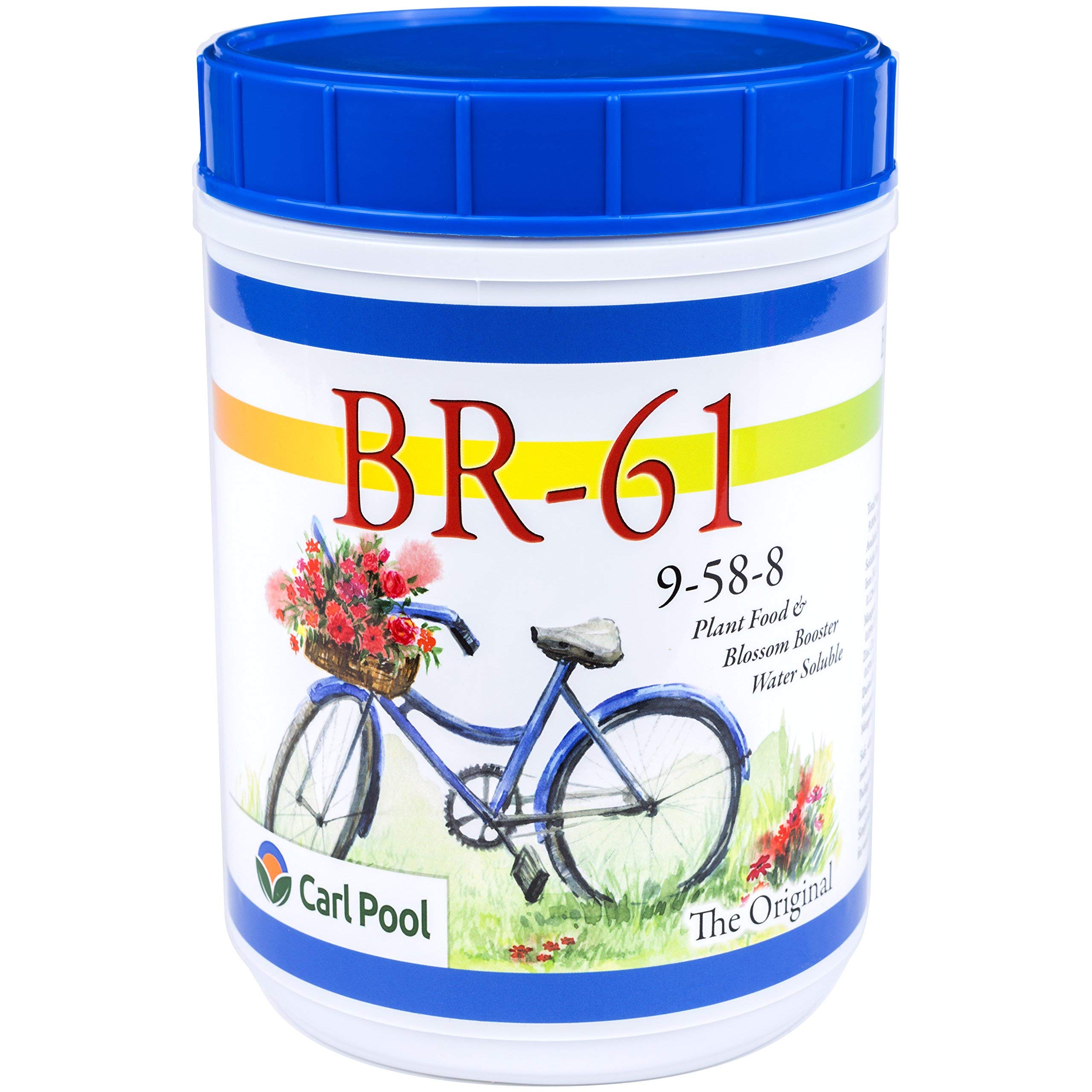
1. Carl Pool BR-61 Plant Food 9-58-8
Our pick — over 4.5★ from 900+ verified ratings; the strongest balance of quality and price.
The phosphorus powerhouse that turns fuchsia baskets into nonstop flower machines.
If you want the strongest flower push per scoop, this is it. The 9-58-8 formula is dramatically front-loaded with phosphorus, the middle number that drives budding, so your fuchsias focus their energy on blooms instead of leafy growth. At a 3-pound size, this is a serious amount of feed, and it weighs in at twice the 1.5 pounds you get from the Grow More option below, so it will carry you through more of the season.
It is a powder you mix at just 1 tablespoon per gallon of water, which is easy to measure into a watering can for hanging baskets. The quality is what wins people over, with owners noting their potted flowers bloom abundantly and stay in flower all summer long, and one gardener reports plants growing 6-8 inches after feeding. As buyers report, “I love the size of this one, it’s hard to find in a store and this one lasts!”
With a 4.8-star rating from a large crowd of owners, it is the highest-rated pick in this lineup, and its 48-ounce size beats the 8-ounce Jack’s Classic tub by a 6.0x gap in sheer quantity. If you have a smaller setup or want to test a formula first, that smaller tub is an easier entry point, but for committed fuchsia lovers this is the one to buy.
Why It Wins
- Extreme phosphorus level (9-58-8) for maximum flowering
- Huge 3-pound bag lasts multiple seasons
- Simple 1-tablespoon-per-gallon mixing ratio
Who Should Pause
- Powder needs mixing each time you water
- High-phosphorus formula is for flowering, not general growth
Reach for this if: you want the strongest bloom production from your fuchsias and don’t mind a quick mix each feeding.
Look elsewhere if: you prefer a set-and-forget granular feed you can scatter and forget for weeks.
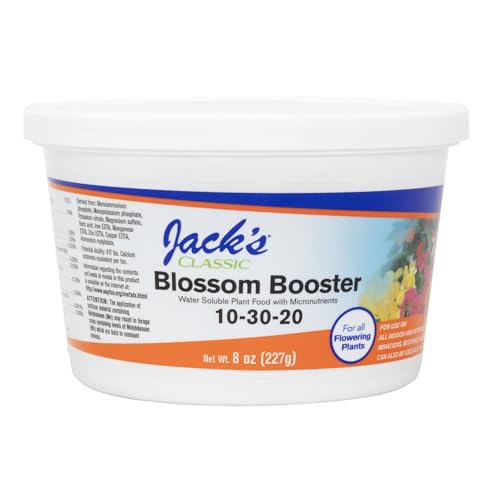
2. Jack’s Classic 10-30-20 Blossom Booster
The fast-acting classic that rewards you with blooms within days of the first feeding.
Jack’s Classic earns its spot because its 10-30-20 NPK ratio (10% nitrogen, 30% phosphorus, 20% potassium) delivers the phosphorus-heavy push fuchsias need for heavy flowering. You can mix it as a root drench for the soil or spray it on the leaves as a foliar feed — a quick fix if your fuchsia leaves look pale and need nutrients fast.
The powder is water-soluble, meaning it dissolves fully into a liquid feed that plants take up immediately. Effectiveness is the thing everyone raves about, with owners reporting it works within days and keeps flowers blooming all summer long. The included measuring spoon removes the guesswork, and the added micronutrients mean you do not need to supplement with extra feedings. As owners put it: “This fertilizer is amazing if you want instant and continuous blooms all summer!”
The honest trade-off is value: the 8-ounce tub is one-sixth the size of the Carl Pool BR-61’s 48-ounce bag, so if you feed many baskets, you will repurchase sooner. But if you want to try a proven bloom booster without committing to a giant bag, this small tub is a low-risk test run — and it is gentle enough that it won’t burn plants even if you are generous with it.
What to love: the instant, continuous blooming response and the dual root-or-foliar feeding flexibility make this a favorite for gardeners who like visible results.
One honest catch: the small 8-ounce tub goes quickly if you are feeding multiple baskets every week.
3. Grow More Sea Grow Flower & Bloom 4-26-26

The seaweed-infused bloom food that strengthens the whole plant while it flowers.
Grow More Sea Grow pairs a solid phosphorus boost with seaweed extract, giving your fuchsias both flower power and overall plant vigor. The 4-26-26 ratio is heavily weighted toward that middle phosphorus number, but it also carries a healthy dose of the last number, potassium, which helps with root strength and overall hardiness. At 1.5 pounds, it is exactly half the weight of the 3-pound Carl Pool BR-61 above, so it is a lighter commitment if you are just starting out.
The blending of organic carbon, amino acids, and carbohydrates from the seaweed is what makes this feel gentler than a straight chemical booster. Owners mention their plants show noticeable improvement in health and production in less than 2 weeks, and the flowering herbs and vegetables respond fast too. One gardener noted their flowers were “putting on weight quickly,” which speaks to how quickly the plant takes up these nutrients.
The mixing ratio is flexible: use 1 tablespoon per gallon for periodic feeding, or drop to 1 teaspoon per gallon if you want to feed at every watering. That constant-feed option is perfect for fuchsia baskets, which like consistent nutrition. This is the value pick because it does double duty, feeding your flowers while also building stronger, healthier plant tissue overall.
Choose this for: gardeners who want a phosphorus-rich bloom feed that also supports whole-plant health through seaweed.
skip it if: you want the absolute maximum flower count and prefer to push phosphorus harder than 26%.
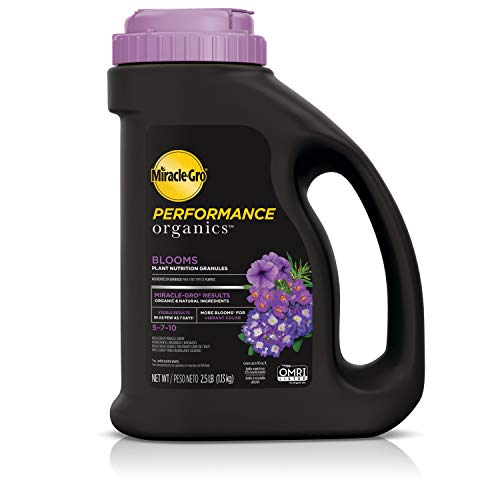
4. Miracle-Gro Performance Organics Blooms Granules
The scatter-and-forget granules for fuchsia fans who hate mixing powders.
Not everyone wants to stand over a watering can mixing powder every week, and that is exactly who Miracle-Gro made this granular feed for. You simply work the granules into the soil around your fuchsia, water it in, and reapply every 4-6 weeks. The 5-7-10 formula is gentler than the hardcore bloom boosters above, but it is certified organic with natural ingredients and still nudges your plants toward flowering.
This is one of the few OMRI-listed options here, which matters if you are trying to garden with organic and natural inputs. The 2.5-pound bag covers up to 165 square feet, so one container handles a whole patio of hanging baskets and containers. The effectiveness shows fast, with owners reporting results within just a week or two, and blooms described as “ginormous” on plants that refused to flower before.
It is a great fit for the gardener who wants “plant food for flowering plants” to be as simple as sprinkle-and-water. The trade-off is that the phosphorus level is much lower than the Carl Pool or Jack’s Classic picks, so if your fuchsia is a stubborn non-bloomer, you might want the stronger liquid or powder push instead. But for steady, low-maintenance feeding, this is the easiest routine in the lineup.
Who it suits best: busy gardeners who want organic feeding on a simple 4-6 week schedule.
The limitation: the 5-7-10 formula is modest compared to dedicated bloom boosters, so maximum flower output may take longer.
5. Fox Farm Big Bloom Liquid Plant Food

The gentle organic liquid that revives tired fuchsias without the burn risk.
Fox Farm Big Bloom is the pick for growers who want organic feeding with a very low risk of burning their plants. The 0-0.5-0.7 NPK is incredibly gentle, so you can feed more often without worrying about salt buildup, and the blend of earthworm castings and bat guano gives your fuchsias a rich, natural nutrient source. It is a liquid, which means plants absorb it immediately, and customers note visible results within hours of application.
The 16-ounce bottle mixes at 4 tablespoons (60 mL) per gallon of water, and you can apply it every other watering rather than every single time. You can also run it through a hose-end sprayer or drip irrigation, which makes it easy to feed a whole row of fuchsia baskets at once. It is formulated to support every stage of growth, so it is also fine for young fuchsia cuttings that are still establishing roots.
Compared to the powder picks, this is a gentler, slower-building approach rather than a heavy phosphorus shock. Owners find it revives struggling plants and produces vigorous growth, and because it is organic, it pairs well with a regular feeding schedule. One thing to know: it settles in water, so you need to shake it frequently while mixing, and the low NPK means it is a supplement rather than a standalone heavy feeder for the most demanding bloom production.
Pick this if: you want an organic, low-burn liquid that you can use freely all season without fear of overfeeding.
Think twice if: your fuchsias need a heavy phosphorus kick to start blooming, since this formula is very mild.
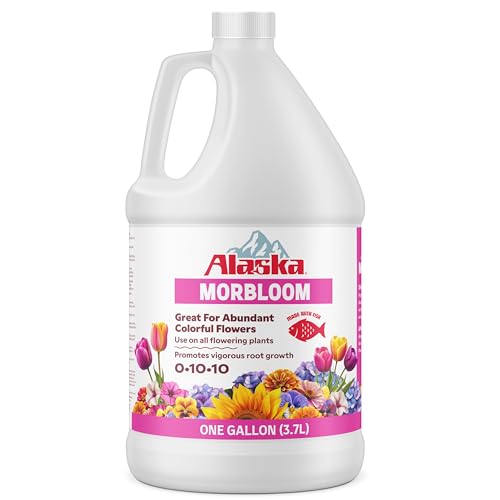
6. Alaska Morbloom Concentrate 0-10-10
The gallon-sized fish-based feed for gardeners with a whole yard of flowers to tend.
If you are feeding fuchsias plus dahlias, tomatoes, and a whole flower border, this is the economical choice. The 0-10-10 formula is all about flowering and root growth, with zero nitrogen, which means it will not push your plants into excess leaf growth. Made with fish, it delivers that phosphorus-potassium punch that fuchsias need for abundant, colorful flowers, and it is made for use on all flowering plants.
The 128-fluid-ounce gallon jug is by far the biggest container in this lineup, so the value per feeding is excellent for serious gardeners. It is a liquid concentrate that you dilute with water as directed, and reviewers point out it produces abundant blooms on flowering shrubs, with tomatoes bearing fruit well. One gardener rotates between the Alaska fish fertilizer and Morbloom each week for the entire garden, which is a smart way to keep heavy feeders happy.
A few things to know before you buy. The product has a strong fish-based aroma — expected but noticeable — and the consistency is not a clear liquid. Shipping is the recurring gripe: shoppers say delays and occasional leakage in transit, so check the packaging when it arrives. Also, the phosphorus level is lower than the Carl Pool or Jack’s picks, so for a single high-value fuchsia basket, a dedicated bloom booster gives a stronger flower push — but for whole-garden feeding, the gallon size wins on coverage.
The big advantage: the 1-gallon size gives you a season’s worth of feed for an entire flower garden, not just a basket or two.
What to watch: the fish smell and the shipping history mean you should inspect the jug on arrival, and very demanding bloomers may want a higher phosphorus kick.
Understanding the Specs
NPK Ratio
Every fertilizer label shows three numbers, like 9-58-8. The first is nitrogen, which grows leaves. The middle is phosphorus, which drives flowers and roots. The last is potassium, which builds overall plant strength. For fuchsias, you want a formula where the middle number is the highest, so your plant puts its energy into blooms instead of just foliage.
Powder vs Granules vs Liquid
Water-soluble powders dissolve into a watering can and feed plants instantly, so they suit a weekly routine. Granules are worked into the soil and release over weeks, which means less frequent application. Liquids are the fastest to absorb and easiest to measure, and they work well with hose-end sprayers if you have many baskets. Pick the form that matches how often you want to tend your plants.
FAQ
What NPK ratio is best for fuchsias?
How often should I feed my fuchsias?
Can I spray fertilizer directly on fuchsia leaves?
What is the difference between a bloom booster and a general fertilizer?
Is organic or synthetic better for fuchsias?
How much fertilizer do I mix per gallon of water?
Why are my fuchsia leaves green but not flowering?
Can I use tomato fertilizer on fuchsias?
Final Thoughts: The Verdict
For most gardeners, the fertilizer for fuchsias winner is the Carl Pool BR-61 because its extreme 9-58-8 phosphorus ratio delivers the strongest flower production and the 3-pound bag lasts for seasons. If you want fast results with an easy measuring spoon, grab the Jack’s Classic Blossom Booster. And for low-effort organic feeding, the Miracle-Gro Organics Blooms granules is the one to reach for. The crowd favorite in this group holds a 4.8-star rating, and with the Carl Pool BR-61 holding a 6.0x size advantage over the 8-ounce Jack’s tub, it is the clear pick for committed fuchsia lovers.
How We Picked
We do not accept paid placement. Every pick is matched to a real buyer and a real use-case; we do not hands-on test units.
Sources & Methodology
Specifications: manufacturer listings and product documentation. Review insights: verified customer reviews, as of August 2026. Pricing: not shown on this page (it changes often); check the current price via the retailer link.
As an Amazon Associate, Lawn Gear Lab earns from qualifying purchases. This does not affect which products we feature.