
You want more flowers, bigger blooms, and healthier plants, but choosing a fertilizer from all those numbers and bags often feels like guessing. The secret to picking the right one is knowing what those three numbers on the label actually mean for your specific flowers. This guide breaks down exactly how to match a fertilizer to your garden’s needs, then reviews six proven options based on their specs and what real buyers experienced.
I’m Rikta — the co-founder and writer behind Lawn Gear Lab. This guide is built by comparing the manufacturers’ published specifications and the patterns across verified customer reviews, so you get each pick’s real strengths and trade-offs instead of marketing spin.
From potted petunias to a full rose bed, this guide reviews the best fertilizer for flowers so you can find your match and give your garden the color boost it deserves.
How To Choose The Best Fertilizer For Flowers
The simplest way to compare flower fertilizers is to look at the N-P-K ratio — the three hyphenated numbers on the front of every bag (for example, 10-30-20). The first number is Nitrogen (N), which fuels green leaves and stems; the second is Phosphorus (P), which drives root growth and flower bud development; and the third is Potassium (K), which supports overall plant health and disease resistance. A fertilizer with a higher middle number is tailored for more and bigger blooms.
Water-Soluble Powders vs. Granules vs. Liquids
The form of the fertilizer dictates how you apply it and how often you need to do it. Water-soluble powders (like Jack’s Classic) are mixed with water and absorbed almost immediately by the roots, so you might feed every week or two. Granules (like the FoxFarm Happy Frog) are sprinkled onto the soil and break down slowly, typically feeding your plants for weeks with a single application. Liquid concentrates (like Neptune’s Harvest) are easy to spray directly on leaves — a method called foliar feeding — and also work quickly, but they usually require more frequent reapplication.
Organic vs. Synthetic Formulations
You will find both organic and synthetic fertilizers in this category. Organic options (like Dr. Earth) are made from natural materials like bone meal or fish emulsion, and they feed the soil microbes as well as the plant — this means they work a little more slowly but build healthier soil over time. Synthetic fertilizers (like Jack’s Classic) are chemically formulated for immediate nutrient availability, so you often see visible results within days. Your choice here comes down to how fast you want blooms versus how much you want to improve your soil’s long-term health.
Quick Comparison
On smaller screens, swipe sideways to see the full table.
| Model | Category | Best For | Key Spec | Amazon |
|---|---|---|---|---|
| Dr. Earth Flower Girl | Organic | Maximizing flower count naturally | 4-10-7 N-P-K ratio | Amazon |
| Jack’s Classic Blossom Booster | Synthetic | Rapid color and bloom production | 10-30-20 N-P-K ratio | Amazon |
| Miracle-Gro Organics Blooms | Organic Granules | Easy, slow-feeding for beds | 5-7-10 N-P-K ratio | Amazon |
| Neptune’s Harvest Rose & Flowering | Organic Liquid | Foliar feeding and soil life | 2-6-4 N-P-K ratio | Amazon |
| FoxFarm Happy Frog | Slow-Release | Gentle feeding for mixed gardens | 6-4-5 N-P-K ratio | Amazon |
| Miracle-Gro LiquaFeed Bloom Booster | Liquid Refill | Convenient watering-can feeding | Liquid 16 fl oz concentrate | Amazon |
In‑Depth Reviews
1. Dr. Earth Flower Girl Bud & Bloom Booster 4-10-7

The 4-10-7 N-P-K ratio makes Dr. Earth Flower Girl Bud & Bloom Booster the top pick for flower gardeners who want a balanced, natural boost that is safe for people and pets.
Buyers report stunning results: one reviewer noted their dragon fruit trees went from only three blooms to an incredible 25 blooms in a single season after switching to this. The 4-pound bag holds a massive 64.0 ounces, which is eight times more product than a compact 8.0-ounce container of Jack’s Classic, so you get serious coverage for larger garden beds and multiple containers. It is certified organic and contains no GMOs, chicken manure, or sewage sludge, making it a clean choice for edible flowers or vegetable gardens.
The catch is that as an organic formula, it works more slowly than synthetic chemical fertilizers — you are feeding the soil microbes, not force-feeding the plant. skip it if you need instant results, but for long-term soil health and massive bloom results without worrying about chemical burns, this is the one to grab.
Why it’s great
- Organic and people-and-pet safe certified formula
- 64-ounce bag offers excellent value for large gardens
- Proven to dramatically increase flower counts (dragon fruit: 3 to 25 blooms)
Good to know
- Organic action means slower visible results vs. synthetics
- Some owners mention the bag label shows a different N-P-K (3-9-4) than advertised (4-10-7)
2. Jack’s Classic 10-30-20 Blossom Booster
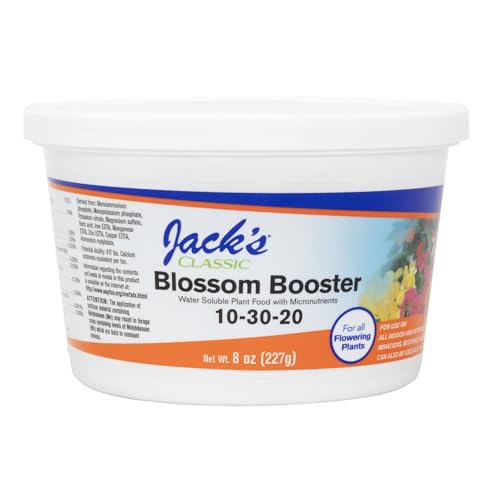
Jack’s Classic 10-30-20 Blossom Booster delivers a much higher Phosphorus punch (30) than the top pick Dr. Earth’s 10, meaning it is designed to push more flower buds and brighter colors fast. Where the Dr. Earth is a steady organic feeder, this is a targeted synthetic punch for plants that need an immediate bloom kick.
You mix the concentrated powder with water, and a little goes a long way: one buyer mentioned the 8-ounce container is “so concentrated that it is a very good value for the money,” and users report their Hoya and jasmine plants blooming beautifully after just a few feedings. The included measuring spoon makes it simple to get the right ratio, and you can either water the roots or spray it directly onto the leaves (foliar feeding) for faster absorption.
If you need instant color for a special event or want to revive a reluctant bloomer like an orchid or anthurium, choose this one over the Dr. Earth. Just be aware that one owner reported the “8oz container is sample size; entire container used in one day for outdoor flower beds and pots,” so buy multiples if you have a large garden. pass on it if you prefer organic methods or need to cover large beds cheaply.
Where it shines
- High phosphorus (30) for maximum flower production
- Water-soluble powder works as both root feed and foliar spray
- Very concentrated formula offers good value per gallon mixed
Worth noting
- Small 8-ounce container may only last a few feedings for large gardens
- Powder can cause skin irritation — wear gloves when handling
3. Neptune’s Harvest Rose & Flowering Fertilizer 2-6-4
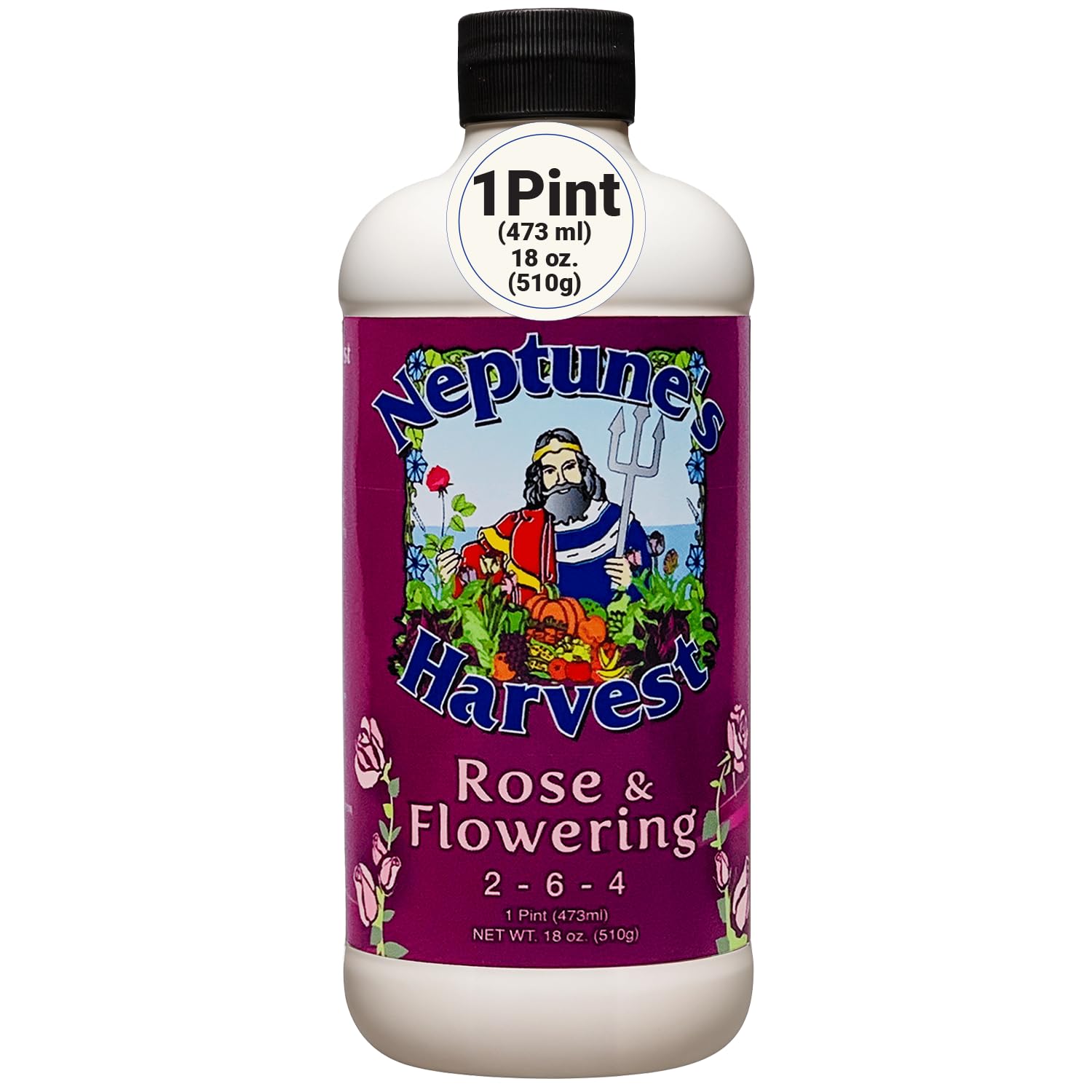
If you are tending a rose bed, a container of peppers, and a few houseplants all at once, this Neptune’s Harvest formula lets you grab one bottle instead of three. The 2-6-4 N-P-K ratio is specifically designed to push blooms while also building soil biology, making it the ideal single-bottle solution for roses, tomatoes, peppers, and indoor plants alike.
One customer observed that their “2-year-old indoor plants produced 102 bell peppers from 9 plants” after using this fertilizer, which shows how effectively the fish emulsion, seaweed, molasses, and humic acids in the formula stimulate both flowering and fruiting. The mixing ratio (1 ounce per gallon for most plants, just 1 tablespoon per gallon for houseplants) makes it easy to adjust strength, and the liquid form absorbs fast whether you pour it on the soil or spray it on the leaves. Customers note it has a “bit of a smell” — it is made from fish — but it fades quickly once it dries.
The standout spec here is the ingredient list: this is the only liquid in this lineup that includes humic acids (natural compounds that help roots absorb more nutrients) and yucca extract (a plant-based wetting agent that helps water and nutrients spread evenly). For an organic grower focused on soil health and versatile use, this 18-ounce pint delivers serious value compared to buying multiple specialized bottles.
What stands out
- All-in-one organic liquid for flowers, vegetables, and houseplants
- Includes humic acids and yucca extract for better nutrient uptake
- Proven by buyers to boost yields dramatically (102 bell peppers from 9 plants)
The trade-offs
- Has a strong fish-based smell that lingers until dry
- Requires more frequent application than granular fertilizers
4. Miracle-Gro Performance Organics Blooms Plant Nutrition Granules

The single number that matters most in this category is the N-P-K ratio, and this product scores a 5-7-10, with Phosphorus (the middle number) higher than Nitrogen to encourage blooms over leaves. The 2.5-pound bag covers up to 165 square feet of garden space.
The downside with granules is that they work more slowly than water-soluble powders or liquid concentrates — you need to reapply every 4-6 weeks and water regularly to activate them. But reviewers point out that patience pays off: one user highlighted it “works within 1-2 weeks; produced very large blooms, especially on butterfly bush,” and another said their Mandevilla “really popped” after feeding. The fertilizer is OMRI listed (meaning it meets organic standards for the Organic Materials Review Institute), so it qualifies for organic gardening, and the granules are easy to sprinkle around existing plants without mixing or measuring.
Considering the price-to-performance ratio, these granules give you no-fuss organic feeding that shoppers say matches or beats many premium fertilizers in bloom size. If you prefer a set-it-and-forget-it approach and have a medium-sized flower bed, this is your pick. Note that the 0.5-pound item weight listed in the technical specs is confusing — the product ships in a bottle and the actual granule weight covers that 165-square-foot area as advertised.
The upsides
- Simple sprinkle-and-water application, no mixing required
- OMRI listed for organic gardens
- Produces visibly larger blooms in 1-2 weeks according to buyers
Keep in mind
- Granules are slow-release — results take slightly longer than liquid feeds
- Some buyers received bottles that appeared to be underfilled
5. FoxFarm Happy Frog All Purpose Fertilizer 6-4-5

What you actually get at this lower price is a 4-pound bag of FoxFarm Happy Frog All Purpose Fertilizer with a 6-4-5 N-P-K ratio, a balanced all-purpose formula built for steady all-around plant health rather than explosive flower production. Unlike the higher-phosphorus Jack’s Classic and Dr. Earth above, this one is tough to overdo, making it ideal if you grow a mix of flowers, vegetables, and ornamentals.
The bag is packed with beneficial soil microbes and mycorrhizal fungi (tiny fungi that attach to roots and help them absorb more water and nutrients). Buyers report it “revived yellow tomato and zucchini plants within a week” and works “very well with pretty much all Monstera plants.” The granules are easy to spread, and a single application feeds for about a month. The trade-off is that it has a strong, pungent manure-like smell that buyers warn is “very smelly indoors” — plan to use it outside or be ready to open windows.
This is the perfect pick for the budget-conscious gardener who has a mixed garden and wants a single OMRI listed organic fertilizer that delivers gentle results without burning plants. If you are specifically after maximum flower power, consider the Dr. Earth or Jack’s Classic instead, but for an all-around soil builder, Happy Frog is hard to beat.
Why we’d pick it
- Contains beneficial soil microbes and mycorrhizal fungi for root health
- Balanced 6-4-5 formula is gentle and hard to over-apply
- Owners mention it revives struggling plants within a week
A few caveats
- Very strong manure-like odor, especially indoors
- Can develop white mold if sprinkled too thickly on soil surface
6. Miracle-Gro LiquaFeed Bloom Booster Flower Food

For the gardener who values speed and simplicity above all else, this liquid concentrate is designed to be used with a Miracle-Gro LiquaFeed sprayer — you attach the bottle, squeeze the trigger, and feed instantly. It is the least fuss option in this roundup: no measuring, no mixing, no waiting for granules to dissolve.
The 16-fluid-ounce bottle is a refill for the LiquaFeed system, and customers note using it “2-3 times a week to keep our flowers blooming” produces “beautiful blooms” and “big blooms” in a fairly short time. One shopper added their flowers were “blooming like never before” and noted the formula is safe for bees and birds. The concentrated liquid mixes into 64 fluid ounces of total feed, so one bottle stretches further than its small size suggests.
The limit here is that you need the proprietary LiquaFeed sprayer (sold separately) to use this fertilizer — you cannot just open the bottle and pour it on the soil. If you already own the sprayer system, this is the fastest way to feed hanging baskets and container flowers all season long. If you do not have the sprayer, the Neptune’s Harvest liquid is a more versatile choice that works without special equipment.
Strong points
- Instant no-mix feeding with the LiquaFeed sprayer system
- 16 fl oz concentrate makes 64 fl oz total feed
- Reviewers point out rapid bloom improvement and safe for pollinators
Before you buy
- Requires the LiquaFeed sprayer (not included) to apply
- Not as cost-effective per feeding as powders you mix yourself
Understanding the Specs
N-P-K Ratio
The three numbers on every fertilizer label stand for Nitrogen (N) – Phosphorus (P) – Potassium (K). For flowers, look for a higher middle number (Phosphorus) because that is what drives bud formation and bloom size. A ratio like 10-30-20 (Jack’s Classic) is much heavier on Phosphorus than 6-4-5 (FoxFarm), so it will push more flowers but might not build strong roots or foliage. A balanced ratio like 4-10-7 (Dr. Earth) gives you moderate leaf growth with a solid bloom boost.
Water-Soluble vs. Granular vs. Liquid
Water-soluble powders (like Jack’s Classic) dissolve in water and work immediately — great for a quick boost but require weekly mixing. Granular fertilizers (like FoxFarm Happy Frog) sit on the soil and release nutrients slowly over weeks — ideal for low-maintenance feeding but slower to show results. Liquid concentrates (like Neptune’s Harvest or the Miracle-Gro LiquaFeed) absorb instantly through both roots and leaves but usually need more frequent application. Your choice depends on how much time you want to spend feeding versus how fast you need to see color.
FAQ
Can I use a bloom booster fertilizer on all my flowers?
How often should I fertilize my flower garden?
What is the difference between organic and synthetic flower fertilizers?
Final Thoughts: The Verdict
For most flower gardeners, the best fertilizer for flowers is the Dr. Earth Flower Girl Bud & Bloom Booster because it combines a bloom-focused 4-10-7 N-P-K ratio with certified organic ingredients in a generous 4-pound bag, giving you both safety and proven flower-count results. If you need instant color for a specific bed or pot and do not mind a compact container, grab the Jack’s Classic 10-30-20 Blossom Booster — its high-phosphorus powder delivers the fastest bloom kick of any pick here. And for the gardener who wants one simple, organic bottle that feeds flowers, vegetables, and houseplants alike, the Neptune’s Harvest Rose & Flowering Fertilizer offers unbeatable versatility in a single liquid formula.