
Pouring a random all-purpose granular onto your flower beds is the fastest way to get lush foliage and zero blooms. The nitrogen in those balanced blends pushes leaf growth at the expense of the buds you actually want. Choosing the right fertilizer for flower beds means matching the NPK ratio to your plants’ flowering stage — a higher middle number for phosphorus drives bud set and color intensity rather than wasting energy on greenery.
I’m Rikta — the co-founder and writer behind Lawn Gear Lab. I’ve cross-referenced hundreds of lab analyses, grower forums, and side-by-side application reports to isolate which formulas actually deliver the flower count and petal density they promise.
The right bloom booster can double your flower count in a single growing cycle, and this guide breaks down the seven best fertilizer for flower beds options that match your specific garden type, from organic slow-release granules to fast-acting liquids for heavy feeders.
How To Choose The Best Fertilizer For Flower Beds
Flower bed fertilizers vary widely in NPK concentration, release speed, and source material. Choosing the wrong one either starves the bloom cycle or overfeeds foliage at the expense of buds. Focus on three core factors before buying.
NPK Ratio And The Phosphorus Rule
The three numbers on a fertilizer bag (Nitrogen-Phosphorus-Potassium) dictate what your plants will prioritize. For flower beds, the middle number — phosphorus — is the one that drives bud formation and bloom size. A 15-30-15 ratio (like the Grow More Super Bloomer) doubles down on phosphorus to shift energy into flowering. Balanced ratios like 16-16-16 work for general maintenance but won’t push peak blooming. Organic formulas such as 4-10-7 (Dr. Earth Flower Girl) still follow the same logic even at lower concentrations. Never choose a high-first-number fertilizer (like 30-0-0) for flower beds unless you want tall green stems with zero flowers.
Release Speed: Granular Vs Liquid
Granular fertilizers release nutrients over weeks or months through soil moisture and microbial activity. They suit pre-season soil prep and established beds where you want consistent feeding without weekly reapplication. Liquid fertilizers (like Great Big Roses) enter the root zone within hours and produce visible results in days, making them ideal for mid-season rescue feeding or for heavy-blooming annuals that need frequent nutrient pulses. The trade-off: liquids require mixing and more frequent dosing, while granules deliver one-and-done convenience for the entire growing period.
Synthetic Versus Organic Sources
Synthetic fertilizers deliver precise NPK ratios immediately available to roots. They produce rapid green-up and bloom formation but can burn roots if over-applied and do little for long-term soil structure. Organic fertilizers (Dr. Earth, Sustane, FoxFarm) build microbial biodiversity, improve water retention, and release nutrients gradually as soil organisms break down the material. They are safer around children and pets and reduce the risk of salt buildup. The catch: organic formulas typically have lower NPK numbers, so you may need larger volumes to match the nutrient punch of synthetics during heavy bloom cycles.
Quick Comparison
On smaller screens, swipe sideways to see the full table.
| Model | Category | Best For | Key Spec | Amazon |
|---|---|---|---|---|
| Great Big Roses Liquid Booster | Liquid | Reviving established rose bushes | 70 trace minerals + humic acid | Amazon |
| Supply Solutions 16-16-16 | Granular | All-purpose bed maintenance | 10 lbs balanced NPK | Amazon |
| FoxFarm Happy Frog Fruit & Flower | Organic Granular | Abundant flowering with mycorrhizae | 4 lb with phosphorus boost | Amazon |
| Sustane All Natural 5 lb | Organic Granular | Soil building + heavy yields | 5 lbs composted poultry litter | Amazon |
| Grow More Super Bloomer | Water Soluble | Quick absorption for high-intensity blooms | 15-30-15 + chelated micronutrients | Amazon |
| Dr. Earth Flower Girl | Organic Granular | Pet-safe blooming for edible gardens | 4 lbs 4-10-7 blend | Amazon |
| FoxFarm Happy Frog Tomato & Veg | Organic Granular | Blossom end rot prevention in vegetable beds | 4 lb 5-7-3 + calcium | Amazon |
In‑Depth Reviews
1. Great Big Roses and Flowers Liquid Fertilizer Booster
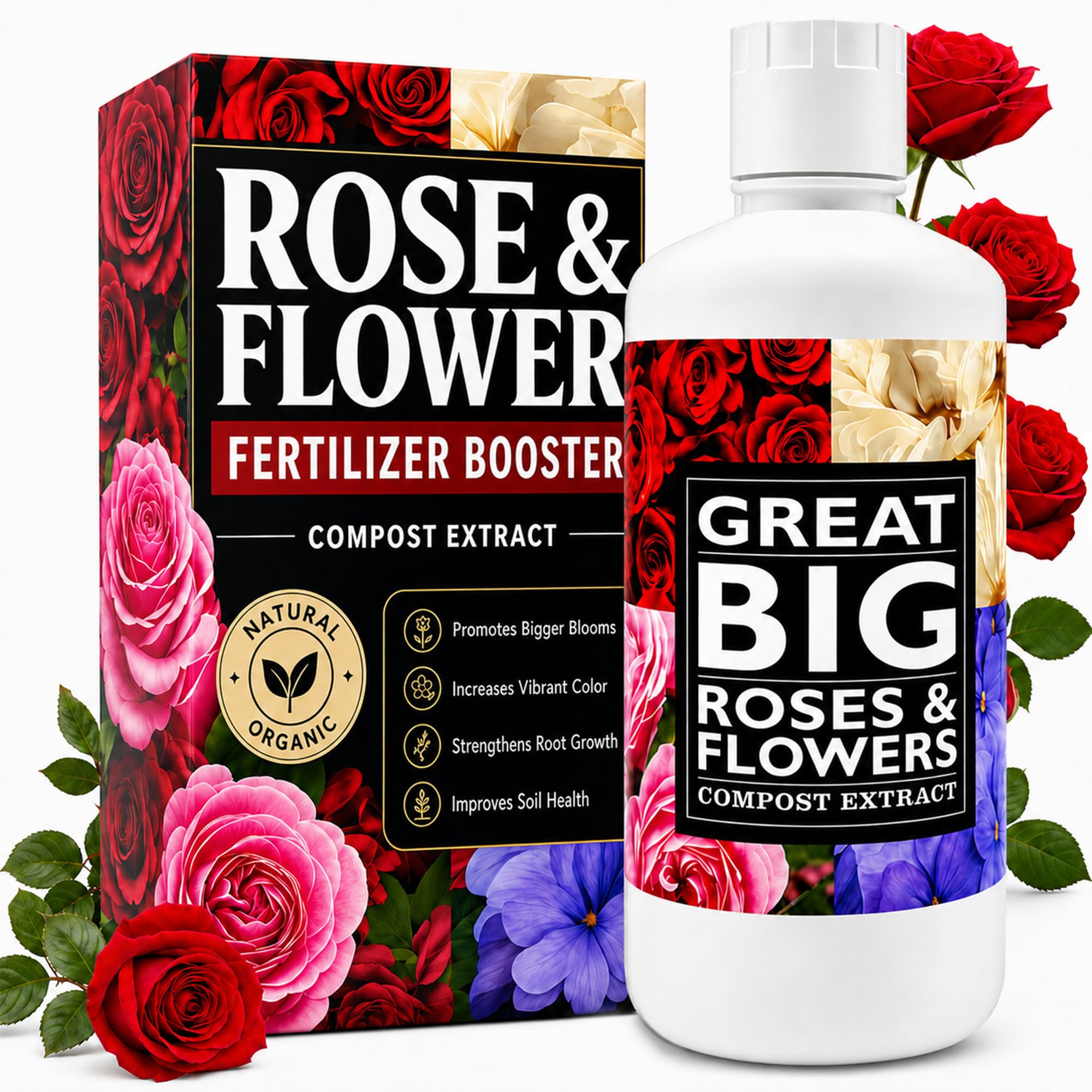
This liquid concentrate delivers 70 chelated trace minerals, humic acids, and seaweed extract directly into the root zone — a formulation designed to unlock nutrients already in the soil rather than just dumping more synthetic salts. Customers consistently report roses that had not bloomed in years producing flowers within weeks of the first application. The 32-ounce bottle dilutes at 4 oz per gallon and covers an entire growing season for most flower beds, making it one of the most concentrated options here.
The liquid format gives you speed: results appear in days, not weeks, making it ideal for mid-season recovery or for coaxing blooms out of stubborn perennials. It works on hydrangeas, citrus, succulents, and any flowering shrub, not just roses. Users note that it amplifies existing fertilizers rather than replacing them, so you can pair it with granular organics for a layered feeding strategy. Independent reviews mention improved foliage color and continuous flowering even through summer heat.
Where this booster truly separates itself is the breadth of micronutrients. Most bloom boosters cover only NPK plus a few secondary minerals; this formula includes iron for chlorophyll production and humic acid for root zone conditioning. The only trade-off is the bottle design — the wide mouth makes measuring into a watering can messy, and spills are costly given the premium price per ounce.
What works
- Revives non-blooming bushes within weeks
- 70 trace minerals plus humic acid for soil activation
- Concentrated formula lasts an entire season
- Safe for roses, hydrangeas, citrus, and more
What doesn’t
- Jug opening causes spillage during mixing
- High cost per bottle compared to granular options
2. Supply Solutions 16-16-16 Complete Lawn & Garden Fertilizer
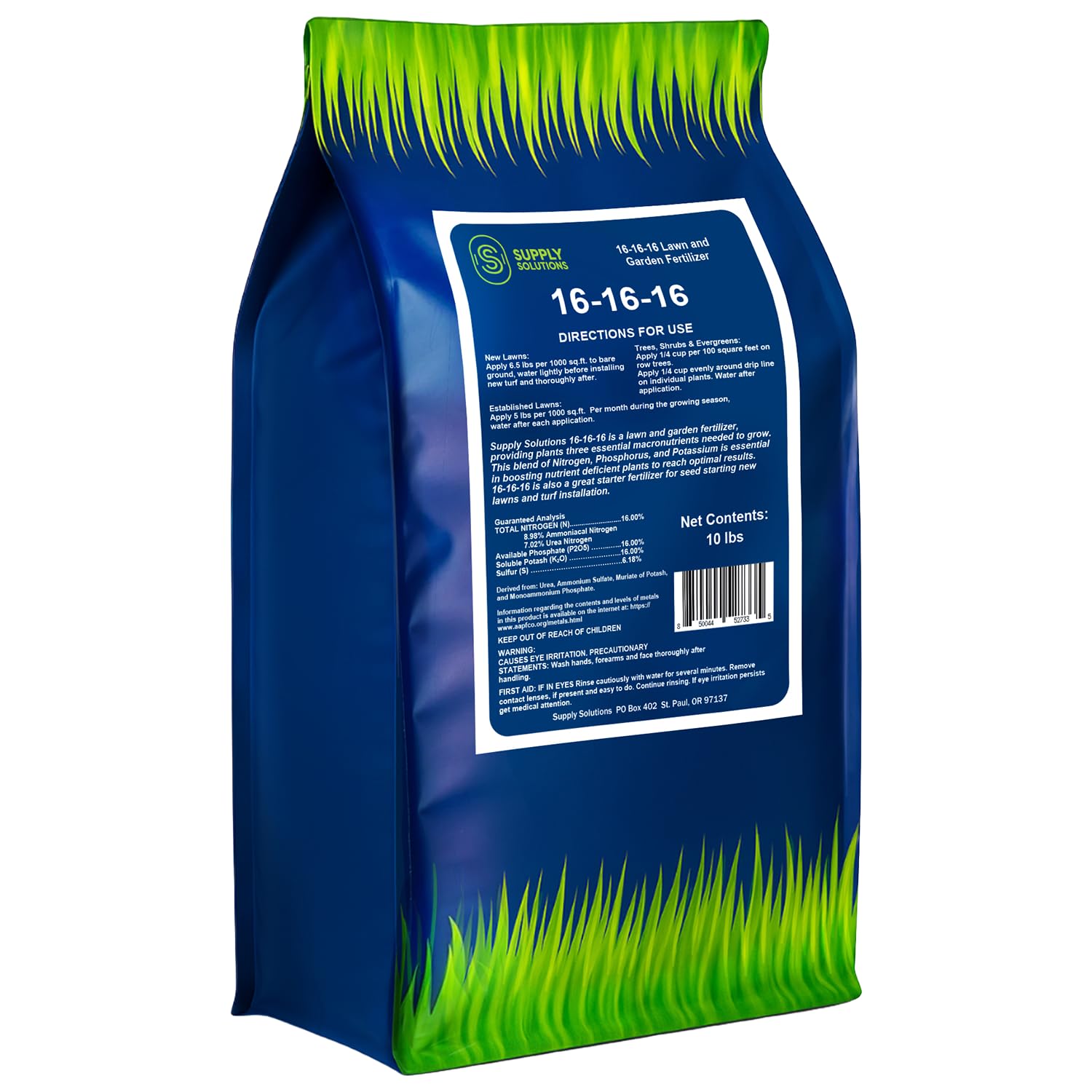
The triple-16 formula delivers equal parts nitrogen, phosphorus, and potassium — a maintenance-level ratio that fuels photosynthesis, root strength, and bloom setting without pushing any single growth pathway too hard. The 10-pound bag covers a large area, making it a cost-effective option for multiple beds or mixed borders where you have both foliage plants and flowering plants together. Users report visible improvement in tomato and pepper yields within five days of application.
It works as a granular top-dress or can be mixed into soil before planting. The balanced nature means you won’t accidentally overfeed nitrogen and get leafy plants with few flowers, which is a common mistake with high-first-number fertilizers. Customer reviews highlight its effectiveness on bare root roses — one reviewer saw new growth reach 6 feet with abundant blooms after switching from a more expensive specialized rose food.
Because the NPK is perfectly even, it is not optimized for peak blooming. If your flower bed consists entirely of heavy-blooming annuals like petunias or zinnias, a phosphorus-focused 15-30-15 will push more flowers. This formula shines when you need a single fertilizer for a varied garden bed that includes shrubs, perennials, and vegetables.
What works
- 10-pound bag provides excellent coverage
- Balanced NPK prevents over-feeding of foliage
- Effective for roses, vegetables, and shrubs
- Granules are easy to spread and water in
What doesn’t
- Even ratio not ideal for pushing maximum blooms
- Packaging changed from white to blue
3. FoxFarm Happy Frog Fruit & Flower Fertilizer

FoxFarm’s Fruit & Flower fertilizer is engineered specifically for the bloom and fruit stages, with a phosphorus-rich formulation that promotes bud initiation and petal density. The organic granular formula includes mycorrhizal fungi, which colonize the root system and increase nutrient and water uptake efficiency — a biological advantage synthetic fertilizers cannot replicate. Gardeners report that spring potted flowers and tropical plants like banana trees show visible improvement in growth and flowering within weeks of application.
Application is straightforward: sprinkle the granules around the base of plants and water in. The OMRI listing means it is certified for organic gardening, and the mycorrhizae add a root-building effect that is especially beneficial for soil that has been depleted by previous seasons of heavy feeding. Users note that it works well on fruit trees and bushes when applied monthly via a simple hand spreader, and it has no strong odor.
The 4-pound bag covers a moderate area, but for large flower beds you will need multiple bags. Compared to the liquid Great Big Roses booster, this granular option requires more time to show results because the organic matter must be broken down by soil microbes before nutrients are released. It is best applied early in the season or as a monthly top-dress during active blooming.
What works
- Mycorrhizal fungi enhance root efficiency
- OMRI certified for organic gardening
- Promotes abundant flowering on a wide variety of plants
- No strong chemical smell
What doesn’t
- Slow-release nature means results are gradual
- 4 lb bag covers limited square footage
4. Sustane All Natural Flower and Vegetable Plant Food

Sustane is a composted poultry litter fertilizer that delivers nutrients through natural microbial breakdown, avoiding the salt burn risk associated with synthetic water-soluble formulas. The 5-pound bag provides more volume than most premium organic options, and independent research cited by the manufacturer shows it produces more fruits and blooms than both other organic and synthetic fertilizers. Gardeners using it in raised beds with soilless mixes (perlite, compost, and coconut coir) report rapid growth responses, with one user seeing onion regrowth from kitchen scraps reaching 150 sprouts in under two weeks.
It improves soil structure by feeding microorganisms, which creates better aeration and water retention over time. This makes it a solid choice for new garden beds where soil health needs rebuilding, not just feeding. Application rates are forgiving: half a cup per 2×6 foot bed mixed into the top 6 inches is sufficient for vegetable and flower beds. Users also combine it with mineral amendments like sea salt for an even broader spectrum of trace elements.
The main consideration is speed — because it is a natural material, nutrient release depends on soil temperature and moisture. In cooler spring soil, don’t expect the instant green-up you would get from a synthetic 15-30-15. It is best used as a pre-plant soil amendment or as a monthly maintenance feed for established beds rather than a rescue treatment for struggling plants.
What works
- 5 lb bag offers excellent volume per dollar
- Builds soil structure and microbial biodiversity
- No risk of chemical root burn
- Effective for raised beds and containers
What doesn’t
- Slow nutrient release in cold soil
- Low NPK numbers require larger application volume
5. Grow More Super Bloomer 15-30-15

The 15-30-15 NPK ratio in this water-soluble powder is engineered specifically for flower and fruit development, with the middle phosphorus number doubled relative to nitrogen. That ratio shifts the plant’s energy directly into bud initiation and petal expansion, making it one of the most aggressive bloom boosters available without a prescription. Users report plants reaching twice their normal size with two to three times the number of blooms after several seasons of use. The formula also includes chelated iron and manganese to prevent leaf yellowing during heavy flowering.
It mixes at a 1:64 ratio (about 1 tablespoon per gallon) and can be applied as a soil drench or foliar spray. The foliar option provides near-instant absorption through leaf stomata, which is useful for plants that have root uptake issues due to compacted soil or cold temperatures. Customers use it successfully on roses, flowering annuals, fruiting shrubs, and even vegetables like tomatoes and peppers for increased yields.
The main drawback is the synthetic salt content — over-application or using it on dry soil can burn roots, especially in containers where salts accumulate. It also does nothing for soil biology; it feeds the plant directly rather than building long-term soil fertility. For gardeners who prioritize organic methods or need to improve poor soil structure, this is a feeding tool rather than a soil-building solution.
What works
- Aggressive 15-30-15 ratio drives maximum blooming
- Water soluble for fast root and foliar absorption
- Chelated micronutrients prevent deficiency during bloom
- Works on a wide range of flowering plants
What doesn’t
- Salt content can burn roots if over-applied
- Does not improve soil structure or microbial life
6. Dr. Earth Flower Girl Bud & Bloom Booster 4-10-7

Dr. Earth’s Flower Girl is a 100% organic and natural hand-crafted blend with a 4-10-7 ratio that provides balanced bloom nutrition without the use of GMOs, chicken manure, or sewage sludge. The formula is certified by OMRI and carries the Non-GMO Project Verified seal, making it one of the safest options around children and pets. Experienced dahlia growers specifically recommend this product for its ability to produce multiple blooms per stem without the risk of chemical leaf burn.
Users report dramatic results on fruiting plants — one customer saw dragon fruit trees go from three blooms to twenty-five after switching to this fertilizer. The granular format allows for easy top-dressing around the base of plants and works well for all types of bedding plants, potted ornamentals, shrubs, and perennials. The 4-pound bag provides good coverage for typical home flower beds.
One notable issue is the NPK labeling discrepancy on Amazon — the product description states 4-10-7 but some customers received bags labeled 3-9-4. If you require a specific ratio for precise bloom feeding, check the bag when it arrives. Additionally, organic formulas like this are gentler but slower than synthetic bloom boosters, so do not expect the same overnight color burst you get from high-phosphorus water-soluble products.
What works
- Certified organic and non-GMO, safe for people and pets
- Effective bloom production for flowers and fruiting plants
- No sewage sludge or chicken manure fillers
- Recommended by experienced dahlia growers
What doesn’t
- NPK labeling discrepancy between description and received bag
- Slower results compared to synthetic bloom boosters
7. FoxFarm Happy Frog Tomato & Vegetable Fertilizer 5-7-3

Although labeled for tomatoes and vegetables, the 5-7-3 ratio and included calcium make this granular fertilizer a strong option for flower beds where you also grow flowering vegetables like peppers, squash, or berries. The calcium content helps prevent blossom end rot, a common disorder in tomatoes and peppers that is often mistaken for a disease. The organic formulation includes mycorrhizal fungi to boost root efficiency and nutrient uptake, replicating the root-building benefits seen in the FoxFarm Fruit & Flower formula.
Users report bumper crop yields of tomatoes and abundant squash production, with no chemical fish smell that can attract pests or annoy neighbors. It is easy to apply as a top-dress and water in, and the slow-release nature means you don’t need to reapply as frequently as with water-soluble products. Gardeners growing in containers or raised beds see particular benefit from the calcium component because container soil is more prone to calcium leaching.
The trade-off: the 5-7-3 ratio is less phosphorus-heavy than dedicated bloom boosters, so if your flower bed is entirely ornamental with no vegetables, you would get more petal production from a 15-30-15 or the Dr. Earth 4-10-7. This is a hybrid formula that works best when your flower bed doubles as a vegetable patch.
What works
- Calcium prevents blossom end rot in vegetables
- Mycorrhizal fungi improve root efficiency
- No strong odor, safe for container gardening
- Supports both flowering and fruiting plants
What doesn’t
- Lower phosphorus ratio limits peak bloom potential
- Considered expensive relative to bag size
Hardware & Specs Guide
NPK Ratio Interpretation
The three numbers on a fertilizer package represent Nitrogen (leaf growth), Phosphorus (flower and root development), and Potassium (overall health and disease resistance). For flower beds, the middle number (phosphorus) is the most important — it drives bud formation, bloom size, and color intensity. A ratio like 4-10-7 has 2.5x more phosphorus than nitrogen, making it optimized for flowering. A balanced ratio like 16-16-16 maintains general health but does not push peak bloom production.
Mycorrhizal Fungi and Root Efficiency
Some organic fertilizers (FoxFarm Happy Frog series) include mycorrhizal fungi — beneficial soil organisms that form a symbiotic relationship with plant roots. The fungi extend the root system’s reach, improving water and nutrient absorption. In flower beds, this translates to larger blooms and better tolerance to dry spells. Mycorrhizal colonization requires undisturbed soil, so avoid deep tilling after application.
FAQ
What NPK ratio is best for flower beds?
Should I use granular or liquid fertilizer for flower beds?
Can I use tomato fertilizer on flower beds?
Final Thoughts: The Verdict
For most gardeners, the fertilizer for flower beds winner is the Great Big Roses Liquid Booster because it revives even stubborn non-blooming plants with a 70-mineral formula and produces visible results within weeks. If you want organic slow-release feeding that builds soil health, grab the Sustane All Natural. And for high-intensity synthetic bloom forcing on annuals and heavy feeders, nothing beats the Grow More Super Bloomer 15-30-15.