
Getting a heavy harvest of glossy, firm eggplants starts with the right food. Eggplants are heavy feeders that need a specific balance of nutrients to push out plenty of blossoms and large fruit without going too leafy. This guide picks the seven best options for feeding eggplants, from simple granular blends to concentrated water-soluble powders, so you can match the product to how you garden.
I’m Rikta — the co-founder and writer behind Lawn Gear Lab. This guide is built by comparing the manufacturers’ published specifications and the patterns across verified customer reviews, so you get each pick’s real strengths and trade-offs instead of marketing spin.
Whether you grow in ground, in raised beds, or in hydroponic buckets, these choices cover the spectrum of needs for a reliable fertilizer for eggplant that delivers real results in your garden.
How To Choose The Best Fertilizer For Eggplant
The right fertilizer for eggplants gives you big, blemish-free fruit all season. Here is what to look for.
N-P-K Ratio — Focus on Phosphorus and Potassium
Eggplants need a lower first number (nitrogen) and higher second and third numbers (phosphorus and potassium). Too much nitrogen gives you monster leaves with few blossoms. A ratio like 5-10-10 or 4-18-38 supports root development, flower set, and fruit size without excess foliage.
Calcium Content — The Blossom-End Rot Defense
Blossom-end rot (a dark, sunken spot on the bottom of the fruit) is the number one frustration for eggplant growers. A fertilizer with added calcium, such as 8% calcium in the Espoma blends or the calcium in the FoxFarm Happy Frog formula, helps prevent this issue by supporting strong cell walls.
Form: Granular vs. Water-Soluble
Granular fertilizers (like the Down To Earth or Espoma Tomato-Tone) are dry pellets you sprinkle on the soil and water in. They release nutrients slowly over weeks, so you reapply every two weeks or monthly. Water-soluble powders (like the Greenway Biotech 4-18-38) dissolve instantly in your watering can and feed the plant right away, which gives you more control but requires mixing each time you water.
Organic vs. Synthetic
Organic fertilizers (like the OMRI-listed Down To Earth mix or Espoma’s Bio-tone formulas) feed the soil microbes along with the plant and are gentler, making them safer if you over-apply. Synthetic water-soluble formulas give you a precise, fast-acting nutrient boost — but they can burn roots if you mix them too strong.
Quick Comparison
On smaller screens, swipe sideways to see the full table.
| Model | Category | Best For | Key Spec | Amazon |
|---|---|---|---|---|
| Espoma Organic Tomato-Tone 3-4-6 | Mid-Range | Blossom-end rot prevention | 8% calcium; 3-4-6 ratio | Amazon |
| Cz Garden 5-10-10 | Mid-Range | Late-season fruiting boost | 2% iron; 5-10-10 ratio | Amazon |
| Down To Earth 4-6-2 | Mid-Range | Soil health and gentle feeding | OMRI organic; 4-6-2 ratio | Amazon |
| FoxFarm Happy Frog 5-7-3 | Mid-Range | Grow-bag and container feeding | 5-7-3 with mycorrhizal fungi | Amazon |
| Jack’s Classic Tomato Feed 12-15-30 | Premium | Precise water-soluble feeding | 12-15-30 water-soluble powder | Amazon |
| Espoma Organic Garden-Tone 3-4-4 | Premium | Two-bag seasonal coverage | Pack of 2; 5% calcium | Amazon |
| Greenway Biotech 4-18-38 | Premium | Hydroponic and soil fruit set | 4-18-38; 100% water-soluble | Amazon |
In‑Depth Reviews
1. Espoma Organic Tomato-Tone 3-4-6
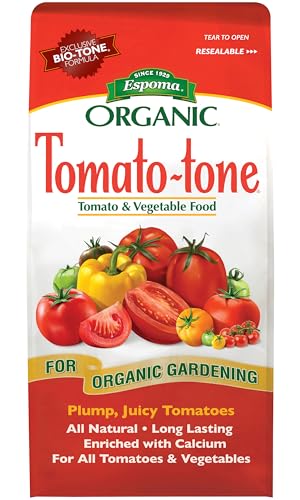
The Espoma Organic Tomato-Tone 3-4-6 earns the top spot because it delivers 8% calcium in a balanced ratio — exactly what eggplants need to avoid blossom-end rot while still pushing out plenty of fruit. It is made for heavy-feeding vegetables, and it works whether you grow heirloom or hybrid eggplant varieties.
You sprinkle the dry granules around the drip line (the circle under the outer leaves) every two weeks and water them in — no mixing required. Buyers report their plants are “healthy,” grow quickly, and produce reasonable-quality fruit, with one reviewer calling it “the best product on the market” for tomatoes and veg. The 64-ounce bag covers a typical home garden for a full season.
The one honest trade-off: some buyers feel the 4-pound bag is small for the price, especially if you have a large plot. But for the average backyard grower, the combination of calcium protection and steady organic feeding makes this the no-brainer starting point. It is the most straightforward, worry-free option on the list.
Why it’s great
- High 8% calcium prevents blossom-end rot on eggplants
- Ready-to-use granules need no mixing — just sprinkle and water
- Approved for organic gardening (OMRI-listed)
Good to know
- Some gardeners find the 4-lb bag runs out quickly for large gardens
- Retails at a premium compared to basic balanced fertilizers
2. Cz Garden Supply 5-10-10 Tomato & Vegetable Fertilizer

Compared to the top pick Espoma’s 3-4-6 ratio, the Cz Garden Supply 5-10-10 delivers more phosphorus and potassium — a 5-10-10 ratio versus 3-4-6 — which gives it a stronger push for flowering and fruiting later in the season when eggplants need that energy most. It also contains 2% iron plus micronutrients for deeper green leaves and better fruit color.
Buyers call this an “effective late-season veggie fertilizer for fruiting” that is easy to apply — just spoon a small amount around the drip line after watering. One reviewer notes their tomato plants grew “huge green leaves” and “lots of fruit” with no weird smell. The 4-pound resealable pouch keeps the granules dry between uses.
This is the pick for you if your eggplants are already well-established and leafy but you want to maximize the fruit set and size toward the end of the season. The iron boost also helps if your soil tends to be alkaline, where iron availability drops. Choose this over the top pick if your plants need a late-season phosphorus and potassium boost rather than the balanced, all-purpose feeding the top pick provides.
Where it shines
- Higher phosphorus and potassium for late-season fruit development
- 2% iron plus micronutrients improve leaf color and fruit quality
- Resealable pouch keeps the product fresh between uses
Worth noting
- Not labeled organic — contains synthetic mineral salts
- Targeted more for fruiting stage than full-season feeding
3. Down To Earth All Natural 4-6-2

If you are planting eggplants in tired, depleted soil and want to rebuild the ground while feeding the plants, the Down To Earth 4-6-2 is the choice. It is a gentle, non-burning organic blend made from fish bone meal, blood meal, feather meal, rock phosphate, langbeinite, greensand, humates, and kelp meal — ingredients that feed soil microbes as well as the plant. It is also OMRI-listed for organic production.
Owners mention that this fertilizer “revived pale, flimsy tomato plants within two weeks after application.” One reviewer found a 5-pound box lasted half the year in an avid home garden. The granules have a natural smell (common with fish-based organics) that fades in a few days after you water them in — the catch for using real organic matter.
The standout here is the ingredient transparency and the 5-pound box weight, which is 2.9 times heavier than the Jack’s Classic 1.7-pound tub but priced similarly for the organic-minded gardener. It is best for anyone who values long-term soil health over a quick nutrient hit.
What stands out
- OMRI-listed organic with eight natural ingredients for soil biology
- Gentle, non-burning formula safe for transplants and containers
- 5-pound box delivers excellent value for organic feeding
The trade-offs
- Natural fish-based smell lasts a few days after application
- 4-6-2 ratio is lower in potassium than fruit-focused blends
4. FoxFarm Happy Frog Tomato & Vegetable 5-7-3

The single number that matters most in this category is phosphorus, and this fertilizer scores a 7 — the highest phosphorus in the mid-range with a 5-7-3 ratio that is 67% more phosphorus than the Espoma 3-4-6, giving it a significant edge for flower and fruit development on eggplants. It also contains calcium to prevent blossom-end rot and mycorrhizal fungi (beneficial fungi that attach to roots) to improve root uptake of water and nutrients.
The downside is you pay a premium for that concentrated phosphorus punch, and the 4-pound bag goes fast if you have many containers. Customers note it “boosts vegetable production in grow bags” and note their tomatoes “fruited days after use.” The formula is water-soluble and won’t burn roots if you follow the label rates.
For the price, you are paying for a specialized formula that targets heavy feeders like eggplants in containers or raised beds where you need every bit of available phosphorus. If you grow in pots and want the biggest possible fruit, this is worth the upgrade.
The upsides
- Highest phosphorus (7) in the mid-range for strong flower set
- Mycorrhizal fungi and calcium support root health and prevent rot
- Water-soluble and safe for container gardens and grow bags
Keep in mind
- Pricier per pound than the Espoma or Down To Earth blends
- Small bag size for gardeners with large in-ground plots
5. Jack’s Classic Tomato Feed 12-15-30
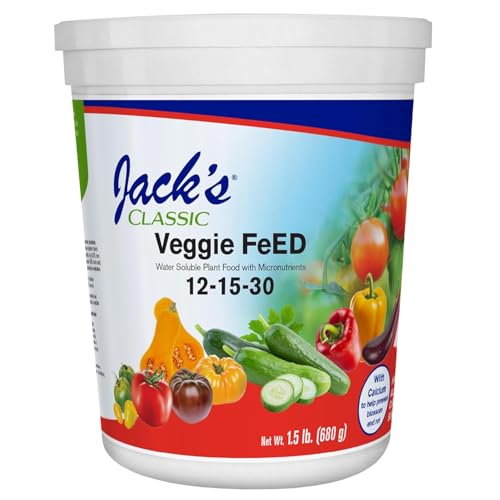
What you actually get at this lower price is a 1.7-pound tub of water-soluble powder with a 12-15-30 analysis — the most potassium-rich option on this list, where the 30 in the last slot means a heavy push for fruit size, flavor, and shelf life. You mix a small measured scoop with water in your watering can and get gallons of liquid feed from that single tub.
What you give up here is organic certification — this is a synthetic mineral salt formula, so it bypasses soil biology and delivers nutrients straight to the roots. Reviewers point out their gardens “respond well” and plants show “blooms and some small tomatoes,” though one reviewer notes the 1.7-pound tub ships across the country and feels expensive for the quantity.
You can use it as a foliar spray (sprayed directly on leaves) or as a root drench, and you adjust the strength each time you water. It is the perfect budget buyer for the gardener who grows a small number of plants and wants precise, rapid results with total control over feeding.
Why we’d pick it
- Highest potassium (30) on the list for bigger, better-tasting fruit
- Water-soluble powder makes multiple gallons from one tub
- Works as both root feed and foliar spray for flexible use
A few caveats
- Synthetic formula — not suitable for organic gardening
- 1.7-pound tub is small compared to granular 4-5 lb bags
6. Espoma Organic Garden-Tone 3-4-4 — Pack of 2

This is perfect for the gardener who wants a versatile, all-season feed for a larger eggplant patch without the hassle of reordering mid-season. The Espoma Organic Garden-Tone 3-4-4 comes as a two-pack, giving you 8 pounds total — double the coverage of the single Tomato-Tone bag.
The 3-4-4 ratio is slightly more balanced for both leafy growth and fruiting, making it versatile for warm-season crops like eggplants, peppers, and squash. Buyers in zone 10b report harvesting 400 pounds of tomatoes and 100 pounds of carrots after switching to Espoma, and one longtime user calls it their “go-to fertilizer” that “doesn’t burn the plants if you over apply.”
The one reason to pick this over the Tomato-Tone is if you have a larger garden and want the convenience of two bags plus the broader 3-4-4 balance. If you specifically worry about blossom-end rot, stick with the Tomato-Tone’s higher 8% calcium — but for general eggplant health, this is a solid choice.
Strong points
- Two-bag pack gives 8 pounds total for season-long feeding
- Contains 5% calcium plus Bio-tone for root health
- Organic and non-burning, safe even if you apply extra
Before you buy
- Lower calcium (5%) than the Tomato-Tone (8%) for rot prevention
- Has a noticeable organic smell after application
7. Greenway Biotech Tomato Fertilizer 4-18-38
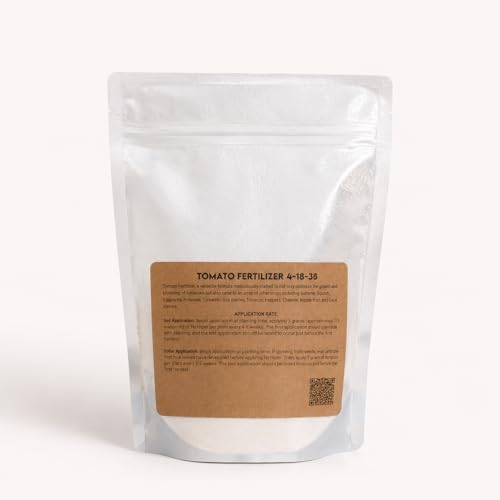
Greenway Biotech 4-18-38 sits at the premium end of the price spectrum, costing more per pound than general-purpose or balanced fertilizers, but its concentrated, water-soluble formula delivers more feed per gram — a 1-pound bag makes roughly 30–50 gallons of solution, making it economical for small-scale growers who want precise control rather than bulk coverage.
It is 100% water-soluble, meaning it dissolves completely with no residue, making it ideal for hydroponic systems, drip irrigation, and foliar sprays. Buyers using it in hydroponic buckets call it “my favorite so far,” noting it mixes easily, dissolves completely, and provides predictable EC (electrical conductivity, a measure of nutrient strength) with minimal pH adjustments needed. One word of caution: a buyer warns it is “extremely strong” and recommends starting with just 1 teaspoon per gallon to avoid burning young plants.
The one clear reason to choose Greenway Biotech 4-18-38 over every other option is if you grow eggplants in a controlled environment — hydroponics, coco coir, or raised beds where you want to dial in every nutrient.
What we like
- 4-18-38 ratio is optimized for fruiting nightshade crops like eggplant
- 100% water-soluble and clog-free for hydroponics and drip systems
- Includes chelated micronutrients for uptake across pH 4-9
The downsides
- Very concentrated — easy to burn plants if you overshoot the dose
- Synthetic formula, not suitable for organic certification
Understanding the Specs
N-P-K Ratio
Every fertilizer label shows three numbers separated by dashes, like 5-10-10. These stand for nitrogen (N), phosphorus (P), and potassium (K). For eggplants, you want a lower first number (to avoid too much leafy growth) and higher second and third numbers (to support blossoms, fruit, and root strength). A ratio like 4-18-38 pushes heavily toward fruiting, while a 3-4-6 is more balanced for general health.
Organic vs. Synthetic
Organic fertilizers (like the OMRI-listed Down To Earth or Espoma formulas) come from natural sources like bone meal, feather meal, and kelp. They feed soil microbes and release nutrients slowly, making them forgiving if you over-apply. Synthetic fertilizers (like Jack’s Classic or Greenway Biotech) are mineral salts that dissolve instantly and give the plant a direct nutrient hit — they work fast but can burn roots if mixed too strong.
Calcium and Blossom-End Rot
Blossom-end rot is a dark, sunken patch on the bottom of eggplant fruit caused by a calcium deficiency in the developing fruit, often due to inconsistent watering. Fertilizers with added calcium (like the Espoma Tomato-Tone with 8% calcium or the FoxFarm Happy Frog) help prevent this by ensuring the plant has a steady calcium supply when fruit is forming most rapidly.
Water-Soluble vs. Granular
Granular fertilizers are dry pellets you sprinkle on soil and water in; they break down over 1-2 weeks, so you reapply every two weeks or monthly. Water-soluble powders dissolve instantly in water and feed the plant the same day — giving you precise control over strength and timing, but requiring mixing before every use. Granular is more convenient for busy gardeners; water-soluble is better for fine-tuning.
FAQ
Can I use a tomato fertilizer on eggplants?
What is the best N-P-K ratio for eggplants?
How often should I fertilize eggplants?
What causes blossom-end rot on eggplants and how can I prevent it?
Final Thoughts: The Verdict
For most gardeners, the best fertilizer for eggplant is the Espoma Organic Tomato-Tone 3-4-6 because it combines a balanced 3-4-6 ratio with 8% calcium to prevent blossom-end rot, in a simple no-mix granular form. If you want to maximize fruit size with precise water-soluble feeding, grab the Jack’s Classic Tomato Feed 12-15-30. And for hydroponic growers or anyone wanting a nightshade-specific high-phosphorus boost, the standout is the Greenway Biotech 4-18-38.