
Specs are compiled from manufacturer listings and verified buyer reviews and can change over time — please confirm the key details on the product page before buying.
You want glossy, deep-purple eggplants, not a leafy bush with no fruit. Eggplants are heavy feeders that need a steady diet of phosphorus (P) and potassium (K) to set fruit. Too much nitrogen (N)—the first number on the bag—and you get a lush plant with zero eggplants. Too little and the leaves yellow and the crop stalls. The right fertilizer for eggplant plants delivers the exact nutrient balance at each growth stage: root development, then flowering, then fruiting.
I’m Rikta — the founder and writer behind Lawn Gear Lab. This guide is built by comparing the manufacturers’ published specifications and the patterns across verified customer reviews, so you get each pick’s real strengths and trade-offs instead of marketing spin.
You need a fertilizer with the right ratio of nitrogen (N, for leaves), phosphorus (P, for roots and flowers), and potassium (K, for fruit size), plus micronutrients like calcium (Ca) to prevent blossom-end rot (a dark, leathery spot on the bottom of the fruit). That is true whether you grow in raised beds, containers, or a traditional garden patch.
Our Picks at a Glance


How To Choose The Best Fertilizer For Eggplant Plants
Eggplants are part of the nightshade family (Solanaceae), meaning they share similar nutritional appetites with tomatoes and peppers. Understanding what the numbers on the bag actually do for your plants is the key to a heavy harvest.
Decoding the NPK Ratio
The three numbers on a fertilizer label (like 5-7-3 or 6-18-6) represent Nitrogen (N), Phosphorus (P), and Potassium (K). Nitrogen drives leafy, green growth — too much and your eggplant becomes a leafy bush with zero fruit. Phosphorus supports strong root development and abundant flowering. Potassium boosts fruit size, flavor, and disease resistance. For eggplants, you want the middle and last numbers (P and K) to match or exceed the first (N). A ratio like 5-7-3 or 4-18-38 is ideal, while a balanced 10-10-10 works in a pinch but requires careful application so the plant does not get too much nitrogen.
Granular vs. Water-Soluble vs. Spikes
Granular fertilizers are worked into the soil and release nutrients over weeks, making them a low-maintenance choice for in-ground beds. Water-soluble powders dissolve instantly in water and deliver nutrients right away — great for container plants and hydroponic setups, but they require more frequent mixing and application. Spikes are pre-measured sticks you hammer into the soil around the plant; they release nutrients slowly for up to 8 weeks. They are the hands-off option with no measuring or mixing involved.
Organic Components That Matter
Organic fertilizers bring more than just NPK. Ingredients like fish bone meal, blood meal, and kelp meal feed the soil’s microbial life, which in turn makes nutrients more available to the plant’s roots. Mycorrhizal fungi (a beneficial fungus that attaches to roots) and beneficial soil microbes (brand names like TruBiotic or Bio-tone) form a symbiotic relationship with root systems, increasing water absorption and nutrient uptake. These extras are especially valuable if you are building long-term soil health in a vegetable garden rather than just feeding a single season’s crop.
Quick Comparison
| Model | Best For | NPK Ratio | Form | Coverage | Amazon |
|---|---|---|---|---|---|
| FoxFarm Happy Frog★ Best Overall | General veggie feeding | 5-7-3 | Granules | 4 lbs | Amazon |
| Jobe’s SpikesTop Performer | No-mess, slow feed | 6-18-6 | Spikes | 18 spikes | Amazon |
| Dr. Earth Home GrownPremium Pick | Organic soil health | — | Powder | 60 sq ft | Amazon |
| Espoma Garden-tone | Monthly organic feeding | 3-4-4 | Granules | 64 oz (2 bags) | Amazon |
| Down To Earth All Purpose | Versatile organic mix | 4-6-2 | Granules | 5 lbs | Amazon |
| Greenway Biotech Tomato | Hydroponics & precise feeding | 4-18-38 | Powder (water-soluble) | 1 lb | Amazon |
| GreenView Multi-Purpose | Large garden coverage | 10-10-10 | Granules | 3300 sq ft | Amazon |
| The Grow Co Fish Fertilizer | Organic liquid feeding | 2-3-1 | Liquid | 160+ gallons | Amazon |
In‑Depth Reviews
1. FoxFarm Happy Frog Tomato & Vegetable Fertilizer 5-7-3
Our pick — over 4.5★ from 600+ verified ratings; the strongest balance of quality and price.
The crowd favorite that turns struggling plants into bloom factories.
This granular formula delivers a 5-7-3 NPK ratio that is perfectly suited for eggplants. The lower nitrogen (5) keeps the plant from wasting energy on excessive leaves, while the higher phosphorus (7) and potassium (3) push flower development and fruit set. It also contains calcium to prevent blossom-end rot (that dreaded black leathery spot on the bottom of your eggplants) and mycorrhizal fungi that form a partnership with the roots to pull in more water and nutrients than the plant could on its own.
Buyers report that after a single application, a struggling zucchini plant was “much happier and has more blooms.” The same pattern holds for eggplants: stronger stems, deeper green leaves, and a noticeable uptick in flowers. The granules have no chemical or fishy smell, making them pleasant to work with in a raised bed or container. What wins people over is plant health — it is the top-mentioned aspect, and owners consistently say their vegetables thrive season after season.
The only real consideration is that, as a granular feed, it works best when mixed into the soil at planting time or scratched into the surface around established plants. It is not a quick-fix liquid for a plant already in distress, but a steady, slow-release foundation for the whole growing season. If you want a single bag that covers tomatoes, peppers, and eggplants with zero guesswork, this is it.
What Owners Love Most
- Contains calcium to prevent blossom-end rot in eggplants
- Mycorrhizal fungi boost root efficiency and water uptake
- No unpleasant smell during or after application
A Note on Use
- Granular form requires working into soil, not a quick liquid drench
- Best applied at planting or early in the season for steady release
Perfect match for: Gardeners who want a proven, balanced granular feed that supports eggplants from seedling to harvest without mixing or measuring.
Think twice if: You need a water-soluble fertilizer for hydroponics or a targeted phosphorus boost for plants already in the flowering stage.
2. Jobe’s Tomato Fertilizer Spikes 6-18-6, 2-Pack
Hammer-and-forget feeding that lasts an entire season.
If mixing and measuring feels like a chore, these pre-measured spikes are the answer. Each spike delivers a 6-18-6 ratio that is heavy on phosphorus (18) — exactly what eggplants need for sturdy root growth and an abundance of flowers. You simply push the spikes into the soil around the plant, and time-release technology feeds the roots continuously for a full 8 weeks per application. There is no runoff, no mess, and no smell.
This is a 6-18-6 mix, with 18 phosphorus versus the FoxFarm’s 7 phosphorus, making it a sharper tool for gardeners focused on maximizing fruit production. Owners mention “bumper crops of tomatoes to the point where I don’t know what to do with them all,” and the same logic applies to eggplants. The spikes are widely used on pepper plants too, which share the same nutritional demands.
The trade-off is that spikes deliver nutrients to a concentrated area around each spike, so they work best when you push them in a circle around the plant’s drip line. If you have very sandy soil, nutrients may leach faster than the spike releases them. And the durability of the spikes themselves gets mixed feedback — they can crumble if the soil is very dry or rocky. But for the sheer convenience of a single application that lasts weeks, these are tough to beat.
Season-long simplicity: The time-release format feeds for 8 weeks, meaning a single application at planting covers most of the growing period. No mixing, no measuring, and no spill risk.
The catch on texture: In dry or rocky soil, the spikes can crumble during insertion. Water the soil first or use a pilot hole with a screwdriver to avoid breakage.
3. Dr. Earth Home Grown Organic Tomato, Vegetable & Herb Fertilizer
The organic powder that revived a yellowing basil plant in 24 hours.
This is not just a fertilizer — it is a soil amendment packed with TruBiotic beneficial soil microbes and mycorrhizae (a beneficial root fungus). Those microbes contribute to drought tolerance and enhanced nutrient availability, meaning your eggplants can access more of what is already in the soil. The organic ingredients come from land and ocean plants, fish, fish bones, and mined minerals — no synthetic ingredients or GMO-infested chicken manure.
The results speak for themselves. One reviewer noted that this fertilizer “revived yellowing, flowering basil in 1 day; new plants in 1 week; pesto in 2 weeks.” For eggplants, the instant availability of nutrients means you see faster greening and more vigorous flowering compared to slow-release granules. It covers 60 square feet per bag, which is enough for several raised beds. A few owners do find it pricey compared to conventional options, though the quality (the most-mentioned positive aspect) keeps people coming back.
A fair warning from experienced growers: you can overdo it. Follow the instructions carefully, because over-fertilizing can create overgrown plants with lots of leaves and very few fruits. This is especially true for eggplants, which are sensitive to nitrogen overload. Apply at planting and then side-dress (sprinkle around the base) monthly for steady, balanced growth.
Microbe-driven feeding: The TruBiotic and mycorrhizal fungi improve root efficiency and drought tolerance, making this more than just NPK — it builds your soil’s long-term health.
Rate-sensitive: More is not better here. Stick to the recommended dose or you risk lush foliage at the expense of fruit production.
4. Espoma Organic Garden-tone 3-4-4, 2-Pack

The two-bag pack that turned a small urban garden into a 400-pound tomato harvest.
Espoma has been in the natural organics game since 1929, and the Garden-tone formula reflects that experience. The 3-4-4 ratio is lower in nitrogen than most general-purpose fertilizers, leaning into phosphorus and potassium for fruit production. It also contains 5% calcium, which helps prevent the blossom-end rot that can ruin an eggplant crop. The Bio-tone formula enhances microbial activity in the soil.
You apply it monthly — just sprinkle around the drip line (the area directly under the outermost leaves) of each plant and water in. No mixing required. One gardener in zone 10b reported an urban garden yielding 400 lbs of tomatoes and 100 lbs of carrots after switching to Espoma products. For eggplants, the steady monthly feeding schedule keeps the plant producing new flowers all season long rather than peaking early and fading. The two-bag pack covers a generous area, making this a strong value play for the organic grower.
The honest trade-off is the smell. The organic ingredients create a noticeable odor when you first apply it, though it fades after watering in. Also, because this is a 3-4-4 ratio, it is a relatively mild feed — plants in very deficient soil may need a stronger starter or a supplemental liquid feed during heavy fruiting.
Monthly rhythm: Apply once a month around the drip line and water in. The 5% calcium is a built-in insurance policy against blossom-end rot on eggplants.
Mild but consistent: The 3-4-4 ratio is gentle enough to use on seedlings without burning, but heavy feeders may need a phosphorus boost during peak flowering.
5. Down To Earth All Natural Organic All Purpose 4-6-2

The all-in-one box that replaces fifteen separate products on the shelf.
Down To Earth’s All Purpose Mix is a 5-pound box of granules with a 4-6-2 formula made from fish bone meal, blood meal, feather meal, rock phosphate, langbeinite (a mineral source of potassium and magnesium), greensand, humates, and kelp meal. It is listed by the Organic Materials Review Institute (OMRI) for use in organic production, so it meets the strictest standards for certified organic growing. The gentle, non-burning formula is ideal for transplants — you can put it right in the planting hole without worrying about root burn.
Customers note that it “revived pale, flimsy tomato plants within two weeks,” and the same responsiveness applies to eggplants. The phosphorus-heavy middle number (6) supports flower set, while the potassium (2) keeps fruit firm and plants disease-resistant. Quality is the most-praised aspect, with owners describing it as a staple that “simplifies organic gardening by replacing 15 separate products.” A 15-pound bag lasts a dedicated gardener nearly an entire season.
The odor is the main point of mixed feedback. The fish-based ingredients produce a noticeable smell right after application, though it dissipates within a few days. If you do not work it into the soil or water it in well, the smell can linger and may attract raccoons or other wildlife. A quick scratch into the top inch of soil and a thorough watering solve that entirely.
Transplant-friendly: The non-burning formula lets you place it directly in the planting hole, giving eggplants a strong phosphorus boost from day one.
Fishy truth: The natural fish ingredients create a temporary odor that vanishes after a few days. Water it in well to keep wildlife away.
6. Greenway Biotech Tomato Fertilizer 4-18-38
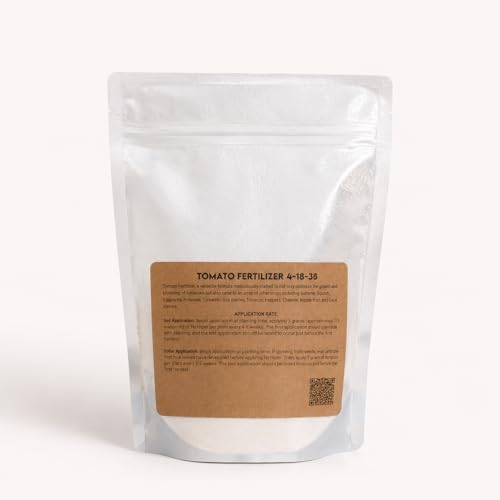
The powerhouse 4-18-38 powder designed specifically for nightshade crops like eggplant.
This is a completely different approach from the granular options above. Greenway Biotech’s 4-18-38 is a 100% water-soluble powder that dissolves fully in water for use in soil, hydroponics, drip systems, and foliar sprays (sprayed directly on leaves). The numbers are striking: very low nitrogen (4) so your eggplants do not waste energy on leaves, moderate phosphorus (18) for root and flower development, and very high potassium (38) which boosts fruit size, flavor, and shelf life. It also includes EDTA-chelated micronutrients — iron, manganese, zinc, copper, boron, and molybdenum — that stay available across a wide pH range of 4 to 9.
This is the top choice for hydroponic growers and anyone who wants precise control over feeding. The recommended rate is 1 to 2 teaspoons per gallon of water every 1 to 2 weeks for soil. But a word of caution from buyers: “this is very strong — fried 3 of 13 plants using 0.75-1.5 tbsp per plant.” Start with the lower end of the recommended rate. One gardener reported their tomatoes reaching “over 8 feet tall” after using this formula, and the same vigor applies to eggplants. The resealable bag is rugged and practical.
The 1-pound bag is concentrated — it covers a lot of plants, but it is not a grab-and-go solution like granules or spikes. You have to mix it every time you water, and measuring precisely matters. If you enjoy fine-tuning your feeding schedule and want maximum fruit production, this is the most effective tool in the list.
Nightshade-tune: The 4-18-38 ratio is engineered for tomatoes, peppers, and eggplants. The high potassium (38%) drives bigger, better-tasting fruit with longer shelf life.
Concentration warning: This is a potent formula. Always start with 1 teaspoon per gallon — more can burn roots and kill plants, as several buyers learned the hard way.
7. GreenView Multi-Purpose Fertilizer 10-10-10, 33 lb

The 33-pound bag that feeds an entire garden, from eggplants to ornamentals.
When you have a large vegetable patch and you need a reliable, budget-friendly fertilizer that covers the whole yard, this 10-10-10 balanced formula is the workhorse. Each 33-pound bag covers 3300 square feet, which is enough for a substantial garden plus flower beds, trees, and shrubs. The granules are non-dusty and non-clumping, making them pleasant to spread with a broadcast spreader or by hand.
The 10-10-10 ratio is perfectly balanced — equal parts nitrogen, phosphorus, and potassium. For eggplants, this means you get steady all-around growth without over-emphasizing any single nutrient. One buyer mentioned that their “vegetables are thriving” and another said their “grass greened up after a few days.” Effectiveness is the most-praised aspect, followed closely by value for money — at this bag size, the cost per square foot is tough to top.
The catch is that a balanced 10-10-10 is not specifically tune for nightshades. Eggplants thrive on a higher phosphorus and potassium ratio, so you may need to supplement with a bloom booster or bone meal during the flowering stage. But as a general-purpose foundation for a mixed garden that includes eggplants alongside flowers, shrubs, and lawn, this bag is a practical and economical choice.
Massive coverage: 33 pounds covers 3300 square feet — one bag handles the whole garden, yard, and flower beds for the season.
Not nightshade-tune: The equal 10-10-10 ratio is good for general use, but eggplants will benefit from an extra phosphorus boost when they start flowering.
8. The Grow Co Organic Fish Fertilizer 2-3-1, 1 Gallon

The liquid fish feed that stinks — and that is exactly why it works so well.
This is a 1-gallon jug of undiluted hydrolyzed fish emulsion (fish processed into liquid form) with a 2-3-1 NPK ratio. The lower nitrogen (2) and higher phosphorus (3) make it ideal for eggplant flowering and fruiting without encouraging excessive leaf growth. The liquid form is versatile: you can use it as a soil drench to improve soil structure and microbial activity, or as a foliar spray that plants absorb directly through their leaves. The 1:100 mixing ratio (about 1.3 ounces per gallon of water) means a single gallon makes over 160 gallons of feed.
The smell is the defining characteristic — and the company is upfront about it: “if it doesn’t smell, then it’s not real fish!” Buyers confirm that “it stinks, and this is good because it’s supposed to stink.” The strong odor does fade after you water it in, but this is not a fertilizer for indoor plants or for gardeners sensitive to fish smells. One experienced grower with 50+ years recommends using rainwater or dechlorinated tap water and heavy mulching to get the best results.
A single bottle goes a long way, but the liquid format requires mixing each time you water. It is not as convenient as spikes or granules for a hands-off gardener. However, for those committed to organic practices and who want a fish-based fertilizer that builds soil life while feeding the plant, this is an exceptional value per gallon of mixed feed.
Gallon goes far: One gallon mixed at 1:100 yields over 160 gallons of ready-to-use fertilizer — enough to feed a large garden all season.
The smell is real: This has a strong, pungent fish odor that dissipates after watering in. Not suitable for indoor use or anyone who cannot tolerate fish smells.
Understanding the Specs
NPK Ratio — The Three Numbers Explained
The three numbers on any fertilizer bag (like 5-7-3 or 4-18-38) stand for Nitrogen (N), Phosphorus (P), and Potassium (K). Nitrogen drives leaf and stem growth; too much and your eggplant becomes a leafy bush with few fruits. Phosphorus supports root development and flower formation — the higher this number, the more blooms you will see. Potassium improves fruit size, flavor, and the plant’s ability to resist disease. For eggplants, look for a middle number (P) equal to or higher than the first (N), with a decent amount of potassium (K) for fruit quality.
Water-Soluble vs. Granular vs. Spikes
Water-soluble powders dissolve instantly in water and deliver nutrients immediately, making them ideal for container plants and hydroponics, but they require frequent mixing. Granules are worked into the soil at planting or side-dressed around plants; they release nutrients slowly over weeks. Spikes are pre-measured sticks pushed into the soil that release a continuous supply of nutrients for up to 8 weeks with no measuring, mixing, or mess — the most hands-off option available.
Organic vs. Synthetic
Organic fertilizers like Dr. Earth, Espoma, and Down To Earth are made from plant and animal byproducts (fish bone meal, kelp, blood meal) and feed the soil’s microbial life as well as the plant. They release nutrients more slowly but build long-term soil health. Synthetic fertilizers (like Greenway Biotech’s powder) deliver nutrients in a form plants can use immediately. They are more precise and concentrated, but do not improve soil structure or microbial diversity.
Calcium and Blossom-End Rot
Blossom-end rot is that dark, sunken patch on the bottom of an eggplant caused by a calcium deficiency. Some fertilizers (like FoxFarm Happy Frog and Espoma Garden-tone) include calcium in the formulation specifically to prevent this. Even with a calcium-rich fertilizer, inconsistent watering is also a common cause — the plant cannot transport calcium to the fruit if the soil goes through wet-dry cycles. Keep the soil evenly moist alongside a calcium-supplying fertilizer for best results.
FAQ
What is the best NPK ratio for eggplant plants?
How often should I fertilize eggplant plants?
Can I use tomato fertilizer on eggplants?
Is organic or synthetic fertilizer better for eggplants?
How do I prevent blossom-end rot on my eggplants?
What happens if I use too much nitrogen on eggplant?
Can I use eggshells or coffee grounds as fertilizer for eggplants?
Should I stop fertilizing eggplant when fruit starts to form?
How do I apply granular fertilizer to established eggplant plants?
How long does a bag of fish fertilizer last?
Final Thoughts: The Verdict
For most gardeners, the fertilizer for eggplant plants winner is the FoxFarm Happy Frog 5-7-3 because it delivers the ideal NPK ratio for fruiting vegetables, includes calcium to prevent blossom-end rot, and comes with mycorrhizal fungi for healthier roots. If you want targeted phosphorus support without any mixing or measuring, grab the Jobe’s Spikes 6-18-6. And for hydroponic or precision feeding where you control every variable, the Greenway Biotech 4-18-38 is the one to reach for.
How We Picked
We do not accept paid placement. Every pick is matched to a real buyer and a real use-case; we do not hands-on test units.
Sources & Methodology
Specifications: manufacturer listings and product documentation. Review insights: verified customer reviews, as of July 2026. Pricing: not shown on this page (it changes often); check the current price via the retailer link.
As an Amazon Associate, Lawn Gear Lab earns from qualifying purchases. This does not affect which products we feature.