
Specs are compiled from manufacturer listings and verified buyer reviews and can change over time — please confirm the key details on the product page before buying.
You want those classic white trumpet-shaped Easter lily blooms, not just a bunch of tall green leaves. The difference depends on feeding them the right fertilizer at the right time. A wrong mix pushes leaf growth while flower buds stay hidden — the exact frustration that sends gardeners searching for a solution.
I’m Rikta — the founder and writer behind Lawn Gear Lab. This guide is built by comparing the manufacturers’ published specifications and the patterns across verified customer reviews, so you get each pick’s real strengths and trade-offs instead of marketing spin.
Whether you are planting new bulbs in the fall or feeding an established patch in the spring, the NPK ratio is the single number that determines whether you get foliage or flowers. This guide cuts through the shelf confusion to find the absolute best fertilizer for easter lilies that actually delivers on its promises.
Our Picks at a Glance


How To Choose The Best Fertilizer For Easter Lilies
Easter lilies are heavy feeders that need a specific nutrient profile to build strong roots in the fall and push out blooms in the spring. The most important factor is the NPK ratio — the three numbers on the bag that tell you the percentage of nitrogen, phosphorus, and potassium. For bulbs, you want a formula where the middle number (phosphorus) is higher than the first number (nitrogen). High nitrogen fuels leafy growth, while phosphorus drives root development and flower formation. That is why a ratio like 4-10-10 or 3-5-4 is ideal, while a lawn fertilizer with a high first number will give you a lot of green stems and zero flowers.
Organic vs. Synthetic Formulations
Organic bulb foods, like those made with bone meal or feather meal, release nutrients slowly as soil microbes break them down. This steady supply is gentle on bulbs and reduces the risk of burning tender roots. Synthetic fertilizers offer a faster nutrient hit, which can push a quick green-up but may not support the long-term soil health that helps bulbs return year after year. For Easter lilies, which you often plant as bulbs hoping for perennial returns, organic blends tend to win over the long haul.
Granules vs. Liquids for Timing
Granular fertilizers are the standard for planting time — you sprinkle them into the hole or work them into the soil surface, and they break down slowly over weeks. A liquid fertilizer, on the other hand, gives you a fast-acting boost that can be applied during the active growing season. If your lilies are already in the ground and look weak, a liquid feed can jump-start them within a week. For most gardeners, a quality granular organic product used at planting and again after blooming is the simplest, most effective approach.
Quick Comparison
| Model | Best For | NPK Ratio | Item Weight | Item Form | Amazon |
|---|---|---|---|---|---|
| Espoma Bulb-Tone 4lb★ Best Overall | Best Overall Organic | 3-5-3 | 4 lb | Granules | Amazon |
| Lilly Miller Bulb & BloomBloom Booster | High-Phosphorus Bloom Boost | 4-10-10 | 4 lb | Powder | Amazon |
| Jobe’s Organics GranularClean Application | Low-Dust Application | 3-5-4 | 4 lb | Granules | Amazon |
| Dr. Earth Bulb Fertilizer | Deep Root Builder | 3-14-2 | 4 lb | Powder | Amazon |
| Cz Garden 4-10-10 | Premium Value Bag | 4-10-10 | 4 lb | Granules | Amazon |
| Fertilome Dutch Bulb Food | Root Development | — | 4.1 lb | Granules | Amazon |
| TPS Liquid Bulb Fertilizer | Fast-Acting Rescue Feed | — | 32 fl oz | Liquid | Amazon |
| Espoma Bulb-Tone 18lb | Large-Garden Value | 3-5-3 | 18 lb | Granules | Amazon |
| Down To Earth Rose & Flower | Multipurpose Garden Feed | 4-8-4 | 25 lb | Granules | Amazon |
In‑Depth Reviews
1. Espoma Organic Bulb-Tone 3-5-3 (4 lb)
Our pick — over 4.5★ from 400+ verified ratings; the strongest balance of quality and price.
The crowd favorite that turns sad bulbs into show-stopping displays.
This 3-5-3 granular blend is specifically listed for use on lilies and gladioli, making it a direct match for Easter lily feeding. The standout detail is the Bio-tone formula — a proprietary mix of natural ingredients that includes 6% calcium, which supports strong cell walls in the bulb. Because it requires no mixing, you simply place it in the planting hole for new bulbs or sprinkle it on the soil surface for established plants and water thoroughly.
Owners rave about the quality of the ingredients and the results. The consensus is clear: this fertilizer finally produced the large blooms they had been chasing. It is also OMRI-listed for organic gardening, so you can feel confident using it around pets and kids. The occasional downside is the odor, which fans of the product acknowledge but shrug off as a small price for the flower show you get in return.
It also has a legitimate edge over the Dr. Earth pick: at 5% phosphorus, it provides a balanced feed compared to the Dr. Earth’s 14%, ensuring the plant puts energy into flower formation rather than just leaves. This is a proven performer across thousands of bags sold, with a loyal following stretching back decades.
What Wins People Over
- Approved for organic gardening with no synthetic chemicals
- Specifically formulated for both spring and fall bulbs including lilies
- Ready-to-use granules eliminate any guesswork or mixing
The Honest Trade-Off
- The organic ingredients create a strong smell that lingers after application
- The 4 lb bag covers a medium garden but large beds will need multiple bags
Reach for it if: you want a proven, organic granular food that covers the whole growing cycle — from planting hole to post-bloom feeding — backed by an undeniable owner consensus on results.
Look elsewhere if: you are extremely sensitive to organic fertilizer smells in your garden shed or garage storage.
2. Lilly Miller Bulb & Bloom Food 4-10-10
The heavy hitter that pours its energy into flowers, not stems.
With a 4-10-10 ratio, this is the most phosphorus-heavy mix on the list — a full 33% more phosphorus than the Espoma Bulb-Tone. That high middle number is exactly what Easter lilies crave when they are setting buds. The combination of phosphorus and potassium here is explicitly designed to produce “bright, vigorous blooms,” as the maker states, and the slow-release formula keeps feeding steadily without a sudden spike.
Buyers report using it specifically on lilies, clematis, and peonies with strong results. One gardener in zone 6 applied it in early spring and again in mid-fall, noting that the natural ingredients give off only a mild bone-meal smell that fades quickly. Another owner switched from a standard 10-10-10 fertilizer and saw noticeably better bulb performance. The main caution is that the smell can attract dogs or mice, so store the sealed bag somewhere critters cannot reach.
A single 4 lb bag goes a long way since you use a relatively small amount per plant, and the resealable packaging helps keep the powder dry between uses. The 4.7-star owner consensus confirms that this is a specialist bloom-builder rather than a general-purpose feed.
Why It Stands Out
- Highest phosphorus-to-nitrogen ratio for maximum bud formation
- Slow-release granular formula feeds for weeks without reapplication
- Natural ingredients produce only a mild, short-lived smell
Things to Know
- The bone-meal base can attract curious pets or wildlife if not stored airtight
- Hard to find in local garden centers — reliable source is online ordering
Best for: the gardener who already has healthy foliage but wants to push their Easter lilies into heavy, show-stopping blooms.
Not ideal if: you have free-roaming dogs that dig in garden beds — the mild bone-meal scent may draw them to the freshly fertilized area.
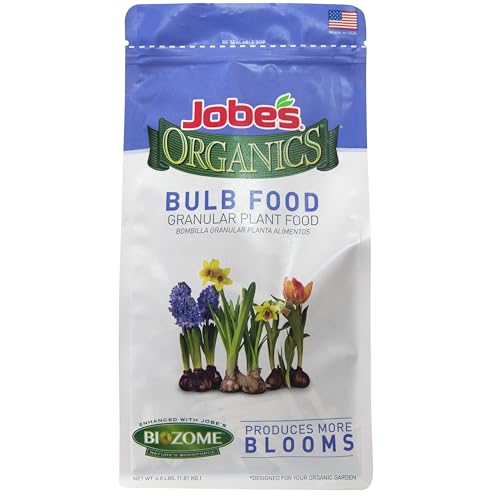
3. Jobe’s Organics Granular Bulb Fertilizer 3-5-4
The easy-to-use organic that cuts down on dust without cutting corners.
Jobe’s forms its granules into small, rounded pieces that produce “lower dust and easier application than most,” according to buyers. That matters when you are crouched over a garden bed trying to measure out the right amount without breathing in fine particles. The 3-5-4 NPK ratio (3 parts nitrogen, 5 parts phosphorus, 4 parts potassium) is well within the balance for lilies, providing enough phosphorus to drive blooms without overdoing the nitrogen.
The formula is OMRI-listed for organic gardening and contains no synthetic chemicals. Owners are impressed with the bloom performance — the most-discussed aspect is the sheer number of flowers it produces. One gardener specifically noted that it “works well with lilies and dahlias.” Application is simple: measure it out, sprinkle it around the base, and water it in. The package recommends feeding every 3-5 weeks during the blooming season, which gives you a clear schedule to follow.
The trade-off is the smell — the organic ingredients (mostly bone meal) have a distinct farmyard odor that some find unpleasant, especially if applied to container plants near a patio. A buyer noted it smells “like chicken poop” and recommended avoiding skin contact. But the garden results make most owners happy to hold their nose.
Honest take: If the dust from other granular fertilizers bothers you, this pelletized version solves that problem cleanly while delivering the same organic bloom-boosting benefits. Just do not expect a scent-free experience.
Grab this if: you hate cloudy dust clouds when measuring fertilizer and want a clean, measurable granular feed for a medium-sized lily bed.
skip it if: your lily pots sit right next to an outdoor dining area — the smell of organic bone meal is not subtle for the first day or two.
4. Dr. Earth 700P Organic Bulb Fertilizer 3-14-2

The specialist that sinks its energy into roots so blooms follow naturally.
With a 3-14-2 mix, this has the highest phosphorus content of any pick here — at 14% phosphorus versus the Espoma Bulb-Tone’s 5%. That extreme phosphorus number is targeted at one thing: building a massive, healthy root system before the plant ever sends up a flower stalk. For Easter lilies, which need a strong foundation to support those tall stems and heavy blooms, that root-first approach makes real sense.
Dr. Earth also targets a soil pH of 6.5, which is right in the neutral-to-slightly-acidic zone that lilies prefer. The formula is 100% organic and marketed as “people and pet safe” once worked into the soil. Owners who planted over 200 tulip and daffodil bulbs reported that a single 4 lb bag was sufficient for that many bulbs, even in poor, windy soil. Another gardener noted that using it on caladiums produced “beautiful and quick” blooms, crediting the rich organic worm casting base.
Because the phosphorus is so dominant, this is best used at planting time or early spring rather than as a mid-season boost. The very high phosphorus can also mean it is less versatile for other garden plants compared to a balanced formula like the 4-8-4 mix from Down To Earth.
Where It Excels
- Extremely high phosphorus (14) for deep, sturdy root development
- Targets a specific soil pH of 6.5 — ideal for Easter lily beds
- One bag covers a massive planting of over 200 bulbs
A Realistic Look
- Not the best choice for mid-season feeding when the plant needs more balanced nutrition
- The bag can arrive with a small pinhole tear due to the powdered form
Ideal for: the fall planting window when your primary goal is to establish a massive root system so the Easter lily returns stronger every year.
Consider another if: you need one fertilizer that works equally well on lilies, vegetables, and roses — the extreme phosphorus is less flexible than a balanced organic blend.
5. Cz Garden Supply 4-10-10 Bulb and Bloom Fertilizer

The 4-10-10 powerhouse that even bougainvillea owners switch to.
This Cz Garden blend matches the Lilly Miller ratio at 4-10-10 but adds a unique twist: 2% iron plus micronutrients. Iron is a crucial trace element that helps plants produce chlorophyll, which keeps lily leaves a deep, healthy green while the phosphorus does the bloom work. That extra iron is a meaningful differentiator if your garden soil is alkaline enough to lock up iron availability, causing yellowing leaves on your lilies.
It comes in a heavy-duty resealable pouch that makes pouring and storage far easier than a bag you have to roll down. The owner feedback is outstanding — the most-mentioned aspect is its effectiveness on a wide range of plants beyond bulbs. One owner reported that their bougainvillea “blooming and growing amazing” after switching from another brand, and another saw transplanted peonies produce “taller, fuller, and significantly more buds” after just one season.
The only catch is that this is a newer product in the market, so it does not have the decades-long track record of Espoma. However, the 4.8-star early consensus suggests it is delivering on its promises right out of the gate.
The short version: A modern, well-formulated 4-10-10 with the added iron bonus that existing lily growers are adopting as their new go-to. The resealable pouch is a genuinely better packaging solution than the standard bag.
Choose this if: you want the highest-performing 4-10-10 ratio with the added benefit of iron for greener foliage and a premium packaging experience.
Stick with a classic if: you prefer a brand with a 45-year track record and want the reassurance of countless long-term reviews.
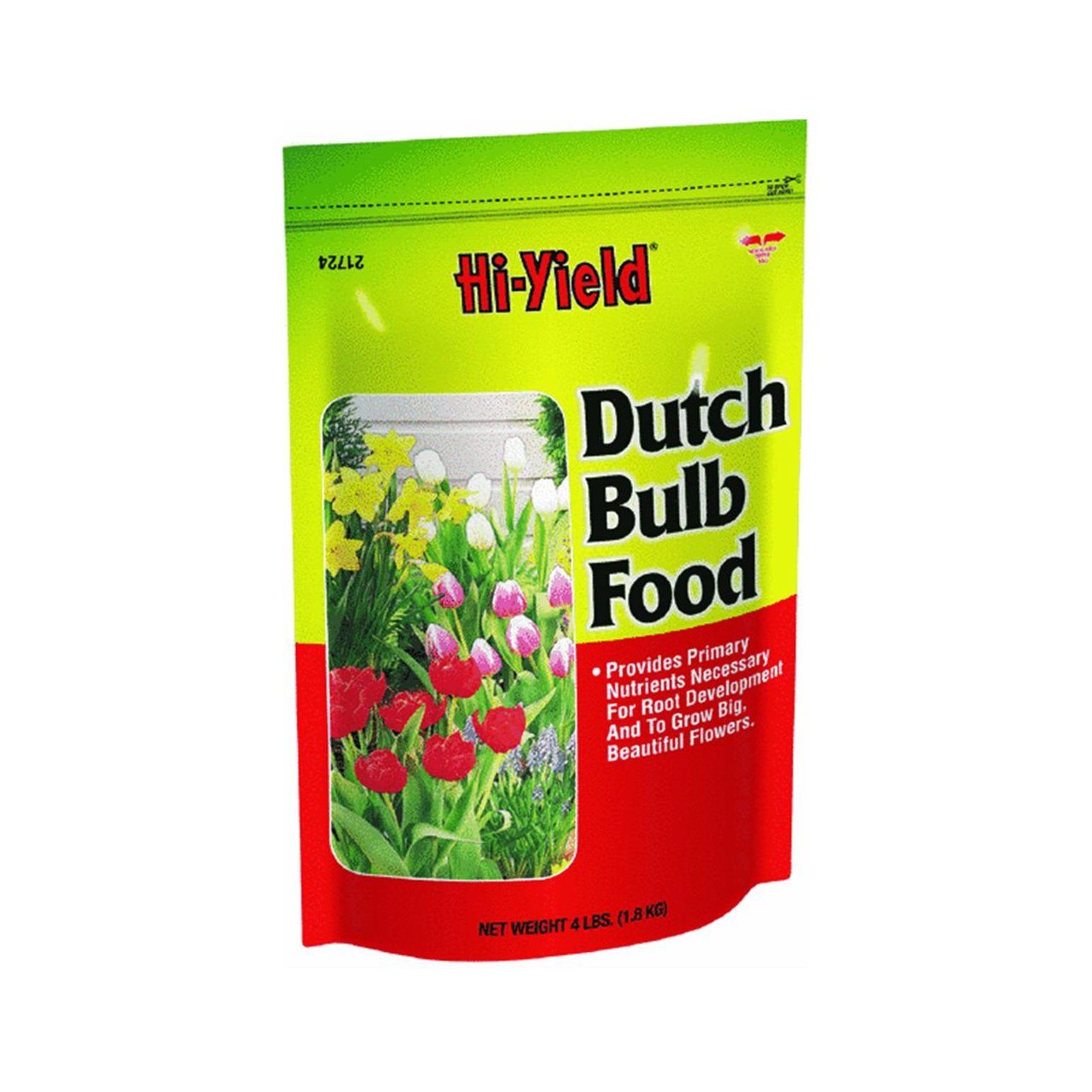
6. Fertilome Dutch Bulb Food 4 lb
The professional-grade feed that growers trust for large-scale bulb beds.
This is the exact fertilizer that a wholesale bulb supplier sells to commercial growers, which gives it an immediate credibility signal. It is specifically designed for use with all types of flowering bulbs at planting time, with clear coverage instructions: 4 cups per 50 square feet for established areas, or 3/4 cup per 10 square feet for new plantings. That precision makes it easy to calculate exactly how much you need for your lily bed.
The formula prioritizes proper root development, which is the foundation of a strong bloom cycle. Owners who used it noted that the directions call for such a small amount that a single 4.1 lb bag stretched much further than expected. One gardener who manages “harsh” land with beds that require twice-yearly replenishment trusts this brand over cheaper alternatives because the wholesale supplier recommends it.
The bag is slightly heavier than the standard 4 lb options, giving you a small extra amount per purchase. It is a no-frills product — straightforward application, no organic certification, but a solid reputation among serious bulb growers who need predictable results at scale.
Bottom line: If you want the same food the pros use and you are managing a larger lily planting, this is the pragmatic choice. The packaging is basic, but the formula inside is vetted by commercial bulb growers.
Best for: gardeners with multiple bulb beds who want a trusted, results-driven formula from a name that commercial growers stand behind.
Probably not for: anyone who insists on organic certification — this is a conventional granular bulb food without an organic label.
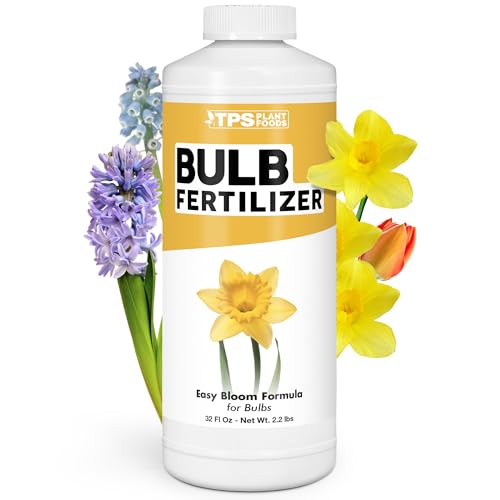
7. TPS Liquid Bulb Fertilizer 32 oz
The emergency boost that has sad lilies pushing new green within a week.
This is the only liquid entry on the list, and it serves a very different purpose from the granular picks. When your Easter lily is already in the ground but looks weak, stunted, or pale, a liquid feed delivers nutrients directly to the root zone within days rather than weeks. One owner reported that their “previously unhappy lilies” put out a ton of new greenery within just a week of application — that kind of speed is simply not possible with a granular slow-release product.
The formula is balanced for bulb plants with seaweed micronutrients, designed to support both rooting and spring bloom performance without overstimulating the bulb during its dormant period. It is suitable for garden beds, borders, and seasonal plantings, and it is made in the USA. Owners say their bulbs were “gorgeous this year” and that the product directly led to more flowering stems.
The honest counterpoint is that for large bulb plantings, the liquid form becomes impractical and expensive compared to granular. One owner pointed out that the Espoma Bulb-Tone is more affordable and practical for feeding dozens of bulbs at once. This liquid excels as a targeted rescue feed for a handful of special lilies, not as your primary garden-wide fertilizer.
What Makes It Unique
- Fast-acting liquid delivers visible results in as little as one week
- Seaweed micronutrients support overall plant health beyond just NPK
- Do not store an open bag — just mix what you need from the bottle
The Trade-Off
- Not cost-effective or practical for feeding large beds or dozens of bulbs
- Some owners found results underwhelming compared to a good granular alternative at a fraction of the cost
Reach for it when: your potted Easter lily looks weak and you need a quick turnaround — think of it as the emergency room for neglected bulbs rather than the daily multivitamin.
Choose a granular instead if: you are feeding a whole garden bed of lilies and want the most economical, long-term solution.
8. Espoma Organic Bulb-Tone 3-5-3 (18 lb)

The same proven formula at 4.5 times the size for serious gardeners.
This is the exact same 3-5-3 Bulb-Tone formula as the 4 lb bag, but scaled up to 18 pounds for gardeners with extensive beds. If you plant a lot of bulbs — not just Easter lilies but also daffodils, tulips, irises, and hyacinths — this bulk bag saves you the trouble of reordering midway through the season. The ingredients are identical: the Bio-tone formula, 6% calcium, and the OMRI-listed organic certification.
The owner feedback mirrors the smaller bag: effectiveness is the most-praised trait, followed by the value for money you get at this larger size. One long-term owner used it to kick-start irises that “hadn’t bloomed in three years,” finally seeing flowers after following the application directions. Another gardener reported that their spring bulbs were “full of blossoms” after switching to this feed. The formula remains environmentally safe with no sludges or toxic ingredients.
The main consideration is storage — 18 pounds of granular fertilizer takes up real shelf space in your garage or garden shed. The bag must be kept dry, and if you only have a few lily plants, the smaller bag is the smarter choice to avoid dealing with a half-used bag for years.
Smart move if: you have a large bulb garden with dozens of plants and already know you love the Espoma Bulb-Tone formula. The cost-per-pound saving makes this the economical choice for the committed gardener.
Perfect for: the gardener with a substantial bulb collection who goes through multiple bags of fertilizer each season and wants the best value for the proven organic formula.
pass on it if: you are feeding a handful of potted lilies — the 4 lb bag will last you several seasons without going stale.
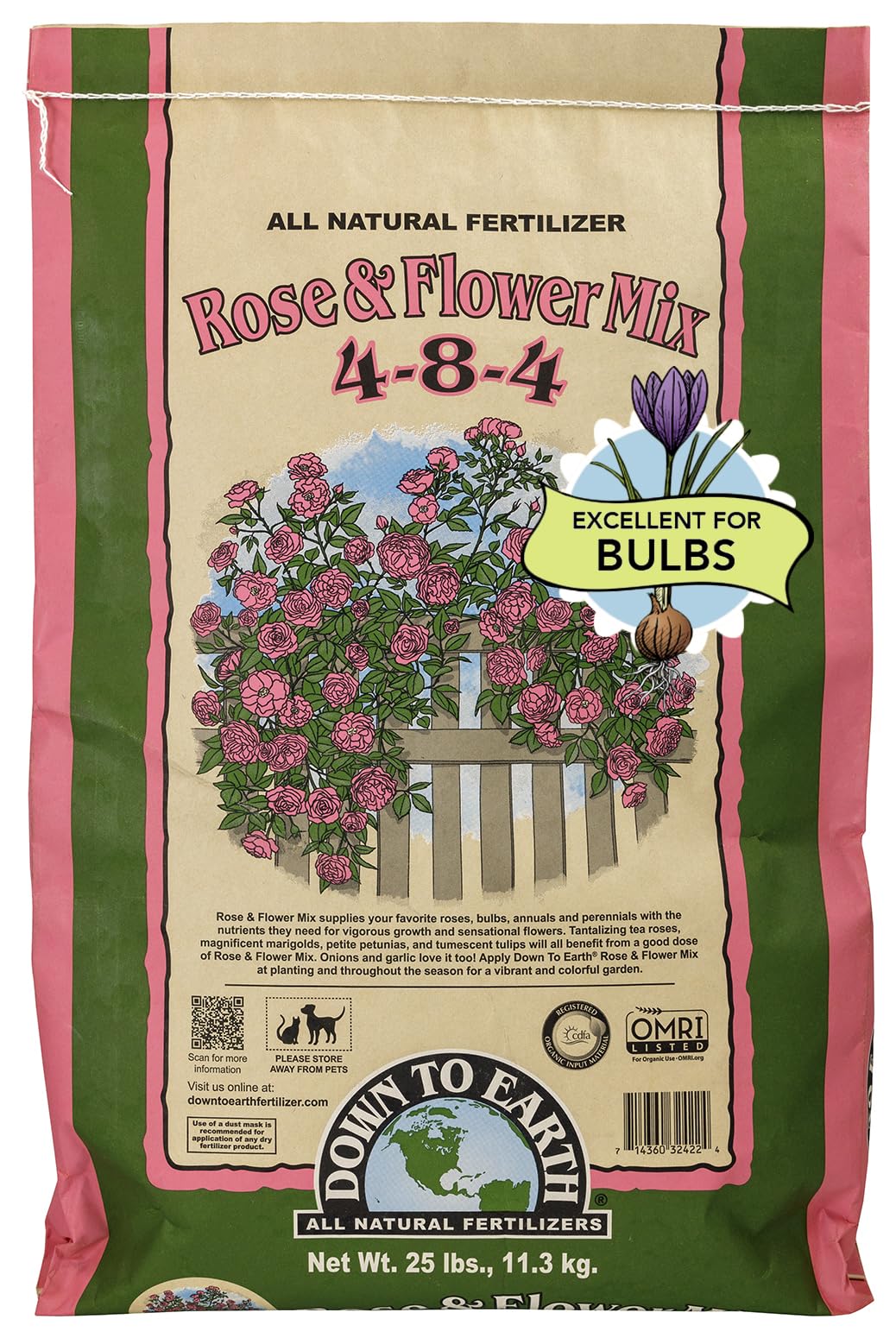
9. Down To Earth Organic Rose & Flower Mix 4-8-4 (25 lb)
The huge-value bag that feeds your whole flower garden, not just the bulbs.
With a 4-8-4 ratio, this is a more balanced flower food than the specialized bulb mixes. The phosphorus is still higher than the nitrogen, keeping it in the bloom-friendly zone, but the numbers are moderate enough that you can safely use it on roses, perennials, ornamentals, and container gardens. The ingredient list reads like an organic gardener’s wish list: feather meal, fish bone meal, alfalfa meal, greensand, langbeinite, basalt, sulfate of potash, zinc sulfate, and kelp meal.
Owners are emphatic about the results — one gardener with over 90 roses called it “better than anything I’ve ever tried” and noted that it fixed yellowing leaves on dahlias and roses. The 25 lb bag is massive, giving you enough feed for an entire season of flower garden maintenance. For Easter lilies, the 4-8-4 ratio provides ample phosphorus for blooms while the calcium, sulfur, zinc, and iron support overall plant vigor.
The catch is the sheer size. Unless you have a substantial garden, a 25 lb bag will take years to use, and organic fertilizers can lose potency over time. It is also heavier to haul and store than the compact 4 lb bags. But if you are maintaining a large flower garden with lilies, roses, and perennials, this is the most economical all-in-one solution available.
The Big Advantage
- Exceptionally rich ingredient list with nine organic nutrient sources including kelp and greensand
- Versatile 4-8-4 formula works for roses, lilies, vegetables, and container plants alike
- Massive 25 lb bag covers an entire large garden for a full growing season
The Practical Reality
- Overkill for small gardens — will take years to use up and may degrade in storage
- Physical weight of the bag makes it cumbersome to move and store
Choose it if: you maintain a diverse flower garden and want one single organic fertilizer that feeds your Easter lilies, roses, and perennials all season long without buying multiple products.
Pick a smaller bag if: your entire garden is a few lily pots on a patio — the 25 lb size will outlast the fertilizer’s freshness.
Understanding the Specs
NPK Ratio — The Three Numbers
Every fertilizer bag displays three numbers, like 3-5-3. The first number is nitrogen, which drives green leaf growth. The second is phosphorus, which fuels root development and flower formation — this is the number you want to be high for Easter lilies. The third is potassium, which supports overall plant health and disease resistance. A bloom-focused bulb food will always have a middle number that is higher than the first, so the plant puts its energy into flowers rather than leaves.
Granular vs. Liquid Form
Granular fertilizers are dry pellets or powders that you sprinkle into the soil. They break down slowly over weeks or months, providing a steady nutrient supply. Liquid fertilizers are mixed with water and applied directly to the soil or foliage. They act within days but need to be reapplied more often. For Easter lilies planted in the ground, granules are the standard choice for initial feeding. A liquid feed becomes useful as a quick rescue for potted lilies that show signs of nutrient stress during the growing season.
Organic Certification (OMRI)
The Organic Materials Review Institute (OMRI) seal means a product is approved for use in certified organic food production. For Easter lilies, an OMRI-listed fertilizer gives you the assurance that the ingredients are natural, contain no synthetic chemicals, and are safe for soil microbes, pets, and children who might play in the garden. The trade-off is that organic fertilizers tend to smell stronger than synthetic ones, especially those based on bone meal or feather meal.
Calcium and Micronutrients
Calcium is a secondary nutrient that is critical for Easter lilies. It strengthens cell walls in the bulb, which helps the plant support the weight of its tall flower stalks. Some bulb foods include calcium explicitly on the label, like Espoma’s 6% calcium content. Other micronutrients like iron, zinc, and sulfur support chlorophyll production and overall plant metabolism. A fertilizer with added micronutrients can make the difference between a good bloom and a spectacular one.
FAQ
When should I fertilize my Easter lilies?
Can I use a general flower fertilizer on Easter lilies?
How much fertilizer does one Easter lily bulb need?
What happens if I use a high-nitrogen fertilizer on lily bulbs?
Is organic fertilizer better than synthetic for Easter lilies?
Can I fertilize potted Easter lilies the same way as garden lilies?
How long does a 4 lb bag of bulb fertilizer last?
Will bulb fertilizer attract animals?
Can I use bulb fertilizer on other spring flowers?
What is the difference between 3-5-3 and 4-10-10 bulb food?
Final Thoughts: The Verdict
For most gardeners, the fertilizer for easter lilies you can trust most is the Espoma Organic Bulb-Tone 3-5-3 because it has the longest track record, the clearest owner support, and the organic certification that keeps your garden chemical-free. If your lily bed is already established and you want the strongest possible bloom push, grab the Lilly Miller Bulb & Bloom 4-10-10 with its high-phosphorus formula. And for the gardener with a large mixed flower garden, the Down To Earth Rose & Flower 4-8-4 in the massive 25 lb size is the one to reach for — it feeds everything from lilies to roses in a single economical buy.
How We Picked
We do not accept paid placement. Every pick is matched to a real buyer and a real use-case; we do not hands-on test units.
Sources & Methodology
Specifications: manufacturer listings and product documentation. Review insights: verified customer reviews, as of July 2026. Pricing: not shown on this page (it changes often); check the current price via the retailer link.
As an Amazon Associate, Lawn Gear Lab earns from qualifying purchases. This does not affect which products we feature.