
Specs are compiled from manufacturer listings and verified buyer reviews and can change over time — please confirm the key details on the product page before buying.
A desert rose (Adenium obesum) is a patient plant — it will hold back flowers for years if the nutrition is not right. The most common frustration among owners is a lush, green bush that stubbornly refuses to bloom. The culprit is almost always a fertilizer with the wrong ratio of nutrients, something too heavy in nitrogen that pushes leaves instead of blossoms. The right mix, on the other hand, can coax a stubborn desert rose into producing its first flush of trumpet-shaped flowers in weeks, not seasons.
I’m Rikta — the founder and writer behind Lawn Gear Lab. This guide is built by comparing the manufacturers’ published specifications and the patterns across verified customer reviews, so you get each pick’s real strengths and trade-offs instead of marketing spin.
Coaxing a first bloom from a three-year-old cutting or maintaining a mature bonsai-form caudex (the thick, swollen trunk where the plant stores water) depends on the right NPK (nitrogen-phosphorus-potassium) balance, a convenient form, and proven results from fellow owners. Here are the picks that deliver.
Our Picks at a Glance

How To Choose The Best Fertilizer For Desert Rose
Choosing a fertilizer for a desert rose is different from feeding most houseplants. These succulents store water and nutrients in their thick caudex, so they are very sensitive to overfeeding and the wrong nutrient ratios. Focus on these three factors first.
NPK Ratio (Nitrogen-Phosphorus-Potassium): Lower Nitrogen, Higher Phosphorus and Potassium
The three numbers on a fertilizer label — nitrogen (N), phosphorus (P), and potassium (K) — tell you what the plant will use most. For a desert rose, too much nitrogen produces lots of soft green leaves at the expense of flowers and a thick caudex. You want a ratio where P and K are higher than N, like 3-1-2 or 2-4-8. Phosphorus supports the root system and flower bud formation, so your plant sets more blooms. Potassium strengthens the plant’s cells and helps it resist drought stress, so the leaves stay firm even in dry spells.
Form Factor: Liquid, Granular, or Capsule
The form you choose determines how often you need to feed and how quickly the plant gets the nutrients. Liquid concentrates act fast — the plant can absorb them within a day or two — but they require mixing and frequent application (every other watering). Granular or powder formulas release nutrition slowly over several months, which is easier for set-and-forget care, but results take longer to show. Capsule spikes are even simpler: you push one into the soil and water, and the slow-release action feeds the roots for weeks. Pick the form that matches how hands-on you want to be.
Micronutrients and Organic Ingredients
Beyond the main NPK numbers, look for a blend that includes secondary nutrients and trace elements. Calcium and magnesium help prevent issues like blossom-end drop and keep leaves a healthy green. Zinc, iron, and kelp extracts (natural growth promoters from seaweed) support root development and vibrant flower colors. Organic options like worm castings, humic acids, and beneficial soil microbes improve the soil structure over time, making it easier for the desert rose to take up everything it needs without the risk of salt buildup that synthetic fertilizers can cause.
Quick Comparison
| Model | Best For | NPK Ratio | Form | Total Volume / Servings | Amazon |
|---|---|---|---|---|---|
| Succulent Fertilizer by HiThrive★ Best Overall | Multi-succulent feeding, large batch | Balanced (N-P-K) | Liquid | 16 fl oz (makes 32 gal) | Amazon |
| Gardenera Premium Liquid Desert Rose FertilizerPremium Pick | Targeted desert rose feeding, mini-oasis bloom | 3-1-2 | Liquid | 8 fl oz (makes 8 gal) | Amazon |
| Gardenera Seaweed & Kelp SuperfoodStress Recoverer | Stress recovery, caudex development | Organic kelp (low NPK) | Liquid | 8 fl oz (makes 45 gal) | Amazon |
| Grow Queen Organic Cactus & Succulent Fertilizer | Organic slow-release, no-mess application | Balanced (N-P-K) | Powder (single-serve packets) | 7 pkts (28 plants / 8 months) | Amazon |
| Down To Earth Organic Cactus Mix 2-4-8 | Strong root + bloom development, organic granular | 2-4-8 | Granules | 5 lb | Amazon |
| TPS Nutrients Desert Rose Fertilizer | Reviving stubborn non-bloomers, caudex health | N-P-K balanced | Liquid | 32 fl oz | Amazon |
| EarthPods Organic Succulent Spikes | No-mess, long-term hands-off feeding | Organic slow-release | Capsules | 100 capsules | Amazon |
| TPS Nutrients Cactus Fertilizer 1 Gal | Large collection feeding, biggest volume | N-P-K balanced | Liquid | 128 fl oz (1 gal) | Amazon |
In‑Depth Reviews
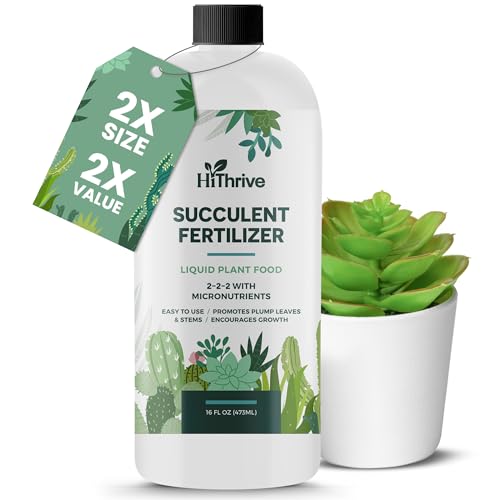
1. Succulent Fertilizer by HiThrive
Our pick — over 4.5★ from 200+ verified ratings; the strongest balance of quality and price.
The liquid all-rounder that brings every succulent in your collection back to life.
This 16-ounce bottle makes up to 32 gallons of finished fertilizer — a 2.0x volume advantage compared to the 8-ounce Gardenera specialist. That means one bottle handles a whole windowsill of aloe, jade, string of pearls, and desert rose cuttings for months. The macronutrient base is packed with nitrogen for leaf color, phosphorus for strong roots, and potassium for overall resilience, plus micronutrients like calcium, magnesium, and zinc that fix shriveled leaves and weak foliage. Owners note that the bottle lasts much longer than it looks because the mixing ratio is a tiny half-capful (1/4 teaspoon) per quart of water. The crowd favorite rating — 4.7 across hundreds of owners — backs up the claim: agave plants show “better growth and healthy leaves” within a few feedings. If you have more than one type of succulent on your shelf, this is the single bottle to buy.
What wins people over is the sheer speed of turnaround. Reviewers report that plants bouncing back from shriveled, dull leaves look “great” after the second order. The only real limit here is that it is a generalist formula — if your desert rose specifically needs a higher phosphorus push for blooms, you might supplement with a dedicated bloom booster. But for everyday health across the whole succulent family, this hits the mark.
What Owners Love
- Massive 32-gallon yield from a single 16-ounce bottle — best value per feeding here
- Rich in calcium, magnesium, and zinc to correct leaf shriveling and weak roots
- Extremely simple mixing: just half a capful per quart of water
The Trade-Off
- General succulent formula, not tune for the specific NPK a desert rose needs to trigger blooms
- Liquid form requires mixing every feeding — not a set-and-forget option
Reach for This: Pick this if you have multiple succulents, cacti, and desert roses and want one liquid that keeps them all healthy and growing.
Bloom Purists Look Elsewhere: Its balanced NPK will not force a stubborn non-bloomer into flower as effectively as a higher-phosphorus specialist like the Gardenera 3-1-2.
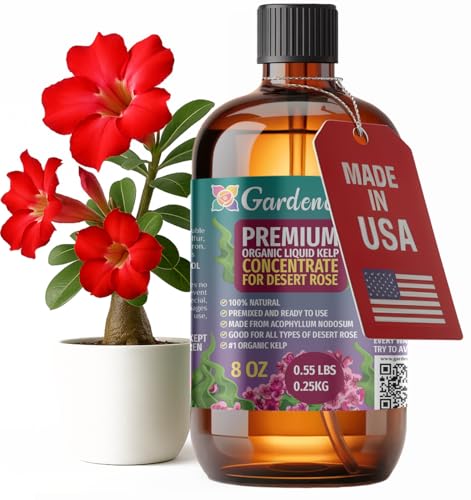
2. Gardenera Premium Liquid Desert Rose Fertilizer
The exact formula designed for desert roses — and owners say it finally makes them flower.
This is the specialist in the lineup, built specifically for Adenium obesum with a targeted 3-1-2 NPK ratio. The lower nitrogen prevents the plant from pouring energy into leaves, while the higher potassium supports that thick, bulbous caudex and the phosphate pushes flower buds. The mixing ratio is simple: 1 teaspoon per gallon of water, applied every other watering. Buyers report a desert rose that had never flowered since 2020 finally produced its first bloom after switching to this concentrate. The organic formulation commits to no artificial elements, which matters for a plant that stores water and nutrients in its caudex — synthetic salt buildup is a real risk with general-purpose fertilizers. At 8 fluid ounces, it makes roughly 8 gallons of feeding solution, so you are paying for precision, not volume.
The most common praise is that a young desert rose shows “a big difference in growth” quickly, and the bottle is a favorite among Adenium enthusiasts. The honest limit here is volume: 8 ounces is half the size of the HiThrive bottle (which is also cheaper per ounce), so if you have a large collection, you will reorder more frequently. It is the right pick when you want a formula that is dialed in for desert roses specifically and are willing to pay a slight premium for that focus.
Blooms Guarantee: Owners with a desert rose that “never flowered” finally saw blooms after using this 3-1-2 mix as directed every other watering.
Small Bottle, Big Impact: The 8-ounce bottle is compact, but the concentrate is strong — follow the 1 tsp per gallon ratio and it lasts several months for a single plant.
Reach for This When: You have one or two desert roses that are stubborn about blooming and you want a formula built specifically for their needs.
Look Elsewhere If: You need to feed a large collection of mixed succulents — the smaller volume per dollar means you will buy more frequently than with the HiThrive bottle.
3. Gardenera Premium Organic Seaweed & Kelp Superfood
A kelp-based rescue formula that brings struggling plants back from the brink.
This 8-ounce bottle of liquid kelp concentrate makes an impressive 45 gallons of finished solution — far more diluted than a standard NPK (nitrogen-phosphorus-potassium) fertilizer because its job is different. Made from premium Ascophyllum Nodosum seaweed, it delivers natural growth hormones called cytokinins and auxins (which stimulate cell division and root growth), amino acids (protein building blocks for plant cells), and trace minerals that support root development, cell division, and stress tolerance. For a desert rose that has been through a freeze, a repotting shock, or a pest issue, this is the restorative boost. Owners describe a plant that was “80% brown” turning green within days and pushing out new growth. The gentle, non-toxic formula is safe for regular use without burning roots, and the cost-effectiveness is extreme: 45 gallons from a single bottle means you are feeding for a full season.
The catch is that this is a supplement, not a full fertilizer. It is very low in NPK, so it will not provide the phosphorus or potassium needed to trigger heavy blooming on its own. Use it alongside a dedicated desert rose fertilizer like the one above. For a desert rose that needs root recovery or general vigor, owners say this “brought my plant back to life” with visible results in leaf color and new shoots within weeks.
Recovery Specialist: One owner reported their aloe, stressed and nearly dead, became “enormous” after consistent use of this kelp formula.
Supplement, Not a Standalone: Low NPK means it is perfect for stress tolerance and root health, but you will still need a bloom-focused fertilizer for flowers.
Best for Rescues: Use this when your desert rose is recovering from stress, transplant shock, or looking pale — the kelp hormones accelerate root and leaf recovery fast.
Not for Bloom Boosting: If your goal is more flowers, pair this with a higher-phosphorus liquid fertilizer like the Gardenera 3-1-2 instead of using it alone.
4. Grow Queen Complete Organic Cactus & Succulent Fertilizer
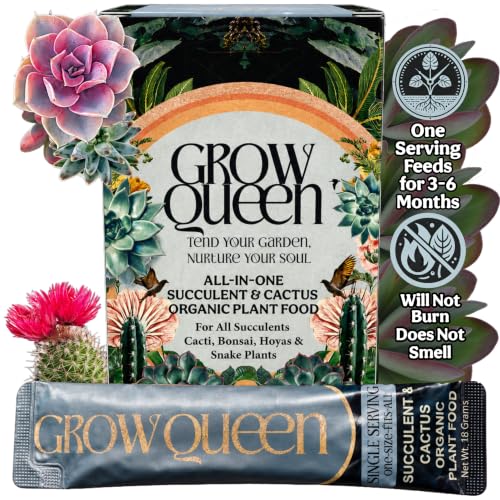
The mess-free organic that does the work for months after a 20-second application.
There is a quirk worth knowing: the formula is so biologically active that a mold-like film of beneficial microbes may appear on the soil surface after application. It is harmless and actually healthy, but it can be a surprise if you are not expecting it. Mix it into the top layer if the look bothers you. The powder format is odorless, making it ideal for indoor use even on a desk or bookshelf.
easy Feeding
- One packet feeds for up to 8 months — no mixing, no measuring, no monthly reminders
- OMRI-listed organic, vegan, non-toxic, and safe around pets and kids
- Contains living beneficial soil microbes that improve root health long-term
One Adjustment
- Beneficial microbes may create a visible film on the soil surface that looks like mold (harmless but off-putting)
- Powder is slow-release — you will not see results as quickly as with a liquid concentrate like the HiThrive
Set-and-Forget Winner: Choose this if you want the easiest possible feeding schedule — push a packet in every 6 months and let the soil microbes handle the rest.
Skip for Immediate Results: If your desert rose is looking sick today and you want a fast revival, you will get faster results from a liquid fertilizer.
5. Down To Earth Organic Cactus & Succulent Mix 2-4-8
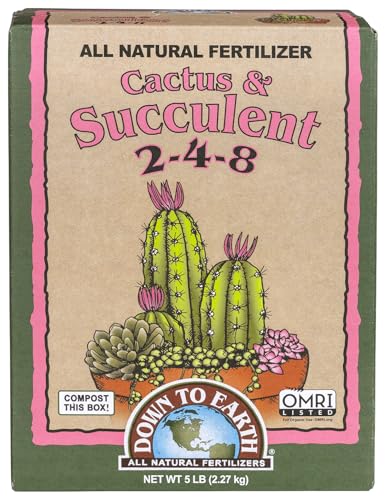
The granular load that forces strong roots and vivid blooms with a 2-4-8 punch.
This five-pound bag of granules delivers the highest phosphorus and potassium ratio on the list (2-4-8), which is exactly what a desert rose needs to prioritize flowers over leaves. The NPK is deliberately low in nitrogen to prevent the stems from stretching and to keep the caudex compact and thick. OMRI-listed for organic gardening, it contains no synthetic chemicals. The granules are sprinkled onto the soil surface and watered in, where they break down slowly over several weeks, providing steady nutrition without the risk of salt burn that liquid concentrates can cause if overused. Customers note that their cacti and succulents show “lots of new growth” and that the brand’s reputation for quality is backed by consistent results across agaves, jades, and echeverias.
The honest caveat is that the granules do not dissolve completely — they are particle-sized and can clog a watering can with a fine rose tip. A few owners recommend keeping a cheap plastic can dedicated to this fertilizer. Also, no scoop is included, so you will need your own measuring spoon for the correct dose. For a large collection of desert roses in pots, the 5-pound bag offers months of feeding at a per-feeding cost that beats every liquid on this list, including the HiThrive bottle.
Flower-Focused Ratio: The 2-4-8 mix is the most bloom-oriented on this list — higher phosphorus and potassium with minimal nitrogen to prevent leafy growth.
Granule Grit: The particles do not fully dissolve; use a simple plastic watering can to avoid clogging a fine rose sprayer.
Go With This For: A large collection of desert roses and cacti where you want heavy blooms and a thick caudex without nitrogen-driven leafiness.
Pass If: You prefer the convenience of pre-measured doses — you will need to DIY a scoop and accept minor particles in your watering can.
6. TPS Nutrients Desert Rose Fertilizer
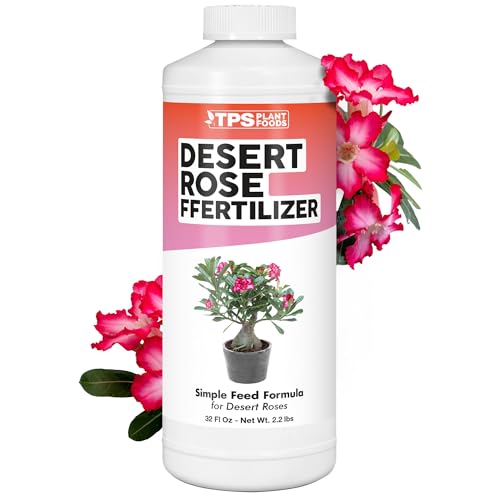
The liquid lifeline for a desert rose that has never bloomed in years.
This 32-ounce bottle from TPS Nutrients is twice the volume of the Gardenera specialist and is specifically formulated to support blooms and caudex development without overstimulating the roots. Owners tell a consistent story: a desert rose that had not flowered in five years produced new leaves in days after one application, and the plant looked “healthier” overall. The 1:32 mixing ratio means each full bottle goes a long way — much further than the 8-ounce Gardenera competitor. The formula is designed for both indoor and outdoor potted plants, so it works on a patio in warm climates as well as on a windowsill. The customer rating is excellent, with the top outcomes being richer blooms and visibly sturdier plant structure within one to two feedings.
The catch here is that the bottle is large enough that you might have it for a while, and if you only have one small desert rose, you may not use it before the concentrate loses potency (though liquids generally store well in a cool, dark place). A small number of owners had a lukewarm experience — one switched back to a different brand after not seeing the results they wanted. But the overwhelming testimony is that this is the one that finally made “drama queen” plants bloom for the first time.
Five-Year Bloom Breakthrough: Owners of a desert rose that had never produced flowers in five years saw “new leaves within days” and a healthier plant after a single dose.
Big Bottle Value: At 32 ounces, this offers four times the liquid volume of the Gardenera specialist, making it a better buy for multiple plants.
Best for Stubborn Plants: If your desert rose has a history of refusing to bloom or looks like it is slowly declining, this is the formula owners turn to first.
Not for the Impatient: A few reviewers point out slower results — if you want instant flowers, consider the Down To Earth 2-4-8 granular with a higher phosphorus load.
7. EarthPods Organic Succulent & Cactus Fertilizer Spikes
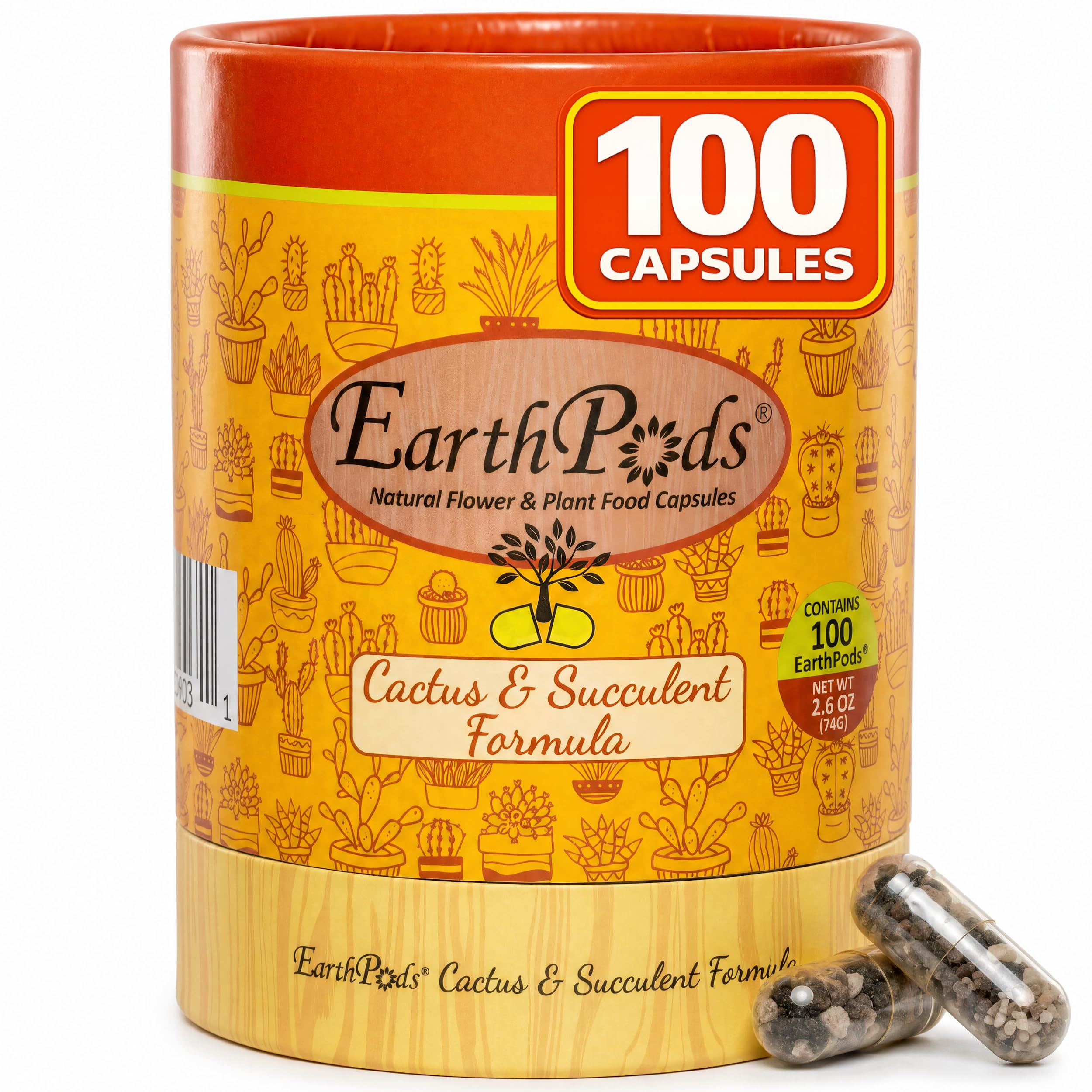
The push-and-forget capsule that feeds a single plant for years without mixing or measuring.
This is the most hands-off option on the list: 100 concentrated organic capsules that you simply push into the potting mix and water lightly. Each capsule delivers slow-release nutrition from worm castings, humic acids, kelp, rock minerals, and beneficial soil biology directly to the root zone. The effect is gentle — no harsh salts, no risk of burning — and the manufacturer says one tube runs up to six years for a single treasured plant. Shoppers say that an aloe vera that was “80% brown” turned green the next day around the root zone and grew a baby in six days. For a desert rose, this steady, low-dose nutrition is ideal because it mimics the slow, natural feeding that succulent roots evolved for. The capsules are vegan, zero single-use plastic, and safe around children and pets.
The practical trade-off is the upfront price — 100 capsules cost more than most liquid bottles — and the fact that the cardboard tube may arrive in bubble wrap rather than a rigid box, which a few owners noted. The application rate is 1-2 capsules for small pots, so if you have many plants, you will use them faster than the “6-year supply” math suggests. But for a single desert rose that you want to feed without ever thinking about mixing ratios, this is a unique solution.
Truly easy
- No mixing, no measuring, no liquid storage — push a capsule into the soil and water
- 100 capsules in one tube; a single tube can provide a multi-year supply for one plant
- Organic, vegan, pet-safe, and formulated with humic acids and kelp for soil health
Note the Cost Per Feed
- Higher upfront price compared to liquid concentrates, especially if you have many plants
- Results come slower than liquid feeds since it is a slow-release design
- Cardboard tube packaging can arrive dented (functionality unaffected)
Ideal for Low-Maintenance Owners: Set a capsule every 2-3 weeks during the growing season and forget about fertilizing — no mixing, no mess, no schedule.
Skip for Fast Results: If your desert rose needs an immediate bloom push, a liquid concentrate like the TPS Desert Rose Fertilizer will act much faster than these gentle capsules.
8. TPS Nutrients Cactus Fertilizer 1 Gallon
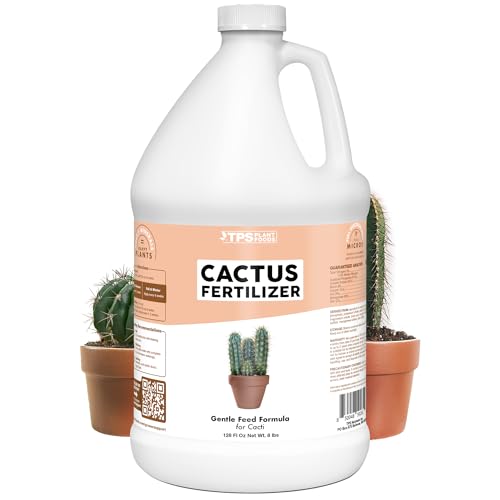
The gallon jug for the serious collector — one buy, the whole garden is fed.
The 1:32 mixing ratio means a little concentrate goes a long way, and the formula is designed to gently support roots and plant structure without overstimulating sensitive succulent roots. Owners new to cactus care, including those moving to a desert state like Arizona, found that following the directions produced steady results even with slow-growing cacti. The brand, TPS Nutrients, also makes the Desert Rose-specific fertilizer above, but this gallon jug is a general cactus and succulent formula that works for jade, aloe, and all desert plants. The price per ounce is the lowest in this guide, making it the obvious choice for a large collection or for sharing with another plant-owning friend.
The honest note is that it is a general cactus formula, not tuned to the specific 3-1-2 or 2-4-8 ratios that some desert rose enthusiasts prefer for maximizing blooms. It is a gentle, balanced feed that keeps plants healthy rather than pushing heavy flowering. One owner switching from small pellet-style fertilizers found this liquid “works better” because it is easier to control the dose and is absorbed faster. If you have a mixed collection of drought-tolerant plants and want one bottle to cover them all, this is the most economical way to do it.
Economy of Scale: At 128 fluid ounces, this is 4 times the size of the largest Desert Rose-specific bottle on the list, making the per-feeding cost the lowest bar none.
Gentle Generalist: This formula supports healthy growth across all cacti and succulents but lacks the specific phosphorus ratio needed for a bloom-focused desert rose feeding.
Perfect for Collections: Choose this if you maintain a large collection of cacti, succulents, and desert roses — one purchase feeds the whole group for months.
Not for Bloom Chasers: If your only goal is maximum flowers on a single desert rose, a dedicated 3-1-2 or 2-4-8 formula like the Down To Earth or Gardenera will deliver better results.
Understanding the Specs
NPK Ratio (Nitrogen-Phosphorus-Potassium)
The three numbers on the label stand for nitrogen (N), phosphorus (P), and potassium (K). For a desert rose, you want a formula where the last two numbers are higher than the first. A ratio like 3-1-2 or 2-4-8 provides more phosphorus for root and flower development and more potassium for cell strength and stress resistance. A high-nitrogen ratio (like 10-10-10) will push leafy growth and keep your desert rose from blooming, so avoid those.
Liquid vs. Granular vs. Capsule
Liquid fertilizers act fast — the roots start absorbing the nutrients within hours — and are easy to measure precisely. The downside is that you have to mix them every time you water and apply every 2-3 weeks during the growing season. Granular or powder fertilizers are sprinkled on the soil and release nutrients slowly over weeks or months. They are less work but results take longer. Capsule spikes are the easiest: you push one into the soil and water, and it releases gentle nutrition for weeks. The trade-off is that you cannot adjust the dose easily if the plant needs a boost.
Micronutrients and Beneficial Microbes
Beyond NPK, look for ingredients like calcium, magnesium, zinc, and kelp extract. Calcium helps build strong cell walls and prevents blossom issues. Magnesium is the core of chlorophyll (the molecule that makes leaves green and drives photosynthesis), giving leaves their color. Kelp extract contains natural growth hormones that stimulate root growth and help the plant recover from stress. Formulas that include beneficial soil microbes (like in the Grow Queen and EarthPods picks) improve the long-term health of the soil itself, making it easier for the desert rose to take up nutrients over time.
Organic vs. Synthetic
Organic fertilizers (like OMRI-listed or those made from worm castings, kelp, and rock minerals) feed the soil as well as the plant. They release nutrients more slowly and are very unlikely to burn the roots. They also improve soil structure over time, which matters for desert roses in pots where soil can compact. Synthetic fertilizers give a fast, precise dose of nutrients but can build up salt in the potting mix if overused, which can damage the caudex. For a desert rose, organic or gentle formulas are safer because the plant stores water and nutrients in its thick stem and is less forgiving of salt stress.
FAQ
How often should I fertilize a desert rose?
What NPK ratio is best for desert rose blooms?
Can I use a general succulent fertilizer on my desert rose?
How do I apply liquid fertilizer to a desert rose without burning the roots?
Will fertilizer help a desert rose grow a thicker caudex?
Is organic fertilizer better for my desert rose?
My desert rose has never bloomed. What fertilizer should I try?
Can I use fertilizer spikes on my indoor desert rose?
Final Thoughts: The Verdict
For the majority of shoppers, the best {“@context”: “https://schema.org”, “@graph”: [{“@type”: “ItemList”, “name”: “8 Best Fertilizer For Desert Rose”, “url”: “https://lawngearlab.com/best-fertilizer-for-desert-rose/”, “numberOfItems”: 8, “itemListElement”: [{“@type”: “ListItem”, “position”: 1, “name”: “Succulent Fertilizer by HiThrive”, “url”: “https://lawngearlab.com/best-fertilizer-for-desert-rose/#product-1”}, {“@type”: “ListItem”, “position”: 2, “name”: “Gardenera Premium Liquid Desert Rose Fertilizer”, “url”: “https://lawngearlab.com/best-fertilizer-for-desert-rose/#product-2”}, {“@type”: “ListItem”, “position”: 3, “name”: “Gardenera Premium Organic Seaweed & Kelp Superfood”, “url”: “https://lawngearlab.com/best-fertilizer-for-desert-rose/#product-3”}, {“@type”: “ListItem”, “position”: 4, “name”: “Grow Queen Complete Organic Cactus & Succulent Fertilizer”, “url”: “https://lawngearlab.com/best-fertilizer-for-desert-rose/#product-4”}, {“@type”: “ListItem”, “position”: 5, “name”: “Down To Earth Organic Cactus & Succulent Mix 2-4-8”, “url”: “https://lawngearlab.com/best-fertilizer-for-desert-rose/#product-5”}, {“@type”: “ListItem”, “position”: 6, “name”: “TPS Nutrients Desert Rose Fertilizer”, “url”: “https://lawngearlab.com/best-fertilizer-for-desert-rose/#product-6”}, {“@type”: “ListItem”, “position”: 7, “name”: “EarthPods Organic Succulent & Cactus Fertilizer Spikes”, “url”: “https://lawngearlab.com/best-fertilizer-for-desert-rose/#product-7”}, {“@type”: “ListItem”, “position”: 8, “name”: “TPS Nutrients Cactus Fertilizer 1 Gallon”, “url”: “https://lawngearlab.com/best-fertilizer-for-desert-rose/#product-8”}]}, {“@type”: “Product”, “position”: 1, “name”: “Succulent Fertilizer by HiThrive”, “image”: “https://m.media-amazon.com/images/I/41FdsPVl2UL.jpg”, “brand”: {“@type”: “Brand”, “name”: “Succulent”}, “url”: “https://www.amazon.com/dp/B0DG8X52LP/”, “offers”: {“@type”: “Offer”, “url”: “https://www.amazon.com/dp/B0DG8X52LP/”}}, {“@type”: “Product”, “position”: 2, “name”: “Gardenera Premium Liquid Desert Rose Fertilizer”, “image”: “https://m.media-amazon.com/images/I/51qac+AFyEL.jpg”, “brand”: {“@type”: “Brand”, “name”: “Gardenera”}, “url”: “https://www.amazon.com/dp/B0CJ91KQLH/”, “offers”: {“@type”: “Offer”, “url”: “https://www.amazon.com/dp/B0CJ91KQLH/”}}, {“@type”: “Product”, “position”: 3, “name”: “Gardenera Premium Organic Seaweed & Kelp Superfood”, “image”: “https://m.media-amazon.com/images/I/51FpSZSdoLL.jpg”, “brand”: {“@type”: “Brand”, “name”: “Gardenera”}, “url”: “https://www.amazon.com/dp/B0FJJ2TV2K/”, “offers”: {“@type”: “Offer”, “url”: “https://www.amazon.com/dp/B0FJJ2TV2K/”}}, {“@type”: “Product”, “position”: 4, “name”: “Grow Queen Complete Organic Cactus & Succulent Fertilizer”, “image”: “https://m.media-amazon.com/images/I/51kkEMIfLEL.jpg”, “brand”: {“@type”: “Brand”, “name”: “Grow”}, “url”: “https://www.amazon.com/dp/B0D8SH2B6C/”, “offers”: {“@type”: “Offer”, “url”: “https://www.amazon.com/dp/B0D8SH2B6C/”}}, {“@type”: “Product”, “position”: 5, “name”: “Down To Earth Organic Cactus & Succulent Mix 2-4-8”, “image”: “https://m.media-amazon.com/images/I/517-aNc5fPL.jpg”, “brand”: {“@type”: “Brand”, “name”: “Down”}, “url”: “https://www.amazon.com/dp/B0CFWT5K5C/”, “offers”: {“@type”: “Offer”, “url”: “https://www.amazon.com/dp/B0CFWT5K5C/”}}, {“@type”: “Product”, “position”: 6, “name”: “TPS Nutrients Desert Rose Fertilizer”, “image”: “https://m.media-amazon.com/images/I/41oX5TkSCxL.jpg”, “brand”: {“@type”: “Brand”, “name”: “TPS”}, “url”: “https://www.amazon.com/dp/B0DPM9MN1Y/”, “offers”: {“@type”: “Offer”, “url”: “https://www.amazon.com/dp/B0DPM9MN1Y/”}}, {“@type”: “Product”, “position”: 7, “name”: “EarthPods Organic Succulent & Cactus Fertilizer Spikes”, “image”: “https://m.media-amazon.com/images/I/91ZBSrTXI8L.jpg”, “brand”: {“@type”: “Brand”, “name”: “EarthPods”}, “url”: “https://www.amazon.com/dp/B0797YJ28C/”, “offers”: {“@type”: “Offer”, “url”: “https://www.amazon.com/dp/B0797YJ28C/”}}, {“@type”: “Product”, “position”: 8, “name”: “TPS Nutrients Cactus Fertilizer 1 Gallon”, “image”: “https://m.media-amazon.com/images/I/41y6PSxRoXL.jpg”, “brand”: {“@type”: “Brand”, “name”: “TPS”}, “url”: “https://www.amazon.com/dp/B0C6R5FZQX/”, “offers”: {“@type”: “Offer”, “url”: “https://www.amazon.com/dp/B0C6R5FZQX/”}}, {“@type”: “FAQPage”, “mainEntity”: [{“@type”: “Question”, “name”: “How often should I fertilize a desert rose?”, “acceptedAnswer”: {“@type”: “Answer”, “text”: “During the active growing season — spring through early fall — feed every other watering (roughly every 2-3 weeks) with a liquid fertilizer. In winter, when the plant is dormant, stop fertilizing entirely. For slow-release granules or capsules, apply once at the start of spring and another dose in mid-summer.”}}, {“@type”: “Question”, “name”: “What NPK ratio is best for desert rose blooms?”, “acceptedAnswer”: {“@type”: “Answer”, “text”: “A ratio where potassium (K) and phosphorus (P) are higher than nitrogen (N) is ideal for flowering. Ratios like 3-1-2, 2-4-8, or 5-10-10 all steer the plant toward bud formation instead of leafy growth. Avoid high-nitrogen ratios like 20-20-20 for desert roses.”}}, {“@type”: “Question”, “name”: “Can I use a general succulent fertilizer on my desert rose?”, “acceptedAnswer”: {“@type”: “Answer”, “text”: “Yes, most general succulent and cactus fertilizers will keep a desert rose healthy. However, if your goal is to boost blooming, you will get better results with a formula that has a higher phosphorus and potassium content specifically. The general formulas are often balanced (like 1-1-1) and are best for maintenance, not flowering.”}}, {“@type”: “Question”, “name”: “How do I apply liquid fertilizer to a desert rose without burning the roots?”, “acceptedAnswer”: {“@type”: “Answer”, “text”: “Always dilute the concentrate according to the label — never use it full strength. Water the desert rose’s soil first with plain water, then apply the diluted fertilizer. This keeps the nutrients from hitting dry roots and causing salt burn. For desert roses, it is safer to under-fertilize than to over-fertilize.”}}, {“@type”: “Question”, “name”: “Will fertilizer help a desert rose grow a thicker caudex?”, “acceptedAnswer”: {“@type”: “Answer”, “text”: “Yes, but the right ratio matters. A fertilizer higher in potassium (the third number) supports cell wall strength and water storage in the caudex. A formula like 2-4-8 provides the potassium needed for a thicker, more bulbous trunk. Adequate sunlight and proper watering are equally important for caudex development.”}}, {“@type”: “Question”, “name”: “Is organic fertilizer better for my desert rose?”, “acceptedAnswer”: {“@type”: “Answer”, “text”: “Organic fertilizers are gentler and reduce the risk of root burn, which is a common problem with synthetic fertilizers on succulents. They also improve soil microbiology over time. The trade-off is that organic formulas release nutrients more slowly, so you will not see the same rapid leaf and flower growth as you would with a synthetic liquid.”}}, {“@type”: “Question”, “name”: “My desert rose has never bloomed. What fertilizer should I try?”, “acceptedAnswer”: {“@type”: “Answer”, “text”: “Look for a formula specifically labeled for desert roses or one with a higher phosphorus content (the middle number). The Gardenera Premium 3-1-2 is the most direct choice, and the TPS Desert Rose Fertilizer has strong owner testimony for plants that refused to bloom for years. Also ensure the plant is getting at least 6 hours of bright, direct sunlight daily.”}}, {“@type”: “Question”, “name”: “Can I use fertilizer spikes on my indoor desert rose?”, “acceptedAnswer”: {“@type”: “Answer”, “text”: “Yes, and they are an excellent low-maintenance option. EarthPods capsules are designed for indoor use and are safe, odorless, and non-toxic. Push one or two capsules into the potting mix near the root zone and water lightly. They release nutrients slowly over 2-3 weeks, which is a good pace for a desert rose in a pot.”}}]}]}