
Your Crape Myrtle isn’t just a tree; it’s the cornerstone of your summer landscape’s visual performance. When its foliage turns yellow and the bloom count drops to a sad handful, your entire curb appeal suffers, and no amount of watering will fix a nutritional imbalance. The wrong fertilizer can actually suppress those coveted flowers, while the right one pushes out a cascade of vibrant panicles that make the neighbors stop and stare.
I’m Rikta — the co-founder and writer behind Lawn Gear Lab. I’ve spent hundreds of hours dissecting NPK ratios, analyzing soil pH responses, and comparing granular versus liquid feeding strategies to determine exactly which formulations deliver the explosive color and dense growth Crape Myrtle owners are after.
Whether you’re battling chlorosis or coaxing a stubborn tree to its first real show, this guide isolates the formulations that actually move the needle. I’ve tested the data behind every product to bring you the definitive list of the best fertilizer for crape myrtles to turn your specimen into a neighborhood landmark.
How To Choose The Best Fertilizer For Crape Myrtles
Crape Myrtles are heavy feeders that thrive on a specific nutrient balance. Selecting the wrong analysis can leave you with tall, leafy trees and zero flowers. Focus on these three factors before you buy.
The NPK Ratio: Phosphorus is King for Blooms
Crape Myrtles need a phosphorus-rich formula to initiate flower buds. Look for a middle number (P) that is equal to or higher than the first number (N). A ratio like 9-58-8 or 4-3-4 with a phosphorus boost will push energy into flowers rather than leaves. Avoid high-nitrogen lawn fertilizers (like 30-0-0) as they trigger lush green growth at the expense of blooms.
Slow-Release vs. Liquid: Timing Matters
Granular slow-release fertilizers (like spikes or coated pellets) provide a steady nutrient supply over several months with a single application in early spring. Liquid fertilizers offer a rapid green-up and bloom kick but require reapplication every two weeks during the growing season. For set-it-and-forget-it convenience, go granular. For a quick correction on a struggling tree, use liquid.
Acid-Loving Formulations for Chlorosis
If your Crape Myrtle leaves are yellowing between green veins, you have iron chlorosis caused by high soil pH. An acidifying fertilizer with sulfur or iron (like Espoma Holly-Tone) will lower the pH and unlock locked-up nutrients. Trees planted near concrete foundations often need this acidic boost to stay dark green.
Quick Comparison
On smaller screens, swipe sideways to see the full table.
| Model | Category | Best For | Key Spec | Amazon |
|---|---|---|---|---|
| Carl Pool BR-61 9-58-8 | Bloom Booster | Maximum flower set | 9-58-8 NPK Ratio | Amazon |
| FoxFarm Happy Frog All Purpose | Organic | Soil microbiome health | OMRI Listed | Amazon |
| Espoma Organic Holly-Tone 4-3-4 | Acidifier | Chlorosis correction | 5% Sulfur | Amazon |
| TPS Nutrients Crepe Myrtle Food | Liquid | Fast green-up & recovery | 32 oz Concentrate | Amazon |
| GreenView Multi-Purpose 10-10-10 | Balanced | General landscape feeding | 33 lb Bag | Amazon |
| Jobe’s Tree Spikes 16-4-4 | Spikes | Mess-free deep root feed | 30 Count | Amazon |
| Nelson NutriStar Crape Myrtle | Species-Specific | Specialized Crape Myrtle feed | 4 lb Granules | Amazon |
In‑Depth Reviews
1. Carl Pool BR-61 Plant Food 9-58-8
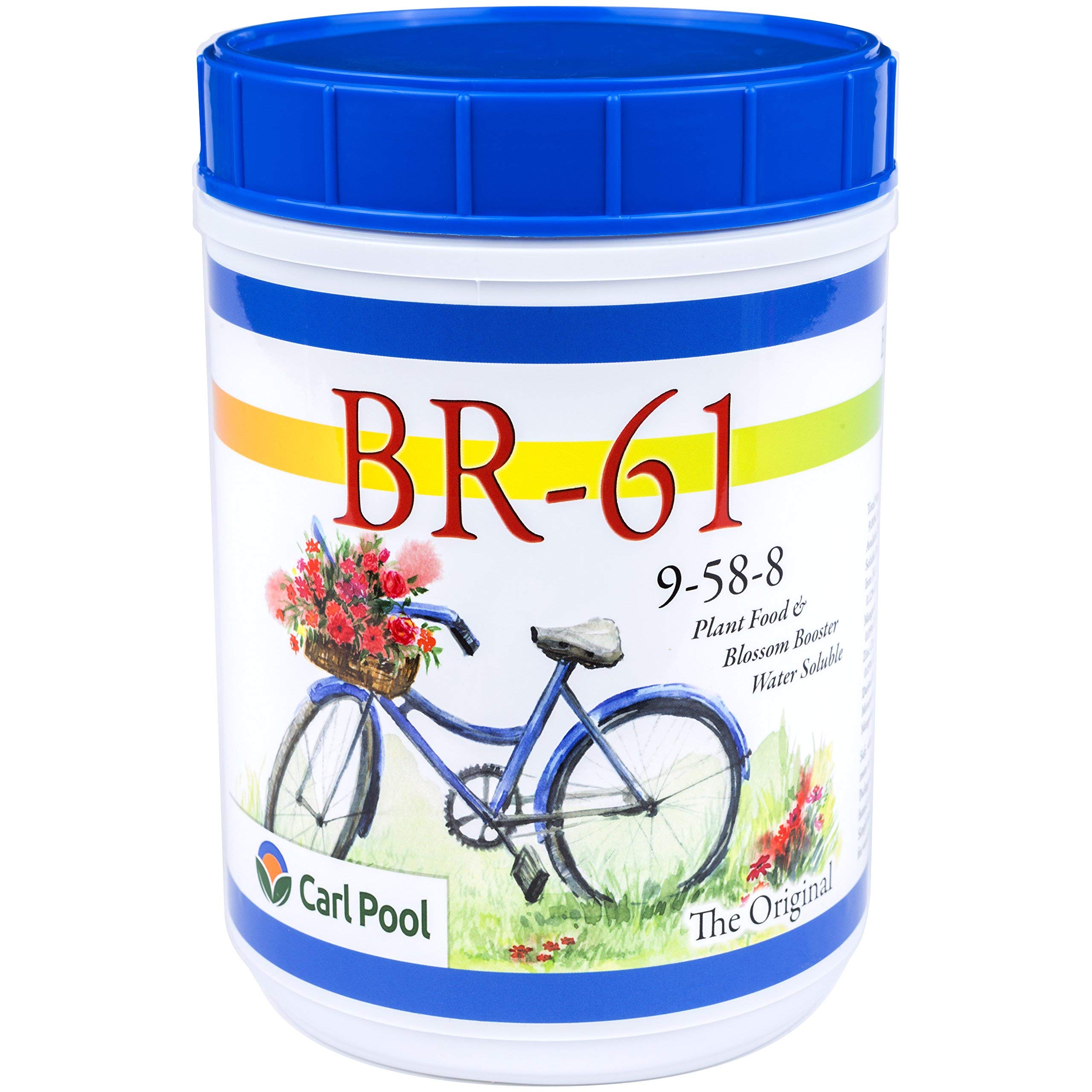
The Carl Pool BR-61 delivers a monstrous 58-point phosphorus hit — the highest middle number in this entire guide. For Crape Myrtles, that extreme phosphorus concentration is the direct signal for heavy bud formation. Users report “best bloom booster ever” and consistent results over years of use, which tracks with the chemistry: when you push that second NPK digit, the tree has no choice but to flower profusely.
This is a water-soluble powder, so you mix it with water and apply as a liquid feed. It works fast, but you’ll need to reapply every two weeks during the active growing season for sustained performance. Many owners alternate it with fish emulsion to keep microbial life balanced while still getting the phosphorus punch.
Be careful with the application rate — too much concentrated phosphorus on young trees can cause salt buildup. Stick to the label dilution, and you’ll see a noticeable spike in bloom density within two to three weeks of first application. For mature Crape Myrtles that haven’t flowered in years, this is the chemical reset button.
What works
- Extremely high phosphorus ratio triggers reliable bloom explosions.
- Water-soluble powder absorbs immediately into the root zone.
- Proven track record across hundreds of flowering plant species.
What doesn’t
- Requires frequent reapplication every 14 days.
- Can burn sensitive roots if mixing ratio is off.
2. FoxFarm Happy Frog All Purpose Fertilizer

FoxFarm’s Happy Frog is an OMRI-listed organic granular that feeds through biology rather than raw salt content. It contains beneficial soil microbes and mycorrhizal fungi that improve nutrient uptake efficiency — particularly valuable if your Crape Myrtle is planted in compacted clay or degraded soil. Users noted that it revived yellowing tomato and zucchini plants within a week, indicating strong bio-availability.
The feed is gentle and slow-release, making it a safe choice for young or newly transplanted Crape Myrtles that can’t handle the salt load of synthetic bloom boosters. You sprinkle the granules around the drip line and water in — no mixing required. The microbial action continues breaking down organic matter in the soil for weeks after application.
One critical caveat: the product has a very pungent, manure-like odor that lingers for a day after application. This isn’t an issue outdoors, but if you’re storing the bag in a garage, it will scent the space. Also, the formulation is best suited for general feeding rather than targeted bloom forcing — you’ll get healthy foliage and steady growth rather than a sudden flower eruption.
What works
- Mycorrhizal fungi improve root access to locked-up soil phosphorus.
- Safe, organic formula won’t burn roots even on sensitive trees.
- Supports long-term soil structure and microbial diversity.
What doesn’t
- Very strong organic smell that some find unpleasant.
- Not optimized specifically for forcing heavy Crape Myrtle blooms.
3. Espoma Organic Holly-Tone 4-3-4
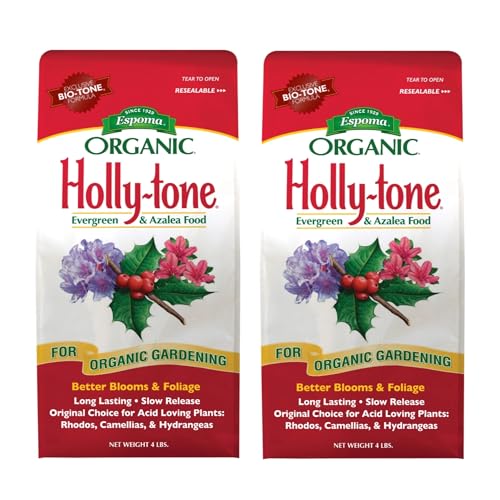
Espoma Holly-Tone is the gold standard for acid-loving plants, and Crape Myrtles absolutely benefit from the sulfur component — especially trees showing interveinal chlorosis (yellow leaves, green veins). The 4-3-4 NPK is lower than synthetic bloom boosters, but the 5% sulfur actively lowers soil pH over time, unlocking iron that’s otherwise unavailable in alkaline soils.
This comes as a dry granular powder that you apply around the drip line in spring and then again in fall. Users rave about its effect on rhododendrons and hydrangeas, noting the yellow leaves turned dark green within weeks. For Crape Myrtles, apply it early spring before bud break to prevent chlorosis from developing in the first place.
The biggest trade-off is that the 4-3-4 ratio won’t produce the same dramatic flush of blooms as a dedicated high-phosphorus bloom booster. Holly-Tone prioritizes overall plant health and soil conditioning over sheer flower count. Pair it with a phosphorus supplement during the growing season if your goal is maximum bloom mass.
What works
- Sulfur content effectively treats iron chlorosis at the root level.
- Approved for organic gardening with a long fertilizer history.
- Safe, slow-release action with zero burn risk.
What doesn’t
- Not a high-powered bloom booster — flower results are moderate.
- Pungent organic odor during and after application.
4. TPS Nutrients Crepe Myrtle Fertilizer (Liquid)
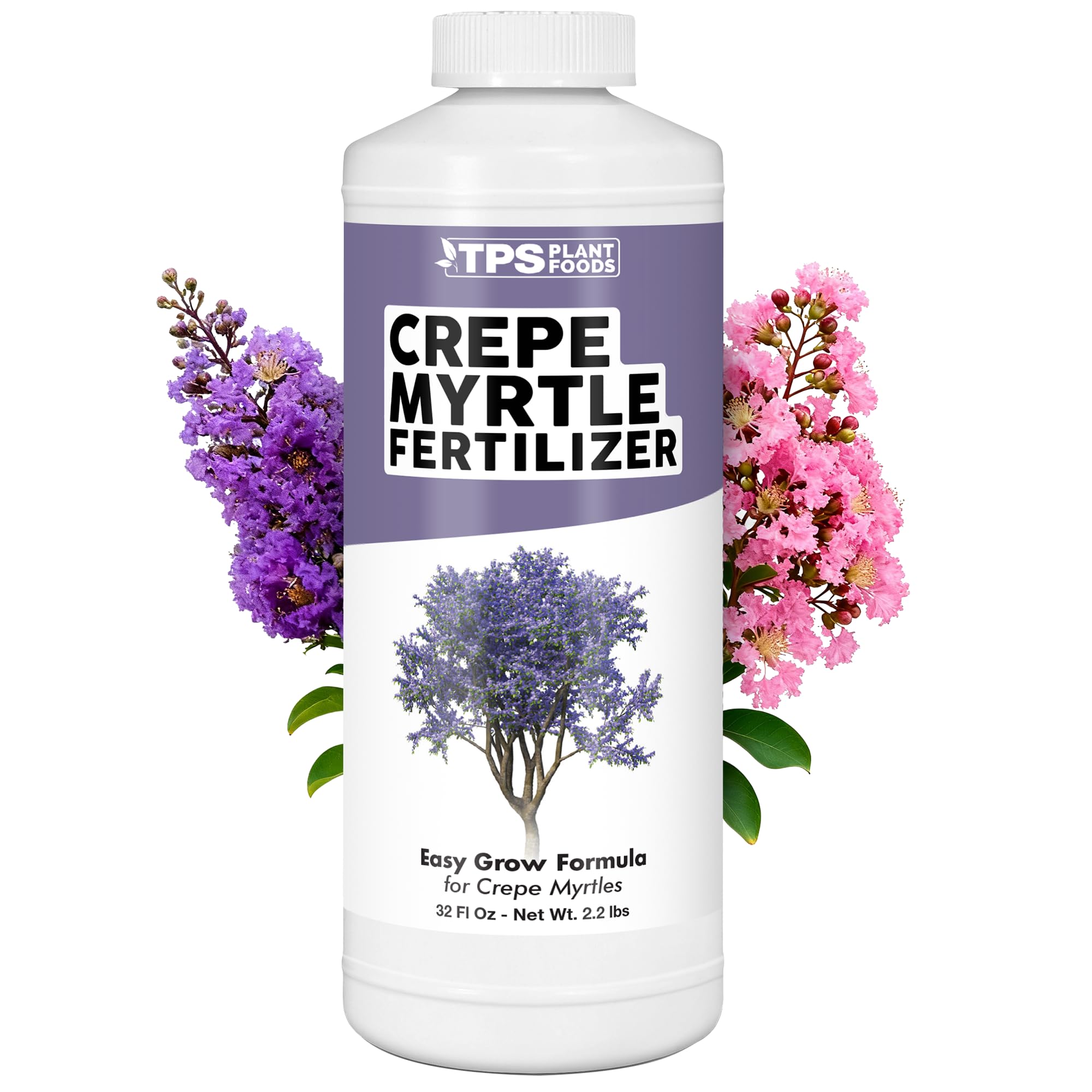
TPS Nutrients offers a species-specific liquid fertilizer formulated specifically for Crape Myrtles. The liquid form provides immediate nutrient availability — within minutes of watering, the root system absorbs the solution. Users reported that trees that were nearly dead after a Central Texas freeze bounced back with full leaves after just one feeding, proving the rapid uptake capability.
The 32-ounce concentrate makes enough to feed multiple trees across a growing season. You mix the concentrate with water and apply every two weeks for best results. Multiple owners noted that their trees started blooming within a few weeks of the first application, even on young trees that had not flowered previously.
The major limitation is that liquid feeding requires consistent scheduling. Skip a couple of weeks in the middle of summer heat, and you’ll notice the bloom production taper off. It’s also a smaller container than granular bags, so if you have a large property with many Crape Myrtles, you’ll need multiple bottles to cover the season.
What works
- Instant nutrient absorption for quick recovery from stress or transplant shock.
- Specifically formulated for Crape Myrtle metabolic needs.
- Easy to measure and apply with a hose-end sprayer or watering can.
What doesn’t
- Requires bi-weekly reapplication for sustained blooming.
- Small bottle runs out fast if you have a large planting area.
5. GreenView Multi-Purpose Fertilizer 10-10-10

GreenView’s 10-10-10 is a classic all-purpose granular that covers a massive 10,000 square feet of garden area. The balanced NPK provides equal parts nitrogen, phosphorus, and potassium — a safe general maintenance feed if you’re also tending lawn, vegetables, and flowers around your Crape Myrtles. Users particularly appreciate the convenience of one bag serving their entire property.
For Crape Myrtles, 10-10-10 won’t give you the intense bloom production of a targeted high-phosphorus feed, but it will maintain consistent health and moderate flowering. The granules are well-formed and resist clumping, spreading easily with a broadcast spreader. It’s a solid choice for gardeners who prefer a single feed for everything rather than species-specific products.
The downside is that the equal NPK ratio can produce more leafy growth than necessary on Crape Myrtles. If your trees are already lush and green but flower sparsely, switching to a phosphorus-dominant feed would deliver better results. Use this as a base feed and supplement with a bloom booster if you want maximum flower mass.
What works
- Extremely cost-effective for covering large landscapes.
- Versatile — works on lawns, shrubs, trees, and vegetable beds.
- Clean, uniform granules that don’t clump in humid conditions.
What doesn’t
- Not optimized for maximizing Crape Myrtle bloom output.
- High nitrogen can push excessive leaf growth at the expense of flowers.
6. Jobe’s Tree Fertilizer Spikes 16-4-4

Jobe’s Tree Spikes offer the ultimate convenience: hammer them into the soil around your Crape Myrtle’s drip line, and the 16-4-4 formula slowly dissolves over the entire growing season. There’s zero measuring, zero mixing, and zero mess. Users confirm that shrubs and trees fed with these spikes show consistent vigor and on-schedule blooming each year.
The 16-4-4 analysis is higher in nitrogen than ideal for a pure bloom focus, but the slow-release mechanism means the tree gets a steady supply rather than a burst. This works well for Crape Myrtles planted in lawns where some nitrogen leaches into the grass. You’ll get solid green foliage and a moderate flower show without any application effort.
However, the spikes require some physical effort to insert — several users noted that a metal rod or drill pre-hole is necessary in compacted soil. The spikes also concentrate nutrients in specific points rather than spreading uniformly across the root zone, which can lead to uneven root development in young trees. For mature, established Crape Myrtles, this is a low-maintenance win.
What works
- One-time application feeds the entire season with zero hassle.
- No runoff, smell, or granule mess on hardscapes.
- Safe, non-burning formula for established trees.
What doesn’t
- High nitrogen ratio can prioritize leaf growth over blooms.
- Difficult to insert into rocky or compacted soils without pre-drilling.
7. Nelson NutriStar Crape Myrtle & Flowering Trees Granular

Nelson NutriStar is a granular fertilizer developed specifically for Crape Myrtles and other flowering trees like Desert Willow, Mimosa, and Orchid Tree. The formulation targets the exact nutrient ratios Crape Myrtles need for heavy flowering. One owner reported that their orchid tree produced its first blooms in years after just two weeks — a testament to the targeted chemistry.
The 4-pound bag is relatively small compared to bulk options, but the concentration allows light feeding for several small to medium trees. Users who have been purchasing this product for years report consistent, repeatable results: their Crape Myrtles flower reliably every season after spring application. The granular form is easy to sprinkle around the drip line and water in.
The main drawback is the cost per pound, which is significantly higher than generic 10-10-10 blends. For a large, 25-foot Crape Myrtle, one owner noted it took nearly a full bag for a single feeding. If you have a single specimen tree, the premium price is justified by the results. For a row of trees or a large property, the smaller bag size becomes impractical.
What works
- Formulation specifically matched to Crape Myrtle flowering physiology.
- Proven to trigger blooms on stubborn, non-flowering trees.
- Easy granular application with clear instructions.
What doesn’t
- Higher cost per pound compared to general-purpose fertilizers.
- Small bag size may not cover large or multiple trees.
Hardware & Specs Guide
NPK Ratio Analysis
The three numbers on every fertilizer bag (N-P-K) are the most critical spec for Crape Myrtles. Nitrogen (first number) fuels leaf and stem growth — too much and the tree gets tall and green but flower production drops. Phosphorus (second number) directly triggers flower bud formation — a higher middle number like 58 in Carl Pool BR-61 forces more blooms. Potassium (third number) supports overall health and disease resistance. For Crape Myrtles, look for a phosphorus number equal to or greater than the nitrogen number.
Form Factor: Granules vs Liquid vs Spikes
Granular fertilizers (like GreenView or Nelson NutriStar) release nutrients over weeks and require water activation. Liquid fertilizers (TPS Nutrients) provide immediate nutrient absorption but need frequent reapplication every 2 weeks. Spikes (Jobe’s) offer the slowest release — up to 3 months — but concentrate nutrients in specific spots. Choose granules for low-maintenance feeding, liquid for quick correction, and spikes for deep-root feeding with zero surface mess.
Organic vs Synthetic Breakdown
Organic fertilizers (FoxFarm Happy Frog, Espoma Holly-Tone) feed soil microbes first, creating a slow, steady nutrient supply that builds long-term soil health. They are less likely to burn roots but produce a slower visual result. Synthetic fertilizers (Carl Pool BR-61, Jobe’s Spikes) deliver salts that plants absorb immediately, producing rapid greening and blooming — but carry a burn risk if over-applied. For Crape Myrtles, a blend approach often works best: organic in spring for soil conditioning, synthetic in late spring for a bloom push.
Acidifying Agents for Iron Uptake
Crape Myrtles in alkaline soils (pH above 7.0) commonly develop iron chlorosis — yellow leaves with green veins. Acidifying fertilizers like Espoma Holly-Tone contain elemental sulfur that gradually lowers soil pH. A drop from 7.5 to 6.5 can dramatically increase iron availability. Check your soil pH with a test kit before buying — if your pH is already in the 5.5–6.5 range, skip the acidifier and focus on phosphorus-driven bloom boosters instead.
FAQ
What NPK ratio is best for Crape Myrtle blooms?
How often should I fertilize my Crape Myrtle?
Should I use an acid-loving fertilizer for Crape Myrtles?
Can I use weed-and-feed products on my Crape Myrtle?
Final Thoughts: The Verdict
For most gardeners, the fertilizer for crape myrtles winner is the Carl Pool BR-61 9-58-8 because its extreme phosphorus concentration delivers the most dramatic bloom production on the market with proven long-term results. If you want organic soil building and gentle feeding, grab the FoxFarm Happy Frog. And for treating chlorosis or improving soil pH while maintaining steady health, nothing beats the Espoma Organic Holly-Tone.