
You plant a tomato in a pot, water it faithfully, and by midsummer the leaves look pale and the fruit has a dark, sunken bottom. That happens because the small amount of soil in a container runs out of nutrients within a few weeks. The best fertilizer for container vegetables replaces those nutrients steadily without burning the roots, and without forcing you to mix liquid doses every weekend. This guide compares five granular options — from budget-friendly organics to premium slow-release formulas — so you can match the right nutrient recipe to your pot, your schedule, and the crop you are growing.
I’m Rikta — the co-founder and writer behind Lawn Gear Lab. This guide is built by comparing the manufacturers’ published specifications and the patterns across verified customer reviews, so you get each pick’s real strengths and trade-offs instead of marketing spin.
Whether you grow tomatoes on a balcony, peppers on a patio, or leafy greens in a raised bed, the right choice comes down to three factors: how the nitrogen and calcium are delivered, how long one application feeds the plant, and whether the mix is gentle enough for a confined root zone. This is exactly what this guide unpacks for you.
How To Choose The Best Fertilizer For Container Vegetables
Choosing a fertilizer for a potted vegetable garden is different from feeding a traditional in-ground plot. The roots are confined, so the margin for error with a too-strong formula is smaller. Here is what a smart buyer looks at first.
The N-P-K ratio and what it does for your potted crop
The three numbers on every fertilizer bag — nitrogen, phosphorus, and potassium (N-P-K) — tell you what the feed prioritizes. Nitrogen (the first number) drives leafy green growth. Phosphorus (the middle number) supports root development, flowers, and fruit set. Potassium (the last number) strengthens overall plant health and disease resistance. For container vegetables that are fruiting, such as tomatoes or peppers, a formula with a middle number at least as high as the first one is a safer bet — you want fruit, not just giant leaves.
Slow-release vs. liquid vs. organic: which delivery system fits a pot?
Liquid fertilizers give a fast boost but require mixing every week or two — that can feel like a part-time job when you have a dozen pots. Granular slow-release options, especially those with a resin coating, meter out nutrients over months with a single application. Organic meal-based blends, like fish bone meal or feather meal, rely on soil microbes to break down the nutrients, which is gentler on confined roots but can be slower to show results, particularly in cooler weather that slows microbial activity.
Calcium: the blossom-end-rot preventer every container tomato grower needs
Blossom end rot — the dark, sunken spot on the bottom of a tomato — is not a disease. It is a calcium deficiency caused by inconsistent watering or low calcium levels in the soil. A fertilizer that includes calcium helps the plant build strong cell walls, producing firmer fruit that stores longer. This is a detail many all-purpose formulas overlook, but it makes a visible difference in a container garden where the soil volume is small and calcium runs out fast.
Quick Comparison
On smaller screens, swipe sideways to see the full table.
| Model | Category | Best For | Key Spec | Amazon |
|---|---|---|---|---|
| FoxFarm Happy Frog Tomato & Vegetable | Premium | High-yield container tomatoes & peppers | 5:7:3 ratio with calcium & mycorrhizae | Amazon |
| Osmocote Smart-Release Outdoor & Indoor | Mid-Range | Set-it-and-forget-it feeding for mixed pots | 6-month resin-coated slow-release | Amazon |
| Miracle-Gro Shake ‘N Feed Tomato, Fruit & Vegetable | Mid-Range | Easiest application for busy gardeners | 10:5:15 ratio, 3-month feeding, 128 sq. ft. | Amazon |
| Down To Earth Organic All Purpose Tomato & Veg | Organic | Organic gardeners who want soil health | 4:6:2 OMRI-listed, 5 lbs. | Amazon |
| FoxFarm Marine Cuisine All Purpose | Mid-Range | Heavy-feeding plants needing a quick green-up | 10:7:7 ocean-based slow-release, 4 lbs. | Amazon |
In‑Depth Reviews
1. FoxFarm Happy Frog Tomato & Vegetable Fertilizer

5:7:3 N-P-K (phosphorus higher than nitrogen) makes this the top pick for any container gardener who prioritizes fruit set over leafy growth. You get more fruit and less leafy overgrowth with this FoxFarm pick because its 5:7:3 N-P-K ratio (nitrogen, phosphorus, potassium) is deliberately higher in phosphorus (the middle number) than nitrogen (the first number) — exactly what a fruiting tomato or pepper plant needs to set more blossoms. Buyers report this is the “best vegetable food for bag-grown plants” and specifically note that the added calcium prevents blossom end rot, the sunken dark patch that ruins tomatoes. This premium pick also includes mycorrhizal fungi (beneficial soil microbes that attach to roots and help the plant pull in more water and nutrients), a big advantage in the limited space of a 5-gallon nursery pot.
Reviewers consistently mention “bumper crop yields” and “prodigious growth” when using Fox Farm products, and several call out that the fertilizer is odorless and safe to apply directly around active root zones. At 4 pounds, a single bag handles multiple containers across a full season. If you want the highest possible fruit yield from a container garden and you are willing to apply every couple of weeks, this is the most effective granular feed for potted vegetables. The catch: this is a dry granular formula you scratch into the top inch of soil every two weeks, so it is less convenient than the single-season Osmocote — skip it if you need a set-it-and-forget-it solution.
For maximum fruit yield from container vegetables, this is the most effective granular feed you can buy.
Why it’s great
- Tailored 5:7:3 ratio prioritizes fruit over leaves.
- Added calcium stops blossom end rot before it starts.
- Mycorrhizal fungi boost water and nutrient uptake in compact pots.
Good to know
- Requires reapplication every two weeks — less convenient than a single-season feed.
- Priced at the premium end of the granular category.
2. Osmocote Smart-Release Plant Food Plus Outdoor & Indoor
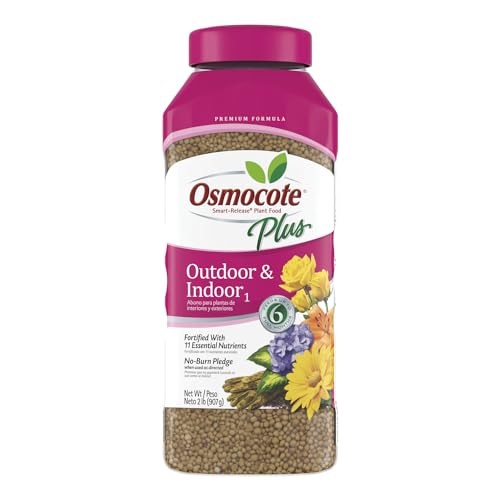
Compared to the top-pick FoxFarm Happy Frog, which requires biweekly mixing and watering, the Osmocote Smart-Release Plant Food Plus Outdoor & Indoor needs just one application in spring and then nothing for 6 months; each granule’s resin coating releases nutrients only when soil is warm, so plants get more food during active growth and less when they slow down, and the 11 essential nutrients (the full set of macronutrients and micronutrients most plants need) are metered out continuously, making this the lowest-effort option in the lineup. One 2-pound container covers 75 sq. ft., which is 71% less coverage area than the Miracle-Gro Shake ‘N Feed, but the Osmocote lasts twice as long — a trade-off of coverage size versus duration.
Owners mention seeing “greener, faster growth in seedlings and grafted trees” and describe the convenient slow-release as “reducing fertilizing frequency.” Several experienced container gardeners say this is the go-to feed for mixed pots that include flowers, herbs, and vegetables, because the gentle release does not burn plants even when a root ball fills the entire container. The manufacturer backs this with a no-burn pledge when used as directed.
This is the right pick if your priority is time: you want to apply a fertilizer once and not think about feeding again until the fall. The downside is it has no added calcium, so blossom end rot can still hit your heavy-fruiting tomatoes — a job better handled by the FoxFarm Happy Frog. Choose this over the top pick if you value minimal effort and a single annual application over the biweekly routine needed with FoxFarm Happy Frog.
Where it shines
- Single application feeds for up to 6 full months.
- Resin coating prevents nutrient burn, even in small containers.
- Works on virtually all plant types, from tomatoes to houseplants.
Worth noting
- 2-pound bag covers only 75 sq. ft. — less coverage than some competitors per bag.
- No added calcium, so blossom end rot may still occur in heavy-fruiting tomatoes.
3. Miracle-Gro Shake ‘N Feed Tomato, Fruit and Vegetable Plant Food

You are a container gardener with a dozen pots of tomatoes, peppers, and squash on your patio, and you want one bag to feed them all season without constant reapplication. A single 4.5-pound container of Miracle-Gro Shake ‘N Feed Tomato, Fruit and Vegetable Plant Food covers 128 sq. ft., beating the Osmocote by 71% and every other granular option on this metric. The 10:5:15 ratio is high in potassium (the last number), which supports overall plant vigor and disease resistance, while the included calcium helps form stronger cell walls for better-quality fruit, according to the manufacturer. Buyers consistently describe the application as the easiest in the category — you literally shake granules onto the soil surface, scratch them into the top 1–3 inches, and water once.
The 3-month feeding window means you reapply twice in a typical growing season rather than just once with the Osmocote, but the dramatically wider coverage per bag offsets that for most gardeners. A caution: the 10-5-15 ratio is nitrogen-heavy compared to the FoxFarm 5-7-3, so if you use it on leafy greens or herbs in containers you may see lush leaves but fewer flowers. For mixed vegetable containers that include tomatoes, peppers, and squash, it performs well across the board, and the mid-range price makes it the most pound-for-pound economical pick in the group.
One 4.5-pound bag covers 128 sq. ft. — that’s 71% more ground than the nearest granular competitor.
What stands out
- 128 sq. ft. coverage per bag — the highest in the category.
- Calcium added to prevent blossom end rot in container tomatoes.
- Shake-and-feed application requires no mixing or measuring.
The trade-offs
- Requires reapplication every 3 months, not a single-season feed.
- Higher nitrogen ratio may favor leaves over fruit in some crops.
4. Down To Earth All Natural Fertilizers Organic All Purpose Tomato & Vegetable Mix

The single number that matters most in this category is the N-P-K ratio, and this Down To Earth mix scores a gentle 4:6:2 — lower in nitrogen than the FoxFarm or Miracle-Gro, which makes it a solid choice if you have young transplants or are gardening in a small container where a strong synthetic dose could burn roots. The formula is made from fish bone meal, blood meal, feather meal, rock phosphate, langbeinite, greensand, humates, and kelp meal — eight ingredients that each supply a different nutrient. One reviewer noted that this mix “revived pale, flimsy tomato plants within two weeks after application,” which is fast for an organic product that relies on soil microbes to break down the meals.
If organic certification matters to you, the 4:6:2 ratio is verified OMRI-listed (Organic Materials Review Institute), meaning it is approved for use in certified organic production. The unmistakable smell of fish and blood meal is the most common buyer complaint, though most note that the odor dissipates within a few days after watering. This fertilizer is best applied when the soil is warm (above 55–60°F) so the microbial breakdown works quickly — if you feed in cool spring soil you may not see results for a few weeks, making the Osmocote a better pick if you garden in a cooler climate or want predictable timing regardless of temperature.
For the organic gardener who wants to feed the soil biology as much as the plant itself — and who does not mind a short-term earthy smell — this mix delivers the best organic nutrient diversity at a competitive mid-range price, and the 5-pound box is the heaviest by weight in the group for that price.
The upsides
- OMRI-listed for certified organic production — the only organic-certified pick here.
- Eight natural ingredient sources provide a broad nutrient spectrum.
- Gentle 4:6:2 ratio safe for young transplants and small containers.
Keep in mind
- Requires warm soil for microbial breakdown — slow to work in cool weather.
- Noticeable fish/blood meal smell for a few days after application.
5. FoxFarm Marine Cuisine All Purpose Fertilizer
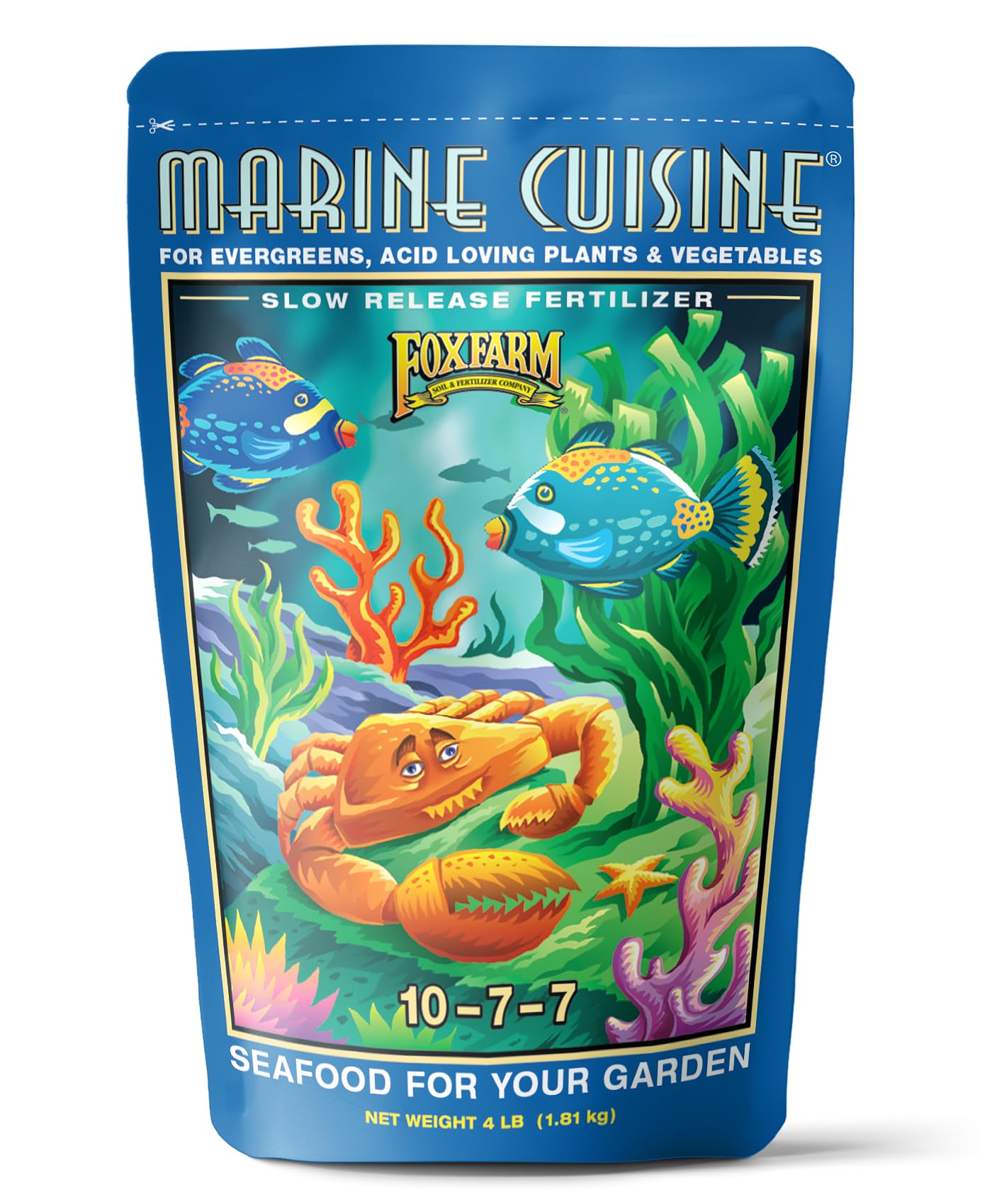
At this lower price you get a 4-pound bag of powder-form FoxFarm Marine Cuisine with a 10:7:7 ratio (nitrogen, phosphorus, potassium), the most nitrogen-dense option in the lineup. The ocean-based ingredient blend includes crab meal, shrimp meal, seabird guano, and kelp, providing both an immediate nutrient boost and a slow-release fraction that continues feeding for up to 3–4 months. The bag has a sturdy, leak-proof seal that reviewers appreciate for storage between applications, and the powder dissolves into soil faster than chunkier FoxFarm Happy Frog granules.
The trade-off: at a 10:7:7 ratio, this delivers significantly more nitrogen than Happy Frog’s 5:7:3 — about a 2:1 gap in the nitrogen-to-phosphorus ratio. For fruiting crops like tomatoes or peppers, that high nitrogen can push leafy growth at the expense of flowers and fruit set, so Marine Cuisine is best reserved for greens, herbs, and hungry squash rather than your main tomato containers. It is an excellent green-up specialist, but Happy Frog remains the better all-season partner for harvest quantity if you are focused on tomatoes and peppers.
One buyer mentioned their pepper plant went from “light green to dark green within 2 weeks” of applying Marine Cuisine, and another reported sad, yellow squash plants turning green and perky in just 3 days — visible proof of the nitrogen punch. At a mixing ratio of 10:7:7, this is designed as a “heavy feeder formula” for vegetables and flowers that require strong nutrition, ideal for leaf-heavy crops like spinach, kale, and basil that prioritize foliage over fruit. This is the exact budget buyer it is perfect for: the gardener growing greens, herbs, and hungry squash who wants a nitrogen-dense, ocean-based powder that delivers fast greening at a lower price point.
Why we’d pick it
- Rapid green-up — visible recovery in as little as 3 days, per buyer reports.
- Ocean-based ingredients provide both fast and slow-release nutrition.
- Sturdy, leak-proof bag keeps stored product fresh for next application.
A few caveats
- High nitrogen (10:7:7) may limit fruit set on container tomatoes and peppers.
- Best for leafy greens, herbs, and squash — less ideal for heavy-fruiting crops.
Understanding the Specs
N-P-K Ratio (Nitrogen, Phosphorus, Potassium)
This is the three-number code on every fertilizer bag, and it tells you what the feed prioritizes. The first number (e.g. 5 in the FoxFarm Happy Frog’s 5-7-3) is nitrogen, which drives leaf growth. The second number (7) is phosphorus, which supports roots, flowers, and fruit. The third number (3) is potassium, which strengthens overall plant health. For a container tomato or pepper that is already in a flowering stage, a formula where the middle number is as high as or higher than the first number (like the 5:7:3 Happy Frog) encourages more fruit and less leafy overgrowth.
Slow-release vs. Organic breakdown timing
Slow-release fertilizers (like the Osmocote smart-release) use a resin coating around each granule that dissolves gradually based on soil temperature and moisture — the plant gets a steady dose over months. Organic fertilizers (like the Down To Earth mix) rely on soil bacteria and fungi to break down the meals into plant-available nutrients. Organic breakdown is slower in cool soil (below about 60°F) but helps build long-term soil health. For a container vegetable garden that gets repotted yearly, the synthetic slow-release approach often delivers more predictable nutrient timing.
FAQ
How often should I fertilize container vegetables with a granular feed?
Can I use these fertilizers for both in-ground and container vegetables?
Why is calcium important in a container vegetable fertilizer?
Final Thoughts: The Verdict
For most container vegetable growers, the fertilizer for container vegetables winner is the FoxFarm Happy Frog Tomato & Vegetable Fertilizer because its 5:7:3 ratio delivers the right nutrition for fruiting crops, the added calcium prevents blossom end rot, and the mycorrhizal fungi make the most of a small root volume. If you want a six-month hands-off feeding schedule that works for mixed container arrangements, grab the Osmocote Smart-Release. And for the largest coverage per dollar with the easiest shake-and-feed application, go with the Miracle-Gro Shake ‘N Feed.