
If your container flowers look pale, refuse to bloom, or never reach the vibrant show you see in garden magazines, the problem is almost always the food you give them. Potted plants cannot send roots out to find new nutrients like in-ground plants can. The fertilizer you add to that pot is the only food they will ever get. This guide covers the formulas that work well for confined roots. It focuses on nutrient ratios (the N-P-K numbers on the label) and organic ingredients that push out more blooms and stronger foliage without burning delicate roots.
I’m Rikta — the co-founder and writer behind Lawn Gear Lab. This guide is built by comparing the manufacturers’ published specifications and the patterns across verified customer reviews, so you get each pick’s real strengths and trade-offs instead of marketing spin.
To find the right fertilizer for container flowers, match the nutrient balance to your plant’s life stage. That way you see bigger, longer-lasting blooms without the guesswork.
How To Choose The Best Fertilizer For Container Flowers
Picking the right fertilizer for your potted flowers is simpler if you focus on three things: the N-P-K numbers on the bottle, whether the ingredients are organic, and how the formula handles the limited root space in a container. Here is what matters most.
N-P-K Ratio: The Three Numbers That Control Blooming
Every fertilizer label shows three numbers separated by dashes, like 2-6-4 or 5-5-5. The first is nitrogen (N), which drives leaf and stem growth. The second is phosphorus (P), which fuels root development and flower production. The third is potassium (K), which supports overall plant health and disease resistance. For container flowers, you want a higher middle number — the phosphorus — because that triggers budding and blooming in a confined space. A balanced 5-5-5 works for general feeding, but a 2-6-4 or 1-3-1 shifts energy toward flowers instead of just leaves.
Liquid vs. Slow-Release for Pots
Liquid fertilizers mix with water and deliver nutrients instantly to the roots. That is ideal for container plants because you control exactly how much goes in each watering. The catch is you have to apply them every one to two weeks during the growing season. Slow-release granules sit in the soil and feed over months. That is convenient, but in a small pot they can release unevenly or build up salts that burn roots. For most container flowers, a liquid organic formula gives you the precision and gentleness that pots demand.
Organic Ingredients and Soil Health
Organic fertilizers like fish emulsion, kelp extract, and humic acids do more than just feed the plant — they feed the microbes in the potting mix. Healthy soil biology in a container means better nutrient uptake, stronger roots, and less risk of salt buildup compared to synthetic salt-based fertilizers. Look for formulas derived from fish, seaweed, molasses, or plant proteins. These break down gradually and are far less likely to burn the tender roots of potted flowers.
Quick Comparison
On smaller screens, swipe sideways to see the full table.
| Model | Category | Best For | Key Spec | Amazon |
|---|---|---|---|---|
| Grow Queen Organic Liquid | Best Overall | Odor-free indoor feeding | 5-5-5 NPK with sea kelp | Amazon |
| Neptune’s Harvest Rose & Flowering | Premium Pick | Maximum bloom production | 2-6-4 NPK with calcium | Amazon |
| MARPHYL All-Purpose | Best Value | Reviving stressed plants | 16.9 oz, 1:20 mix ratio | Amazon |
| True Organic All Purpose | Top Performer | Large containers and gardens | 32 oz, covers 60 sq ft | Amazon |
| Espoma Organic Bloom! | Bloom Booster | Hanging baskets and annuals | 1-3-1 NPK concentrate | Amazon |
| Great Big Roses and Flowers | Soil Activator | Reviving stubborn rose bushes | 32 oz, 70 trace minerals | Amazon |
In‑Depth Reviews
1. Grow Queen Organic Liquid Indoor Plant Food (5-5-5)
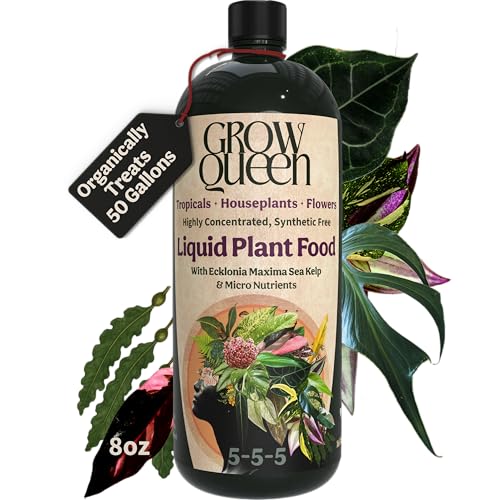
The 5-5-5 N-P-K ratio makes Grow Queen the only true balanced organic liquid on the market, according to the brand, and it is for container flower growers who want equal support for leaves, roots, and blooms without favoring one over the other. Its gentle formula, designed for potted plants and tropicals, reduces the risk of root burn in small containers, and buyers report it “boosted plant health and growth significantly” and “revived sluggish plants with new blooms and leaves.” The instant-acting liquid can show visible results within days.
One 8-ounce bottle treats up to 50 gallons of water, providing roughly 50 feedings — about a year of weekly care for a typical collection. The formula uses cold-processed Ecklonia maxima sea kelp from the South Atlantic, delivering auxins (natural plant growth hormones) and trace minerals that thicken stems and deepen leaf color.
This fertilizer has virtually no smell, making it suitable for indoor flowers in a living room or office without the fishy odor common to many organic liquids, and it works across a whole windowsill of flowering houseplants with one bottle. skip it if you need a bloom-specific high-phosphorus feed — the 5-5-5 is balanced, not bloom-focused. For a single, odorless, balanced organic liquid that supports all stages of container flower growth, this is the top pick.
Why it’s great
- Odor-free formula works indoors without stinking up your space
- One 8 oz bottle makes up to 50 gallons of feed
- 5-5-5 balance supports both foliage and blooms in containers
Good to know
- Small bottle size requires more frequent repurchasing for large collections
- Best results require consistent weekly feeding
2. Neptune’s Harvest Rose & Flowering Fertilizer (2-6-4)
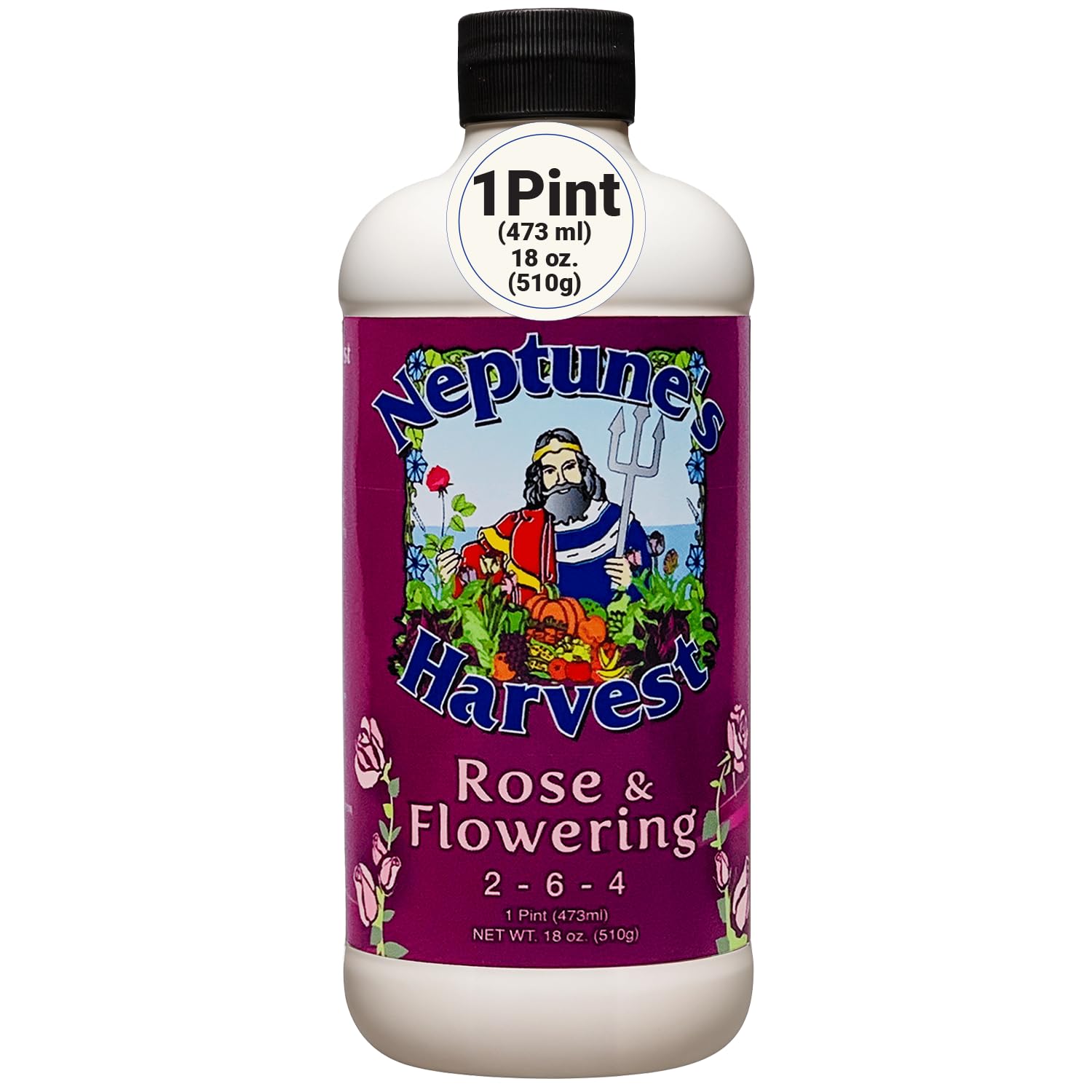
Where the Grow Queen is balanced for all-purpose feeding, the Neptune’s Harvest shifts hard toward bloom production with its 2-6-4 NPK ratio. The middle number (phosphorus) is triple the nitrogen, so your container flowers focus energy on buds and petals rather than just leaves. At 18 ounces, it holds the same volume as the MARPHYL, but Neptune’s delivers more phosphorus per ounce and includes liquid calcium (calcium dissolved in water), which strengthens cell walls and helps prevent blossom-end rot in potted tomatoes and peppers.
This fertilizer works both as a soil drench and a foliar spray (you spray it on the leaves for faster uptake). You mix just 1 ounce per gallon of water for most container flowers. Owners mention incredible results: one reviewer harvested 102 bell peppers from 9 indoor plants after switching to this formula. Another noted that “flowers go crazy with it.” The formula includes molasses, humic acids (natural compounds that improve nutrient uptake), yucca extract (a natural wetting agent from the yucca plant), and biological microbes, which feed the soil biology in your pot and improve the potting mix itself over time.
The downside is the smell — reviewers consistently describe it as “a bit of a smell” or “like the ocean.” It fades after the soil dries, but you will want to use this one in a well-ventilated room or outdoors. Choose this over the Grow Queen if your container flowers are heavy bloomers like roses, petunias, or hibiscus and you want the highest possible flower count. pass on it if you need an odorless indoor feed — the Neptune’s has a definite fishy scent.
Where it shines
- High-phosphorus 2-6-4 ratio pushes maximum bud and bloom production
- Contains liquid calcium and humic acids for strong cell walls and soil health
- Can be used as a foliar spray for faster nutrient absorption
Worth noting
- Strong fishy odor that lingers until the soil dries out
- 18 oz bottle is small for large container gardens
3. MARPHYL All-Purpose Plant Food (16.9 oz)

If your potted flowers are in poor soil and look half-dead, MARPHYL is the bottle that customers note “perked up within 4 days” even for “new plantings in poor soil.” The 16.9-ounce bottle uses a 1:20 mixing ratio (one part fertilizer to 20 parts water). That is more diluted than the 2-6-4 Neptune’s, but it makes the bottle last longer since you use less per feeding. It delivers balanced macro and micronutrients from marine phytoplankton (microscopic marine algae), giving your container flowers a broad spectrum of trace elements that standard N-P-K fertilizers often skip.
The brand markets the formula for indoor plants, succulents, bamboo, and hydroponics (growing plants in water without soil). But buyers are using it successfully on patio flowers and heat-beaten vegetable gardens. One reviewer noted that “Pride of Barbados, Elephant Ears, herbs [are] thriving 6 weeks later” after using this every two weeks at the 20:1 mix.
Note that MARPHYL has a strong fishy odor — best used outdoors or with a window open. It uses a general-purpose nutrient profile rather than a bloom-specific ratio. If your container flowers are already healthy and you just want a cost-effective maintenance feed that keeps everything green and growing, this is your bottle. it’s not for you if you want a bloom-specific high-phosphorus formula — for that, get the Neptune’s Harvest instead. One 16.9-ounce bottle yields up to 3.2 gallons of mixed feed at the 1:20 ratio.
What stands out
- Large 16.9 oz bottle at a budget-friendly price point
- Revives stressed plants quickly, as verified in multiple buyer reports
- Diluted 1:20 ratio makes the bottle last for many feedings
The trade-offs
- Strong fishy smell that works best for outdoor use
- General-purpose balance, not optimized for bloom production
4. True Organic Liquid All Purpose Plant Food (32 oz)
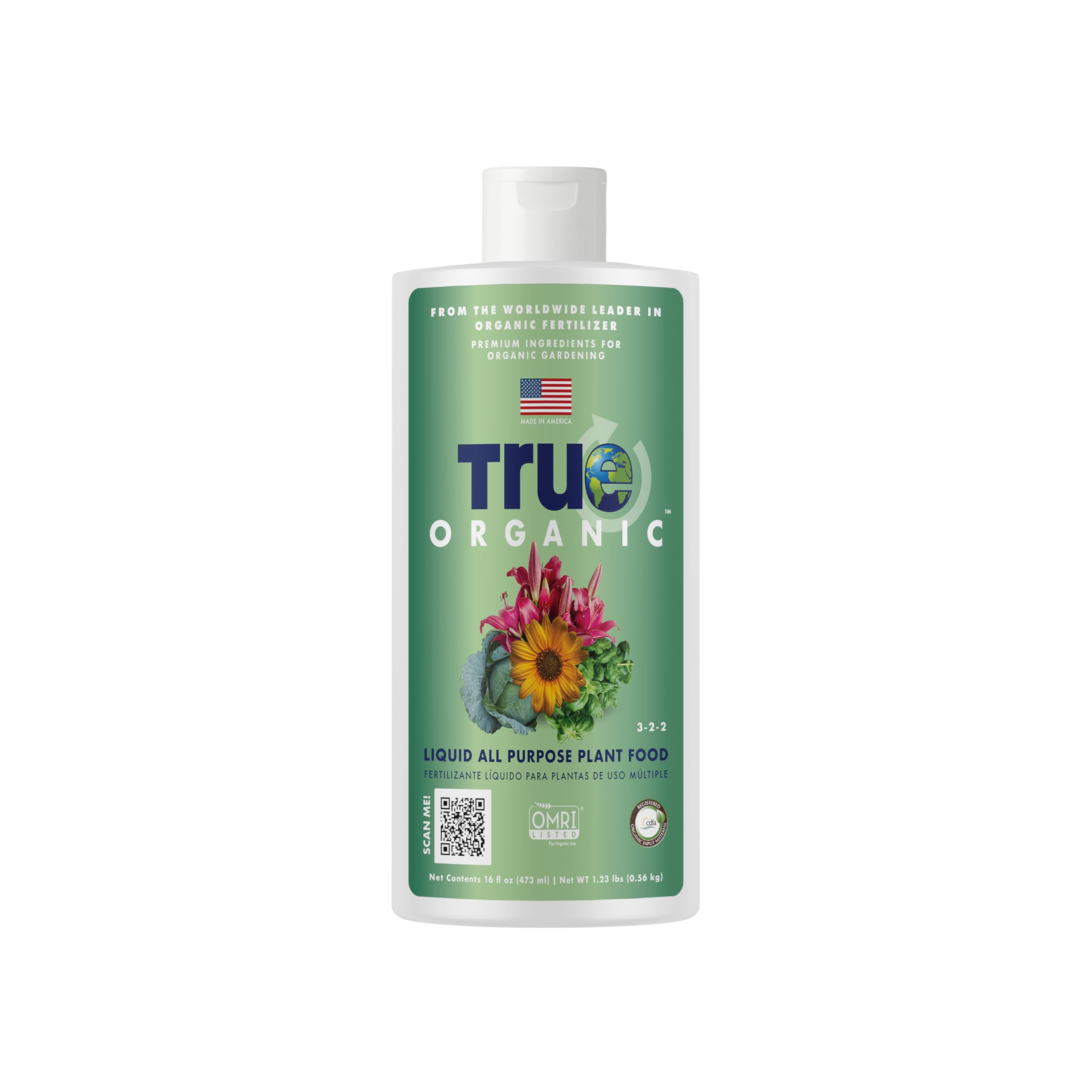
The single number that matters most in this category is the NPK ratio, and this product scores a 3-2-2, which leans slightly nitrogen-heavy for green growth but still provides enough phosphorus and potassium to support solid flower production in containers. If you have a balcony full of pots, the True Organic 32-ounce bottle handles the entire season without a mid-summer restock. The brand says it covers up to 60 square feet of containers.
The trade-off you accept here is the smell — multiple reviewers describe it as “strong” and “bad,” so this is strictly an outdoor fertilizer. One buyer mentioned “the plants are HUGE, beautiful, bountiful” using this every two weeks. The ingredients come from fish solubles (liquid fish protein), soy protein hydrolysate (broken-down soy protein that plants absorb quickly), and kelp extract. Together they give your potted flowers a steady supply of organic nitrogen for leafy growth while the kelp pushes root development.
This is the price-to-volume champion. You get the most liquid for your money. Each 2-ounce dose per gallon of water is easy to measure even for beginners. If you have a large container garden and prioritize bottle longevity over odor-free application, this is the pick. look elsewhere if you need an odorless indoor feed — the True Organic has a strong fishy smell.
The upsides
- Massive 32 oz bottle covers up to 60 sq ft of containers
- Budget-friendly per-feeding cost compared to smaller bottles
- Organic fish, soy, and kelp ingredients feed soil microbes
Keep in mind
- Strong odor that is best suited for outdoor use
- Higher nitrogen (3%) may favor leaf growth over blooms
5. Espoma Organic Bloom! (16 oz)

What you actually get at this lower price is the lowest nitrogen count in this entire list — just 1% — paired with a phosphorus-heavy 1-3-1 ratio that tells your container flowers to stop making leaves and start pumping out buds. This is a dedicated bloom booster, not an all-purpose feed. It is designed for the flowering stage rather than general maintenance. The 16-ounce bottle is a concentrated liquid, so you only use one capful per gallon of water. The company has been making organic fertilizers since 1929.
What you give up here is versatility and bottle size. The 16 ounces runs out faster than larger bottles. The formula is too low in nitrogen to support leafy growth if your plants need a general pick-me-up. The smell is “pungent” according to buyers, so keep this one outside. One owner reported it “greatly improved flower vibrancy and beauty for zinnias, gardenias, geraniums, azaleas, hydrangeas.”
Buy this if you have a specific batch of annuals in hanging baskets or window boxes and you want to push every last flower out of them before the season ends. It is also approved for organic gardening, which matters if you grow edible flowers like nasturtiums or pansies in your containers. steer clear if you need a general-purpose feed — this one is bloom-only. It is the exact budget buyer it is perfect for: the gardener who wants a cheap, targeted bloom booster for a single season of container flowers and doesn’t need a multi-purpose fertilizer.
Why we’d pick it
- Lowest nitrogen (1%) of any pick, pushing all energy into blooms
- Concentrated formula means one capful per gallon goes far
- Approved for organic gardening
A few caveats
- Small 16 oz bottle runs out quickly for large container gardens
- Pungent smell requires outdoor application
6. Great Big Roses and Flowers Liquid Fertilizer Booster (32 oz)
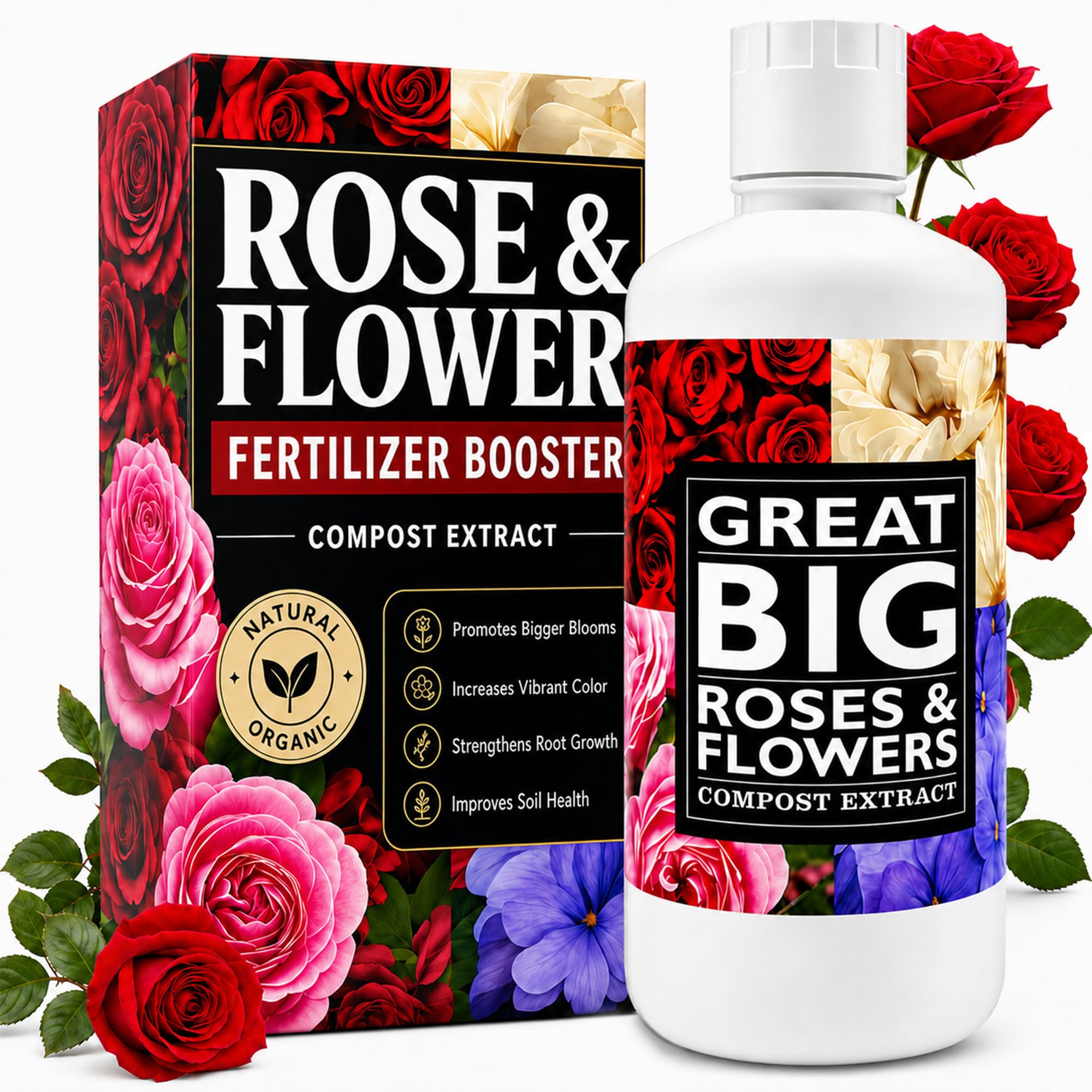
This product is perfect for the frustrated container gardener whose roses or flowers are stubbornly refusing to bloom despite regular feeding, because it works as a soil activator rather than a direct fertilizer. It delivers humic acids (compounds that improve nutrient uptake), seaweed, and over 70 chelated trace minerals (minerals bonded to organic molecules so roots can absorb them). These unlock nutrients already present in your potting mix rather than adding new ones. If your container roses are stubborn and refuse to bloom even when you feed them regularly, this booster helps by converting locked-up soil nutrients into forms the roots can actually absorb. Reviewers point out “rose bushes that had not bloomed in years producing big, beautiful flowers within weeks.”
The 32-ounce bottle uses a 4-ounce dose per gallon of water, giving you about 8 applications per bottle — enough for a full growing season for most container gardens. One customer observed that “my roses haven’t been this plentiful ever” after just one application. Another said it works for “hydrangeas, citrus trees, and garden plants” beyond just roses. The formula amplifies the results of any other fertilizer you are already using, so you can combine it with the Neptune’s Harvest or Espoma for a double punch.
The honest limit is the price per application — this is the most expensive option in the lineup. The jug design frustrates some buyers because the wide mouth makes measuring messy. But if your container flowers are established plants that just need a nudge to unlock their potential, this is the one specialized tool that solves the problem. Choose it when nothing else seems to work — just be prepared for the higher cost and a slightly messy pour.
Strong points
- Unlocks existing nutrients in potting soil that plants cannot otherwise absorb
- Reportedly revives non-blooming rose bushes within weeks
- Works alongside any other fertilizer to amplify results
Before you buy
- Higher per-application cost than standard liquid fertilizers
- Wide-mouth jug makes measuring and pouring messy
Understanding the Specs
N-P-K Ratio (Nitrogen-Phosphorus-Potassium)
The three numbers on every fertilizer label tell you exactly what the plant will focus on. For container flowers, the middle number (phosphorus) is the most important because it drives bud formation and blooming — a 2-6-4 or 1-3-1 ratio shifts energy into flowers, while a 5-5-5 or 3-2-2 supports more even growth across leaves, roots, and blooms. Potted plants cannot search for phosphorus in the soil like garden plants, so you have to supply it in every feeding.
Liquid Volume and Mixing Ratio
The bottle size in fluid ounces tells you how many feedings you get, but the mixing ratio determines how fast you go through it. A 1:20 ratio (like the MARPHYL) uses less fertilizer per watering and makes a bottle last longer, while a 1-gallon-to-1-ounce ratio (like the Neptune’s Harvest) gives a stronger dose per feeding. For small container collections, a smaller bottle with a dilute ratio can last a full season — for large balconies, the 32-ounce True Organic is the volume winner.
FAQ
How often should I fertilize container flowers with liquid fertilizer?
Can I use a bloom booster on all my container flowers?
Why do my container flowers have lots of leaves but no blooms?
Is organic liquid fertilizer better than synthetic for pots?
Final Thoughts: The Verdict
For most buyers, the fertilizer for container flowers winner is the Grow Queen Organic Liquid (5-5-5) because it delivers a balanced N-P-K ratio, works odor-free indoors, and treats up to 50 gallons from one small bottle. If you want maximum bloom production for heavy-flowering containers, grab the Neptune’s Harvest Rose & Flowering (2-6-4). And for reviving stressed plants on a budget, the MARPHYL All-Purpose (16.9 oz) is designed to bring struggling plants back quickly.