
Specs are compiled from manufacturer listings and verified buyer reviews and can change over time — please confirm the key details on the product page before buying.
A capsicum plant that puts out weak, sparse fruit or leaves that turn yellow mid-season is almost always yelling for one thing: the right food. The trick is less about buying a bag labeled “tomato feed” and more about matching the NPK numbers to what capsicums actually demand at each growth stage — low nitrogen once flowers appear, high potassium to thicken the fruit walls, and steady calcium to stop blossom-end rot from ruining the harvest. This guide cuts through the shelf of 20-pound bags and fancy bottles to the specific formulations that make capsicums explode with fruit.
I’m Rikta — the founder and writer behind Lawn Gear Lab. This guide is built by comparing the manufacturers’ published specifications and the patterns across verified customer reviews, so you get each pick’s real strengths and trade-offs instead of marketing spin.
The crowd favorite here — 4.8 stars across 600+ owners — proves that the right dry granular formula can turn a struggling zucchini into a bloom machine, and the same logic applies to capsicums. This review of the fertilizer for capsicum market lines up the eight best options by formulation, feeding style, and real-world results so you can grab the one that fits your growing setup.
Our Picks at a Glance


How To Choose The Best Fertilizer For Capsicum
Capsicums are heavy feeders that respond dramatically to the right nutrient balance. Picking the wrong bag can give you a giant leafy plant with zero fruit or a harvest of tiny, thin-walled peppers. Here are the three specs you need to check first.
Understand the NPK Ratio
The three numbers on a fertilizer bag stand for Nitrogen (N), Phosphorus (P), and Potassium (K). For capsicums, the rule changes as the plant grows. Early on, a balanced feed like a 4-6-2 or 5-7-3 supports leaf and root development. Once flowers appear, you want the middle and last numbers to climb — potassium is the driver of fruit size, wall thickness, and overall yield. A blend with a high last number, such as 11-11-40, pushes capsaicin in hot peppers but is overkill for sweet bells unless you dilute it carefully.
Liquid vs. Granular: Feeding Speed
A liquid concentrate like the 8 oz Professional Pepper Fertilizer delivers nutrients instantly to the roots, which is ideal for fixing a deficiency you can see — yellow leaves, stunted growth — or for giving a weekly boost during fruiting. A granular formula like the Down To Earth 4-6-2 or the FoxFarm Happy Frog breaks down slowly over weeks, which means you apply it once at planting and once mid-season. For containers, liquids are easier to control; for in-ground beds, a granular feed saves you the weekly mixing step.
Calcium and Mycorrhizae: The Rot Preventers
Blossom-end rot — the dark, sunken spot on the bottom of a capsicum — is caused by a calcium deficiency during fruit formation. A fertilizer that lists calcium in its ingredients, like the FoxFarm Happy Frog, directly addresses this. Mycorrhizal fungi, which you find in the Dr. Earth and FoxFarm products, colonize the root system and improve the plant’s ability to pull water and nutrients (including calcium) from the soil. This is a buy-once feature that pays off through the whole season.
Quick Comparison
| Model | Best For | NPK Ratio | Form | Weight / Volume | Amazon |
|---|---|---|---|---|---|
| Burpee Bone Meal★ Best Overall | Root development | 3-15-0 (approx) | Powder | 3 lb | Amazon |
| FoxFarm Happy FrogAlso Great | Vigorous fruit production | 5-7-3 | Granules | 4 lb | Amazon |
| Down To Earth All PurposeBest Value | Organic all-round feeding | 4-6-2 | Granules | 5 lb | Amazon |
| Dr. Earth Home Grown | Soil health & microbes | 4-6-3 (approx) | Powder | 4 lb | Amazon |
| Greenway Biotech 11-11-40 | Hot pepper capsaicin boost | 11-11-40 | Powder | 1 lb | Amazon |
| TPS Nutrients Pepper Fertilizer | Liquid quick-fix | Not specified | Liquid | 32 oz | Amazon |
| Growth Technology Chili Fertilizer | Balanced liquid for chillies | Not specified | Liquid | 100 ml | Amazon |
| Leaves and Soul Professional Pepper | Pepper-specific liquid feed | 5-1-5 | Liquid | 8 oz | Amazon |
In‑Depth Reviews
1. Burpee Bone Meal Fertilizer
Our pick — over 4.5★ from 7,500+ verified ratings; the strongest balance of quality and price.
The old-school powder that builds the root system before fruit sets.
A bone meal fertilizer is not a complete feed for the whole season — it is a phosphorus and calcium bomb that you add at planting or transplanting time. The Burpee bag delivers a natural source of organic nitrogen, phosphorus, and calcium that promotes strong root establishment, which is critical for capsicums because a shallow root system leads to stress and fruit drop when the heat hits. The 3-pound bag covers 240 square feet, and the fine powder makes it easy to work into potting soil or sprinkle around existing plants.
Owners mention that “this stuff made my tomatoes and pepper come back to life” and note that it works well for bulbs, tomatoes, and peppers alike. The trade-off is the odor — several owners mention it “stinks” after rain, though the smell fades within about a week. It also runs roughly 33% lighter than the Dr. Earth option above (3 pounds vs 4 pounds), so factor that into your coverage math if you have a large bed. This is not a standalone feed for mature fruiting plants; pair it with a balanced liquid feed mid-season for best results.
Slow-release calcium: Use this at transplant to lock in root strength and prevent blossom-end rot, then switch to a bloom-boosting feed once flowers appear. The odor is real but temporary.
2. FoxFarm Happy Frog Tomato & Vegetable Fertilizer
The granular feed that turns struggling plants into bloom factories.
This 4-pound bag of granules carries a 5-7-3 blend that is built for heavy feeders during the flowering and fruiting stage. The phosphorus (the middle 7) drives bloom formation, while the potassium (the 3) supports fruit development. What sets this apart from standard vegetable food is the added calcium, which directly targets blossom-end rot — the most common reason a capsicum looks perfect on top and rotten on the bottom. The mycorrhizal fungi in the mix colonize the root zone and help the plant pull more water and nutrients from the soil, so each watering counts more.
Buyers report that it revived a failing zucchini plant after a single application, and capsicum growers note that it “helped support grow bag pepper forest” — a direct quote from the review data that sums up the vigor this stuff delivers. It has no chemical or fishy smell, which is a relief if you are feeding containers near a patio door.
High phosphorus boost
- Calcium prevents blossom-end rot before it starts
- Mycorrhizal fungi boost root efficiency and drought tolerance
- No unpleasant smell, unlike many organic granular feeds
Strong smell lingers
- Granular feeding is less precise than liquid for container growers who want weekly control
- Not formulated specifically for capsicums — works best as an all-round vigorous feeder
grab it if: you want a single application at planting that covers calcium, fungi, and balanced NPK for the whole fruiting season.
think twice if: you prefer a liquid feed you can adjust week-to-week or need a formula with a higher potassium number for hot peppers.
3. Down To Earth All Natural Fertilizers Organic All Purpose 4-6-2
A five-pound box that simplifies organic feeding down to one scoop.
The 4-6-2 formula in this box blends fish bone meal, blood meal, feather meal, rock phosphate, langbeinite, greensand, humates, and kelp meal into a single granular feed that replaces 15 separate amendments. For a capsicum grower, that means you can mix this into the soil at planting and the nutrients release steadily over the growing season without needing to calculate which bag has the potassium and which has the phosphorus. The langbeinite provides a natural source of potassium and magnesium, both important for fruit quality.
Owners consistently report that it revived pale, flimsy tomato plants within two weeks and that plants thrive on it with minimal effort. The fishy odor is noticeable for a few days after application, and some customers note you must work it into the soil or water it in well to avoid attracting raccoons. At 5 pounds, it is the heaviest bag in this lineup, giving you more feed per unit than the 4-pound Dr. Earth option and the 3-pound Burpee bag.
best for: organic gardeners who want one box to feed everything from capsicums to flowers without mixing different bottles or bags.
skip if: you are bothered by a fishy smell or you need a high-potassium formula for hot pepper capsaicin production.
4. Dr. Earth Home Grown Organic Tomato, Vegetable & Herb Fertilizer

The one that feeds the soil biology as hard as the plant.
Dr. Earth packs its 4-pound bag with TruBiotic beneficial soil microbes and both ecto and endo mycorrhizae — living organisms that attach to the root system and expand the plant’s reach for water and nutrients. For capsicums grown in containers or raised beds where the soil can get compacted, these microbes create a buffer against drought stress and nutrient lockout. The formula is made from organic nutrients found in land and ocean plants, fish, fish bones, and mined minerals, with no synthetic ingredients or GMO-infested chicken manure.
Experienced growers with “60+ years” of gardening note that Dr. Earth is the go-to for adding probiotics to sterilized indoor soil. One reviewer noted that it revived yellowing, flowering basil in low-nutrient container soil — greener in one day, harvestable in two weeks. The recurring criticism is the price, which sits near the premium end of this list, and the fact that over-application can lead to overgrown plants with low fruit production. Follow the instructions closely, and it feeds for several months on a single application.
reach for this if: you grow in containers or poor soil where root health and microbe activity make the difference between a few peppers and a full harvest.
look elsewhere if: you are on a tight budget — some owners find the premium price hard to justify versus competing organic blends.
5. Greenway Biotech, Inc. Pepper & Herb Fertilizer 11-11-40
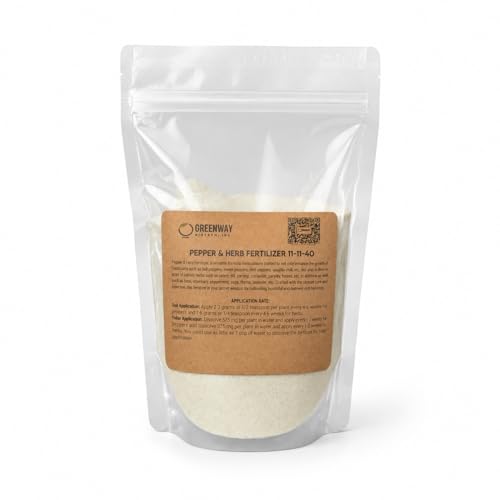
The professional-grade powder engineered for capsaicin production.
This 1-pound bag of water-soluble powder has an NPK of 11-11-40 — the ultra-high potassium number (40%) is what makes it a specialist tool rather than an all-round feed. Potassium drives the production of capsaicin in hot peppers and essential oil concentration in aromatic herbs, so this is the fertilizer to use when you want hotter habaneros, more fragrant basil, and thick-walled bell peppers. It dissolves completely in room-temperature water, so it works in soil drenches, foliar sprays, drip irrigation, and hydroponic systems like NFT, DWC, and Dutch buckets.
The powder contains EDTA-chelated iron, manganese, zinc, and copper that stay plant-available across a pH range of 4 to 9, preventing nutrient lockout in varying water conditions. Reviewers point out seeing results “within the first couple days of application” and note that pepper plants that were growing “super slow” took off quickly after switching to this feed. A single pound makes up to 200 gallons of feeding solution when mixed at the recommended rate of 0.5 pounds per 100 gallons. This is not a beginner’s feed — the high potassium can burn plants if over-applied, so measure carefully.
best for: serious hot pepper growers and hydroponic setups where you control every variable and want maximum capsaicin yield.
not for: casual gardeners who want a single all-purpose bag — this requires mixing and precise application.
6. TPS Nutrients Pepper Fertilizer – Liquid Plant Food

The quart-sized rescue for yellowing, stunted pepper plants.
When your capsicum leaves turn yellow and growth stalls, a liquid feed delivers nutrients to the roots in hours rather than weeks. This 32-ounce bottle from TPS Nutrients is a ready-to-use concentrate that supports strong roots, healthy foliage, and steady growth, with a specific focus on flowering and fruiting. Shoppers say that it “reversed stunted growth and yellowing leaves on peppers” and note a “dramatically improved bell pepper growth” compared to a standard all-purpose feed like Miracle-Gro.
The bottle is formulated for both hot and sweet peppers, covering chili peppers, bell peppers, and other varieties in garden beds or containers. One owner described a turnaround where struggling sweet and hot peppers (with yellowing, flower drop, and dying plants) turned green and flowered heavily. The 32-ounce volume is the largest liquid bottle in this roundup — compare that to the 8-ounce Leaves and Soul bottle below — so you get more feed per purchase. A few buyers report the price feels a bit high per application, but the results justify the cost for container gardeners with a handful of plants.
Fast liquid uptake: Keep this on hand for mid-season rescues. If a plant looks sad, a single watering with this bottle will tell you within a week whether the issue was nutrition.
7. Growth Technology Chili Fertilizer

The tiny bottle that punches above its weight for chili plants.
Growth Technology claims to be the only liquid nutrient solution on the market formulated specifically for chili and pepper plants. The 100ml bottle is small — it weighs just 0.13 kilograms — but it is a concentrated formula with a 1:200 mixing ratio, meaning a little goes a long way. Owners mention that it “increased my yield” and that their bell peppers and jalapeños “all loved this stuff and produced a lot of fruit.”
The balanced nutrition is designed to be used regularly from the start of the growth cycle, supporting healthier plants and juicier fruits. The catch is the bottle size: capsicums are heavy feeders, and some buyers found that a single 100ml bottle runs out quickly if you have multiple plants. One buyer mentioned it is “not recommended for peppers; they are heavy feeders requiring too much of this liquid fertilizer” and suggested slow-release granular feed instead. If you have a small container setup with two or three plants, this is a precise, effective option. For a full garden, buy the larger sizes available from the brand.
best for: small-scale growers with a few chili or bell pepper plants who want a species-specific liquid feed.
skip if: you have a big garden or want a lower-cost-per-feeding option — the small bottle adds up fast.
8. Leaves and Soul Professional Pepper Fertilizer Liquid 5-1-5
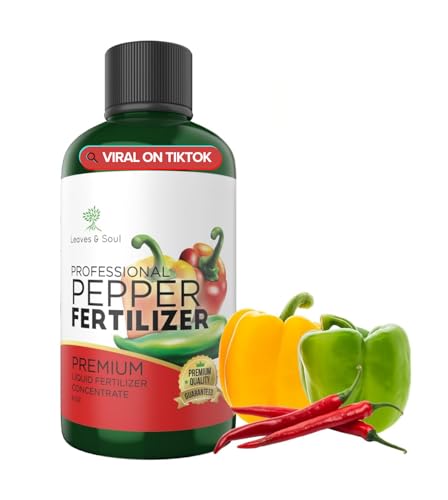
The 5-1-5 liquid that perked up non-flowering peppers into fruit.
This 8-ounce concentrate from Leaves and Soul carries a 5-1-5 NPK, which is a low-phosphorus formula designed for all growth stages — from seedlings to mature fruiting plants. The liquid form absorbs instantly, so you see results quickly. Customers note that it “perked up our non-flowering pepper plants — finally fruiting!” and that a 100% satisfied bell pepper grower “noticed a change in my Bell Pepper plants quickly.” It is formulated for indoor and outdoor use and works for tomatoes, melons, corn, pumpkins, and herbs as well.
The bottle is small at 8 ounces, but because it is a concentrate you dilute with water, a single bottle lasts multiple feedings. The brand is relatively new (Leaves and Soul) with 140 ratings at 4.4 stars, so the track record is thinner than the Burpee bone meal with nearly 8,000 ratings. If you overwinter your pepper plants each year, this is a solid choice to keep them healthy and ready for the next season — owners specifically mention overwintering success as a use case.
Easy spray application: A reliable starter liquid for anyone who wants a pepper-specific feed without the high-potassium kick of the Greenway Biotech option. The results are real, but the brand is green.
Understanding the Specs
NPK Ratio — The Three Numbers
Every fertilizer label shows three numbers separated by dashes, for example 5-7-3 or 11-11-40. The first number is nitrogen (N), which drives leaf and stem growth. The second is phosphorus (P), which supports root development and flower formation. The third is potassium (K), which controls fruit size, wall thickness, and the production of capsaicin in hot peppers. For capsicums, the ideal ratio shifts from a balanced feed during the early leafy stage to a higher last number once flowers and fruit appear.
Liquid vs. Granular — Feeding Speed and Control
A liquid concentrate like the 8 oz Professional Pepper Fertilizer delivers nutrients to the root zone within hours, making it perfect for correcting deficiencies or giving a weekly boost during fruiting. A granular feed like the FoxFarm Happy Frog or the Down To Earth All Purpose releases nutrients slowly over several weeks, requiring fewer applications but less precise control. For container capsicums, liquids give you the ability to adjust the feed week-by-week based on the plant’s appearance. For in-ground beds, granules save time and reduce the risk of nutrient burn from over-mixing.
FAQ
Can I use a general vegetable fertilizer for capsicums or do I need one labeled “pepper”?
How often should I fertilize my capsicum plants during the fruiting stage?
Will bone meal alone be enough for my capsicum plants?
What does blossom-end rot look like and how do I stop it with fertilizer?
Is liquid fertilizer better than granular for container-grown capsicums?
What is the difference between organic and synthetic fertilizer for capsicums?
Can I use the Greenway Biotech 11-11-40 on sweet bell peppers or just hot peppers?
How do I know if I am over-fertilizing my capsicum plants?
How long does a 1-pound bag of powder like the Greenway Biotech last for a few capsicum plants?
Do I need to add mycorrhizal fungi separately or is it already in most fertilizers?
Final Thoughts: The Verdict
For most gardeners, the fertilizer for capsicum winner is the FoxFarm Happy Frog Tomato & Vegetable Fertilizer because it delivers a balanced 5-7-3 NPK with added calcium and mycorrhizal fungi in a single granular application — preventing blossom-end rot while building root health. If you want a liquid feed you can adjust week-to-week, grab the TPS Nutrients Pepper Fertilizer. And for hot pepper growers chasing maximum capsaicin, the Greenway Biotech 11-11-40 is the one to reach for.
How We Picked
We do not accept paid placement. Every pick is matched to a real buyer and a real use-case; we do not hands-on test units.
Sources & Methodology
Specifications: manufacturer listings and product documentation. Review insights: verified customer reviews, as of July 2026. Pricing: not shown on this page (it changes often); check the current price via the retailer link.
As an Amazon Associate, Lawn Gear Lab earns from qualifying purchases. This does not affect which products we feature.