
Bougainvillea in pots are notorious for producing lush green vines while stubbornly refusing to bloom. The difference between a wall of green and a cascade of color comes down to one factor: the NPK ratio and how quickly your potting mix flushes out nutrients. Without a targeted fertilizer strategy, your bracts will stay pale and sparse no matter how much sun they get.
I’m Rikta — the co-founder and writer behind Lawn Gear Gear Lab. I’ve spent countless hours cross-referencing soil science journals, comparing NPK values across dozens of brands, and analyzing thousands of owner reports to isolate exactly what potted bougainvillea need to push out brilliant flowers.
This guide walks through the specific bloom-boosting numbers, application timing, and product forms that actually work in containers. My aim here is to help you identify the right best fertilizer for bougainvillea in pots based on your plant’s maturity and your own willingness to mix.
How To Choose The Best Fertilizer For Bougainvillea In Pots
Container-grown bougainvillea face a unique challenge: every time you water, nutrients wash out the drainage holes. That means the fertilizer you choose must either be strong enough to survive multiple leachings or applied often enough to keep levels up. The right choice depends on your schedule, your plant’s size, and the bract color you are chasing.
Find the right NPK ratio
Bougainvillea bloom on stress and phosphorus. A formula with a middle number significantly higher than the first number — such as 10-30-10 or 9-58-8 — signals feeding energy into flower production rather than leaf growth. Avoid high-nitrogen lawn foods that push green growth at the expense of bracts.
Decide between granular and liquid forms
Granular slow-release options like an 8-8-8 or a specially formulated bloom granule offer once-a-month convenience but rely on consistent soil moisture to break down. Liquids and water-soluble powders deliver nutrients immediately, making them ideal for correcting a bloom stall fast, but they require bi-weekly or weekly application in pots.
Check the iron content
Bougainvillea in containers often show iron chlorosis — yellowing leaves with green veins — especially in alkaline potting mixes. A fertilizer that includes chelated iron or a high iron percentage (up to 5%) helps keep foliage dark and bract color deep. Without enough iron, even a perfect NPK ratio yields washed-out blooms.
Quick Comparison
On smaller screens, swipe sideways to see the full table.
| Model | Category | Best For | Key Spec | Amazon |
|---|---|---|---|---|
| BGI BOUGAIN 10lb | Granular | Set-it-and-forget-it monthly feeding | 5% Iron content | Amazon |
| Carl Pool BR-61 | Powder | Maximum phosphorus for bloom push | 9-58-8 NPK ratio | Amazon |
| Grow More Super Bloomer | Powder | Versatile feeding for mixed flower pots | 15-30-15 NPK + chelated micronutrients | Amazon |
| Neptune’s Harvest 2-6-4 | Liquid | Organic soil-building with gentle feeding | 2-6-4 NPK + humic acids | Amazon |
| TPS Bougainvillea 32oz | Liquid | Targeted liquid for stressed or stalled plants | 32 oz ready-to-use liquid | Amazon |
| Miracle-Gro LiquaFeed Bloom | Liquid | Quick daily boost with watering wand | 64 oz total (4-pack) | Amazon |
| Miracle-Gro Organics Blooms | Granules | Organic option for gentle feeding | 5-7-10 NPK, OMRI listed | Amazon |
In‑Depth Reviews
1. BGI Fertilizers BOUGAIN Bougainvillea Fertilizer

BGI is the largest bougainvillea nursery in the country, and their proprietary 10-pound bag of granules is formulated specifically for this species. The 5% iron content is the standout feature — it directly addresses the chlorosis that plagues container plants in alkaline potting mixes, keeping foliage dark and bract color saturated. The once-a-month granular application eliminates the need for mixing, making it the most convenient option for owners with multiple large pots.
Owner reports consistently describe rapid recovery on plants that had stalled or turned yellow after storm damage or poor feeding. The granular formula slowly breaks down with each watering, providing a steady supply of nutrients that resist the rapid leaching of containers. Users note that new plants show vigorous growth within weeks and old plants that had not bloomed in years produce heavy bract displays.
The main trade-off is the upfront investment for a 10-pound bag — larger than most home gardeners need for a single pot. However, for anyone serious about maintaining several bougainvillea year after year, the per-feeding cost is lower than liquids, and the iron-rich formula eliminates the need for separate micronutrient supplements. A resealable bag keeps granules fresh between monthly applications.
What works
- 5% iron content corrects chlorosis and deepens bract color
- Once-a-month granular feeding suits busy schedules
- Developed by the largest bougainvillea nursery in the US
What doesn’t
- 10-pound bag is large for a single container plant
- Granules require consistent soil moisture to break down
2. Carl Pool BR-61 Plant Food
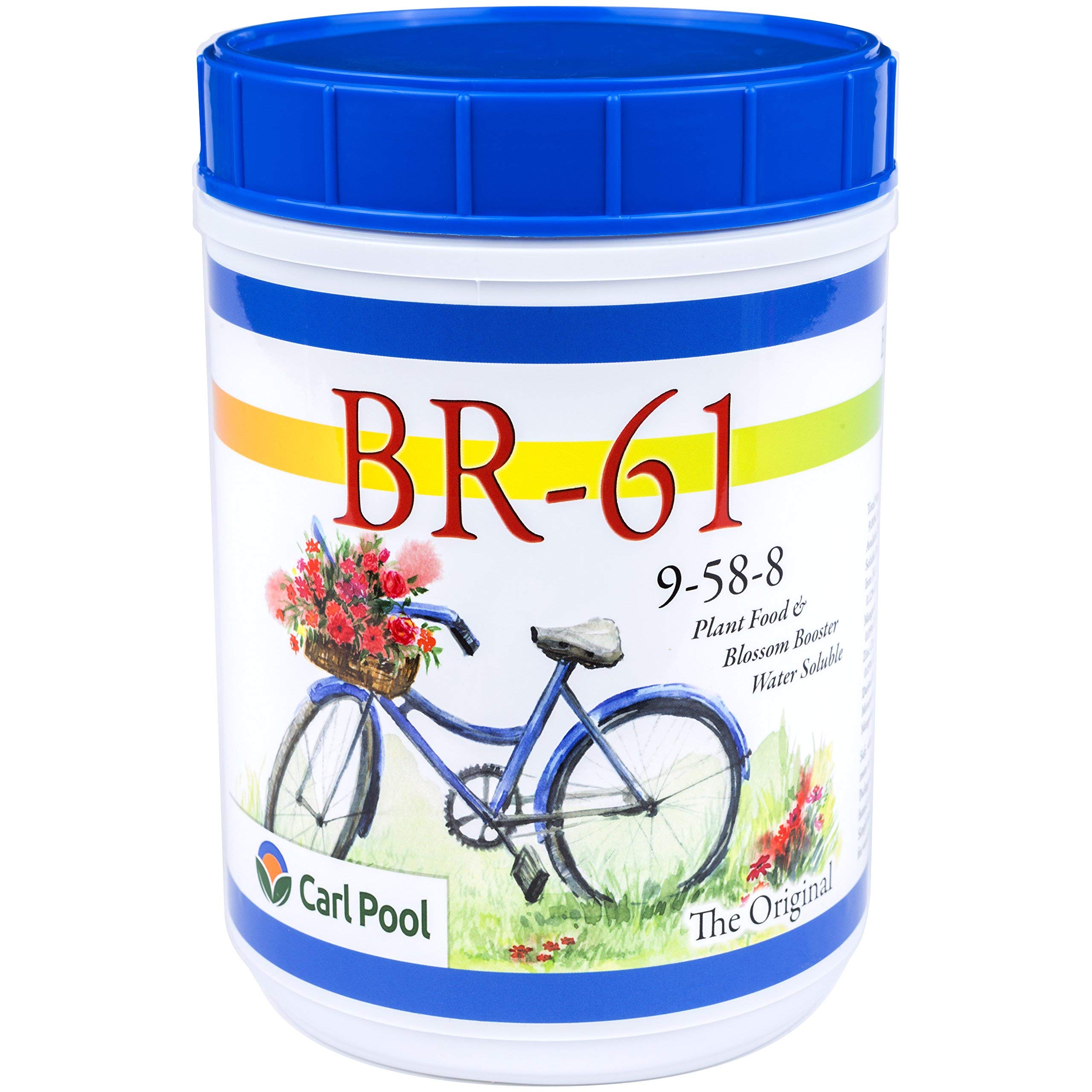
Carl Pool BR-61 delivers a staggering 9-58-8 NPK ratio that pushes phosphorus levels far beyond any balanced fertilizer. For bougainvillea in pots, this extreme middle number directly triggers bract formation on mature wood. The powder form mixes at one tablespoon per gallon of water, making it easy to adjust strength for younger plants or during cooler months when growth slows.
Long-term users report alternating BR-61 with fish emulsion or seaweed feeds every two weeks to avoid nutrient lockout while maintaining continuous bloom cycles. Plumeria and hibiscus growers also rely on this formula, which speaks to its effectiveness on any tropical flowering plant that responds to heavy phosphorus signals. The 3-pound bag lasts multiple seasons for a modest container collection.
Because the phosphorus content is so high, beginners should avoid over-application. Too much can burn roots in small pots, and the powder must be fully dissolved before watering. Stick to the labeled rate and observe leaf tips for browning — if you see salt stress, reduce frequency to every three weeks rather than every two.
What works
- Extremely high phosphorus ratio (9-58-8) forces heavy bloom initiation
- Water-soluble powder is easy to adjust for pot size
- Trusted by plumeria and tropical flower specialists
What doesn’t
- Powder must be fully dissolved to prevent root burn
- Very high phosphorus can lock out micronutrients if overused
3. Grow More Super Bloomer 15-30-15

Grow More Super Bloomer uses a 15-30-15 formula that provides both a solid nitrogen baseline for foliage and a significant phosphorus boost for flowering. The inclusion of chelated iron and manganese sets it apart from generic bloom boosters — these micronutrients keep container plants from showing deficiency streaks that turn leaves pale between veins. The water-soluble format dissolves fully and can be applied as a soil soak or foliar spray.
Gardeners using this on mixed flower pots report plants growing to twice their normal size with triple the blooms. For bougainvillea specifically, the balanced nitrogen prevents the leaf drop that sometimes occurs with ultra-high phosphorus formulas, making it a safer choice for younger plants or first-time owners. The 3-pound bag covers a large number of applications at the recommended 1:64 mixing ratio.
The powder requires a measuring scoop and some stirring to dissolve in a watering can. If you skip the dissolution step, undissolved granules can settle in the pot and cause uneven feeding. Stick to warm water for faster mixing and apply immediately after preparation — the dissolved nutrients degrade if stored overnight.
What works
- 15-30-15 ratio includes micronutrients like chelated iron and manganese
- Can be used as a foliar spray for rapid uptake
- Balanced enough for younger bougainvillea without leaf drop
What doesn’t
- Powder must be fully dissolved to avoid hot spots in pots
- Not a slow-release format — requires frequent mixing
4. Neptune’s Harvest Rose & Flowering Fertilizer
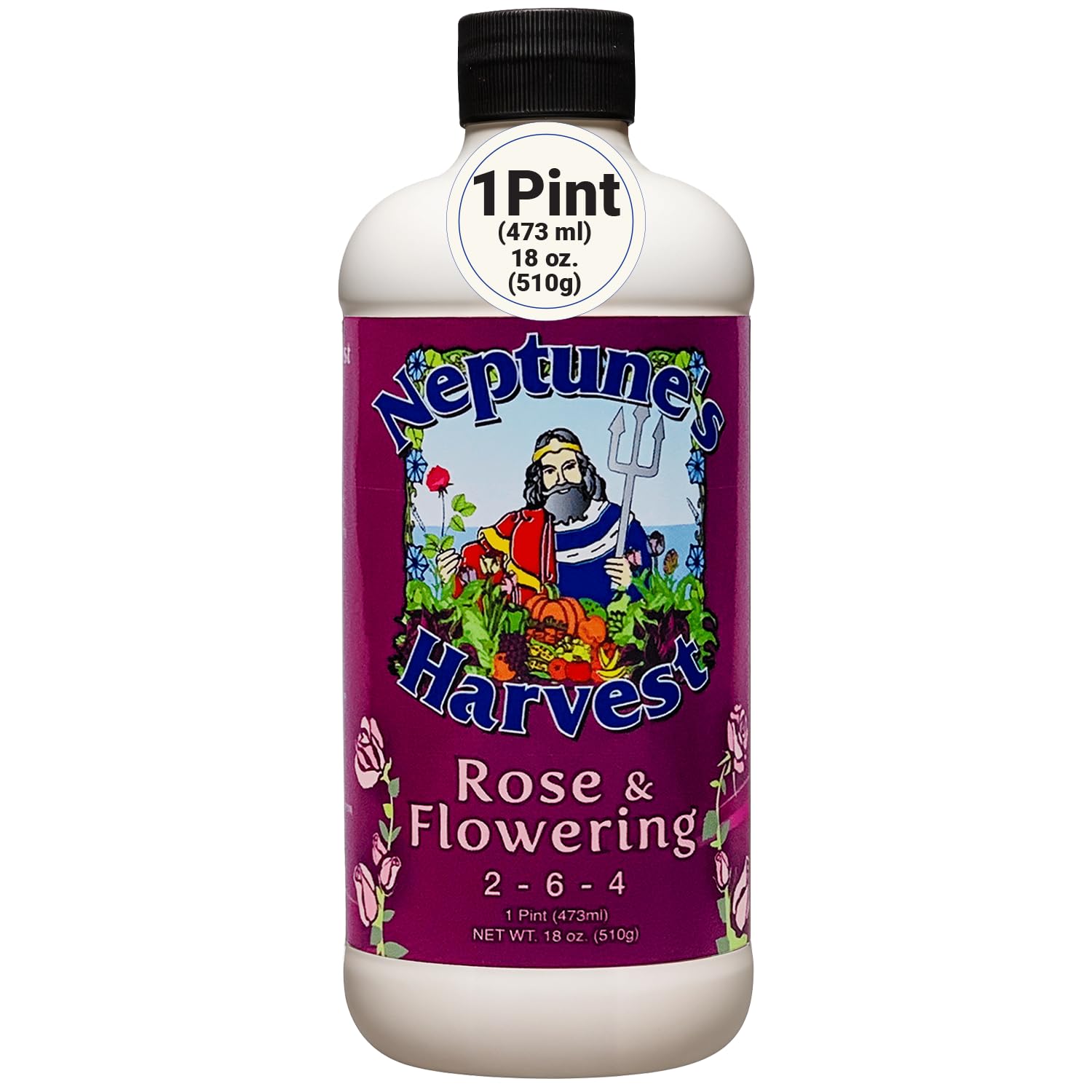
Neptune’s Harvest Ferilizer uses a 2-6-4 NPK derived from fish, seaweed, molasses, and humic acids, making it the only fully organic liquid option in this lineup. For container growers who want to build soil biology while feeding blooms, the humic acids and yucca extract improve nutrient retention in potting mixes that drain fast. The 18-ounce pint is concentrated — one ounce per gallon provides enough for several 5-gallon pots per feeding.
Users report rapid recovery on stunted plants, with one account detailing a Brandywine tomato that perked up overnight and produced fruit within two days. For bougainvillea, the organic calcium supports cell wall strength, which helps potted plants handle wind stress on patios. The mild fish smell dissipates once the soil dries, and the formula is safe around kids and pets when dry.
The organic composition means a lower nutrient concentration compared to synthetic powders, so you will need to feed more often — roughly every two weeks during active growth. The pint bottle goes quickly for a large collection, and the liquid form requires a measuring cap and consistent shaking before each use to redistribute the natural sediment.
What works
- Organic ingredients build soil biology in containers
- Humic acids and yucca extract improve nutrient retention
- Safe around kids and pets once dry
What doesn’t
- Requires bi-weekly feeding due to lower NPK concentration
- Small 18-ounce bottle goes quickly for multiple large pots
5. Miracle-Gro Performance Organics Blooms Granules

Miracle-Gro Performance Organics Blooms uses a mild 5-7-10 NPK with OMRI-listed ingredients, offering a middle ground between synthetic boosters and raw organic amendments. The granules are easy to sprinkle on top of potting mix and work into the surface — no mixing, no measuring cups. Reapplication every four to six weeks matches the leaching schedule of most container plants during warm months.
Owners report visible improvement on flowering plants like Black Eyed Susan, Mandevilla, and Canna lilies within one to two weeks. For bougainvillea in pots, the 7 phosphorus provides enough bloom signal without risking the salt buildup that higher numbers can cause in small containers. The 2.5-pound bag covers up to 165 square feet, making it a budget-friendly option for mixed container gardens.
The organic certification means slower release compared to synthetic granules, so plants in heavy bloom may need supplementary feedings during peak summer. The paper seal under the lid can loosen during shipping, and some users report the granules arrive with slight dust. Check the seal before storage to keep moisture out.
What works
- OMRI listed for organic gardening
- Granules are mess-free and easy to apply
- Mild NPK reduces risk of salt burn in small pots
What doesn’t
- 4-6 week release may need supplementation during peak bloom
- Paper seal under lid can come loose in transit
6. Miracle-Gro LiquaFeed Bloom Booster Flower Food

Miracle-Gro LiquaFeed Bloom Booster is a liquid concentrate designed for use with the LiquaFeed watering wand system, though you can measure it manually into a watering can. The 4-pack gives you 64 total ounces, enough for dozens of feedings on a moderate container setup. The liquid format delivers nutrients immediately to the root zone, which helps when bougainvillea stall mid-season and need a quick phosphorus hit.
Users consistently report faster blooming and healthier growth within days of starting a regular schedule — two squirts into a pint bottle or two big squirts into a quart, applied every few days. The formula is gentle enough for daily use on mature plants, and several owners mention it is safe for bees and other pollinators once the foliage dries. The four-bottle pack offers better value than single bottles if you have multiple pots.
The downside is that LiquaFeed is not a standalone complete feed for bougainvillea long-term if you want the high phosphorus and iron levels that this species craves. It works best as a maintenance booster between stronger granular feedings. Additionally, the bottles are small at 16 ounces each, so heavy users with large collections will go through them quickly and need to reorder frequently.
What works
- Delivers immediate nutrients for a quick bloom restart
- Safe for daily application and gentle on plants
- Four-pack provides good value for frequent feeders
What doesn’t
- Not a complete high-phosphorus solution for mature bougainvillea
- Small 16-ounce bottles deplete quickly for multiple pots
7. TPS Nutrients Bougainvillea Fertilizer
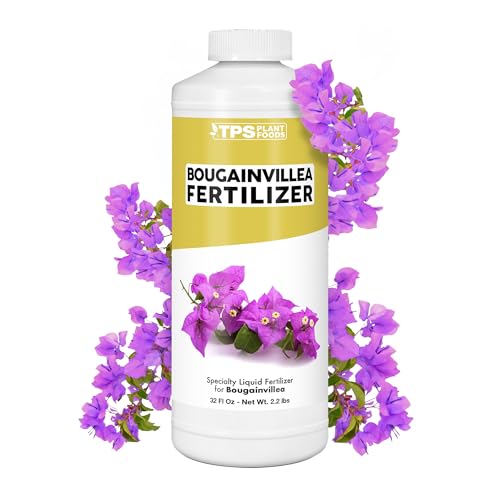
TPS Nutrients markets this 32-ounce liquid specifically for bougainvillea, making it the only product here formulated exclusively for this genus. The ready-to-use liquid requires no mixing — simply measure and pour into the pot during your regular watering routine. Owners report dramatic turnarounds on plants that were struggling after frost damage or prolonged neglect, with visible green-up and new bract formation within weeks.
Users with balcony bougainvillea appreciate the convenience of a no-mix liquid that works with daily watering schedules — critical for pots that dry out fast in direct sun. The formula covers trellises, fences, and containers equally well, and the 32-ounce bottle provides enough for several weeks of weekly feeding on a single large plant. Repeat buyers confirm it keeps potted plants blooming consistently through the season.
The main limitation is the price per ounce compared to powdered concentrates or bulk granular bags. For a single container, the 32-ounce bottle lasts a reasonable time, but owners with multiple large bougainvillea will find the ongoing cost higher than mixing their own from a powder. Additionally, the liquid format means you cannot adjust the NPK ratio — you are locked into the manufacturer’s formula.
What works
- Specifically formulated for bougainvillea, no guesswork needed
- Ready-to-use liquid — no mixing or measuring
- Quick results on stressed or frost-damaged plants
What doesn’t
- Higher cost per ounce compared to powders or granules
- Fixed NPK ratio cannot be customized for different growth stages
Hardware & Specs Guide
NPK Ratio (Nitrogen-Phosphorus-Potassium)
The most critical number for potted bougainvillea is the middle phosphorus value. A ratio like 9-58-8 or 15-30-15 forces energy into bloom production. Avoid ratios where the first nitrogen number exceeds the phosphorus number, as this pushes leaf growth and reduces bract density. For containers, a phosphorus value at least double the nitrogen value is the recommended starting point.
Granule vs. Powder vs. Liquid
Granules (BGI, Miracle-Gro Organics) offer once-a-month slow release but require consistent soil moisture. Powders (Carl Pool BR-61, Grow More) dissolve in water for immediate uptake but need precise mixing. Liquids (Neptune’s Harvest, TPS, LiquaFeed) are the fastest-acting option but require the most frequent application — weekly in fast-draining potting mixes. Choose based on how often you are willing to feed.
FAQ
How often should I fertilize bougainvillea in pots during summer?
Can I use a general 10-10-10 fertilizer for bougainvillea in containers?
What does iron deficiency look like in potted bougainvillea?
Final Thoughts: The Verdict
For most gardeners, the fertilizer for bougainvillea in pots winner is the BGI BOUGAIN 10lb because the 5% iron content and once-a-month granular format directly address the two biggest container problems: chlorosis and nutrient leaching. If you want maximum phosphorus for a fast bloom push, grab the Carl Pool BR-61. And for an organic soil-building approach, nothing beats the Neptune’s Harvest 2-6-4.