
Specs are compiled from manufacturer listings and verified buyer reviews and can change over time — please confirm the key details on the product page before buying.
If your magnolia is all leaves and no flowers, or if that deep green has turned a sad, pale yellow, you are looking at a classic acid-soil hunger problem. Magnolias are picky eaters — they need a soil pH on the acidic side and a specific nutrient mix to open up those waxy, fragrant blooms. The right fertiliser for magnolia doesn’t just make the tree look better; it determines whether you get a canopy of blooms or just more leaves.
I’m Rikta — the founder and writer behind Lawn Gear Lab. This guide is built by comparing the manufacturers’ published specifications and the patterns across verified customer reviews, so you get each pick’s real strengths and trade-offs instead of marketing spin.
Whether you are tending a towering Southern Magnolia or a compact Little Gem, the best fertiliser for magnolia delivers a precise acidifying formula that supports root health, deepens leaf colour, and drives the kind of bloom sets that stop the neighbours.
Our Picks at a Glance

How To Choose The Best Fertiliser For Magnolia
Magnolias evolved in rich, acidic woodland soils. A fertiliser that works for your lawn or vegetable bed can actually hurt a magnolia by raising the pH or delivering the wrong nitrogen balance. Here are the three factors that matter most.
Low pH Is Non-Negotiable
A magnolia’s roots can only absorb iron and phosphorus when the soil pH sits between 5.0 and 6.5. Above that range, leaves turn chlorotic — pale with dark veins — and flower buds stall. The fertilisers on this list all include sulfur or other acidifying agents to keep the root zone in the balance.
NPK Ratio and Release Type
The three numbers on the bag (nitrogen-phosphorus-potassium) tell you what the plant gets for leaves, roots, and flowers. Magnolias do well with a moderate first number (4 to 8) and a balanced middle number. Slow-release granules feed across a whole season with one application; water-soluble powders give you quick uptake for a tree that looks stressed and needs a fast green-up.
Micronutrients and Organic Matter
Iron, sulfur, and manganese are the unsung heroes for acid-loving trees. Without them, leaves yellow and blooms stay small. Organic fertilisers also add humic acids and beneficial soil microbes that improve the root environment over time, not just for one season.
Quick Comparison
| Model | Best For | NPK Ratio | Form | Item Weight | Amazon |
|---|---|---|---|---|---|
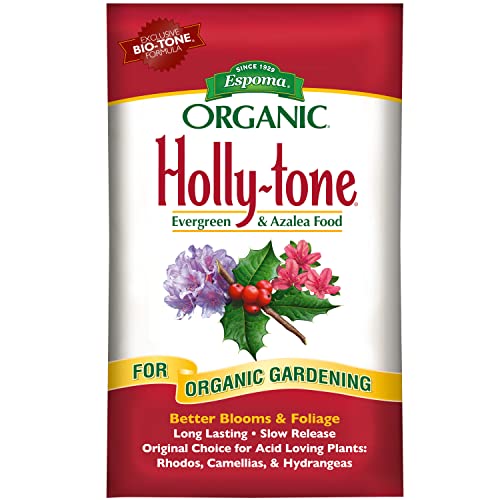
| Espoma Organic Holly-Tone (36 lb)★ Best Overall | Overall Best for Large Trees and Year-Round Feeding | 4-3-4 | Granules | 36 lb | Amazon |
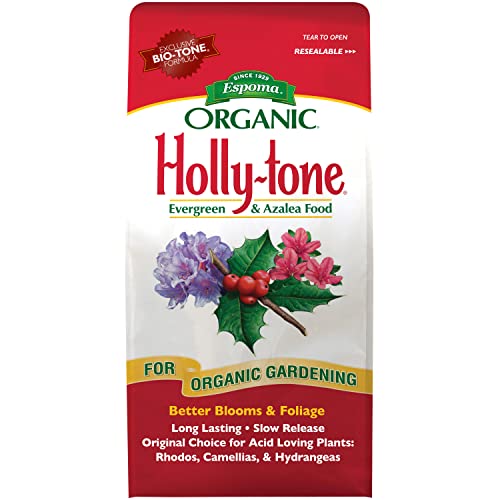
| Espoma Organic Holly-Tone (4 lb)Best Value Start | Entry-Level Organic for Small Gardens | 4-3-4 | Granules | 4.1 lb | Amazon |
| Miracle-Gro Water Soluble 5 lbFast Green-Up | Fast-Acting Water-Soluble for Quick Results | — | Powder | 5 lb | Amazon |
| Dr. Earth Acid Lovers 4 lb | Non-GMO Verified Organic Fertiliser | — | Granules | 16 oz | Amazon |
| TreeHelp Premium Fertilizer for Magnolia | Species-Specific Slow-Release for Magnolias | — | Granules | 3 lb | Amazon |
| FoxFarm Happy Frog 4 lb | Gentle Feed with Mycorrhizal Fungi | — | Powder | 4 lb | Amazon |
| Jack’s Classic 17-6-6 Acid Special 1.5 lb | High-Performance for Vigorous Vegetative Growth | 17-6-6 | Powder | 1.5 lb | Amazon |
| GARDENWISE 8-4-8 1 Quart | Economical Slow-Release for a Variety of Acid-Lovers | 8-4-8 | Granules | 0.96 kg | Amazon |
| TPS Nutrients Magnolia Liquid 32 oz | Ready-to-Use Liquid for Quick Absorption | 1:1:1 | Liquid | 32 fl oz | Amazon |
In‑Depth Reviews
1. Espoma Organic Holly-Tone 4-3-4 (36 lb)
Our pick — over 4.5★ from 950+ verified ratings; the strongest balance of quality and price.
A 36-pound powerhouse that feeds the whole garden for a year
This is the original acid-loving plant food for a reason — the formula has been around since 1929, and owners still call it “miracle level” for the way it triggers bloom sets. The 4-3-4 NPK analysis is gentle enough not to burn roots while the 5% sulfur works on keeping the soil pH where magnolias need it. An owner from the Bay Area plants it under their magnolias and calls it a “great product” — exactly the kind of real-world testimony that backs up the 4.8-star crowd favourite across 900+ ratings.
The real edge here is the Bio-tone formula, a proprietary blend of natural organics that breaks down slowly so the tree gets a consistent nutrient reservoir across spring and fall feedings. The 36-pound bag is serious value; one owner notes it covers “enough for my spring and fall feedings” on a property with multiple acid-loving shrubs. This is a set-and-forget approach to magnolia care.
The only thing to watch is the scent — a handful of owners mention the natural odour (it is organic after all), but it fades fast after watering. If your magnolia is planted near a patio where you sit, just water it in thoroughly and the smell disappears within a few hours.
reliable soil acidifier
- Effectiveness and quality dominate owner feedback, with dozens calling it the best they have tried for acid-loving trees.
- At 36 pounds you get enough for a multi-tree property or two full seasons on a single large magnolia.
- OMRI-listed organic input material — no sludges, no toxic ingredients.
bulky bag size
- The organic odour gets a few mentions — plan to water in well if your magnolia is near a seating area.
- At 36 pounds it is physically heavy to carry from the garage to the garden.
long-term garden use: you have a mature magnolia or several acid-loving trees and want the most cost-effective, time-tested organic feed on the market.
small spaces: you only have a small potted magnolia — the 4-pound version of the same product is a better fit and easier to store.
2. Espoma Organic Holly-Tone 4-3-4 (4 lb)
Same award-winning formula, sized for smaller gardens and first-timers
If the 36-pound bag feels like overkill for your single magnolia, this 4.1-pound version gives you the exact same 4-3-4 analysis with Bio-tone for a fraction of the commitment. Buyers report visible results inside a week — one owner says their neighbours’ azaleas “are already starting to fade while mine are still vibrant and gorgeous” after a single application. That is the kind of colour and persistence you want from a slow-release organic.
The plant benefits and effectiveness are the two most-discussed aspects here, and the feedback is consistent: evergreens green up fast, hydrangeas bloom bigger, and the granular form makes application as simple as sprinkling around the drip line and watering in. The 5% sulfur in the mix does the acidifying work that magnolias depend on, so you are not just feeding the tree — you are fixing the soil chemistry that open up those nutrients.
convenient small size: a few owners feel the 4-pound bag is pricey per pound compared to the bulk version. If you have more than one or two acid-loving plants, the math works better on the 36-pound bag.
limited space: you want to try the legendary Holly-Tone formula on a single small magnolia without committing to a huge bag.
large gardens: you have a large garden with several acid-loving trees — the bigger bag is dramatically better value in the long run.
3. Miracle-Gro Water Soluble Azalea, Camellia, Rhododendron Plant Food (5 lb)
Instant-feed powder that shows results within a week
When you look at a magnolia with pale, yellowing leaves and want a fast correction, this water-soluble powder is the speed option. It dissolves completely in water — no granules sitting on the soil — so the roots get the nutrients immediately. Owners use it every 7 to 14 days, and the results are fast: one owner reports their rhododendron “recover and look stunning this summer” after just one season.
Effectiveness is the top praise by a wide margin, with over 50 owners calling it out. The formula is designed for acid lovers like azaleas, camellias, and hydrangeas, and it works the same way for magnolias — the key is the low nitrogen-phosphorus balance that encourages blooms without forcing soft new growth. The 5-pound bag is a powder concentrate, so it makes many gallons of liquid fertiliser.
The Velcro closure on the bag gets mixed marks — owners say it works fine as long as no powder gets on the seal. The simpler workaround is to transfer the powder to a sealed container. Also, because it is water-soluble, you have to mix and apply more often than a slow-release granule.
quick green-up: a magnolia that needs a quick health intervention or for someone who prefers to feed regularly with a watering can rather than a once-a-season sprinkle.
slow release: you want a “set and scatter” approach — granules are better for hands-off feeding.
4. Jack’s Classic 17-6-6 Acid Special (1.5 lb)

High-nitrogen precision for pushing serious vegetative growth
This is a different animal from the gentle organics. The 17-6-6 analysis delivers a significant nitrogen punch aimed at acid-loving plants, with improve iron and sulfur to keep leaves dark green and growth vigorous. Owners use it on everything from blueberry bushes to Colorado spruce trees, and the feedback on plant sensitivity and effectiveness is strong. One owner preferred it over a competitor’s acid mix because the 17-6-6 ratio gives better pH control with less risk of over-fertilization.
It is water-soluble — mix one teaspoon per gallon of water. The included measuring spoon means you get the ratio right every time. Because it works as a foliar feed or a root drench, you have flexibility: spray it onto the leaves for a quick micronutrient boost or water the root zone for longer feeding. The 1.5-pound powder concentrate yields far more gallons of liquid fertiliser than the bag size suggests.
The catch is the nitrogen level. At 17, it is higher than most general-purpose acid fertilisers. For a magnolia that is already growing well, this can push too much leaf growth at the expense of flowers. Use it on a magnolia that needs a growth reset, not on a tree that is already healthy and blooming.
precision feeding: a magnolia that has suffered a setback (frost damage, poor soil) and needs a strong vegetative comeback before it can flower again.
large areas: a mature, healthy magnolia that just needs a seasonal top-up — the 4-3-4 or 8-4-8 options are gentler on bloom production.
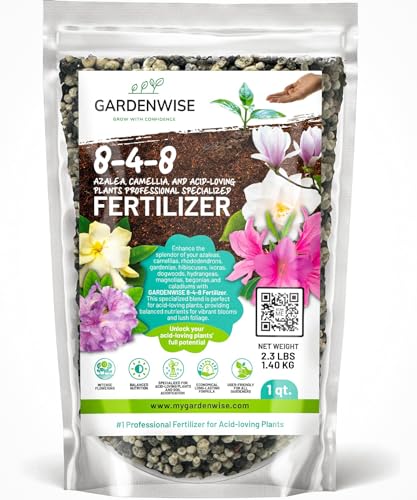
5. GARDENWISE 8-4-8 Acidic Fertilizer (1 Quart)
An iron-rich slow-release that brings rhododendrons back in 24 hours
The numbers here tell the story: an 8-4-8 NPK with added magnesium, iron, and manganese to prevent chlorosis (that yellow-leaf look) in acid-loving plants including magnolia trees. Owners mention serious turnaround times — one says their rhododendron looked 75% better within 24 hours of applying it, and another notes their plant “came back to life” with greener leaves and more blooms the following season.
Effectiveness and quality are the top praises, and a big selling point is the slow-release granule design: you only need three feedings per year. That is genuinely economical for a busy gardener. The formula is enriched with beneficial soil microbes from a bio-solid production process, which adds an organic dimension to the feeder schedule. It covers a full spectrum of plants — azaleas, camellias, hydrangeas, gardenias, and blueberries — so one bag works across your whole garden.
The value-for-money aspect is mixed among owners, and the bag size (1 quart, roughly 2 pounds) runs out fast if you have several large shrubs or trees. For a single mature magnolia it is fine; for a whole landscape you need multiple bags.
container plants: a gardener with a small collection of acid-loving plants who wants a single slow-release product that works on all of them.
low maintenance: you have a large garden — the per-pound cost is higher in this size and you would save by buying a bigger bag of a similar analysis.
6. Dr. Earth Acid Lovers Azalea, Camellia, Rhododendron & Maple Fertilizer (4 lb)

Handcrafted purity for gardens where safety matters most
Dr. Earth is the only Non-GMO Project Verified fertiliser in the U.S., and it is formulated without synthetic chemicals, GMO chicken manure, or toxic ingredients. That matters if you have pets, kids, or edible plants near your magnolia. Customers note dramatic results: one owner’s rhododendron “hadn’t bloomed for two years” until this product “sprang to life and was covered with huge pink flowers.” Another revived sad camellias and saw leaves green up quickly with no digging or tea prep — just toss and water.
Effectiveness and plant health are the two most-discussed aspects. The formula includes multi-minerals, proteins, carbohydrates, humic acids, and trace elements. It is OMRI-listed, CCOF-certified, and NOP-compliant, so you are getting the highest purity label in the category. The 4-pound bag treats a medium-sized garden.
Value for money is a negative note here: several owners find it overpriced given the 1-pound bag size (the 4-pound bag in the data is heavier, but the complaints likely refer to a smaller option). The 4-pound bag lasts several seasons for a single magnolia, but the per-pound cost is higher than a general-purpose acid fertiliser.
soil building: purity standards are your priority — Non-GMO verification and the safety profile make it the best choice for gardens with pets and children.
immediate results: you are on a tight budget — the cost per pound is higher than most alternatives here.
7. FoxFarm Happy Frog Acid Loving Plants Fertilizer (4 lb)

A gentle, microbe-rich feed that saved frost-damaged bushes
FoxFarm is a known name in the premium soil world, and this acid-loving formula brings that philosophy to magnolia care. It contains beneficial soil microbes and mycorrhizal fungi that improve nutrient uptake and water absorption — essentially building the soil’s own ability to feed the tree. Reviewers point out it works wonders on potted plants and in-ground shrubs alike: one owner’s Katsura bushes “got frosted” and after trimming dead branches and applying this fertiliser, they “are coming back with healthy leaves.”
The mixing ratio is 1/16 cup per gallon of water, making it easy to apply with a watering can. Quality and plant health are the two most-discussed aspects, with owners of blueberries, raspberries, and roses all praising the results. Because it is a powder that mixes into a liquid feed, you get the immediate availability of a soluble fertiliser with the biological benefits of a soil amendment.
The only real drawback is the container size and frequency — at 4 pounds, you will need to reapply every few weeks during the growing season. For a single magnolia it lasts a season; for a large tree you may want a bigger bag or a slow-release granule.
acid lovers: container-grown magnolias or trees recovering from stress, where the mycorrhizal fungi give an extra root-support advantage.
budget buys: you prefer a once-a-season granular feed and do not want to mix and water regularly.
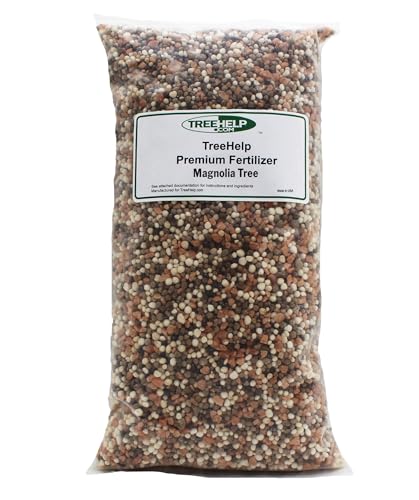
8. TreeHelp Premium Fertilizer for Magnolia (3 lb)
Formulated exclusively for magnolias, not just any acid-lover
Most fertilisers on this list cover a broad range of acid-loving plants. This one is engineered specifically for magnolia trees, with a slow-release nitrogen formula that feeds continuously through the entire growing season. Owners of Little Gem magnolias report the exact method: “made 4″ holes a foot or so apart in the drip line, added 1/4 cup of the fertilizer beads, watered in” — then “buds everywhere!” after rain. That targeted application is what TreeHelp designed, and it shows in the feedback.
The 3-pound bag treats one large tree or 2 to 3 smaller or newly planted trees, so it is sized realistically for a typical home landscape. Owners praise it for improving magnolia health significantly and note that reordering is common — one owner says they “ordered it twice now in the past year” after planting eight magnolia trees. The granules are easy to scatter along the drip line and require no mixing.
The limitation is that this is a single-species product. If you have azaleas, hydrangeas, or blueberries in the same garden, you are buying a separate fertiliser for them. It also has fewer total reviews than the category leaders, but every single one is 5 out of 5.
targeted care: a dedicated magnolia owner who wants a product formulated specifically for the tree’s unique nutrient needs, not a general acid mix.
multi-plant needs: you have a mixed garden of acid-loving plants and want one bag for everything.
9. Magnolia Tree Fertilizer by TPS Nutrients (32 oz)
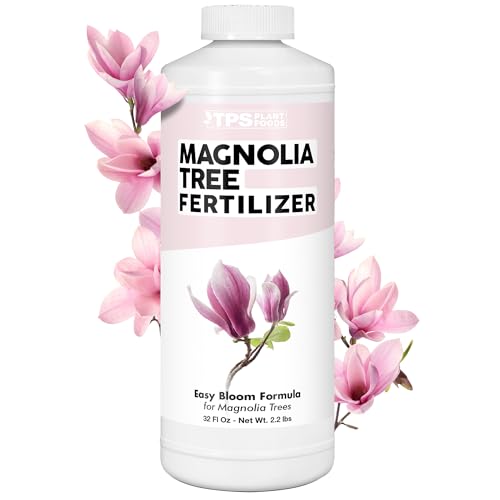
A ready-to-pour liquid that works more like a tonic than a feed
If the idea of measuring and mixing powder or hauling 36 pounds of granules puts you off, this liquid fertiliser is the simplest entry point. It comes ready to use — just pour the recommended amount around the drip line. Shoppers say visible effects: one says their tree “has grown since I have been using it, and looks much healthier,” and another notes that after a tough Michigan winter, the fertiliser was “working well” to bring their magnolias back. The 1:1:1 mixing ratio (used when diluting) is gentle and balanced for both young and established trees.
Effectiveness and growth are the two most-discussed aspects, with 20 positive mentions for effectiveness. The formula is designed to support bloom development, leaf colour, and root strength without overloading the tree. Being a liquid, it is absorbed quickly by the roots, which makes it a good option for magnolias in pots or for a quick seasonal boost. It is made in the USA.
The trade-off is the frequency. A liquid fertiliser gets absorbed faster, which means you need to reapply every few weeks during the growing season instead of the once-in-spring-and-fall schedule of a slow-release granule. The 32-ounce bottle covers several applications for one mature tree, but you will work through it faster than a bag of concentrates.
small doses: you want the easiest possible application — no measuring, no mixing, just pour and go.
large-scale feeding: you want a low-maintenance feeding schedule; a slow-release granule is a better hands-off option.
Understanding the Specs
NPK Ratio
The three numbers on the bag tell you the percentage of nitrogen (first number), phosphorus (second), and potassium (third) in the mix. Nitrogen drives leaf and stem growth, phosphorus supports root and flower development, and potassium strengthens overall plant health. For magnolias, a first number between 4 and 8 is the balance — too much nitrogen (like 17) pushes leaves at the expense of blooms, too little and the tree stays small and pale.
Slow-Release vs. Water-Soluble vs. Liquid
Slow-release granules (like Espoma Holly-Tone or GARDENWISE) break down over months, feeding the magnolia continuously from a single application. Water-soluble powders (like Miracle-Gro or Jack’s Classic) dissolve instantly and give the tree a quick jolt — good for correcting a deficiency fast. Liquids (like TPS Nutrients) are the easiest to apply but require the most frequent reapplication. Your choice depends on how much hands-on time you want.
Sulfur Content
Magnolias need acidic soil (pH 5.0–6.5) to access iron and other nutrients. Sulfur is the most common soil acidifier in fertilisers. When you see 5% sulfur on a label, that product is doing double duty: feeding the tree and gradually lowering the soil pH. Without it, iron locks up in alkaline soil and leaves turn chlorotic (pale with dark veins).
Organic vs. Synthetic
Organic fertilisers (Espoma, Dr. Earth, FoxFarm) feed the soil microbes that in turn break down nutrients for the tree. They are slower but build long-term soil health. Synthetic fertilisers (Jack’s Classic, Miracle-Gro) deliver nutrients in a form the tree can absorb immediately. Neither is “better” — they just serve different timeframes and gardening philosophies. For a magnolia, both work well if the soil pH stays low.
FAQ
Can I use regular lawn fertiliser on my magnolia tree?
How often should I fertilise a magnolia tree?
What NPK ratio is best for magnolia flowers?
Will this fertiliser work for my potted magnolia?
How long until I see results from a new fertiliser?
Is organic fertiliser better for magnolias than synthetic?
Can I over-fertilise a magnolia tree?
What are the signs that my magnolia needs more acid?
Should I use a liquid or granular fertiliser for a newly planted magnolia?
Can I use these fertilisers on other acid-loving plants?
Final Thoughts: The Verdict
For most gardeners, the fertiliser for magnolia that delivers everything — organic certification, proven results, and a 4.8-star reputation from 900+ owners — is the Espoma Organic Holly-Tone 36 lb. It is the original formula for acid-loving plants, it feeds your magnolia for a full season with two applications, and the 36-pound bag is the most cost-effective way to feed a large tree or several shrubs. If you want something species-specific for a single magnolia, the TreeHelp Premium Fertilizer for Magnolia is your best bet. And for a fast-acting liquid that needs no mixing, reach for the TPS Nutrients Magnolia Liquid — it makes the whole process about as simple as watering.
How We Picked
We do not accept paid placement. Every pick is matched to a real buyer and a real use-case; we do not hands-on test units.
Sources & Methodology
Specifications: manufacturer listings and product documentation. Review insights: verified customer reviews, as of July 2026. Pricing: not shown on this page (it changes often); check the current price via the retailer link.
As an Amazon Associate, Lawn Gear Lab earns from qualifying purchases. This does not affect which products we feature.