
Specs are compiled from manufacturer listings and verified buyer reviews and can change over time — please confirm the key details on the product page before buying.
Groundhogs are master excavators. They can tunnel under a traditional fence in an afternoon, leaving you with a ruined garden and a growing family of uninvited guests under your shed. The real battle happens underground. That is why standard above-ground fencing usually fails — you need a barrier that extends into the soil to block their path. This guide cuts through the confusion and focuses on the panels, barriers, and fencing that actually stop groundhogs from digging under.
I’m Rikta — the founder and writer behind Lawn Gear Lab. This guide is built by comparing the manufacturers’ published specifications and the patterns across verified customer reviews, so you get each pick’s real strengths and trade-offs instead of marketing spin.
If groundhogs are digging under your shed or garden, you need a fence that stops them from tunneling underneath. The best fencing for groundhogs uses a buried barrier that blocks their digging, plus a sturdy above-ground mesh that they cannot climb or chew through.
Our Picks at a Glance

How To Choose The Best Fencing For Groundhogs
Groundhogs are determined diggers. A weak barrier is just an invitation. Focus on these three areas to get a fence that works year after year.
Underground Depth Is Everything
A groundhog burrow can go several feet down, but a barrier that extends at least 13 to 15 inches into the soil is usually enough to stop them from tunneling under a fence. Look for panels that specify their below-ground height — this is the number that matters more than the above-ground portion. Panels with sharp bottom points drive in easily and stay put.
Spike Spacing and Material Gauge
The gaps between vertical spikes determine what gets through. A spacing of 1.5 to 2 inches prevents groundhogs from squeezing between bars while still allowing grass to grow through. Thicker steel — measured in millimeters or by gauge — resists bending when animals press against it. Look for galvanized or powder-coated finishes that resist rust after years in wet soil.
Total Coverage and Number of Panels
Measure the perimeter you need to protect and buy a kit that covers it in one go. Mixing panels from different brands creates weak spots. Most kits cover between 10 and 40 linear feet. A longer kit with more panels costs more upfront but saves you from buying a second set later.
Quick Comparison
| Model | Best For | Underground Depth | Coverage (Linear Ft) | Spike Spacing | Amazon |
|---|---|---|---|---|---|
| Dig Defence Original 10‑Pack★ Best Overall | Best Overall | 15″ | 20 ft | 1.5″ | Amazon |
| CHTSJQW 28‑PanelBest Value | Best Length | 13″ | 39.5 ft | 1.52″ | Amazon |
| Adavin 15‑PackTall Barrier | Tall Panels | 25″ | 15 ft | 1.6″ | Amazon |
| Getlay 24‑Panel | Critter Deterrent | 13″ | 24 ft | 1.5″ | Amazon |
| AVELOTUUG 25‑Pack | Thicker Metal | 17″ | 27 ft | 1.7″ | Amazon |
| GRELWT 5‑Pack | Heavy Duty | 15″ | 10 ft | 2″ | Amazon |
| Gartist Hardware Cloth | Custom Cuts | 48″ (roll) | 100 ft | 0.5″ | Amazon |
| Getlay Tall w/ Gate | Above‑Ground Defense | 36″ (above ground) | 30.6 ft | 1.6″ | Amazon |
In‑Depth Reviews
1. Dig Defence Original Animal Barrier Garden Fence, X‑Large, 10‑Pack
Our pick — over 4.5★ from 600+ verified ratings; the strongest balance of quality and price.
The crowd‑favorite underground barrier that keeps groundhogs out and dogs in — proven by a year‑long crawlspace victory.
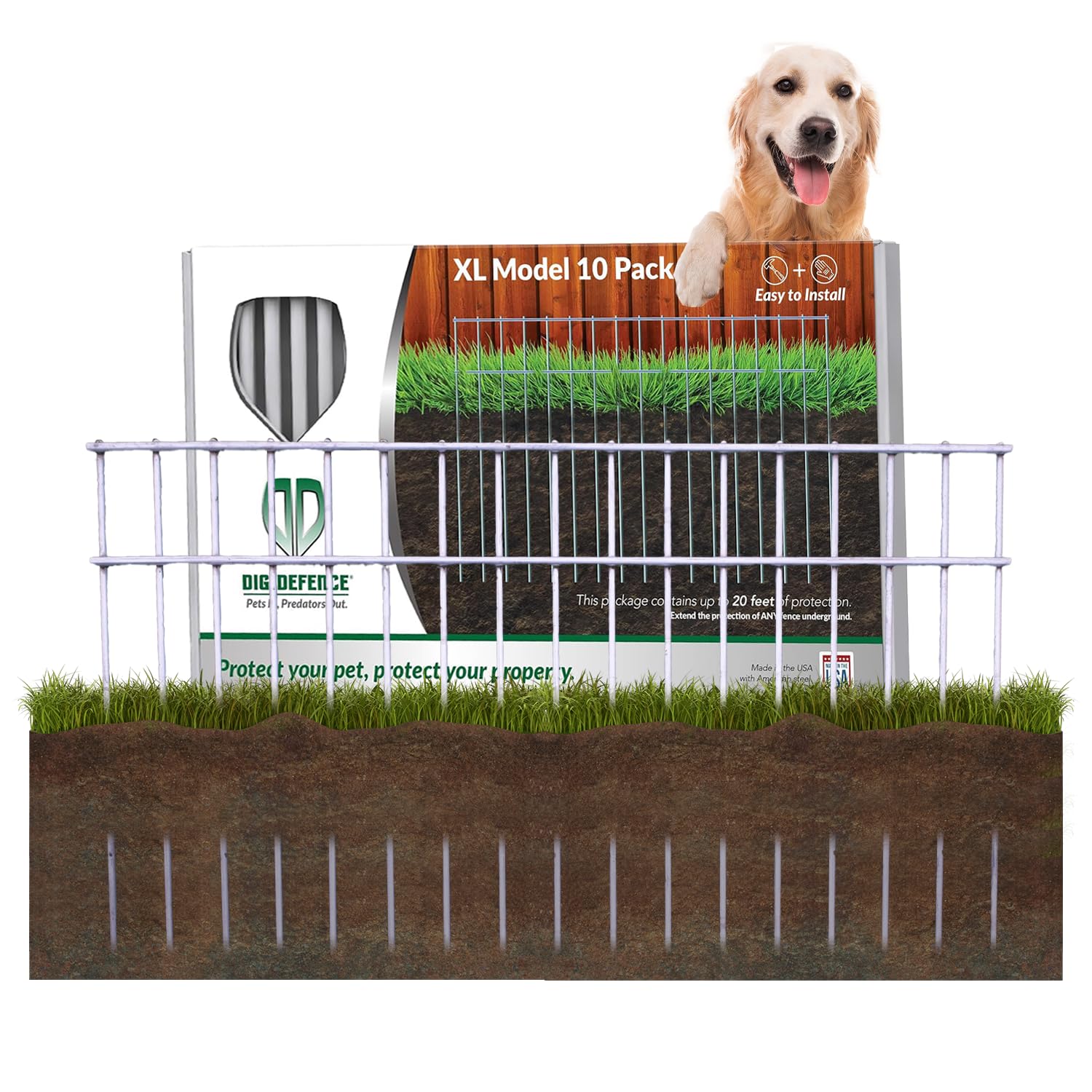
What wins people over is raw stopping power. Made of galvanized American steel (not hollow tubing), each of the 10 panels measures 24 inches long and drives 15 inches into the ground with 1.5-inch spike spacing. That depth is the real secret — groundhogs hit the steel long before they can tunnel under your fence.
Buyers report one result stands out: a home that installed two boxes after trapping five groundhogs reported their “crawlspace groundhog-free for a year.” Each panel weighs 3.2 pounds, so you need a hammer to drive them in, but they do not bend. Owners note the panels survived a 5-pound sledgehammer without damage. The 10-pack covers 20 linear feet — enough for a small garden perimeter or a shed foundation. The one trade-off is the price, which several owners describe as high, balanced against the fact that the barrier works the first time and does not need replacing.
The thing everyone raves about is functionality — mentioned by far the most by owners — followed closely by quality and sturdiness. If you want a single purchase that solves groundhog tunneling for years without rust or rot, this is it.
Why it wins
- 15-inch underground reach blocks groundhogs where they dig
- Galvanized American steel resists rust and bends — verified by owners after 5-6 years of use
- No ongoing maintenance; pound in and forget
The honest trade‑off
- Premium price reflects the materials and American manufacturing
- Heavy panels require a sledgehammer for installation in tough soil
Reach for this if: you want a set‑and‑forget underground barrier that proved itself against groundhogs for over a year at a stretch.
Look elsewhere if: you need a budget option that covers a long perimeter in a single box — the 10‑pack covers 20 ft, not 40 ft.
2. CHTSJQW 39.5ft(L) x 13in(H) Animal Barrier Fence, 28 Panels
More than double the coverage of the Dig Defence at a fraction of the price — 39.5 feet of groundhog defense for under.
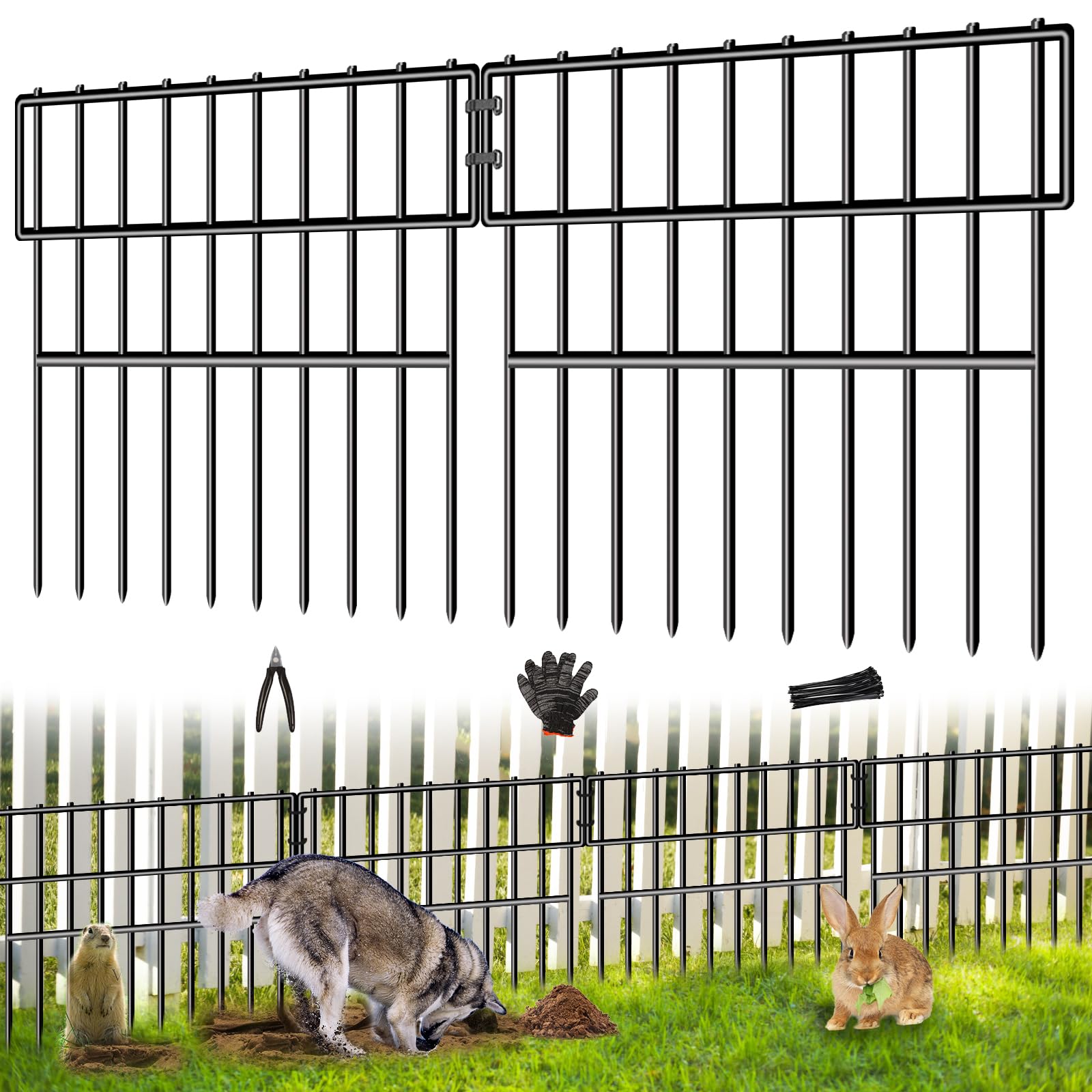
With 28 panels stretching 39.5 feet, this kit covers a full garden bed or a long fence line in one purchase. Each panel stands 13 inches tall with a 1.52-inch gap between spikes. The heavy-duty metal uses an upgraded welding process and an anti-rust baking paint coating that holds up through seasons of rain and snow. The included gloves and cutting pliers make assembly straightforward — a major convenience versus brands that sell panels alone.
Owners praise its functionality and ease of installation most. One buyer used them for a chicken coop and reported the panels “function as a safeguard for the chicken run.” Rabbits stopped coming under the fence, and groundhogs stayed out of raised beds. At 13 inches deep, this is on the lower end of the underground depth range — adequate for most groundhogs, but a determined digger might test the limit. The 39.5-foot length vs. the Dig Defence’s 20 feet is a direct advantage if you are protecting a larger area.
The included cable ties and cutting pliers make connecting panels safer and simpler than snap-on methods that risk pinched fingers. For the price per foot, this is the strongest value in the list.
Smart coverage choice: The 28 panels cover 39.5 ft — the full length of a typical suburban fence line. At 13 inches deep, it works for most groundhog encounters, but if you have seen tunnels deeper than a foot, consider pairing it with a 15-inch barrier in key spots.
Perfect for: protecting a long garden perimeter or reinforcing an existing fence without overspending.
Not ideal if: your groundhogs have already dug burrows deeper than 13 inches — go with a 15-inch barrier for those hotspots.
3. Adavin Animal Barrier Garden Fence, 15 Pack Black 12″L x 25″H
The tallest underground panel on this list — 25 inches of barrier that stops groundhogs from both digging under and climbing over.
While most underground barriers sit at 13 to 15 inches, the Adavin panels rise a full 25 inches above ground. That extra height matters: groundhogs are strong climbers, and a short barrier left exposed above the soil can become a ladder. The 1.6-inch spike spacing keeps even young groundhogs from squeezing through. Each panel is 12 inches wide, and the 15-pack covers 15 linear feet — a shorter overall run, but the panels connect into various shapes for odd garden beds or patio edges.
The powder-coated black finish resists rust and blends into landscaping. Owners consistently mention how easy installation is — just a hammer and a block of wood to protect the panel. Several owners mention rabbits and groundhogs stopped digging under their garden fence after installing these. The coverage area is 34.37 square feet, giving you more surface area per pack than the Dig Defence 10-pack (25 square feet). The trade-off is that the 15-foot total length may require a second box for larger perimeters.
The extra vertical reach also helps with snow accumulation — when the ground freezes and heaves, a taller panel stays above the surface while a shorter one might get buried.
The climbing solution: At 25 inches tall, this is the panel to choose if your groundhogs have been scaling your existing fence. Pair two packs for 30 feet of coverage.
Best for: gardens where groundhogs have learned to climb over shorter barriers. The 25-inch height stops them cold.
skip it if: you need to cover a long fence line with a single box — 15 feet goes fast around a large yard.
4. Getlay Garden Fencing Animal Barrier 24 ft(L)×13 in(H), 24 Panels

The “groundhog block” that owners use under porches, sheds, and decks — 24 feet of no‑dig defense at a crowd‑pleasing price.
Each of the 24 panels is 12 inches long and 13 inches high, with 1.5-inch spacing. The pointed stakes drive 9 inches into the ground in wet soil (a piece of wood on top protects the panel when using a mallet). The anti-rust coating holds up against all weather. Customers note using this barrier to block skunks under sheds and to stop pit bulls from digging under fences — proof that the same design works for groundhogs.
More owners mention easy installation than any other feature. One buyer specifically called it a “groundhog block” after using it to keep the critters from digging back under their porch. The 24-foot coverage is the balance for a medium garden or the base of a deck.
The panels are sturdy enough to hold up against aggressive diggers, though some owners wish the panels were taller. At 13 inches deep, it matches the CHTSJQW in underground reach, but the slightly wider 24-foot coverage with 24 panels gives you more flexibility in shaping the barrier around corners.
The porch protector: Reviewers point out using it specifically to close gaps under porches and sheds where groundhogs love to den. The 24 panels can surround a small crawlspace entirely.
Reach for this if: you need to block groundhogs from getting under a porch, deck, or shed — the 24 panels shape easily around foundations.
Look elsewhere if: your groundhogs have already dug deeper than 9 inches below the surface — consider pairing with a longer-stake barrier.
5. AVELOTUUG 25‑Pack Garden Animal Barrier Fence, 17in (H) x 27ft (L)
20 percent thicker metal rods than standard panels — engineered for owners who have lost the battle with determined diggers.
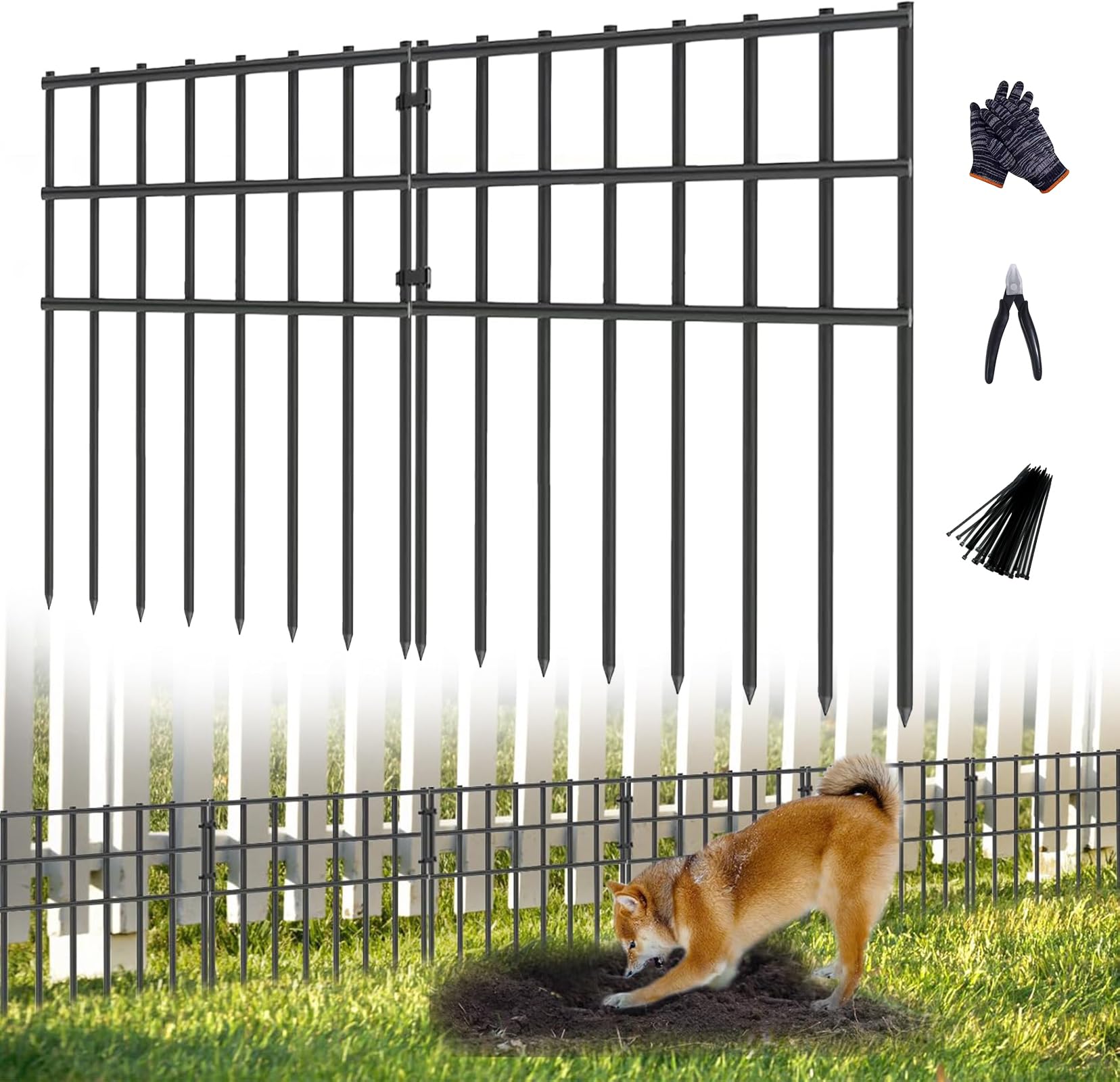
The manufacturer states that every rod in this fence is 20% thicker than typical barriers. That extra heft handles the worst-case scenario: a groundhog that throws its full weight against the barrier night after night. The double horizontal rod structure adds stability so the panel does not shake loose from repeated digging attempts. Each panel stands 17 inches high with a 1.7-inch gap, covering 27 linear feet with 25 panels.
The included cutting pliers, gloves, and cable ties make installation straightforward. Pet protection gets the most praise from owners, followed closely by ease of installation.
The 17-inch height splits the difference between the 13-inch panels and the 25-inch Adavin — enough to stay visible above landscaping while still driving deep enough into soil to block tunnels. The thicker rods mean cutting them to size requires the included pliers (or bolt cutters for tougher adjustments).
The digger stopper: If you have a groundhog that has already pushed past thinner panels, the 20% thicker rods and double‑horizontal stability make this the upgrade pick.
Perfect for: high‑pressure areas where groundhogs have worn through or bent lighter barriers.
Not for: purely decorative use — this fence is built tough, not delicate, and stands out in a flower bed.
6. GRELWT 5‑Pack 24″L x 15″H Animal Barrier Fence
Each panel weighs 3.1 pounds of solid 5.5mm galvanized steel — no hollow tubes, no shortcuts.
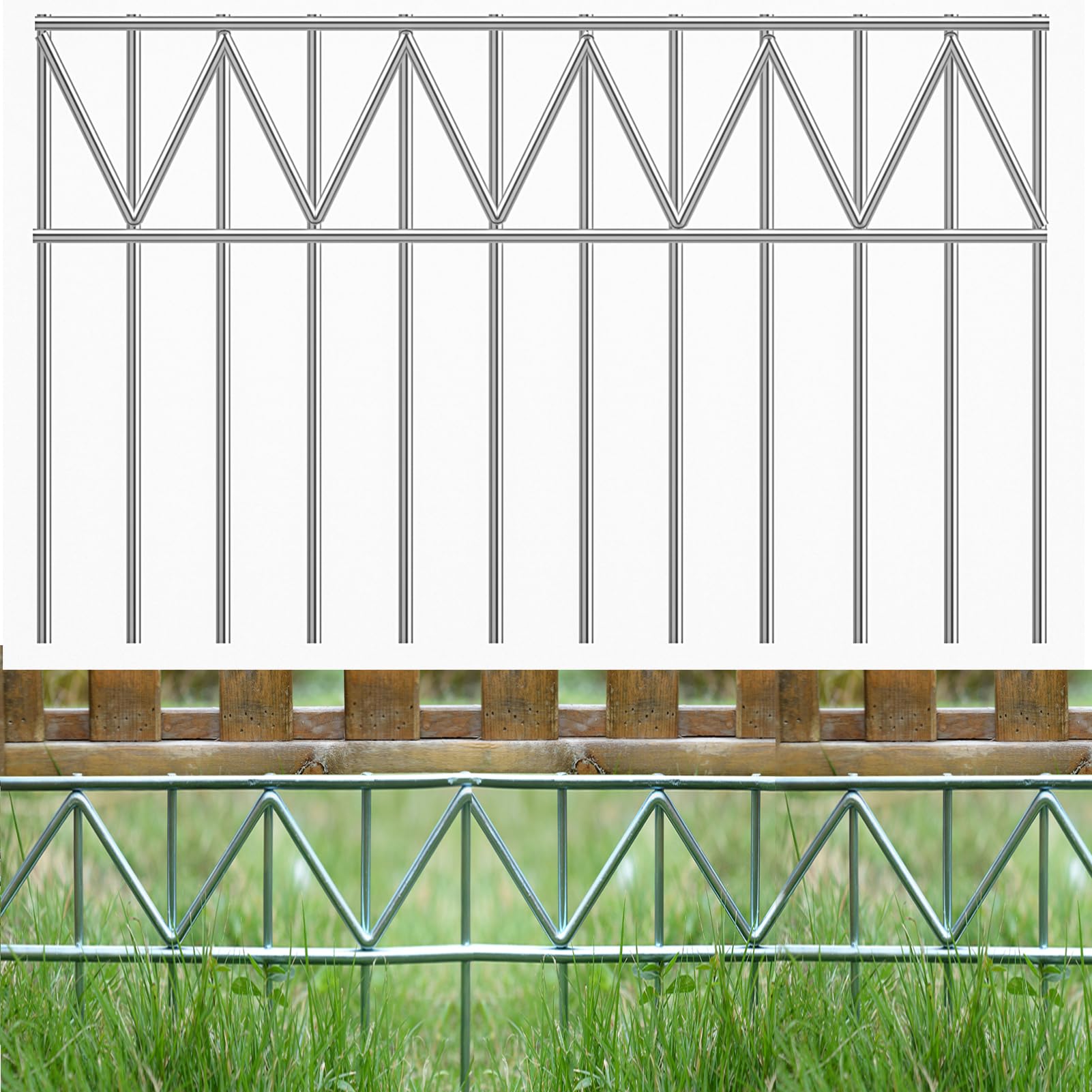
This is the heaviest individual panel on the list at 3.1 pounds per piece, built from 5.5mm galvanized steel rod (not hollow tubing). The patented V-shaped cross-welded design resists bending even in rocky soil. Each panel is 24 inches long and 15 inches high, with a 2-inch spike spacing — a slightly wider gap than other picks, but still small enough to block groundhogs. The 5-pack covers 10 linear feet.
Owners praise pet prevention and durability most. The panels drove into rocky soil on a sloped yard without breaking, and owners using them on a 360-foot farm perimeter reported no more escapes. At 2-inch spacing, the gap is larger than the 1.5-inch standard; groundhogs cannot fit through it (adult groundhogs need roughly 3-4 inches to squeeze through), but smaller critters like baby rabbits might slip past. The silver galvanized finish blends with chain-link fencing.
The trade-off is coverage: 10 feet per box means you will need multiple boxes for a large garden, and 2-inch spacing is the widest gap among the underground barriers here. For isolated gate gaps or corner repairs, the heavy build is ideal.
The heavy hitter
- 5.5mm solid steel rods — the thickest material in this roundup
- Patented V‑shape cross‑welded design resists bending under pressure
- Each panel weighs 3.1 lbs for rock‑solid stability
The narrow use
- 2‑inch spike spacing is the widest gap here — fine for adult groundhogs, but smaller animals may pass
- 5 panels cover only 10 ft, so you will need multiple boxes for full perimeter protection
Reach for this if: you are reinforcing a single weak spot — a gate corner, a fence gap, or a spot where a groundhog keeps breaking through.
Look elsewhere if: you need to cover a long garden perimeter in one purchase — the 5‑pack goes quickly.
7. Gartist 1/2 in 48″x100′ Hardware Cloth – Hot‑Dip Galvanized After Welding
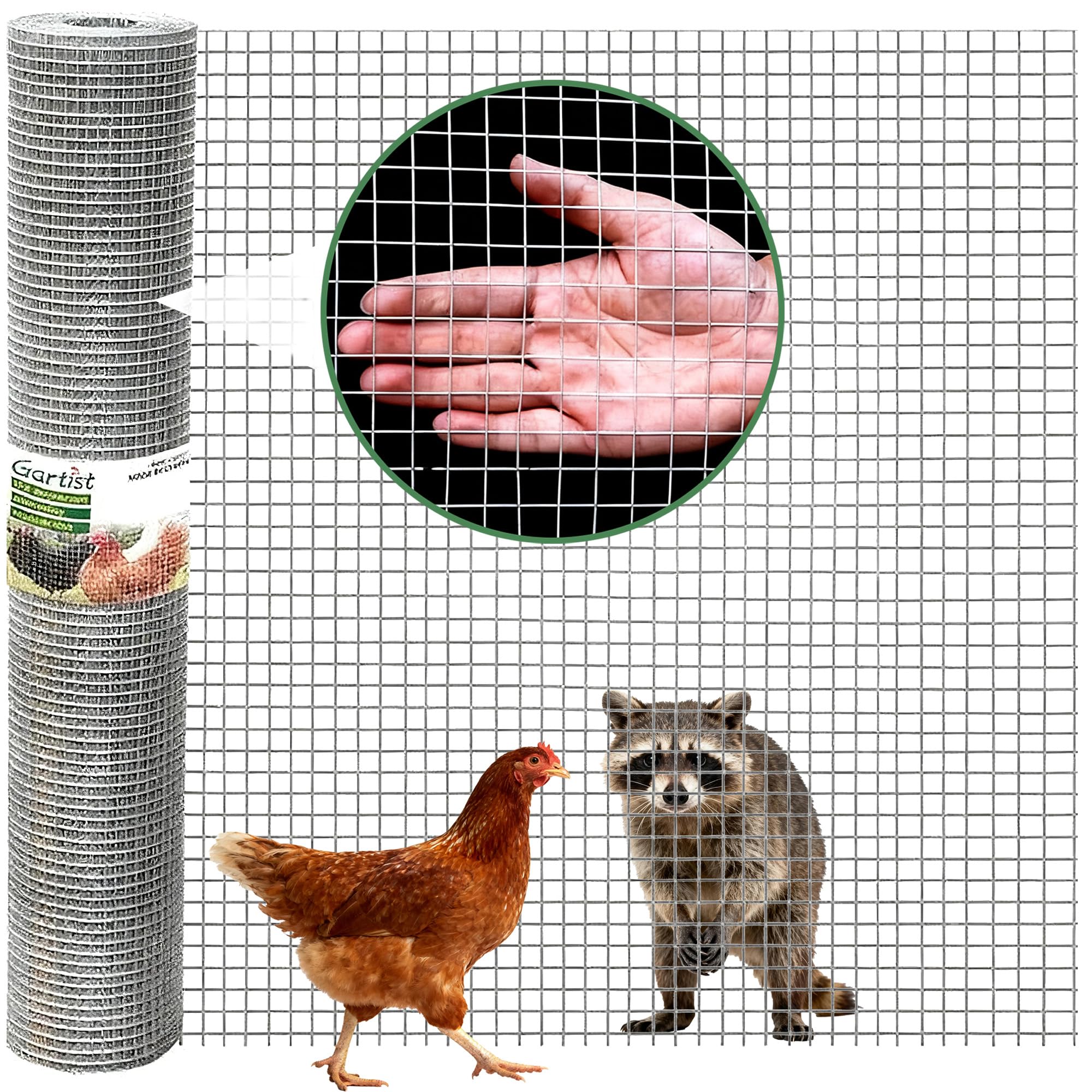
A 100‑foot roll of 1/2‑inch mesh that you cut and bury to create a custom underground fortress — the most flexible groundhog fence you can buy.
Unlike the rigid panel systems above, this hardware cloth comes as a continuous roll: 48 inches wide and 100 feet long, made of 19-gauge steel that is hot-dip galvanized after welding. The double galvanizing process — welding pre-galvanized wire, then dunking the finished mesh — provides superior corrosion resistance for long-term ground contact. The 1/2-inch openings are small enough to block baby groundhogs, snakes, and even mice.
Owners highlight quality and predator protection most. The typical installation involves digging a 2 to 3-foot deep trench and laying the mesh, but the simpler approach for groundhogs is to cut the roll into 15-inch tall strips and bury them 6-8 inches deep. The 100-foot length covers the longest perimeters without needing to join panels. The 36-pound roll is heavy, and the manufacturer recommends wearing gloves to handle the cut edges.
The downside: this is a DIY project. You need tools to cut the mesh (scissors or tin snips), and installing it as an underground barrier requires digging a trench — the most labor-intensive option. But for total custom coverage, nothing else on this list lets you shape the barrier to exactly match your property.
The custom solution: Cut a 15‑inch‑wide strip from the 48‑inch roll and bury half of it — you get a 15‑inch underground barrier that runs the whole length of your property. The remaining 33 inches of mesh works for above‑ground fencing.
Best for: owners who need to cover a long, irregular perimeter and are comfortable with a weekend installation project.
pass on it if: you want a 30‑minute no‑dig install — panels go in faster than a roll.
8. Getlay Tall Garden Animal Barrier Fence with Gate, 36 in(H)×30.6 Ft(L) 14 Panels
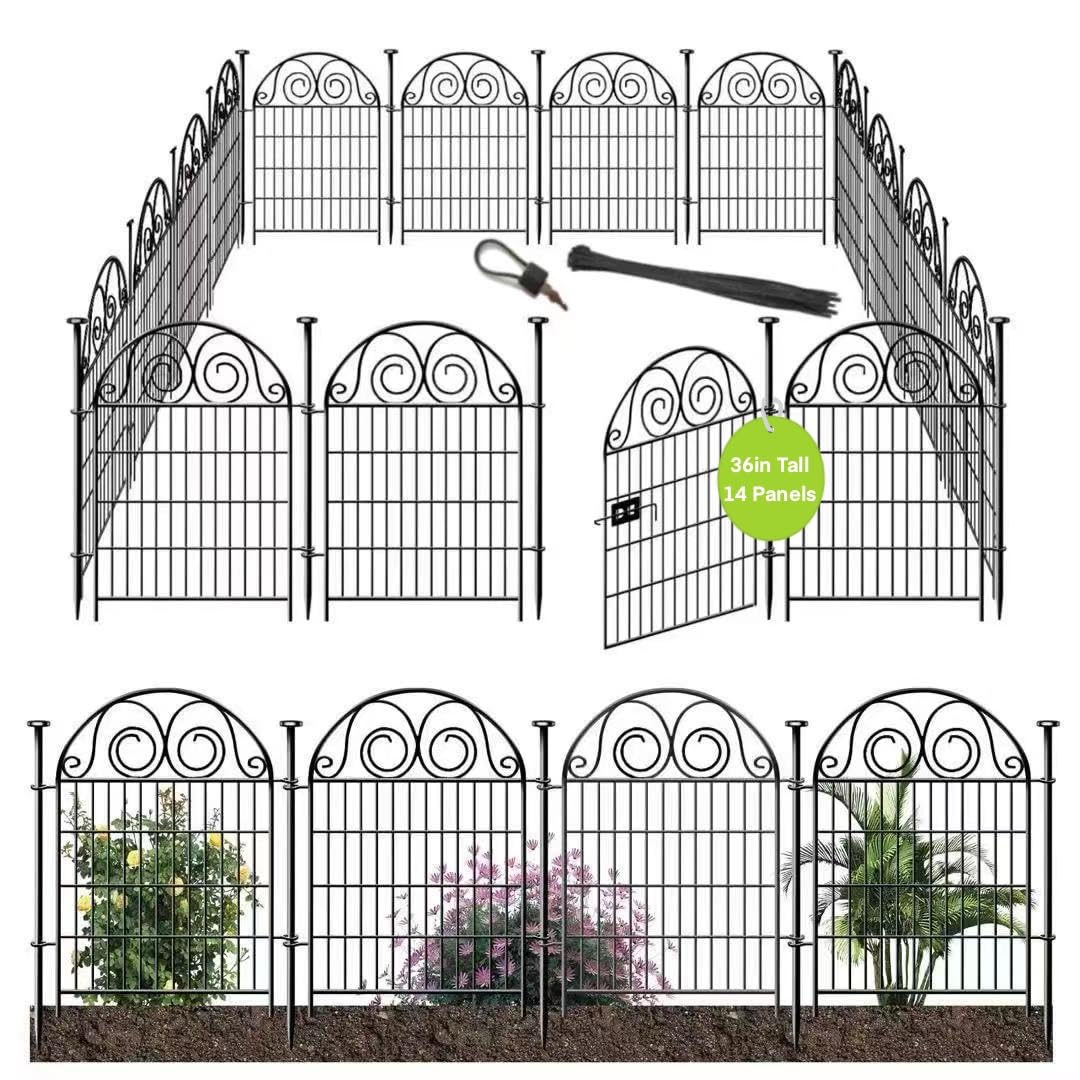
The only freestanding above‑ground fence on this list — 36 inches tall with a gate — for groundhogs that climb.
This is a different approach: an above-ground fence system that stands 36 inches high and spans 30.6 feet across 13 panels plus a gate. The outer frame uses 0.2-inch diameter rust-resistant metal wire with 1.6-inch spike spacing. It is designed to be installed without digging — just stake the panels into the ground. The included gate gives you easy access to your garden or yard.
Owners love how easy it is to install and how good it looks — appearance gets as much praise as ease of installation. The fence works well as a decorative barrier around flower beds and vegetable gardens, keeping bunnies out and small dogs in. The 36-inch height stops groundhogs from climbing over, unlike the short panels that leave the top exposed.
The honest trade-off: several owners note the panels feel flimsy compared to underground barriers, and the sturdiness rating is mixed among buyers. This fence works well for light to medium pressure, but a determined groundhog might push against the panels. It is best used as a standalone fence for smaller gardens or as a visible deterrent rather than a full fortification solution.
The visual barrier
- 36‑inch height stops climbing groundhogs and coyotes
- Included gate provides garden access without stepping over the fence
- No‑dig installation takes minutes per panel
The honest limit
- Panel sturdiness gets mixed owner reviews — not built for extreme digging pressure
- Above‑ground only; groundhogs can still tunnel under
Reach for this if: you need a quick, attractive above‑ground fence for a flower bed or vegetable garden, and you are willing to pair it with an underground barrier for full protection.
Look elsewhere if: you need a single barrier that stops groundhogs underground and above — pair this with a 15‑inch underground panel.
Understanding the Specs
Underground Depth
This is how far the barrier reaches below the soil surface. For groundhogs, you need at least 13 to 15 inches of underground coverage because their burrows start shallow but deepen quickly. A barrier that stops 6 inches down leaves a gap that a groundhog can exploit in one night. Look for panels that clearly state their underground height (often the same as the panel height for no-dig barriers).
Spike Spacing
The distance between each vertical rod matters because it determines what can squeeze through. A 1.5-inch gap blocks adult groundhogs (they need roughly 3-4 inches to fit), but a 2-inch gap is still safe for full-grown animals. Smaller spacing also means the fence is harder for young groundhogs or baby rabbits to slip past. Tighter spacing (1.5 inches or less) is always better for groundhog exclusion.
Material Thickness and Coating
Thicker steel rods — measured in millimeters (5.5 mm) or by gauge — resist bending when groundhogs push or dig against them. Galvanized steel (hot-dip or electro-galvanized) prevents rust when the metal stays in contact with moist soil for years. Powder-coated finishes add a second layer of protection and come in colors (usually black) that blend into landscaping. Avoid plain steel panels that will rust within one season underground.
Coverage Length and Number of Panels
Kits come in set lengths from 10 feet to 100 feet. Measure the perimeter you need to protect before buying — you want coverage in one continuous barrier, not multiple smaller barriers joined together. More panels mean more flexibility to shape the fence around corners, flower beds, or foundations. Remember that each panel has a slight overlap when connected, so total coverage is slightly less than the sum of panel widths.
FAQ
How deep does a groundhog fence need to go underground?
Can groundhogs climb over a fence?
What is the best spike spacing for groundhog fencing?
Will a 25-inch tall panel stop groundhogs completely?
How do I install no-dig fence panels in rocky soil?
Will these fences rust after a few years underground?
Can I cut these panels to fit odd-shaped spaces?
How long do groundhog barriers last?
Is a single barrier enough or do I need to pair panels with a roll fence?
What is the difference between 1.5-inch and 2-inch spike spacing for groundhogs?
Final Thoughts: The Verdict
Across the board, the best fencing for groundhogs winner is the Dig Defence Original 10-Pack because it combines proven 15-inch underground depth, galvanized American steel, and a year-long real-world track record against groundhogs. If you want maximum coverage for your dollar, grab the CHTSJQW 28-Panel — it delivers 39.5 feet of protection at a budget-friendly price. And for custom-fit protection around porches, sheds, or irregular perimeters, the Gartist Hardware Cloth gives you 100 feet of mesh to cut exactly to your property lines.
How We Picked
We do not accept paid placement. Every pick is matched to a real buyer and a real use-case; we do not hands-on test units.
Sources & Methodology
Specifications: manufacturer listings and product documentation. Review insights: verified customer reviews, as of July 2026. Pricing: not shown on this page (it changes often); check the current price via the retailer link.
As an Amazon Associate, Lawn Gear Lab earns from qualifying purchases. This does not affect which products we feature.