
Specs are compiled from manufacturer listings and verified buyer reviews and can change over time — please confirm the key details on the product page before buying.
Deer see your garden as a salad bar. The right fence stops that before you lose another season of tomatoes, hostas, or fruit trees — but choose wrong and you will be re-staking tangled plastic next spring. A tall, tight barrier is the only reliable solution, and the best options let you install it once and forget it.
I’m Rikta — the founder and writer behind Lawn Gear Lab. This guide is built by comparing the manufacturers’ published specifications and the patterns across verified customer reviews, so you get each pick’s real strengths and trade-offs instead of marketing spin.
Whether you are protecting a small flower bed or a large orchard, this roundup of the best fencing for deer breaks down the six top options by height, weight, material, and real-world staying power.
Our Picks at a Glance


How To Choose The Best Fencing For Deer
Deer are strong jumpers and persistent browsers. A garden fence that works on rabbits will be meaningless to a hungry buck. You need to focus on three things: height, material strength, and mesh size.
Height Is Everything
Seven feet is the standard starting point. Deer can clear a 6-foot fence without much effort, so anything shorter is a gamble. If you have high-pressure deer or larger species like elk, you should look at 7.5-foot rolls.
Material: Plastic vs. Polypropylene
Most deer fences use polyethylene or polypropylene. Polyethylene is lightweight and cheaper but can degrade faster under sunlight. Polypropylene, especially UV-stabilized grades, is more rigid and can last a decade or more. Look for “UV treated” on the label — that is what stops the sun from turning your fence brittle.
Mesh Size
A mesh opening around 1 inch x 1 inch blocks deer without blocking light or wind. Larger openings (like 2 inches) are fine for deer alone but let smaller critters through. Smaller openings (under 1 inch) add weight and catch wind, making the fence harder to install.
Quick Comparison
| Model | Best For | Height | Length | Weight | Amazon |
|---|---|---|---|---|---|
| Jobes Jobe’s LG400171★ Best Overall | Affordable all-purpose deer barrier | 7 ft | 100 ft | 8 lb | Amazon |
| Fencer Wire 7ft x 100ftBudget Champion | Budget-friendly, easy handling | 7 ft | 100 ft | 4 lb | Amazon |
| Tenax Deer Netting 7ft x 100ft | Season-to-season garden reuse | 7 ft | 100 ft | 8 lb | Amazon |
| Farm Fence 4ft x 164ft | Multi-animal pasture and yard enclosure | 4 ft | 164 ft | 48 lb | Amazon |
| TENAX Deer Control Fence 7.5ft x 165ft | Max coverage for large properties | 7.5 ft | 165 ft | 27 lb | Amazon |
In‑Depth Reviews
1. Jobes Jobe’s LG400171 Deer Barrier Fencing, 7 ft x 100 ft, Black
Our pick — 4.5★ from 850+ verified ratings; the strongest balance of quality and price.
The deer barrier that survives two Arizona summers without turning brittle.
This black polypropylene fence uses a 1 1/8-inch by 7/8-inch mesh grid and a UV treatment that, as buyers report, “holds up well in Arizona sun after 2 years.” That is the kind of real-world proof you want when you are staking a 100-foot roll. At 7 feet tall, it hits the minimum height for stopping a deer jump, and the 8-pound weight makes it noticeably sturdier than bargain-bin netting — 4 pounds heavier than the budget pick below.
The thing owners praise most is how well it keeps deer out: the fence has dozens of people reporting zero breaches after several seasons. It attaches easily to posts and trees with zip ties, and the grid is tight enough to block squirrels and birds from your blueberries, though ground-level tension matters here — loose spots invite nose work. Reviewers who combined it with electric wire reported stopping elk and javelina too. An honest caveat: it will not stop a buck with a rack from damaging itself or the fence, and it is stiff enough that draping it over plants is tricky. But for a do-it-yourself perimeter around a vegetable patch or orchard, this is the balanced choice that wins on both toughness and price.
Where It Excels
- UV-stabilized polypropylene lasts 5-10 years per owners, even in intense sun
- 7-foot height with a tight 1 1/8″ x 7/8″ mesh stops deer and smaller animals
- Reviewers report zero breaches after multiple seasons when properly staked
The Trade-Offs
- Not flexible enough to drape over plants or bushes
- Bucks with antlers can damage the fence or hurt themselves
Best for: Gardeners who need a single roll for a 7-foot perimeter and want it to last years without rusting or corroding.
Think twice if: You have bucks with racks visiting — add a top strand of electric wire to keep them at a distance.
2. Fencer Wire 7 ft. x 100 ft. Garden & Plant Protective Netting with 3/4″ Mesh
Ultra-light 4-pound netting that deer bounce off — but squirrels eat through.
At just 4 pounds for a 100-foot roll, this is half the weight of the Jobes fence — a serious advantage when you are hauling it across the yard or installing solo. The 3/4-inch mesh size is actually tighter than most deer fences, which means it blocks birds and keeps deer out (owners mention the “7 ft height is perfect to keep deer out of garden”). The polyethylene material acts as a friendly barrier that does not snag on leaves or tangle itself into a knot when you try to unfold it.
The trade-off is plain: the material is thin. Owners describe it as “very thin but works for what I wanted” and note that squirrels and rabbits chew holes in the bottom to get at vegetables. If you have a serious deer pressure problem and nothing else, this will stop the big animals fine. But if ground-level critters are also raiding your garden, you will need to double up the bottom layer or combine it with a shorter wire fence. It is a smart pick for budget shoppers who need a deer-specific barrier fast and are not worried about rabbits.
Why It Works
- Featherlight 4-pound roll is easy to carry, unfold, and cut without fraying
- Tight 3/4-inch mesh blocks birds and deer without harming them
- Buyers with “major deer problems” say it works effectively
Watch Out For
- Thin polyethylene is vulnerable to chewing by squirrels and rabbits
- Some owners expected actual wire and were disappointed despite the photos
Reach for this if: You need a lightweight, cheap deer fence for a single season and you are not worried about small mammals.
Look elsewhere if: Rabbits and squirrels are also in your garden — you will need a second barrier at the bottom.
3. Tenax Deer Netting, 7ft x 100ft, Black Polypropylene
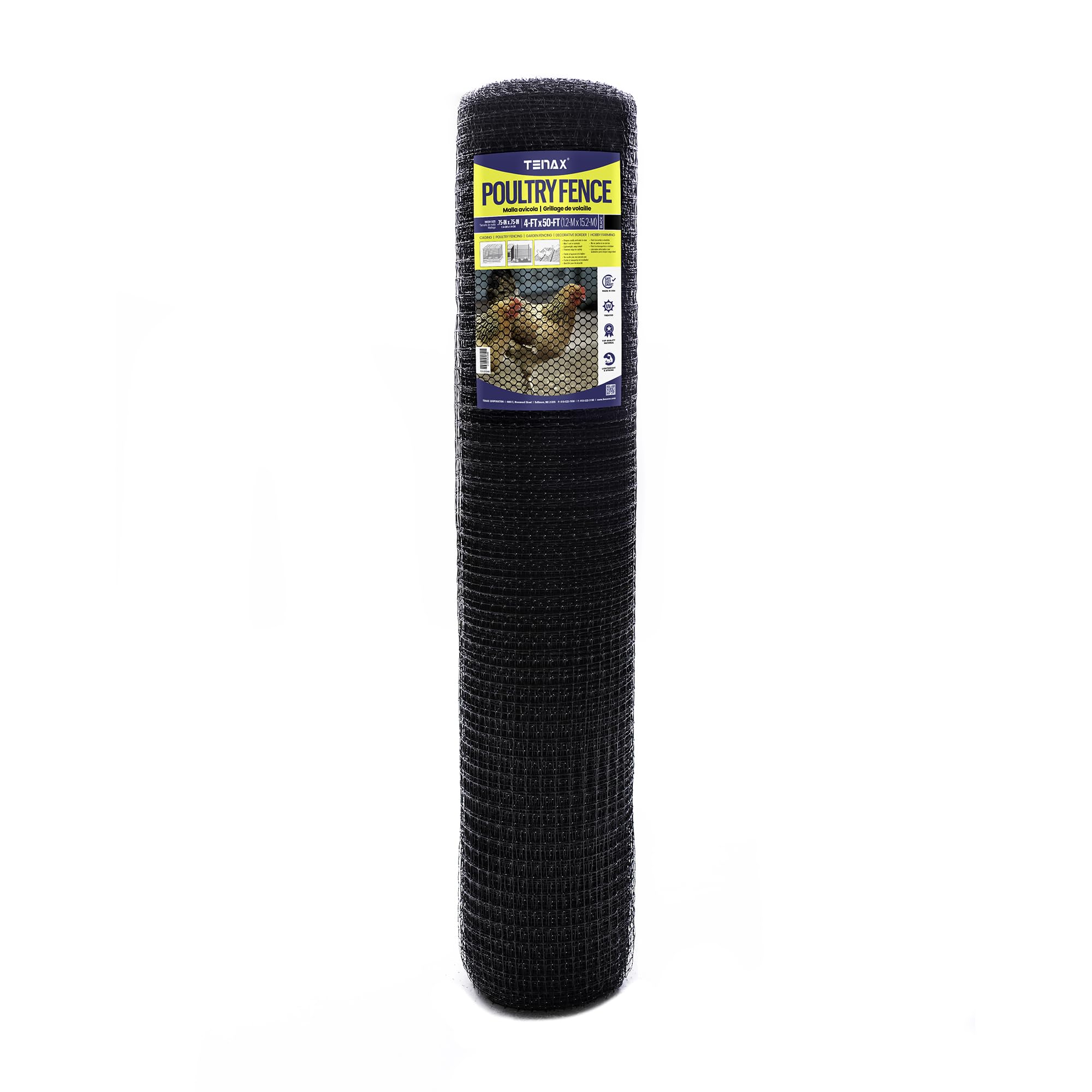
Four seasons of flower-bed protection from a netting that feels sturdier than it looks.
Tenax’s basic deer netting uses a 0.63-inch by 0.75-inch mesh opening — tighter than many competitors — and a polypropylene build that owners call “sturdier than it looks.” One buyer used it for 4 years with 8-foot metal stakes and zip ties, reporting that “deer have not jumped over.” It is not the premium Select line, but it shares the same brand DNA: a rigid enough material that it can be reused season after season without tangling.
The trade-off is that deer can cut holes in it with their hooves if they lean into it hard enough, so a few buyers recommend spraying plants with deer repellent on the inside as a backup. The 7-foot height is standard and effective for most garden deer, but you will want a helper for the 100-foot unroll. Compared to the Jobes fence above, this Tenax is slightly more rigid and slightly more expensive per foot, but owners who have dealt with flimsy netting say this one’s reusability makes it worth it. If you want one roll that comes down in winter and goes back up in spring, this is the candidate.
What Stands Out
- Tight 0.63″ x 0.75″ mesh blocks large animals while staying easy to see
- Rigid polypropylene stands up on its own and reuses across seasons
- Customers note 4 years of use without deer jumping over the 7-foot height
What To Know
- Deer can cut holes with hooves if they push hard against the netting
- A second person helps significantly with the 100-foot unroll
Best used for: Seasonal garden protection where you take the fence down and store it between growing seasons.
Not ideal for: Permanent year-round barriers where repetitive physical pressure from deer is high — combine with repellent or a tougher fence.
4. Farm Fence, 4ft X 164ft Wire Fence, Galvanized
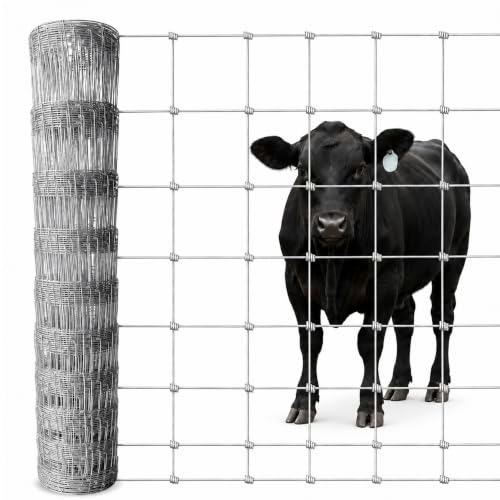
Hot-dip galvanized steel that weighs more than all the netting options combined.
This is a different animal entirely. At 48 pounds and 4 feet tall, it is a heavy woven-wire fence built from 14-gauge galvanized steel with a hot-dip coating for corrosion resistance. It uses an innovative grading design where mesh sizes gradually decrease from top to bottom — larger openings near the top for deer, smaller holes near the base to stop goats and chickens from squeezing through. The 164-foot length gives you nearly twice the coverage of a standard 100-foot netting roll.
The catch with this fence for deer is the 4-foot height. Deer can clear 4 feet easily, so this fence alone will not stop them. Owners use it effectively for goat and chicken containment, and one buyer confirmed it keeps “wild animals eating or messing up my plants” — likely because it is sturdy enough to make deer prefer an easier path. However, the most-mentioned aspect is sturdiness being mixed: some reviewers point out it is light and sturdy, while one called it “not sturdy at all” and “bends too easy.” It is best understood as a quality livestock fence that offers deer resistance as a bonus, not a dedicated deer fence. If you need a barrier that stops deer and also handles goats, dogs, and chickens, this is a versatile pick. But if deer are your sole target, stick with a 7-foot+ option.
Built For
- Hot-dip galvanized 14-gauge steel resists rust and corrosion in wet conditions
- 164-foot length is nearly double the coverage of standard netting rolls
- Graduated mesh keeps goats and chickens in while deterring larger animals
Keep In Mind
- Only 4 feet tall — deer can jump it if they are determined
- Some shoppers say the wire bends easily under pressure
Ideal for: Multi-animal farm yards where you need one fence for goats, chickens, dogs, and some deer deterrence.
Skip it for: Dedicated deer-only perimeter protection — pair it with an electric top strand or netting above 4 feet.
5. TENAX Deer Control Fence, 7.5 ft x 165 ft Black
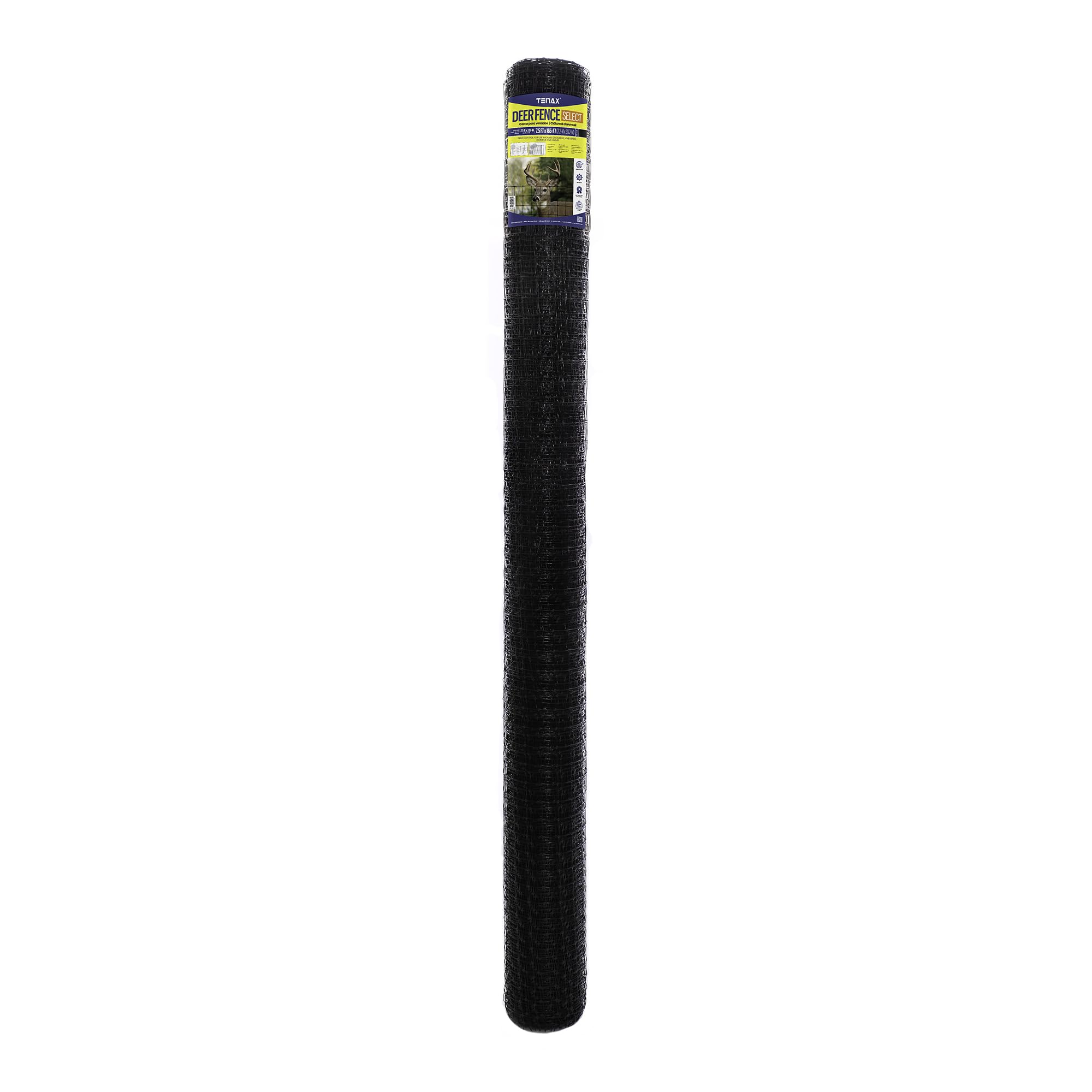
From a roll that weighs 27 pounds, you get 165 feet of fence without sagging.
If you have a large orchard, a long property line, or just want the maximum square footage from a single roll, this TENAX control fence delivers: 7.5 feet tall and 165 feet long, weighing 27 pounds. The mesh openings are large — 1.77 inches by 1.97 inches — which means it blocks deer but casts minimal shade on your plants. Owners repeatedly praise its durability, with one noting “no sagging over time” and another saying it “lasted a long time.” The nearly invisible appearance is also a consistent highlight: it is not overly obvious or intrusive from a distance.
There is one honest disappointment some buyers flag: the height is advertised as 7.5 feet but one owner measured it at roughly 7 feet 2 inches. That is still taller than the standard 7-foot nets, but if you need every inch for high-jumping deer in your area, be aware of the variance. The 27-pound weight also demands two people for a safe install. But for raw value per foot and proven longevity — buyers report 10+ years — this is the heavy-duty option for big properties.
The Appeal
- 165 feet of coverage from one roll — nearly 65% more than 100-foot options
- Large 1.77″ x 1.97″ mesh minimizes garden shading
- Owners mention no sagging over time and a lifespan measured in years
The Downside
- Actual height measures closer to 7’2″ than the listed 7.5 feet per one owner
- 27-pound roll requires two people to handle safely during installation
Choose this if: You are fencing a large area and want the best square-foot value from a single roll without sacrificing height.
Pass on it if: You need an exact 7.5-foot height or plan to install solo — the weight and potential height variance make it tricky.
Understanding the Specs
UV Stabilization
A fence that sits in direct sunlight needs protection from ultraviolet (UV) radiation. “UV treated” or “UV stabilized” means the plastic contains additives that slow down sun damage, so the fence does not become brittle and crack after one or two summers. Without it, a polyethylene net can disintegrate within a single hot season.
Break Load
This is a measurement of how much force the fence can take before it breaks. A fence with a certified break load of 600-650 lbs (pounds-force) can absorb the impact of a deer running into it without tearing. Lower-cost nets do not typically advertise this number, which usually means they are weaker.
FAQ
How tall should a deer fence be?
Will a 4-foot fence stop deer?
Does deer fencing need to be buried?
What is the best mesh size for a deer fence?
How long does plastic deer fencing last?
Can deer chew through plastic fencing?
Is black deer fence less visible than white or green?
Do I need metal posts for a deer fence?
Final Thoughts: The Verdict
For the majority of shoppers, the fencing for deer winner is the Jobes Jobe’s LG400171 because it balances UV-stabilized durability, the correct 7-foot height, and a track record of zero breaches in hundreds of owner accounts — all at a price that undercuts the premium TENAX options. If you want a nearly invisible fence that can last 10-15 years and survive an impact, grab the TENAX Select Deer Fence. And for budget shoppers who need a lightweight roll that stops deer this season, the Fencer Wire netting is the one to reach for.
How We Picked
We do not accept paid placement. Every pick is matched to a real buyer and a real use-case; we do not hands-on test units.
Sources & Methodology
Specifications: manufacturer listings and product documentation. Review insights: verified customer reviews, as of July 2026. Pricing: not shown on this page (it changes often); check the current price via the retailer link.
As an Amazon Associate, Lawn Gear Lab earns from qualifying purchases. This does not affect which products we feature.