
Specs are compiled from manufacturer listings and verified buyer reviews and can change over time — please confirm the key details on the product page before buying.
Deer jump — it is what they do. A 4-foot garden fence is a suggestion, not a barrier. To keep them out of your vegetables, fruit trees, and flower beds, you need a fence tall enough that a deer refuses to clear it, and tough enough that a buck does not just push through. That height is about 7 feet, and every option on this list meets that single, non-negotiable spec.
I’m Rikta — the founder and writer behind Lawn Gear Lab. This guide is built by comparing the manufacturers’ published specifications and the patterns across verified customer reviews, so you get each pick’s real strengths and trade-offs instead of marketing spin.
The right fence for deer for your yard depends on a few measurable trade-offs — mesh size, material durability, and installation ease — that determine whether it lasts one season or five.
Our Picks at a Glance

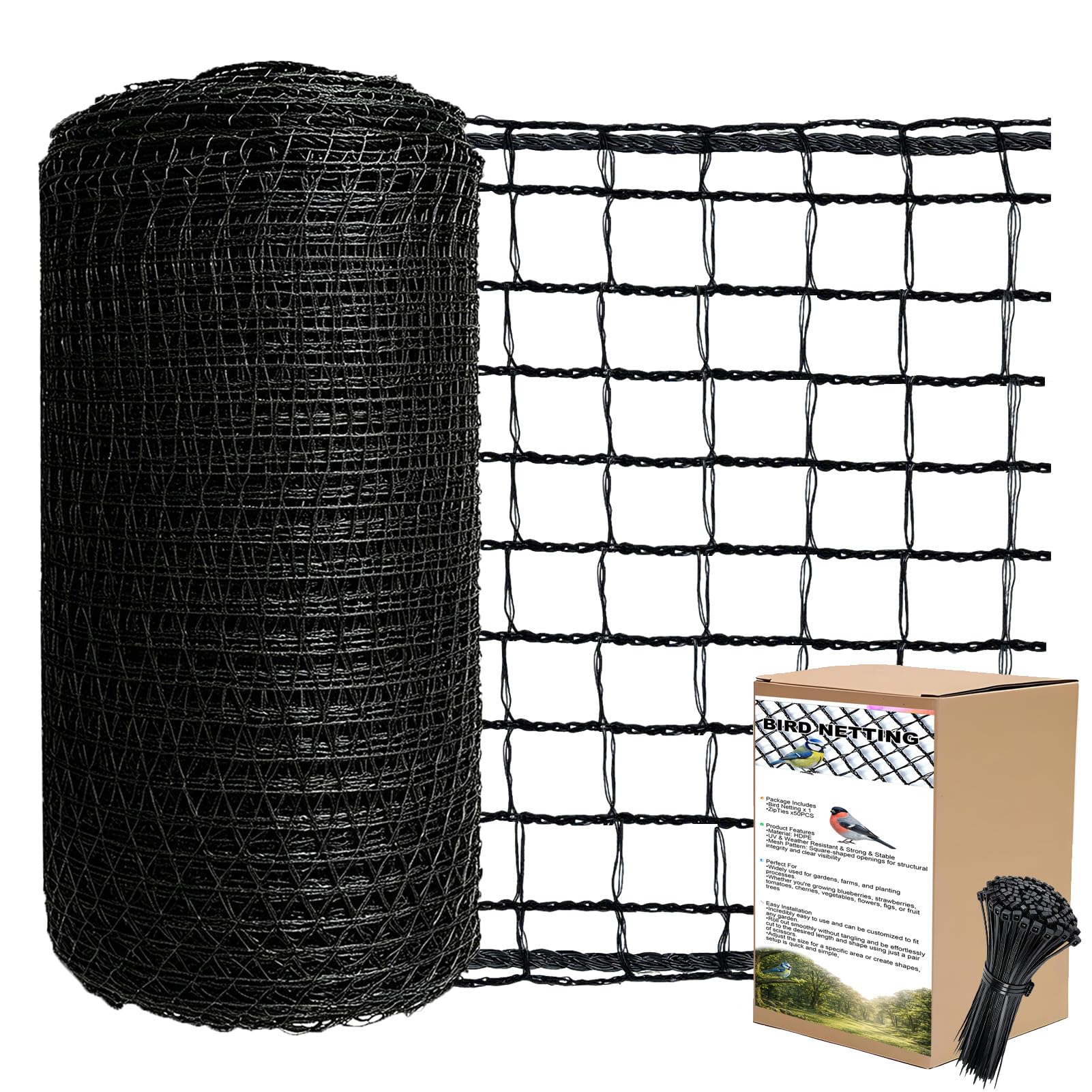
How To Choose The Best Fence For Deer
Picking the right fence is about matching the material and mesh to your specific pest pressure and weather. Here is what matters most.
Height Is Everything
Deer can easily clear a 6-foot fence. That is why every product here is 7 feet or taller — that extra foot is the difference between a deer testing the jump and walking away. A 7-foot fence is the proven height for keeping out whitetail deer (the most common deer species in North America).
Mesh Size and Animal Exclusion
The mesh openings determine what gets through. A tight 1/2-inch or 3/4-inch square mesh blocks birds, rabbits, and squirrels in addition to deer, while also preventing small animals from getting tangled. A larger 1-inch opening may let small birds pass but is easier to see through and less likely to snag foliage.
Material: Polypropylene vs. HDPE
Polypropylene is affordable, light, and resists rot and rust, but it can degrade after a few years in intense sun. High-density polyethylene (HDPE) is tougher and more UV-resistant (resists the sun’s ultraviolet rays that break down plastic), lasting longer in harsh weather without becoming brittle. Both work; HDPE is the better investment for year-round, multi-season use.
Quick Comparison
| Model | Best For | Height | Material | Mesh Size | Amazon |
|---|---|---|---|---|---|
| Jobe’s LG400171 Deer Barrier★ Best Overall | All-around value | 7 ft | Polypropylene | 1 1/8″ x 7/8″ | Amazon |
| POYEE 7.5 ft Deer Fence NettingTallest Pick | Non-slip reinforcement | 7.5 ft | HDPE | 1/2″ square | Amazon |
| Fencer Wire 7 ft Protective Netting | Heavy-duty polypropylene | 7 ft | Polypropylene | 3/4″ | Amazon |
| POYEE Deer Fence Netting 7x100ft | Temporary / seasonal use | 7 ft | HDPE | Diamond pattern | Amazon |
| xihakey 7’x100′ Deer Fence | Quick, no-tool setup | 7 ft | HDPE | Diamond pattern | Amazon |
| Tenax Deer Netting | Rigid, reusable material | 7 ft | Polypropylene | 0.63″ x 0.75″ | Amazon |
In‑Depth Reviews
1. Jobe’s LG400171 Deer Barrier Fencing, 7 ft x 100 ft
Our pick — 4.5★ from 850+ verified ratings; the strongest balance of quality and price.
The proven workhorse that holds up under two years of Arizona sun, according to buyers.
This fence earns the top spot because its 7-foot height and UV-treated polypropylene (a plastic that resists sun damage) have a proven track record. The Jobe’s LG400171 is the mid-range pick that hits the balance of cost and effectiveness. It is a 7-foot tall barrier made from polypropylene that weighs almost nothing but withstands rot, rust, and corrosion. The grid measures 1 1/8″ x 7/8″ — large enough that you can see through it from a distance (buyers report it nearly disappears from 70 feet) but tight enough to keep out deer and birds.
One buyer who used it for two years in Arizona sun reported it “holds up well” and kept deer, javelina (a type of wild pig-like animal), and elk out when paired with a 4-strand electric wire at the top. That is a strong sign of its real-world toughness. Unlike the Fencer Wire option below, this mesh is a good bit heavier than bird netting, making it easier to handle during installation and less likely to tangle.
Another reviewer notes it lasts 5-10 years in moderate climates and is flexible enough to sew into 14-foot panels for fruit trees. The catch: it is not designed to stop a buck with antlers, who can cut holes in the polypropylene. If you have antlered deer in your area, you will want to double up with a sturdier wire fence on the bottom 2 feet. This is a much better choice for the cost-conscious buyer who wants a tested, long-lasting barrier than the newer POYEE models, which lack Jobe’s track record.
Sturdy barrier fencing
- UV treated and reusable — owners mention it lasts years in harsh sun
- Lightweight enough for one-person installation but tough against pushing animals
- Easy to cut and attach to T-posts with zip ties
Heavy installation
- Not rigid enough to stop antlered bucks from cutting holes
- Storm damage can cause breaches if posts are not deeply set
Large properties: you need a proven, economical barrier for landscapes and orchards that does not rust or rot.
Temporary use: you have large bucks with antlers or need a permanent fence that will stop a running deer.
2. POYEE 7.5 ft x 100 ft Deer Fence Netting, 1/2-inch Square Mesh
Half an inch higher than the rest — an extra 6 inches of confidence.
This POYEE netting stands at 7.5 feet, giving you a 7% height advantage over the standard 7-foot models — a difference that can matter if you have particularly athletic deer. It is made from high-density polyethylene (HDPE — a tougher, more UV-resistant plastic than standard polypropylene) with a fabric weight of 1 oz/yd², which gives it better tensile strength (the ability to resist being pulled apart) and UV resistance than the polypropylene options on this list. The 1/2-inch square mesh is the tightest on this list, blocking birds, squirrels, and rabbits in addition to deer.
The reinforced nylon ropes at the top and bottom keep the fence standing upright even on uneven ground, and you get 50 zip ties included to fix it to T-posts, wooden stakes, or existing fences. Unlike the Jobe’s deer barrier, this one includes ground stakes that drive through the bottom rope to prevent animals from lifting the fence from underneath.
The obvious trade-off: with only 28 ratings, it is a newer product without the long-term track record of the established brands. The mesh is lightweight and nearly invisible from a distance, which some buyers worry could tangle small birds. One reviewer specifically flagged it as best used as a trellis doubled for visibility rather than a full enclosure. If you want the proven track record of the Jobe’s instead, that is the safer bet if you can live with the 7-foot height.
Tight mesh design
- Extra 7.5 ft height — 7% taller than 7-foot fences
- HDPE material resists UV, rot, and tearing better than polypropylene
- Reinforced ropes at top and bottom prevent sagging on slopes
Less durable
- Newer product with a limited review history
- Tight 1/2-inch mesh may tangle very small birds
Small pests: orchards and gardens on uneven ground where sagging is a problem — the rope reinforcement solves that.
Long-term use: you need a product with a proven multi-year track record; this one is still being tested by buyers.
3. Fencer Wire 7 ft x 100 ft Garden & Plant Protective Netting, 3/4″ Mesh

The netting that survives 5-plus years in Ozark mountain weather, per buyers.
This fence stands out for its extreme weather survival. The Fencer Wire netting uses a 3/4-inch mesh made from polypropylene that is advertised as heavy duty, and it weighs 8 pounds for the full 7 ft x 100 ft roll. A single buyer who has run this fence for over 5 years in the Ozark mountains — facing extreme wind, snow, rain, and temperatures from 0°F to 90°F — says it is “lightweight but rugged.” That kind of long-term review is rare for a product at this price point. Another reviewer built an 8′ x 7′ x 16′ blueberry enclosure and found the mesh tough enough that a single strand was unbreakable by hand.
The stand-out feature here is the “frustration-free” installation. The netting does not snag on leaves and branches, and it cuts to size without fraying. That makes it much easier to re-use season after season compared to flimsy bird netting. It is designed to be used with garden fencing, as a fence screen, or as a temporary measure. In terms of getting the job done quickly without tangling, it is much easier to handle than the rigid Tenax netting.
The catch: the mesh is not invisible to deer. One reviewer noted that a spooked doe ran into it on day one. The deer did get through by putting a hoof through the mesh, bending a post. If you are in an area with heavy deer pressure, you will want deeper-set posts and possibly a double layer. A reviewer noted that this fence did not stop the deer entirely, but the mesh held up well enough to repair.
Rust-resistant wire
- Proven 5+ year lifespan in harsh weather (Ozark mountains, 0°F to 90°F)
- Won’t snag or tangle — re-usable season after season
- Strong polypropylene that resists tearing
Sharp edges
- A determined deer can put a hoof through the mesh
- Requires sturdy metal posts and extra zip ties for reliability
Permanent fences: a long-lasting, fuss-free fence that handles extreme weather and is easy to install and re-use.
Flexible setups: high-pressure deer zones where deer will run into the fence — you will need deeper posts and reinforcement.
4. POYEE Deer Fence Netting 7x100ft Plastic Mesh Netting for Garden Protection
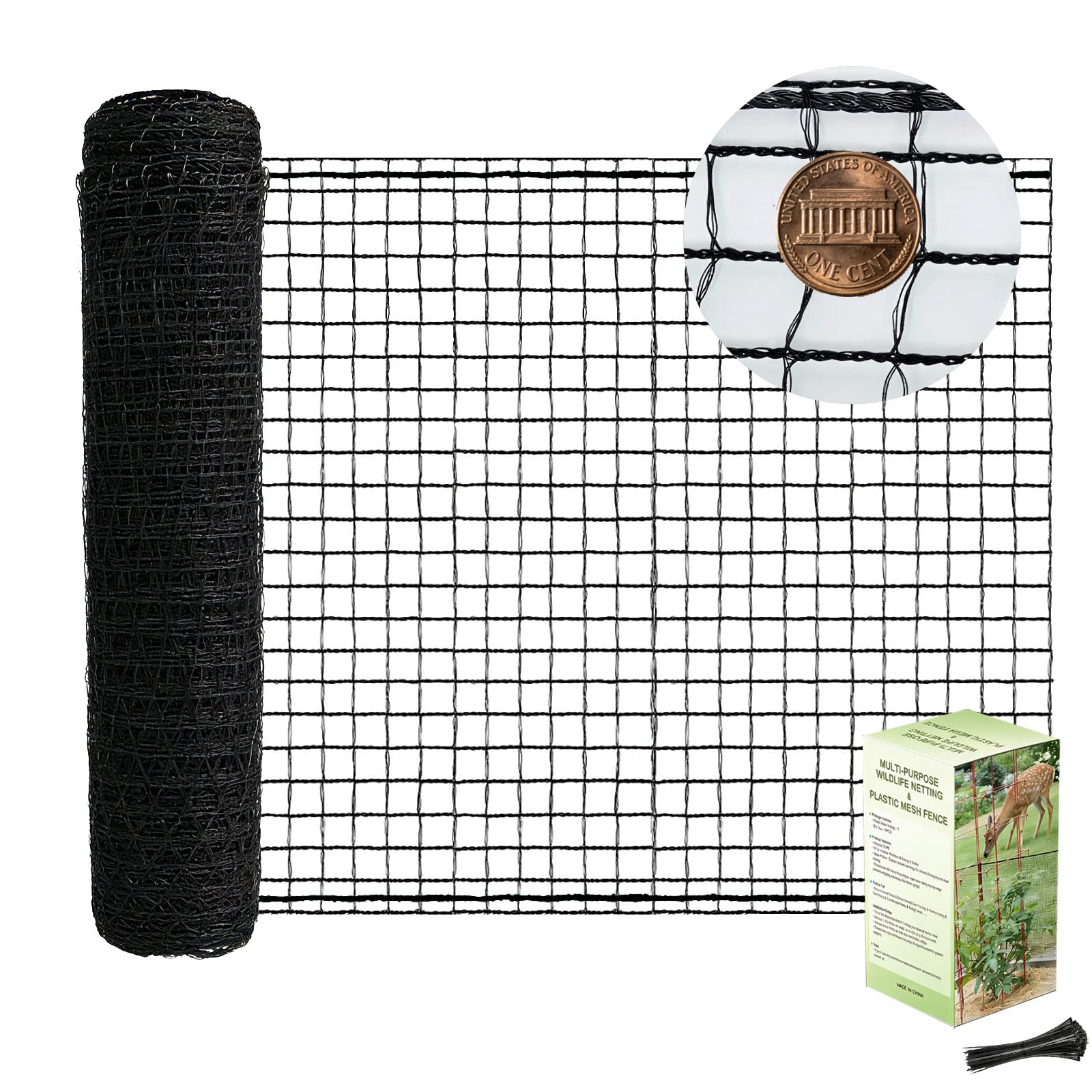
A mid-range HDPE fence that buyer reviews say is not quite 100 feet long.
This POYEE netting is another HDPE option, designed specifically to be highly visible to wildlife as a psychological deterrent (animals see it and avoid it from a distance). The material is UV-resistant and built to handle wind without tearing — the mesh design allows wind to pass through, reducing resistance on gusty days. Unlike the Fencer Wire fence above, this one includes a reinforced rope edge at the top and bottom to prevent fraying and keep the fence tight against posts. One buyer who installed it around a flower garden says it “feels much more substantial than our past similar fence material.”
Here is a real buyer-reported issue you need to know: the 7 x 100 ft roll may not actually be 100 feet. One reviewer who measured during installation reports getting “right at 88 feet” out of the first roll and a similar shortfall on the second. If you are planning exact dimensions for a garden enclosure, you could end up with a 20-foot gap to fill. This is a critical watch-out that the listing does not mention.
The fence is also on the lighter-duty side. One buyer in North Dakota reported that while it has held up to wind so far, it is “not as heavy duty as expected” — though it still functions fine for keeping out small critters. If you need something that stops a determined buck, you may want to step up to a heavier pick like the Tenax.
UV-resistant plastic
- HDPE resists UV and tearing better than polypropylene equivalents
- Reinforced rope edges make attachment to posts quick and secure
- Wind-friendly mesh design holds up in strong gusts
Thin material
- Customers note actual length is shorter than advertised (88 ft vs 100 ft)
- Lighter-duty than expected — not ideal for high-pressure deer zones
Budget projects: low-pressure temporary fencing around flower beds or vegetable gardens where a 7-foot deterrent is enough.
Heavy deer: precise perimeter fencing where every foot matters, or areas with large bucks that push hard.
5. xihakey 7’x100′ Deer Fence Netting – Plastic Mesh Roll for Garden
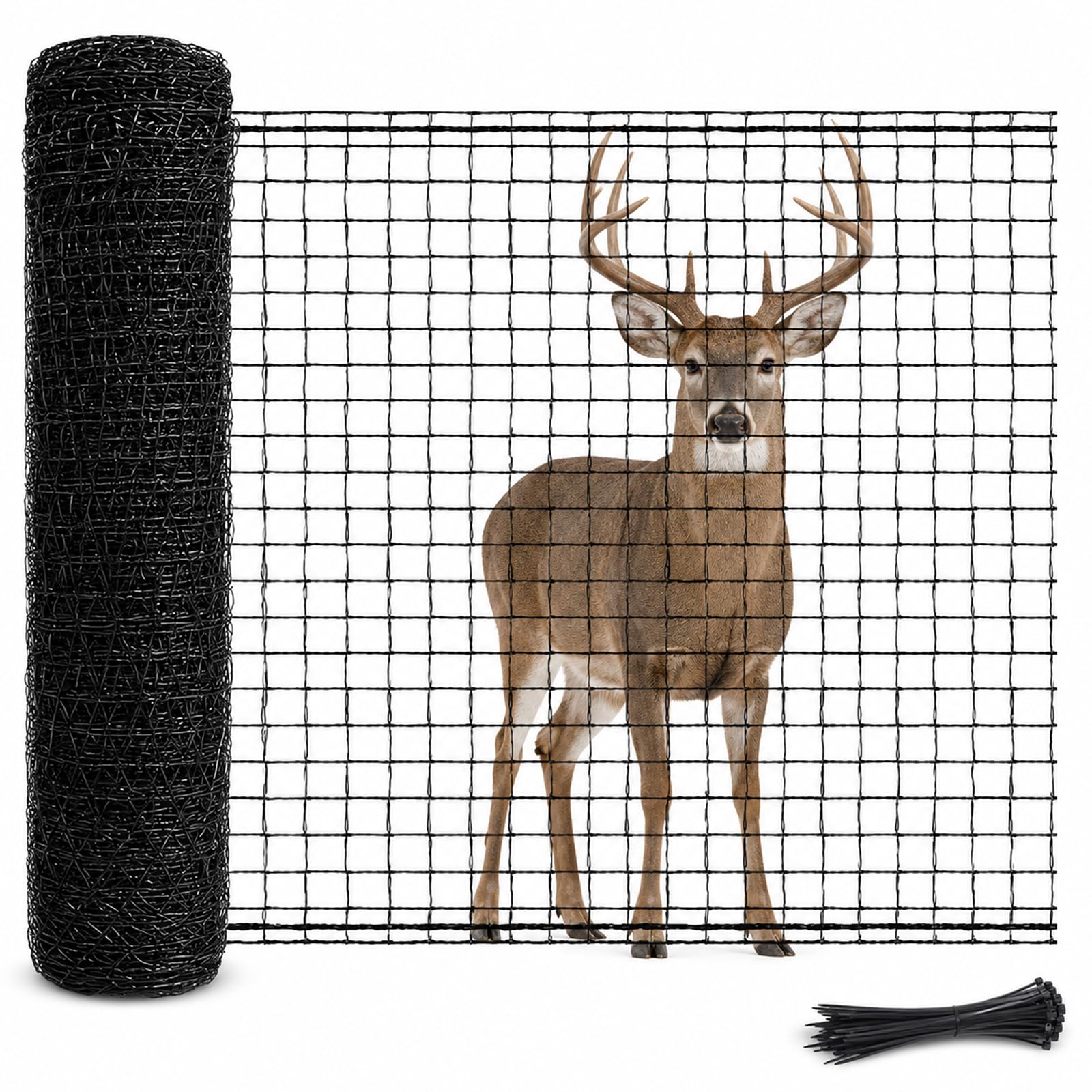
A 5-minute, no-tool fence that reviewers point out looks nicer than expected.
Speed is the name of the game here. The xihakey fence is built for speed. The listing claims a “5-minute setup” — unroll, position, and secure with the included zip ties. The edges have a sturdy rope reinforcement that prevents fraying, and the material is HDPE, which means better UV resistance and longer life than basic polypropylene netting. It covers 700 square feet (7 ft x 100 ft) and has a modern black finish.
Buyers who have used it as temporary garden fencing report it is “easy to set up and decent quality” and that the reinforcement at the top and bottom is a real improvement over standard netting. One reviewer used it to keep deer and rabbits out of a vegetable garden and said it “looks much nicer than our last one.” It also works well as a temporary dog pen or chicken run, which adds to its versatility.
The downside: at 35 ratings, this is still a relatively new product without the long-term weathering data that the Jobe’s or Fencer Wire options have. If you need a fence that you know will last 5+ years, the older, more tested picks are safer. Also, the lightweight diamond-pattern mesh is less rigid than the square-mesh options, so it may sag more on long spans without frequent posts. The Tenax netting is a much better choice if you plan to re-use the fence season after season without it warping.
Easy roll handling
- Extremely fast setup — no tools required, zip ties included
- Reinforced rope edges hold shape better than standard netting
- HDPE material resists UV damage and tearing
Low strength
- Newer product without a long-term track record
- Lightweight mesh may sag on long spans without frequent posts
Quick fixes: quick seasonal fencing, dog pens, or chicken coops where speed and ease matter more than extreme durability.
High pressure: you need a permanent, tested barrier that you will not replace for half a decade.
6. Tenax Deer Netting – Heavy Duty, 7ft Netting for Gardens – 7 Ft x 100 Ft
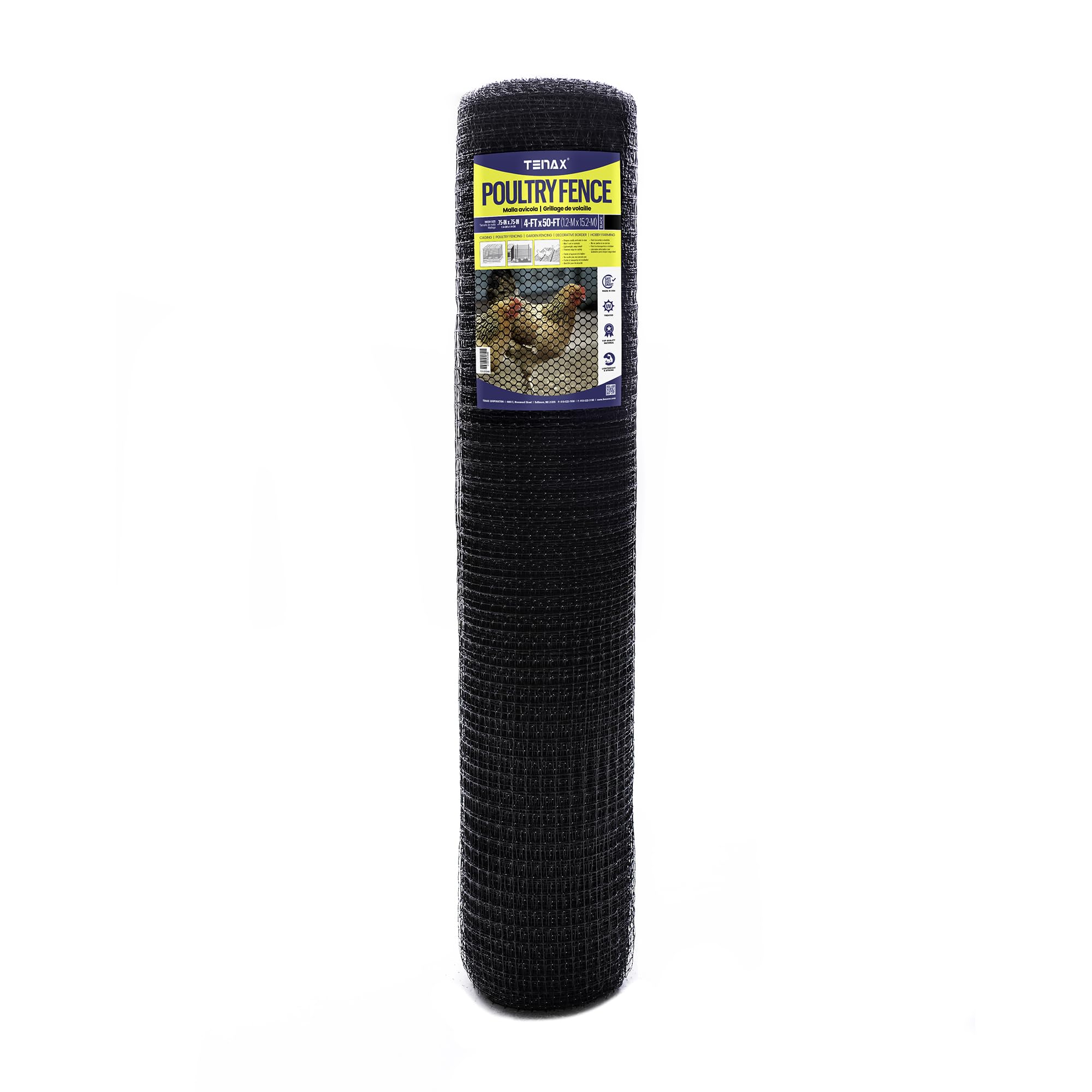
The rigid polypropylene netting that buyers have trusted for 4+ years without a deer jump.
This netting earns its spot for tangle-free reusability. The Tenax Deer Netting has a reputation for stiffness and reusability. Its 0.63-inch by 0.75-inch mesh is rigid enough that it does not tangle like cheap netting, making it easy to take down and put back up season after season. One reviewer has used it for 4 years in flower beds and reports that deer “have not jumped over” — a direct testament to the 7-foot height doing its job. The netting is made from polypropylene and weighs 128 ounces (8 pounds), giving it a substantial feel that shoppers say is “thicker than store-bought.”
Unlike the lightweight Fencer Wire mesh, the Tenax is described as rigid enough to avoid the knotting problems that plague low-cost fencing. It is a “good middle-of-the-road option,” according to one reviewer, who says it is less expensive than premium versions but still avoids the tangling of cheap netting. Another reviewer uses it wrapped around 6-foot grapevines and says it keeps deer from the leaves and magpies from the fruit — it has worked perfectly for two years with no knotting.
The trade-off: the rigid material makes it harder to work with than a flexible netting. One buyer notes it required a helper to install because of the stiffness, and the 7-foot height means you will need a second person to lift it. Also, a reviewer warns that deer can still cut holes in it, and beavers have been known to chew through it. The manufacturer backs it with a 1-year limited warranty, which is longer than most competitors.
Heavy-duty build
- Rigid, tangle-free design makes seasonal re-use practical
- Proven 4-year performance — deer have not jumped over
- Thicker material than standard store-bought netting, easier to see
Higher cost
- Stiff material usually requires a helper for installation
- Deer can cut holes in the polypropylene with antlers
Tough terrain: you plan to put up and take down the fence each season — the rigid mesh avoids the tangling nightmare of flimsy netting.
Short fences: you are fencing alone and need a lightweight netting that one person can manage.
Understanding the Specs
Height (Feet)
The single most important spec. A 7-foot fence is the proven height that deters whitetail deer from jumping. Any shorter, and most deer will clear it with ease. The extra half-foot on the POYEE 7.5 ft model adds a 7% height advantage over 7-foot fences — enough to discourage the most athletic jumpers. Measure your post length to ensure the top of the fence sits at a full 7 feet or higher above ground level.
Material (Polypropylene vs. HDPE)
Polypropylene is the standard material for budget to mid-range deer fencing. It is lightweight, resists rot and rust, and costs less. Its weakness is long-term UV exposure — after 3-5 years of direct sun it can become brittle and tear more easily. HDPE (high-density polyethylene) is tougher and more UV-resistant, lasting 5-10 years without significant degradation. If you are fencing a permanent garden bed, HDPE is the better investment. If you are fencing a seasonal plot, polypropylene saves money.
Mesh Size
The size of the openings determines what gets through. A 1/2-inch square mesh (like the POYEE 7.5 ft) blocks birds, rabbits, squirrels, and deer. A 3/4-inch mesh (like the Fencer Wire) also blocks most animals but may allow very small songbirds to pass. Larger diamond-pattern meshes (like the xihakey) are less rigid but easier to see through at a distance. The trade-off is that larger meshes are less effective at stopping small animals from pushing through. The tightest mesh gives the best all-around exclusion but can be heavier to handle.
Reinforced Edges
Fences with reinforced ropes or extra material at the top and bottom edges stay upright better on uneven ground and resist sagging over long spans. The POYEE and xihakey models include this feature. Without it, you will need more posts (spaced more closely) to keep the fence taut. If your garden is on a slope, reinforced edges are worth paying extra for.
FAQ
Will a 7-foot fence keep deer out?
Can deer push through plastic netting?
How long does deer fence netting last outdoors?
Is HDPE better than polypropylene for deer fencing?
Can I install deer fence netting by myself?
What is the best mesh size to keep birds and squirrels out?
Will deer fence netting rust or rot?
How do I install deer fence netting on T-posts?
Is deer fence netting reusable from season to season?
Final Thoughts: The Verdict
For most people, the best fence for deer is the Jobe’s LG400171 Deer Barrier Fencing because it combines a proven 7-foot height, UV-treated polypropylene, and a wide buyer consensus that it lasts years without rust or rot. If you need an extra 6 inches of height for particularly athletic deer, grab the POYEE 7.5 ft Deer Fence Netting. And for a rigid, tangle-free fence you can take down and re-use every season, the Tenax Deer Netting is the one to beat.
How We Picked
We do not accept paid placement. Every pick is matched to a real buyer and a real use-case; we do not hands-on test units.
Sources & Methodology
Specifications: manufacturer listings and product documentation. Review insights: verified customer reviews, as of July 2026. Pricing: not shown on this page (it changes often); check the current price via the retailer link.
As an Amazon Associate, Lawn Gear Lab earns from qualifying purchases. This does not affect which products we feature.