
Specs are compiled from manufacturer listings and verified buyer reviews and can change over time — please confirm the key details on the product page before buying.
The moment rust starts, your fence cable wire weakens and the whole look fades. You are running wire across a deck, along a garden boundary, or securing a gate — and the steel grade and the braid pattern decide whether that wire outlasts the wood it is bolted to. The seven-strand braid and the stainless grade are what decide whether that wire outlasts the wood it is bolted to.
I’m Rikta — the founder and writer behind Lawn Gear Lab. This guide is built by comparing the manufacturers’ published specifications and the patterns across verified customer reviews, so you get each pick’s real strengths and trade-offs instead of marketing spin.
The right wire resists salt, sun, and constant tension without fraying or snapping — and from marine-grade 316 stainless to a 7,000-pound galvanized option, these picks deliver.
Our Picks at a Glance

How To Choose The Best Fence Cable Wire
The right fence cable wire feels almost invisible once installed, but the wrong one shows rust in six months or sags under tension. Three factors separate the keepers from the returns.
Stainless Steel Grade — 304 vs 316
304 stainless works fine for dry climates and occasional rain — it resists rust well and costs less. T316 stainless adds molybdenum (a hard metal element), which fights off the salt in coastal air, road salt spray, and chlorine near a pool. If you live within a few miles of the ocean or run wire near a treated deck, 316 is the safer bet.
Strand Construction — 7×7 vs 7×19
A 7×7 cable (seven strands of seven wires each) is the standard for railing and fence work. It stays round under tension, cuts clean, and has just enough flexibility to curve around corners without kinking. The more flexible 7×19 construction (seven strands of 19 wires each) bends easier, making it a better choice for winches, pulleys, or applications that need tight-radius turns, but it can be more prone to fraying when cut.
Breaking Strength vs. Safe Working Load
Manufacturers list breaking strength — the point the wire snaps. For railing and fencing, the safe working load is roughly one-fifth of that number. Never tension a cable to its breaking point, and always factor in the dynamic load of a person leaning or a wind gust on a shade sail.
Quick Comparison
| Model | Best For | Length | Steel Grade | Breaking Strength | Amazon |
|---|---|---|---|---|---|
| Steel DN Mate 220FT★ Best Overall | Decks & Coastal Railing | 220 ft | T316 | 1,800 lb | Amazon |
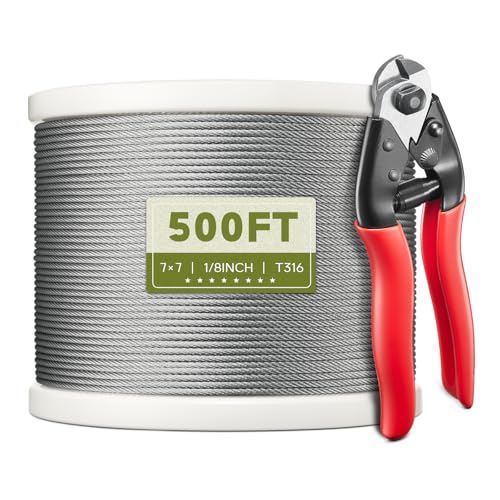
| KALLSDY 500FTPremium Pick | High-Volume Railing Jobs | 500 ft | T316 | 1,780 lb | Amazon |
| AFences 100FT Kit | Budget Starter Projects | 100 ft | 304 | 2,000 lb | Amazon |
| RECTOO 200FT | Versatile Indoor/Outdoor | 200 ft | T316 | 1,800 lb | Amazon |
| ACLASTOOL 3500FT Polywire | Electric Livestock Fencing | 3,500 ft | 304 (Conductor) | 140 lb | Amazon |
| VEVOR 250FT Galvanized | Heavy-Duty Structural | 250 ft | Galvanized Carbon | 7,000 lb | Amazon |
In‑Depth Reviews
1. Steel DN Mate 220FT 1/8″ Genuine T316 Stainless Steel Cable
Our pick — over 4.5★ from 600+ verified ratings; the strongest balance of quality and price.
220 feet of T316 that holds up to coastal salt and heavy tension without a trace of rust.
This cable resists rust in coastal air better than any other pick in the lineup because it uses certified T316 stainless steel (a grade with 2% molybdenum). The 1,800-pound breaking strength gives you a safe working tension of around 260 pounds for a deck railing, and the 7×7 strand construction means you can cut it without fraying. The 220-foot spool is 220 feet compared to the AFences 100-foot kit, so you can run a full deck or multiple fence sections without splicing.
The included heavy-duty cutter stays sharp enough for over 100 cuts, according to owners with years of use. Buyers report that the cable does not unwind or distort when cut — it inserts cleanly into fittings, which saves time during a railing install. The polished surface has no burrs, so handling it with bare hands is safe. The single recurring note of caution is that an occasional reel can have a flaw in the way the cable is wound, causing the wire to tear during the first cut; the consensus is that if you hit a clean first cut, the rest of the spool works perfectly. After two years, owners mention zero rust and only minor connector loosening, which is a normal maintenance check on any tensioned cable system.
29 owners single out quality as the defining feature. Durability follows closely, with 19 owners noting the cable shows no wear even after a full season exposed to the elements. The cutter quality also earns consistent praise, with buyers noting it cuts cleanly without distorting the cable end.
Why It Wins
- Genuine T316 marine-grade stainless — ASTM certified (meaning it meets a published standard for material composition), outperforms T304 in salt and humidity
- 220-foot spool covers a full deck without a join — 220 feet versus the 100-foot kit
- Included cutter stays sharp for 100+ cuts, according to long-term owners
- 7×7 strand construction cuts clean without fraying or unwinding
The Fine Print
- Reel winding can occasionally cause the first cut to tear — a known but intermittent production issue
- Minor connector loosening reported after extended use — normal for any tensioned system
Reach for this if: you want a single-spool solution for a deck railing, fence, or shade sail in a coastal or humid climate where rust is the primary concern.
Look elsewhere if: you need 300+ feet of wire or a super flexible cable for winching; the 7×7 build is designed for straight tension runs, not pulleys.
2. KALLSDY 500FT 1/8″ T316 Stainless Steel Cable
A half-thousand-foot spool of T316 that outpaces every other railing cable in this lineup for sheer coverage.
When you need more than 220 feet — say, wrapping a large deck, running multiple fence lines, or tackling a commercial job — this is the cable to grab. It is manufactured from T316 stainless steel with 2% molybdenum, which gives it top-tier corrosion resistance even in chlorine-rich environments like swimming pools or high-salt coastal zones. The 7×7 strand construction has a minimum breaking strength of 1,780 pounds and a working load limit of 570 pounds for cargo applications. It is a small jump from the Steel DN Mate’s 1,800-pound rating, but the real difference is length: this spool is 500 feet compared to the 220-foot option, so you can tackle a larger project in one run.
Owners consistently compliment the feel of the cable — the weave is smooth to the touch with no burrs, which makes pulling it through fittings safe and easy. The included cable cutter is described as excellent, with one buyer noting it was a surprise extra that they plan to reuse. The only practical drawback is that the supplied drill bits may struggle on hardwood posts; larger pilot holes are recommended for hickory, oak, or pressure-treated posts.
Who It’s For: Buyers tackling a large deck, multiple fence sections, or a coastal property where T316 rust resistance (the grade with added molybdenum) is non-negotiable and a single spool must carry the whole job.
The Only Trade-Off: The inclusion of undersized drill bits for hardwood is a minor frustration; plan to buy separate bits if your posts are dense oak or hickory.
Best for: high-volume railing or fencing jobs where buying one 500-foot spool beats buying two smaller reels.
skip it if: your project is small — 500 feet is more wire than you need for a single gate or a short garden fence.
3. RECTOO 200FT 1/8″ T316 Stainless Steel Cable
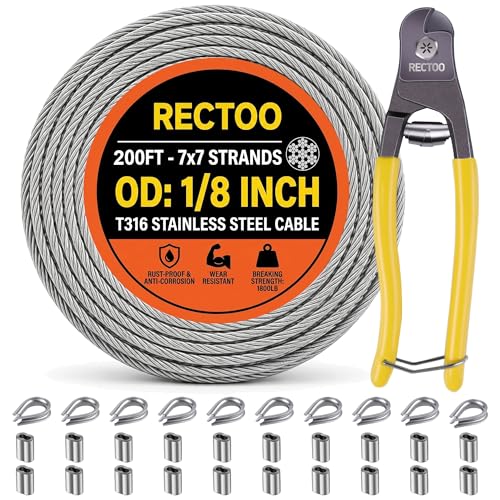
200 feet of T316 at a price that beats most 304 options — a smart middle ground between budget and build.
RECTOO offers the same T316 marine-grade material as the Steel DN Mate above (and the same 1,800-pound breaking strength), but in a 200-foot spool that costs less. The 7×7 strand construction provides the same clean-cut behavior and smooth surface, making it suitable for deck railing, stair handrails, and garden fencing. The included cutter is noted as functional but gets mixed feedback — some customers note it works perfectly, while a few found the cutter missing from the package, so verifying the contents on arrival is a good habit.
The real-world use cases here are varied: reviewers point out using this cable to tie down a large outdoor skeleton decoration, run shade sails, and support heavy bird feeders — all without the cable showing stretch or rust. Quality is the most mentioned aspect, with 36 owners calling it out, followed by durability at 20 mentions. In terms of value, this wire sits between the budget 304 kits and the premium 500-foot spools, delivering marine-grade corrosion protection at a mid-range price. The practical trade-off is that the cutter is less sturdy than what the Steel DN Mate or KALLSDY include, so ordering a separate heavy-duty cutter is a reasonable plan if you have many cuts to make.
Why It Works: You get the rust-fighting power of T316 stainless without paying for the extra 20 feet you might not need — a smart compromise for a standard-size deck or fence.
The Minor Gripe: The included cutter can be absent from the package; open the box before starting your project.
Reach for this if: you want T316 quality on a mid-range budget for a deck or fence of average size, and you are comfortable buying a separate cutter if needed.
Look elsewhere if: you prefer a simple to use unboxing experience with a guaranteed heavy-duty cutter — the Steel DN Mate wins on that front.
4. VEVOR 250FT 1/4″ Galvanized Carbon Steel Cable
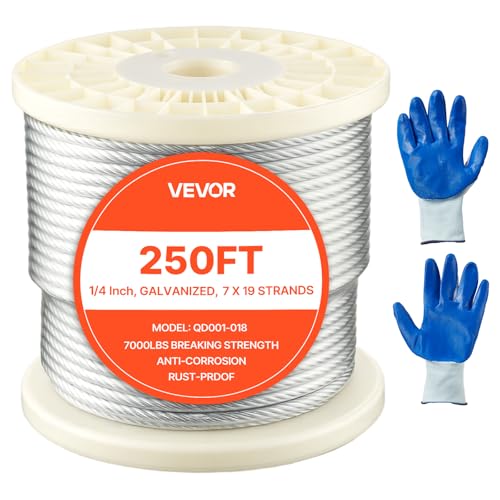
A quarter-inch cable with 7,000 pounds of breaking strength — the serious option for structural tension.
Everything about this cable is bigger. At 1/4-inch thick (6.35 mm), it is double the diameter of the 1/8-inch wires above, and the breaking strength jumps to 7,000 pounds, compared to the Steel DN Mate’s 1,800 pounds. The galvanized carbon steel construction means it fights rust through a zinc coating (a layer of zinc applied to the surface) rather than the alloy chemistry of stainless, and the 7×19 strand structure (seven strands of 19 wires each) makes it noticeably more flexible than the 7×7 cables. This flexibility helps when wrapping around stair transitions or curved deck edges — a detail carpenters appreciate.
The build has a dedicated following among contractors. The 7×19 construction uses 19 individual strands woven around a single core, which owners say resists fraying better than multi-strand alternatives. It is a stiff cable — buyers warn that cutting it requires a quality cutter, with Knipex recommended as a reliable choice. The included gloves are a welcome touch for safety, since working with galvanized wire can be rough on hands. The key dispute is whether this is genuine 316 stainless or galvanized carbon steel; the manufacturer specifies carbon steel with a galvanized coating, so if you are set on specialty T316 for a coastal environment, this is not the right match. For dry climates and heavy-duty tension where appearance is less critical than raw strength, it is the most capable cable in this lineup.
The Case For It: class-leading breaking strength at 7,000 pounds and a thicker gauge for structural applications like heavy gates or tensioned frameworks.
Honest Caution: Not 316 stainless — if your primary need is corrosion resistance in a salt environment, stick with the T316 options.
Best suited for: heavy-duty fencing, gates, and any project where raw tensile strength matters more than marine-grade rust protection.
Think twice if: you are installing within a mile of the ocean or require a polished, decorative finish — the galvanized coating is functional, not cosmetic.
5. AFences 100FT 1/8″ 304 Stainless Steel Cable Kit

A starter kit with 38 pieces, including thimbles and cutters, that keeps the entry price low.
At 100 feet, this is the shortest cable in the lineup, but it punches above its weight for small projects. The 304 stainless steel 7×7 strand wire carries a 2,000-pound breaking strength — slightly higher than the T316 cables above, though 304 is less resistant to salt corrosion. The kit includes 12 wire rope thimbles (metal sleeves that protect the cable loop from wear), 24 aluminum crimping loops, and a cable cutter, which makes it a complete starter set for someone running their first fence or railing. The cutter earns high marks for a clean cut with no fraying, though owners note that the included tool cuts wire only — it does not crimp. You will need a separate hydraulic crimping tool (a tool that uses hydraulic pressure to squeeze the loop tight) to secure the aluminum loops.
The biggest practical difference from the T316 options above is corrosion resistance in wet or coastal environments. 304 stainless is durable and rust-resistant, but a magnetic test by some owners shows the strands contain iron, which can rust in persistent moisture. For a dry climate or occasional rain, it works without issue. Given that the package cost sits well below the T316 cables, this makes sense for temporary fencing, string light hanging, or lighter garden projects where the wire does not need to last a decade in salt air. The recurring owner line sums it up: good starter kit, but plan on buying a real crimping tool.
Why It’s a Value: You get wire, thimbles, loops, and a cutter in one box for less than many bare spools — ideal for a first-time install or a one-season project.
The Fine Print: The included tool cuts wire only; crimping requires a separate hydraulic tool, which costs more than the kit itself.
Best for: small projects, temporary fences, string lights, and budget-conscious first-time buyers who own or plan to buy a crimping tool.
pass on it if: you need a full fencing solution with working hardware in one box — the crimping requirement adds cost and friction.
6. ACLASTOOL 3500FT Polywire Electric Fence Wire
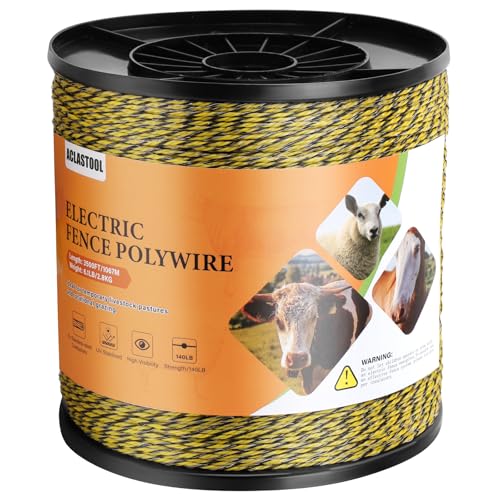
3,500 feet of polywire with six stainless steel conductors — built for electric livestock fencing over large pastures.
This is a completely different animal from the stainless cables above. It is a polywire — woven polymer strands with six 304 stainless steel conductors running through the core — designed for portable electric fencing that you move around the property. The 1/8-inch diameter has a 140-pound breaking strength, which is far lower than the 1,800-pound steel cables, but that is intentional: polywire is meant to contain livestock with a gentle electric pulse, not hold up under structural tension. The 3,500-foot spool covers a massive area — roughly 2.2 acres of single-strand perimeter — making it a strong pick for rotational grazing or garden protection from deer.
Owners confirm the polywire works well with solar-powered fence energizers and praise the value, with several noting the cost is roughly one-quarter of what local farm stores charge. The 304 stainless conductors deliver good conductivity over long distances without the oxidation that aluminum wire develops, keeping the shock consistent. Durability is the mixed point: the braid is looser and the conductor thinner than premium brands, and some owners estimate the wire may last two seasons in permanent sun before the UV stabilizers degrade — still ahead on cost for a temporary setup. The integrated plastic reel design gets positive marks for not falling apart during re-spooling, a common frustration with cheaper spools.
Why It Stands Out: The length-to-price ratio is class-leading for electric fencing — a single spool can define a half-acre paddock at a fraction of farm-store prices.
The Honest Note: The polymer braid is thinner and looser than premium brands; for a permanent high-traffic fence, a thicker polytape or steel wire may last longer.
Reach for this if: you need a large volume of affordable electric fence wire for temporary or rotational grazing, garden deer control, or poultry runs.
Look elsewhere if: you need a permanent fence that does not rely on electricity — the 140-pound breaking strength is not designed for tensioned railing or structural fencing.
Understanding the Specs
T316 vs 304 Stainless Steel
T316 stainless contains 2% molybdenum (a hard metal element that boosts corrosion resistance), an addition that significantly improves corrosion resistance in saltwater, road salt, and chlorine environments. 304 stainless is still rust-resistant but lacks that extra protection — it works in dry and moderate climates but can develop surface pitting near the coast or a pool. If your wire will see ocean spray or winter road salt, T316 is the grade to look for. In the data, the Steel DN Mate, RECTOO, and KALLSDY cables all specify T316, while the AFences kit uses 304.
7×7 vs 7×19 Strand Construction
The first number is the count of strands; the second is the number of wires per strand. A 7×7 cable (49 wires total) is stiffer and holds its shape under tension, which makes it the standard for deck railing and straight fence runs where sag is the enemy. A 7×19 cable (133 wires total) is more flexible and can bend around tighter curves without kinking, so it is preferred for winching, pulleys, or stair transitions. The VEVOR cable uses 7×19; the rest of the picks here use 7×7, which is the right choice for most fence and railing applications.
FAQ
Will 1/8-inch cable work for deck railing?
Can I use polywire for a permanent fence?
How do I cut stainless steel fence cable without fraying it?
Is T316 stainless steel worth the extra cost over 304?
Can I use fence cable wire for hanging string lights?
What is the safe working load of a 1,800-pound breaking strength cable?
Will galvanized cable rust, and when should I use it instead of stainless?
Do I need a special crimping tool for cable fittings?
What is the difference between 7×7 and 1×19 cable construction?
How long will fence cable wire last outdoors?
Final Thoughts: The Verdict
For most buyers, the winner is the fence cable wire Steel DN Mate 220FT T316 because it combines marine-grade corrosion resistance (thanks to 2% molybdenum), a generous 220-foot spool, and a reliable included cutter that owners have proven durable over multiple years. If you need a larger volume of wire for a multi-section deck or commercial run, the KALLSDY 500FT T316 delivers 500 feet in one spool — more coverage than the 220-foot option. And for heavy-duty structural tension where stainless is not required, the VEVOR 250FT galvanized 1/4-inch cable brings a 7,000-pound breaking strength that no other pick here can match.
How We Picked
We do not accept paid placement. Every pick is matched to a real buyer and a real use-case; we do not hands-on test units.
Sources & Methodology
Specifications: manufacturer listings and product documentation. Review insights: verified customer reviews, as of July 2026. Pricing: not shown on this page (it changes often); check the current price via the retailer link.
As an Amazon Associate, Lawn Gear Lab earns from qualifying purchases. This does not affect which products we feature.