
Specs are compiled from manufacturer listings and verified buyer reviews and can change over time — please confirm the key details on the product page before buying.
Hoe shopping feels impossible when every long handle looks the same but reviews call one “the best ever” and another “fell apart in minutes.” The difference is not just the price tag — it is the steel gauge, the blade shape, the handle weight, and whether the tool was built to pop roots or merely scratch the surface.
I’m Rikta — the founder and writer behind Lawn Gear Lab. This guide is built by comparing the manufacturers’ published specifications and the patterns across verified customer reviews, so you get each pick’s real strengths and trade-offs instead of marketing spin.
Whether you are clearing a new plot, tilling a vegetable patch, or saving your back from hours of stooping, here is exactly how to choose the right farming hoe tool for the job.
Our Picks at a Glance


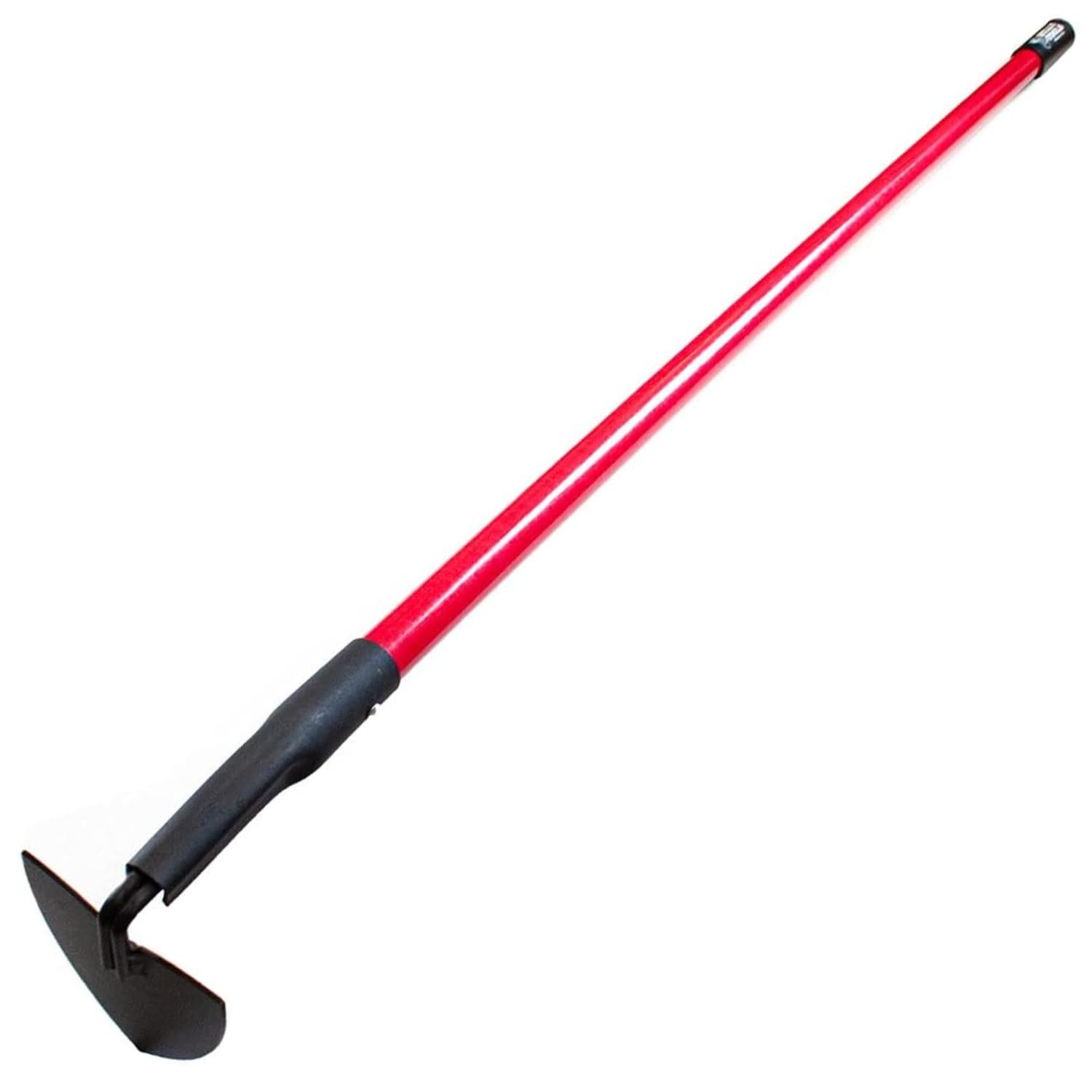
How To Choose The Best Farming Hoe Tool
Selecting the right hoe depends on three things: the type of ground you dig, how much weight you want to swing, and the shape of the blade that matches your task.
Blade Shape Determines the Job
A wide paddle blade (like a draw hoe) is your go-to for chopping weeds, shaping soil, and moving dirt. A narrow triangular or warren blade digs trenches and loosens compacted ground. A stirrup (or hula) hoe slices weeds just below the surface without disturbing the roots of nearby plants.
Weight Decides Who Can Use It All Day
Heavier heads around 4 to 5 pounds cut tough soil and roots in one swing but wear you out faster. Lighter heads around 2 to 3 pounds are easier on the arms and back, making them a better pick for large gardens or gardeners who prefer not to wrestle the tool.
Handle Material and Length
Fiberglass handles resist moisture and splintering better than wood, but wood offers natural shock absorption. A handle between 54 and 62 inches lets you stand upright while you work — a real back-saver. Steel handles are durable but can transmit more vibration to your hands.
Quick Comparison
| Model | Best For | Weight | Blade Width | Handle Length | Amazon |
|---|---|---|---|---|---|
| Rogue Hoe 7″ Wide Blade★ Best Overall | Professional ground clearing | 4.09 lb | 7 in | Amazon | |
| Bully Tools Paddle Draw HoePremium Pick | Heavy chopping & shaping | 3.2 lb | 6.25 in | 58 in | Amazon |
| Bully Tools Warren HoeTop Performer | Precision digging & weeding | 3.07 lb | 6.25 in | Amazon | |
| Truper Lane Hoe No. 3 | Quick soil work & tilling | 2.1 lb head | 8.5 in x 8.5 in | 54 in | Amazon |
| Rogue Hoe 6″ Triangle Fire Trail | Trail work & sod removal | 4.8 lb | 6.5 in | 40 in | Amazon |
| YEELOR Warren Hoe | Economical stainless steel | 2.55 lb | 57 in | Amazon | |
| Garden Hoe Hula/Stirrup | Light weeding & raised beds | 62 in | Amazon | ||
| COCONUT 2-in-1 Hoe | Versatile small gardens | 2.51 lb | 60 in | Amazon |
In‑Depth Reviews
1. Rogue Hoe 7 Inch Wide Blade Heavy Duty Garden Cultivator Field Cotton Hoe Tool
Our pick — over 4.5★ from 850+ verified ratings; the strongest balance of quality and price.
The heavy lifter that cuts weeds and brush in a single swing.
This is the hoe that owners describe with a single word: “stout.” The Rogue 7-inch wide blade is built from recycled agricultural disc blades, so the steel is already work-hardened and holds a sharp edge across three sides. At 4.09 pounds it is noticeably heavier than the COCONUT model (2.51 pounds), but buyers report that extra mass means it “cuts weeds/brush in one swing vs. 2-3” — less effort over the long day, not more. The blade measures 7 inches wide along the cutting edge by 6.5 inches, and the socket is welded directly to the blade so there is no weak joint to snap. Owners rave about the quality above all else — that is the most-discussed aspect by a wide margin — and many call it a tool that will outlast a lifetime of hard use.
The trade-off is that this is a purpose-built chopper. It is not designed as a multi-tool with a pronged tiller end or interchangeable heads; it does one thing (cut, dig, scrape, furrow) and does it ferociously. The handle is long enough to let you work upright, saving your back during extended sessions. For gardeners facing tough sod, clay, blackberries, or saplings up to an inch in diameter, this is the tool that eliminates the need for a small tiller.
What wins people over
- Built from recycled agricultural disc steel — tough from day one
- Three sharpened sides mean you never need to reposition the blade
- Welded socket-to-blade connection resists breaking
The honest limits
- Heavier than most hoes at 4.09 pounds
- Single-purpose design — no flip-to-tiller feature
Reach for this if: you need to clear brush, sod, or compacted ground regularly and want a tool that feels like an extension of your arm.
Look elsewhere if: you prefer an ultralight tool or need a 2-in-1 cultivator head for delicate flower beds.
2. Bully Tools 12-Gauge Garden Hoe for Gardening, Heavy Duty Draw Hoe for Weeding
A 12-gauge USA-made paddle that chops tough soil without breaking a sweat.
Bully Tools builds this draw hoe in Steubenville, Ohio, from 12-gauge American-made tempered steel — a thickness that the brand says is up to 30% more durable than foreign competitors. The paddle-shaped head measures 5.25 inches long by 6.25 inches wide, making it a natural for chopping weeds, shaping rows, and spreading soil amendments. The 58-inch fiberglass handle is coated in a polyester veil that prevents splintering, and the rubber grip cuts down hand fatigue during long sessions. Owners call it “a beast of a garden tool” and note that the reinforced welded head handles rocky, invasive terrain without issue. The Bully Tools draw hoe weighs 3.2 pounds, while the Rogue 7-inch weighs 4.09 pounds. It is in the middle of the weight spectrum but still substantial enough to break clay.
The honest caveat: several owners mention the blade arrives quite blunt, likely a safety choice from the factory. A quick pass with a file brings it to a working edge. A few owners also mention surface rust appearing after a few weeks of use, so a protective wipe-down after each session helps keep the powder-coat finish intact. The lifetime warranty and USA-made pedigree give it a strong long-term value story that cheaper alternatives cannot match.
Draw-hoe authority: The 12-gauge steel head and 58-inch fiberglass handle make this a serious tool for anyone who chops, shapes, and turns soil regularly.
Grab this if: you work in heavy clay or rocky soil and want American-made durability with a comfortable rubber grip.
skip it if: arriving blunt or needing occasional rust maintenance bothers you.
3. Bully Tools Warren Hoe Professional 12-Gauge 6.25-Inch Garden Hoe Tool
Commercial-grade warren hoe that digs trenches and pops weeds with surgical accuracy.
This is the pointed-blade version of the Bully family, and it trades the wide paddle of its sibling for a triangular warren shape that slips into tight rows and digs precise furrows. The head is forged from 12-gauge steel with an extended ferrule (the metal collar where the handle meets the head) that adds structural strength at the connection point — a common failure spot on cheaper hoes. At 3.07 pounds it is only a hair lighter than the draw-hoe version, but the shape changes the swing feel: the pointed tip concentrates force into a smaller area, so it drives through compacted soil and roots more efficiently. Owners highlight the quality and sturdiness as the top reasons to buy, and several mention the warranty support — one buyer had a replacement shipped at no charge after four years of hard use.
The weight draws mixed feedback: some find it “heavy duty and super strong…also heavy,” while others appreciate the mass for digging. This is a specialist tool for detailed work — opening seed furrows, grubbing out individual weeds, and cultivating between established plants. It does not double as a rake or a stirrup, but for precision ground prep it leads the category.
For the precision digger: The extended ferrule and 12-gauge head make this the go-to warren hoe for serious gardeners who need accuracy.
Best for: gardeners who dig furrows, cultivate between rows, and want a commercial-grade American-made tool.
Not ideal if: you need a lightweight tool for quick touch-ups or a wide paddle for moving soil.
4. Truper Lane Hoe No. 3, 54-Inch Fiberglass Handle, 8-1/2-Inch Forged Head
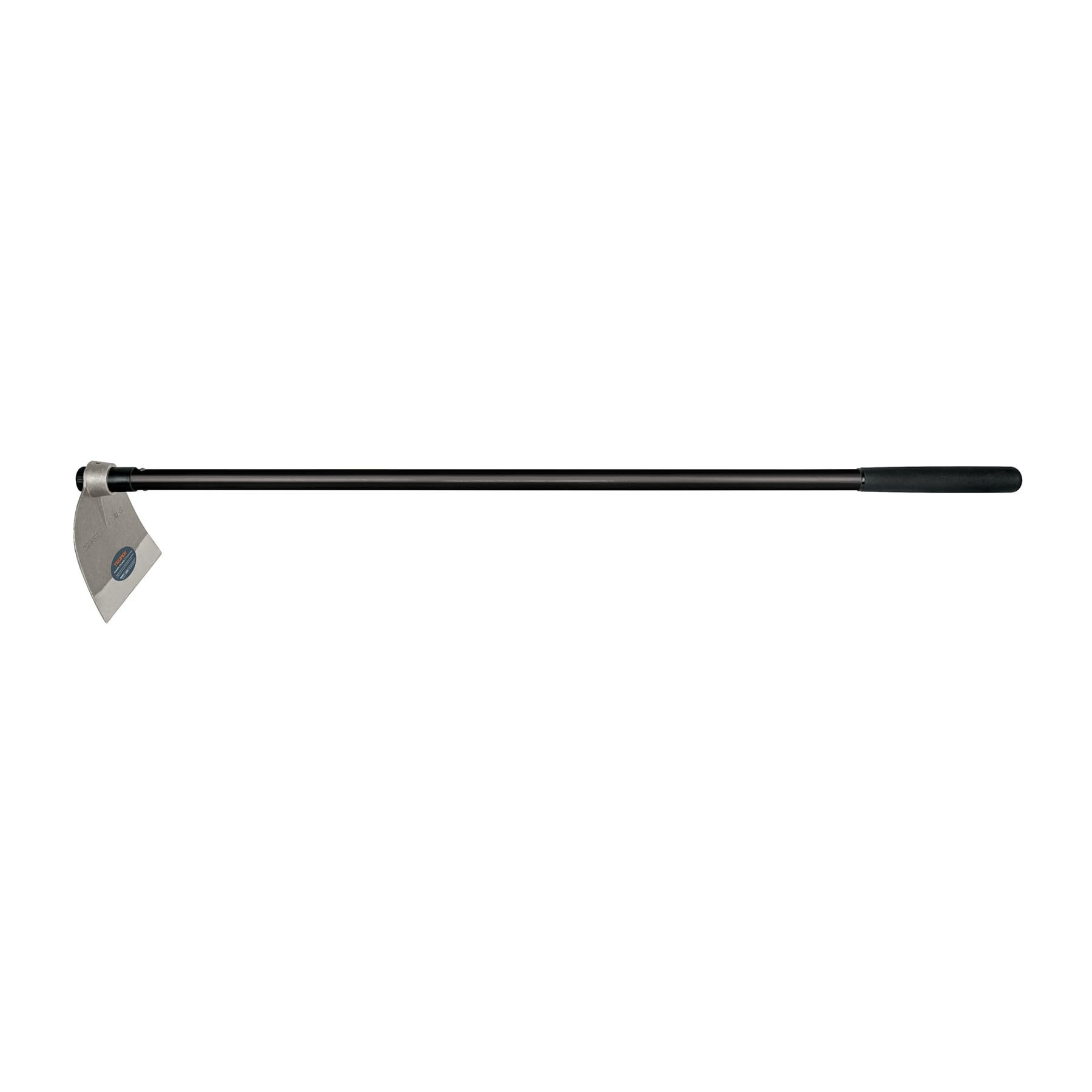
A big forged blade that moves dirt fast without wearing out your arms.
The Truper Lane Hoe stands out for its sheer blade area: a forged one-piece head measuring 8.5 inches by 8.5 inches — far larger than the Rogue 7-inch or the Bully 6.25-inch heads. The forged construction with a central rib helps absorb vibration and resist impact, so each swing transfers more energy into the soil and less into your hands. The head weighs 2.1 pounds, which makes it one of the lighter heavy-duty hoes here, but the wide face means it displaces a lot of dirt per pass. The 54-inch fiberglass handle is longer than wood alternatives and resists splintering. Owners describe it as “super light” and “very sturdy,” and one called it the best hoe they have used in 40 years.
The mixed feedback centers on durability — a small number of reports mention the head breaking under extreme force, and the handle-length opinions are split between those who want it longer and those who find it perfect. This hoe excels at quick soil loosening and tilling in garden beds and flower plots, but it is not built for prying up rocks or clearing dense brush. The price-to-area ratio is excellent, giving you the most cutting edge per dollar in this lineup.
Why it stands out
- 8.5 x 8.5 inch forged head — the largest blade in this guide
- Central rib reduces vibration during heavy work
- Polished and pre-sharpened edge right from the start
Things to consider
- Handle length is a firm 54 inches — no adjustability
- Not intended for brush clearing or rock removal
Reach for this if: you need to cover ground quickly in garden beds and flower plots with minimal arm fatigue.
Choose something else if: your soil is full of rocks or you need to clear woody growth.
5. Rogue Hoe 6 Inch Steel Triangle A Blade Fire Trail Hoe with Hickory Wood Handle

The trail-clearing monster that works like an axe on roots and sod.
This Rogue Triangle blade is the most specialized tool in the lineup — built for fire trail work, heavy sod removal, and busting new ground. The triangular steel blade is precision-sharpened on all three sides, and the 40-inch curved hickory handle gives you leverage for chopping motions that feel closer to swinging an axe than hoeing a garden. The Rogue Triangle weighs 4.8 pounds, and the Rogue 7-inch weighs 4.09 pounds. Customers note that it “tears through roots better than a combi” and is “useful for wildland fire handline cutting.” The blade is made from recycled agricultural disc steel, so the material is already hardened from years of field work.
The handle length is a deliberate trade-off: at 40 inches it is shorter than nearly every other pick here, which keeps the weight balanced for overhead chopping but means you will hunch more when weeding flat ground. Several reviewers point out the handle feels short at first but “it actually is the right length for the weight of the steel hoe.” This is a tool for ground you want to dominate — rocky hardpan, dense clay, thick root mats. It is overkill for a manicured flower bed.
Ground-breaking authority: The 4.8-pound tempered steel triangle and 40-inch hickory handle make this the ultimate sod-buster for trail work and tough terrain.
Reach for this when: you face thick sod, roots, and unbroken ground that a standard hoe cannot touch.
Not for: raised beds, light weeding, or anyone with back concerns — the shorter handle demands bending.
6. YEELOR Warren Hoe with 57-inch Stainless Steel Long Handle

A budget-friendly warren hoe with a stainless steel handle that refuses to rust.
This YEELOR hoe brings a carbon steel head on a stainless steel handle — a combination that resists the corrosion and splintering that plague wood handles over time. The YEELOR weighs 2.55 pounds, while the Rogue 7-inch weighs 4.09 pounds. This makes it a comfortable choice for gardeners who want to work all day without fatigue. The 57-inch handle includes a non-slip silicone grip near the top, and the multi-section design lets you adjust the length by connecting one, two, or all four poles. Owners praise the “beautiful, rock-solid” assembly and say it is “efficient and back saving” because the long handle lets you stand upright while weeding. The sharp blade penetrates various soil types, and the stainless steel ferrule connection is notably strong.
The main complaint: the blade arrives dull and needs immediate sharpening before it cuts effectively. Several owners mention this as an easy fix with a file, but it is a step you need to plan for. The handle sections screw together securely, but the multi-piece construction introduces more potential failure points than a one-piece fiberglass or wood handle. For the price, this balance of weight, rust resistance, and adjustable length is tough to top.
What stands out
- Stainless steel handle resists rust and splintering
- Adjustable length from compact to 57 inches
- Very lightweight at just 2.55 pounds
What to know
- Blade arrives dull and requires sharpening before use
- Multi-section handle may feel less rigid than a single piece
Best for: budget-conscious gardeners who want a rust-proof long handle and are comfortable sharpening a blade.
Think twice if: you want a tool that works from the start with no prep.
7. Garden Hoe, Heavy Duty Hula Hoe Garden Tool for Weeding, 62 Inch Cultivator Stirrup Hoe with Adjustable Long Handle

The stirrup hoe that slices weeds below the surface while you stand tall.
This hula hoe uses a stirrup-style blade that cuts weeds by pushing AND pulling — no chopping motion needed. It means you work the soil with a gentle back-and-forth glide, which is why a 71-year-old reviewer reported easily weeding over 8,900 square feet in compacted sandy loam and clay. The 62-inch handle is the longest in this review, letting even tall gardeners work without bending, and the 2-in-1 design means you flip the head to switch from stirrup weeding to a cultivator rake. The metal stirrup blade is sharp on both ends, so it cuts in both directions, and buyers consistently praise the functionality and weed-removal effectiveness.
The recurring durability concern is the handle: it comes in three sections that screw together, and some shoppers say the plastic joints loosening during use. A few resorted to duct tape to keep the sections tight. The metal stirrup and rake heads are well-made, but the handle assembly is the weak link. If you treat the connections carefully and do not over-torque the joints, this tool delivers stirrup-hoe convenience at a very accessible price point.
For the gentle weeder: The stirrup action and long handle make this ideal for anyone who wants to stand upright while slicing weeds just below the surface.
Reach for this if: you garden in raised beds or soft soil and want an easy push-pull weeding action.
Not ideal if: your ground is hard-packed or you prefer a solid one-piece handle.
8. COCONUT Hoe Garden Tool, 60 Inch Garden Hoe Long Handle for Weeding, Hoe Cultivator 2 in 1

The lightweight two-tool head that switches from chopper to tiller with a flip.
COCONUT’s 2-in-1 hoe combines a blade end for digging and chopping with a three-prong tiller end for stirring soil — all on a 60-inch adjustable steel handle. At 2.51 pounds it ties with the YEELOR as one of the lightest picks here, making it an obvious choice for gardeners with arthritis or back issues (several owners specifically note it as a “perfect adaptive tool”). The steel handle measures 1 inch in diameter and includes a non-slip grip, and the four-section assembly lets you run the tool at full 60 inches or collapse it to a shorter length for tight spaces. One owner put it simply: “Can dig, chop and put up roots with this one tool.”
The manufacturer explicitly states this tool is NOT intended for hard soil — it is designed for soft to medium ground where the blade can penetrate without excessive force. The handle length draws mixed opinions, with some wishing it were a few inches longer. The assembly is straightforward, and the included hang hole makes storage simple. This is the go-to pick for the weekend gardener who wants one tool that does two jobs and does not tire out the arms.
Versatility in one tool: The blade and tiller combo on a 60-inch adjustable handle means you never switch tools for digging versus cultivating.
Grab this if: you have soft to medium soil and want a lightweight dual-purpose tool that saves you trips to the shed.
Avoid if: your garden is full of clay or rocks that demand heavy chopping force.
Understanding the Specs
Blade Weight
The weight of the hoe head directly affects how much force you deliver per swing and how quickly you fatigue. A 4-pound head cuts deep roots in one pass but wears out your arms faster. A 2-pound head lets you work longer but may need multiple passes in tough ground. Match the weight to the task: heavy for clearing, light for maintaining.
Handle Material
Fiberglass handles resist moisture, UV rays, and splintering better than wood, which makes them a longer-lasting choice in wet climates or year-round storage. Wood handles (especially hickory) absorb vibration better, reducing shock to your hands. Steel handles are durable but can transmit more vibration. The best choice depends on whether you prioritize toughness or comfort.
Blade Shape
The shape of the blade dictates the job it does best. A wide paddle (draw hoe) chops and moves soil. A triangular or warren blade digs furrows and precise holes. A stirrup (hula hoe) slides just below the surface to cut weeds without disturbing soil. A lane hoe combines a large forged blade for fast tilling. Use the shape that matches your most common task.
Handle Length
A handle between 54 and 62 inches lets you stand upright while hoeing, which reduces lower back strain compared to shorter handles that force you to hunch. Taller gardeners should lean toward the 60-inch-plus range. The trade-off is that longer handles reduce leverage for overhead chopping motions — a 40-inch trail hoe swings more like an axe but demands more bending.
FAQ
What is the difference between a draw hoe and a warren hoe?
How long should the handle be for a farming hoe?
Can a stirrup hoe work in hard clay soil?
How often do I need to sharpen a garden hoe?
Is a heavier hoe always more effective?
What is the best hoe for raised bed gardening?
Can I use a farming hoe to dig planting holes?
How long does a high-quality farming hoe last?
Final Thoughts: The Verdict
For most buyers, the farming hoe tool winner is the Rogue Hoe 7 Inch Wide Blade because it combines recycled disc-steel toughness, a 7-inch sharpened blade, and the weight needed to clear ground in one swing. If you want American-made durability with a comfortable rubber grip, grab the Bully Tools 12-Gauge Draw Hoe. And for a lightweight adjustable tool that switches between digging and cultivating, the COCONUT 2-in-1 Hoe is the one to reach for.
How We Picked
We do not accept paid placement. Every pick is matched to a real buyer and a real use-case; we do not hands-on test units.
Sources & Methodology
Specifications: manufacturer listings and product documentation. Review insights: verified customer reviews, as of July 2026. Pricing: not shown on this page (it changes often); check the current price via the retailer link.
As an Amazon Associate, Lawn Gear Lab earns from qualifying purchases. This does not affect which products we feature.