
A fall weed and feed application is the single most important step you can take to guarantee a thick, green, weed-free lawn next spring. Summer heat stresses turf, and winter dormancy puts growth on hold; the window between those seasons is your one chance to restore root vigor and stop winter weeds from ever germinating. Choosing the wrong formula — or applying too late — wastes your time and leaves your lawn vulnerable to poa annua and henbit come March.
I’m Rikta — the co-founder and writer behind Lawn Gear Lab. My process for this guide involved cross-referencing NPK ratios, analyzing slow-release nitrogen percentages, checking iron content for deep greening, and sorting through thousands of verified owner experiences to separate what actually survives winter dormancy from what just looks good on the label.
The formulas below are ranked by real-world evidence: nutrient delivery, weed suppression science, and seasonal timing. This is your complete resource for finding the best fall weed and feed to match your lawn type, coverage area, and budget.
How To Choose The Best Fall Weed And Feed
Not all fall fertilizers are created equal. Choosing the wrong N-P-K for your region or grass type can promote weak top growth right before frost, leaving roots exposed to winter heaving and spring disease. Focus on four factors to pick the right bag.
NPK Ratio — Potassium Is The Fall Star
Nitrogen should be moderate and mostly slow-release — look for numbers like 32-0-10 or 24-0-6. Phosphorus (the middle number) is often zero because established turf doesn’t need it and runoff regulations ban it in many states. The last number, potassium, is critical: it builds cell wall strength, improves cold tolerance, and boosts root carbohydrate storage. Anything below 6 in the K slot is not a true winterizer.
Slow-Release Nitrogen Percentage
Quick-release nitrogen forces a green flush that the lawn cannot sustain through winter. Controlled-release or slow-release nitrogen (often listed as polymer-coated or sulfur-coated urea) meters nutrients over 10–16 weeks. Stick with products that specify at least 50% slow-release nitrogen on the label — this matches the metabolic pace of cool-season grass root development during autumn.
Weed Control Type: Pre-Emergent vs. Post-Emergent
Fall weed and feed products typically target winter annual weeds. Pre-emergent herbicides like prodiamine or dithiopyr stop weed seeds from germinating. Post-emergent formulas like 2,4-D and dicamba kill existing broadleaf weeds (dandelions, clover). If your lawn is currently clean, go with a pre-emergent combination. If you already see fall weeds, choose a post-emergent formulation or a dual-action product.
Coverage Area and Iron Content
Check the labeled coverage — a 5,000 sq. ft. bag is fine for a typical suburban lot; larger properties need 10,000 or 15,000 sq. ft. formulations. Iron (Fe) content above 1% delivers dark green color without forcing unnecessary leaf growth. Iron also aids chlorophyll production during shorter daylight hours, making the lawn look vibrant without wasting energy on top growth that will get frost-burned.
Quick Comparison
On smaller screens, swipe sideways to see the full table.
| Model | Category | Best For | Key Spec | Amazon |
|---|---|---|---|---|
| Yard Mastery 24-0-6 Flagship | Premium Granular | Deep greening & long-season feeding | 24% slow-release N, 3% iron, 15,000 sq. ft. | Amazon |
| The Andersons Barricade 18-0-4 | Pre-Emergent Combo | Preventing winter annual weeds | 0.426% prodiamine, 40 lbs, 10,000 sq. ft. | Amazon |
| Scotts 23614 LawnPro Step 2 | Post-Emergent Weed + Feed | Killing existing broadleaf weeds in fall | 14.63 lbs, broadleaf weed control | Amazon |
| The Andersons Premium New Lawn Starter 20-27-5 | Starter Fertilizer | Establishing new turf before winter | Quick + slow N, 1% iron, 18 lbs | Amazon |
| Jonathan Green 11591 Corn Gluten 10-0-2 | Organic Weed Suppressant | Pet-safe weed prevention | 10-0-2, 15 lbs, 5,000 sq. ft. | Amazon |
| GreenView Fairway Formula 33 lb | High Nitrogen | Large lawns needing quick green-up | 63% slow-release N, 33 lbs, 10,000 sq. ft. | Amazon |
| Green Thumb GT58105 Winterizer 32-0-10 | Budget Winterizer | Low-cost winter preparation | 32-0-10, 2% iron, 5,000 sq. ft. | Amazon |
In‑Depth Reviews
1. Yard Mastery 24-0-6 Flagship Granular Lawn Fertilizer

The Yard Mastery Flagship delivers a 24-0-6 NPK with 24% slow-release nitrogen — precisely the ratio a cool-season lawn needs during autumn root expansion. The 3% iron content is the highest in this lineup, producing visible dark green color within 10 days without forcing a flush of blade growth that would be vulnerable to early frosts.
Owners of bermuda and tall fescue report the 15,000 sq. ft. coverage per 45-lb bag allows a single purchase to handle most large residential lots. The Bio-Nite additive improves microbial activity in cooling soil, which extends nutrient uptake later into the season than standard urea-based products can manage. Several verified reviews note that this formula choked out existing weed patches simply by thickening the turf canopy.
The price point puts it in the premium tier, but the per-square-foot cost is actually lower than many mid-range 5,000 sq. ft. bags. If you have a medium-to-large lawn and want one application to carry you from September through winter dormancy, this is the most cost-effective choice over the full season.
What works
- Exceptionally high iron (3%) for deep, lasting color without top growth surge
- Slow-release nitrogen matches fall root development timeline
- Massive 15,000 sq. ft. coverage reduces per-application cost
What doesn’t
- Heavy 45-lb bag may be difficult to maneuver for smaller spreaders
- No EPA-registered herbicide — weed control is indirect through turf density
2. The Andersons 18-0-4 Barricade Fertilizer with Pre-Emergent
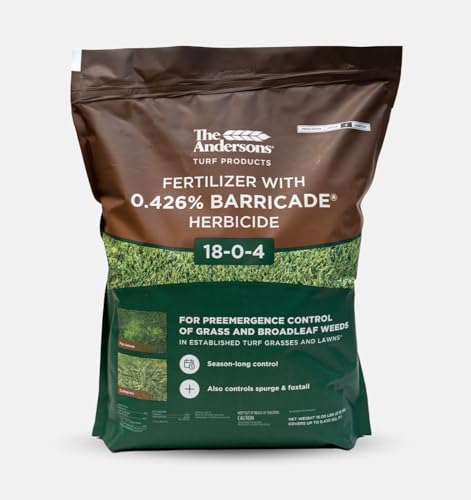
The Andersons Barricade is the only product on this list that combines a fall fertilizer (18-0-4) with a professional-grade pre-emergent herbicide (prodiamine at 0.426%). This dual-action approach is ideal for lawns that are currently weed-free but are prone to poa annua, henbit, and crabgrass germination in late summer and early fall.
The DG Technology (dispersible granule) is a standout feature — granules dissolve rapidly upon watering, pushing the prodiamine directly into the soil profile where weed seeds sit. This prevents the common problem of granules sitting on thatch and never reaching the germination zone. Zoysia and bermuda owners in warmer transition zones report this single fall application keeps lawns weed-free through March without a spring pre-emergent.
At 40 lbs covering 10,000 sq. ft., it lands at a higher upfront cost than basic winterizers. However, because it eliminates the need for a separate pre-emergent application in late winter, the total annual weed control spend may be lower. Just note this is strictly preventive — it will not kill existing broadleaf weeds.
What works
- Professional-grade prodiamine stops 30+ weed types before they emerge
- DG Technology ensures herbicide reaches soil, not thatch
- Eliminates need for separate spring pre-emergent in many regions
What doesn’t
- Does not kill existing weeds — must be applied to clean turf
- Potassium content (4) is lower than ideal for deep winter hardening
3. Scotts 23614 LawnPro Step 2 Weed Control Plus Lawn Fertilizer

Scotts Step 2 is designed for lawns that already have broadleaf weeds like dandelions, clover, and chickweed showing in fall. The granular formulation carries a post-emergent herbicide that enters the weed through leaf contact, then moves to the root system for complete kill. This is not a pre-emergent — it will not stop winter annual seeds from germinating, but it cleans up existing infestations quickly.
The fertilizer component builds thick green turf from the root system up, which helps the lawn recover from summer stress before dormancy. Verified owners consistently report visible weed death within two weeks, and the lawn recovers with denser coverage. The 14.63-lb bag covers a typical suburban lawn, though heavy thatch may require a second application for full control on large properties.
A critical warning from user data: do not apply this when temperatures are forecast to exceed 90°F. Several reviews noted temporary lawn burn when applied during a late-season heatwave. The lawn recovered, but the burn risk is real. Also, this product is not safe for St. Augustinegrass, centipedegrass, or bahiagrass — keep it on fescue, bluegrass, ryegrass, or bermuda.
What works
- Kills mature dandelions and clover within 14 days
- Fertilizer component thickens turf to prevent winter weed invasion
- Part of Scotts proven 4-step annual program for consistent results
What doesn’t
- Can burn lawn if applied above 90°F — strict temperature window
- Not labeled for St. Augustine, centipede, or bahia grass
4. The Andersons Premium New Lawn Starter 20-27-5
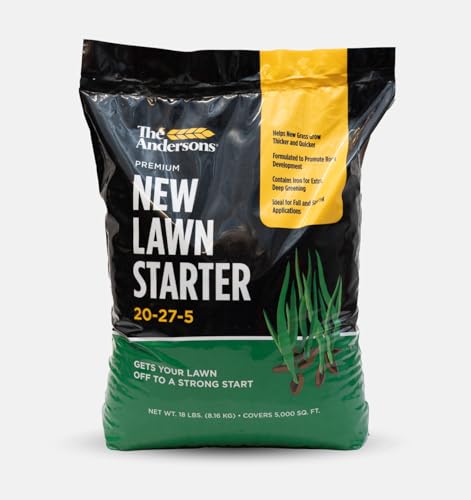
If you are establishing new turf in early fall — either from seed or sod — this Andersons starter is the correct choice. The 20-27-5 ratio provides a heavy phosphorus boost to stimulate vigorous root development while the combination of quick- and slow-release nitrogen feeds the grass from day one and sustains it for weeks. The 1% iron content adds dark green color without forcing top growth that can be frost-damaged.
Owner reviews from fall overseeding projects consistently show grass emerging in under 10 days when this starter is paired with consistent moisture. The 18-lb bag covers 5,000 sq. ft., making it suitable for smaller patches or full front lawns. Because it is not a weed-and-feed, it is safe to use directly over new seed without suppressing germination — a critical distinction from products containing pre-emergent herbicides.
One limitation: this is not a maintenance fertilizer. Once the lawn is established, you will need a traditional winterizer (like the Yard Mastery or Green Thumb options) to carry the turf through dormancy. Use this in September for new seed, then switch to a potassium-rich winterizer in late October.
What works
- High phosphorus (27%) drives fast root establishment for new seed
- Dual nitrogen release provides immediate green and sustained feeding
- Safe to apply directly over newly seeded areas
What doesn’t
- Not a winterizer — requires follow-up with high-potassium formula
- Phosphorus may be restricted in certain state/county regulations
5. Jonathan Green 11591 Corn Gluten Lawn Fertilizer 10-0-2

Jonathan Green’s corn gluten meal formula is the only organic option in this lineup. The 10-0-2 ratio is lower in nitrogen than synthetic alternatives, but the corn gluten protein acts as a natural pre-emergent that inhibits root formation on germinating weed seeds. It is safe for use around children and pets immediately after application, with no watering-in restrictions — a major advantage for homeowners with dogs that patrol the lawn.
Owner feedback confirms timing is everything with corn gluten: it must be applied before weed seeds germinate, typically when soil temperatures reach 55°F in early fall. Reviews note that crabgrass suppression is effective when the product is applied on schedule, but spurweed and other deep-rooted broadleaf weeds may break through and require a complementary Jonathan Green post-emergent product.
The 15-lb bag covering 5,000 sq. ft. is costlier than synthetic winterizers on a per-pound basis. However, the peace of mind from zero chemical restriction for pets and the ability to use it in flower beds and vegetable garden borders without crop damage makes it the right choice for organic-focused lawn care programs.
What works
- 100% pet-safe and child-safe — no watering-in restrictions
- Dual function: gentle fertilizer plus natural pre-emergent weed suppression
- Safe for use in flower beds and planting areas
What doesn’t
- Lower NPK ratio provides less aggressive winter feeding
- Timing is critical — misses weed control if applied after germination
6. GreenView Fairway Formula Lawn Fertilizer 33 lb

GreenView’s Fairway Formula is built for large lawns that need a high-nitrogen rebound after summer. The 63% slow-release nitrogen content is the highest in this comparison, feeding for up to 12 weeks without the surge-and-crash pattern typical of cheaper fertilizers. The 33-lb bag covers 10,000 sq. ft., which makes it a practical choice for half-acre lots or multi-zone properties.
Users report seeing dark green color within 48 hours of application, which is unusually fast for a slow-release dominant formula. The key is the dual-release design: a small portion of quick-release nitrogen provides immediate visual payoff while the encapsulated nitrogen meters out steadily through the fall. The phosphate-free composition (0 in the middle) protects waterways and complies with state restrictions from the Chesapeake Bay region to the Pacific Northwest.
On the downside, this product does not include any herbicide — it is purely a fertilizer. Fall weeds will need to be controlled separately with a spot spray or a pre-emergent application. Additionally, the high nitrogen content will accelerate leaf growth, meaning you will need to mow more frequently during the feeding window.
What works
- 63% slow-release nitrogen for steady 12-week feeding
- Large 10,000 sq. ft. coverage at a competitive per-area cost
- Phosphate-free — compliant with waterway protection regulations
What doesn’t
- No weed control component — requires separate herbicide application
- High nitrogen demands more frequent mowing during feeding period
7. Green Thumb GT58105 Winterizer Lawn Fertilizer 32-0-10
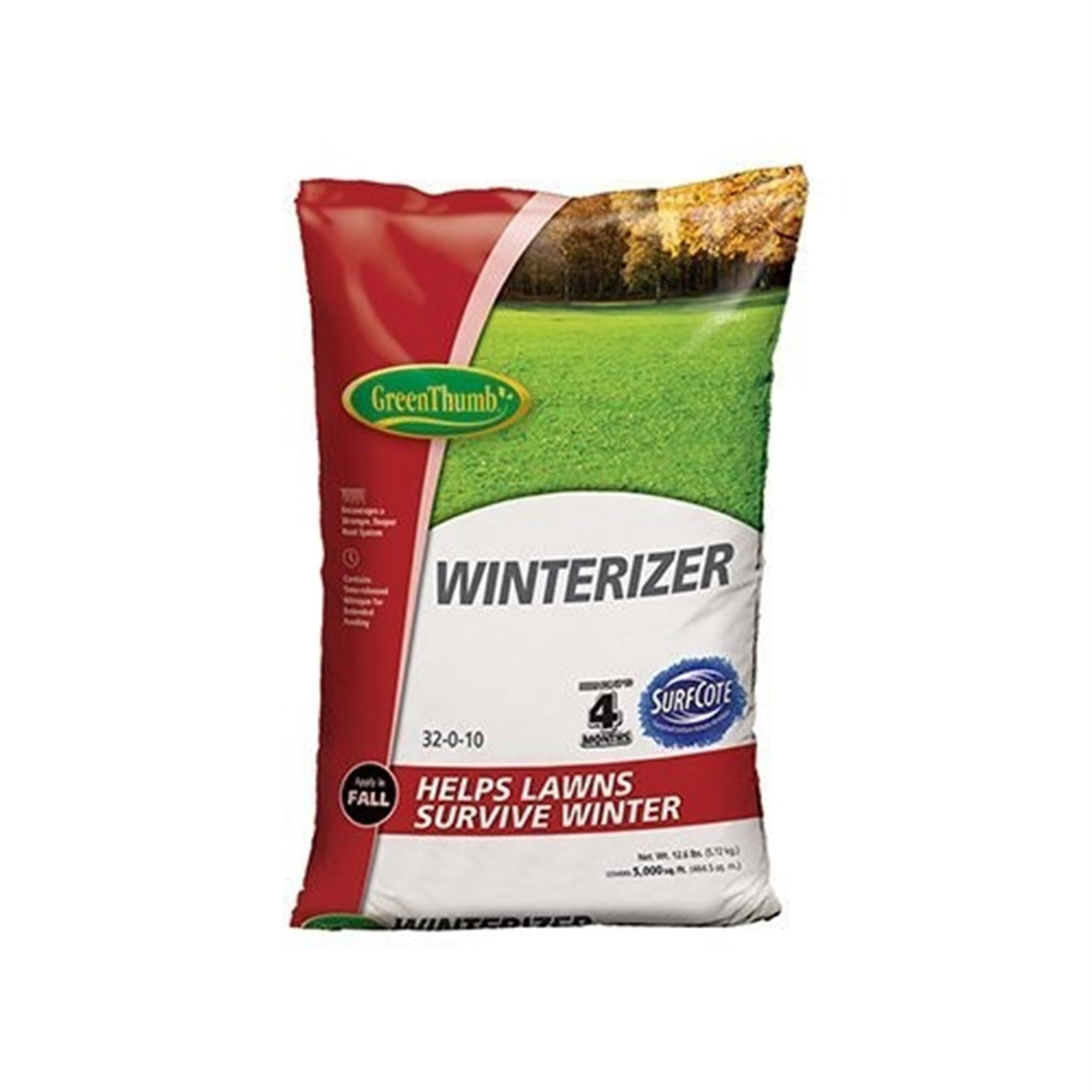
The Green Thumb GT58105 delivers a textbook winterizer NPK of 32-0-10 with 50% controlled-release nitrogen and 2% iron — all at the lowest entry price in this guide. The high potassium (10) supports root carbohydrate storage and cold tolerance, while the iron content provides deep greening without forcing top growth that winter will burn off.
Coverage is limited to 5,000 sq. ft., so larger properties will need multiple bags. However, for a standard quarter-acre lot with a single bag needed, the cost per application is hard to beat. Verified owner reports confirm that a late-October application produces noticeable spring green-up in March, with several reviewers comparing the results favorably to Scotts at a fraction of the per-bag cost.
The trade-off is that this is a bare-bones winterizer — no weed control, no dual-release technology, no soil conditioners. It does exactly one job (feed the roots through winter) and does it well. If your lawn already has a weed management program in place and you just need a cost-effective winter food source, this is the most sensible option in the budget tier.
What works
- Classic 32-0-10 winterizer ratio with high potassium for cold hardiness
- 2% iron provides visible greening without excessive blade growth
- Lowest entry price makes it accessible for budget-conscious buyers
What doesn’t
- No weed suppression or herbicide component
- Limited 5,000 sq. ft. coverage — large properties need multiple bags
Hardware & Specs Guide
NPK Ratio Explained for Fall
Nitrogen (N) should be high but slow-release — aim for 24–32. Phosphorus (P) should be 0 for established lawns to comply with runoff laws and because fall roots do not need it. Potassium (K) must be at least 6, ideally 10 or above, to strengthen cell walls and store carbohydrates for winter survival. A 32-0-10 or 24-0-6 formula is the gold standard for September through November applications.
Slow-Release vs. Quick-Release Nitrogen
Quick-release nitrogen (urea, ammonium sulfate) gives a 24-hour green flush but dissipates in 3–4 weeks, leaving roots unfed during deep winter cold. Slow-release forms (polymer-coated sulfur-coated urea, methylene urea) meter nutrients over 8–16 weeks, matching grass metabolic slowdown as soil temperatures drop. Look for bags that list at least 50% slow-release on the guaranteed analysis label.
FAQ
When is the best time to apply fall weed and feed in my zone?
Can I use a spring weed and feed formula in the fall?
Do I need to water after applying fall weed and feed?
What grass types should not receive fall weed and feed with herbicides?
Final Thoughts: The Verdict
For most gardeners, the fall weed and feed winner is the Yard Mastery 24-0-6 Flagship because it combines the highest iron content with 24% slow-release nitrogen and wide 15,000 sq. ft. coverage at an excellent per-area value. If you want proven pre-emergent weed prevention for winter annuals, grab the The Andersons Barricade 18-0-4. And for establishing new turf before frost, nothing beats the The Andersons Premium New Lawn Starter 20-27-5.