
Specs are compiled from manufacturer listings and verified buyer reviews and can change over time — please confirm the key details on the product page before buying.
Your lawn’s most important meal of the year happens in fall. A single fall application feeds roots through winter dormancy, ensuring thick, green grass in spring. Pick the wrong fertilizer and you waste money or risk burning the turf before the snow comes. This guide breaks down seven top fall formulas by their real performance, nutrient makeup, and coverage area, so you know exactly which bag to grab for your grass type and yard size.
I’m Rikta — the founder and writer behind Lawn Gear Lab. This guide is built by comparing the manufacturers’ published specifications and the patterns across verified customer reviews, so you get each pick’s real strengths and trade-offs instead of marketing spin.
A good winterizer builds deep, resilient roots that shrug off winter stress for a thick, healthy lawn come spring. That is the core job of every fall lawn fertilizer we compared here.
Our Picks at a Glance

How To Choose The Best Fall Lawn Fertilizer
Choosing a fall fertilizer is not just about grabbing the bag with the biggest number. You need to match the nutrients to your grass’s winter needs and to your yard’s size. Here are the three factors that matter most.
The NPK Ratio: Why the Third Number Matters Most
The three numbers on a fertilizer bag (Nitrogen-Phosphorus-Potassium) tell you its exact nutrient makeup. For a fall application, you want the third number — potassium — to be relatively high. Potassium strengthens cell walls and boosts root growth, helping grass survive winter and green up early in spring. A ratio like 32-0-10 or 10-0-20 is a classic winterizer profile. Many fall formulas drop phosphorus entirely (the middle zero) to protect local waterways, which is perfectly fine for most established lawns.
Coverage: Matching the Bag to Your Yard’s Size
A standard 10-pound bag might cover 4,000 square feet, while a 45-pound bag can cover 15,000 square feet. Buying a bag that covers far more than your yard wastes money, and buying one that is too small leaves you running to the store mid-job. Measure your lawn first (a simple online map tool can do this), then pick a fertilizer whose coverage matches as closely as possible without a big gap.
Slow-Release vs. Quick-Release Nitrogen
Your grass should not be pushed into a fast growth spurt just before winter — that tender new growth is vulnerable to frost damage. Look for a fertilizer that uses at least some slow-release nitrogen (the bag will often say “controlled release” or list a percentage of slow-release nitrogen). This feeds the lawn steadily over weeks or months, building roots without forcing top growth that winter will kill off.
Quick Comparison
| Model | Best For | NPK Ratio | Coverage | Unit Count | Amazon |
|---|---|---|---|---|---|
| Scotts WinterGuard Fall Lawn Food★ Best Overall | All-Around Winterizer | — | 4,000 sq. ft. | 160 Ounce | Amazon |
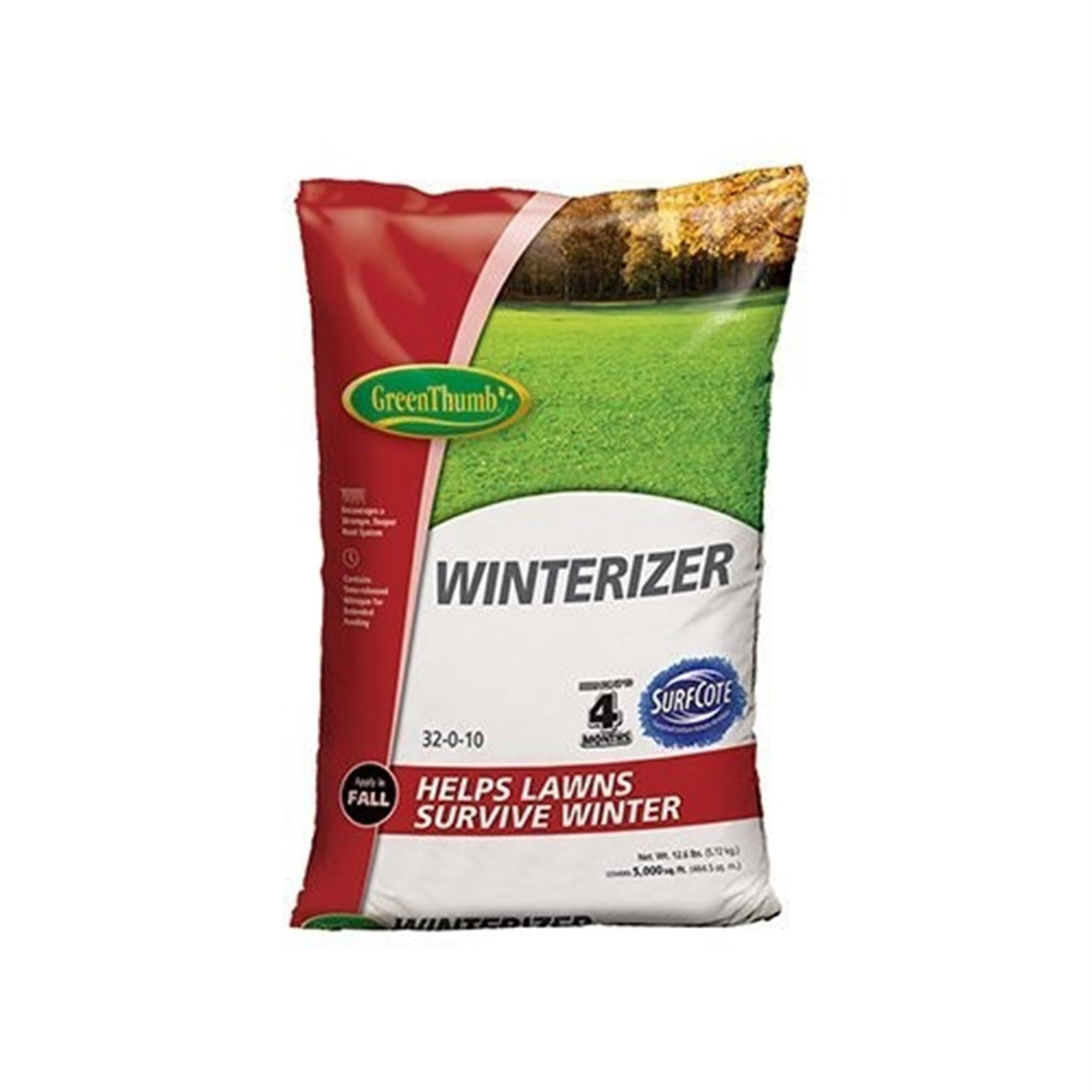
| Green Thumb Winterizer GT58105Top Performer | Controlled Release | 32-0-10 | 5,000 sq. ft. | — | Amazon |
| GS Plant Foods Green Envy Liquid | Organic & Liquid Applications | — | Medium | 128 Fluid Ounces | Amazon |
| The Andersons Premium Fall Lawn Food | Deep Greening & Long Feed | 24-0-14 | 5,000 sq. ft. | 288 Ounce | Amazon |
| GreenView Fairway Formula 30-0-12 | Premium Quality & Winter Hardiness | 30-0-12 | 7,500 sq. ft. | 360 Ounce | Amazon |
| GreenView Fall Lawn Food 22-0-10 | Large Yard Coverage | 22-0-10 | 15,000 sq. ft. | — | Amazon |
| Jonathan Green Winter Survival | High Potassium Boost | 10-0-20 | 15,000 sq. ft. | — | Amazon |
In‑Depth Reviews
1. Scotts Turf Builder WinterGuard Fall Lawn Food
Our pick — over 4.5★ from 13,500+ verified ratings; the strongest balance of quality and price.
The crowd-tested standard delivers reliable winter protection for every grass type.
This is the bag most homeowners reach for, and for good reason. It is a 10-pound bag that covers 4,000 square feet — a solid fit for a typical suburban yard. It is designed to build deep, strong roots while helping the lawn recover from summer heat and foot traffic. The formula works on any grass type, so you do not need to worry about whether it matches your fescue or Bermuda lawn.
Buyers consistently report seeing results within a couple of weeks, with grass turning a healthy green and staying that way through the colder months. One owner of a freshly grown lawn that only gets a few hours of sun a day noted that this stuff obviously worked for their yard. The granular format spreads easily in a broadcast or drop spreader, making it a simple weekend job. The GreenView Fairway Formula covers 7,500 sq. ft. per bag, while this bag covers 4,000 sq. ft., so you will need more bags for a larger lot.
The Winning Formula
- Proven to work on all common grass types.
- Helps the lawn recover from summer damage.
- Easy to broadcast without clumping or dust.
One Limitation
- Coverage is limited to 4,000 sq. ft. per bag, so larger yards will need multiple bags.
Best for: The homeowner who wants a proven, no-fuss winterizer they know will work on their lawn, regardless of grass type.
Look elsewhere if: Your lawn is larger than 4,000 square feet and you prefer a single bag that covers the whole area in one trip.
2. Green Thumb GT58105 Winterizer Lawn Fertilizer
A powerful winterizer with a high-potassium kick and weeks of controlled feeding.
If you want a serious nutrient punch before the ground freezes, the Green Thumb GT58105 delivers with a 32-0-10 NPK ratio. The third number — potassium — is the key here. It supports root strength and winter survival. The bag also contains 50% controlled release nitrogen, which means the grass gets a steady diet rather than a sudden growth surge that frost could kill.
The 12.6-pound bag covers up to 5,000 square feet, giving you a bit more reach than the Scotts WinterGuard (4,000 sq. ft.). It also includes 2% iron for that deep greening effect many owners look for. Buyers report applying it just before the snow flies and seeing the promised spring green-up. One user applied the fertilizer in late November and noted the springtime green up was just as promised. With just over 140 ratings, the track record is solid but smaller than the category leader’s.
Why It Works
- High-potassium 32-0-10 formula is ideal for winter root development.
- Half the nitrogen is slow-release, feeding the lawn for up to 16 weeks.
- 2% iron provides visible greening without burning the grass.
One Thing to Note
- With just over 140 ratings, the track record is solid but smaller than the category leader.
Perfect for: The lawn owner who wants a high-potassium winterizer with a long, controlled feeding window and the ability to cover a larger yard than the standard 4,000 sq. ft. bag.
Not ideal for: Anyone who prefers a liquid application or needs a zero-phosphate formula for local environmental regulations.
3. The Andersons Premium Fall Lawn Food 24-0-14
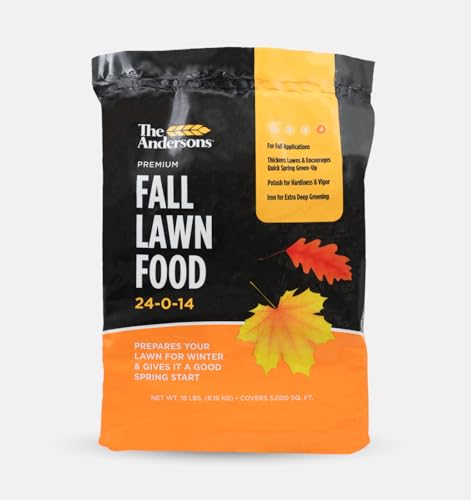
A nutrient-dense blend that greens up lawns fast and keeps feeding through winter.
This bag gives you a serious step up in nutrient density. It weighs 18 pounds and covers 5,000 square feet. The Andersons formula uses a three-way nitrogen delivery system: quick-, intermediate-, and slow-release nitrogen. That means you see a green-up within days, but the feeding continues for weeks without pushing frost-vulnerable top growth. The 24-0-14 NPK ratio keeps potassium high while eliminating phosphate entirely.
Owner responses are unusually strong. One owner called it the best fertilizer they have ever used, reporting that their grass became thicker and greener across the board. The bag is the fourth application in The Andersons Lawn Program, but it works as a standalone fall feed for any turf type. At 288 ounces per bag, it gives you more product by weight than the Scotts WinterGuard (288 ounces vs. 160 ounces) while covering more area (5,000 sq. ft. vs. 4,000 sq. ft.). The Andersons trails the Green Thumb GT58105 in total coverage per bag (5,000 sq. ft. vs. 5,000 sq. ft., same reach, but heavier per bag).
Standout quality: The three-speed nitrogen delivery gives you a fast visible result and steady long-term feeding in a single application.
The trade-off: The bag weighs 18 pounds, so it is heavier than many competitor bags of similar coverage, but that weight comes from a richer nutrient load.
Reach for this if: You want a dense, high-quality fertilizer that delivers visible greening within days while feeding steadily for months.
Pass if: You need a liquid concentrate or a bag that covers more than 5,000 square feet in one purchase.
4. GreenView Fairway Formula Fall Lawn Fertilizer 30-0-12

Professional-grade nutrition with slow-release nitrogen for a lawn that stays green through winter.
GreenView’s Fairway Formula uses a 30-0-12 NPK profile with 59% of the nitrogen being slow-release. That is the highest slow-release percentage on this list, so the grass gets fed steadily for up to 12 weeks without a dangerous late-season growth spike. The 22.5-pound bag covers a generous 7,500 square feet — ahead of the 4,000 and 5,000 sq. ft. options in value per application. If you want more coverage per bag, the GreenView Fall Lawn Food 22-0-10 covers 15,000 sq. ft., but with a lower nitrogen percentage.
Owners praise the deep green color that persists from fall all the way to late spring, with one buyer calling it a standout after switching from a major brand. The lack of phosphate also makes it a responsible choice near waterways. The price sits at the higher end of the mid-range, though most owners feel the performance justifies it. One reviewer who has used it for three consecutive falls reported noticeable lawn health improvements and will repurchase next fall.
The Best Part
- 59% slow-release nitrogen keeps feeding steady for 12 weeks.
- 7,500 sq. ft. coverage stretches further than most mid-range bags.
- Moisture-proof packaging prevents clumping in the spreader.
The Catch
- Slightly higher cost per bag than the basic winterizers, though coverage per dollar remains competitive.
Ideal for: The lawn enthusiast who wants premium, slow-release nutrition for a larger yard and values deep, long-lasting color over the lowest upfront cost.
Skip if: Your yard is smaller than 3,000 sq. ft., as the bag would last multiple seasons and the formula might lose potency before the next use.
5. GreenView Fall Lawn Food 48 lb. 22-0-10

A 48-pound bag with a 22-0-10 NPK that covers a full acre’s worth of lawn at once.
If you have a large property, lugging multiple bags out to the spreader is a pain. This GreenView bag weighs 48 pounds and covers a massive 15,000 square feet. The 22-0-10 NPK ratio is a balanced winterizer, and the GreenSmart Enhanced Efficiency technology keeps feeding for up to 8 weeks. It is an ideal option if you want one purchase to handle the entire fall season.
Owners consistently highlight the value. The quality and effectiveness get strong marks — one buyer called it the best lawn food ever, noting how it thickened the lawn and helped maintain a green appearance. The per-square-foot cost is very efficient. If you are covering a standard 5,000-square-foot lot, this bag lasts three seasons. One trade-off versus the Jonathan Green Winter Survival (also 15,000 sq. ft.) is that the 22-0-10 ratio here has lower potassium for root strength.
Why it stands out: The 15,000 sq. ft. coverage is the largest on this list, making it a single-bag solution for big properties. The 8-week feeding window is shorter than some controlled-release options, but perfectly matched to the fall-to-early-winter period.
A practical note: At 48 pounds, the bag is heavy. You will need a sturdy spreader and likely a wheelbarrow or cart to move it from the garage to the yard.
Go for this: If your yard is 10,000 sq. ft. or more and you want to handle your fall feeding in one shot without buying multiple small bags.
Think twice if: You have a small yard and do not have dry storage that can keep a partial bag of fertilizer fresh for next season.
6. Jonathan Green Winter Survival Fall Lawn Food 10-0-20

The highest potassium ratio here locks in nutrients and powers an early spring awakening.
This fertilizer flips the typical NPK ratio on its head. With a 10-0-20 formula, the potassium (20) is double the nitrogen (10). That is intentional — potassium drives deep rooting, winter hardiness, and energy storage for spring. The sodium-free potassium source also helps the lawn resist disease and drought stress as it enters dormancy. The 45-pound bag covers 15,000 square feet, putting it in the same large-yard class as the GreenView 48 lb. bag but with a completely different nutrient focus.
Owners mention clear results. One applied it to their pasture and saw it turn super green, calling it a definite future repurchase. Another owner in the Northeast applied it in early November and by mid-December found their treated front lawn was significantly healthier than the untreated back yard. The product works on any turfgrass type and includes slow-release nitrogen to extend feeding into late fall. One trade-off to the GreenView Fairway Formula: this bag has far less nitrogen (10 vs. 30), so the greening effect is less dramatic.
What Shines
- Highest potassium content (20) on this list for maximum winter root strength.
- 45-pound bag covers 15,000 sq. ft. efficiently.
- Works as a standalone fall feed or can be split into early-fall and November applications.
What to Know
- The nitrogen level (10) is lower than typical winterizers, so the greening effect is less dramatic than a 30-0-12 mix.
Pick this if: Your number one priority is winter root development and spring green-up, and you care less about deep green color during the fall.
skip it if: You want a visible greening effect in the weeks after application, since the lower nitrogen will not produce that quick color change.
7. GS Plant Foods Green Envy Liquid Lawn Food
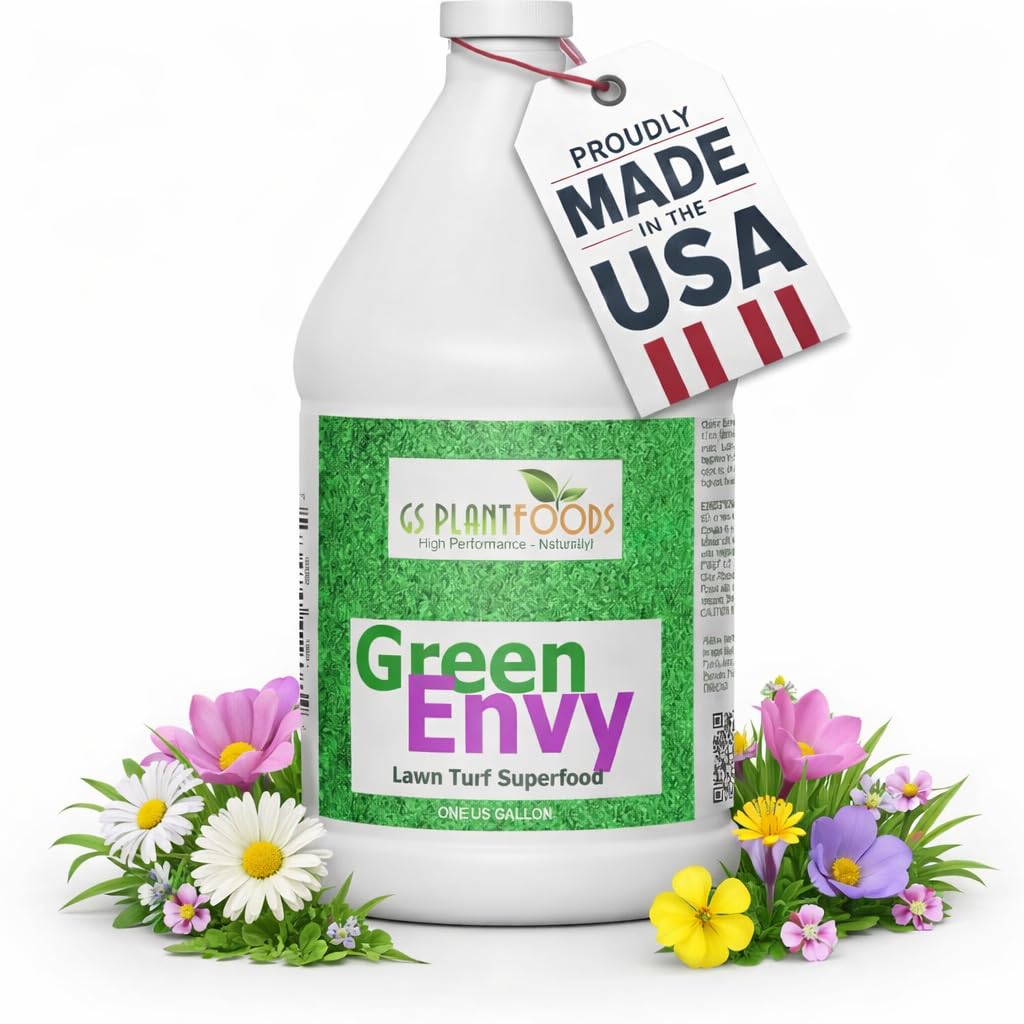
A humic-acid-rich liquid concentrate that goes where granular bags cannot reach.
Liquid fertilizers offer a different approach. Instead of broadcasting dry granules, you mix a concentrate with water and spray it directly onto the lawn. This Green Envy formula is a 1-gallon (128 fluid ounce) jug that yields up to 64 gallons of mixed solution. The listed mixing ratio is 2 to 4 ounces per gallon of water, covering roughly 1,000 square feet per prepared gallon. The formula includes humic acid, which improves nutrient uptake in the soil and supports root development.
Buyers respond positively but with an asterisk. Effectiveness is the most-praised aspect — over 60 owners single it out — with many reporting greener, healthier lawns after application. However, the odor gets mixed reactions, with some owners calling it tolerable and others comparing it to farmyard smells. A smaller number reported no visible difference between sprayed and unsprayed areas after six weeks, so results can vary depending on soil conditions and application technique. The liquid format is excellent for spot-treatment or for owners who prefer a hose-end sprayer, unlike the granular Scotts WinterGuard which needs a full spreader pass.
The Big Plus
- Liquid format allows precise spot-treatment and even coverage with a hose-end sprayer.
- Humic acid improves root nutrient uptake.
- 1 gallon makes up to 64 gallons of mixed solution.
The Catch
- The odor is a frequent mention — fine outdoors, but noticeable during mixing.
- Thicker consistency can clog some hose-end sprayers if not mixed well.
Best for: The gardener who prefers liquid feeding, wants to incorporate humic acid into their fall routine, or needs to spot-treat specific thin areas.
Not for you if: You prefer the low-maintenance simplicity of granular broadcast application or have a very large lawn where a hose-end sprayer becomes tedious.
Understanding the Specs
NPK Ratio Explained Simply
The three numbers on a fertilizer bag stand for Nitrogen (the first number), Phosphorus (the second), and Potassium (the third). For fall, you want the first and third numbers to be relatively high, while the middle number can be zero. Nitrogen drives green top-growth and leaf development, while potassium strengthens the root system and helps the plant store energy for winter. A ratio like 30-0-12 or 24-0-14 is a classic winterizer profile — plenty of nitrogen for a final green-up, lots of potassium for root health, and zero phosphorus to protect waterways.
Slow-Release vs. Quick-Release Nitrogen
Quick-release nitrogen gives the lawn a fast green-up within days, but it can also push a flush of tender growth that is vulnerable to an early frost. Slow-release or controlled-release nitrogen (sometimes labeled as “polymer-coated” or “sulfur-coated”) breaks down more gradually over weeks or months, feeding the lawn steadily without a dangerous surge. For a fall application, a blend of both is ideal — quick-release for visible results and slow-release for sustained winter feeding. The percentage of slow-release nitrogen is often listed on the bag; 50% or higher is a strong signal of a well-designed winterizer.
FAQ
When is the best time to apply a fall lawn fertilizer?
What does NPK 30-0-12 mean for my lawn?
Will a fall fertilizer make my grass grow when it is cold?
Can I use a regular summer fertilizer in the fall?
How do I know if my lawn needs a fall fertilizer at all?
Is it better to use granular or liquid fertilizer in the fall?
Will a high-potassium fertilizer make my lawn greener?
How do I spread granular fertilizer evenly?
Can I overseed and fertilize at the same time in the fall?
How long does a fall fertilizer last in the soil?
Final Thoughts: The Verdict
For most buyers, the fall lawn fertilizer winner is the Scotts Turf Builder WinterGuard Fall Lawn Food because it is the most proven, versatile winterizer available — it works on every grass type and delivers consistent results across thousands of lawns. If you want maximum root strength for a spectacular spring green-up, grab the Jonathan Green Winter Survival for its class-leading 10-0-20 potassium profile. And for covering a big yard in one go, the GreenView Fall Lawn Food 48 lb. is the one to reach for.
How We Picked
We do not accept paid placement. Every pick is matched to a real buyer and a real use-case; we do not hands-on test units.
Sources & Methodology
Specifications: manufacturer listings and product documentation. Review insights: verified customer reviews, as of July 2026. Pricing: not shown on this page (it changes often); check the current price via the retailer link.
As an Amazon Associate, Lawn Gear Lab earns from qualifying purchases. This does not affect which products we feature.