
Specs are compiled from manufacturer listings and verified buyer reviews and can change over time — please confirm the key details on the product page before buying.
A fall feeding isn’t about making your St. Augustine look green right now — it’s about building the root system that carries it through winter dormancy and into a strong spring comeback.
I’m Rikta — the founder and writer behind Lawn Gear Lab. This guide is built by comparing the manufacturers’ published specifications and the patterns across verified customer reviews, so you get each pick’s real strengths and trade-offs instead of marketing spin.
The best fall fertilizer for st augustine grass pushes root growth with low nitrogen and high potassium, and this guide breaks down the top five formulas by coverage, analysis, and real owner results.
Our Picks at a Glance

How To Choose The Best Fall Fertilizer For St Augustine Grass
St. Augustine is a warm-season grass that slows way down once soil temperatures drop. Your fall application is less about feeding the blades you see and more about feeding the roots below, so the grass banks energy for winter and wakes up faster in spring.
Read the N-P-K numbers first
The three numbers on any fertilizer bag are nitrogen, phosphorus, and potassium — in that order. In fall you want the potassium (the last number) to be high, because that element strengthens cell walls and roots against cold. You want nitrogen (the first number) low, because too much pushes soft green top growth that frost can damage. A 10-0-20 formula is a classic winterizer for exactly this reason.
Match coverage to your yard, not your hopes
Bags vary wildly in how much ground they cover. A 10-pound bag might only handle 4,000 square feet, while a 45-pound bag can stretch to 15,000 square feet — roughly four times the area. Measure your lawn before you buy so you don’t end up a bag short in late November, when stores have already rotated to spring stock.
Pick a form you’ll actually apply
Granular fertilizer needs a spreader and typically a single pass per season. Liquid concentrate mixes with water and works through a hose-end sprayer, which can feel easier for small yards but demands careful mixing ratios. Neither is better — the right one is the one you will consistently apply at the right time.
Quick Comparison
| Model | Best For | N-P-K Analysis | Bag Size | Coverage | Amazon |
|---|---|---|---|---|---|
| Scotts WinterGuard★ Best Overall | Smaller lawns | — | 10 lbs | 4,000 sq. ft. | Amazon |
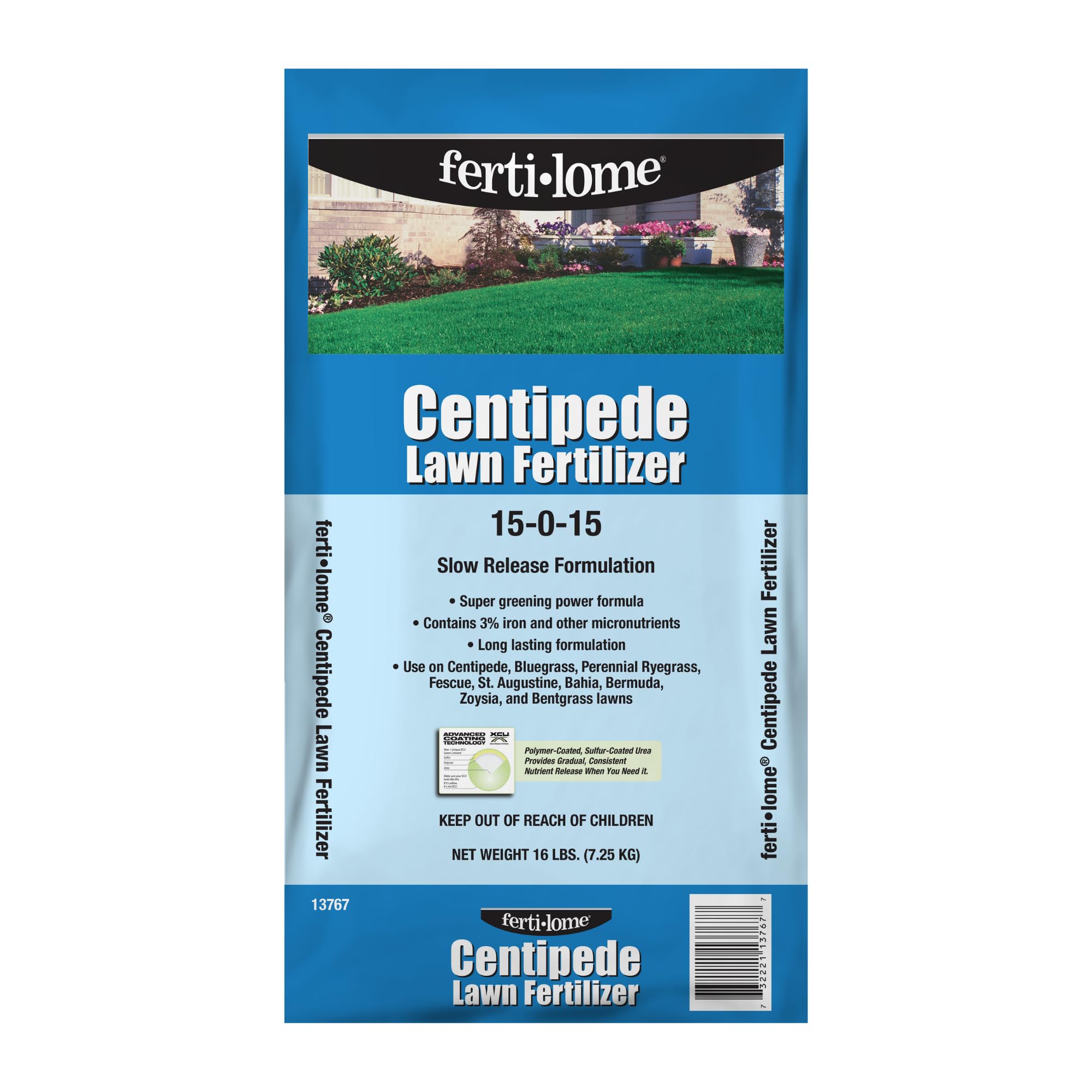
| Fertilome Centipede 15-0-15Best Value | Yellowing warm-season grass | 15-0-15 | 16 lbs | 5,000 sq. ft. | Amazon |
| GS Plant Foods Green Envy | Organic + hose-end sprayer | — | 1 gallon | Yields up to 64 gallons | Amazon |
| Jonathan Green Winter Survival | Large lawns | 10-0-20 | 45 lbs | 15,000 sq. ft. | Amazon |
| GreenView Fairway Formula | No-surge root building | 30-0-12 | 45 lbs | 15,000 sq. ft. | Amazon |
In-Depth Reviews
1. Scotts Turf Builder WinterGuard Fall Lawn Food
Our pick — over 4.5★ from 13,500+ verified ratings; the strongest balance of quality and price.
The crowd favorite that rebuilds roots after a punishing summer, one spreader pass at a time.
Scotts has owned this fall slot for years, and the 10-pound bag covers a modest 4,000 square feet — right for a typical suburban front and back yard. The selling point is root development: this feed delivers nutrients that help your lawn recover from the damage summer heat, drought, and foot traffic piled on, and owners say new growth appears within two weeks of application.
The real-world payoff is the spring. As buyers report: “After using it for the first time last fall, my lawn came back in the spring looking healthier and greener than ever before.” That captures the entire point of a winterizer — you do the work now so the payoff shows up when the snow melts. The product page is upfront that you can apply it to a wet or dry lawn in the fall, which removes a lot of the guesswork about timing.
One honest note: the star power here is huge — a 4.6 average across more than 13,800 ratings makes it the most-proven product in this roundup, and nobody can accuse Scotts of an underfed lawn. It works on any grass type, so if you have a mixed yard with a little St. Augustine and some fescue, you are still covered.
What owners rave about
- Grass that returns “healthier and greener” every spring after a single fall feed
- Visible growth within two weeks of application
- Helps stabilize freshly grown lawns through cold months
The trade-off
- 4,000 sq. ft. coverage means big yards need multiple bags
- No N-P-K analysis printed on the listing, so you can’t verify the exact ratio
Grab this if: you want the most battle-tested winterizer on the shelf for a small-to-mid lawn.
Look elsewhere if: your lawn runs well past 4,000 square feet and you’d rather buy one bag than three.
2. Fertilome Centipede Lawn Fertilizer 15-0-15
The repair specialist that turns patchy plug-filled damage into a uniform deeper green.
Fertilome targets a specific pain: yellowing grass and bare spots. The 15-0-15 analysis pairs 15% nitrogen with 15% soluble potash (potassium), and the slow-release nitrogen cuts the risk of nitrogen burn — the chemical scorch that happens when fast-release fertilizer hits the blades too hard. The 16-pound bag covers up to 5,000 square feet, which beats the Scotts bag above on both weight and coverage.
What wins people over here is germination and fill-in — 13 owners single that out, and it makes sense given the label is explicitly formulated for warm-season grasses including St. Augustine, Bermuda, and Zoysia. One buyer describes plugging bare spots and losing zero new plugs, with the repaired grass turning “a much deeper green color than the rest of the block.” That is the exact scenario a St. Augustine owner lives: runners and plugs trying to stitch a lawn back together after summer damage.
Note the label timing: apply in early spring and early fall, at a rate of 4 lbs. per 1,000 square feet. That makes this more of a season-long warm-season feed than a pure winterizer, so if your St. Augustine is healthy and just needs winter prep, the higher-potassium winterizers below might fit better.
At 16 pounds it is exactly double the weight of the GS liquid feed below — that 2.0x gap shows up the moment you lift both. There is zero phosphorus in the mix, which keeps the formula friendlier to waterways if you live near a lake or stream.
Stands out for: the highest nitrogen-plus-iron kick in this roundup for correcting yellow foliage fast.
Who it’s for: warm-season lawns that spent summer fighting heat damage, not winterizing perfectionists.
3. GS Plant Foods Green Envy Liquid Lawn Food
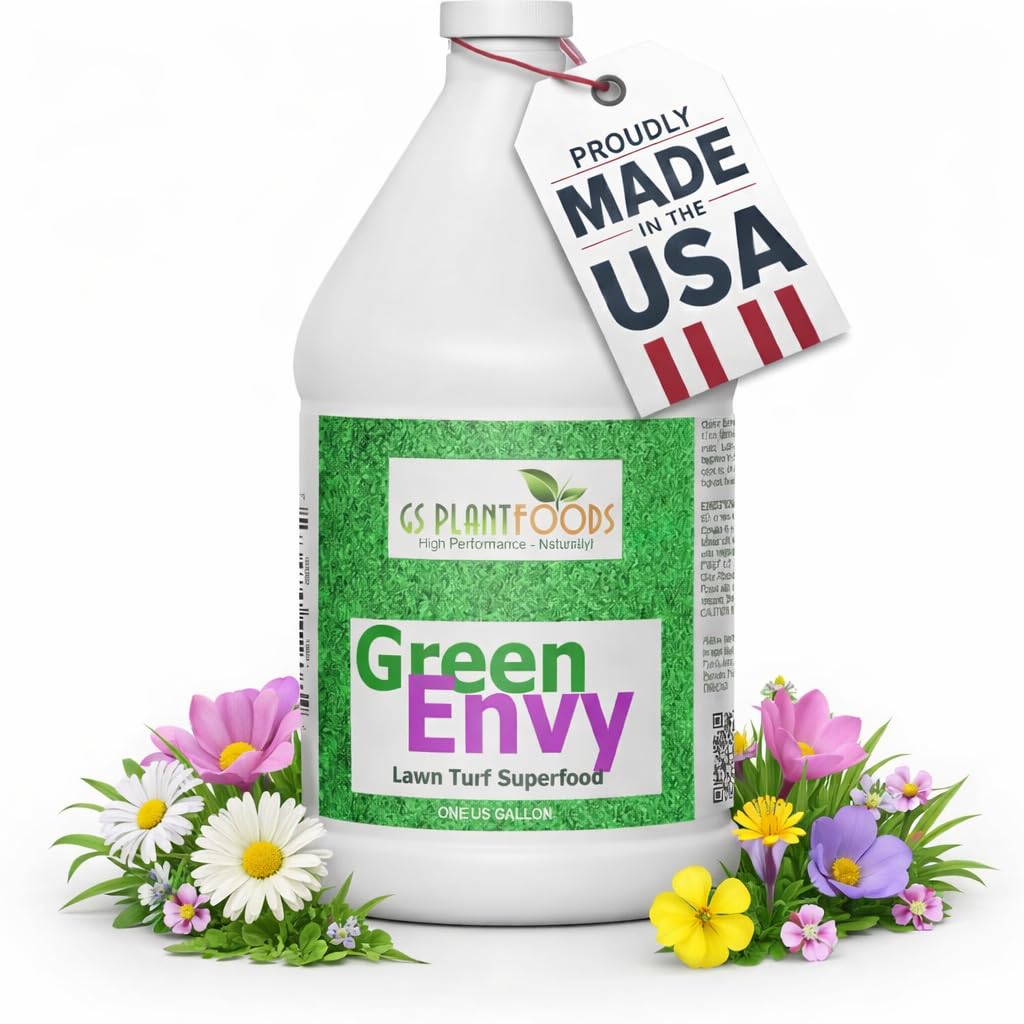
The hose-end sprayer option that skips the spreader and leans on humic acid for uptake.
This is the only liquid in the lineup, and it changes the whole application game. Instead of lugging a spreader, you mix 2 to 4 ounces of concentrate per gallon of water, then spray roughly 1 gallon of prepared mixture per 1,000 square feet. One gallon of concentrate yields up to 64 gallons of finished feed — a serious value proposition if you have the time to mix.
The formula leans on humic acid, an organic compound that improves how readily grass roots absorb nutrients. Buyers on St. Augustine specifically report greener, healthier lawns, and the brand positions it as working synergistically with any other fertilizer you’re already using — so it can double as a late-season boost on top of your granular winterizer rather than replacing it.
Be honest about the mixed feedback here. Effectiveness is the top praise — 67 owners call it out — but the odor draws a split verdict: some owners say it smells like success while others compare it to animal waste. One condensed review sums up the risk: “Honestly after six weeks, no difference,” with a side note that the liquid is thick enough to clog a hose-end sprayer. Stir or mix well before each use, exactly as the label instructs, and you sidestep the clogging complaint.
Why owners switch to it
- The most-cited plus is effectiveness — 67 owners mention visible results
- Dark color shows exactly where you’ve sprayed for even coverage
- No irrigation required after application
Know before you spray
- Odor is genuinely divisive — mild success-smell to some, barnyard to others
- Thick concentrate can clog standard hose-end sprayers if not mixed well
Reach for this if: you already spread a granular feed and want an organic foliar boost without dragging equipment out.
Think twice if: you have a big yard and no patience for measuring ounces — the granular options win on speed.
4. Jonathan Green Winter Survival Fall Lawn Food

The true winterizer — 10-0-20 high-potassium analysis built specifically for deep rooting and spring payoff.
This is the most textbook winterizer in the group, and the math checks out immediately: a 45-pound bag covers a full 15,000 square feet. Compare that to the Scotts bag above — 4,000 square feet — and the Jonathan Green bag is doing 3.8x the work of the 10-pound Scotts bag in a single trip to the lawn. For a big St. Augustine yard, that is the difference between one purchase and four.
The 10-0-20 analysis is exactly what fall feeding should look like: low nitrogen, zero phosphorus, and a heavy 20% potassium load. That potassium is the winter-hardiness engine — it promotes deep rooting and stores nutrients for spring, while the slow-release nitrogen keeps your grass greener later into the year without pushing a frost-vulnerable growth surge. Customers note the expected result: yards that turn “super green” and stay visibly healthier than untreated sections well into December.
Quality is the aspect owners praise most — 18 of them call it out — and several note it beats the Scotts brand outright on results. The recurring theme in the reviews is a November application followed by a noticeably healthier lawn by mid-December, exactly the delayed payoff a winterizer is supposed to deliver.
The honest catch: some owners note that newly seeded grass can die off anyway despite the feed, so this is a strength-builder for established turf more than a miracle worker for brand-new seed.
The defining edge: the only true 10-0-20 analysis in the roundup, matched with the biggest coverage per bag.
skip it if: your whole lawn fits under 5,000 square feet — you’d be buying years of fertilizer at once.
5. GreenView Fairway Formula Fall Lawn Fertilizer

The no-surge performer that delivers deep green color without the mowing frenzy.
GreenView positions itself as the anti-surge feed: it promotes brilliant deep green turf with fewer clippings and no sudden growth spike. The 30-0-12 analysis carries a higher nitrogen load than the Jonathan Green above, but nearly 60% of it is slow-release — which is the mechanism that prevents the fast flush of growth that would leave you mowing twice a week in November.
The 45-pound bag covers the same 15,000 square feet as the Jonathan Green, so for a large yard these two are the real head-to-head. Owners who switched from the Scotts 4-Step program report one fall application produced a deep green lawn within two weeks, and that color held from winter snow right through late spring. Zero phosphate is part of the pitch, framed explicitly as a waterway-friendly choice.
Quality is the most-cited strength — 23 owners praise it — and the application experience gets its own credit. Buyers specifically note the moisture-proof packaging, which keeps the granules free-flowing and clump-free in the spreader, a quiet frustration with other name-brand bags that arrive caked solid.
The fair caveat: value for money is a genuine split among buyers. Some call it well worth the cost; others flag it as pricey for a fertilizer. This is the premium-tier play — you’re paying for the slow-release formulation and the packaging, and if you’ve been burned by clumped bags before, that alone can justify it.
What earns the premium
- Nearly 60% slow-release nitrogen means color without a growth surge
- Moisture-proof bag pours clean with zero clumping
- One fall application holds color from winter to late spring
The price of polish
- Higher sticker price than other fall fertilizers in this lineup
- 30-0-12 nitrogen load is high for St. Augustine — check your local extension guidance
Choose this when: you hate clumped bags, want zero-surge green, and have 15,000 square feet to cover.
Pass it by if: a true winterizer ratio like 10-0-20 is what your soil test shows you need.
Understanding the Specs
N-P-K Ratio And Why It Flips In Fall
The three numbers on any bag are nitrogen, phosphorus, and potassium, in that order. Summer feed is nitrogen-heavy to push blade growth. Fall feed flips the priority: you want potassium high — think 20% in a 10-0-20 — because potassium hardens cell walls and drives root depth, which is what carries your St. Augustine through cold dormancy. Nitrogen stays low and mostly slow-release so you don’t trigger soft growth that frost kills.
Coverage And Bag Weight
Coverage is the number that actually determines how much you spend. A 10-pound bag handling 4,000 square feet means a quarter-acre lawn needs three bags. A 45-pound bag covering 15,000 square feet does that same job in one purchase. Measure your lawn’s square footage — roughly length times width — before you buy, then match it to the bag’s stated coverage so you never run short in late fall.
Slow-Release vs. Fast-Release Nitrogen
Slow-release nitrogen feeds grass gradually over weeks, which is what you want heading into winter — steady root nutrition with no green growth spike. Fast-release nitrogen hits hard and fast, produces a mowing frenzy, and raises the risk of nitrogen burn. For a fall application on St. Augustine, slow-release is the safer, smarter choice, and it shows up in formulations like GreenView’s nearly 60% slow-release mix.
Granular vs. Liquid Application
Granular fertilizer requires a spreader and usually one clean pass per season — straightforward and forgiving of timing. Liquid concentrate needs mixing (often 2 to 4 ounces per gallon of water) and works through a hose-end sprayer, which suits small yards but demands you measure carefully and clean your sprayer afterward. Both work on St. Augustine; pick the one you will actually follow through on.
FAQ
When exactly should I apply fall fertilizer to St. Augustine grass?
What is the best N-P-K ratio for fall feeding of St. Augustine?
Can I use a “warm-season” fertilizer on St. Augustine in the fall?
How much fertilizer do I need for my lawn size?
Should I use granular or liquid fertilizer for fall feeding?
Will slow-release nitrogen keep my St. Augustine greener in winter?
Does zero phosphorus matter for fall lawn fertilizer?
Can I combine a liquid boost with my granular winterizer?
Final Thoughts: The Verdict
For most people, the best fall fertilizer for st augustine grass winner is the Scotts Turf Builder WinterGuard because it holds a 4.6-star average across 13,000+ owner ratings — overwhelming real-world proof that one fall pass pays off every spring. If you want a true high-potassium winterizer and a single bag for a large yard, grab the Jonathan Green Winter Survival with its 10-0-20 analysis and 15,000 sq. ft. coverage. And for organic-minded sprayer users, the GS Plant Foods Green Envy liquid is the one to reach for.
How We Picked
We do not accept paid placement. Every pick is matched to a real buyer and a real use-case; we do not hands-on test units.
Sources & Methodology
Specifications: manufacturer listings and product documentation. Review insights: verified customer reviews, as of August 2026. Pricing: not shown on this page (it changes often); check the current price via the retailer link.
As an Amazon Associate, Lawn Gear Lab earns from qualifying purchases. This does not affect which products we feature.