
Specs are compiled from manufacturer listings and verified buyer reviews and can change over time — please confirm the key details on the product page before buying.
Picking the wrong bag of dirt is a quick way to watch a new evergreen turn brown. The real challenge isn’t finding soil — it’s finding one that drains fast enough to prevent rot but holds enough moisture that the roots don’t dry out between waterings. You need a mix that stays loose over time, doesn’t bring in pests, and delivers steady nutrition without burning delicate feeder roots. This guide cuts through the marketing to find the best evergreen potting soil for both containers and in-ground planting.
I’m Rikta — the founder and writer behind Lawn Gear Lab. This guide is built by comparing the manufacturers’ published specifications and the patterns across verified customer reviews, so you get each pick’s real strengths and trade-offs instead of marketing spin.
Whether you are potting a single dwarf conifer or refreshing a whole row of raised beds, the right mix determines whether you get lush growth or a slow decline. Below are nine blends worth your money, ranked by what real owners actually experience.
Our Picks at a Glance


How To Choose The Best Evergreen Potting Soil
Evergreens have different needs than annual flowers or vegetables. Their roots are often more sensitive to compaction, and they prefer a slightly acidic pH. The three things to check on any bag are drainage material, organic content, and the presence of slow-release nutrients.
Drainage & Aeration
A mix that stays soggy will drown evergreen roots. Look for perlite, pumice, or coarse sand in the ingredient list — these create air pockets that let roots breathe and excess water escape. A soil that feels light and fluffy in the bag is a good sign.
Organic Matter & Nutrients
Compost, peat moss, and worm castings feed the soil food web. Evergreens do not need heavy fertilizer at planting time; a mild, balanced mix with slow-release nitrogen is safer than a hot blend that can burn roots. Beware of soils with high levels of uncomposted manure.
Pest Risk
Several organic soils arrive with fungus gnat eggs or larvae already inside the bag. This is especially common with compost-heavy mixes stored outdoors. If you are growing indoors or on a patio, consider a mix that has been pasteurized or one that buyers report as clean.
Quick Comparison
| Model | Best For | Volume | Key Ingredients | Unit Count | Amazon |
|---|---|---|---|---|---|
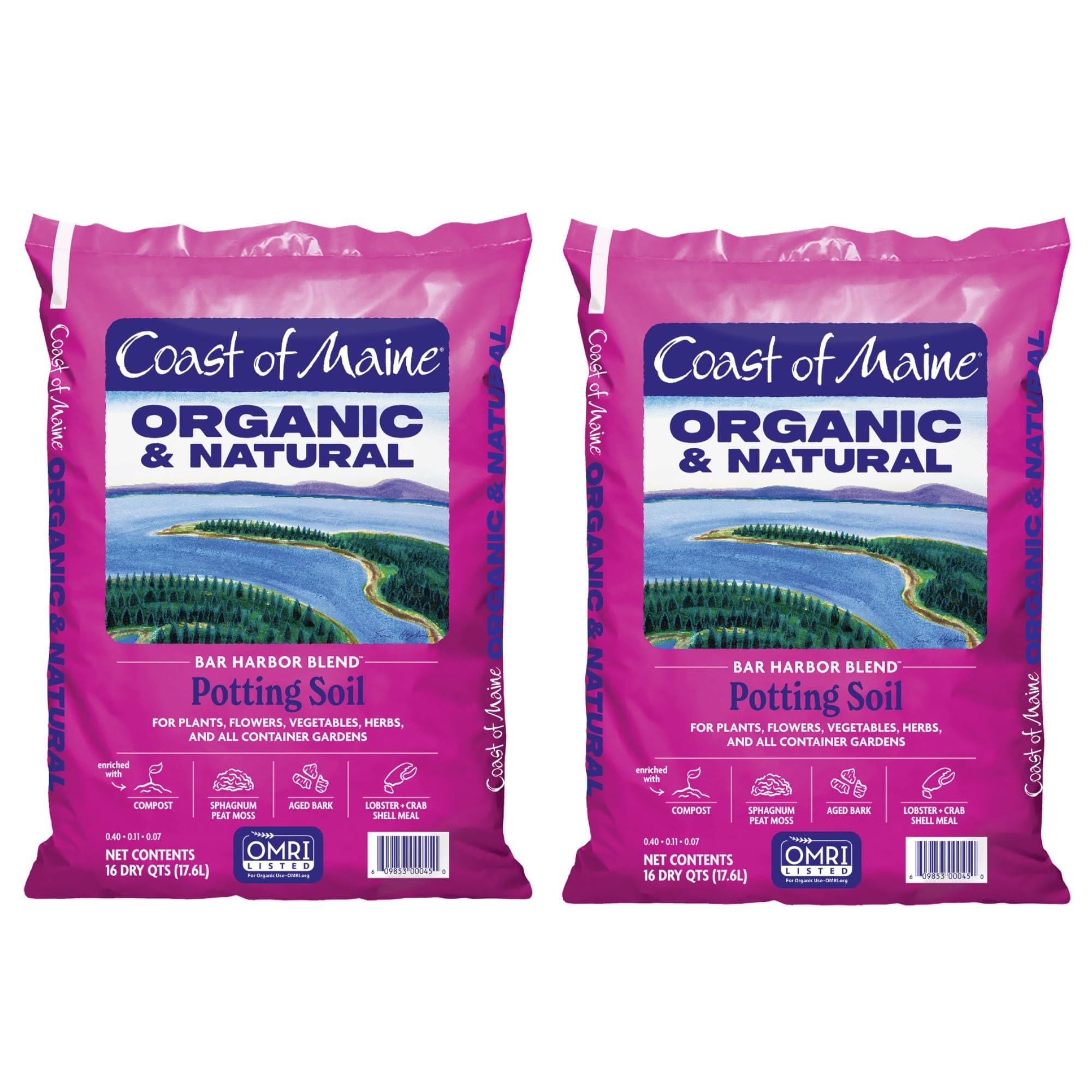
| Coast of Maine Bar Harbor Blend★ Best Overall | Premium container mix | 16 Quarts | Compost, Perlite, Lobster Meal | 2.0 | Amazon |
| Coast of Maine Veg & TomatoBest Value | Vegetable & tomato beds | 20 Quarts | Composted Manure, Peat Moss | 1.0 | Amazon |
| Black Gold 2 PackGnat-Free Guarantee | Houseplant repotting | 8 Quarts | Organic compost, perlite | 1.0 | Amazon |
| Midwest Hearth Premium Mix | Seed starting & small pots | 8 Quarts | Peat Moss, Perlite, Vermiculite | 1.0 | Amazon |
| Espoma Organic 2 Pack | Indoor & outdoor containers | 8 Quarts | Peat Moss, Humus, Worm Castings | 2.0 | Amazon |
| Miracle-Gro Moisture Control 2 Pack | Drought protection | 16 Quarts | Sphagnum Peat Moss, Coir | 2.0 | Amazon |
| Michigan Peat BACCTO 50lb | Large container gardens | 50 Pounds | Reed Sedge Peat, Perlite, Sand | 1.0 | Amazon |
| Brut Organic Worm Castings Mix | Foliage greening | 21 Quarts | Worm Castings, Azomite, Kelp | 1.0 | Amazon |
| Miracle-Gro Potting Mix 3 Pack | Multiple small containers | 8 Quarts | Sphagnum Peat Moss, Coir | 3.0 | Amazon |
In‑Depth Reviews
1. Coast of Maine Organic & Natural Bar Harbor Blend Potting Soil
Our pick — over 4.5★ from 550+ verified ratings; the strongest balance of quality and price.
The soil that makes owners ditch their longtime brand after one bag.
Your plants get a dark, crumbly texture that roots love, thanks to the blend of sphagnum peat moss, compost, perlite, and lobster and crab shell meal. Owners mention tomatoes looking better than ever and flower gardens flourishing. The crowd — with a 4.8-star average — calls it “the best soil” and notes it is “rich and not full of sticks like some others.” The 16-quart bag comes as a 2-pack, and customers note two bags were enough to mound up 8 potato plants with extra left over for 2 more planters.
The real-world advantage here is the light, airy structure. Because the blend includes both perlite for drainage and compost for moisture, it works across raised beds, pots, hanging baskets, and even indoor containers. The slow-release nitrogen from the kelp meal feeds consistently without a burn risk. The only honest caveat: a few owners mention pest resistance is mixed, and a rare batch may bring in fungus gnats — though that complaint is far less common here than with other organic brands.
What owners rave about
- Pre-mixed with seafood meals for natural slow-release feeding
- Light, fluffy texture with no sticks or weeds
- Works for indoor, outdoor, containers, and raised beds
The honest trade-off
- Premium price point — costs more than standard generic mixes
- Occasional reports of pest issues, though rare
Reach for this if: you want a single, versatile organic blend that handles everything from dwarf evergreens to tomatoes without needing extra fertilizer.
Look elsewhere if: you need a budget option for dozens of large containers — the volume-to-price ratio is better for smaller, high-value plantings.
2. Coast of Maine Organic & Natural Planting Soil for Vegetables & Tomatoes
Bigger bag, lower price, and plants that show zero stress.
The formula blends composted manure with sphagnum peat moss and perlite for a lightweight mix that drains well while holding moisture. Reviewers point out “plants thriving with no stress” and visible growth within days after transplanting heirloom tomatoes and zucchini.
The downside is real: the same compost that feeds plants can also harbor fungus gnats. Nearly 20 owners mention infestation issues, and a few note undecomposed twigs that need sifting for fine seedbeds. If you grow indoors or on a patio, consider mixing in a layer of sand or gravel on top to deter pests. For in-ground vegetable beds or outdoor pots, this is a fantastic value that delivers rich, dark soil with plenty of nutrients for the season.
Best pick for volume growers: If you are planting a vegetable patch or multiple tomato plants in containers, this 20-quart bag gives you more soil per dollar than almost anything on this list. Just be ready to manage potential gnats if you bring it indoors.
3. Black Gold 1302040 8-Quart All Organic Potting Soil 2 Pack
The soil for houseplant owners terrified of another gnat infestation.
Fungus gnats are the nightmare of every indoor gardener, and Black Gold directly answers that fear. One owner put it plainly: “I tried this potting soil while keeping my fingers crossed that it wouldn’t introduce fungus gnats to my houseplants. Guess what? It didn’t. Not one fungus gnat!” The soil arrives rich and moist, and the organic compost base is light enough to prevent compaction. Owners see plants “thrive” and “grow beautifully” in container gardens.
The catch is bag size. A few owners were surprised at how small the bags look when they arrive. This is best suited for repotting a handful of houseplants or mixing into a custom blend, not for filling large raised beds. For the quality and the confidence on gnats, it earns a strong place on the shelf.
Best for indoor growers: If your biggest worry is bringing pests into your home, this mix has the cleanest track record in the list. Just know you are paying a premium for a small volume.
4. Premium Potting Soil Mix with Peat Moss, Vermiculite, Perlite (Midwest Hearth)

A growers-grade formula that stays fluffy and never hardens around roots.
This mix uses the classic trinity of peat moss, perlite, and vermiculite — the same formulation professional growers rely on. The result is a light, airy texture that holds moisture without getting soggy and provides “phenomenal drainage,” according to owners. It is pH-balanced for a broad spectrum of plants, so you do not have to worry about acidity swings. One owner noted it was “great for my germinating petunias” and praised the resealable bag.
The 8-quart bag size draws mixed reactions — some find it perfect for small projects, while others call it very small. At roughly 1.25 kilograms, this is not the bag for large landscaping tasks. It shines as a seed-starting mix or for repotting a few precious specimens. The texture stays loose over time, so roots are never trapped in a hard shell, which is critical for evergreens in small containers.
Perfect for precision gardeners: If you are starting seeds, rooting cuttings, or potting up small perennials, the fluffy texture and clean composition make this a standout. skip it if you need bulk volume.
5. Espoma Organic Potting Soil Mix 2 Pack

A biological powerhouse that feeds roots from the first transplant.
Espoma stands out for its Myco-Tone — a proprietary blend of endo and ecto mycorrhizae that colonizes roots and extends the plant’s nutrient reach. The formula pairs sphagnum peat moss, humus, and perlite with earthworm castings, alfalfa meal, kelp meal, and feather meal. Shoppers say rapid growth, with African violets and ivy responding well after transplant. One summed it up: “The best potting mix.”
Germination results are mixed — roughly as many owners praise it as those who saw nothing sprout. The soil can arrive quite dry, making the first watering a challenge because it repels water until it is fully saturated. A few owners also report fungus gnat issues. The 8-quart size (2-pack) is modest, making this best for indoor plants and small container gardens rather than large landscaping projects.
Best for biological boosters: If you believe in the power of mycorrhizae and want a soil that feeds from the root level up, Espoma delivers. Just soak it thoroughly before planting.
6. Miracle-Gro Moisture Control Potting Mix 2 Pack

The mix that turned weekly watering into every-other-week for one owner.
Grab this bag if you forget to water or live in a dry climate. The Moisture Control formula uses sphagnum peat moss and coir (coconut fiber) to absorb up to 33% more water than basic potting soil, then releases it slowly. One owner in Zone 6A reported that during a heat wave, the mix “really helped out my vegetable garden by helping to keep moisture in the pots.” Another noted that watering dropped from daily to weekly during a drought. The built-in fertilizer feeds plants for up to 6 months.
The trade-off is that this is not an organic mix and contains synthetic fertilizers. For pure organic gardeners, this is a non-starter. The bags are also 16 quarts total (two 8-quart bags), which is enough for several 12-inch containers but not for filling large beds. If moisture management is your top priority — especially for evergreens in hot, exposed pots — this is the clear winner.
Best for forgetful waterers: If keeping soil consistently moist is your biggest challenge, the water-absorbing coir and peat in this mix buys you days of forgiveness. Just note it is not organic.
7. Michigan Peat General All Purpose Premium Potting Soil (BACCTO)

The 50-pound workhorse that 50-year gardeners swear by.
When you need serious volume for a large container garden or raised beds, this 50-pound bag of BACCTO is the traditionalist’s choice. The blend — rich dark reed sedge peat, perlite, and sand — comes pre-mixed with starter and slow-release fertilizers, so you do not need to add anything. Owners who have been gardening for 50+ years call it “the best potting soil we have found” and say they plant more than 200 dozen flowers annually with it.
Texture is where opinions diverge. Some owners describe the soil as “wet and heavy” in the bag, and it can compact after watering, making it harder to gauge moisture at the root level. Others report excellent water absorption and plant growth. The 50-pound weight is a physical challenge — moving the bag around the yard is not a one-hand job. For large-scale planting where cost per pound matters, this is a proven performer, but it is not the fluffiest mix for delicate container evergreens.
Best for heavy lifters: If you are planting dozens of containers or filling a raised bed and value bulk economy over premium texture, BACCTO is a trusted classic. Be prepared for a heavier, denser feel than premium blends.
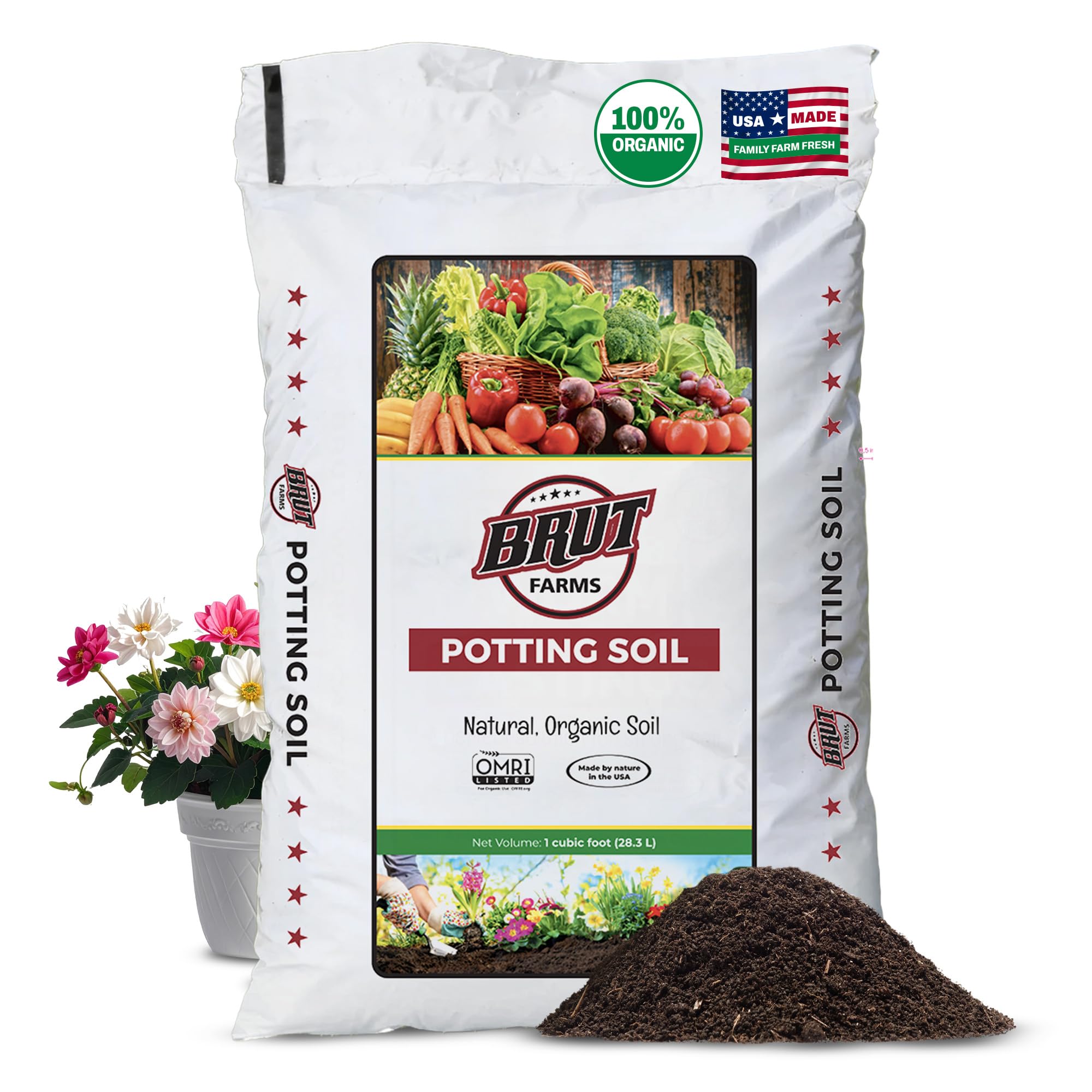
8. Brut Organic Potting Soil with Worm Castings
The “black gold” that had citrus trees greening in two days.
Brut focuses on microbiology. The blend packs microbe-rich worm castings, trace minerals from Azomite, and kelp meal into a filler-free, 100% organic mix. Buyers report dramatic results: “rapid deep greening and new growth in 2 days for citrus and cherry trees.” The soil is pH-balanced between 6.3 and 6.5, which is ideal for most evergreens. It is also OMRI listed for organic gardening, so you can trust the label.
Price is the main friction point — several owners call it “expensive” despite loving the results. The high fish and bone meal content can attract flies if the bag is left open or if the soil is used outdoors without a top dressing. One owner learned the hard way: “high fish and bone meal content attracted flies, leading to severe maggot infestation when moved outside.” This is user error — a layer of sand or gravel on top solves it — but it is worth knowing before you buy. For indoor or patio plants where you want maximum nutrient density, Brut delivers.
Best for nutrient hounds: If your evergreens look pale and you want a concentrated organic boost, the worm castings and minerals here produce visible greening fast. Just cover the surface to avoid attracting flies.
9. Miracle-Gro Potting Mix 3 Pack

Three manageable bags that fit in a car and feed for half a year.
This 3-pack of 8-quart bags is designed for convenience. Each bag fills two 8-inch containers, and the built-in fertilizer feeds plants for up to 6 months. Owners love the smaller bags because they are easy to carry and store — “I order in these smaller bags so I don’t have to lug around the large ones.” The mix is well-draining “and doesn’t tend to pack down enough to be hard,” according to one owner, making it reliable for both indoor and outdoor containers.
Volume here is the weakest point. At 8 quarts per bag, the 3-pack offers 24 quarts total, but some owners felt the bags were small for the price. This is not an organic mix — it uses synthetic fertilizer, which may be a dealbreaker for purists. If you are starting a small container garden, repotting a collection of houseplants, or need a lightweight soil that you can carry without help, this 3-pack is an excellent choice.
Reach for this if: you need a lightweight, easy-to-carry soil that comes in multiple small bags for separate projects. The 6-month feeding schedule is a real time-saver.
Look elsewhere if: you need organic certification or a larger volume for raised beds — the per-quart cost is higher than bulk options.
Understanding the Specs
Perlite vs Vermiculite vs Coir
The white flecks you see in potting soil are perlite — volcanic glass popped like popcorn to create air pockets that improve drainage. Vermiculite is a mineral that absorbs water like a sponge, so it holds moisture. Coir (coconut fiber) does both: it holds water and stays fluffy. A good evergreen mix usually has perlite for drainage, vermiculite or coir for moisture, and peat or compost for organic matter.
OMRI Listed vs Organic
OMRI (Organic Materials Review Institute) listing means the product is approved for use in certified organic agriculture. “Organic” on a bag can be a marketing term; OMRI listing is a verified third-party standard. If you are growing food or want the strictest assurance of no synthetic chemicals, look for the OMRI seal on the bag.
FAQ
Can I use regular potting soil for evergreens in containers?
How do I prevent fungus gnats in my potting soil?
Is Miracle-Gro potting soil safe for evergreens?
Should I mix my own soil or buy a pre-made blend?
How often should I repot an evergreen in a container?
What does “slow-release fertilizer” mean in potting soil?
Can I use the same soil for indoor and outdoor evergreens?
Why does some potting soil smell bad when I open the bag?
Final Thoughts: The Verdict
Across the board, the best evergreen potting soil winner is the Coast of Maine Bar Harbor Blend because it combines premium organic ingredients, light texture, and consistent owner satisfaction across indoor and outdoor use. If you want the best value for volume — especially for vegetable beds or large containers — grab the Coast of Maine Veg & Tomato. And if you need a mix that simply will not bring fungus gnats into your home, the Black Gold 2 Pack is the one to reach for. Whichever you pick, your evergreens will thank you with deep green growth and strong roots.
How We Picked
We do not accept paid placement. Every pick is matched to a real buyer and a real use-case; we do not hands-on test units.
Sources & Methodology
Specifications: manufacturer listings and product documentation. Review insights: verified customer reviews, as of July 2026. Pricing: not shown on this page (it changes often); check the current price via the retailer link.
As an Amazon Associate, Lawn Gear Lab earns from qualifying purchases. This does not affect which products we feature.