
Specs are compiled from manufacturer listings and verified buyer reviews and can change over time — please confirm the key details on the product page before buying.
An afternoon bent over a garden bed can leave your lower back in open rebellion by dinner. The true measure of a good hoe isn’t just how cleanly it severs a weed root — it is whether you can stand up straight at the end of the row. A handle that forces you to stoop or a head that requires a heavy swing defeats the whole purpose of buying an ergonomic tool in the first place. This guide cuts through the marketing to find the hoes that actually save your spine while doing the work.
I’m Rikta — the founder and writer behind Lawn Gear Lab. This guide is built by comparing the manufacturers’ published specifications and the patterns across verified customer reviews, so you get each pick’s real strengths and trade-offs instead of marketing spin.
Whether you are clearing a new patch or maintaining established beds, the right ergonomic garden hoe is the difference between a productive morning and a week of back pain.
Our Picks at a Glance

How To Choose The Best Ergonomic Garden Hoe
An ergonomic hoe is supposed to make weeding easier on your body, but the term gets thrown around loosely. Three things separate a genuinely comfortable tool from a standard one with a padded grip.
Handle Length and Material
The most common ergonomic fail is a handle that is too short. You want a handle that lets you stand mostly upright while the blade works at ground level, which typically means a minimum of 54 inches. Fiberglass handles dampen vibration better than wood and won’t splinter, while steel handles are incredibly strong but heavier. Rubber or foam grips at the top give you a secure hold even when your hands are sweaty.
Hoe Head Design and Your Soil Type
The shape of the blade determines the motion you use. A stirrup or scuffle hoe (a loop of metal) cuts weeds in both directions with a push-pull motion — great for sandy loam or well-tilled beds. A draw hoe (a solid paddle) needs a chopping or pulling motion and is better for breaking up heavy clay or cutting through tough roots. Match the head to your soil and you save a lot of unnecessary effort.
Weight and Balance
A hoe that is too light bounces off hard soil, forcing you to swing harder. A hoe that is too heavy wears out your shoulders. The ideal weight for most adults falls between 2.5 and 4.5 pounds, with the weight balanced near the head so the tool does the work for you. A well-balanced hoe feels heavier at the blade but light in your hands.
Quick Comparison
| Model | Best For | Handle Length | Handle Material | Blade Width | Amazon |
|---|---|---|---|---|---|
| BULLY TOOLS 12-Gauge★ Best Overall | Tough soil & daily durability | 58 in. | Fiberglass | 6.25 in. | Amazon |
| EUIJOIP 72-Inch StirrupLongest Reach | Long reach & standing work | 72 in. | Steel | Stirrup | Amazon |
| Nohovu 58-Inch | Lightweight daily weeding | 58 in. | Fiberglass | 6.3 in. | Amazon |
| Bully Tools 7-Gauge Field | Heavy clearing & root cutting | 42 in. | Fiberglass | 8.5 in. | Amazon |
| Xtreme Weeder Scuffle | Precision weeding in beds | 54 in. | Fiberglass | V-blade | Amazon |
| Haliaeetus 58-Inch Hula | Light push-pull weeding | 58 in. | Wood | Stirrup | Amazon |
| Berry&Bird Swoe | Surface slicing in loose soil | 61.8 in. | Ash Wood | Angled edge | Amazon |
In‑Depth Reviews
1. BULLY TOOLS 12-Gauge Garden Hoe
Our pick — over 4.5★ from 450+ verified ratings; the strongest balance of quality and price.
The American-made brute that turns clay soil into manageable rows without bending your back.
This is the tool you grab when you are staring down a patch of weeds with thick roots and compacted dirt. The 12-gauge steel head,, makes quick work of breaking up tough ground. At 3.2 pounds it has a satisfying heft that lets the weight of the head do the chopping, so your arms and shoulders don’t have to. The 58-inch fiberglass handle keeps your back vertical while the 6.25-inch-wide paddle blade dislodges weeds by the root with a simple pulling motion.
The rubber grip genuinely reduces hand fatigue over a long session. Durability and quality are the most-mentioned aspects by owners, and the tool is 100% made in the USA by a family-owned company in Ohio — a rarity that shows in the fit and finish. It comes apart for storage and assembles with a screwdriver and pliers.
A fair word: the steel head is heavier than a typical store-bought hoe, and the blade is not razor-sharp from the start. Buyers also note that rust can develop within weeks if you don’t oil the head periodically. This is a tool for the gardener who treats their equipment well, not for someone who wants to leave it in the rain.
Why Owners Reach For It
- 12-gauge steel head is built to outlast you — 60 owners single out the durability.
- 58-inch fiberglass handle lets you stand upright, saving your lower back.
- Paddle design dislodges weeds by the root with one pull motion.
The Honest Trade-Off
- Needs regular oiling; rust has been reported within six weeks if neglected.
- Heavier feel than lightweight alternatives — not the one for quick touch-ups.
Reach for this if: you have heavy or clay soil and want a hoe that will still be working when you pass it down.
Look elsewhere if: you prefer an ultralight tool and you aren’t willing to oil the steel.
2. EUIJOIP 72-Inch Stirrup Hoe
Adds a full 14 inches of reach over the standard 58-inch hoe, saving your back even more.
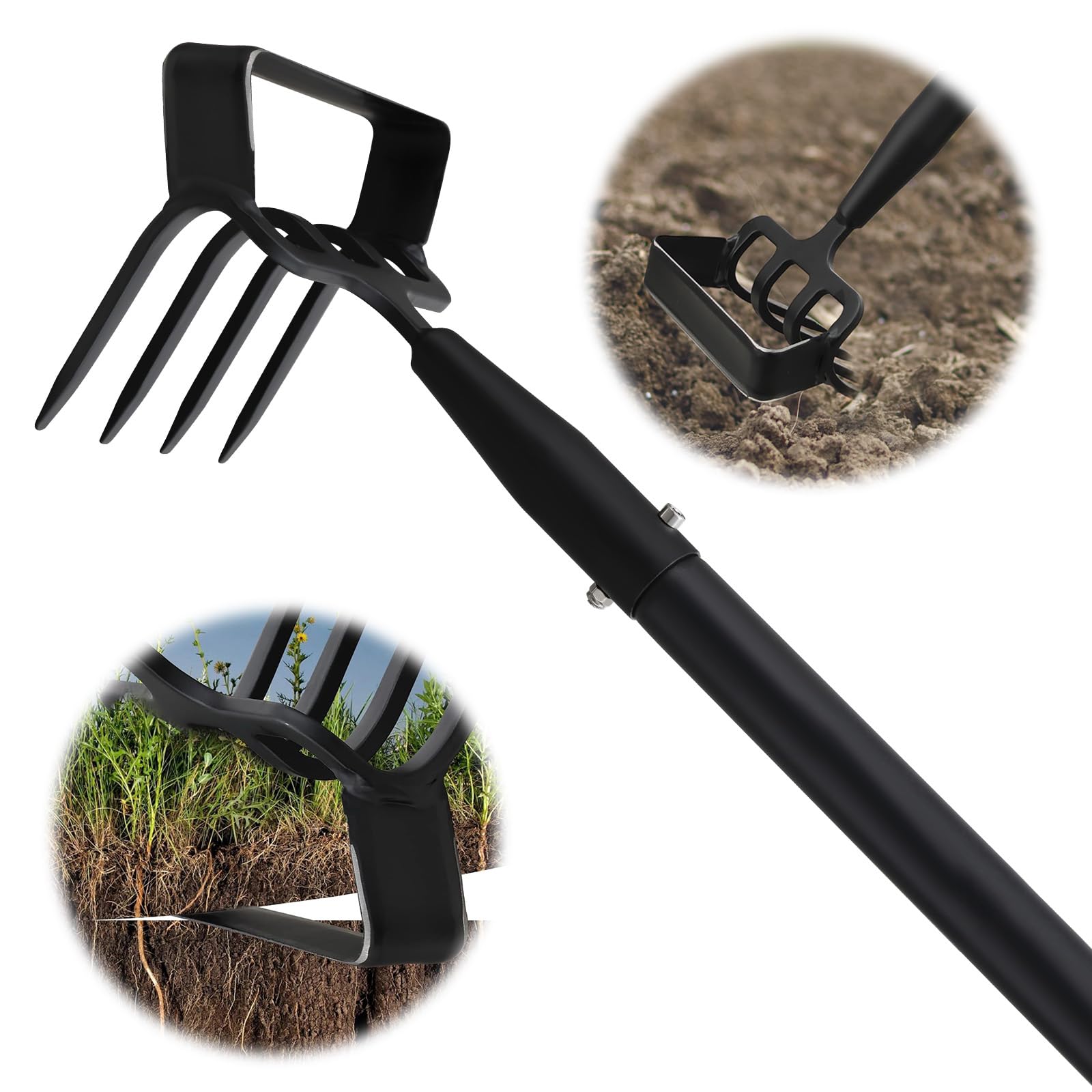
If you have tall raised beds, a large vegetable patch, or simply want to stand as straight as possible, this stirrup hoe gives you a 72-inch handle that clears your lower back completely. The main blade is a sharp stirrup loop that cuts weeds on both the push and the pull, so you cover ground faster. On the reverse side you get a set of 3-inch tines for raking up the debris — a genuine 2-in-1 design that owners love for not having to switch tools mid-row.
The steel handle has a 1 1/8-inch diameter, making it far more rigid than plastic or wood. Weed removal is the top aspect owners praise, and the adjustable length means you can shorten it for storage or pass it to a shorter family member. It handles loose-to-medium soil efficiently.
The catch: the stirrup blade is reported to bend slightly after moderate use in rocky conditions, and sharpness from the start gets mixed reviews. The rake tines are useful but not as sturdy as dedicated rakes. This is a great tool for regular maintenance weeding in softer soil, not for breaking new ground.
Stand-up verdict: The 72-inch reach (the longest handle in this guide) lets you stand fully upright while weeding, so your back stays straight and pain-free even after hours of work — ideal if you are tall or have back trouble.
Perfect for: regular weeding in loose-to-medium soil where you want the fastest ground coverage.
Not for: rocky clay or heavy-duty digging where the stirrup loop might bend.
3. Nohovu 58-Inch Garden Hoe
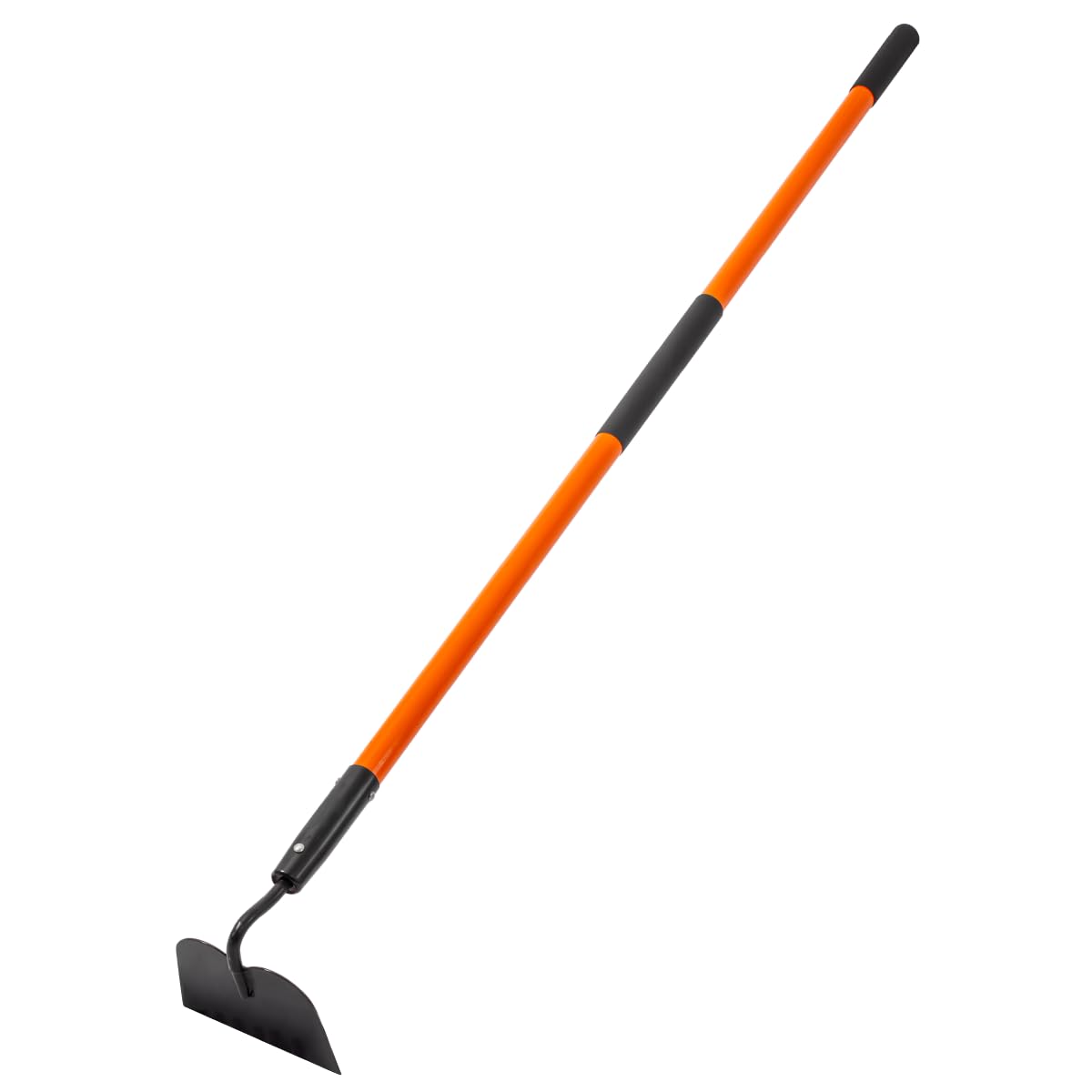
A featherlight chopping hoe with a blade that covers more ground per swing than most draw hoes.
At just 2.7 pounds, this hoe is remarkably easy to swing all morning without fatigue. The blade is 6.3 inches wide of heat-treated high-carbon steel that has a special anti-rust coating, and the fiberglass handle is thickened for strength while staying light. The double-riveted connection between head and handle is a detail that prevents the wobble that cheaper hoes develop over time.
Build quality is the most-discussed strength among owners — the welds are clean, the handle has two non-slip grips, and the single-piece handle design resists bending. A number of owners note that the factory edge is flat rather than sharp, so a quick pass with a file or grinder transforms its performance significantly.
This is a chopping hoe (a draw hoe), not a stirrup style, so you need a swinging or pulling motion. It shines in established beds where you are maintaining weed control, not breaking virgin ground. The lighter weight is a genuine advantage for anyone with shoulder or arm limitations.
The edge it has: Sharper than the Bully Tools 12-Gauge blade from the start — though both benefit from a quick filing. The Nohovu’s light weight makes it the better choice for longer sessions.
Best suited for: the gardener who wants a lightweight, well-finished tool for regular maintenance weeding without the arm fatigue of a heavy steel head.
Think twice if: you need to hack through root-heavy sod or rocky ground — this is a precision tool, not a demolition one.
4. Bully Tools 7-Gauge Field Hoe

The short-handled tank that demolishes roots and trenches new beds — if you have the arms for it.
This is the most heavy-duty hoe in the lineup. The head is a massive 8.25 by 8.5 inches made from 7-gauge steel — noticeably thicker than the 12-gauge BULLY TOOLS above. It weighs 4.65 pounds, which makes it a beast for heavy trenching, cutting through sod, and prying out buried rocks. The fiberglass handle has a rubber grip and is American-made with a limited lifetime warranty.
The catch is the 42-inch handle. Owners repeatedly mention the handle length as a drawback for garden weeding, though many also note that the tool is “built like a tank” and cuts through any soil condition. This tool is better classified as a field hoe for ground-breaking and landscaping than a standing weeding hoe.
At 83 years old and 118 lbs, one owner found it too heavy to use and returned it. This is a tool for a younger or stronger gardener tackling rough terrain, not for light bed maintenance.
When You Need This
- 7-gauge steel head is virtually indestructible in normal use.
- 8.5-inch blade width moves a massive amount of dirt per swing.
When You Don’t
- 42-inch handle forces you to stoop — not ergonomic for weeding.
- 4.65 pounds is brutally heavy for extended sessions.
Grab it for: landscaping, trenching, and demolition of old garden beds where brute force is required.
skip it if: you need an ergonomic weeding hoe for daily standing use — the handle is simply too short.
5. Xtreme Weeder Scuffle Hoe Cultivator
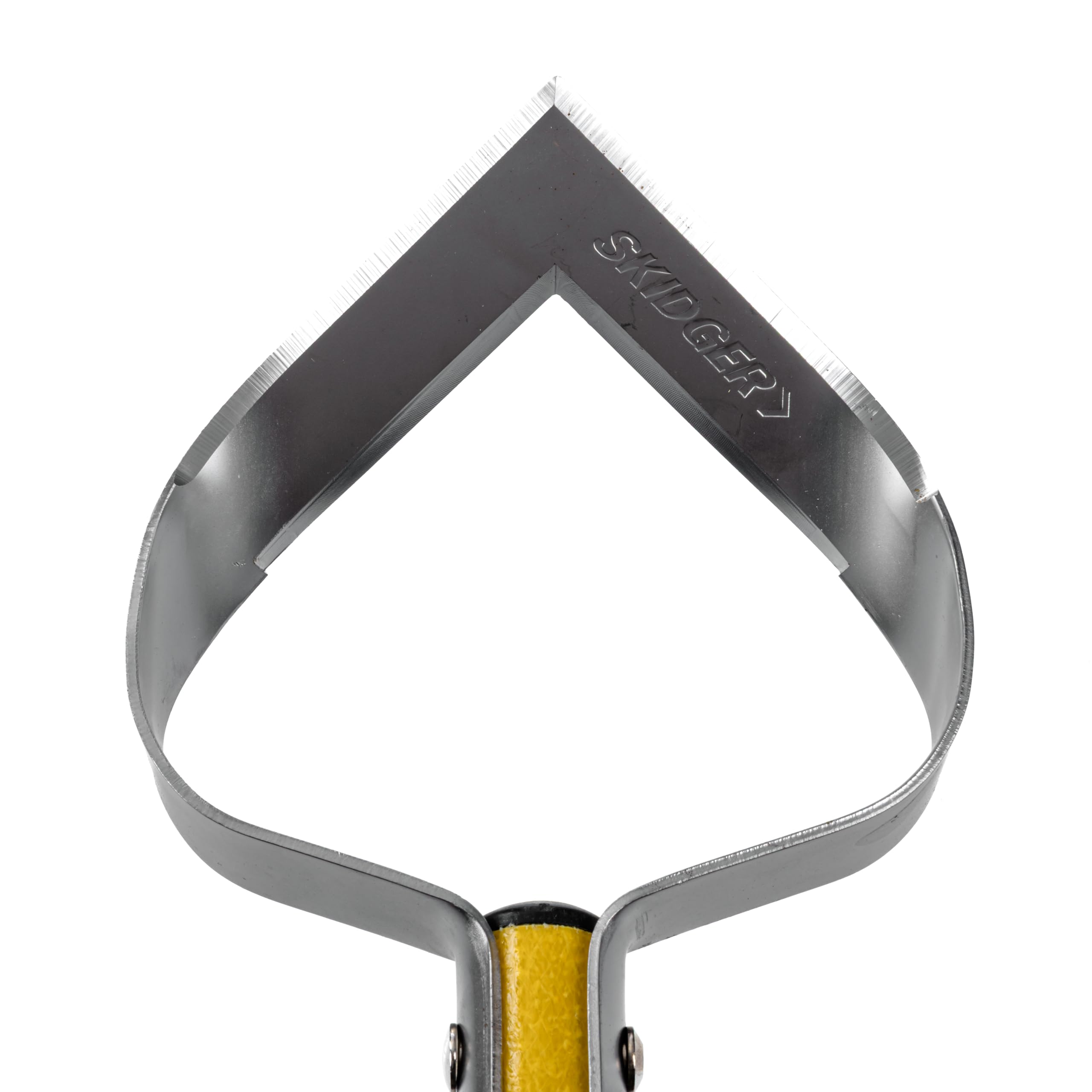
The sharpest V-blade in the group that slips between plants without harming their roots.
This scuffle hoe uses a precision V-shaped blade that cuts weeds in both directions with a push-pull motion. The open head design means it doesn’t clog with soil, mulch, or gravel, and the pointed tip lets you get close to established plants and drip irrigation lines without damaging them. At just 2 pounds, it is the lightest full-size hoe here, and the 54-inch fiberglass handle with rubber grips keeps you standing comfortably.
Functionality and weeding performance are the most-praised aspects by a wide margin. Owners describe the cutting action as slicing through weeds like butter, and the curved blade gives you a clear line of sight to the work. The sharp tip also works for surface edging and removing tree suckers.
The blade is stainless steel, so rust is less of a concern, but the metal is thinner than a heavy draw hoe — it is designed for slicing, not chopping. A few units arrived with the tip poking through the packaging, so inspect on arrival. This is the perfect tool for a gardener with established beds who wants a fast, accurate weeding session.
What stands out: At 2 pounds versus the Nohovu’s 2.7 pounds and uses a stirrup-style motion instead of a chopping one, which means less arm strain and faster coverage in loose soil.
Best for: precision weeding in flower beds, around vegetables, and under shrubs where you don’t want to disturb the good plants.
Not ideal for: breaking up compacted clay or cutting through thick root mats — that requires a heavier chopping head.
6. Haliaeetus 58-Inch Hula Hoe

A beautifully made wood-handled stirrup hoe that weeds a 15-minute hand-pull area in under two minutes.
The hula hoe (also called a scuffle or stirrup hoe) uses a stainless steel loop that slices weeds just below the soil surface when you push and pull it. The 58-inch hardwood handle is sanded smooth and finished beautifully — buyers often say it is “much nicer than expected.” The stainless steel blade resists rust, and the head is joined with smooth welding (no gap at the connection), so there is no weak point where the head meets the handle.
This tool excels in loose soil and after rain, when the weeds lift out cleanly. The manufacturer backs it with a lifetime warranty, which is a strong signal of confidence. The open loop design means you can work right up to young seedlings without damaging their stems, making it brilliant for vegetable gardens.
The blade is not razor-sharp from the factory, and it demands more effort in dry, hard-packed soil. It is also one of the pricier options. But for regular maintenance weeding on decent soil, the craftsmanship and ease of use make it a pleasure to work with.
The quality difference: The hardwood handle on the Haliaeetus is more elegant than the fiberglass or steel handles of other picks, and the stainless blade means no rust worries compared to the BULLY TOOLS 12-Gauge.
Reach for it when: you want a beautifully built tool that makes weeding feel easy in soft, prepared beds.
Hold off if: your soil is dry clay most of the year and you need a heavier chopping head to penetrate the surface.
7. Berry&Bird Swoe Garden Hoe
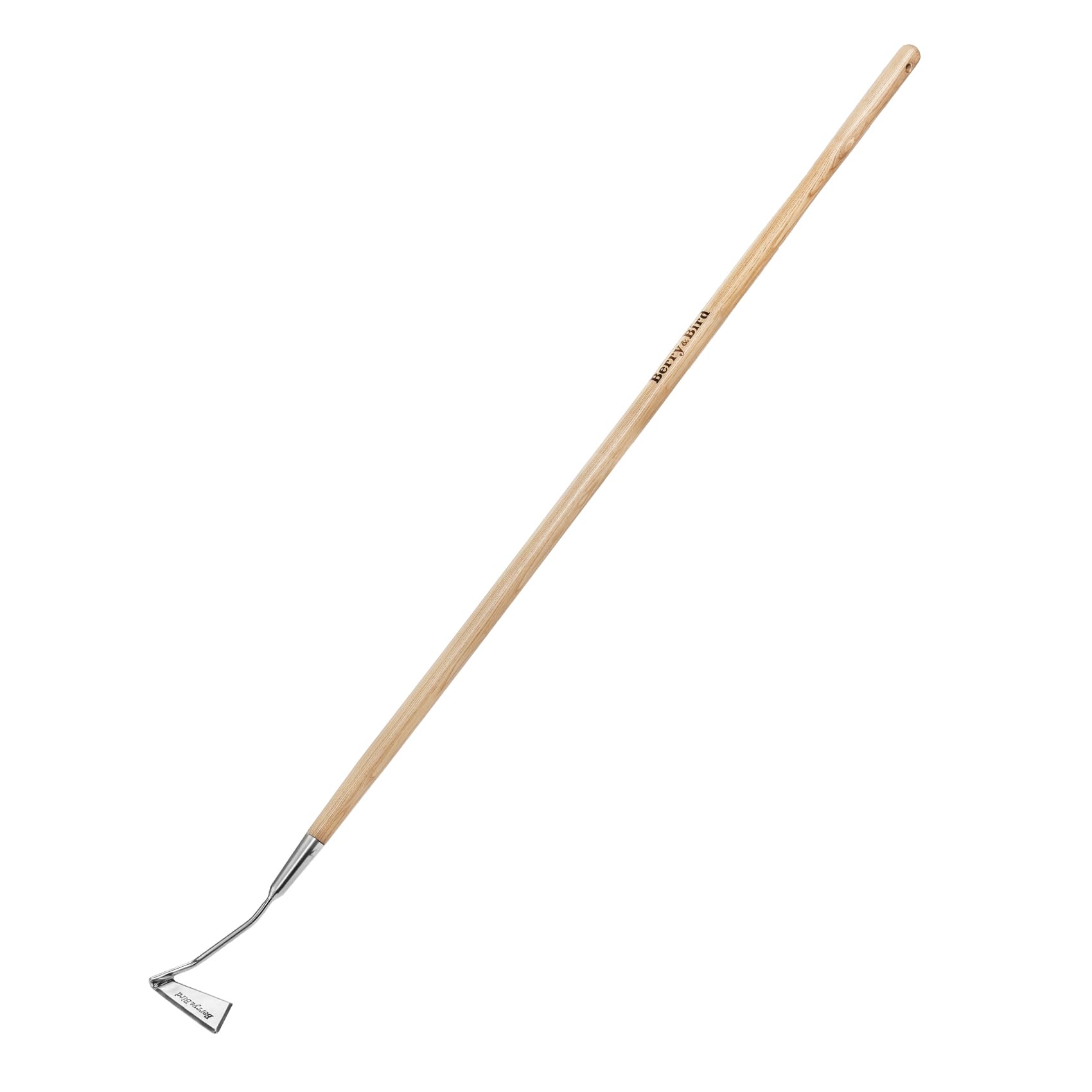
A traditional angled swoe with an extremely long ash handle for minimal bending and maximum sustainability.
This mini angled/warren hoe uses a sharp 3-edge stainless steel head that works just beneath the soil surface to slice through weeds without disturbing plant roots. The handle is a generous 61.8 inches of FSC-certified ash wood, which is sustainably sourced and designed to get smoother the more you use it. The manufacturer states the tool is built by a traditional manual process and should last more than 10 years.
The angled head is particularly good for creating seed rows, making small water trenches, and mixing soil around shrubs. For a standing gardener, the long handle is very comfortable, and the 3.19-pound weight is manageable. Effectiveness and quality are the two most-mentioned strengths by owners.
Assembly is required, and the pre-drilled holes are absent — one owner mentions you need a drill to make pilot holes, which is an unusual extra step. The blade could also be sharper from the start, and a few owners found it disappointing for digging under established weeds. This is a specialized swoe (surface hoe) that excels at light surface work in well-tended beds.
The trade-off: The Berry&Bird’s 61.8-inch handle versus the BULLY TOOLS 12-Gauge’s 58-inch handle offers better back relief, but the blade is less aggressive for tough roots.
Best for: the organic gardener who wants a sustainably made, long-handled tool for light surface weeding and seed bed prep.
pass on it if: you don’t want to drill pilot holes for assembly or you need a heavier blade for established hardpan.
Understanding the Specs
Steel Gauge and Blade Thickness
The gauge number tells you how thick the steel is — lower numbers mean thicker steel. A 7-gauge head is significantly denser and stronger than a 12-gauge head. For light maintenance weeding, 12-gauge is plenty. For breaking new ground or cutting roots, a lower gauge like 7 matters more than any ergonomic handle wrap.
Draw Hoe vs. Scuffle Hoe
A draw hoe (paddle or field hoe) cuts when you pull it toward you and is best for heavy chopping and soil shaping. A scuffle or stirrup hoe (a loop of blade) cuts on both push and pull, which is faster for light weeding but less effective in hard, compacted soil. Your soil type dictates the right head shape.
FAQ
How long should an ergonomic garden hoe handle be for standing use?
Will a stirrup hoe work in my clay soil?
Is a fiberglass handle better than a wooden one?
How often do I need to sharpen my garden hoe?
What is the difference between a swoe and a regular hoe?
Can I use a garden hoe for digging?
How do I prevent my steel hoe from rusting?
What does a 2-in-1 garden hoe mean?
Final Thoughts: The Verdict
If you want one dependable pick, the best ergonomic garden hoe is the BULLY TOOLS 12-Gauge 58-Inch because it combines the ideal handle length for upright work with a durable head that handles tough soil. If you want a lightweight precision tool for established beds, grab the Xtreme Weeder Scuffle Hoe. And for maximum reach and back relief during long sessions, the EUIJOIP 72-Inch Stirrup Hoe is the one to reach for.
How We Picked
We do not accept paid placement. Every pick is matched to a real buyer and a real use-case; we do not hands-on test units.
Sources & Methodology
Specifications: manufacturer listings and product documentation. Review insights: verified customer reviews, as of July 2026. Pricing: not shown on this page (it changes often); check the current price via the retailer link.
As an Amazon Associate, Lawn Gear Lab earns from qualifying purchases. This does not affect which products we feature.