
Specs are compiled from manufacturer listings and verified buyer reviews and can change over time — please confirm the key details on the product page before buying.
Grass creeps back onto concrete within a week of trimming, making the yard look unkempt. A crisp lawn-to-sidewalk border gives a professional finish, and the right edging maintains that line year after year.
I’m Rikta — the founder and writer behind Lawn Gear Lab. This guide is built by comparing the manufacturers’ published specifications and the patterns across verified customer reviews, so you get each pick’s real strengths and trade-offs instead of marketing spin.
Whether you are fighting encroaching grass or keeping mulch off your path, the edging for sidewalks you choose determines how much time you reclaim and how crisp your yard looks from the street.
Our Picks at a Glance


How To Choose The Best Edging For Sidewalks
Sidewalk edging is a physical barrier that stops grass, weeds, and soil from spilling over onto the concrete. To pick the right one, focus on a few key details that make the difference between a clean line and a constant maintenance headache.
Material and durability
Most edging is made from plastic, resin, or HDPE (high-density polyethylene). HDPE is the most durable against sun, frost, and impact — it resists cracking and won’t rot. Resin-based options, like the Beuta, mimic the look of real stone while staying lightweight and easy to cut. Avoid anything too thin, as it can warp or get brittle after a single season of hot sun and freezing ground.
Height matters for sidewalks
You need an edging tall enough to block grass roots from creeping under, but short enough that your mower or string trimmer can pass over it without damage. For sidewalk use, a height of 2.5 to 4 inches is usually the balance. Anything shorter risks being overrun by aggressive grass, while anything much taller gets in the way of the mower deck.
Stakes: the unsung heroes
The edging strip is only as good as the stakes holding it in place. Look for kits that include plenty of stakes — at least one every two to three feet. Metal spiral spikes or tough nylon spikes are vastly better than thin plastic ones that snap when you hammer them into hard ground. If the reviews mention broken stakes repeatedly, that is a red flag.
No-dig vs. trench installation
A no-dig design lets you hammer stakes directly into the ground and is perfect for soft soil. But on hard-packed or rocky ground along a sidewalk, digging a shallow trench first gives a far more stable result. Some flexible edging also benefits from being warmed in the sun before installation to remove kinks and make curves easier.
Quick Comparison
| Model | Best For | Material | Height | Length | Amazon |
|---|---|---|---|---|---|
| Beuta Polyrock Bricks★ Best Overall | Stone-like curb appeal | Resin | 2.25 in | 48 in (section) | Amazon |
| Master Mark Terrace BoardBest Coverage | Flexible long runs | HDPE Plastic | 5 in | 40 ft | Amazon |
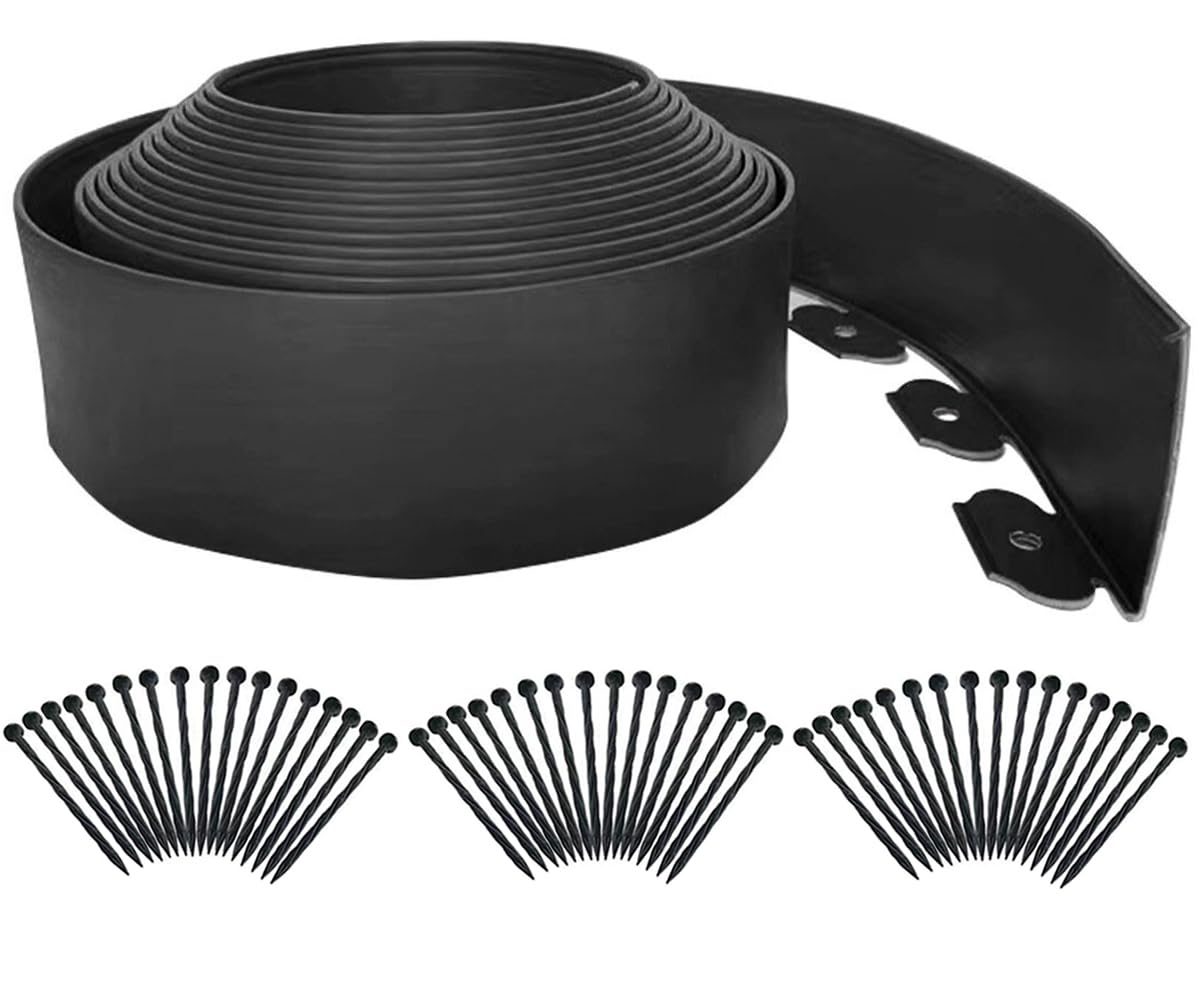
| Landscape Edging 33FTBest Value | Value with extra stakes | PE | 4 in | 33 ft | Amazon |
| FunFanso Edging Border | Max coverage per dollar | PE Plastic | 2 in | 66 ft | Amazon |
| Vashly No-Dig Edging | Decorative sections | Plastic | 6 in | 20 ft | Amazon |
| Focefec Garden Edging | Brown color landscaping | HDPE | 4 in | 33 ft | Amazon |
| Anleolife Flexible Edging | Thick root barrier | Plastic (2.5mm) | 5 in | 40 ft | Amazon |
| Gardzen Landscape Edging Kit | Complete all-in-one kit | Plastic | 3 in | 40 ft | Amazon |
| EasyFlex Tall Wall Edging | Premium recycled build | Recycled Plastic | 2.5 in | 40 ft | Amazon |
In‑Depth Reviews
1. Beuta Landscape Edging | Polyrock Bricks
Our pick — over 4.5★ from 900+ verified ratings; the strongest balance of quality and price.
The brick look that fools the eye from the driveway.
This edging gives you the upscale look of real stone pavers without the backbreaking labor of hauling actual masonry. Each section is 48 inches long and 2.25 inches tall, with a realistic Sandstone finish that blends beautifully alongside a sidewalk. The resin material is lightweight — just 0.65 pounds per section — so carrying a stack from the garage to the front yard is easy. Owners love the appearance, with hundreds of reviews singling out how natural and rich the stone texture looks once it’s installed.
Installation is where this product shines. The interlocking sections snap together, and each six-brick piece comes with three spikes to anchor it. Buyers report the pieces are simple to trim with a hand hacksaw when you need a shorter run, and the edging stays put through weather and changing seasons without shifting. It is also made in the USA, which some buyers particularly value for a landscaping product that lives outdoors year-round.
The honest caveat is the cost per foot. Because this is a premium stone-look product, you pay more per linear foot than you would for a basic plastic roll. That price is why some owners call it expensive even when they love the result. This is best for front-yard sidewalks where curb appeal matters more than covering a massive backyard in budget edging.
Real stone illusion: The resin texture and coloring are convincing enough that neighbors will assume you installed actual brick. At 2.25 inches high, it creates a clear barrier that stops grass and mulch from creeping onto the walkway.
Who it isn’t for: If you need to edge a 200-foot stretch of back pathway on a tight budget, the per-section cost adds up quickly. Look to a coiled plastic roll for that job.
Grab it if: Your sidewalk is the first thing guests see and you want a decorative border that looks like it cost three times as much.
Pass if: You are fencing a large, low-visibility area and need maximum length for your dollar.
2. MASTER MARK Terrace Board, Landscape Coiled Edging
Forty feet of coiled barrier that snakes along any sidewalk.
This is the classic workhorse edging — a 40-foot coil that unrolls along your walkway and gets pounded in with the included stakes. At 5 inches tall, it offers a barrier, which helps block grass roots from sneaking under the edge. The material is HDPE (high-density polyethylene), a dense plastic that resists chipping, fading, rotting, and peeling over many seasons. Master Mark has been manufacturing HDPE products since 1966, and the brand loyalty shows in the consistently positive feedback about its quality and ease of use.
Installation is straightforward: dig a shallow trench about 1.5 inches deep, place the edging, and use the included stakes to hold it. The wood-grain texture gives a subtle, natural look that blends into the yard without screaming for attention. Owners praise how flexible it is for shaping around curves and how it stays put once secured.
However, some long-time owners mention a reality of modern manufacturing — the material has become thinner compared to what it was 7+ years ago. The thinner gauge can make the edging wavy if you don’t let it warm in the sun first. You will want extra stakes if you are covering a large area, as the 10 included are only enough for a modest run. For the price, this remains the go-to for long, uninterrupted sidewalk borders where the mower deck passes right over the 5-inch height.
What wins people over
- 40 feet of continuous coverage in one roll — no piecing sections together
- HDPE material that withstands sun, frost, and string trimmers without cracking
- Flexible enough for gentle curves around walkways and tree rings
Buyer reality check
- The plastic is thinner than earlier versions, which can lead to waviness if not warmed in the sun before installation
- Only 10 stakes included for 40 feet — plan on buying extra for proper support
Reach for this: When you have a long, straight sidewalk run and want a no-nonsense barrier that works on the first try.
Look elsewhere if: You want a decorative stone look or a completely rigid edge that won’t flex at all.
3. Landscape Edging 33FT (shsyue)
Fifty spiral spikes in the box — you won’t run short.
This kit delivers 33 feet of 4-inch-tall PE edging with a whopping 50 spiral spikes. The generous supply means you can place a stake every 8 to 10 inches along your sidewalk, giving you a rock-solid hold even in loose or sandy soil. The edging itself is made from durable PE material that handles sun and rain without warping, and the black color disappears into the grass line so the edging itself is subtle while the clean edge stands out.
Buyers consistently call out how easy the roll-out installation is. You simply position the edging along the sidewalk, hammer the spiral spikes into the pre-marked slots, and the job is done — no trenching required for soft ground. The material bends easily into curves around walkway corners, and it is simple to cut with a pair of heavy-duty shears when you need a custom length.
The main complaint is the quality of the included plastic stakes. A number of customers note that the tips break off when hammering into hard or rocky soil. Pre-drilling a pilot hole with a smaller metal stake solves the problem, but it is an extra step. The edging itself is tough and weather-resistant, so if you swap the stakes for metal ones or pre-drill, this kit offers tremendous value for the price.
Upgrade the stakes, keep the edging: The 33-foot HDPE strip is solid and flexible, but the nylon spikes are the weak link. Pre-drill or buy metal stakes if your sidewalk soil is compacted.
Best for: Homeowners with soft to average soil who want a no-dig install with plenty of stakes for a very low per-foot cost.
skip it if: Your sidewalk sits on rocky, hard-packed ground where plastic stakes break before they go in.
4. FunFanso 66 FT Landscape Edging Border
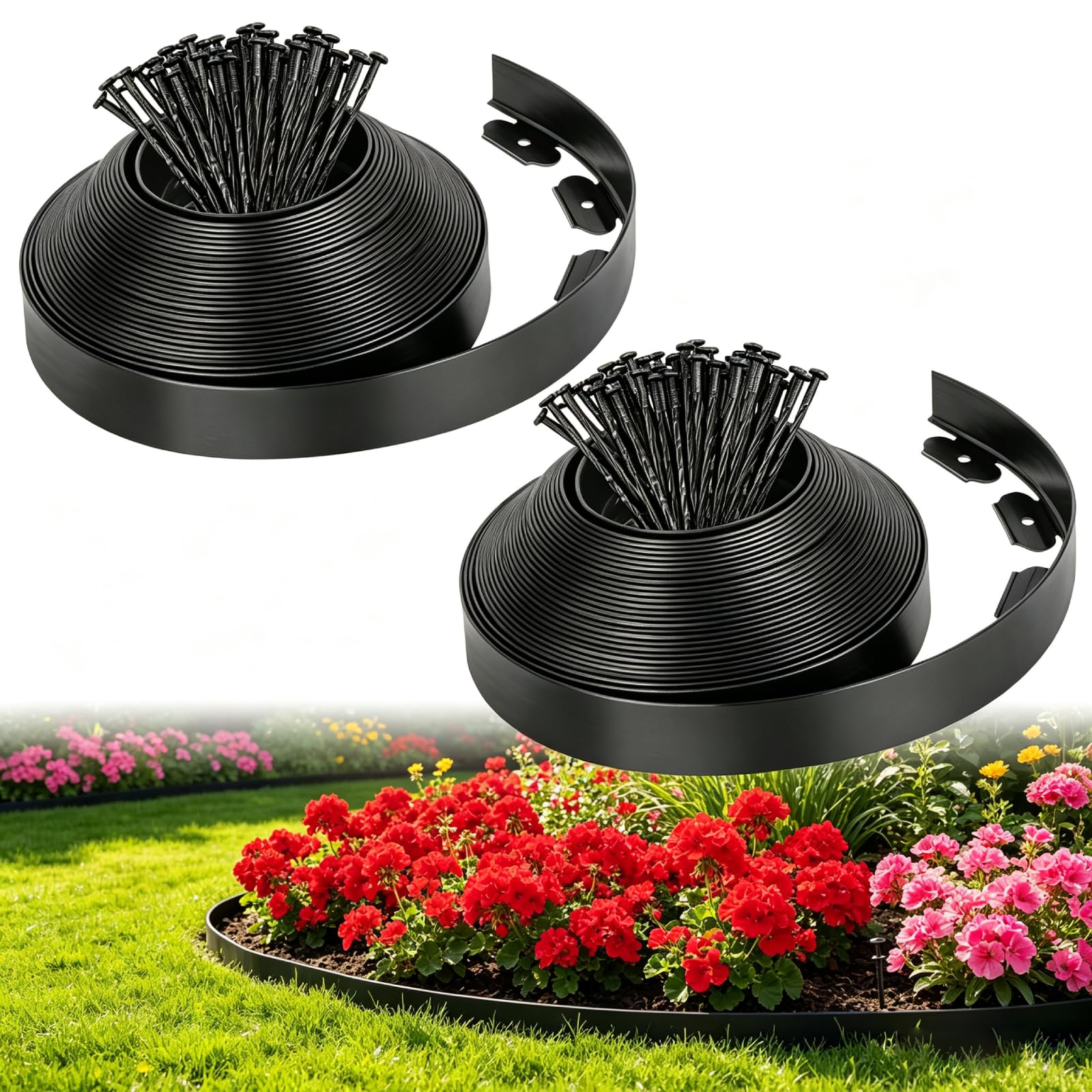
This is the math that works in your favor: 66 total feet of edging (two 33-foot rolls) and 100 plastic spikes for a very accessible price. The 2-inch height is lower than most, which is both a strength and a limitation. It stays completely out of the way of your mower — the blade passes over it with zero risk — and it creates a subtle separation between grass and sidewalk that looks tidy without being obvious. For a straight, low-profile border, it gets the job done fast.
The material is polyethylene (PE) plastic that bends into curves without breaking, and the no-dig design means you just hammer the spikes through the edging into the ground. Owners find it easy to install and appreciate that the kit includes 100 stakes for 66 feet — that’s about 1.5 stakes per foot, which provides dense support. That extra stake density makes a real difference in keeping the edging tight against the sidewalk.
The trade-off with the 2-inch height is that it won’t stop aggressive grass types or deep-rooted weeds from creeping over. If your lawn has Bermuda or zoysia grass that spreads via surface runners, a taller barrier is a better bet. Also, some owners find the plastic stakes snap during installation in firm soil. For light-duty edging on a large perimeter, this is a smart budget choice, but don’t expect it to hold back a determined invasion.
Why it’s a deal
- 66 feet total coverage — enough to edge both sides of a long driveway
- 100 included stakes give you dense, sturdy support along the entire run
- 2-inch height is completely mower-friendly; you won’t hit or bend it
Where it falls short
- Too short to block aggressive surface-spreading grass like Bermuda
- Plastic stakes can snap when hammered into hard, dry ground
Perfect for: Maximum coverage on a minimum budget — ideal for lining rental properties or large side yards where you just need a visual boundary.
Not for: Battling tough, spreading grass varieties that will laugh at a 2-inch wall.
5. Vashly No-Dig 20ft Landscape Edging
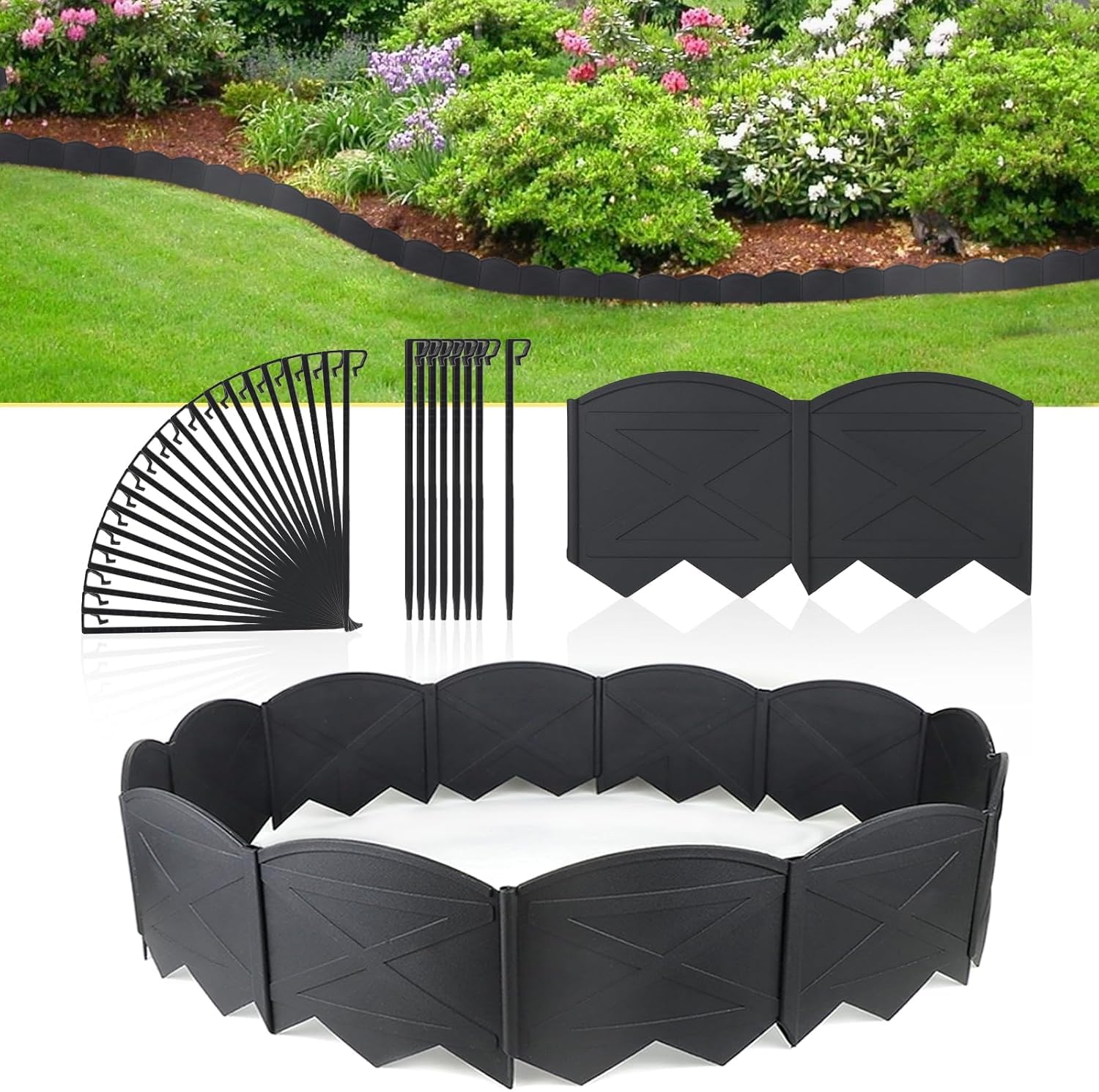
Tall, interlocking sections that act like a mini fence.
If you want a visible border that actually stands above the ground, this 6-inch-tall edging is for you. Each piece is 12.2 inches long and snaps together with a simple slide-and-lock mechanism — no tools required for assembly. The set includes 20 pieces and 20 stakes, covering just over 20 linear feet, which is perfect for a single sidewalk segment or a flower bed border next to the drive. The height is substantial enough to stop mulch, dirt, and even small decorative rocks from washing onto the concrete.
The standout feature is how easy it is to shape into arcs, circles, or straight runs. Owners mention that the pieces bend smoothly for curved walkways and that the stakes push into soft ground with just a gentle tap. One owner in Florida noted that the edging held up through heavy rain without shifting, which says a lot about the hold it provides. The top of the fence even gives you a place to hang small holiday lights, which is a clever bonus.
The durability has drawn some real concern. A few reviewers point out that the plastic becomes brittle after only a few months in the sun, leading to cracks and breakage. This is not a product you should expect to last for many years, especially in regions with intense UV exposure. If you need a temporary border or a decorative touch that you can replace when it wears, this is a fine choice. For a permanent sidewalk solution, consider a thicker HDPE option.
Picture-perfect, not heirloom-tough: The 6-inch height gives you a charming mini-fence look that keeps everything neat, but the plastic may fade and crack after a single season of full sun.
Reach for this: When you want a decorative, easy-to-install border for a short sidewalk stretch and you are okay replacing it every couple of years.
Think twice if: You expect edging to last multiple seasons without cracking — invest in a sturdier material instead.
6. Focefec 33FT Garden Edging, Brown
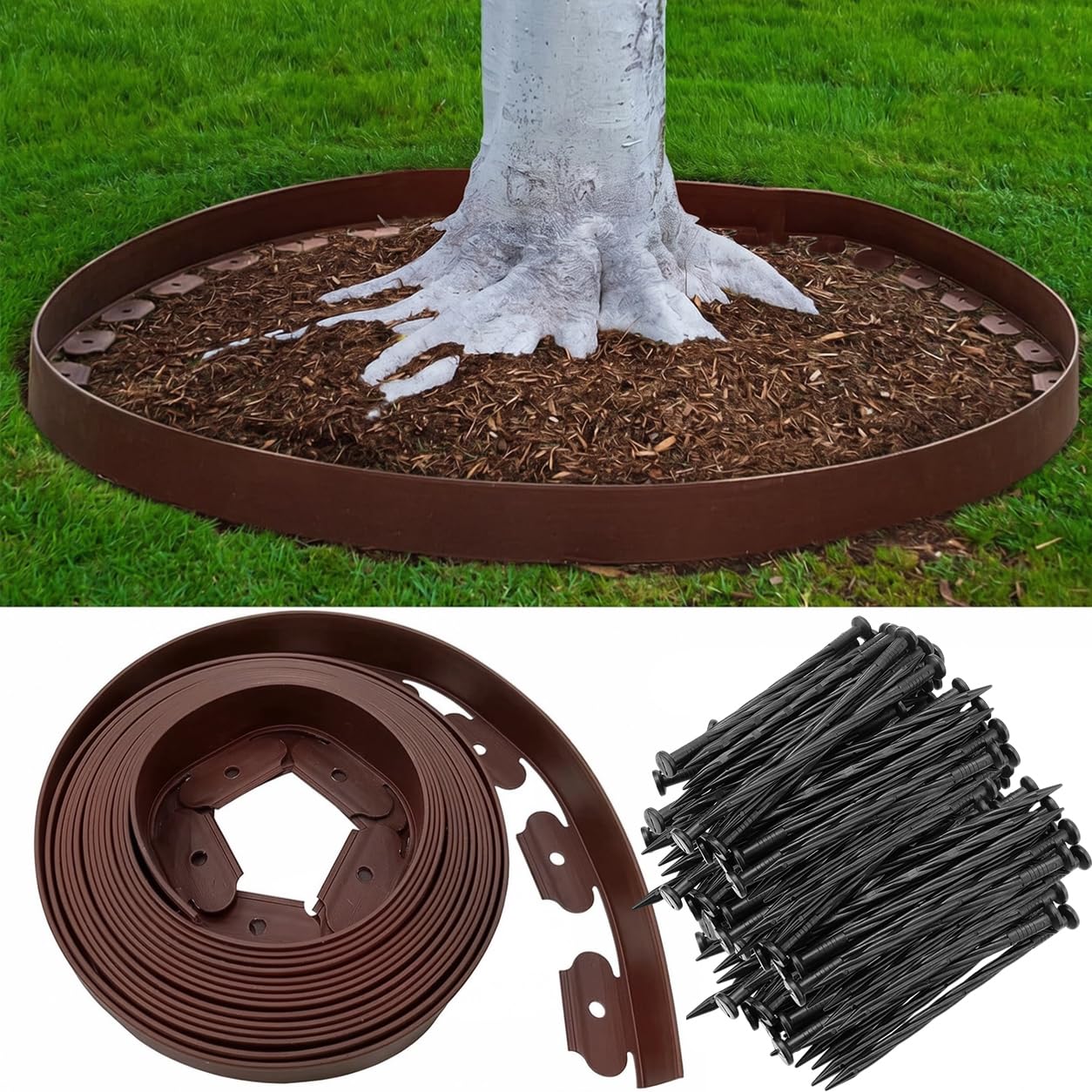
A brown border that blends into garden beds, not black.
Most sidewalk edging comes in basic black, but this kit offers a rich brown color that looks more natural against soil and mulch. The 33-foot roll is 4 inches tall and made from HDPE (high-density polyethylene), so it is sturdy enough to hold back mulch and dirt without buckling. It comes with 50 anchoring stakes that are 8 inches (20cm) tall, giving you enough hardware to secure the entire length. The no-dig design works on most soil types, which saves a lot of time compared to trench-style edging.
Buyers praise how well this edging works around trees and for sectioning off garden beds from the lawn. It is flexible enough to bend into curves, but some owners note that keeping a perfectly straight line along a sidewalk takes some patience with stake spacing. The bottom edge is solid while the top remains pliable, which helps it conform to slight ground unevenness without looking wavy. Many owners found they got great results by using a rubber mallet and heavy-duty shears to trim and install.
The main issue is the stakes. In rocky soil, they bend rather than drive straight in. Some owners ended up cutting the stakes down to 4 inches to get them through the tough spots. A separate complaint is that the color can fade over a year of direct sun exposure. If brown is the look you want for your garden and you have relatively soft soil, this is a solid mid-range option.
Pros that stand out
- Brown color blends naturally into soil and mulch beds around the sidewalk
- 50 stakes included — enough to secure every few holes along 33 feet
- HDPE construction offers good strength and weather resistance
Things to watch
- Stakes bend in rocky soil; you may need to pre-drill or swap for metal
- Color may fade noticeably after a year in direct sun
Ideal for: Gardeners who want a brown border that disappears into the flower bed and prefer a 4-inch height that works with a mower.
Less ideal: If your soil is full of rocks or you need a barrier that maintains its deep color year after year.
7. Anleolife 40ft Flexible Plastic Landscape Edging
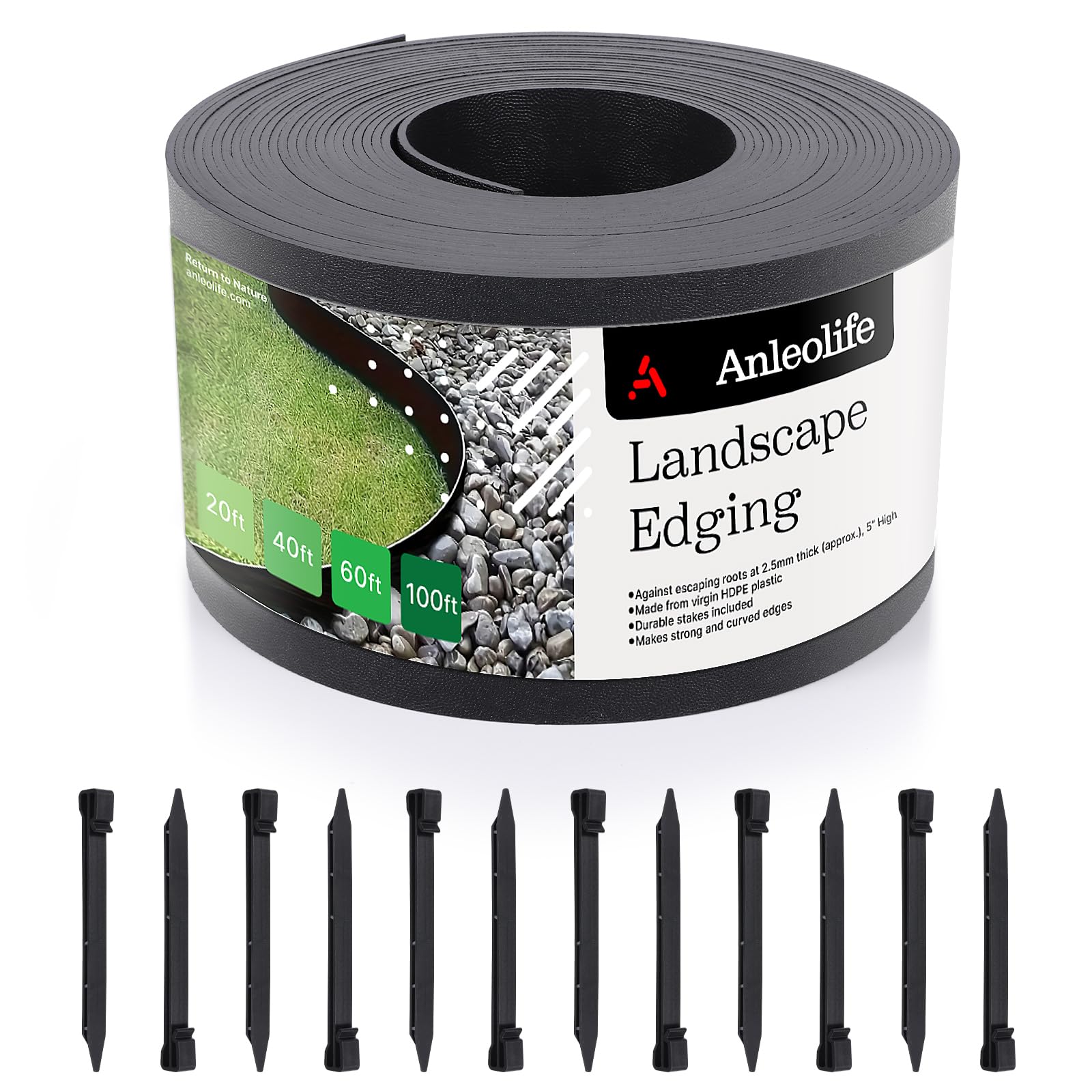
A thick 2.5mm wall that serious roots won’t cross.
This is not your average flimsy coil. At 2.5mm thick and 5 inches tall, the Anleolife edging is built like a true underground barrier — it prevents grass roots from invading garden beds and keeps pebbles and mulch inside the border. At 2.5mm thick, it stands up to string trimmers without tearing and resists buckling from frost heave. It covers 40 linear feet and includes 12 stakes, but the manufacturer is upfront that you should allow for about 1% expansion and contraction with temperature changes.
Installation requires digging a narrow trench, placing the edging, backfilling, and compacting the soil. It is not a true no-dig product, but the result is far more stable. The plastic is flexible enough for smooth curves around walkways, and the subtle black finish blends into the landscape. Owners who used it for straight runs and circle beds alike appreciated the sturdy feel of the material.
The package only comes with 12 stakes for 40 feet, which is not nearly enough. You will need to buy extra stakes or use the edging in a trench-style installation where the soil itself holds it upright. Some owners also reported that the provided stakes broke when hammered with a plastic mallet. If you are comfortable digging a trench and providing your own stakes, the thick material makes this a top-tier barrier. But if you want a quick hammer-and-done installation, the stake situation is frustrating.
A serious barrier for serious gardeners: The 2.5mm thickness is rare at this price point and provides root-blocking power that thin rolls can’t match. Just budget for extra stakes and a trenching shovel.
Choose this for: Permanent sidewalk borders where you want to stop invasive grass roots permanently — the thick material justifies the extra install effort.
Pass on this if: You want a fast, stake-only installation with no digging required.
8. Gardzen Landscape Edging Kit, 40-Foot Long
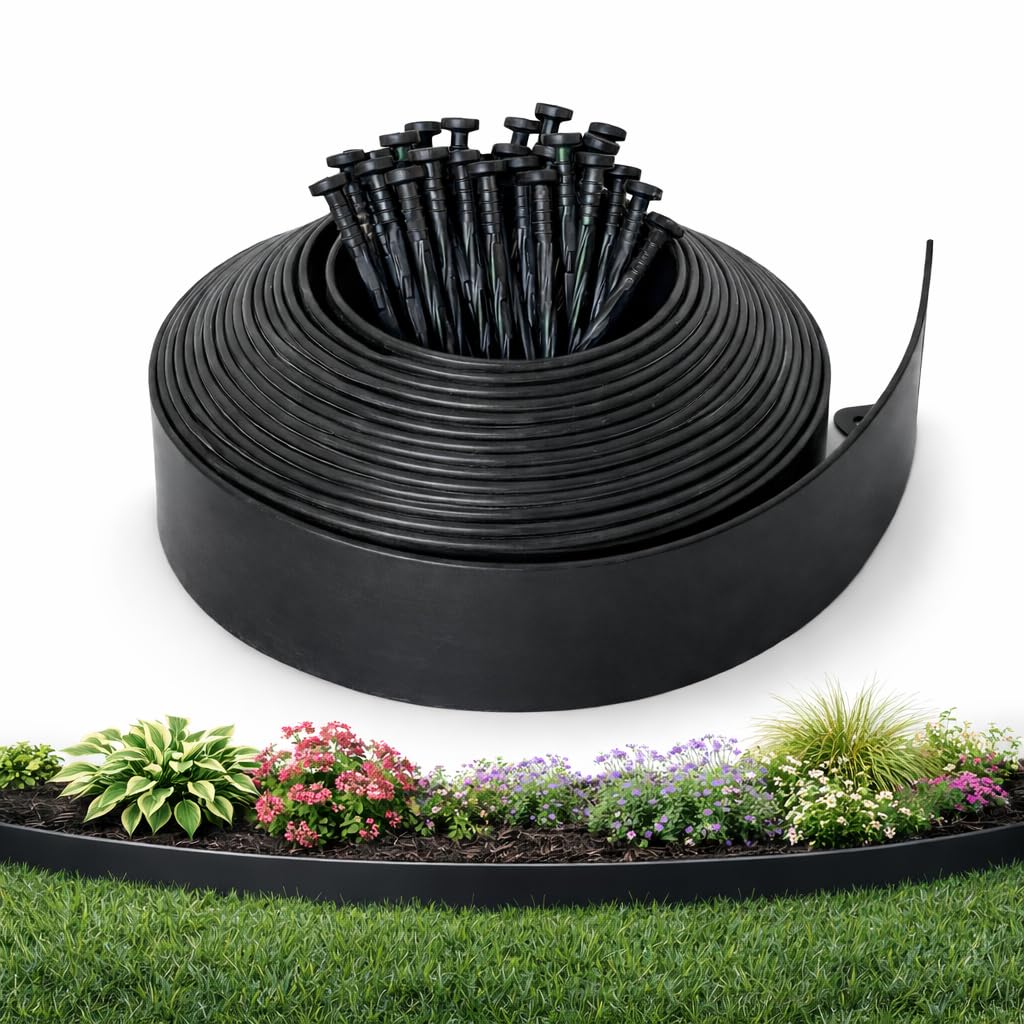
A complete package with spikes and edging that actually matches.
This is one of those rare kits where the number of included spikes (40) is well-matched to the 40-foot length of edging, so you don’t have to buy a separate stake pack to get a secure install. The edging is 3 inches tall and made from weather-resistant plastic that is sturdy enough to hold pebbles and mulch while being flexible enough for curved installations. The 3-inch height is a middle ground — short enough to clear a mower deck but tall enough to block most surface-level grass creep. It works well for separating a rock border from the grass right alongside a sidewalk.
Installation is no-dig: you simply place the edging along your walkway and hammer a spike into the ground every 2 to 3 holes using the pre-marked slots. Owners praise how easy it is to cut to size and how clean the finished look is. It is particularly effective for small gravel or mulch, where the barrier keeps the loose material from scattering onto the concrete. The black color is unobtrusive and fades into the background once the grass grows around it.
The plastic spikes are the recurring weak point. They bend easily when you try to hammer them near rocks or in compacted soil. Some owners solved this by using 16-inch carbon nails they already had on hand, which is a simple fix but an extra expense. The edging itself is good quality for the price, but if your ground is hard, expect to replace the stakes.
What you’ll love
- 40 spikes for 40 feet — a proper 1:1 ratio that actually holds the edging flush to the ground
- 3-inch height clears most mower decks while still keeping mulch off the sidewalk
- Easy to cut and shape; works equally well for straight runs and curved beds
One honest complaint
- Plastic stakes bend when they hit small rocks; keep metal nails ready as a backup
Great for: A balanced, no-hassle install on a sidewalk where the soil is average and you want everything in one box.
Not great for: Extremely rocky ground where plastic stakes stand no chance of driving straight.
9. EasyFlex Tall Wall No-Dig Landscape Edging
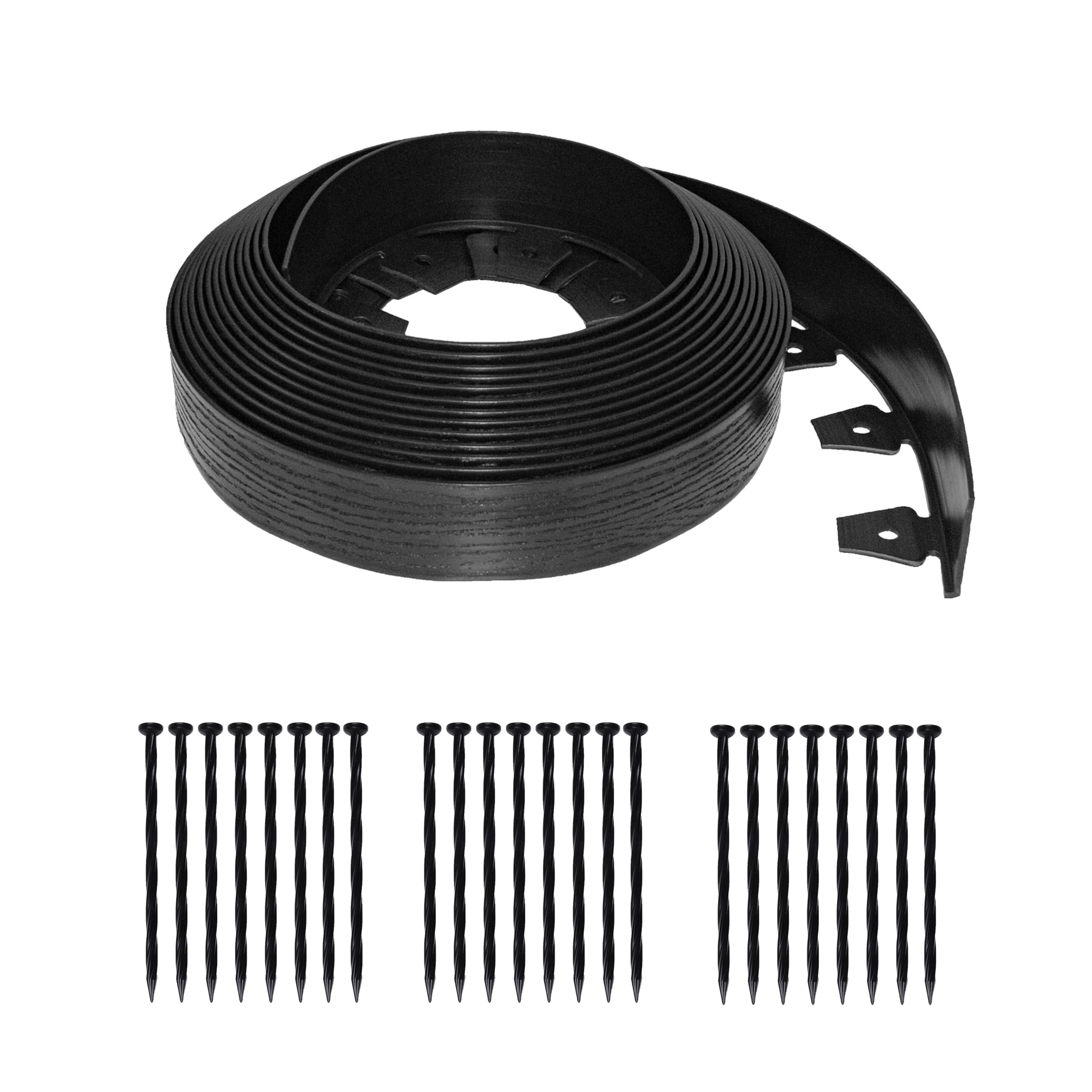
A US-made coil that shrugs off the string trimmer.
EasyFlex is among the most trusted names in landscape edging, and this 40-foot kit shows why. The 2.5-inch-tall wall is made from recycled plastic that is thick and rubbery, which makes it remarkably resistant to string trimmers and frost heave. It comes with 24 spiral anchoring spikes (8 inches long) that grip the ground aggressively and keep the edging locked in place even through heavy rain and freeze-thaw cycles. The no-dig installation is straightforward: place it along the sidewalk and drive the spikes into the pre-formed tabs with a rubber mallet.
The material is flexible enough to bend into curves around walkways, but it has enough body to hold a straight line without sagging or waving. Owners consistently call out how easy it is to cut and how well it holds larger materials like river rock. The woodgrain texture gives a subtle, natural appearance that suits most yards. Made in the USA from recycled materials, it also appeals to buyers who want a more environmentally responsible product.
Budget for an extra pack of stakes and plan to place one every foot for the best results. At a slightly higher price point, this is the pick for buyers who want a low-maintenance edge that outlasts cheaper alternatives.
Once and done: The rubbery recycled plastic and aggressive spiral spikes make this the most durable coil in the lineup. The higher upfront cost is offset by years of not replacing it.
Buy this if: You want a premium, low-maintenance barrier that can handle string trimmers, frost, and heavy rain without budging.
pass on it if: Your budget is tight and you only need a temporary solution for a rental property.
Understanding the Specs
HDPE vs. Standard Plastic
HDPE (High-Density Polyethylene) is a denser, more UV-resistant plastic that handles temperature swings without cracking. Standard PE (polyethylene) is cheaper and more flexible but tends to become brittle after a few seasons in direct sun. For edging that runs alongside a sidewalk where it gets full sun exposure, HDPE is worth the small extra cost.
Stake Spacing and Quantity
The distance between stakes determines whether your edging stays tight against the ground or lifts and waves. A good rule is one stake every 1 to 2 feet. Many kits skimp on stakes to keep the price low, so always check the stake count against the length. Having 40 stakes for 40 feet is much better than 12 for 40 feet.
Height and Mower Clearance
Your lawn mower deck typically sits 2.5 to 4 inches off the ground. Edging taller than that will get hit by the blade, which can damage the edging and dull your blade. A 2.5-inch or 3-inch height is safest for mowing directly over. If you choose a 4-inch or taller barrier, you will need to trim around it separately.
No-Dig vs. Trench Installation
No-dig edging uses spikes driven directly into the soil, which works well in soft, loamy ground. Trench-style installation involves digging a narrow slot for the edging to sit in, then backfilling. Trenching is more work but gives a much more stable, straight result — essential on sidewalks where the soil is often compacted from foot traffic.
FAQ
What is the best height for sidewalk edging?
Can I install edging without digging a trench?
How many stakes do I really need?
Will plastic edging crack in the winter?
How do I keep edging from looking wavy?
Can edging stop grass from growing onto the sidewalk?
What is the difference between flexible coil edging and rigid sections?
Will my lawn mower damage plastic edging?
How long does sidewalk edging usually last?
Can I reuse edging if I move it to a new location?
Final Thoughts: The Verdict
For most people, the edging for sidewalks winner is the Beuta Polyrock Bricks because it delivers the curb appeal of real stone with an easy snap-together install that holds up to weather — giving you the best of both looks and durability. If you need to cover a long stretch on a tighter budget, the Landscape Edging 33FT kit offers great value with its generous stake count. And for the buyer who wants a low-maintenance coil that can handle string trimmers and frost, the EasyFlex Tall Wall is the premium choice built from recycled materials. Whichever pick suits your walkway, you will save hours of weed trimming every season.
How We Picked
We do not accept paid placement. Every pick is matched to a real buyer and a real use-case; we do not hands-on test units.
Sources & Methodology
Specifications: manufacturer listings and product documentation. Review insights: verified customer reviews, as of July 2026. Pricing: not shown on this page (it changes often); check the current price via the retailer link.
As an Amazon Associate, Lawn Gear Lab earns from qualifying purchases. This does not affect which products we feature.