
Specs are compiled from manufacturer listings and verified buyer reviews and can change over time — please confirm the key details on the product page before buying.
Picking the right earthworm castings is the single fastest way to transform tired potting soil into a living, nutrient-dense foundation for your plants. The challenge is that not every bag on the shelf contains the pure, screened, microbe-rich material your garden actually needs — some are dry, dusty, or cut with fillers that do little more than take up space. This guide strips away the marketing so you can match the right organic fertilizer to your exact growing setup, whether you are nursing houseplants indoors or building soil for a vegetable patch outside.
I’m Rikta — the founder and writer behind Lawn Gear Lab. This guide is built by comparing the manufacturers’ published specifications and the patterns across verified customer reviews, so you get each pick’s real strengths and trade-offs instead of marketing spin.
We have sorted through six of the most popular pure worm castings on the market, weighing their nutrient content, texture, and reported performance so you can find the best earthworm castings for your specific soil and plants.
Our Picks at a Glance

How To Choose The Best Earthworm Castings
A bag of worm castings might all look like dark soil, but the quality varies in ways that directly impact your plants. You want castings that are pure, properly screened, and alive with beneficial microbes.
Texture and Screening
Good worm castings are sifted to remove debris like twigs, rocks, or uncomposted bedding material. A fine, uniform texture blends more easily into your potting mix without creating air pockets or interfering with delicate root systems. Coarse, clumpy castings often mean lower quality and less consistent nutrient delivery.
Nutrient Profile and Source
Pure worm castings provide a balanced, slow-release supply of nitrogen, phosphorus, and potassium (NPK) along with trace minerals like calcium and magnesium. The diet the worms were fed matters — castings from a vegan-fed worm diet tend to be cleaner and more consistent than those from mixed-feed operations. A product that lists “100% worm castings” as the sole ingredient is your target.
Moisture Content and Smell
High-quality castings feel like damp, crumbly soil — rich and earthy without being soggy or bone dry. They should smell like fresh earth, not ammonia or rot. Castings that are too dry may have lost microbial activity, while overly wet castings can become anaerobic and develop odors that harm plant roots.
Quick Comparison
| Model | Best For | Weight | Volume | Rating | Amazon |
|---|---|---|---|---|---|
| Back to the Roots★ Best Overall | Best Overall | 5 lb | 80 oz | 4.8 / 5 | Amazon |
| Worm Bliss (Plantonix)Top Purity | Top-Tier Purity | — | 1 Gallon | 4.8 / 5 | Amazon |
| Harris Worm Castings | Versatile Superfood | 5 lb | 4 qt | 4.8 / 5 | Amazon |
| Doter Worm Castings | Premium Organic Feed | 5.5 lb | 88 oz | 4.6 / 5 | Amazon |
| Uncle Jim’s Worm Farm | Largest Bag Value | 4 lb | — | 4.4 / 5 | Amazon |
| Soil Sunrise | Small Batch / Trial | 1 lb | 1 Quart | 4.7 / 5 | Amazon |
In‑Depth Reviews
1. Back to the Roots Organic Worm Castings
Our pick — over 4.5★ from 900+ verified ratings; the strongest balance of quality and price.
The pure, USA-made vermicompost that blends into chunky soil without compacting it.
This is the pick that sets the standard for what good castings should feel like. Back to the Roots delivers a 5-pound bag of pure worm castings that buyers describe as “rich and clean,” blending easily into a chunky soil mix of coco chips, perlite, and charcoal without losing aeration. It is made in the USA and doubles as a soil conditioner for indoor and outdoor use, from milkweed to tomatoes. The resealable bag keeps the material fresh between applications, which is a small but welcome touch for consistent use. Unlike the Uncle Jim’s bag at 4 pounds, this one gives you 5 pounds, which matters if you are amending multiple containers or a whole garden bed at once.
Reviewers consistently note that it promotes stronger leaf growth and healthier root development without any burn or strong odor, even when applied directly around seedlings. The only real trade-off here is that the bag is not the largest on this list — at 5 pounds, it is a solid mid-range option for the dedicated home gardener but may not be the most economical choice for large-scale landscaping.
Reasons to Buy
- Pure, no-burn formula safe for seedlings and monarch larvae
- Blends easily into chunky soil mixes without compaction
- Resealable bag protects freshness between uses
Reasons to Consider
- 5-pound volume is not the largest for heavy-duty garden applications
Reach for this if: You want a reliable, pure organic casting that works across all your plants — indoor and out — with no surprises.
Look elsewhere if: You need a bulk supply for a large vegetable garden and want a bigger per-bag volume.
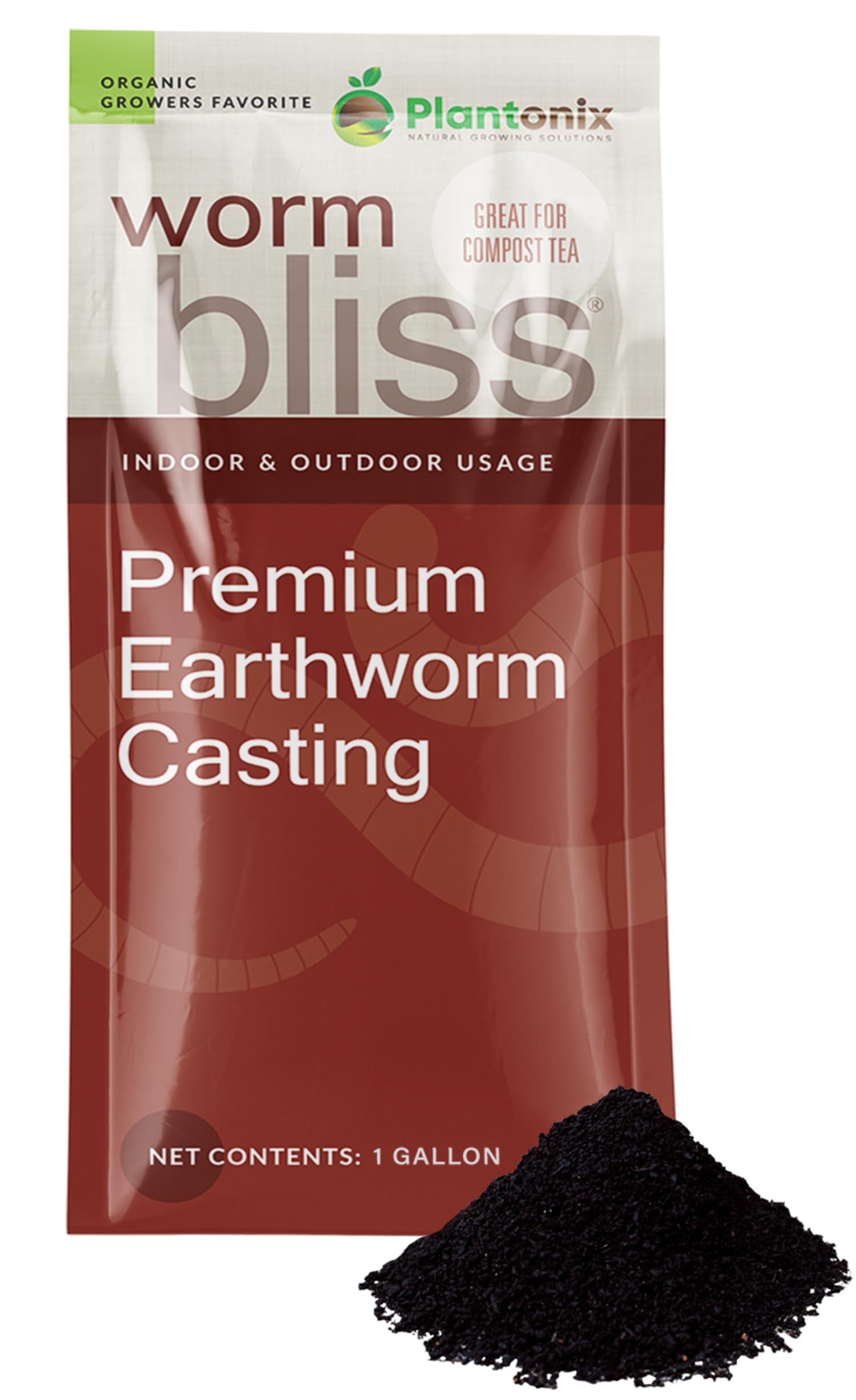
2. Worm Bliss (Plantonix) Organic Worm Castings
The finely sifted, vegan-fed castings that houseplant lovers say visibly transforms their leafy plants.
If you have ever opened a bag of castings that felt more like dusty dirt than premium compost, Worm Bliss is the correction. This is the brand that one reviewer noted “you can tell has been sifted” — it arrives as a uniform, fine-textured material free of the debris and uncomposted bedding that plagues cheaper bags. These worms are raised on a strictly vegan diet in a climate-controlled facility, so you get a manure-free, OMRI-listed product that supports beneficial microbial activity in your potting soil. The 1-gallon volume is slightly smaller than the Back to the Roots bag, but the reported quality is a cut above for any grower who values ingredient integrity.
Buyers report that using Worm Bliss improves growth and health in houseplants — including tropicals, cacti, and succulents — while also helping soil retain moisture. One reviewer specifically mentioned that other castings gave them fungus gnats, but this brand did not. The main factor here is the size: at 1 gallon, it is a premium choice for container gardeners who want the best for a few pots, not for amending an entire garden bed.
Why It Stands Out
- Finely screened, no grit or debris reported in reviews
- Vegan-fed, manure-free process for a cleaner product
- OMRI-listed for certified organic gardening
Consider This
- 1-gallon bag is best for small-scale or container use only
Grab this if: You are a houseplant enthusiast who values a clean, debris-free casting that won’t introduce gnats to your indoor setup.
Pass if: You need a larger, more economical bag for a vegetable patch or multiple raised beds.
3. Harris Worm Castings Organic Fertilizer
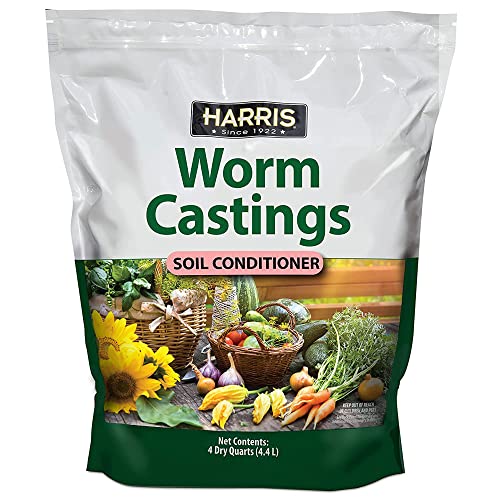
The go-to powder that one buyer called “the best bag of worm poop” for transforming old, water-repellent soil.
Harris Worm Castings is a 5-pound, 4-quart bag that reviewers describe as a dark, rich powder rather than chunky granules, which makes it exceptionally easy to mix into potting soil or brew into an “earthworm tea” for a liquid feed. The maker claims a mixing ratio of 1:7, so a single bag can go a long way — one buyer mentioned mixing 3/4 cup of castings to a gallon of purified water and seeing houseplants that had water-repellent old soil bounce back with visible vigor. It is also designed to retain water while promoting drainage, which is a useful feature for gardeners in drier climates. Unlike the Back to the Roots bag that is a granular form, the Harris powder dissolves more readily into a liquid, giving you two application methods in one product.
Owners mention that it works well for improving success when repotting a variety of plants, from houseplants to herbs, lettuce, and even sapling trees. While some might prefer a granular texture for certain chunky soil mixes, the powder form is ideal for creating a quick-acting liquid fertilizer.
Why It Works
- Powder form blends easily into soil or dissolves for liquid tea
- 4 qt volume compared to some competitors’ 1 gallon for a solid price
- Improves water retention in old or repellant soil
Keep in Mind
- Powder texture may not be as good for chunky aroid mixes
Choose this if: You want the flexibility of both a soil amendment and a liquid fertilizer from the same bag.
skip it if: You prefer a coarse, granular casting to maintain an open, airy soil structure for tropical plants.
4. Doter Worm Castings Organic Fertilizer 5.5 LB

The odor-free, non-toxic formula that a reviewer said made their kalanchoe blooms turn “brighter pink.”
Doter brings a slightly larger bag than most — 5.5 pounds — with a focus on being safe to use around children and pets, according to the manufacturer. The castings are described as nontoxic and odor-free, which is a major plus for indoor gardeners who don’t want their living room smelling like a working worm farm. The larger volume is practical for medium-sized gardens, and one owner reported their plants’ vibrancy improved significantly, with sedum flowering for the first time after application. The maker suggests a mixing ratio of 1:3 or 1:10, depending on whether you are adding it to soil or creating a concentrated tea.
That said, one buyer did point out that the product is made in China, which may be a consideration for those who prioritize a domestic supply chain. The performance seems solid nonetheless, particularly for ornamentals and fruiting plants like tomatoes and strawberries.
Strong Points
- Largest pure casting bag on this list at 5.5 lb (88 oz)
- Odor-free and non-toxic, safe for indoor use around pets
Things to Note
- Manufactured in China, which may be a concern for some buyers
Best for: Indoor and mixed gardeners who want the largest single bag of pure, odorless castings and don’t mind the country of origin.
Consider alternatives if: Sourcing from a US-based worm farm is a priority for you.
5. Uncle Jim’s Worm Farm Black Gold Worm Castings

The veteran worm farm that bundles castings with a legacy of US-based experience and a natural earthy odor.
Uncle Jim’s brings a 4-pound bag of “Black Gold” castings from a company that claims to operate the largest worm farm in the US, with over 50 years of history. The castings come from worm beds that are decades old, working all layers of the compost rather than just the top few inches, which the company says results in a richer product. Customers note that the soil works great for sunflowers without causing leaf yellowing, and one customer observed that it contains beneficial tiny white bugs that help control pests. At 4 pounds, this bag is noticeably lighter than the Back to the Roots 5-pound bag.
A number of reviewers remark on its natural “worm dirt” smell, which is a sign of active biology but might be a minor turn-off for those who prefer a more neutral, odor-free casting like the Doter or Harris options. The packaging has also drawn some complaints over the years, and one user highlighted a delivery mix-up that was resolved by the seller’s customer service. For the price point, this is a good entry-level option to test whether worm castings are right for your garden, but the smaller volume and stronger scent make it less of a top-tier choice compared to the more refined picks above.
What Works
- From a well-known, long-established US worm farm
- Contains beneficial micro-organisms that support soil biology
What Doesn’t
- At 4 lb, it offers less volume than most bags on this list
- Natural earthy odor may be too strong for indoor use
Reach for this if: You want a low-cost introduction to worm castings from a trusted US name for outdoor garden beds.
Look elsewhere if: You need a scentless product for your indoor houseplant collection or a larger bag for the money.
6. Soil Sunrise Premium Organic Worm Castings

The compact quart bag that one buyer says improved their leafy houseplants “in just a few weeks.”
Soil Sunrise offers the smallest bag on this list — 1 pound, or 1 quart — which makes it an ideal sample size for the skeptical gardener who wants to see if worm castings are hype before buying a 5-pound sack. It is 100% pure castings with no added fertilizers or pesticides, and the reviewer who gave it a 5-star rating said they were “amazed at the improvement in my green leafy houseplants (more so non-flowering) in just a few weeks!!” That kind of testimonial, straight from a verified buyer, speaks to the immediate impact that a small application can have. The 1-quart bag is notably dense for its size, as the maker notes, so you get more material than you might expect by volume.
The main limitation here is the size: at 1 pound, compared to the Uncle Jim’s 4-pound bag, making it impractical for anyone hoping to amend a full garden bed or several large containers. It is also note that one shopper added the zipper seal on the packaging could be improved to avoid spillage during storage. For a one-time test or a single houseplant reset, it is a solid pick that will not leave you with a surplus you cannot use.
Good Points
- Ideal trial size for first-time worm casting users
- Dense 1-quart volume packs more than a typical 1-pound bag
Weaknesses
- Smallest volume on the list — not for large-scale use
- Bag seal reported as weak by one reviewer
Get this if: You are curious about worm castings and want a small, affordable bag to test on a few houseplants before committing.
pass on it if: You already know castings work and need a bulk bag to feed your entire garden.
Understanding the Specs
Purity and Ingredients
The most important spec on a bag of worm castings is the ingredient list. You want “100% worm castings” with no added compost, peat moss, chemical fertilizers, or synthetic fillers. A product that is OMRI-listed (a certification mark from the Organic Materials Review Institute, which means the product is allowed in certified organic production) gives you an independent verification that the product meets organic standards. Castings from a vegan-fed worm diet tend to be cleaner and more consistent than those from mixed-feed operations where worms consume animal manure.
Texture and Screening
Uniform texture matters because it determines how well the castings will mix into your existing soil. Finely screened castings (sometimes described as a powder or fine granules) blend evenly without creating air pockets, while coarser castings are better for open, chunky mixes like those used for orchids or aroids. The moisture level should be like “damp but not wet” — castings that are too dry may have lost microbial life, while castings that are too wet can compact and become slurry-like. A simple sniff test can tell you a lot: fresh castings smell like rich earth, not like ammonia or rot. If you notice a strong chemical or sour smell, the batch may have gone anaerobic during storage, which kills the beneficial bacteria your plants rely on.
FAQ
How often should I apply worm castings to my plants?
Can I use worm castings on seedlings without harming them?
What is the difference between worm castings and regular compost?
How long do worm castings last in the bag?
Are worm castings better than synthetic liquid fertilizers?
Will worm castings attract pests or gnats to my houseplants?
What does it mean if a product is “OMRI-listed”?
Can I make my own worm castings at home instead of buying them?
What is the ideal moisture level for worm castings when I open the bag?
Which brand has the largest bag of pure worm castings?
Final Thoughts: The Verdict
Across the board, the best earthworm castings winner is the Back to the Roots Organic Worm Castings because it offers the ideal balance of excellent purity, a 5-pound volume that suits the average home gardener, and a resealable bag that keeps the rich texture fresh. If you want an OMRI-listed, screened product for indoor houseplants, grab the Worm Bliss (Plantonix). And for a versatile powder that can be used both as a soil amendment or brewed into a liquid tea, the standout is the Harris Worm Castings.
How We Picked
We do not accept paid placement. Every pick is matched to a real buyer and a real use-case; we do not hands-on test units.
Sources & Methodology
Specifications: manufacturer listings and product documentation. Review insights: verified customer reviews, as of July 2026. Pricing: not shown on this page (it changes often); check the current price via the retailer link.
As an Amazon Associate, Lawn Gear Lab earns from qualifying purchases. This does not affect which products we feature.