
Specs are compiled from manufacturer listings and verified buyer reviews and can change over time — please confirm the key details on the product page before buying.
You pick a raised bed for the long haul — not just one season of tomatoes, but years of reliable growing without the frame rotting out or rusting through. The trouble is that “durable” means very different things across wood, resin, and metal beds, and a few seasons of rain and frost will expose the truth fast. This guide cuts through the material claims and highlights the three specs that actually determine whether a bed will still look good and hold soil five or ten years from now: the gauge and coating of the metal, the thickness of the wood, and the corrosion warranty baked into the design.
I’m Rikta — the founder and writer behind Lawn Gear Lab. This guide is built by comparing the manufacturers’ published specifications and the patterns across verified customer reviews, so you get each pick’s real strengths and trade-offs instead of marketing spin.
if you want a modular metal system that outlasts the fence or a handcrafted cedar box that ages gracefully in the backyard, this breakdown of the best durable raised garden beds will help you match the right material and depth to your garden plan and your patience for assembly.
Our Picks at a Glance

How To Choose The Best Durable Raised Garden Beds
The secret to a durable raised bed is the material science, not the brand. Focus on these three things and you will avoid the disappointment of a bed that bows, rusts, or rots after a single winter.
Material: Metal vs Cedar vs Resin
Metal beds built with a Zinc-Magnesium-Aluminum alloy (like Vego’s VZ 2.0) resist corrosion far longer than standard galvanized steel because the coating is tested at a national corrosion lab. Cedar is naturally rot-resistant and needs no chemical treatment, but its lifespan depends on the thickness of the boards — thin, knotty cedar warps faster. Resin composite (like Keter’s Evotech) will never rust or rot, but thin plastic walls can flex under heavy wet soil and may become brittle after years in strong sun.
Depth: 11 Inches vs 17 Inches vs 24 Inches
An 11-inch deep bed works fine for lettuce and herbs, but root vegetables like carrots and potatoes need at least 17 inches to develop fully. Deeper beds also reduce how far you have to bend, and they hold more moisture between waterings during a hot week. If you plan to grow anything that tunnels into the soil, skip the shallow boxes and go for at least 17 inches.
Assembly and Bracing
A durable bed must not bulge when filled with soil. Look for models with internal bracing rods or thickened corner brackets — cheap metal beds often skip these, and the walls will bow outward within months. Also check that the edges are rolled or covered with rubber edging, because sharp galvanized sheet metal can cut your hands and arms every time you reach in to weed.
Quick Comparison
| Model | Best For | Material | Depth | Weight | Amazon |
|---|---|---|---|---|---|
| Vego 17″ Tall 6 in 1★ Best Overall | Modular metal longevity | VZ 2.0 Metal | 17 inches | 10 pounds | Amazon |
| Keter 48″ x 48″ Wood LookFast & Light | Quick-assembly resin | Resin Composite | 12.6 inches | 14.3 pounds | Amazon |
| SoliWood improve PlanterStanding Height | Back-saving cedar height | Cedar Wood | 30 inches high | 38.9 pounds | Amazon |
| Ohuhu 8x3x1.9 FT Metal | Large budget grow space | Galvanized Steel | 22.8 inches | 29.5 pounds | Amazon |
| Land Guard 8x4x2ft | Massive 478-gallon capacity | Galvanized Metal | 24 inches | — | Amazon |
| AMERLIFE 8×4 Ft Wood | Affordable natural wood look | Fir Wood | 15 inches | 45 pounds | Amazon |
| Anleolife 8x4x2ft Oval | Premium deep-root metal | 22-ga Galvanized Steel | 24 inches | 48.5 pounds | Amazon |
| Vego 17″ Tall 10 in 1 Jumbo | Max modular flexibility | VZ 2.0 Metal | 17 inches | 41.7 pounds | Amazon |
| Infinite Cedar 3’x6’x11″ | Handcrafted USA cedar | Western Red Cedar | 11 inches | — | Amazon |
In‑Depth Reviews
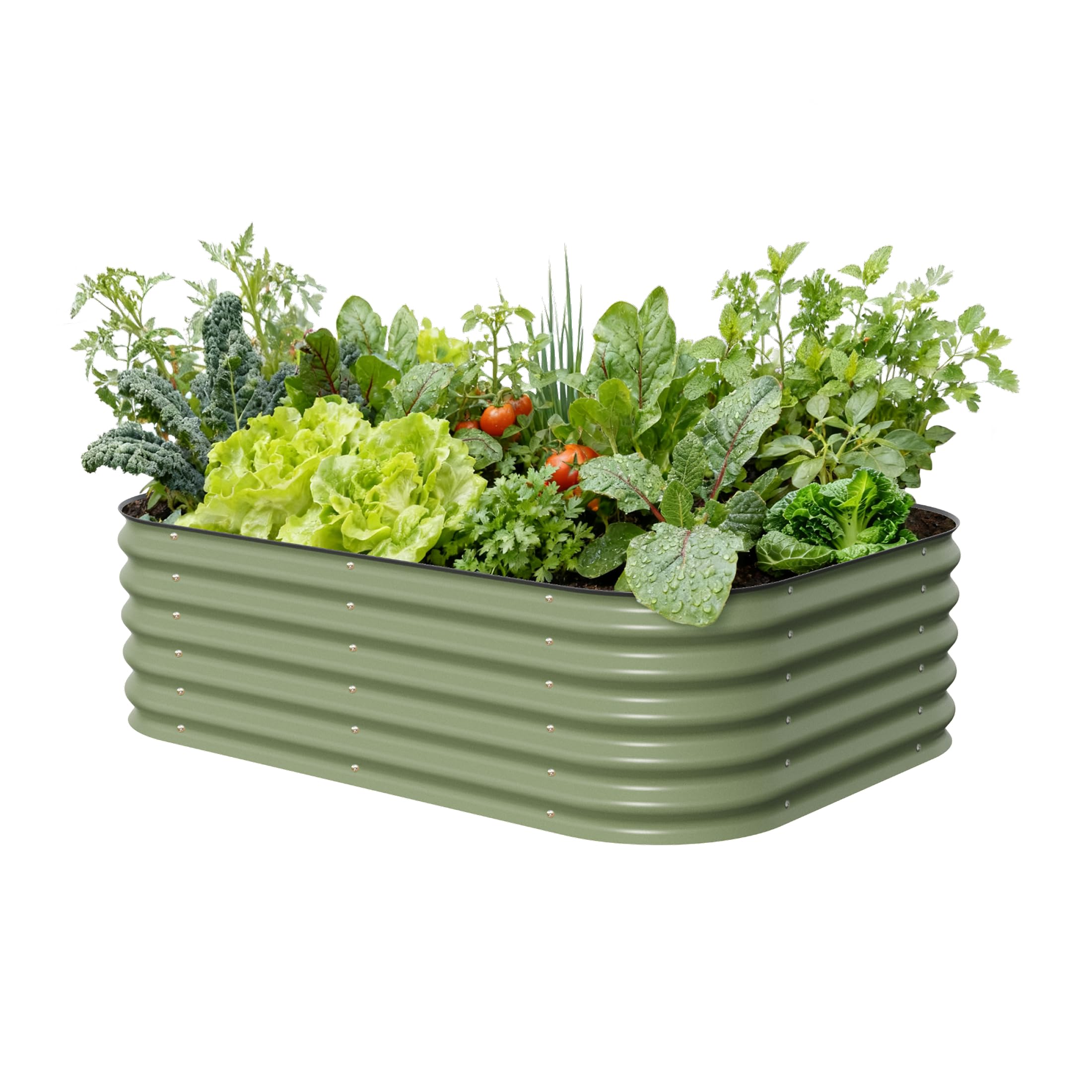
1. Vego garden Raised Garden Bed Kits, 17″ Tall 6 in 1 Modular
Our pick — over 4.5★ from 750+ verified ratings; the strongest balance of quality and price.
The metal bed rated to outlast the fence — 20-plus years, per the corrosion lab.
What makes this bed the one to beat is the material itself. Vego calls it VZ 2.0 — a blend of Zinc, Magnesium, and Aluminum coated steel with a USDA-approved AkzoNobel paint. The performance of that coating was verified at the Texas A&M National Corrosion & Materials Reliability Lab, which is an engineering stamp most garden beds never get. At just 10 pounds, the 36 x 36 x 17-inch configuration is shockingly light for something built to hold soil for two decades, though the 6-in-1 kit lets you arrange the panels into six different shapes, so you are not locked into a square.
The 17-inch height is the practical balance: deep enough for root vegetables, high enough for stool weeding. Buyers report that filling one takes 12 to 13 bags of 1.5 cubic foot soil, which gives you a sense of the volume. The assembly uses many screws, but owners consistently call the process straightforward, and the oval design with heavy-duty rubber edging means no sharp corners to catch your arms.
The crowd puts this at 4.8 stars across hundreds of owners, and the top praise centers on how easily it goes together and how solid it feels once loaded. Stainless steel bolts prevent rusted fasteners in year three. An occasional owner notes the value feels mixed relative to cheaper metal beds, but the corrosion warranty and lab-tested coating justify the mid-range price for anyone who wants to set this up once and forget it.
Why owners commit
- Lab-verified VZ 2.0 coating targets a 20-plus year life — most metal beds do not have a corrosion test to back up the claim
- 17-inch depth gives root vegetables room and saves your lower back
- Rubber edging covers the rim; you will not scrape your forearms reaching in
The honest trade-off
- Assembly involves many screws — plan for a solid hour of turning fasteners
- Some owners feel the per-bed cost is higher than basic galvanized options, though the material upgrade explains the gap
Grab it if: you want a metal bed that a corrosion lab has actually validated and a modular kit that adapts as your garden plan grows.
Think twice if: you need the absolute lowest up-front cost — basic galvanized beds run cheaper, but they lack the rust-proof coating.
2. Keter 48″ x 48″ Wood Look Raised Garden Bed
Five-minute assembly from a resin that mimics real wood grain.
This Keter bed is ready before lunch. The panels are made from Evotech advanced composite material — a resin that will never rust, rot, or splinter — and they click together with just a few screws per corner. No tools beyond a screwdriver are needed, and owners confirm the whole job takes about 10 to 15 minutes. At 14.3 pounds, you can carry it empty to its final spot by yourself, and the 48 x 48 x 12.6-inch dimensions create a generous square that owners mention holds five tomato plants comfortably.
The wood-look texture convincingly mimics real wood grain. The bed is BPA-free, so there is no concern about chemicals leaching into the soil. The catch is the 12.6-inch depth — fine for lettuce, peppers, and shallow-root flowers, but not deep enough for carrots or potatoes. The sturdiness gets mixed feedback; some owners find the corners a little wobbly until the soil weight settles everything in place. One reviewer noted it survived a blizzard without damage, which speaks to the material’s cold-weather toughness.
The recurring note in reviews is that the assembly is so fast and the appearance so clean that it feels like a good value, especially given the 2-year limited warranty. For a bed you can unpack and plant in the same afternoon, this is the easiest route to durable gardening that exists in this list.
Who it serves best: the gardener who wants instant gratification — unpack, screw four corners, fill with soil, plant. The 12.6-inch depth limits root crops.
Best for: shallow-root vegetables, herbs, and flowers where you want a wood look without the maintenance of real wood.
Look elsewhere if: you plan to grow carrots, potatoes, or anything that tunnels deep — you need at least 17 inches of soil.
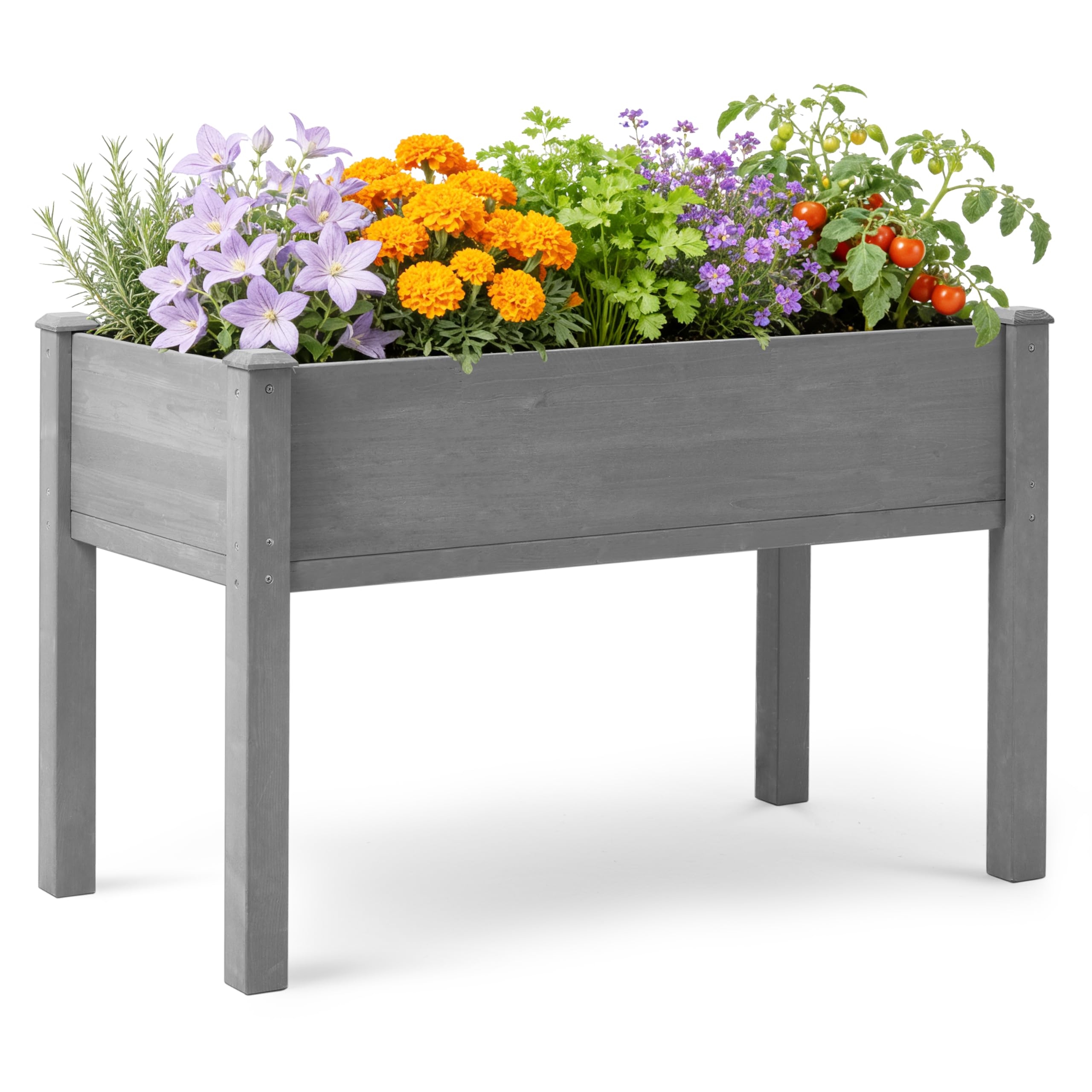
3. SoliWood Raised Garden Bed with Legs, 48x24x30
A cedar planter on legs that lets you garden standing fully upright.
The 30-inch height eliminates bending entirely. Unlike the other picks that sit on the soil and reduce bending, this one completely eliminates it — the growing surface is at counter height. At 38.9 pounds, it is the heaviest wooden bed in the lineup, but that weight comes from 0.7-inch thick frame panels and 2.4-inch thick pole legs that can hold up to 300 pounds of soil. The cedar wood is finished with a water-based eco paint, so there are no chemical fumes leaching into your vegetables.
The 48 x 24 x 30-inch overall size gives you 6 cubic feet of growing space — enough for a solid mix of tomatoes, peppers, and herbs. Assembly takes about 30 minutes, and owners note that the pre-drilled holes align well. One buyer described it as easy enough for a solo build. The trade-off is that cedar, while naturally rot-resistant, is still wood; it will weather and gray over time, and a few reviews mention that the wood can split slightly if you over-tighten the screws. A liner is included with the bed, which helps retain moisture and protect the wood bottom.
This improve design is the most practical solution for back pain or avoiding crouching. The deep planting area and sturdy cedar construction justify the mid-range price, and the 4.7-star consensus backs up the claim that it looks better in person than in the photos.
The stand-out advantage: you garden standing up — no bending, no kneeling. The cedar is naturally rot-resistant, but expect some wood movement over time; it is not as maintenance-free as metal.
Reach for this if: your knees or back tell you to stop bending — the 30-inch height is a standout for comfortable gardening.
skip it if: you want a permanent in-ground bed that will not need eventual wood replacement; metal or resin will outlast cedar in wet climates.
4. Ohuhu 8x3x1.9 FT Metal Raised Garden Bed
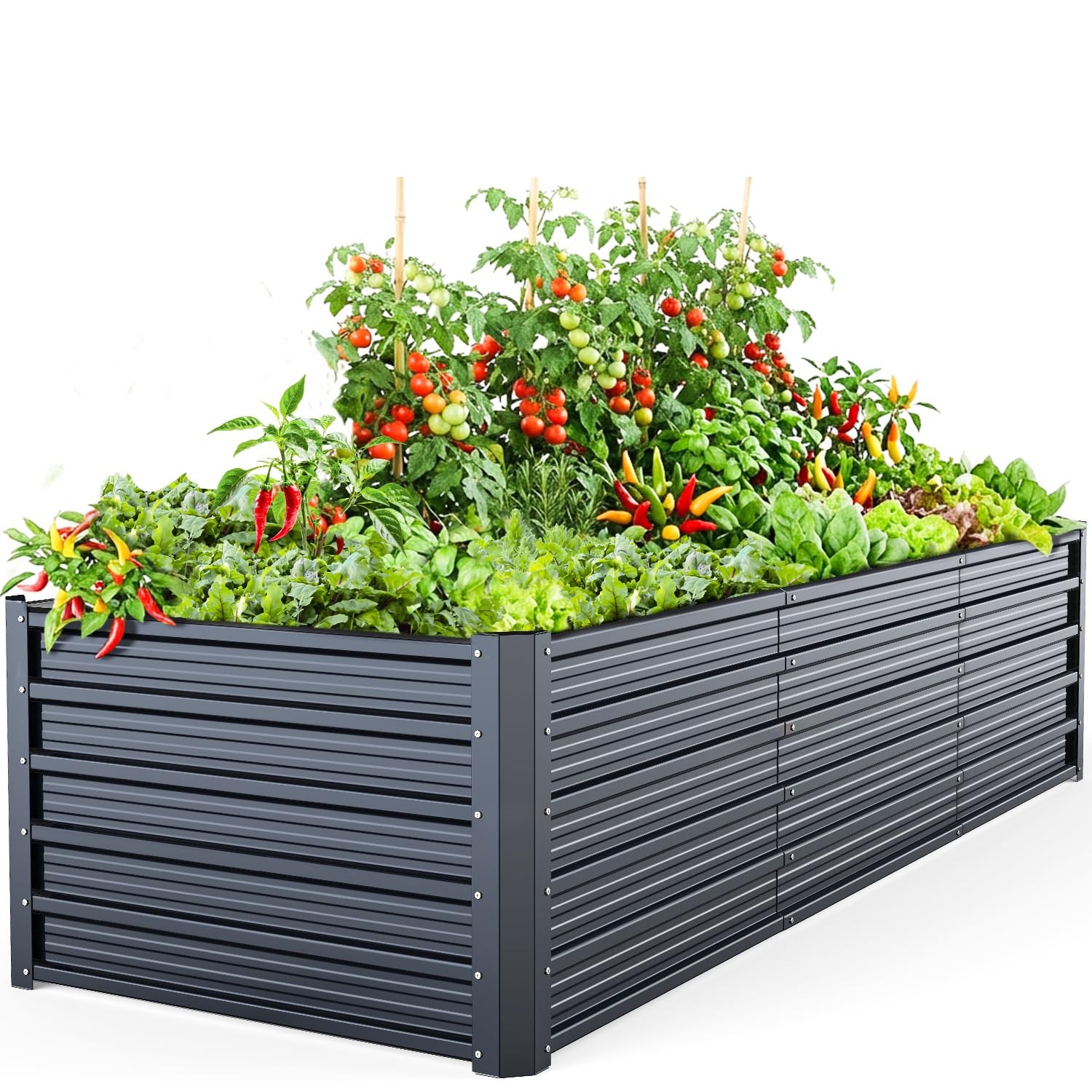
A deep-root metal bed at 22.8 inches for serious vegetable growers.
The Ohuhu gives you 341 gallons of soil capacity — enough to grow potatoes, carrots, and other deep-root crops without restriction. The 22.8-inch depth is 0.9 feet higher than the general version, so you get extra root room plus a more comfortable working height that reduces bending. The open base prevents water from pooling, and the design doubles as a compost bed if you want to build nutrient-rich soil directly inside. The metal is heavy-duty galvanized steel with an eco-coating, and it is CA65 and REACH certified, meaning it is safe for organic produce.
What holds it back from the top spot is the mixed feedback on sturdiness. The metal panels are thin — some owners describe them as flimsy — and the eight bracing rods plus four thickened corner brackets are essential to prevent bowing once the soil is in. Assembly is a two-person job according to experienced buyers, and the sharp edges are a recurring concern even though the edges are folded. One owner upgraded their rating after two years, noting the paint still looked new and the bed held up well, which suggests that with careful assembly and gentle handling of the walls, it can last.
For the price, you get an enormous growing area that will hold a serious harvest. It is not the easiest build or the toughest metal in the lineup, but the depth-to-dollar ratio is tough to top.
Where it wins
- 22.8-inch depth rivals premium beds at a mid-range price
- CA65 and REACH certified — safe for organic vegetables and pets
- Open base doubles as a compost bed for eco-friendly soil building
Where it compromises
- Thin metal panels can feel flimsy during assembly; the bracing rods do the heavy lifting once filled
- Sharp edges are a real concern — handle with gloves and be careful every time you reach in
Ideal for: the budget-conscious grower who needs deep soil for root vegetables and does not mind a fussier assembly process.
Not for: anyone who wants a rock-solid frame from the moment the box is empty — the metal is thin until the soil weight stabilizes it.
5. Land Guard Galvanized Raised Garden Bed, 8x4x2ft

An 8×4 foot bed with 24 inches of soil depth for epic garden yields.
At 96 inches long by 48 inches wide by 24 inches deep, this Land Guard bed gives you 478 gallons of dirt — enough space to run serious crop rotations or plant a full row of potatoes alongside peppers and tomatoes. The corrugated galvanized metal is thicker than the cheapest alternatives, and the four internal support braces keep the walls from bulging outward once the bed is full. Assembly takes about 15 minutes according to the brand, though owners note there are many screws and the process is time-consuming despite being straightforward.
The open bottom sits directly on the ground, which provides natural drainage and allows earthworms and beneficial microbes to move up into the bed. The classic silver finish is simple and industrial, but it will not fade or peel the way painted metal can. One owner built two of these and combined the panels to create a custom 12×4 foot configuration, which shows how flexible the modular panels can be if you buy multiples. The main complaint is that the thin metal support braces are not very sturdy — three bolts each on thin rods — but the bed itself stays solid when the weight of the soil is inside.
If you have a large garden space and want maximum growing volume for your money, this Land Guard bed delivers scale that the smaller modular kits cannot touch. Just set aside a good chunk of assembly time and have a drill ready.
The headline number: 478 gallons of soil at 24 inches deep — that is a serious vegetable plot. The assembly is tedious, but the finished volume justifies the effort for committed growers.
Choose this if: you have a big garden plan and need the largest soil capacity possible without buying multiple smaller beds.
Avoid if: you want quick assembly or a painted finish — this is raw galvanized metal and lots of screws.
6. AMERLIFE 8×4 Ft Wood Raised Garden Bed
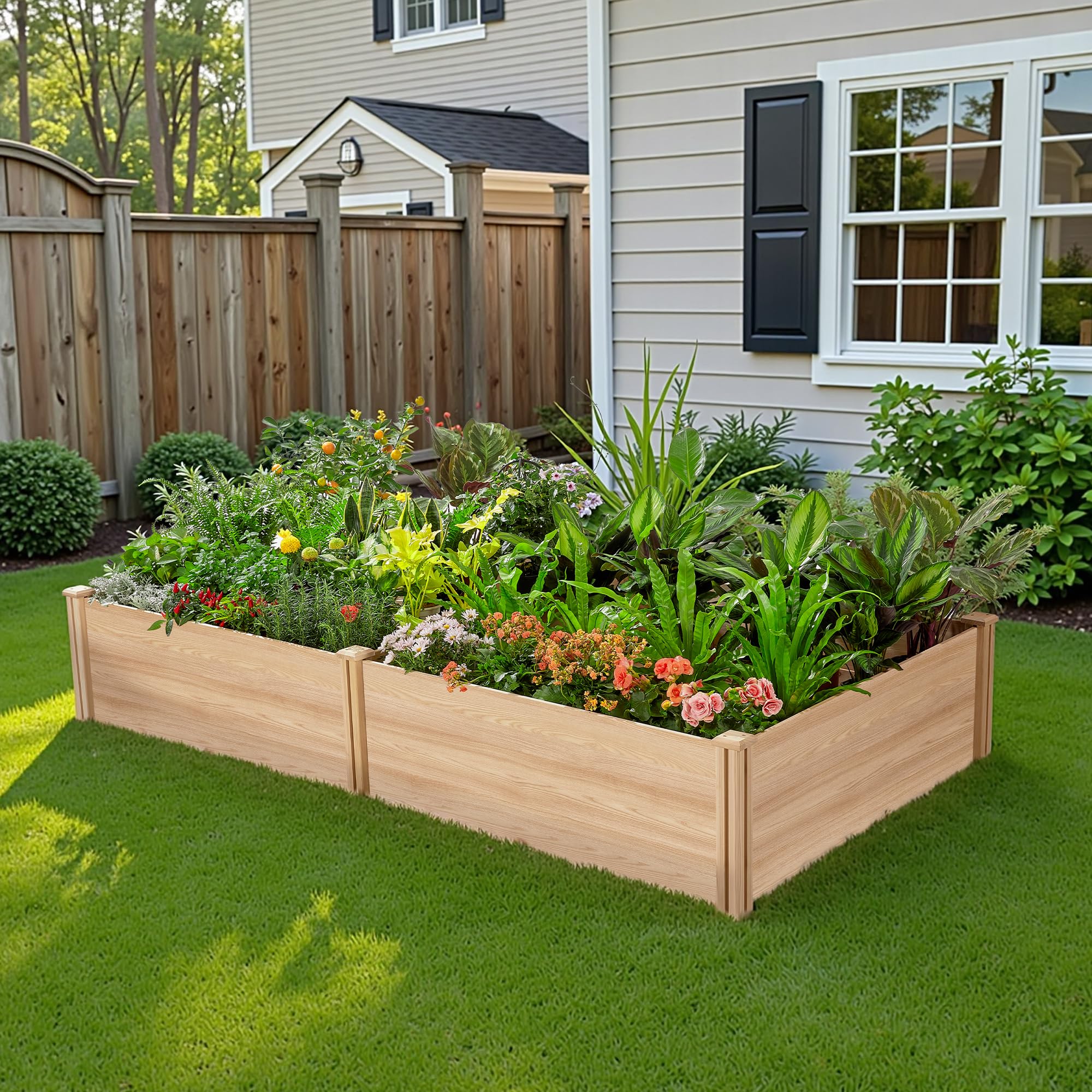
A fir wood bed that goes together without tools in 15 minutes.
The AMERLIFE uses a mortise-and-tenon structure — wood joinery that slides together without screws or nails. That means you can have the entire 8×4 foot frame assembled in about 15 minutes, and the central divider helps you organize different crops on each side. At 44 cubic feet of planting space and 15 inches of depth, it is deep enough for most vegetables except the longest-root varieties like full-size carrots. The fir wood has a warm natural grain that looks great in a backyard or against a patio wall.
The durability picture is more complicated. While many owners praise the solid construction and beautiful appearance, a significant number report that the wood starts cracking or warping within a year, particularly the small corner toppers. The “Durability” aspect in reviews carries a negative verdict, with 44 owners noting that the bed can fall apart or warp over time. The wood quality itself gets mixed feedback — some find it excellent, others call it cheap. This is fir, not cedar, so it lacks natural rot resistance and will need sealing or treatment to survive multiple wet seasons.
For the price, you get a good-looking, easy-to-assemble wooden bed that will work beautifully for a season or two. If you are willing to apply a protective sealant annually, it can last longer. But if you want a truly durable wood bed that requires no maintenance, the cedar options above are a safer long-term investment.
What works
- Tool-free mortise-and-tenon assembly is genuinely fast — 15 minutes and you are done
- 44 cubic feet of space at a competitive price for wood construction
The honest limit
- Fir wood is prone to cracking and warping without sealant; durability is the most-discussed negative in reviews
- Not naturally rot-resistant like cedar — expect to treat it or replace it sooner
Best for: a budget-friendly wood bed that looks great for the first season and requires minimal setup effort.
Think again if: you want a long-term raised bed that will not need maintenance or replacement — invest in cedar or metal instead.
7. Anleolife 8x4x2ft Oval Deep Root Galvanized Raised Garden Bed
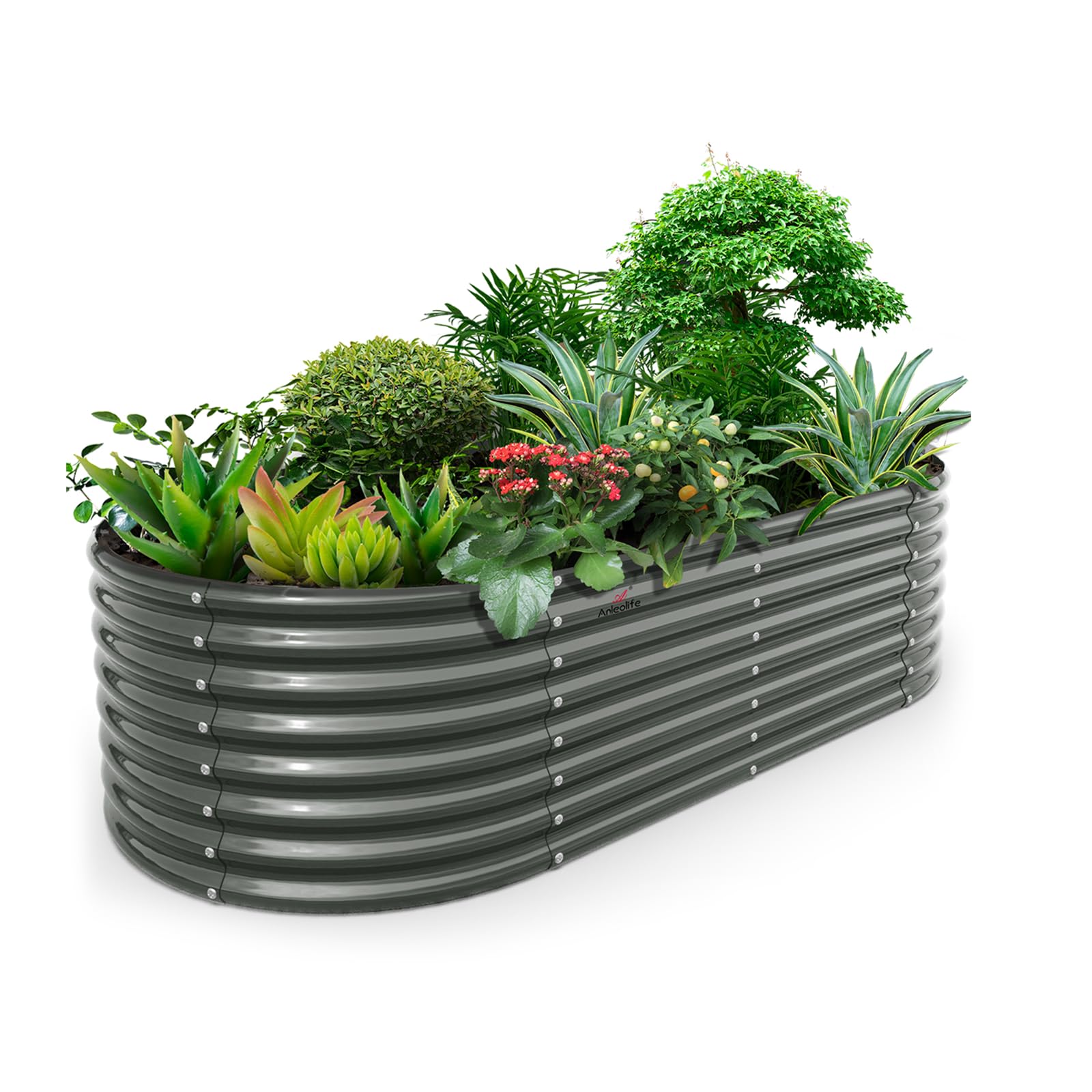
Thick 22-gauge steel with rolled edges and a paint finish that rivals an automotive coat.
This is the premium metal option for a reason. The Anleolife bed uses 22-gauge 0.8mm thick corrugated galvanized steel with a multi-layer eco-powder coating, and owners describe the paint finish as automotive quality — no scratches, no chips, and no fading after assembly. The oval shape eliminates sharp corners, and the edges are smoothly curled for safety, plus the kit includes garden gloves as an extra precaution. At 478 gallons of capacity with a 24-inch depth, it holds as much soil as the Land Guard but with noticeably thicker, more rigid metal.
Internal bracing rods are included to prevent bowing, and the bottomless structure allows natural soil integration and drainage. The 4.7-star rating across hundreds of owners speaks to the build quality; many reviewers ordered multiple units after seeing the first one. The quartz grey color is modern and understated, and the design looks tidy in a backyard, patio, or greenhouse. The only consistent drawback is that the center support rods are not the most sturdy component, but once the bed is filled, the soil weight holds everything solid.
If you want a metal bed that feels premium from the moment you open the box — thick panels, safe edges, and a finish that will not flake — the Anleolife is the one. It is more expensive than the basic galvanized options, but the material upgrade and safety features justify the jump.
The build quality tell: 22-gauge steel with rolled edges and a powder coating that owners compare to a car’s paint. The price is higher, but the feel and safety are a clear step above the thinner metal beds.
Pick this if: you want the safest, best-finished metal bed available — thick steel, curled edges, and a paint job that stays new-looking.
Pass if: budget is the primary concern — you can get similar capacity for less, though the metal will be thinner and the edges sharper.
8. Vego garden Raised Garden Bed Kit, 17″ Tall 10 in 1 Jumbo
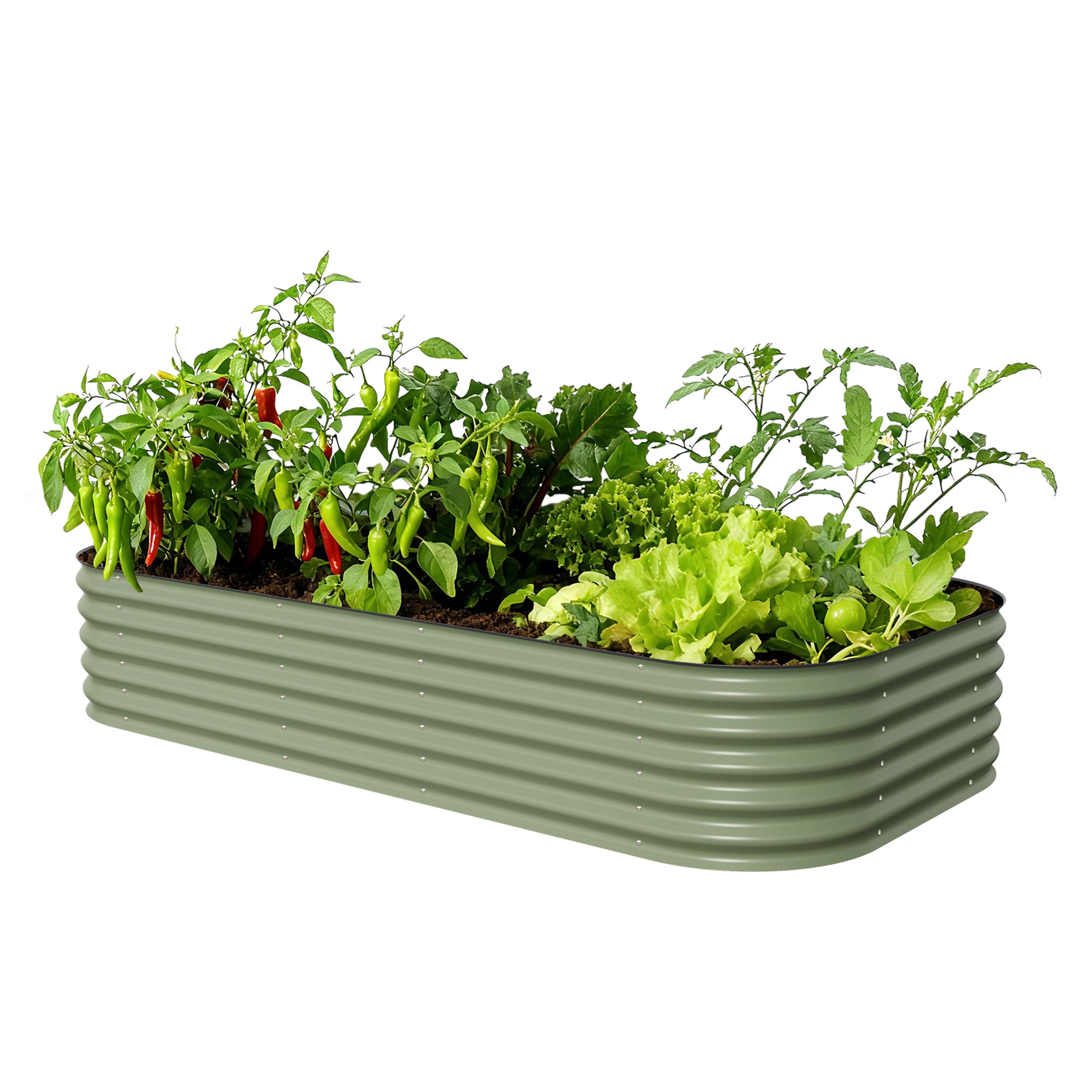
The same lab-tested VZ 2.0 metal in a 10-in-1 kit for serious garden customization.
If the 6-in-1 Vego above feels too small for your vision, the 10-in-1 Jumbo gives you the same VZ 2.0 material — Zinc-Magnesium-Aluminum coated steel with a 20-plus year life — but packed into a kit that can build ten different configurations. At 41.7 pounds, this is a heavier, larger system designed for gardeners who need to cover more ground. The 17-inch depth stays consistent across all shapes, so you get the same root-friendly, back-friendly height no matter which layout you choose.
Owners who replaced old cedar beds with this Vego praise how lightweight the panels are compared to treated lumber and how much safer the Aluzinc metal is for food growing. The assembly is straightforward but time-consuming — the many bolts take 45 to 90 minutes depending on the configuration. The protective plastic film on both sides of the panels needs to be removed before assembly, and a few owners missed that step and had to redo it. The rounded oval design and rubber edging keep sharp metal away from your arms, and the stainless steel fasteners will not rust.
This is the pick for the gardener who wants the long-term durability of Vego’s material science but needs a larger, more flexible footprint. The 4.6-star rating holds steady across many reviews, and the fact that multiple buyers ordered additional kits after the first one is the strongest endorsement.
Why scale up
- 10 possible configurations from one kit — adapt the shape to any garden contour
- Same VZ 2.0 corrosion-resistant material as the top pick, with verified 20-plus year life
- Lightweight at 41.7 pounds compared to an equivalent wooden bed
What to know
- Assembly is detailed with many bolts — set aside an hour or more
- The panels have protective plastic on both sides; forgetting to peel it is a common first-build mistake
Best for: the expanding garden — one kit lets you reconfigure as your planting needs change, and the material will outlast the fence.
Not ideal if: you want a simple, one-shape bed with minimal assembly — the 6-in-1 above is a faster build.
9. Infinite Cedar Premium Cedar Raised Garden Bed – 3′ x 6′ x 11″

Handcrafted in Maine from 1-inch thick Western Red Cedar with a five-year warranty.
This is the only bed on the list made entirely in the USA — handcrafted in Maine from North American Western Red Cedar that is naturally rot-resistant. The boards are a full 1 inch thick, which is significantly sturdier than the thin, slatted cedar kits you find at big-box stores. There are no screws or nails; the interlocking design slides together in minutes without any tools at all. The 3-foot by 6-foot footprint gives you 16.5 cubic feet of growing space at an 11-inch depth, which works well for shallow-root crops like lettuce, herbs, and flowers.
The wood arrives pristine — no knots, cracks, or warping according to most owners — and the natural cedar color is beautiful without any stains or chemicals. The 5-year warranty on workmanship and material quality is the longest guarantee in this entire comparison, and it reflects the confidence in the build. The downsides are the 11-inch depth, which limits what you can grow, and the price, which is the highest in the lineup. Some owners also report that the wood can begin to warp or bow after a few weeks, though the manufacturer’s customer service is responsive and will send replacement pieces.
For the purist who wants a chemical-free, American-made cedar bed that will age gracefully and can be repaired under warranty, this is the most artisanal option available. It is not the most versatile or the deepest, but it is the most thoughtfully constructed wood bed here.
The craftsmanship angle: handcrafted in Maine from 1-inch thick Western Red Cedar with a five-year warranty — you are paying for quality control and natural rot resistance. The 11-inch depth is the trade-off for that simple, elegant design.
Choose this if: you want the most premium cedar bed available — made in the USA, no chemicals, 5-year warranty, and assembly in under five minutes.
pass on it if: you need more than 11 inches of soil depth or want to minimize up-front cost — the price is high for the growing volume.
Understanding the Specs
Metal Gauge and Coating
The thickness of the steel (measured in gauge — lower number means thicker metal) and the type of coating determine how many years the bed will survive rain, snow, and soil moisture. Standard galvanized steel can rust in 5-8 years in wet climates. The newer Zinc-Magnesium-Aluminum alloys (like Vego’s VZ 2.0) are corrosion-tested at labs like Texas A&M and are rated for 20-plus years. Look for “multi-layer eco-powder coating” or “galvanized with AkzoNobel paint” as signs of a quality finish that will not flake or peel.
Wood Species and Thickness
Cedar is naturally rot-resistant and needs no chemical treatment, but the thickness of the boards matters enormously. Thin cedar (under 1 inch) will warp and crack within a year or two, especially in freeze-thaw climates. Thicker boards (1 inch or more) hold their shape longer. Fir and pine are cheaper but lack natural rot resistance — they require annual sealing or replacement in 3-5 years. The “Mortise and Tenon” joinery used by some wooden beds eliminates screws that can rust and fail.
FAQ
How long do metal raised garden beds last compared to wood?
What depth do I need for tomatoes and root vegetables?
Are metal raised beds safe for growing vegetables?
Can I put a raised garden bed directly on grass?
How much soil do I need to fill a raised bed?
Will a resin composite bed hold up in winter?
What is the difference between Vego’s 6-in-1 and 10-in-1 kits?
Do raised beds need a bottom?
How long does it take to assemble a raised garden bed?
Is a wooden or metal raised bed more durable?
Final Thoughts: The Verdict
For most gardeners, the best durable raised garden bed is the Vego 17″ Tall 6 in 1 because the VZ 2.0 coating is lab-verified for corrosion resistance and the 17-inch depth works for both shallow and deep-root crops. If you want the easiest assembly and a clean wood look without the wood maintenance, grab the Keter 48″ Square. And for the premium experience — thick 22-gauge steel with rolled edges and an automotive-grade finish — the Anleolife 8×4 Oval is the one to reach for. The crowd favorite across thousands of owners is clearly the Vego, combining the best material science with the most flexible design.
How We Picked
We do not accept paid placement. Every pick is matched to a real buyer and a real use-case; we do not hands-on test units.
Sources & Methodology
Specifications: manufacturer listings and product documentation. Review insights: verified customer reviews, as of July 2026. Pricing: not shown on this page (it changes often); check the current price via the retailer link.
As an Amazon Associate, Lawn Gear Lab earns from qualifying purchases. This does not affect which products we feature.