
A drip hose sounds simple, but picking the wrong one means dealing with clogged pores, burst seams, or water streaming out of the connector instead of seeping into your soil. The best drip hose delivers slow, even moisture right to the roots—no wasted spray, no dry patches, and no weekend replacements. This guide cuts through the conflicting specs to show you which hose actually waters your garden the way it should, and which ones leave you high and dry.
I’m Rikta — the co-founder and writer behind Lawn Gear Lab. This guide is built by comparing the manufacturers’ published specifications and the patterns across verified customer reviews, so you get each pick’s real strengths and trade-offs instead of marketing spin.
Whether you are setting up a raised bed, a row of shrubs, or a vegetable patch, the right drip hose saves water, time, and frustration — so we matched six of the best contenders against each other to find the very best drip hose for every garden situation.
How To Choose The Best Drip Hose
Choosing a drip hose is really about matching the hose’s construction and flow rate to your garden’s layout and your water pressure. The wrong match means wasted water, dry plants, or a hose that bursts in its first season.
Wall Thickness and Material
The nominal wall thickness tells you how much punishment the hose can take from rocks, foot traffic, and sun exposure. Thin walls (around 0.04 inches) are fine for soft, mulched beds, while thick walls (0.5 inches or more) stand up to heavy use and rough ground. Material also matters: recycled rubber is heavy and affordable, vinyl is lightweight and kink-resistant, and polyurethane is the most durable and non-toxic choice for vegetable gardens.
Flow Rate and Water Pressure
Your hose needs enough pressure to push water to the far end, but not so much that it turns into a sprayer. Most drip hoses operate best between 8.5 and 60 psi (pounds per square inch, a measure of water pressure). If your home’s pressure is above 60 psi, you will need a pressure regulator to avoid bursting the hose. The flow rate (gallons per minute) determines how quickly the water seeps out — a slower rate gives the soil time to absorb it.
Length and Connectors
Measure your garden bed before buying. A hose that is too short leaves you patching extensions together, while one that is too long wastes water pressure at the far end. Brass connectors resist corrosion and cracking better than plastic ones, and universal 3/4-inch garden hose thread (GHT) fittings let you attach to standard faucets, timers, and splitters without adapters.
Quick Comparison
On smaller screens, swipe sideways to see the full table.
| Model | Category | Best For | Key Spec | Amazon |
|---|---|---|---|---|
| Water Right Polyurethane Soaker Hose | Premium | Toxin-free vegetable gardens & long-term durability | 150 psi burst pressure | Amazon |
| Rain Bird ET256-50S Emitter Tubing | Precision | Even watering without clogging | 0.8 gph emitters spaced 6″ apart | Amazon |
| Taisia 1/2″ Soaker Hose 25 ft | Best Value | Small beds needing simple, sturdy coverage | 0.5-inch wall thickness | Amazon |
| Secbulk Flat Soaker Hose 100 ft | Large Area | Long runs with a timer and low storage space | 90 psi max pressure | Amazon |
| 2 Pack Suneed Soaker Hose 25 FT | Multi-Bed | Watering two separate garden beds at once | 60 psi max pressure | Amazon |
| MAMIZO Soaker Hose 50 ft | Budget Pick | Covering a large area on a tight budget | 50 psi max pressure | Amazon |
In‑Depth Reviews
1. Water Right Polyurethane Soaker Hose 50 ft
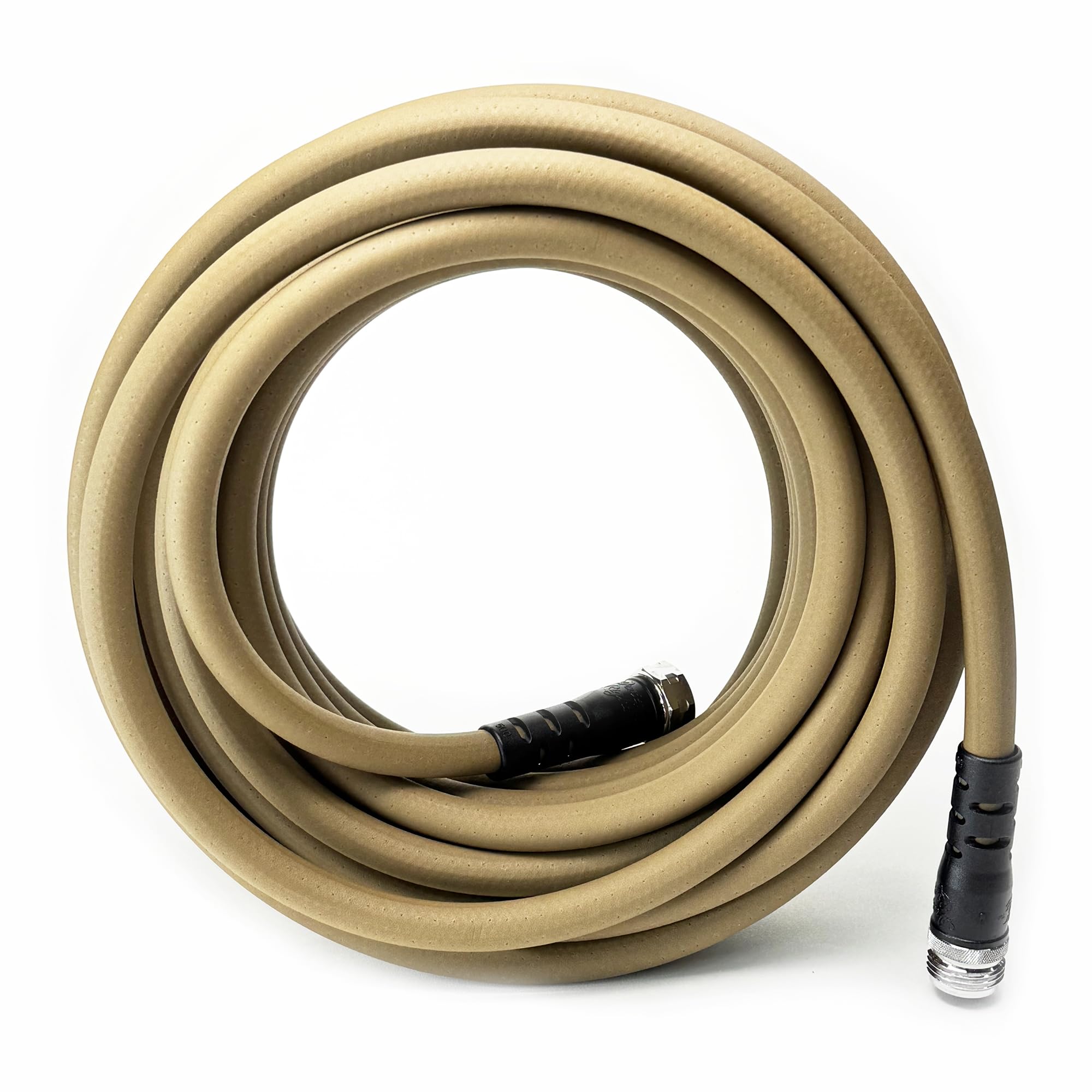
The 700 Series delivers a consistent water weep from end to end without the brittle feel or toxic smell of rubber hoses, making it the best choice for organic gardeners who care about what touches their soil. It is made from 100% virgin polyurethane, which is drinking-water-safe and completely free of lead, BPA, and phthalates — so you can water a vegetable patch or herb bed without worrying about chemical residue.
Reviewers report that after four years outdoors in a veggie garden and hedge, this hose still works perfectly and leaves no black marks on hands or paving. It handles up to 150 psi of burst pressure, which is more than twice the 60 psi limit of most rubber hoses, so it can survive a sudden pressure spike without splitting. The 0.65-inch outside diameter is thick enough to resist kinks, and the beige color blends into mulch so it doesn’t stand out.
The catch is the price — this hose costs several times more than a basic rubber option, and one reviewer noted it is “expensive; must be rolled up in freezing winters.” Still, if you want a hose that lasts 10 years without deteriorating, this is the one.
Why it’s great
- Drinking-water-safe polyurethane — no toxins near vegetables
- 5-year warranty backs long-term durability
- Even water distribution across the full 50 feet
Good to know
- Premium price compared to rubber alternatives
- Needs winter storage to avoid freeze damage
2. Rain Bird ET256-50S Drip Irrigation Emitter Tubing

If the Water Right is the long-term tank, the Rain Bird ET256-50S is the precision tool — it beats the top pick on being completely clog-free, because its pressure-compensating (pressure balancing) emitters keep water flow even regardless of changes in water pressure, so you never have to unclog tiny pores. Each emitter releases 0.8 gallons per hour and is spaced every 6 inches along the 50-foot tube, giving you exact, measured delivery at each plant.
Buyers report that a “15-minute run perfectly moistens a 2×4 ft square foot garden bed,” which shows how efficiently this tubing delivers water exactly where it is needed. The wall thickness is only 0.04 inches, so the tubing is quite stiff and requires heating in sunlight to lay out in curves — one buyer mentioned it is “difficult to insert barbs; warming in the sun helps slightly.”
This design is especially good for raised beds where you want to run straight lines along the base of plants. Pick this over the Water Right if your garden has slopes or uneven pressure, because the pressure-compensating emitters ensure every plant gets the same amount of water.
Where it shines
- Pressure-compensating emitters for even watering on slopes
- Built-in 0.8 gph outlets every 6 inches
- Virtually clog-proof design
Worth noting
- Thin wall (0.04 in) means it’s stiff and harder to route
- Needs 1/2″ main tubing and barbed fittings to connect
3. Taisia 1/2″ Soaker Hose 25 ft

If you need to water a single flower bed that gets daily foot traffic from kids or pets, the Taisia 1/2″ Soaker Hose 25 ft is built to take the abuse without splitting.
It is made from recycled rubber and delivers about 5-8 liters of water per minute at 60 psi, which is a steady stream that the soil can absorb gradually. The 3/4-inch GHT (garden hose thread) universal connectors attach easily to a standard faucet or hose, and the round profile makes it simple to snake around plants. One owner reported the hose is “easy setup, durable, effectively waters vinca bed without runoff for 1+ hour runs.”
For the price, the Taisia gives you heavy-duty construction that outperforms many cheaper plastic alternatives. The thick 0.5-inch nominal wall is 12.5 times thicker than the Rain Bird’s emitter tubing.
What stands out
- 0.5-inch wall thickness for outstanding durability
- Universal 3/4-inch connectors for easy hookup
- Delivers steady water without runoff over long runs
The trade-offs
- Some plastic connectors on early batches may leak
- 25-ft length suits small beds only
4. Secbulk Flat Soaker Hose 100 ft

For covering a long, narrow vegetable patch or a row of hedges, length is the single most important number — and the Secbulk delivers 100 feet of hose, double the length of most contenders, so you can irrigate a large area without joining multiple hoses. It is a flat design, which means it resists kinking and lies flat on the ground, making it easy to snake under plants and straighten out.
The downside you accept is that the material is vinyl, which is lighter and more flexible than rubber but also less puncture-resistant. The maximum operating pressure is 90 psi, so it can handle higher water pressure than most, but it is still recommended to stay under 90 psi for best results. Reviewers describe it as “lightweight, easy-to-manage” and note that it works well with a water timer set for 17-minute runs.
At a mid-range price, it offers a strong price-to-length ratio, making it a smart choice for gardeners with sprawling beds who want a single hose solution rather than multiple connectors.
The upsides
- 100-foot length for large gardens with a single run
- Flat design resists kinks and stores easily
- 90 psi max pressure handles standard home water pressure
Keep in mind
- Vinyl is less puncture-resistant than rubber
- May need flush before first use to prevent clogging
5. 2 Pack Suneed Soaker Hose 25 FT

What you actually get at this lower price is a two-pack of 25-foot hoses, each with its own end cap and connectors, so you can water two separate flower beds or a split vegetable garden independently without cutting or splicing one long hose. You can run them from a splitter or two different faucets, or link them together to make a single 50-foot run if needed.
The upgraded rubber material is designed to prevent the cracking that often happens with cheaper soaker hoses. One buyer reports the hoses “work pretty well after two years buried under mulch,” though they note the tube “has developed a few larger leaks” over time. The maximum pressure is 60 psi, which is standard for most household systems.
This is a budget-friendly way to cover two distinct areas without buying two separate products, especially useful for raised beds that are spaced apart — making it the exact budget buyer it is perfect for.
Why we’d pick it
- Two 25-ft hoses for watering separate beds
- Can be linked into a single 50-foot run
- Upgraded rubber material resists cracking
A few caveats
- Some units develop minor leaks after a couple of years
- Flow limiter inside may need adjustment for even seepage
6. MAMIZO Soaker Hose 50 ft
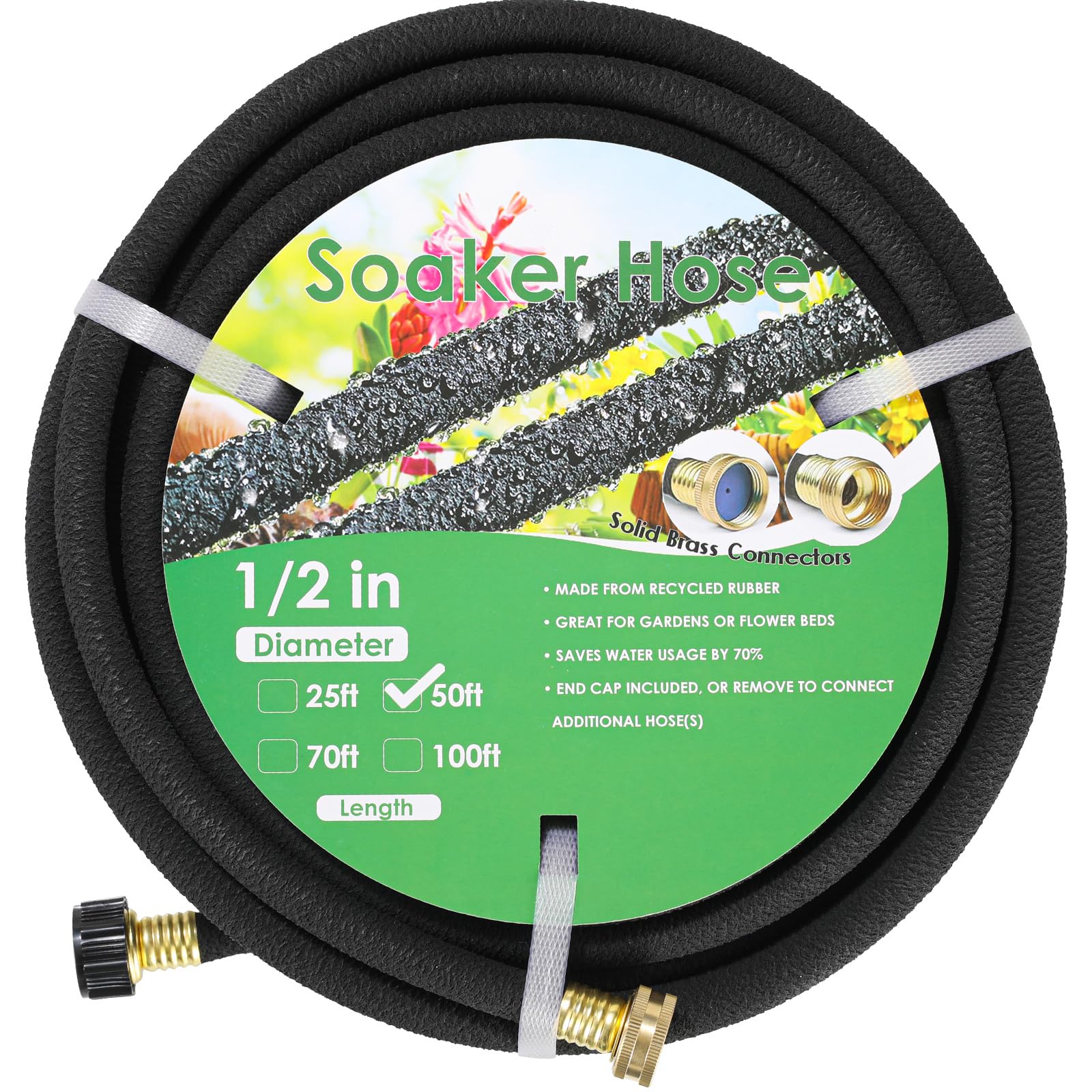
The MAMIZO Soaker Hose 50 ft is perfect for budget-conscious gardeners who need to cover a large area—like a medium-sized bed or a row of trees—without spending much, offering heavy-duty recycled rubber and solid brass connectors typically found on pricier hoses. It delivers 2 to 2.65 gallons per minute at 50 psi, enough to saturate a medium-sized bed in 20 minutes.
What you give up is some durability: the nominal wall thickness is not provided in the specs, and several owners mention that the hose kinks easily and that the blue gasket inside the connector can restrict water flow. One reviewer notes, “Blue gasket in hose restricts water flow; removed it,” which resolved the issue. The maximum pressure is 50 psi, which is lower than the 60-90 psi limit of other hoses in its class.
If your main goal is to water a large patch of lawn or a row of trees without spending much, and you are comfortable troubleshooting small connector issues, the MAMIZO is the exact budget-friendly hose for that job—just be aware that its lower 50 psi maximum pressure and potential gasket restriction may require a bit of tinkering to get optimal flow.
Strong points
- 50 feet of coverage at a budget price
- Solid brass connectors resist corrosion better than plastic
- High flow rate for quick watering sessions
Before you buy
- Blue internal gasket may need removal to improve flow
- Material kinks more easily than thicker rubber hoses
Understanding the Specs
Nominal Wall Thickness
This is the thickness of the hose wall in inches. A thicker wall (0.5 inches as on the Taisia) resists punctures from rocks, foot traffic, and garden tools, and usually means a longer-lasting hose. A thinner wall (0.04 inches as on the Rain Bird) makes the tubing stiff and precise but more vulnerable to damage if stepped on.
Maximum Operating Pressure (psi)
This number tells you the highest water pressure the hose can safely handle before bursting. Standard home water pressure is often between 40 and 60 psi. If your home’s pressure is higher, you need a hose with a higher psi rating (like the 150-psi Water Right) or a simple pressure regulator to protect your hose.
FAQ
What is the difference between a soaker hose and drip emitter tubing?
Can I bury a drip hose under mulch or soil?
Do drip hoses work on slopes?
Final Thoughts: The Verdict
For most buyers, the best drip hose winner is the Water Right Polyurethane Soaker Hose because it combines durable, non-toxic construction with even water distribution and a 5-year warranty. If you need precise, clog-free watering for a raised bed with uneven pressure, grab the Rain Bird ET256-50S Emitter Tubing. And for a budget-friendly large-area solution, the standout is the coverage of the Secbulk Flat Soaker Hose 100 ft.