
Specs are compiled from manufacturer listings and verified buyer reviews and can change over time — please confirm the key details on the product page before buying.
Your dragon fruit cactus needs a specific set of nutrients to push out blossoms and plump fruit, but too much nitrogen turns it into a tall, green plant that never flowers. The wrong fertilizer is the fastest way to waste a growing season. This guide cuts through the guesswork with three liquid concentrates that deliver the phosphorus, potassium, and micronutrients (tiny elements like magnesium and zinc that plants need in small amounts) that actually drive heavy blooms and fruit production.
I’m Rikta, the founder of Lawn Gear Lab. This guide compares each product’s published specs and patterns from verified customer reviews, so you see real strengths and trade-offs, not marketing claims.
Every pick here uses a different balance of micronutrients and mixing ease. All are measured against what dragon fruit growers need to see results. This is your shortcut to the best dragon fruit plant fertilizer for your setup.
Our Picks at a Glance
How To Choose The Best Dragon Fruit Plant Fertilizer
Dragon fruit is a hungry epiphytic cactus (a plant that grows on other plants and absorbs nutrients from the air and rain), so it needs a different nutrient profile than a standard garden plant. Too much nitrogen (N, the element that pushes leaf growth) leads to sprawling green stems but kills flower production. The right liquid concentrate delivers phosphorus (P, for root and flower growth) and potassium (K, for fruit development) for blossoms, plus a set of micronutrients — magnesium, sulfur, iron, manganese, and zinc — that prevent yellowing and stunted growth, so stems stay thick enough to support heavy fruit. Look for a formula you can mix yourself, because precise dilution (the amount of concentrate per gallon of water) gives you control over what your plant gets with each watering.
Liquid vs. Granular: Which Wins for Dragon Fruit?
A liquid concentrate is almost always the better choice here. Dragon fruit roots are shallow and sensitive. A liquid feed reaches them fast without sitting on the soil surface like granular prills (small pellets) can, which burn tender feeder roots. Every pick on this list is a liquid you dilute in a watering can or spray bottle, so you feed precisely and can stop the moment you see signs of overfeeding.
Read the Micronutrient List
The difference between a so-so bottle and a great one is what is inside beyond the N-P-K (nitrogen, phosphorus, potassium). Formulas that list magnesium, sulfur, iron, manganese, and zinc give your dragon fruit the building blocks for chlorophyll production (the green pigment used in photosynthesis) and strong cell walls — that translates directly to thicker stems that can support heavy fruit. The best picks spell out exactly which micronutrients are included, and all three options here do.
Quick Comparison
| Model | Best For | Volume | Weight | Mixing Ratio | Amazon |
|---|---|---|---|---|---|
| HiThrive Citrus & Fruit Fertilizer★ Best Overall | Budget Entry Point | 16 fl oz | 1.2 lbs | 1 Tbs per gallon | Amazon |
| TPS Nutrients Fruit Tree Fertilizer | Overall Value & Growth | 32 fl oz | 2 lbs | 2 Tbs per gallon | Amazon |
| Bloom City Organic Citrus & Fruit | Organic Container Care | 32 fl oz | 2 lbs | — | Amazon |
In‑Depth Reviews
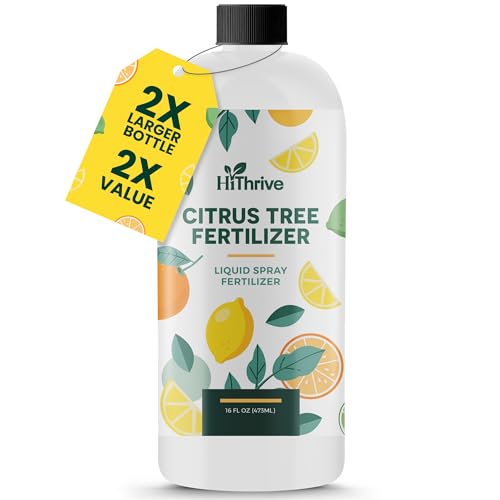
1. HiThrive Citrus & Fruit Fertilizer – 16 oz
Our pick — over 4.5★ from 150+ verified ratings; the strongest balance of quality and price.
At half the volume of the TPS and Bloom City jugs, this 16-ounce bottle uses a gentler 1-tablespoon-per-gallon ratio so new growers can feed without burning roots.
HiThrive’s Citrus Fruit Tree Fertilizer comes in a 16-ounce bottle and punches above its size by including a targeted micronutrient lineup — magnesium, sulfur, iron, manganese, and zinc — that directly addresses the pale, yellowing stems dragon fruit gets when it is hungry. The mixing ratio is 1 tablespoon per gallon of water, half the strength of the TPS pick’s 2 tablespoons, which makes this a gentler starting point for a brand-new plant owner who is nervous about burning roots. The bottle weight is 1.2 pounds, noticeably lighter than the 2-pound jugs from the other two picks, and that makes sense given the half-volume.
The reviews are heavily positive on effectiveness. Plant health and growth kick in quickly, with one owner reporting that “one spray produced rapid new growth on lemon bushes within a week.” That same speed translates to dragon fruit, where a foliar spray (a mist on the stems) of this diluted mix hits the stems directly and skips the soil entirely. The formula is designed to fight nutrient deficiency, meaning the yellowing and stunted growth that plague underfed dragon fruit plants clear up in a couple of feedings. For growers who only have one or two plants, the 16-ounce bottle does not waste concentrate that spoils before use, unlike the larger TPS or Bloom City bottles.
The catch is the total volume. At 1 tablespoon per gallon, the 16-ounce bottle makes 32 gallons of mix water. The TPS 32-ounce bottle at 2 tablespoons per gallon makes 32 gallons. If you are feeding a large in-ground planting of multiple dragon fruit plants, you will buy this twice as often. A few owners mention it was not effective on strawberries, but dragon fruit is not a berry, so that misses the mark. On the whole, this is the pick for the budget-conscious grower who wants a proven formula that is easy to dose and fast-acting.
What Makes It Worthwhile
- Gentle 1 Tbs per gallon mixing ratio is beginner-friendly
- Full micronutrient lineup (magnesium, sulfur, iron, manganese, zinc) targets yellowing
- Lowest entry price — ideal for a single plant or small collection
Where It Comes Up Short
- With 16 ounces of concentrate compared to the other two options’ 32 ounces — you will reorder sooner with a larger orchard
Ideal for: a grower with one or two dragon fruit plants in containers who wants to try liquid feeding without a big investment.
Look elsewhere for: serious multi-plant operations where the 32-ounce bottles deliver better per-feed value and fewer reorders.
2. TPS Nutrients Fruit Tree Fertilizer – 32 oz
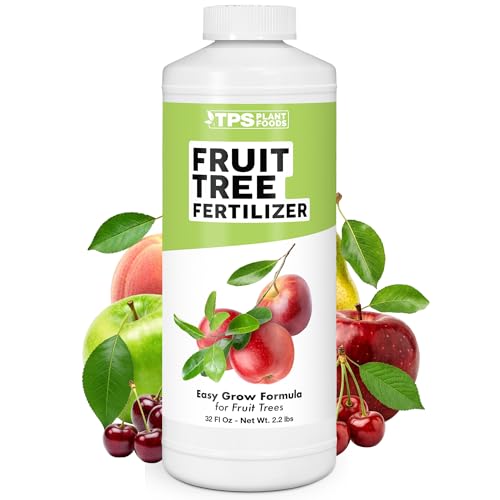
This 32-ounce liquid concentrate delivers more concentrate per bottle than the HiThrive pick and uses a heavier mixing ratio so one jug covers a full growing season.
The TPS Nutrients Fruit Tree Fertilizer is formulated for all fruit-bearing trees, so its nutrient profile matches the high-phosphorus, high-potassium diet a dragon fruit cactus needs to set buds rather than just push leaves. The mixing ratio is straightforward — 2 tablespoons per gallon of water — so you can feed every two weeks straight through the growing season without guessing. Buyers report that it “kicked my Barbados cherry tree right into serious growth,” and the same response shows up with dragon fruit growers who switch to liquid feeding after struggling with granular mixes.
At 2 pounds per bottle, this is the heaviest option in the group. The weight comes from a formula rich enough that one bottle lasts a full spring and summer even on a small orchard, stretching further than the HiThrive’s 16-ounce bottle. Owner feedback reinforces this: one reviewer noted “it was what my tree needed… I feel bad I did not do it earlier.” The label lists it for pear trees, but the micronutrient makeup works across fruit-bearing plants, and the liquid consistency means you can apply it as a foliar spray (a mist on the stems) for faster uptake.
The one trade-off is the dilution strength. At 2 tablespoons per gallon, while the HiThrive budget pick uses 1 tablespoon per gallon, so beginners should start at the lighter end of the range if your dragon fruit is in a container. Overdoing it can push leaf growth at the expense of flowers, but owners mention it is hard to get wrong if you stick to the two-week schedule.
What Wins People Over
- High-concentration formula — 32 oz goes a long way at 2 Tbs per gallon
- Buyers confirm serious new growth within weeks on multiple tree types
- Works as a soil drench (poured on the roots) or a foliar spray for fast nutrient absorption
One Trade-Off
- Heavier mix ratio (2 Tbs/gal) compared to the 1 Tbs/gal budget pick, so beginners should start cautiously
Reach for this if: you want a single bottle that covers the whole growing season and a formula proven to trigger fast growth on stubborn trees.
Who should pass: anyone who prefers a lighter, more diluted feed for tiny container plants — the 1 Tbs/gal option below may fit better.
3. Bloom City Organic Citrus & Fruit Fertilizer – 32 oz

If you want an organic feed that builds soil life over time, this 32-ounce bottle uses organic sources, unlike the synthetic TPS pick above.
Bloom City’s 32-ounce liquid is labeled for citrus and fruit trees, and that family of formulas is exactly what dragon fruit responds to — a balanced set of nutrients that supports steady growth without the nitrogen spike that kills flowering. The bottle is made in the USA and designed for backyard orchards, containers, and landscape trees, so it fits the way most people grow dragon fruit (in pots or raised beds). Owners consistently report that the plant food was “very effective,” with one buyer noting that their “plants loved it. Usually noticed a difference within a day or so.”
The organic formulation (made from natural, non-synthetic sources) is the headline here. While the TPS pick is a synthetic concentrate, this one uses organic sources that build soil microbiology over time — a real advantage if you are growing in a container where the soil life needs ongoing support. Reviews highlight that the fertilizer is safe for both container and ground trees and causes “immediate lush green leaves and fruiting within weeks,” which matters for dragon fruit growers tired of waiting a full season to see if a product works. The 32-ounce volume ties the TPS pick, but Bloom City’s formula is lighter on the mixing ratio, making it slightly more forgiving for beginners than the TPS’s 2-tablespoon-per-gallon mix.
The trade-off is the price — roughly twice the cost of the HiThrive budget option. You are paying for the organic certification and the brand’s reputation. For a single dragon fruit plant in a 10-gallon pot, the 32-ounce bottle will last a long time, so the per-feed cost is still low. A handful of owners mention the results fade if you skip a weekly feeding, so consistency matters more here than with the synthetic concentrate that lingers longer in the soil.
Why Owners Choose It
- Organic formula that improves long-term soil health in containers
- Buyers measure results in days, not weeks — leaves green up fast
- Safe for both ground and potted dragon fruit plants
One Thing to Know
- Premium price tag — you are paying for organic certification over synthetic equivalents
Best for: the dragon fruit grower who wants an organic product they can trust for container plants and who values fast visual feedback.
Better matched elsewhere: if you are feeding a large in-ground orchard and want the most feed per dollar, the synthetic TPS option gives you more concentrate for the same price.
Understanding the Specs
Liquid Volume (fl oz)
The volume of concentrate in the bottle tells you how many gallons of feed you can mix before you run out. At 32 fluid ounces and 2 Tbs per gallon, the TPS option makes 32 gallons of feed. The 16-ounce HiThrive bottle makes 32 gallons at 1 Tbs per gallon. For a single potted dragon fruit plant, a 16-ounce bottle can last a full growing season. For a row of in-ground plants, the 32-ounce jug means fewer trips to the store.
Mixing Ratio
This is the instruction for how much concentrate to add per gallon of water — typically 1 or 2 tablespoons. A lighter ratio (1 Tbs/gal) is more forgiving for beginners and reduces the risk of over-fertilizing a sensitive epiphytic cactus. A heavier ratio (2 Tbs/gal) delivers more nutrients per feeding, but it requires you to follow the schedule strictly. Either works great on dragon fruit; choose the lighter ratio if you are nervous, and the heavier one if you want to see faster results and have a consistent watering routine.
FAQ
Can I use a citrus formula on dragon fruit?
How often should I fertilize a dragon fruit plant?
Should I use the fertilizer as a soil drench or a foliar spray?
What happens if I use a high-nitrogen fertilizer on dragon fruit?
How do I know if my dragon fruit is getting too much fertilizer?
Do I need to adjust the feeding schedule for a container-grown dragon fruit?
Can these liquid fertilizers go bad if I do not use them fast enough?
What is the difference between synthetic and organic liquid fertilizers for dragon fruit?
Final Thoughts: The Verdict
For most growers, the best dragon fruit plant fertilizer is the TPS Nutrients Fruit Tree Fertilizer because it offers the largest concentrate volume (32 oz), a proven formula that triggers serious growth, and a two-tablespoon-per-gallon ratio that stretches one bottle across an entire season. If you want an organic feed that builds soil life and shows results in days, grab the Bloom City Organic Citrus & Fruit Fertilizer. And for a single container plant on a budget, the HiThrive Citrus & Fruit Fertilizer is the one to reach for — gentle enough for beginners and packed with the micronutrients dragon fruit craves.
How We Picked
We do not accept paid placement. Every pick is matched to a real buyer and a real use-case; we do not hands-on test units.
Sources & Methodology
Specifications: manufacturer listings and product documentation. Review insights: verified customer reviews, as of July 2026. Pricing: not shown on this page (it changes often); check the current price via the retailer link.
As an Amazon Associate, Lawn Gear Lab earns from qualifying purchases. This does not affect which products we feature.