
Specs are compiled from manufacturer listings and verified buyer reviews and can change over time — please confirm the key details on the product page before buying.
You want to start seeds earlier, shield your tomatoes from a surprise frost, or maybe just stop hauling pots inside every time the sky looks dicey—but a fancy, permanent glass greenhouse costs more than your car payment. The trick is finding a structure that actually holds up to wind and snow without draining your wallet or making you sweat through a nightmare assembly. This guide cuts through the confusion to show you which budget-friendly options deliver real protection for your plants and which ones will leave you frustrated.
I’m Rikta — the founder and writer behind Lawn Gear Lab. This guide is built by comparing the manufacturers’ published specifications and the patterns across verified customer reviews, so you get each pick’s real strengths and trade-offs instead of marketing spin.
Every option here was chosen for its real-world value. This is your guide to finding the do it yourself greenhouses for cheap that actually stand up to the weather and keep your plants thriving.
Quick Picks
- Greenhouse for Outdoors, Portable Green House, Sannwsg — Best Overall
- Miracle-Gro 6′ x 4′ x 6′ Outdoor Mini Walk-in Greenhouse — Best Ventilation
- Sylviera 6x4FT Greenhouse with Hygrometer — Premium Value
- WORKPRO Greenhouse, 56″ x 28″ x 77″ — Compact Shelving
- WUKHG 6x4FT Small Greenhouse — Budget Poly Build
How To Choose The Best Do It Yourself Greenhouses For Cheap
A bargain greenhouse can be a brilliant tool or a flimsy headache. The difference depends on a few key decisions that determine whether it survives its first windy night or collapses under a dusting of snow. Here’s what you need to look for before you click “buy.”
Frame Material: The Backbone of Your Budget Build
The frame is what keeps your greenhouse standing, so this isn’t a place to skimp. Cheap greenhouses usually use either powder-coated steel or aluminum alloy. Powder-coated steel is very strong and resists rust, but it is heavier. Aluminum is lighter and will never rust, but you want to check that the tubes are thick enough, or the whole structure can feel wobbly. For a cheap greenhouse, a well-built steel frame is often the safer bet for wind resistance.
Cover Material: PE Fabric vs. Polycarbonate Panels
Your two main cover options are polyethylene (PE) fabric—which is a thick plastic tarp stretched over the frame—and polycarbonate (PC) hard panels. PE is cheap, lightweight, and easy to replace, but it can tear after a few seasons and doesn’t insulate as well. Polycarbonate panels are much more durable, offer better insulation to keep temperatures steady, and block harmful UV rays, but they cost more and take more work to assemble. For a truly cheap setup, a good PE cover is fine; for something that might last a few years, look for a polycarbonate model.
Ventilation: Why Your Plants Won’t Survive Without Airflow
A sealed greenhouse on a sunny spring day can turn into an oven in minutes, cooking your young plants. Ventilation is critical. Look at how many vents (mesh windows or openable roof panels) the greenhouse has. Front and rear screen vents allow cross-breezes, while roll-up side panels give you even more control. A model with at least two ventilated openings is the bare minimum to keep temperatures manageable and prevent fungal diseases from taking hold.
Quick Comparison
| Model | Best For | Dimensions (L x W x H) | Cover Material | Number of Vents | Amazon |
|---|---|---|---|---|---|
| Greenhouse for Outdoors, Sannwsg | Spacious Walk-Ins | 76″ x 57″ x 76″ | Polyethylene (PE) | 2 | Amazon |
| Miracle-Gro 6′ x 4′ x 6′ | All-Season Tents | 46.5″ x 48″ x 71″ | Polyethylene (PE) | 3 | Amazon |
| Sylviera 6x4FT Greenhouse | Long-Lasting Durability | 45″ x 67″ x 77″ | Polycarbonate (PC) | 2 | Amazon |
| WORKPRO 56″ x 28″ x 77″ | Compact Shelving | 56″ x 29″ x 77″ | Polyethylene (PE) | 2 | Amazon |
| WUKHG 6x4FT Greenhouse | Budget Poly Build | 66.93″ x 44.69″ x 76.77″ | Polycarbonate (PC) | 1 | Amazon |
In‑Depth Reviews
1. Greenhouse for Outdoors, Portable Green House, Sannwsg
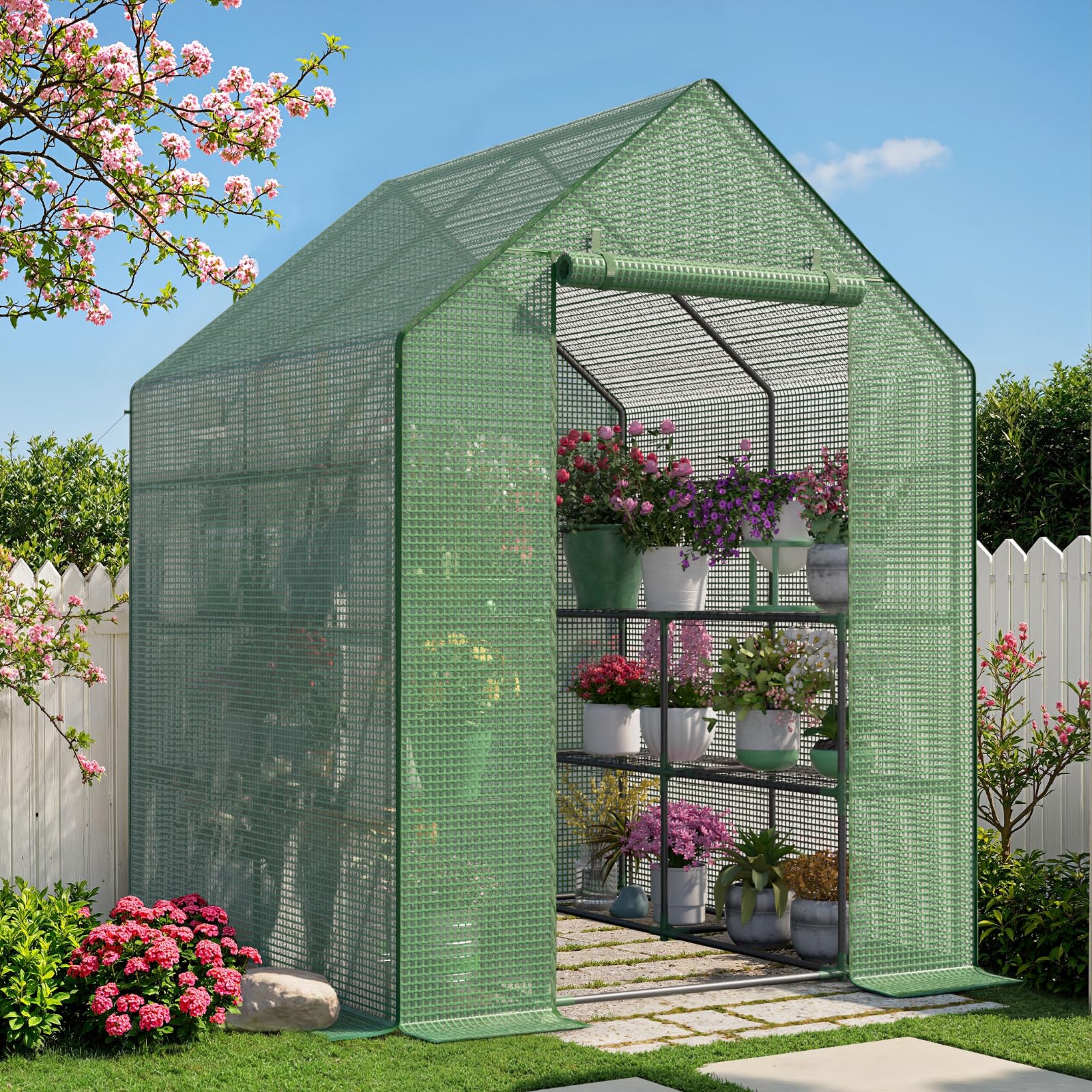
The roomiest walk-in tent that stands its ground through thunderstorm season while staying affordable.
This pick gives you a genuinely walk-in greenhouse at 76″L x 57″W x 76″H—versus the Miracle-Gro model’s 46.5″ x 48″ footprint. You get 17.5 inches between each shelf layer, which is enough vertical room to grow bushy tomato starts or pepper plants without them touching the top. The PE cover is durable enough to handle wind and light rain, and the screen windows provide solid ventilation to keep air moving on warm days.
Buyers report the Sannwsg unit stayed sturdy and wind-resistant after three months of thunderstorms, with one owner noting they “opened it for ventilation daily” and kept it on a partial-shade deck that “created a perfect growing environment.” Another reviewer mentioned the greenhouse kept their roses warmer and shielded them from wind and frost. Assembly is easy and needs no tools, though a second pair of hands makes it simpler. The catch is that humidity inside can be tough to manage—one reviewer noted their plants developed fungus, and wind caused the shelves to tip inside, so you will want to watch the moisture level and maybe add your own tie-downs for the shelving.
Why It Wins
- Generous 76″ x 57″ x 76″ interior gives you room to walk around and arrange multiple shelf units
- Sturdy alloy steel frame resists rust and held up through months of storms
- Comes with a free indoor thermometer to help you monitor conditions
The Honest Trade-Offs
- Humidity build-up can lead to fungus if you don’t ventilate carefully
- Shelf stands inside can tip in strong wind without extra lashing
Grab it if: You want the most interior space for your dollar and don’t mind managing humidity with daily ventilation.
Look elsewhere if: You live in a very humid climate where constant moisture could become a problem for your plants.
2. Miracle-Gro 6′ x 4′ x 6′ Outdoor Mini Walk-in Greenhouse
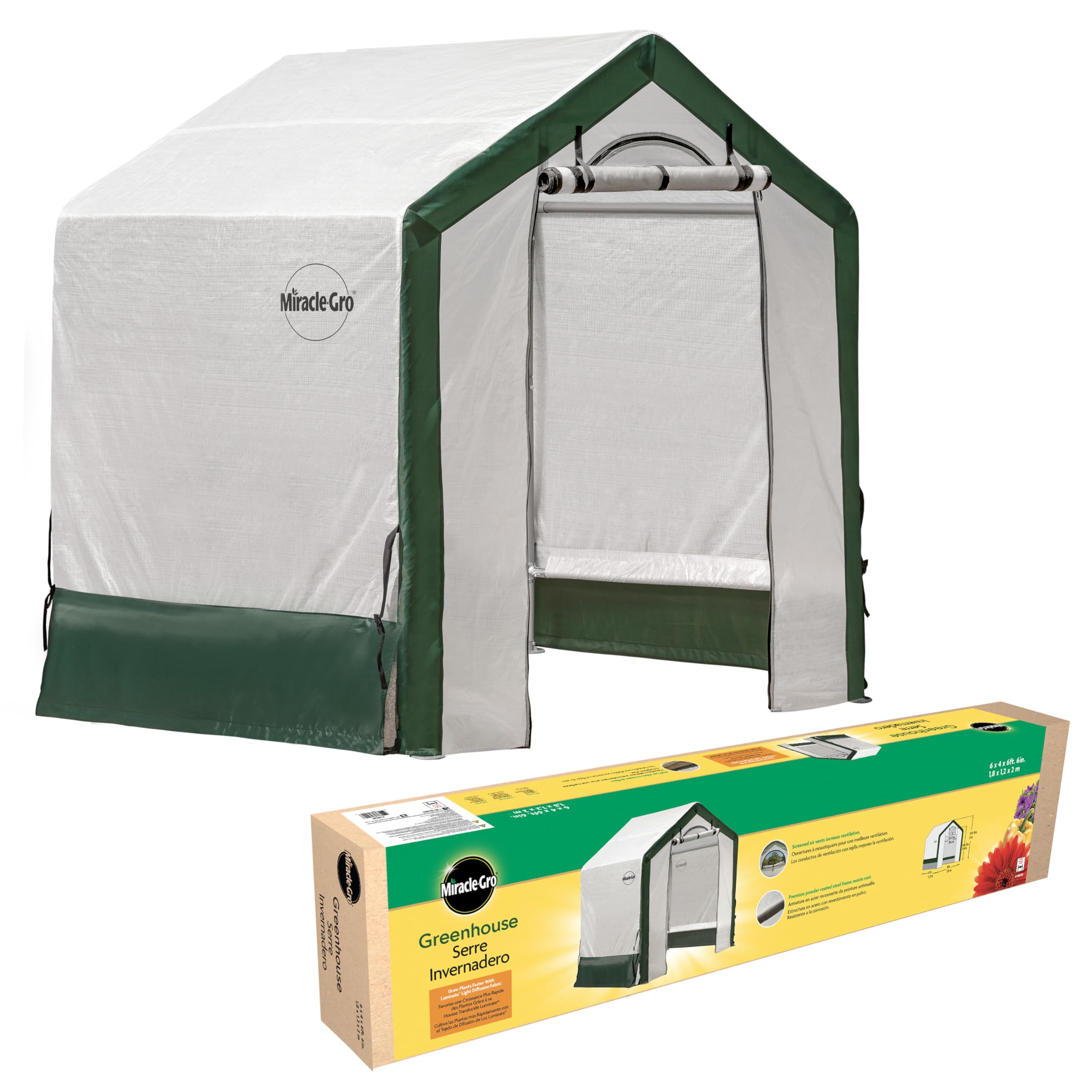
The tent that keeps your plants breathing easy with three separate vent openings on a sturdy steel frame.
This Miracle-Gro model is a compact walk-in tent at 46.5″L x 48″W x 71″H, so it is noticeably smaller than the Sannwsg pick above. What it lacks in floor space it makes up for in airflow: it comes with 3 vents, while the WORKPRO and Sannwsg units have 2 each. You get front and rear zippered screen vents plus roll-up side panels, all secured with bungee cords, giving you serious control over temperature and humidity on sunny days.
Owners mention this greenhouse is sturdy and the triple-layer 5.5 oz ripstop polyethylene cover is both waterproof and UV-treated. One buyer mentioned it “protected tropical hibiscus at 38°F,” showing that it can handle a cold snap. Another owner anchored theirs to a 2×4 frame on a covered patio and successfully housed six large pots with a temp sensor and heater. The trade-off is that the included stakes don’t hold well in wind according to some buyers, and the zipper can feel stiff at first. For a walk-in tent at this price, the ventilation is genuinely tough to top.
What Stands Out
- Triple vent system (front window, rear window, roll-up sides) for excellent cross-breeze control
- Powder-coated 1″ tubular steel frame resists rust and feels sturdy for its size
- UV-treated polyethylene cover diffuses light while reducing harmful rays
What to Watch
- Ground stakes are weak in wind—plan to use the included auger anchors or add your own tie-downs
- Fits best on a patio or covered area where wind is less of a factor
Choose this if: You prioritize airflow and want a well-built tent for overwintering a moderate number of pots on a sheltered patio.
Pass on this if: You need a greenhouse bigger than roughly 4 feet by 4 feet, or you want something you can anchor into open ground.
3. Sylviera 6x4FT Greenhouse with Hygrometer
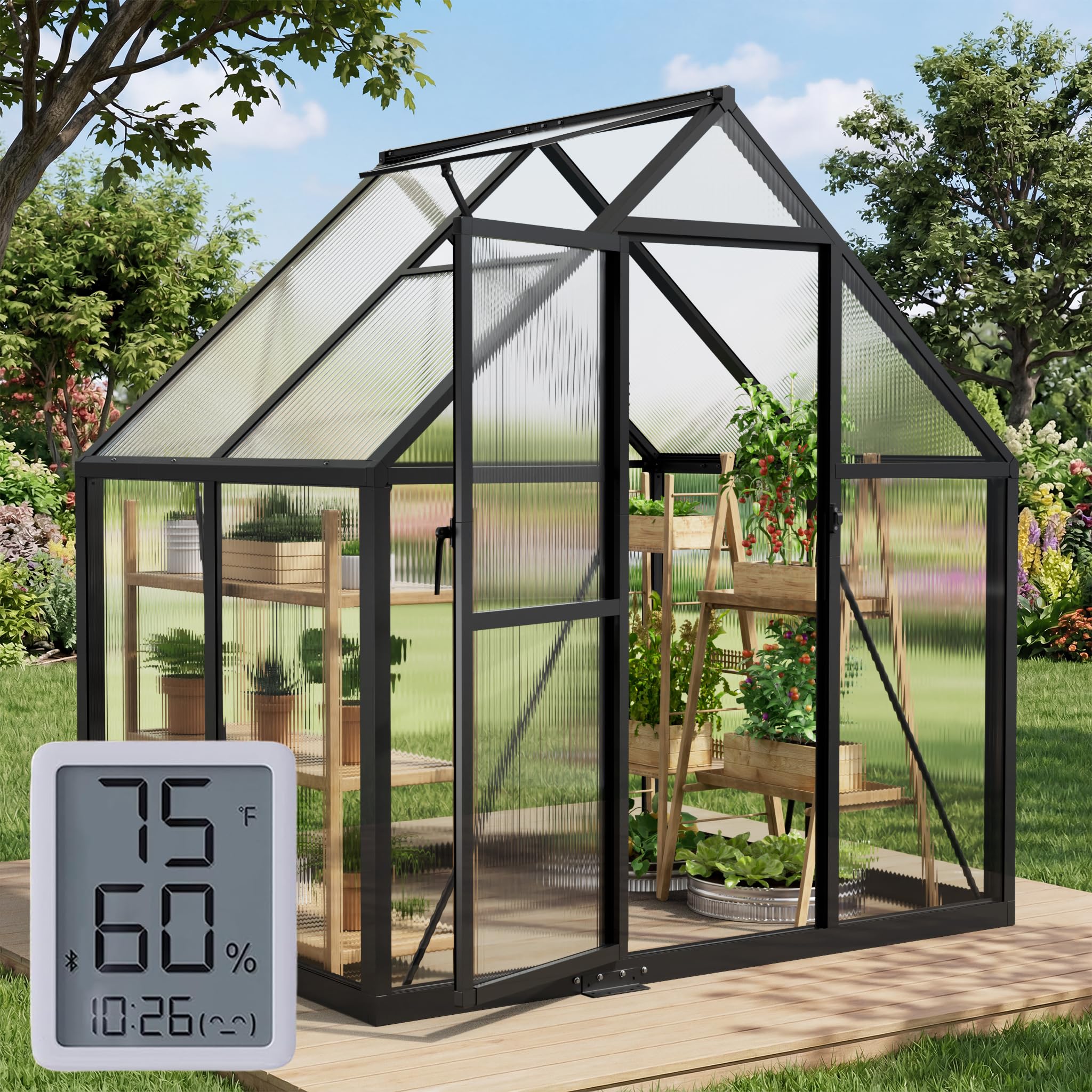
The hard-sided polycarbonate upgrade that actually resists snow and heavy winds without a premium price tag.
This is the first greenhouse on the list that trades a PE fabric cover for 4mm thick, 580g double-wall polycarbonate (PC) panels. That is a major durability upgrade—polycarbonate doesn’t tear, insulates far better, and blocks harmful UV rays while letting in good light. The frame is reinforced aluminum alloy, which is lighter than steel but completely rust-proof. Add a roof vent and a lockable door, and you have a serious little structure at 45″L x 67″W x 77″H that could realistically handle winter snow loads.
Customers note this greenhouse maintains a stable temperature much better than the cheap plastic tents. One owner reported “the frame is sturdy” and that it “withstands wind and rain well.” Another mentioned it includes an app-connected thermometer, which is a nice extra. The major headache with polycarbonate assembly is real: several reviewers point out you need to remove protective film from both sides of the panels (not clearly stated in instructions), and the roof vent support arms may need rubber bands to stay attached. A few people reported very frustrating assembly experiences with missing or poorly fitting parts. This pick demands more patience during setup, but the build quality you get is a clear step up from PE tents.
The Big Upgrade
- 4mm double-wall polycarbonate panels provide real insulation and impact resistance
- Aluminum frame is light but rust-proof and handled wind/rain well in reviews
- Adjustable roof vent plus lockable door gives solid temperature management
The Assembly Tax
- Setup requires two people and a few days; instructions can be unclear or missing
- Plan to buy Locktite and silicone caulk to seal it properly for long-term use
Buy this for: A long-lasting greenhouse that will stand up to weather better than any fabric tent—ideal if you plan to use it year-round.
skip it if: You want an afternoon project; this build is a weekend commitment with some frustration baked in.
4. WORKPRO Greenhouse, 56″ x 28″ x 77″

The narrow, three-tier shelving unit that packs a ton of plant space into a tight balcony or patio corner.
This WORKPRO greenhouse is a different shape than the others—it is a tall, narrow cabinet measuring 56″L x 29″W x 77″H with four wire shelves (24″ x 11″ per tier) arranged two per side. That makes it a fantastic choice if you are short on horizontal space and want to stack plants vertically. Each shelf holds up to 33 lbs, so you can pack it with seed trays and medium pots. The front roll-up zipper door and 2 side mesh windows give you decent airflow for such a compact footprint.
Shoppers say this unit performed beyond expectations in tough conditions. One customer observed it “survived blizzard with teens/20s temps, wind, snow, ice,” and with a heat lamp inside, the interior stayed above 40°F. Another noted assembly is straightforward at 45 minutes solo. The biggest issue across reviews is the included zip ties for the shelves—they are tiny and break easily. Buyers universally recommend replacing them with stronger zip ties before loading the shelves. A couple of people also reported missing parts and confusing instructions, so check your box early.
Space Saver Superpower
- 4 sturdy wire shelves hold up to 33 lbs each, ideal for vertical plant stacking
- Reinforced 140g/㎡ PE cover held up through a blizzard according to one buyer
- Narrow 29-inch depth fits on balconies, patios, or even indoors against a wall
Know Before You Buy
- Stock zip ties on the shelves are flimsy—plan to replace them immediately
- Small footprint means you cannot walk inside; it is strictly a reach-in cabinet greenhouse
Reach for this if: You have a small balcony or patio and need to maximize vertical growing space without taking over the whole area.
Think twice if: You want a walk-in greenhouse or need to overwinter tall, bushy plants that won’t fit on shelves.
5. WUKHG 6x4FT Small Greenhouse
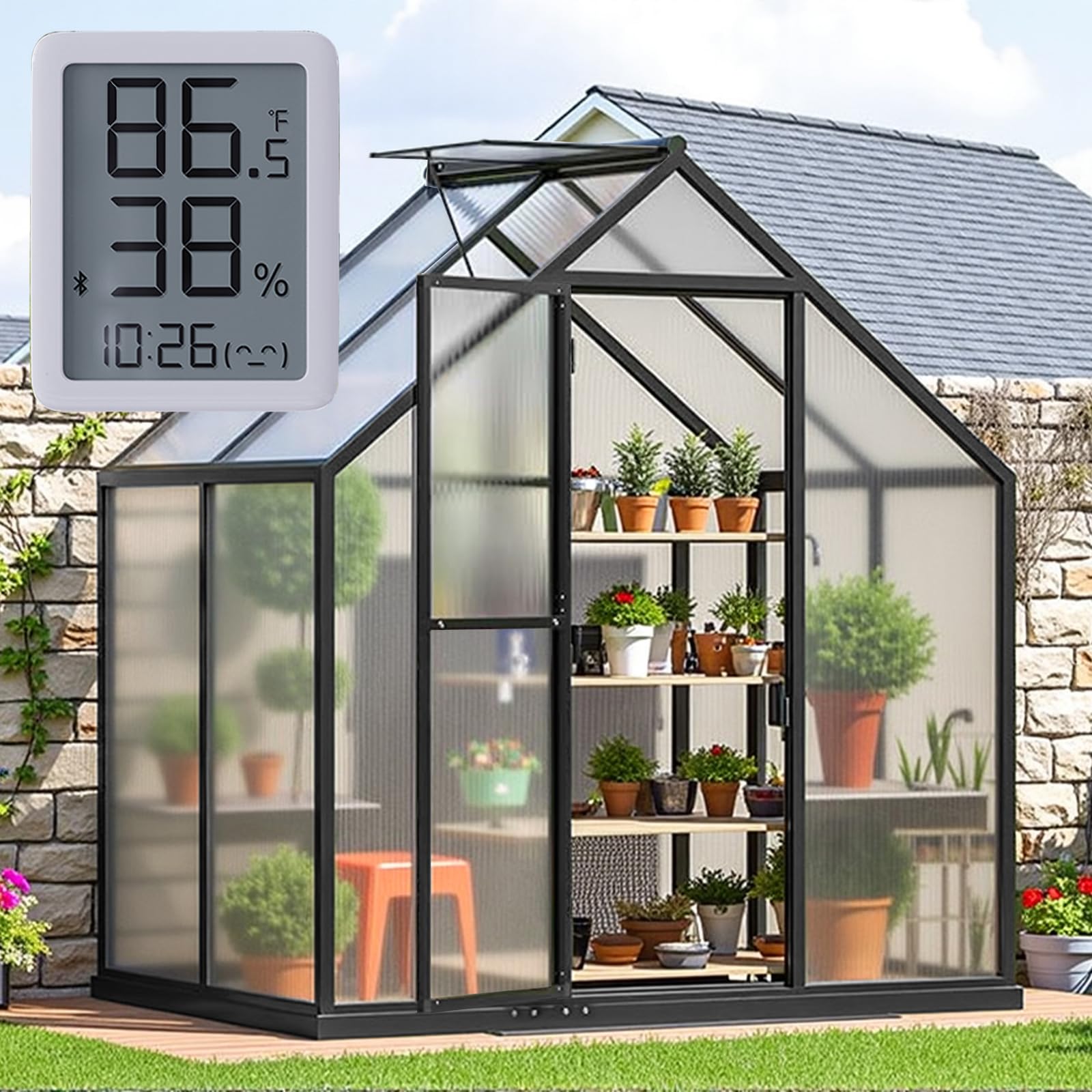
An entry-level hard-panel greenhouse that offers polycarbonate protection for not much more than a fabric tent.
This WUKHG model is another polycarbonate panel greenhouse, sized at 66.93″L x 44.69″W x 76.77″H with a sliding door and a single roof vent. At 48.9 pounds, it is heavy enough to feel solid. The aluminum frame and polycarbonate panels give it a clear durability advantage over any PE tent, and for the price, it is one of the cheapest ways to get a hard-sided greenhouse that can handle snow loads and wind without tearing.
Buyers report the greenhouse is sturdy and holds up well in wind once assembled, with one reviewer noting it “transmits sunlight, protects plants” and provides “good ventilation.” Another said it “retains heat” and led to “faster plant growth.” The assembly, however, is a common sore point. Multiple owners mention it took three people and a full day to put together. One user highlighted their roof window blew out the first night, and another said the panels feel thin and the doors are insecure. A few people had extremely negative experiences with missing instructions and parts. This is very much a “buyer beware” budget poly build—if you get a complete kit and are patient with the assembly, it is great value; if you get a bad unit, it is a massive headache.
What You Get for the Price
- Polycarbonate panels and aluminum frame for much better durability than fabric tents
- Sliding door saves floor space compared to a traditional hinged door
- Sturdy enough to handle wind when assembled correctly with extra anchoring
The Risk Factors
- Assembly is difficult and time-consuming (common complaints about parts and instructions)
- Single roof vent is less than ideal—expect interior temps to climb fast on sunny days
Consider this if: You want a hard-sided polycarbonate greenhouse on a tight budget and are willing to invest a full day in assembly.
Avoid this if: You are not comfortable with complex DIY assembly, or you need reliable performance straight from the start.
Understanding the Specs
Polyethylene (PE) vs. Polycarbonate (PC) Covers
Polyethylene (PE) is the thick plastic fabric you see on pop-up tents and portable greenhouses. It is lightweight, cheap, and easy to replace, but it tears more easily and provides little insulation. Polycarbonate (PC) panels are hard, clear plastic sheets that are much more impact-resistant and offer far better insulation. A PC greenhouse will hold heat better on a cold night and last multiple seasons, but it is heavier, more expensive, and requires more effort to assemble. For a truly cheap DIY greenhouse, PE is fine for a season or two; for something that can handle real winter weather, PC is the better investment.
Number of Vents
The number and type of vents on a greenhouse directly control the temperature and humidity your plants experience. More vents mean better cross-ventilation, which prevents the interior from turning into a plant-cooking oven on a warm spring day. A greenhouse with only 1 vent (like the WUKHG 6x4FT) will struggle to stay cool unless you leave the door open. Models with 2 or 3 vents (like the Miracle-Gro canopy with 3) give you much more control over airflow, which is critical for preventing fungal diseases and keeping your seedlings healthy.
FAQ
Will a cheap PE greenhouse survive the winter?
Do I need to anchor a portable greenhouse?
Can I use a cheap greenhouse indoors?
How many plants can I fit in a 6×4 foot greenhouse?
What size greenhouse do I need for tomatoes?
How do I prevent my cheap greenhouse from overheating?
Can I leave my greenhouse up all year?
Is a polycarbonate greenhouse worth the extra money?
What tools do I need to assemble a cheap DIY greenhouse?
Will a greenhouse keep plants from freezing?
Final Thoughts: The Verdict
For the majority of shoppers, the do it yourself greenhouses for cheap winner is the Sannwsg walk-in tent because it offers the most interior space for the money with a solid frame that buyers have proven can handle stormy weather. If you want the best ventilation and a compact package that feels built to last for its price, grab the Miracle-Gro 6′ x 4′ tent. And for a serious hard-sided polycarbonate structure that can weather real winter conditions, splurge on the Sylviera 6x4FT greenhouse—just be prepared for a weekend assembly project.
How We Picked
We do not accept paid placement. Every pick is matched to a real buyer and a real use-case; we do not hands-on test units.
Sources & Methodology
Specifications: manufacturer listings and product documentation. Review insights: verified customer reviews, as of July 2026. Pricing: not shown on this page (it changes often); check the current price via the retailer link.
As an Amazon Associate, Lawn Gear Lab earns from qualifying purchases. This does not affect which products we feature.