
Vegetables are heavy feeders — they extract massive amounts of nitrogen, phosphorus, and potassium from the ground every single growing cycle. When you plant tomatoes, peppers, or leafy greens into thin, compacted, or nutrient-poor soil, you are essentially starving them from day one. The difference between a bumper crop and a spindly harvest often comes down to what you put in the ground before the seed ever goes in.
I’m Rikta — the co-founder and writer behind Lawn Gear Lab. I spent hundreds of hours cross-referencing bag labels, analyzing organic certification claims, studying NPK profiles, and reading thousands of verified buyer accounts to understand exactly which soil blends deliver measurable results for home vegetable gardens.
The right foundation makes every subsequent step easier, which is why this guide focuses exclusively on the best dirt for vegetable garden applications, covering premium organic mixes, moisture-retentive composts, and balanced potting blends that support strong root systems from transplant through harvest.
How To Choose The Best Dirt For Vegetable Garden
Soil is not a one-size-fits-all product. The best mix for a raised bed of root vegetables differs from the ideal blend for a container of cherry tomatoes. Understanding a few key variables will help you match the bag to your garden setup.
Organic Certification and Ingredient Transparency
OMRI-listed products are verified to contain no synthetic fertilizers, pesticides, or sewage sludge. For edible crops, this matters because chemical residues can accumulate in plant tissue over a growing season. Look for soil that lists specific compost sources — worm castings, aged manure, or crab meal — rather than vague “organic matter.”
Texture and Drainage Balance
Vegetable roots need oxygen as much as they need water. A bag that feels heavy and clumps when squeezed is likely too dense. Premium blends include perlite, coarse sand, or coconut coir to maintain aeration. In-ground gardens require a mix that blends with native soil, while containers demand a lighter, faster-draining structure to prevent root rot.
Nutrient Longevity and Microbial Life
Starter fertilizers feed plants for the first few weeks, but slow-release nutrients from composted manure or kelp meal sustain growth through the fruiting phase. Mycorrhizae — beneficial fungi that attach to root systems — increase water and nutrient absorption dramatically. A soil that lists endo and ecto mycorrhizae offers measurable advantages for transplants under stress.
Quick Comparison
On smaller screens, swipe sideways to see the full table.
| Model | Category | Best For | Key Spec | Amazon |
|---|---|---|---|---|
| Coast of Maine Veg & Tomato | Premium Organic | Heirloom tomatoes & deep-root vegetables | Composted manure & kelp meal blend | Amazon |
| Coast of Maine Bar Harbor | Premium Organic | Container vegetables & hanging baskets | Lobster & crab shell meal plus perlite | Amazon |
| Brut Organic Potting Soil | Premium Organic | Indoor/outdoor transplants & microgreens | pH balanced 6.3-6.5 with worm castings | Amazon |
| Miracle-Gro Potting Mix 3-Pack | Mid-Range | Potted annuals & quick container crops | Feeds up to 6 months | Amazon |
| Michigan Peat All-Purpose | Mid-Range | General potting & raised bed bulk fill | 50 lb bag with slow-release fertilizer | Amazon |
| Espoma Organic Veg & Flower | Mid-Range | In-ground garden amendment & transplanting | Myco-tone endo/ecto mycorrhizae formula | Amazon |
| R&M Organics Premium Compost | Budget-Friendly | Reviving ailing plants & top-dressing beds | 10 lb dairy cow manure compost | Amazon |
In‑Depth Reviews
1. Coast of Maine Organic & Natural Planting Soil for Vegetables & Tomatoes
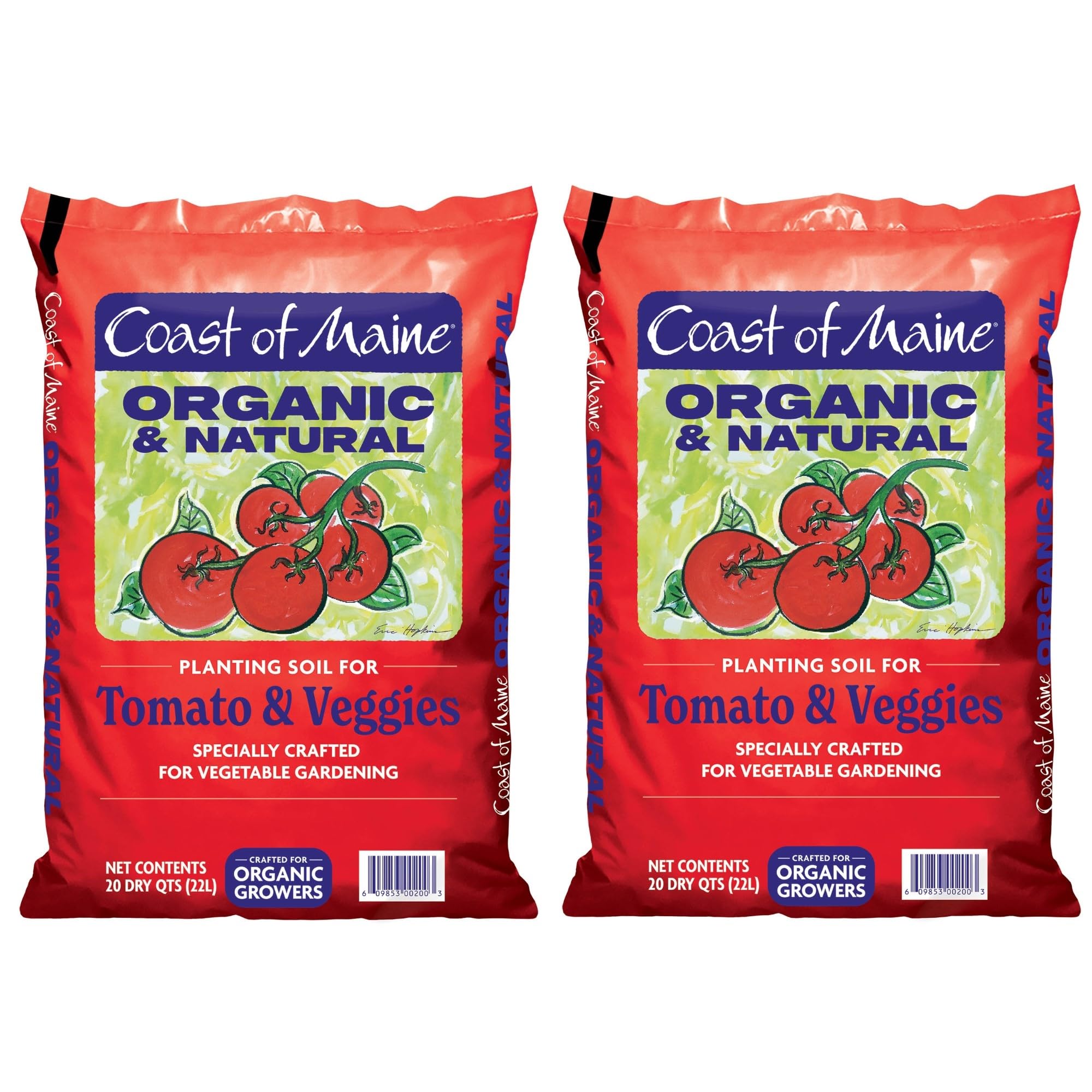
This 20-quart bag from Coast of Maine is built with a composted manure base blended with sphagnum peat moss, giving it the ideal density for in-ground vegetable plots and large raised beds. The aroma of aged manure is present but not offensive, and the texture is light enough to crumble easily by hand — a sign that aeration will be adequate for tomato root systems that can extend two feet deep. Users consistently report that tomatoes, peppers, and squash planted in this mix show deeper green foliage within the first two weeks compared to generic topsoil.
The inclusion of kelp meal provides a slow-release source of potassium and trace minerals essential for fruit set and disease resistance. Moisture retention is notably high without becoming waterlogged, which reduces the frequency of watering during hot spells. Multiple verified reviews mention that this soil revived heirloom tomato seedlings that were struggling in cheaper blends, and the results held steady through harvest without additional fertilizers.
Two bags are enough to fill a standard 4×4-foot raised bed to a depth of about six inches when mixed with native soil. The OMRI listing gives organic gardeners confidence, and the absence of synthetic wetting agents means the natural microbiology of the soil remains intact. The only common complaint is that a few bags arrived with fungus gnat eggs, so indoor or greenhouse users should consider pre-moistening and aerating the mix before planting.
What works
- Excellent moisture-drainage balance for deep-root vegetables
- Kelp meal provides natural slow-release potassium
- OMRI-listed with transparent ingredient sourcing
What doesn’t
- Can carry fungus gnat eggs; needs airing before indoor use
- Premium price point for large-scale bed filling
2. Coast of Maine Bar Harbor Blend Potting Soil
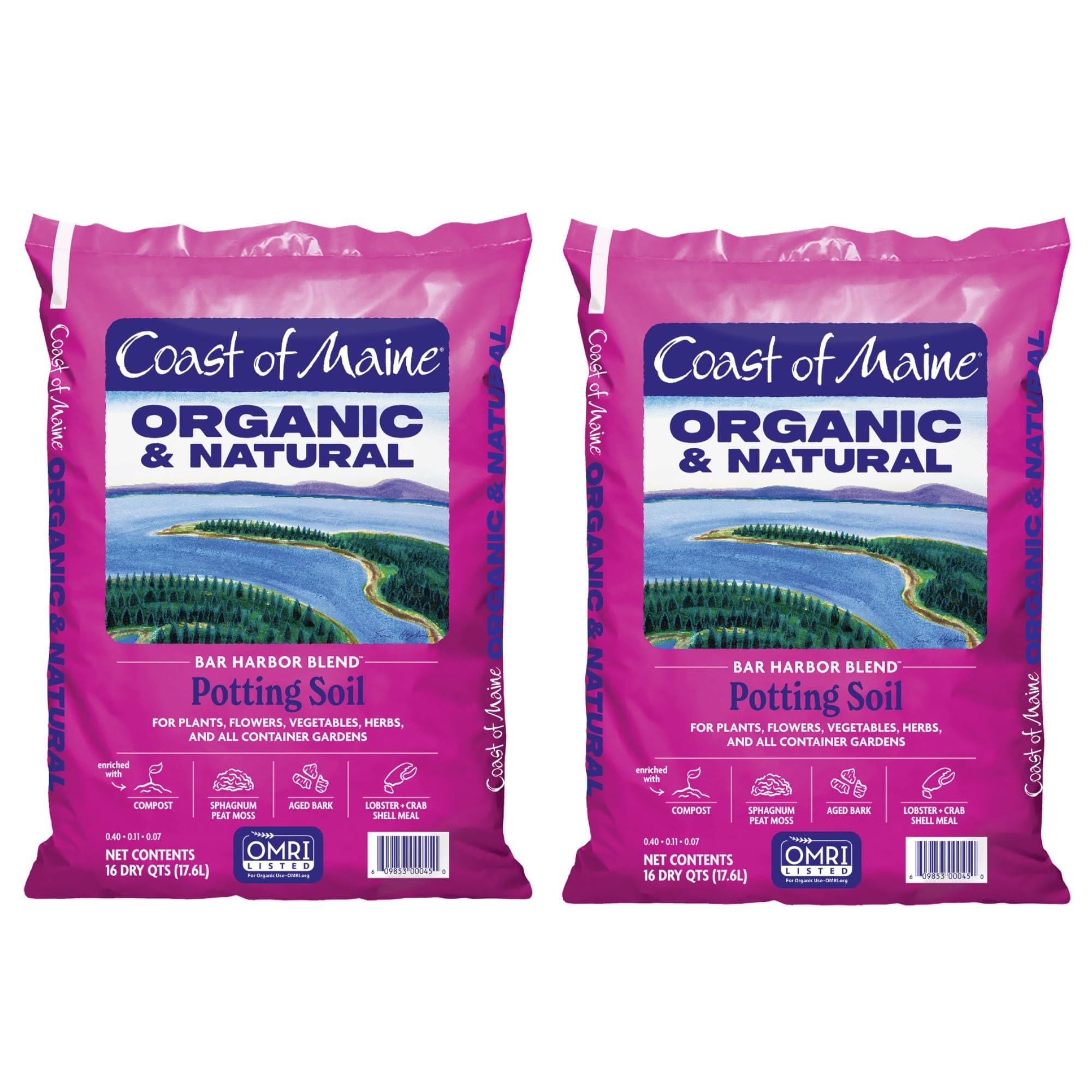
Bar Harbor Blend shifts the formula toward container gardening by increasing the perlite content and adding lobster and crab shell meal. The shell meal acts as a natural source of chitin, which some gardeners believe triggers a biological response in the soil that suppresses certain fungal pathogens. The base of sphagnum peat and compost gives it a dark, rich color that contrasts sharply with lighter filler soils, and the texture feels almost fluffy when poured into a pot.
Vegetables in containers — particularly potatoes, peas, and bush beans — responded vigorously in this mix, with users noting faster emergence and thicker stems compared to standard potting soils. The slow-release nitrogen from the marine byproducts sustains growth over several weeks without the need for liquid feeding. One reviewer described it as the best soil they have used in a GreenStalk vertical planter, citing no runoff staining and consistent moisture levels across all tiers.
The 16-quart bag size is practical for small to medium container gardens. Two bags mounded up eight potato plants with enough leftover for two additional planters. The blend is OMRI-listed and free of synthetic additives, though the price per cubic foot is higher than commodity mixes. Gardeners with very large raised beds may find it more economical to use this as a top dressing rather than a full fill.
What works
- Lobster and crab shell meal for sustained feeding
- High perlite content prevents compaction in pots
- Consistent moisture across tiered planters
What doesn’t
- Strong marine odor initially, though it fades quickly
- Not cost-effective for filling large in-ground beds
3. Brut Organic Potting Soil
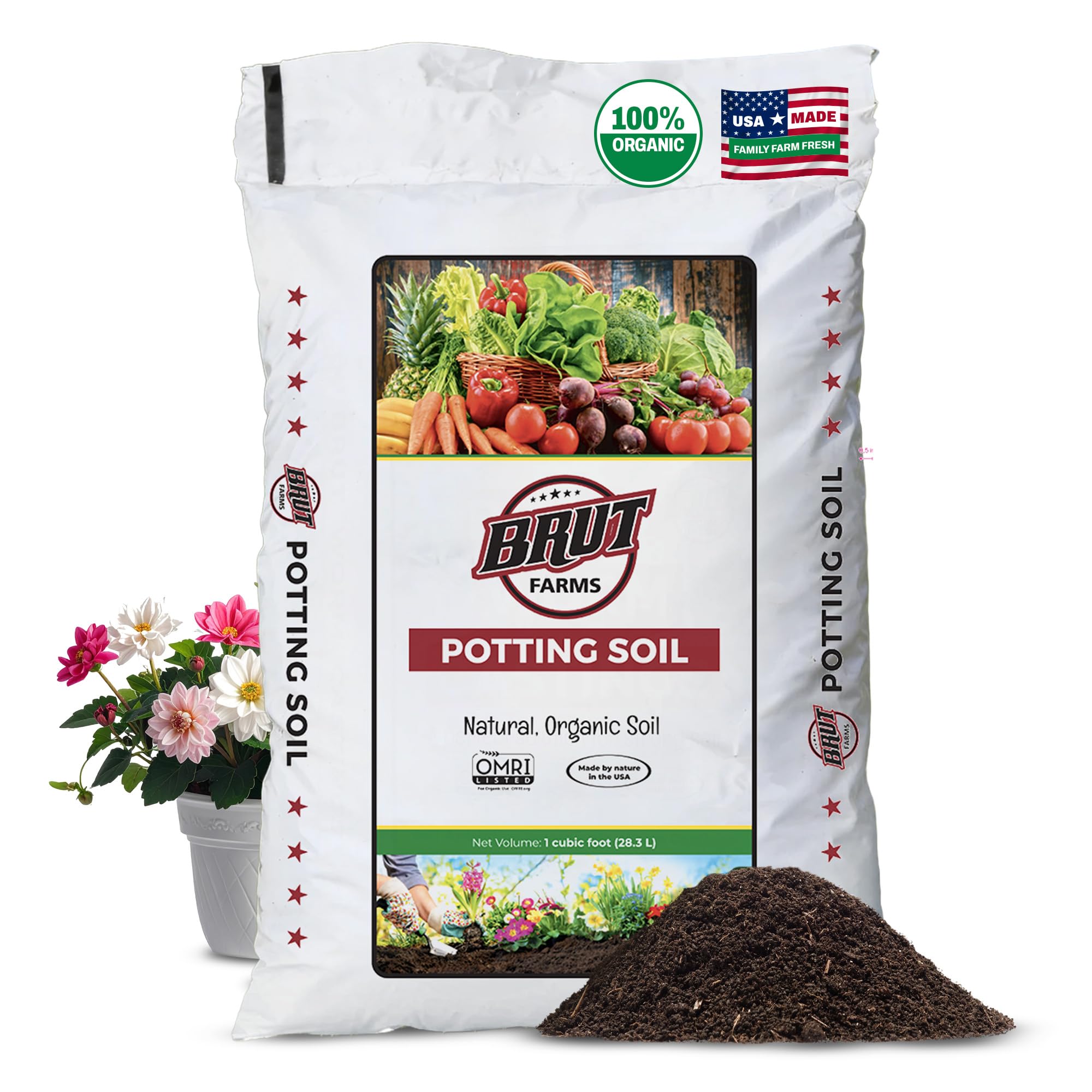
Brut differentiates itself with a heavy dose of microbe-rich worm castings and trace minerals from Azomite and kelp. The soil is naturally buffered to a pH range of 6.3 to 6.5, which sits perfectly for most vegetables, including acid-tolerant crops like tomatoes and peppers. The texture is fine and uniform — noticeably free of the large bark chips and sticks that plague many mass-market bags — making it pleasant to work with during transplanting.
Users who switched from a store-brand organic alternative reported that their tomato plants showed deeper color and faster vertical growth within days of transplanting into Brut. The inclusion of fish meal and bone meal provides a phosphorus boost that benefits flowering and fruit set, though this also attracted flies when pots were moved outdoors. A thin layer of sand or gravel on top solves the pest issue without compromising the soil biology.
The one-cubic-foot bag covers roughly twelve 10-inch pots, making it a smart choice for gardeners managing a mix of indoor seedlings and outdoor container vegetables. The OMRI certification adds credibility, and the filler-free formulation means every scoop delivers active organic matter rather than inert bulking agents. It does carry a premium per-bag cost, but for small-scale growers focused on quality, the results justify the expense.
What works
- Fine, uniform texture with no wood filler
- Precise pH range ideal for most vegetables
- Rich in worm castings and kelp for robust feeding
What doesn’t
- Fish meal can attract flies if left uncovered
- Premium price per cubic foot
4. Miracle-Gro Potting Mix 3-Pack

The three-pack of 8-quart bags gives you a total of 24 quarts, enough to fill multiple small-to-medium containers. Miracle-Gro incorporates a timed-release fertilizer that feeds potted plants for up to six months, which eliminates the need for regular liquid feeding during the growing season. The soil structure includes perlite and peat to maintain aeration, though it is denser than premium organic blends and can compact slightly if overwatered.
Customers consistently note that this mix delivers reliable results for annual flowers, herbs, and quick-growing vegetables like lettuce and radishes. The formula is engineered for container performance rather than in-ground applications, so it shines in patio pots and window boxes where drainage is critical. One reviewer appreciated the smaller bag size because it avoids the heavy lifting associated with 50-pound sacks.
Gardeners who prioritize organic certification should note that Miracle-Gro uses synthetic fertilizers — this is not OMRI-listed. For edible crop growers who are not strictly organic, the convenience of built-in feeding and the brand’s consistent quality control make it a practical choice. It is ideal for beginners or those who want a no-fuss potting solution for a mixed container garden of flowers and vegetables.
What works
- Built-in slow-release fertilizer for up to six months
- Convenient smaller bags for easy handling
- Good drainage and aeration for container use
What doesn’t
- Not OMRI-listed or suitable for organic gardens
- Can compact if watering schedule is inconsistent
5. Michigan Peat General All Purpose Premium Potting Soil

Michigan Peat delivers a 50-pound bag of pre-blended soil that combines reed sedge peat, perlite, and sand with starter and slow-release fertilizers. This is a workhorse product for gardeners who need to fill multiple containers or top off raised beds without breaking the bank. The texture is moderately coarse, with peat providing the primary water-holding capacity while sand and perlite handle drainage.
The included fertilizers give new plantings an immediate nutrient boost and sustain growth for several weeks. Users who planted vegetables in containers reported satisfactory germination and early development, though heavy feeders like tomatoes may require supplemental feeding after the first month. The large bag size is cost-effective for bulk applications, but the quality is not as refined as premium organic blends — you may encounter small sticks or clumps.
Several buyers noted that this soil can harbor fungus gnats, especially if stored in damp conditions before opening. Allowing the bag to dry out slightly or mixing in a layer of sand on top helps mitigate the issue. It is a solid mid-range option for gardeners who prioritize volume and value over organic certification or exacting ingredient transparency.
What works
- Large 50 lb bag provides excellent value for bulk use
- Ready-to-use with built-in starter and slow-release fertilizer
- Decent aeration from perlite and sand blend
What doesn’t
- Potential for fungus gnat infestation
- Not OMRI-listed and contains synthetic fertilizers
6. Espoma Organic Vegetable & Flower Garden Soil

Espoma is a well-respected name in organic gardening, and this one-cubic-foot bag is specifically formulated for mixing with native garden soil at planting or transplanting time. The standout feature is Myco-Tone — a proprietary blend of endo and ecto mycorrhizae that colonize root systems and dramatically increase the surface area for water and nutrient absorption. This biological boost is particularly valuable for tomatoes, peppers, and squash that undergo transplant shock.
The base includes earthworm castings for a gentle nitrogen release and composted organic matter that improves soil structure over multiple seasons. Gardeners who compared Espoma against a competing organic brand side-by-side reported that plants in the Espoma mix outperformed in both vigor and yield. The bag is lightweight — only 16 ounces of actual weight (the product is measured by volume) — so it is easy to handle and apply even in tight garden beds.
It is designed as an amendment rather than a stand-alone potting soil, so mixing it 1:1 with your existing dirt is the intended use. Users who tried it as a straight potting medium in containers found drainage adequate but not exceptional. A small number of buyers reported soil gnats appearing after bringing bags indoors, though outdoor use did not produce the same issue. For improving an existing in-ground vegetable patch, Espoma delivers targeted biology at a fair price point.
What works
- Myco-Tone mycorrhizae improve transplant survival and root growth
- Enriched with worm castings for gentle organic feeding
- Lightweight bag with good value per cubic foot
What doesn’t
- Not ideal as a stand-alone container potting mix
- Indoor use can trigger fungus gnat emergence
7. R&M Organics Premium Organic Compost
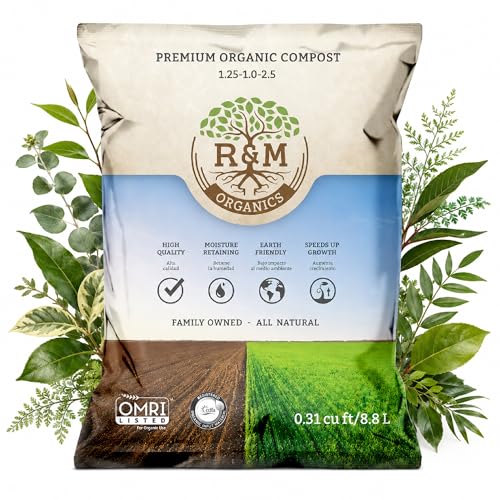
R&M Organics offers a 10-pound bag of fully composted dairy cow manure processed through continuous aeration to reduce odor and impurities. The result is a fine, soil-like material with an earthy scent that is far milder than raw manure — suitable for both indoor and outdoor use. The compost acts as a soil amendment rather than a standalone planting medium, best applied as a quarter-inch top dressing or mixed into existing soil at a 5:1 ratio.
Users have reported dramatic turnarounds for ailing plants. One reviewer described how their Master Gardener sister-in-law recommended this compost to rescue azaleas damaged by a roof-cleaning chemical. Another customer saw a struggling tomato plant’s yellow leaves turn green within a week after mixing the compost into the planter. The compost’s ability to improve moisture retention also means less frequent watering during dry spells.
The bag size is compact — 0.31 cubic feet — making it a targeted treatment rather than a bulk fill. It is OMRI-listed and free from synthetic additives, so it fits seamlessly into organic regimens. Gardeners with large plots may find the per-pound cost high compared to bulk alternatives, but for reviving individual plants or top-dressing containers, the convenience and efficacy are hard to beat.
What works
- Low-odor, fully composted manure suitable for indoor use
- Proven ability to revive stressed and ailing plants quickly
- Improves moisture retention and soil texture effectively
What doesn’t
- Small bag size limits use to spot treatment or top dressing
- Higher price per pound compared to bulk compost options
Hardware & Specs Guide
Bag Volume vs. Weight
Vegetable soil is sold by volume (cubic feet or quarts) rather than weight, because moisture content varies. A 1-cubic-foot bag can range from 16 ounces (dry, lightweight peat-based) to 50 pounds (dense, sand-heavy mix). Always check the volume spec — not the weight — to understand how much ground you can cover. A 20-quart bag fills roughly two 10-inch standard pots.
Mycorrhizae Colonization
Endo and ecto mycorrhizae are beneficial fungi that attach to plant roots and extend the effective root zone by up to 100 times. Soils listing “Myco-Tone” or similar additives support stronger transplant establishment and better drought tolerance. Not all organic soils include live mycorrhizae — check the ingredient list. Heat-treated or irradiated sterilized soils will have no active fungal life.
pH Range for Vegetables
Most vegetables prefer a slightly acidic pH between 6.0 and 7.0. Soils buffered to 6.3-6.5, like the Brut Organic mix, are ideal because they allow optimal uptake of phosphorus, iron, and zinc. Soils with added lime shift pH upward; those heavy in peat or sulfur push it down. A pH test kit is a cheap way to verify the bagged soil matches your crop’s needs.
Organic Certification Labels
OMRI (Organic Materials Review Institute) listing means the product meets USDA organic standards for input materials. Products like Coast of Maine and Brut carry OMRI certification, while Miracle-Gro and Michigan Peat use synthetic fertilizers. For vegetable gardens, OMRI-listed products avoid risk of residual chemicals in edible tissue, but synthetics are still regulated for safety by the EPA.
FAQ
Can I use bagged potting soil directly in an in-ground vegetable bed?
How do I prevent fungus gnats from bagged vegetable soil?
What is the difference between compost and potting soil for vegetables?
Final Thoughts: The Verdict
For most gardeners, the best dirt for vegetable garden winner is the Coast of Maine Organic Planting Soil for Vegetables & Tomatoes because it balances composted manure nutrition with peat-based aeration, delivering strong results for both in-ground beds and large containers. If you want a container-specific formula with marine-based slow-release feeding, grab the Coast of Maine Bar Harbor Blend. And for reviving a single struggling plant or top-dressing a small raised bed on a budget, nothing beats the R&M Organics Premium Organic Compost.