
The single most common killer of succulents isn’t light or water—it’s using the wrong dirt. Standard potting mix holds moisture like a sponge, suffocating roots and inviting rot within days. What your plants actually need is a gritty, fast-draining medium that mimics the arid, rocky conditions of their native habitat.
I’m Rikta — the co-founder and writer behind Lawn Gear Lab. I’ve spent countless hours poring over soil science data, analyzing particle-size distribution, drainage rates, and pH ranges, and cross-referencing hundreds of verified owner reports to separate truly effective formulas from water-retaining imposters.
Whether you’re repotting a single jade plant or building a collection of rare echeveria, choosing the right substrate changes everything. This guide breaks down the best available options to help you find the right dirt for succulent plants so your collection thrives instead of just surviving.
How To Choose The Best Dirt For Succulent Plants
The perfect succulent soil does one thing above all else: drains fast. While a standard potting mix holds water for days, a succulent-grade mix should shed excess moisture within seconds. But drainage isn’t the only variable—you also need proper aeration, a balanced pH, and enough organic matter to sustain roots without trapping water.
Particle Size & Texture
Look for a chunky, gritty texture when you squeeze a handful. If it clumps into a wet ball, it’s too dense for succulents. Premium mixes use a blend of coarse sand, perlite, pumice, or lava rock to create air pockets that let roots breathe and water pass through freely.
Organic vs. Inorganic Amendments
Pure inorganic grit (pumice, lava rock, calcined clay) drains perfectly but holds little to no nutrients. Organic components like peat moss, coco coir, or compost provide water retention and fertility—but they must be balanced. If you see “forest products” or “compost” as the first ingredient, expect slower drainage and a higher risk of rot unless you add your own amendments.
pH Balance
Succulents prefer a slightly acidic to neutral pH range (around 5.5 to 7.0). Many commercial cactus mixes are pH-adjusted to fall in this sweet spot. If you blend your own, test the pH of your components—peat moss is acidic, while limestone amendments can raise it.
Quick Comparison
On smaller screens, swipe sideways to see the full table.
| Model | Category | Best For | Key Spec | Amazon |
|---|---|---|---|---|
| Rosy Soil Cactus Soil | Organic | Living soil enthusiasts | Peat-free, pre-loaded microbes | Amazon |
| Tinyroots Succulent Soil | Premium Blend | Small & delicate succulents | Finer grain, excellent drainage | Amazon |
| Hoffman Organic Cactus Mix | Organic | Starting succulents from seed | 4-quarts organic formula | Amazon |
| Midwest Hearth Cactus Soil | Mid-Range | Ready-to-use convenience | pH-balanced, 4 dry quarts | Amazon |
| DUSPRO 7-in-1 Mix | Premium Blend | Nutrient-rich potting | 7 ingredients including worm castings | Amazon |
| Miracle-Gro Cactus Mix | 3-Pack Value | Multi-plant households | 8 qt. bag, 3-pack bundle | Amazon |
| Avalution Lava Rock Pumice | Amendment | DIY custom blends | 2.4 lbs horticultural lava rock | Amazon |
In‑Depth Reviews
1. Rosy Soil Cactus & Succulent Potting Mix
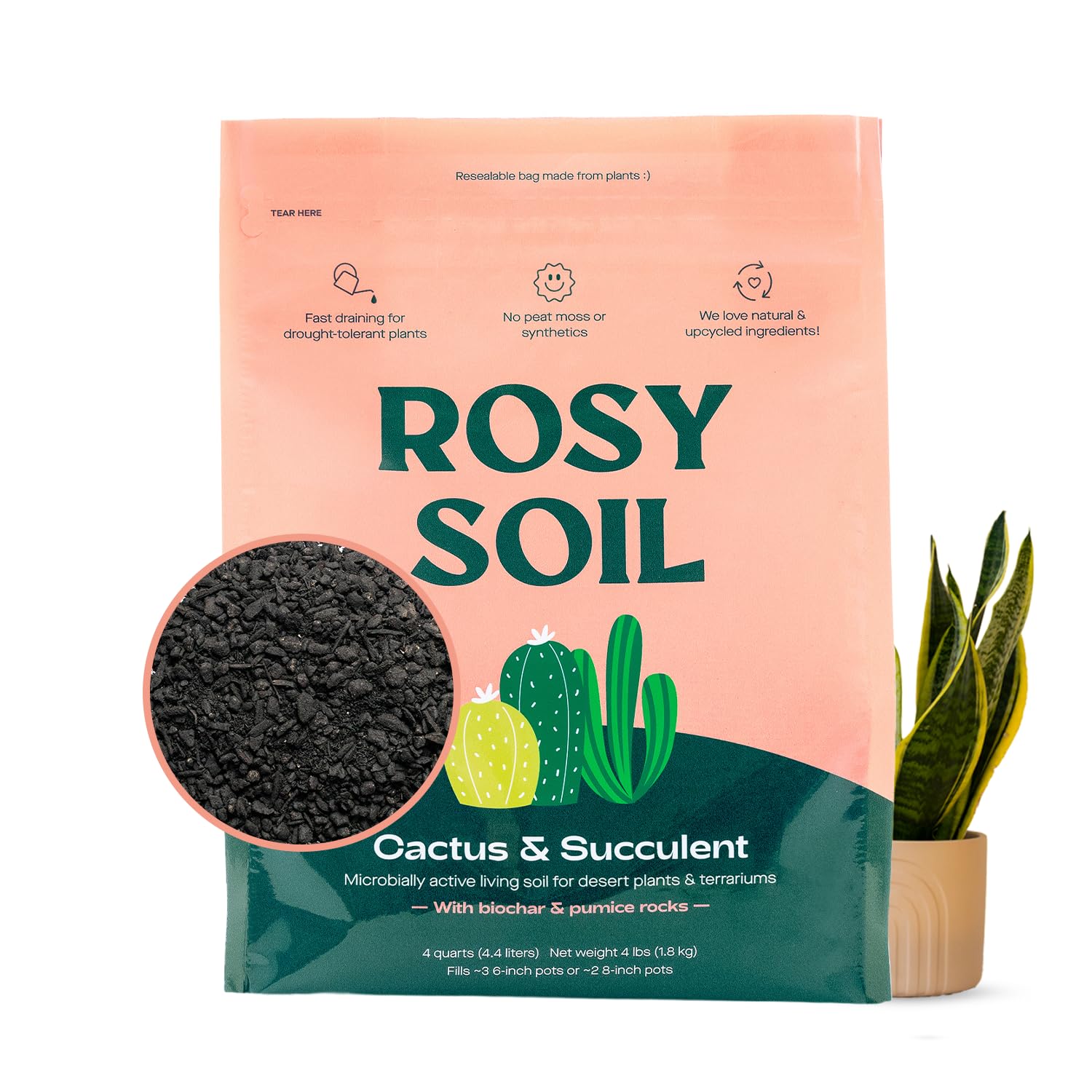
Rosy Soil has engineered their cactus formula to be genuinely peat-free, relying on a chunky mixture of bark, pumice, and worm castings instead. The absence of peat means this mix drains noticeably faster than conventional organic blends—water flows through rather than pooling on top. Owners consistently report zero compaction or sogginess even after multiple waterings, a rare trait in bagged succulent soil.
The pre-loaded beneficial fungi and microorganisms give this mix a living-soil edge. For growers who want a biologically active substrate that feeds roots without synthetic fertilizers, this is the most complete option in its class. The 4-quart resealable bag is also plastic-neutral, a detail that matters to environmentally conscious buyers.
A few users note that the bag’s resealable closure doesn’t always hold tightly, which can dry out the slightly moist contents between uses. Also, some experienced growers still add extra perlite or bonsai grit for older, larger succulents that demand an even leaner profile. But for most indoor succulent collections, this is a standout one-bag solution.
What works
- Peat-free formula drains better than most organic cactus mixes
- Pre-loaded beneficial fungi and worm castings for natural feeding
- Chunky, airy texture resists compaction
What doesn’t
- Resealable bag flap may not close fully, risking moisture loss
- Some users add extra grit for older succulents needing leaner soil
2. Tinyroots Succulent Soil Potting Mix

Tinyroots has carved out a specific niche: a succulent soil with a finer particle size than typical cactus mixes. This makes it the top choice for delicate, shallow-rooted succulents like lithops (living stones) and small echeveria rosettes where large chunks of bark would be physically difficult to root into. The grain is consistent and well-graded, providing even moisture distribution without large air pockets.
Drainage is the headline feature. Multiple owners report that this mix makes it virtually impossible to overwater—water runs straight through the pot and exits via the drainage holes within seconds. For anyone who has struggled with root rot in the past, this level of porosity is a game-changer. Cactus blooms appeared in first-time growers’ collections after switching to this blend.
The premium price per quart is the main barrier here, especially compared to bulk bags from larger brands. A 2.25-quart bag covers only a few small pots, so it’s best suited for hobbyists with curated collections rather than mass repotting projects. But for the plants it’s designed for, the performance justifies the cost.
What works
- Finest grain of any succulent mix tested, ideal for tiny roots
- Drains so fast it practically eliminates overwatering risk
- No large bark chunks or perlite floating to surface
What doesn’t
- Small bag size limits use to a few containers
- Premium cost per quart may not suit budget-focused growers
3. Hoffman 10404 Organic Cactus and Succulent Soil Mix

Hoffman’s organic cactus mix has been a staple in the succulent community for years, and for good reason: it hits the sweet spot between drainage and fertility better than most mass-market options. The blend is light and fluffy, composed mainly of peat moss and composted materials with enough perlite and sand to keep water moving. It arrives ready to use with no mixing required.
Where this mix really shines is in its ability to eliminate fungus gnats and root rot after other soils failed. Owners who repotted snake plants and jade from dense big-box mixes into Hoffman saw immediate improvement—no more gnats, no more mushy roots. It also works well as a base for custom blends, with many users adding extra perlite or pumice without losing the structural integrity of the original formula.
Quality control is the main concern. Some bags arrive with the seal broken or have inconsistent texture between batches. A few users report the mix is a bit too moisture-retentive for desert cacti straight out of the bag, suggesting that a 50/50 blend with coarse sand or pumice yields better results for the most drought-sensitive species.
What works
- Proven track record of eliminating fungus gnats and rot
- Organic ingredients with consistent pH balance
- Versatile enough to use straight or as a custom base blend
What doesn’t
- Some bags arrive with seal defects or inconsistent moisture
- May need amendment for ultra-drought-tolerant desert cacti
4. Midwest Hearth Cactus & Succulent Potting Soil Mix
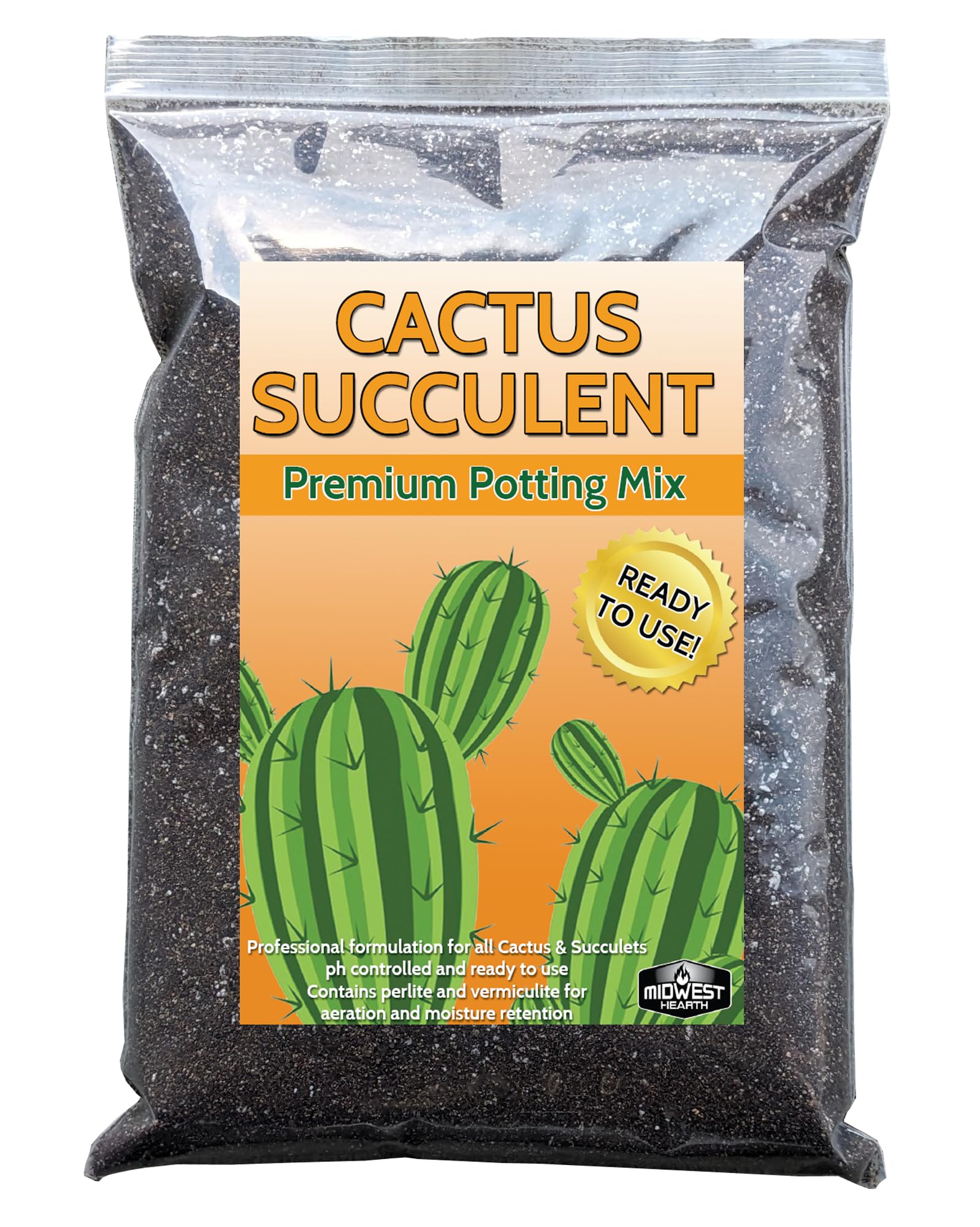
Midwest Hearth delivers exactly what the label promises: a professionally formulated, pH-balanced cactus blend that comes ready to use. The combination of peat moss, perlite, and vermiculite creates a mix that drains quickly while still retaining enough moisture to prevent roots from drying out completely between waterings—a crucial balance for most indoor succulents.
Owners consistently praise the ease of use. Multiple dish gardens and collections were repotted without issue, and plants remained happy weeks later. The 4-quart bag fills two to three standard pots, making it a practical choice for modest collections. The fact that it’s made in the USA with quality-controlled ingredients adds confidence for buyers wary of off-brand mixes.
The main drawback is practical rather than compositional: the dry top layer of this mix is light and can blow away if the pot sits near an open window or fan. A few owners report needing to vacuum around the pot regularly. Adding a top dressing of pebbles or grit solves this easily, but it’s an extra step that not all mixes require.
What works
- pH-balanced formula works straight from the bag for most succulents
- Fast drainage prevents root rot in standard indoor conditions
- Made in USA with consistent, quality ingredients
What doesn’t
- Dry top layer can blow away near windows unless top-dressed
- Small bag size limits use for larger collections
5. DUSPRO Succulents Soil Potting Mix 7-in-1
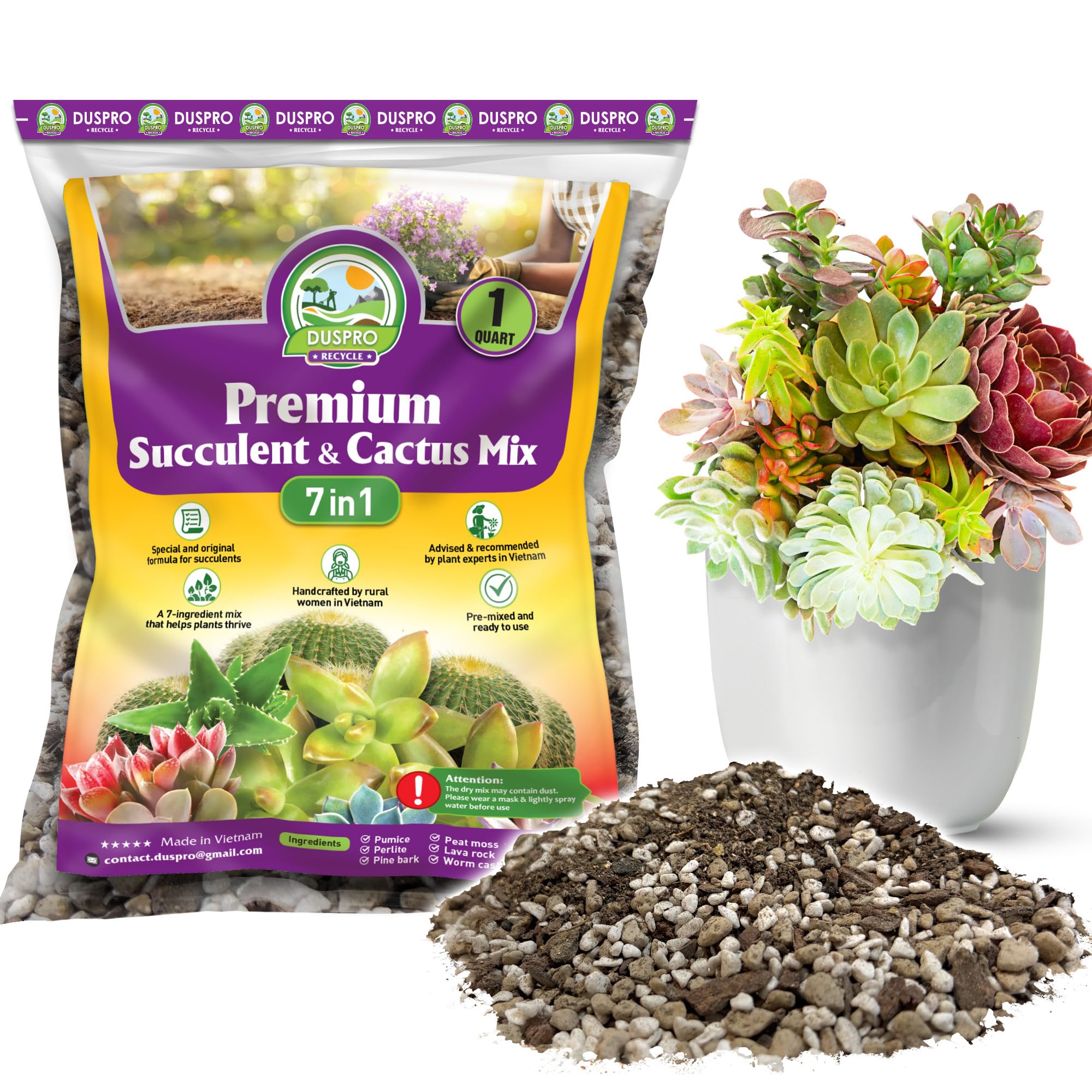
DUSPRO’s 7-in-1 formulation brings together perlite, pumice, lava rock, peat moss, pine bark, worm castings, and vermiculite—a more diverse ingredient list than almost any other bagged succulent soil on the market. The worm castings provide a slow-release nutrient source that standard cactus mixes lack, giving a mild fertility boost without the risk of fertilizer burn.
The texture is noticeably chunky and well-draining, with the inorganic components (pumice, perlite, lava rock) forming the backbone of the structure. Owners report healthy root growth and vibrant color in their succulents after repotting. The mix is ready to use and requires no amendments for most common indoor succulent varieties.
One consistent note from buyers: the components can separate during shipping, meaning you may need to dump the bag into a bucket and stir before use to re-distribute the grit evenly. Some users also find the price per quart to be on the higher side, though the inclusion of premium ingredients like lava rock and worm castings partially offsets the cost.
What works
- Seven diverse ingredients provide both drainage and natural nutrition
- Worm castings offer slow-release feeding without synthetic chemicals
- Chunky texture resists compaction over time
What doesn’t
- Ingredients settle during shipping and need stirring before use
- Premium price per quart compared to simpler blends
6. Miracle-Gro Cactus, Palm & Citrus Potting Mix (3-Pack)

Miracle-Gro’s cactus formula is the most widely available option on this list, and the 3-pack of 8-quart bags offers exceptional value for anyone repotting a large collection or multiple pots. The formula is designed to drain faster than standard Miracle-Gro potting mix, with added perlite and sand to create air channels. It’s enriched with their proprietary plant food for a built-in nutrient boost.
Seasoned succulent growers often use this as a base to blend with extra perlite, pumice, or coarse sand at a 50/50 ratio for desert cacti and sensitive succulents. Straight out of the bag, it works well for hardier species like Christmas cactus, jade, and snake plants. The three-bag bundle keeps the per-quart cost low, making bulk repotting projects affordable.
The main trade-off is texture. Compared to premium cactus-specific blends, the Miracle-Gro mix is less chunky and retains more moisture. For beginners, this can lead to overwatering issues if pots lack drainage holes or watering schedules aren’t adjusted. It’s a solid entry-level option, but experienced growers will likely reach for amendments to tighten the drainage profile.
What works
- Excellent cost-per-quart value with the 3-pack bundle
- Readily available and consistent quality batch to batch
- Works well as a base for custom-blended succulent mixes
What doesn’t
- Retains more moisture than premium succulent soils straight from bag
- Less chunky texture; denser than gritty specialist blends
7. Avalution Horticultural Lava Rock & Pumice Pebbles

This is not a complete soil—it’s a 2.4-pound bag of mixed horticultural lava rock and pumice pebbles designed as an additive. But for anyone serious about custom-blending their own succulent substrate, these grits are invaluable. The porous volcanic rock creates large air pockets in any soil blend, dramatically improving drainage and preventing compaction. The varied particle sizes also make for an attractive top dressing.
Owners use this product in two primary ways: mixed into potting soil (typically 30-50% grit to 70-50% organic mix) for a custom succulent blend, or layered as a top dressing to protect the soil surface from gnats and erosion. The pebbles are clean and aesthetically pleasing, coming in a subtle gray tone that complements modern pots and terrariums.
The main limitation is the need for use as an amendment. Beginners hoping for a ready-to-use mix will be disappointed—this is an ingredient, not a finished product. It also requires thorough rinsing before use, as the first batch may contain fine dust from shipping. For DIY enthusiasts, however, it’s an excellent way to dial in the exact drainage profile your succulents need.
What works
- Porous lava rock and pumice dramatically improve soil aeration
- Works as both an amendment and an attractive top dressing
- Clean, subtle aesthetic suits modern pot designs
What doesn’t
- Not a complete soil; must be mixed with organic base
- Requires rinsing to remove shipping dust before use
Hardware & Specs Guide
Particle Size & Grittiness
The physical texture of succulent soil determines how water moves through the pot. Look for particle sizes ranging from 1-8 millimeters with a mix of fine sand, perlite, pumice, and bark. If the bag feels like powder or fine dust, it will compact and hold water. Real succulent soil should feel sharp and scratchy, not soft and silty.
pH Range
Succulents thrive in a slightly acidic to neutral pH range of about 5.5 to 7.0. Most commercial cactus mixes are pH-adjusted within this window, but if you’re blending custom soil, test your components. Peat moss is naturally acidic (pH 3.5-4.5), while limestone or dolomite can raise pH. A simple soil pH tester from a garden center gives you the data you need.
Organic Matter Percentage
Too much organic matter (compost, peat, bark) holds water; too little leaves roots without nutrients. A well-balanced succulent mix contains roughly 30-50% inorganic grit (perlite, pumice, lava rock, coarse sand) and 50-70% organic components. Pure gritty mixes need regular fertilizing, while high-organic mixes risk rot unless watering is strictly controlled.
Water Drainage Rate
The best test for succulent soil is simple: water a filled pot and clock how long it takes for water to stop dripping from the drainage holes. Fast-draining soil should empty completely within 5-10 seconds. If water sits on the surface or takes longer than 30 seconds to drain, the soil is too dense for most succulents and needs amendment.
FAQ
Can I use regular potting soil for succulents?
How often should I change succulent soil?
What is the ideal particle size for succulent soil?
Should I add pebbles at the bottom of the pot for drainage?
Can I make my own succulent soil at home?
Final Thoughts: The Verdict
For most succulent keepers, the dirt for succulent plants winner is the Midwest Hearth Cactus & Succulent Potting Soil Mix because it balances fast drainage, pH precision, and ready-to-use convenience at a fair price. If you want a living soil with microbe support and peat-free drainage, grab the Rosy Soil Cactus Mix. And for building a perfect custom blend with total control over particle size, nothing beats the Avalution Lava Rock & Pumice Pebbles as an amendment.