
Specs are compiled from manufacturer listings and verified buyer reviews and can change over time — please confirm the key details on the product page before buying.
Starting seeds indoors is where a great garden begins, but the biggest mistake new growers make is using the wrong dirt. Regular potting soil packs too much weight and too many big chunks for fragile new roots, often drowning them or blocking their growth. The best dirt for seed starting is a light, fine-textured mix that holds steady moisture, drains well, and gives tiny roots room to spread — no guesswork required.
I’m Rikta — the founder and writer behind Lawn Gear Lab. This guide is built by comparing the manufacturers’ published specifications and the patterns across verified customer reviews, so you get each pick’s real strengths and trade-offs instead of marketing spin.
If you choose the wrong mix, you risk poor germination, soggy soil that rots seeds, or a fine-textured blend that dries out way too fast. We have picked out the top contenders to help you find the dirt for seed starting that matches exactly how you plan to grow.
Our Picks at a Glance


How To Choose The Best Dirt For Seed Starting
The right seed starting mix does three things well: stays moist, drains enough so the seed does not rot, and stays light so tiny roots can push through. Here is what separates a good mix from one that will leave you with leggy, struggling seedlings.
Texture and Fineness
Seeds need consistent contact with the soil to germinate. Chunky bark pieces or large fibers create air pockets that dry out the seed or prevent it from rooting. A fine, hand-screened mix ensures the seed sits snugly in the medium, which leads to faster sprouting and stronger initial growth.
Moisture Retention without Sogginess
Seedling roots are short, so they cannot reach deep for water. The mix needs to wick water upward and hold it evenly, but if it gets soggy, the seed can rot or damp-off. The best mixes use ingredients like peat moss, coco coir, or vermiculite to hold water while keeping air space.
Nutrient Balance
Seeds have enough food inside them for the first few leaves. A mix that is too rich can burn the tender new roots. Most quality seed-starting mixes have little to no added fertilizer, providing a gentle start. Some advanced compost-based blends offer slow-release feeding for the first few weeks, which is excellent for heavy feeders like tomatoes or peppers.
Quick Comparison
| Model | Best For | Volume | Weight | Base Material | Amazon |
|---|---|---|---|---|---|
| Jiffy Natural & Organic Seed Starting Mix★ Best Overall | Consistent Germination | 10 Quarts (2 bags) | — | Peat Moss | Amazon |
| Purple Cow Organics Seed StarterAlso Great | Soil Blocking | 12 Quarts | 8 Pounds | Activated Compost | Amazon |
| Espoma Organic Seed Starter | Premium Root Growth | 16 qt (2 bags) | — | Sphagnum Peat Moss | Amazon |
| Duspro Seed Starter Potting Mix | Peat-Free Option | 8 Dry Quarts | — | Coco Coir | Amazon |
| Wonder Soil 100 Organic Seed Starter Pellets | Convenience/No Mess | 100 Count | 0.59 kg | Coco Coir | Amazon |
| Hoffman Seed Starter Mix | Budget-Friendly Starting | 10 Quarts | 4.7 Pounds | Soilless Mix | Amazon |
| Vermont Compost Company Fort Vee | High-Nutrient Starts | 20 Quarts | — | Compost & Sphagnum Peat Moss | Amazon |
In‑Depth Reviews
1. Jiffy Natural & Organic Seed Starting Soil Mix, 10 QT (2 Bags)
Our pick — over 4.5★ from 800+ verified ratings; the strongest balance of quality and price.
The reliable, high-germination-rate mix that growers keep coming back to season after season.
Jiffy has been a staple in the seed-starting world for decades, and this mix shows why. It combines peat moss (which can absorb up to 20 times its weight in water) with vermiculite (which holds 3-4 times its volume in water) and lime to balance the pH. The result is a soil that stays consistently moist without becoming a heavy, airless block. One buyer notes: “We have an excellent germination rate, and the seedlings look quite healthy.”
The texture is fine enough for tiny seeds like lettuce or herbs, yet it has enough structure to hold together when you transplant. It comes as two 10 QT bags, giving you a total of 20 Quarts — a substantial amount for the price. Like the Espoma, the peat base means you should wet it thoroughly before planting to avoid dry spots. A buyer shared that this mix “holds together when transplanting to larger pots,” which is a real time-saver.
Compared to the Purple Cow compost mix, the Jiffy is lighter and more airy, making it easier to lift and pour. It is a dependable, middle-ground option that works with nearly every seed type.
What Works Well
- Fine texture suits all seed sizes, from tiny to large
- Excellent moisture retention with peat and vermiculite
- Excellent germination rate reported by buyers
What to Note
- Peat-based, so re-wetting can be slow if fully dry
- Does not contain added mycorrhizae or compost
Grab this if: You want a reliable, time-tested seed starting mix with proven high germination rates.
Look elsewhere if: You need a peat-free mix or want added biological boosters for your seedlings.
2. Purple Cow Organics Seed Starter 12 Quart Bag
The compost-based mix that holds together beautifully for soil blockers and tray growers alike.
Purple Cow built this mix around Activated Compost, a premium soil amendment they have refined over 20 years of growing. The result is a dense, nutrient-rich medium that weighs 8 Pounds in a 12 Quart bag That weight comes from real organic matter, not synthetic fluff, and it gives you enough fertility to feed seedlings for up to 45 days without any extra fertilizer. Buyers report that “the blocks came out perfectly sized and held together well, making planting a breeze,” which is exactly what you want if you use a soil blocker.
Unlike lighter peat-based mixes that can float in water or dry out on top, this one stays slightly compact so roots have something to grip. At 12 Quarts, this is a solid value for the serious home grower. It is ready to use right out of the bag — no mixing, no measuring.
For those who want a premium finish but do not necessarily need the highest volume, the Espoma Organic Seed Starter provides a peat-based alternative with added mycorrhizae for root development. However, if you want compost-powered starts that hold their shape from tray to garden, this is the pick.
Why It Stands Out
- Compost base feeds seedlings for up to 45 days
- Holds shape perfectly for soil blocking, verified by buyers
- Heavier, denser texture prevents dry pockets
The Trade-Offs
- Heavier than peat or coco coir mixes (8 Pounds)
- Compost texture may not suit ultra-fine seed trays
Reach for this if: You use soil blockers or want a nutrient-rich organic start that reduces the need for early fertilizing.
Look elsewhere if: You need the lightest possible mix for delicate, top-watered trays.
3. Espoma Organic Seed Starter Premium Potting Soil Mix, 16 qt (2 Bags)
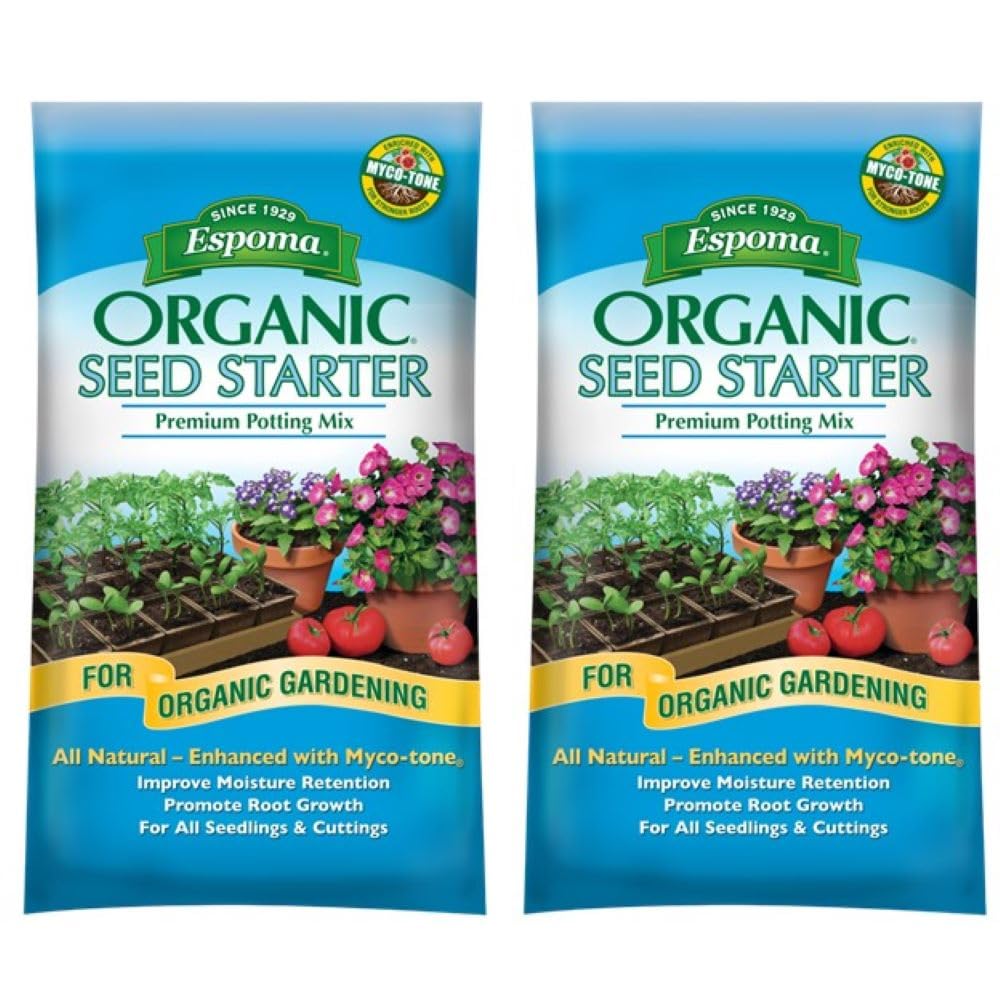
A peat-based classic with Myco-Tone added to get roots off to a flying start.
Espoma is a trusted name in organic gardening, and this premium seed starter mix lives up to that reputation. The blend is built on sphagnum peat moss and perlite, with yucca extract to help water penetrate evenly and lime to keep the pH correct for sensitive seedlings. The big differentiator here is Myco-Tone, a mix of endo and ecto mycorrhizae (beneficial fungi that team up with roots to boost nutrient uptake).
This particular listing gives you a 16 Quart total in two 8-quart bags, which is more volume than the single 10 Quart Jiffy or Hoffman bags, and the dual-bag system makes it easy to use one now and store one later. Owners mention that “my seedlings have done very well with this product,” and the light, fluffy texture from the perlite ensures air movement around the root zone. It is also versatile enough to root stem and leaf cuttings, so it pulls double duty.
The peat base is a classic for a reason — excellent moisture retention — but it can be slightly hydrophobic (resistant to water) when dry. Soaking the mix thoroughly before planting is a good practice. For a peat-free alternative, check the Duspro coco coir option below.
The Strong Points
- Myco-Tone mycorrhizae provides a root-health boost
- Yucca extract improves water penetration and wetting
- Comes as 2 bags of 8 qt each for flexible use
One Catch
- Peat moss can be difficult to re-wet if it dries out completely
Best for the organic grower: who wants a proven peat base with an added biological edge for strong root systems.
skip it if: You are strictly avoiding peat moss due to environmental concerns or need a mix that re-wets instantly.
4. Duspro Seed Starter Potting Soil Mix, 8 Dry Quarts
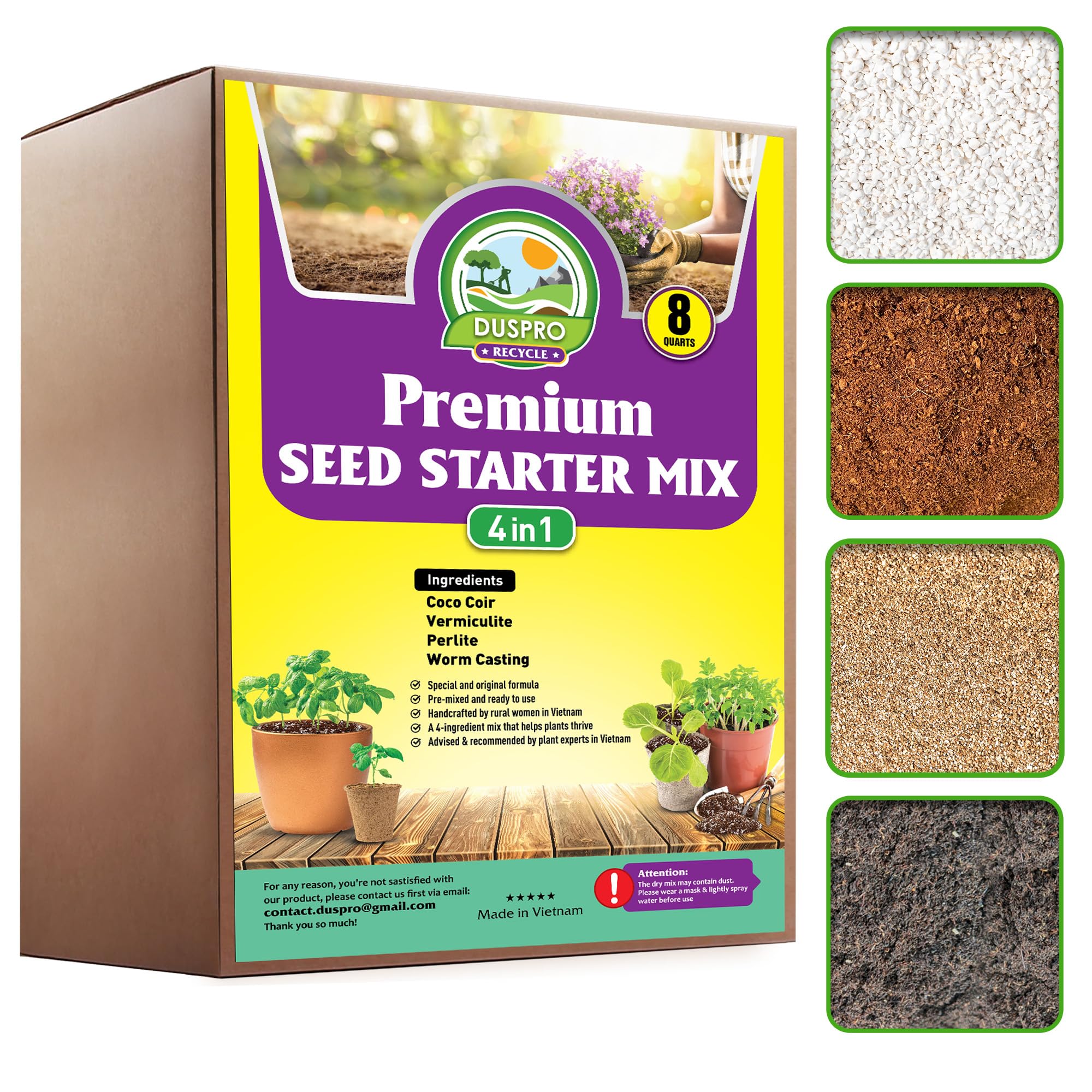
A carefully blended peat-free mix that solves the common problems of soggy or dry spots.
This Duspro mix is a 4-in-1 blend of coco coir, perlite, vermiculite, and worm castings — all peat-free. Coco coir re-wets instantly, a major advantage over peat, and the hand-screened texture ensures fine, consistent particles that make excellent contact with seeds. One reviewer compared it directly to other mixes: “Other mixes I have used either wick too much water and become soggy, or contain too much hydrophobic fibers and end up with dry spots.” This mix avoids both extremes.
At 8 Dry Quarts, the bag is compact but covers around 6-8 standard seed trays. The worm castings provide a gentle, slow-release nutrient boost without burning delicate roots. It works well for vegetables like tomatoes, peppers, and basil. Customers note that “my plants and seeds have taken root very fast and very healthy,” which matches the fine, well-aerated texture. The Duspro is a direct competitor to the Jiffy mix above, but with a lighter, more re-wettable base material.
If you want a coco coir-based pellet for ultimate convenience, check the Wonder Soil pellets below. But if you prefer a loose mix for trays, this is a top peat-free contender.
The Advantages
- Peat-free and re-wets instantly
- Perfect balance of wicking and aeration
- Worm castings provide gentle nutrition
The Downsides
- 8 quart bag is smaller than some 10-12 qt options
- Less nutrient-dense than compost-based mixes
Choose this for: A consistent peat-free experience with no soggy or dry spots, verified by experienced seed starters.
Avoid it if: You need a larger volume bag or prefer the weight of a compost-based mix.
5. WONDER SOIL 100 Organic Seed Starter Pellets
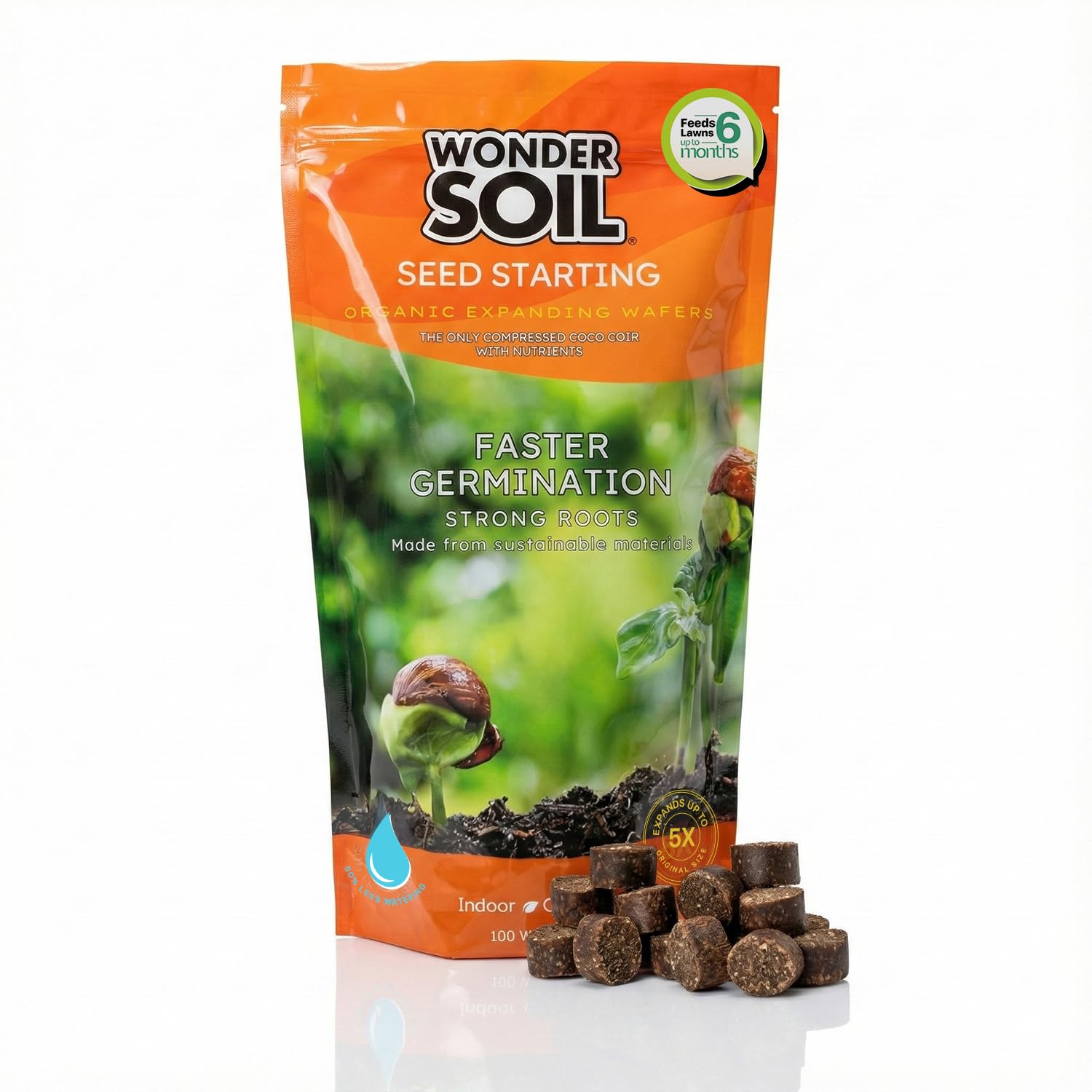
The ready-to-expand pellet that comes pre-loaded with nutrients for faster germination.
These Wonder Soil pellets take all the measuring and mixing out of seed starting. Each compressed disc is made from organic coco coir and is already infused with worm castings, mycorrhizae, kelp, and calcium — a significant upgrade from standard plain coir pellets. When you add water, each pellet expands to 4 times its original size, creating a nutrient-rich planting cell. Reviewers point out: “Seeds already sprouted within a week for most, with light of course.”
The 100 Count box gives you a large supply for a single season. The pellets themselves are small when dry, making them easy to store. Keep in mind that the expanding volume can vary — one reviewer pointed out that some pellets fill a cell completely while others only reach halfway. This inconsistency means you may need to trust the process and top off with a little loose mix if needed.
Compared to the loose Duspro or Jiffy mixes, these pellets are far more convenient but slightly less flexible. You cannot adjust the texture or mix them with other ingredients as easily. They are the perfect solution for someone who wants to start 50-100 seeds in trays with zero dust or mess.
Why They Work
- No measuring — just add water and expand
- Pre-loaded with nutrients for faster early growth
- Organic coco coir base with mycorrhizae
The Inconsistency
- Expansion volume can vary between pellets
- Less control over texture than a loose mix
Pick this for: Zero-mess seed starting with built-in nutrients, ideal for beginners or quick setups.
Pass on it if: You prefer controlling your own mix ratios or need consistently filled cells every time.
6. Hoffman Seed Starter Potting & Planting Mix, 10qt Bag

A lightweight, six-component soilless mix that punches above its weight for the price.
Hoffman has been a go-to for gardeners on a budget, and this 10 Quart bag is a classic example. At just 4.7 Pounds, it is significantly lighter than the Purple Cow mix (8 Pounds) — due to its soilless formula. It includes a built-in wetting agent to help water spread evenly, which is a smart feature for a mix in this price range. The six-component blend is designed to be lightweight, loose, and fertile — three things young seeds appreciate.
It works well for direct sowing in trays, transplanting, or rooting cuttings. The texture is fine enough for small seeds but has enough structure to prevent the mix from compacting into a hard brick. While it does not have the nutrient density of a compost-based mix like the Purple Cow or the biological boosters of the Espoma, it is a reliable, no-frills option for starting a garden. The major trade-off is the need to fertilize earlier — probably around the 2-3 week mark for vigorous seedlings.
For the entry-level price point (the most affordable of all the bagged mixes here), you get a solid foundation for germination. It is a strong choice for beginners who want to learn the ropes without spending on premium additives.
The Budget Benefits
- Very lightweight (4.7 Pounds) and easy to handle
- Built-in wetting agent helps prevent dry spots
- Six-component soilless formula is well-balanced
The Limitations
- Lower nutrient content than compost-based competitors
- May need early fertilizing (around 2-3 weeks)
Best for the budget-conscious grower: who needs a large bag of light, balanced mix to start dozens of trays while staying affordable.
pass on it if: You need a mix that feeds seedlings for several weeks without added fertilizer.
7. Vermont Compost Company Fort Vee Organic Potting Mix, 20 Quarts

The gold-standard, high-nutrient blend for heavy feeders like tomatoes and peppers.
Fort Vee from Vermont Compost Company is unlike any other mix on this list. It is a premium, compost-dense soil that includes composted manure and plant materials, blonde sphagnum peat moss, crushed granite and basalt, blood meal, kelp meal, steamed bone meal, mined gypsum, vermiculite, and washed coconut coir. This is not a simple inert mix — it is designed for plants that demand a lot of nutrients from the very start. At 20 Quarts, it is also the largest bag by volume here.
The texture is “fluffy and light” according to a reviewer who contacted the company about the gold specks, which are vermiculite for aeration and drainage. One buyer raved: “This is superb for seed starting. When I opened the bag it reminded me of the soil of my childhood where I could grow anything.” It holds water well and provides nutrients for heavy feeders before transplanting. A buyer testing it with marigolds saw sprouts after 3 days (the seed packet promised 5-8 days).
The catch is the price, which is the highest per quart here, and the fact that the rich compost base can be too strong for the most delicate, nutrient-sensitive seeds. It is best reserved for vegetables, herbs, and flowers that benefit from a nutrient-dense start. For heavy feeders, this is the ultimate pick.
The Standout Features
- Rich compost base provides deep nutrition for heavy feeders
- Fluffy, light texture with excellent drainage
- Large 20 Quarts volume for extensive planting
What to Consider
- Premium price point — the highest per quart here
- May be too rich for the most delicate, tiny seeds
The final word: If you are growing heavy feeders like tomatoes, peppers, or squash and want a nutrient-dense, high-quality organic start, the Fort Vee is a clear winner.
Skip it for: Delicate flowers or herbs that need a lean, inert starting medium without heavy compost.
Understanding the Specs
Base Material
The main ingredient in a seed starting mix defines how it behaves. Peat moss (used in Jiffy and Espoma) holds a lot of water but can be hard to re-wet if it dries out. Coco coir (used in Duspro and Wonder Soil) re-wets instantly and is more sustainable, but provides fewer native nutrients. Compost (used in Purple Cow and Vermont Compost) feeds seedlings for weeks but is heavier and denser — great for soil blocks.
Volume vs. Weight
Volume (measured in quarts) tells you how many cells you can fill. Weight tells you if the mix is dense (compost-based) or light (soilless). A light mix like Hoffman (4.7 Pounds for 10 Quarts) is easy to lift and pour but does not hold its shape as well as a heavy mix like Purple Cow (8 Pounds for 12 Quarts). Choose weight based on whether you use trays or soil blocks.
FAQ
Can I use regular potting soil for starting seeds?
What is the difference between seed starting mix and potting soil?
How wet should I keep my seed starting mix?
Why does my seed starting mix have mold on top?
Should I add fertilizer to my seed starting mix?
What is dampening-off and how do I prevent it?
Can I reuse seed starting mix from last year?
What is the advantage of soil blocking with seed starting mix?
Is coco coir better than peat moss for seed starting?
How many seed trays can one bag of mix fill?
Final Thoughts: The Verdict
Across the board, the dirt for seed starting winner is the Purple Cow Organics Seed Starter because it offers the best balance of compost-based nutrition, soil-blocking structure, and buyer-verified performance. If you want a proven, high-germination, peat-based mix, grab the Jiffy Natural & Organic Seed Starting Mix. And for heavy feeders like tomatoes and peppers that need a nutrient-dense jumpstart, the standout is the Vermont Compost Company Fort Vee.
How We Picked
We do not accept paid placement. Every pick is matched to a real buyer and a real use-case; we do not hands-on test units.
Sources & Methodology
Specifications: manufacturer listings and product documentation. Review insights: verified customer reviews, as of July 2026. Pricing: not shown on this page (it changes often); check the current price via the retailer link.
As an Amazon Associate, Lawn Gear Lab earns from qualifying purchases. This does not affect which products we feature.