
Specs are compiled from manufacturer listings and verified buyer reviews and can change over time — please confirm the key details on the product page before buying.
Your plant’s roots need more than just dirt. They need a mix that holds the right amount of air and water. Get it wrong, and you get root rot or fungus gnats. Get it right, and your plant thrives for months with almost no extra work. This guide breaks down the best bag for each situation so you buy the right one the first time.
I’m Rikta — the founder and writer behind Lawn Gear Lab. This guide is built by comparing the manufacturers’ published specifications and the patterns across verified customer reviews, so you get each pick’s real strengths and trade-offs instead of marketing spin.
Whether you are repotting a tired houseplant, starting seeds for your garden, or filling outdoor containers, this breakdown of the best dirt for potted plants will help you match the right soil to your exact setup without wasting money on a bag that does not fit your needs.
Quick Picks
- Lambert Potting Mix — Best Overall
- Miracle-Gro Indoor Potting Mix (2-Pack) — Gnat Guardian
- Perfect Plants Indoor Plant Soil — Bug-Free Value
- Midwest Hearth Premium Potting Soil Mix — Seed Starter
- Espoma Organic Potting Mix (2-Pack) — Organic Powerhouse
- Miracle-Gro Potting Mix (3-Pack) — Heavy Feeder
- Coast of Maine Bar Harbor Blend Potting Soil — Premium Harvest
How To Choose The Best Dirt For Potted Plants
Not every bag of dirt is the same. A blend packed with heavy compost might be perfect for outdoor flower pots but will suffocate the roots of a spider plant on your shelf. Here are the three factors that matter most when picking the right mix.
Drainage vs. moisture retention
Fine roots need both air and water. Ingredients like perlite (small white volcanic rocks that create air pockets) and sand help water drain through so roots do not rot. Peat moss and coco coir (coconut husk fibers) act like sponges, holding onto moisture so you do not have to water every day. The right mix balances both based on what you are growing — succulents want fast drainage, while ferns prefer more moisture.
The truth about fungus gnats
Many standard potting soils contain compost or bark, which can harbor fungus gnat eggs. If you have ever seen tiny flies buzzing around your houseplants after repotting, the soil was the source. Some mixes specifically leave out compost and bark to break the gnat cycle, which is a huge advantage for indoor plants.
Feeding power — does it already contain fertilizer?
Some soils come pre-loaded with nutrients that feed plants for months. That is convenient — you do not need to remember to add fertilizer. Others are “plain” blends that rely on you to add your own plant food. If you want a low-maintenance setup, a mix that feeds for up to 6 months saves you a step, but be careful with seedlings, which can be burned by too much fertilizer too soon.
Quick Comparison
On smaller screens, swipe sideways to see the full table.
| Model | Best For | Volume | Item Weight | Key Ingredients | Amazon |
|---|---|---|---|---|---|
| Lambert Potting Mix | All-purpose indoor/outdoor | 8 Quarts | 1.75 Kilograms | Peat moss, perlite | Amazon |
| Miracle-Gro Indoor Mix (2-Pack) | Houseplants & gnats prevention | 6 Qt. (each bag) | 1 Pounds (per bag) | Sphagnum peat moss, coconut coir, perlite | Amazon |
| Perfect Plants Indoor Soil | All indoor potted plant types | 4 Quarts | — | Pine bark, coco coir, perlite, sand, garden lime | Amazon |
| Midwest Hearth Premium Mix | Seed starting & rooting | 8 Dry Quarts | 1.25 Kilograms | Peat moss, vermiculite, perlite | Amazon |
| Espoma Organic Potting Mix (2-Pack) | Organic indoor/outdoor containers | 8 qt. (each bag) | — | Sphagnum peat moss, humus, perlite, earthworm castings, kelp meal | Amazon |
| Miracle-Gro Potting Mix (3-Pack) | Outdoor containers, flowers, veggies | 0.66 cu ft (each bag) | — | Peat moss, perlite, fertilizer | Amazon |
| Coast of Maine Bar Harbor Blend | Premium organic container gardening | 16 Quarts | 14 Pounds | Sphagnum peat moss, compost, perlite, lobster/crab shell meal, kelp meal | Amazon |
In-Depth Reviews
1. Lambert Potting Mix
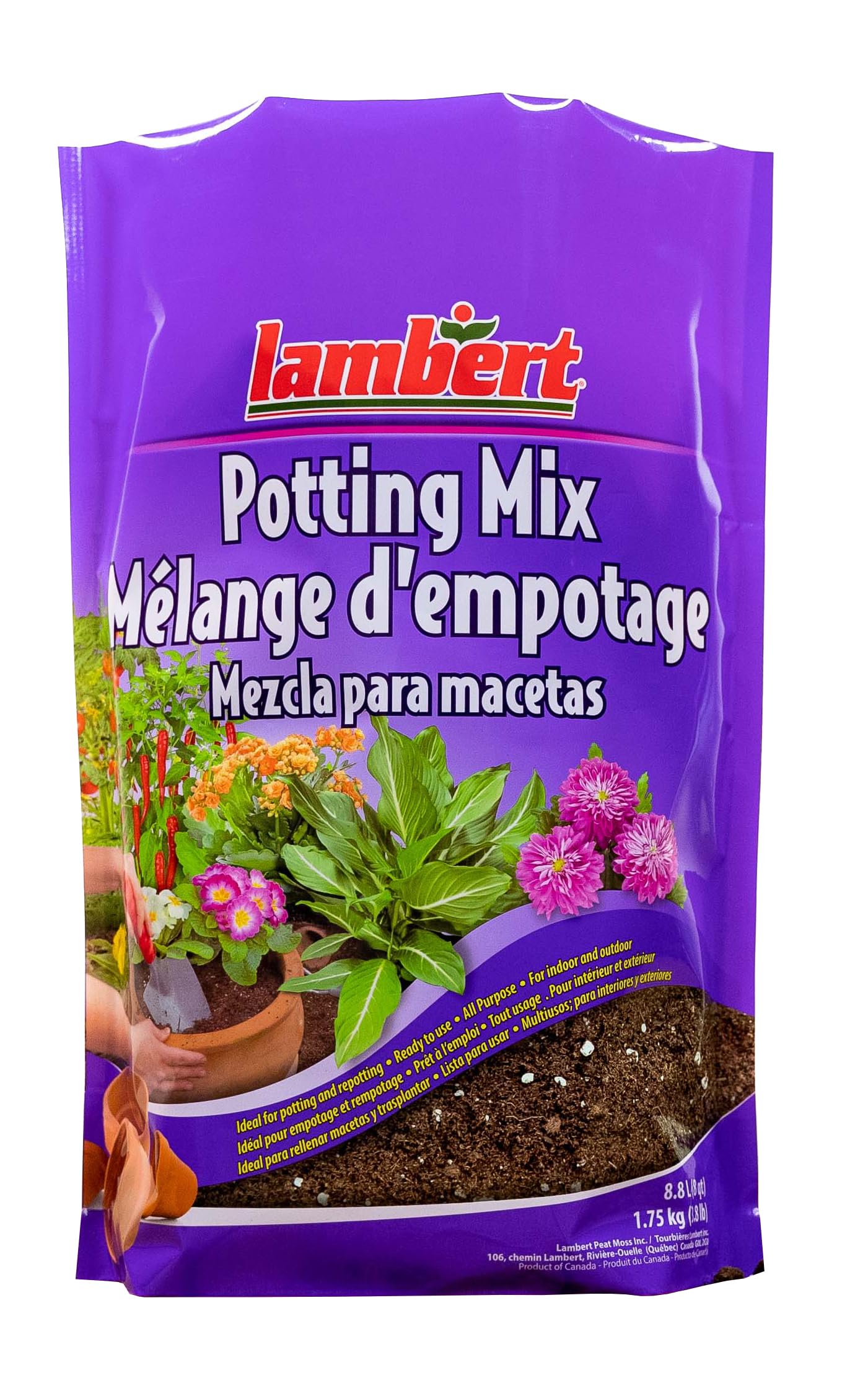
A clean, ready-to-use mix that brings weak houseplants back to life.
This all-purpose blend works for both indoor pots and outdoor containers straight from the bag — no mixing or sifting required. Buyers report that one owner “repotted my houseplants as they were weak and hanging lifeless” and came back from a weekend trip to find them thriving, an honest signal that the formula provides a fast boost. The Lambert Potting Mix uses just peat moss and perlite (small white volcanic rocks that create air pockets for drainage), so it holds moisture without getting waterlogged.
At 8 quarts versus the Perfect Plants Indoor Soil at 4 quarts, it gives you more volume for potting multiple containers. And at 1.75 kilograms versus the Midwest Hearth Premium Mix at 1.25 kilograms, it suggests a denser, more moisture-retentive composition for sturdy root growth. A few buyers noted very tiny seeds might benefit from sifting first, since the mix can contain small debris. Choose this over the Perfect Plants if you need to fill more pots at once.
Why Shoppers Choose This
- Ready to use with no mixing or blending needed
- Light texture offers both good drainage and moisture retention
- Eco-friendly formulation
Small Trade-offs
- May need sifting if used for germinating very fine seeds
- Best results may require added compost or fertilizer for long-term feeding
Grab this if: you want one versatile mix for houseplants, flower pots, and vegetable containers without the hassle of blending your own.
Look elsewhere if: you need a specialized seed-starting blend with ultra-fine texture for tiny seeds.
2. Miracle-Gro Indoor Potting Mix (2-Pack)
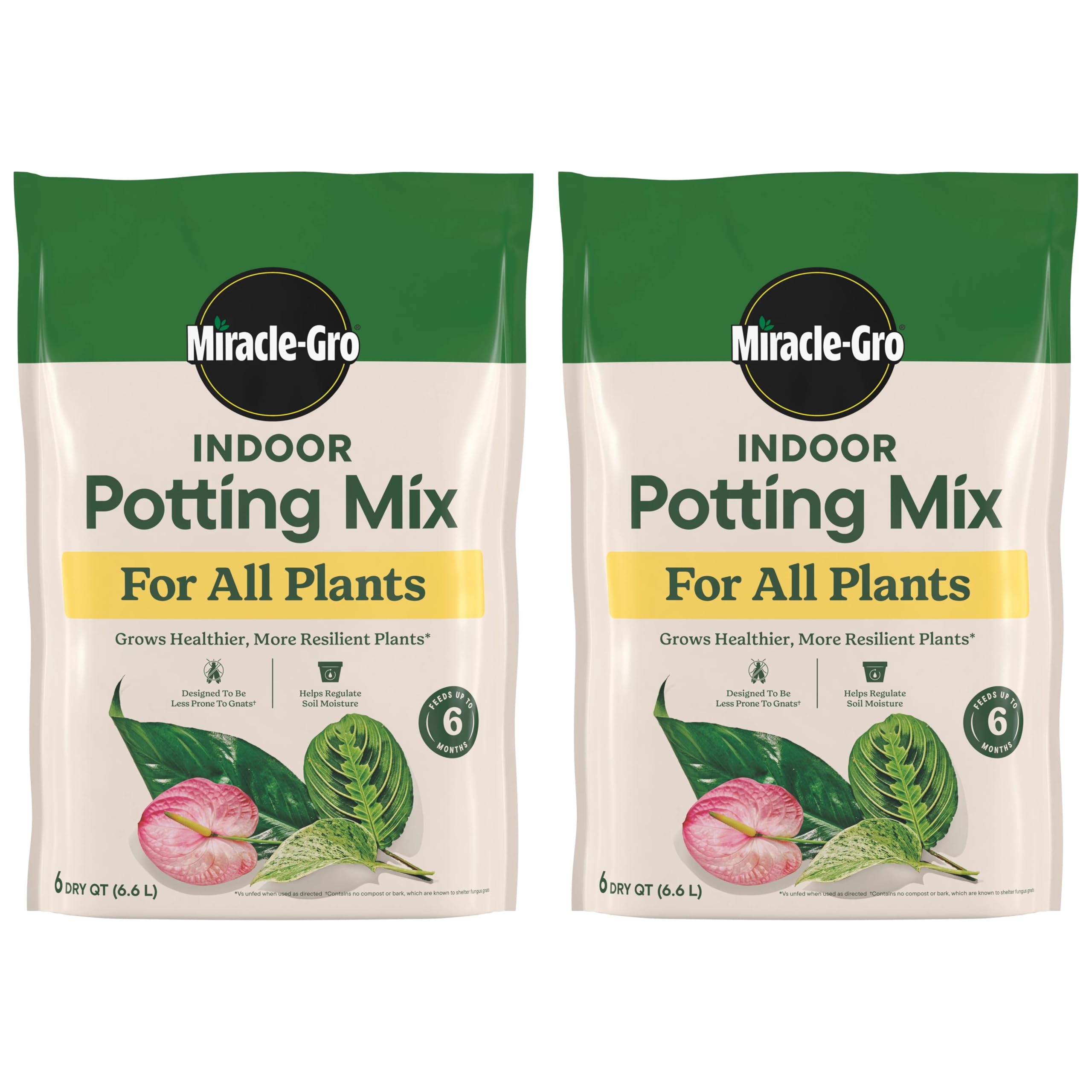
Designed for houseplants, this mix skips the bark and compost that attract gnats.
If you have fought fungus gnats (tiny flies that buzz around soil), you will appreciate what Miracle-Gro left out of this indoor formula. It contains no compost or bark — the two ingredients most likely to harbor gnat eggs. Instead, the blend uses sphagnum peat moss, coconut coir (coconut husk fibers that hold moisture), and perlite to hold moisture while letting roots breathe. It also feeds plants for up to 6 months, so you can skip fertilizing for half a year. Owners mention it offers “excellent drainage and moisture retention” and that it feels “lightweight, easy to use.”
Because the indoor mix is formulated for houseplants, it is best kept for pots on your shelf rather than outdoor containers that get heavy rain. A few reviewers mentioned that the soil came out of the bag a little dusty, so you might want to open it slowly or moisten it first. This 2-pack gives you two 6-quart bags, with each bag filling about four 6-inch containers — enough to repot several plants without leftover mix sitting in storage for months. For gnat-free indoor soil, this is a more targeted option than the multi-purpose Lambert Potting Mix.
Why Indoor Gardeners Like It
- Stops fungus gnats by leaving out compost and bark
- Built-in plant food feeds houseplants for up to 6 months
- Light texture drains well without staying waterlogged
Keep in Mind
- Some bags arrive dusty and need a light misting before use
- Not suitable for succulents or cacti without added sand or perlite
Best for: houseplant owners who hate dealing with gnats and want a low-fuss soil that feeds on its own for months.
skip it if: you are planting succulents, cacti, or any plants that need very fast drainage without extra additives.
3. Perfect Plants Indoor Plant Soil

A lightweight, carefully mixed soil that stays free of gnats and works for many plant types.
Perfect Plants made this mix with organic materials such as pine bark, coco coir, perlite, sand, and garden lime (a mineral that balances pH so nutrients are available to roots). This combination drains quickly and protects roots from sitting in water. Customers note it is “bug-free, unlike Miracle Grow” and that their plants are “thriving” after transplanting. One reviewer noted “this soil exceeded my expectations” after bad experiences with gnat-infested bags from other brands. The blend is formulated for popular indoor species including Monstera, Aloe, Spider Plants, and African Violets.
The bag is smaller than many options at just 4 quarts versus the Lambert Potting Mix at 8 quarts, so it is best for repotting a few houseplants rather than filling multiple large containers. The texture is light and airy, and the resealable bag keeps unused soil fresh for later use. A few buyers mentioned it dries a bit slower in plastic pots, so you should adjust your watering schedule accordingly during the first week. This is the most compact option for a quick, gnat-free repot of one or two plants.
What Buyers Appreciate
- Gnat-free, using ingredients that do not harbor eggs
- Light, airy texture with excellent drainage
- Resealable bag keeps remaining soil fresh
The Catch
- Small 4-quart bag is better for a few pots than big projects
- More expensive per quart than some larger bags
Reach for this if: you have been burned by soil full of gnats and want a clean, lightweight mix for your indoor houseplants.
Consider something else if: you need to fill several large outdoor pots — you will work through this bag fast.
4. Midwest Hearth Premium Potting Soil Mix

A professional-grade blend that gives delicate seedlings the light, airy start they need.
If you start seeds indoors, you know that heavy soil can crush tiny sprouts. Midwest Hearth formulated this mix with peat moss, vermiculite (a mineral that holds water and nutrients like a sponge), and perlite — three ingredients that keep the soil fluffy and well-drained so fragile roots can push through easily. Reviewers point out it was “great for my germinating petunias” and praised the “very easy open bag and resealable” closure. The pH is balanced to suit a broad range of plants, from herbs to flowers.
At 1.25 kilograms, this soil is noticeably lighter than the Lambert Potting Mix (1.75 kilograms), confirming its airy structure. However, a few users noted that if you do not pre-soak the bag before planting, the peat-heavy mix can repel water at first, causing it to drain too quickly. Once you wet it properly, the vermiculite and perlite work together to hold just enough moisture without drowning the roots. This 8-quart bag hits a nice middle ground — big enough for several seed trays but not so large it goes stale before you finish it. For seed starting, it is a more specialized choice than the all-purpose Lambert.
Perfect For Seed Starting
- Light, fluffy texture helps tiny roots grow strong
- Resealable bag keeps the remaining soil fresh
- No weeds, bugs, or bad odor reported
One Tip
- Needs a good pre-soak or the dry peat will repel water at first
- Some buyers find it expensive per quart compared to big-box brands
Grab this if: you start your own seeds and want a sterile, well-draining mix that will not crush delicate sprouts.
Pass if: you need a heavy, moisture-retaining mix for thirsty outdoor pots in hot weather.
5. Espoma Organic Potting Mix (2-Pack)

An all-natural blend packed with earthworm castings and kelp for rich, steady growth.
Espoma is a trusted name in organic gardening, and this potting mix delivers on that reputation. It blends sphagnum peat moss, humus (broken-down organic matter that improves soil structure), and perlite with earthworm castings (worm droppings that add nutrients), alfalfa meal, kelp meal, and feather meal — ingredients that feed plants slowly without synthetic chemicals. It also includes Myco-Tone, a mix of endo and ecto mycorrhizae (beneficial fungi that attach to plant roots and help them absorb more water and nutrients). Shoppers say “the plants took to it immediately and are growing great.”
One buyer mentioned the soil arrived “too dry, though, to actually absorb water on a new-plant,” so you should plan to moisten it thoroughly before potting. This 2-pack gives you two 8-quart bags, making it a solid option for both indoor repotting and outdoor container gardens with herbs and vegetables. The only real hesitation from buyers is the price — this is more expensive than most standard soils — but for organic gardeners who avoid synthetic plant foods, the ingredients justify the cost. For a rich, natural blend, this is a step up in ingredients from the Lambert Potting Mix.
Why Gardeners Love It
- Rich organic ingredients including earthworm castings and kelp meal
- Myco-Tone helps roots absorb water and nutrients better
- Suitable for vegetables, herbs, houseplants, and outdoor containers
Know Before You Buy
- Tends to arrive very dry and needs thorough pre-moistening
- Higher price per quart than conventional potting soils
Perfect for: organic gardeners who want a rich, natural blend that feeds plants without synthetic fertilizers.
Skip if: you are on a tight budget or need a mix that works straight from the bag without pre-watering.
6. Miracle-Gro Potting Mix (3-Pack)

The classic outdoor container soil that promises bigger blooms without extra work.
This is the standard-bearer for outdoor potted plants. Miracle-Gro Potting Mix is formulated for container flowers, vegetables, shrubs, annuals, and perennials, and it feeds them for up to 6 months so you do not have to mix liquid fertilizer all summer. The manufacturer claims it “Grows Plants Twice As Big!” (compared to unfed plants), and buyers echo that confidence, calling it “a great product, and worth every penny.” Users love that it stays loose instead of packing down hard, which helps water reach the roots evenly.
This mix is explicitly for outdoor containers — it has compost and bark that can attract gnats if used indoors for long periods. The 3-pack includes three 8-quart bags, with each bag covering two 8-inch pots. Reviewers also note the smaller bag size is convenient because you do not have to drag heavy 50-pound bags from the garden center. One catch: because it contains fertilizer, it may be too strong for very young seedlings. Stick with a lighter blend for starting seeds, then transplant into this once the plants are established. For outdoor volume, this 3-pack is a more economical choice than buying individual bags of the Lambert.
What Outdoor Gardeners Like
- Built-in fertilizer feeds potted plants for up to 6 months
- Stays loose and does not pack into a hard block
- Smaller bags are easier to handle than bulk sacks
Consider This
- Not ideal for indoor use — may bring in fungus gnats
- Pre-loaded fertilizer can be too strong for seedlings
Best for: anyone with outdoor flower pots, vegetable containers, or hanging baskets who wants a soil that feeds and drains reliably all season.
Look elsewhere if: you are starting seeds indoors or want an organic, chemical-free mix.
7. Coast of Maine Bar Harbor Blend Potting Soil
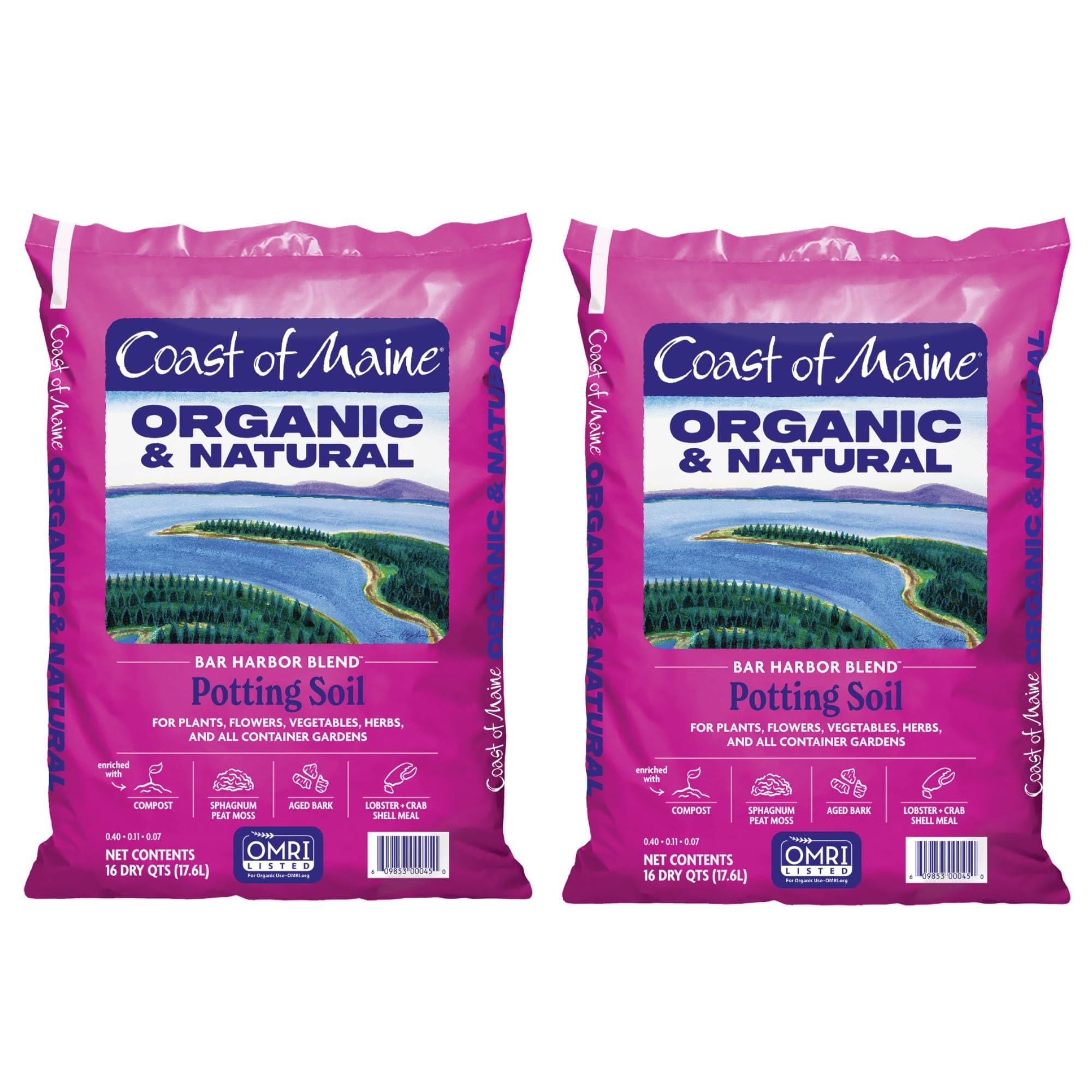
A nutrient-dense organic blend enriched with lobster and crab shell meal for serious growers.
Coast of Maine took an unusual approach by adding lobster and crab shell meal — natural sources of slow-release nitrogen and calcium — alongside sphagnum peat moss, compost, perlite, and kelp meal. The result is a dark, rich soil that smells earthy rather than chemical, and buyers report their tomato plants “never looked so good.” One owner reported the soil has “a darker color” from the compost content, with “less peat moss” than typical mixes, and “no bad smell.”
At 16 quarts and 14 pounds, this is the largest and heaviest bag in the lineup — compared with a standard 8-quart bag, you get 16 quarts instead of 8 quarts. It is designed for both indoor and outdoor container gardens, including hanging baskets, window boxes, and raised beds. The natural slow-release nitrogen means you will need less frequent fertilizing. A few buyers mentioned the texture is “super nice” and that it holds moisture well without becoming soggy. The biggest trade-off is the premium price, but for serious container gardeners growing vegetables like tomatoes and peppers, the results speak for themselves — owners mention it is “well worth the price.” This is the most nutrient-rich option here, even compared to the organic Espoma.
Why Serious Gardeners Buy It
- Nutrient-rich with lobster/crab shell meal and kelp for slow-release feeding
- Large 16-quart bag is excellent value per quart for big projects
- Encourages strong root development and sustained plant growth
The Fine Print
- Heavy bag at 14 pounds — not the easiest to carry home
- Premium price may be overkill for casual indoor houseplants
Reach for this if: you grow vegetables or flowering containers and want the richest organic mix available for serious harvests.
Keep it simple if: you just need a small bag for a single houseplant — this much soil will go to waste before you use it all.
Understanding the Specs
Volume (Quarts)
This tells you how much soil you are actually buying. A 4-quart bag is roughly enough for a single 6-inch pot with a bit left over. An 8-quart bag covers two to three medium pots. The Coast of Maine 16-quart bag is ideal if you have multiple large containers or a raised bed to fill. Match the volume to your project size so you do not run out mid-repot or end up storing half a bag for a year.
Key Ingredients (Peat, Perlite, Compost)
Peat moss and coconut coir hold moisture. Perlite (those little white rocks) creates air pockets so roots can breathe. Vermiculite also holds water and nutrients, making it great for seed starting. Compost adds slow-release nutrients but can bring fungus gnats indoors. Watch for “bark” in the ingredient list — it improves drainage but sometimes carries pests. If you want gnat-free soil, look for a mix that explicitly leaves out compost and bark.
FAQ
Can I use garden soil from my yard for potted plants?
What is the difference between potting mix and potting soil?
How do I know if my potting soil is too wet for my plants?
Does potting soil expire or go bad?
Can I reuse potting soil from last season?
What is perlite and why is it in my potting mix?
Is organic potting soil better for my plants?
Why does my potting soil repel water when I first use it?
How often should I repot my houseplants with fresh soil?
What is the best soil for succulents and cacti compared to regular potted plants?
Final Thoughts: The Verdict
For most people, the best dirt for potted plants is the Lambert Potting Mix because it blends the right volume, clean ingredients, and all-purpose versatility for both indoor and outdoor containers. If you want a gnat-proof mix that feeds houseplants on its own, grab the Miracle-Gro Indoor Mix. And for organic gardeners growing vegetables in pots, the Coast of Maine Bar Harbor Blend brings the premium nutrition your tomatoes and peppers need to thrive.
How We Picked
We do not accept paid placement, and we did not hands-on test every unit. Instead, we match each pick to a real buyer and use-case by comparing the manufacturers’ published specifications against the patterns in verified customer reviews — so you get each pick’s real strengths and trade-offs instead of marketing copy.
Sources & Methodology
Specifications: manufacturer listings and product documentation. Review insights: verified customer reviews, as of July 2026. Pricing: not shown on this page (it changes often); check the current price via the retailer link.
As an Amazon Associate, Lawn Gear Lab earns from qualifying purchases. This does not affect which products we feature.