
Specs are compiled from manufacturer listings and verified buyer reviews and can change over time — please confirm the key details on the product page before buying.
Your Monstera’s roots hate sitting in wet, dense soil. The single most important thing to know: regular potting soil holds too much water, which suffocates roots and invites rot. What your Monstera needs is an airy, well-draining aroid mix — a blend designed for tropical plants whose roots need to breathe — with ingredients like bark, pumice, and coco coir that let water flow through freely. This guide compares the manufacturers’ published specs and patterns across verified customer reviews, so you get each pick’s real strengths and trade-offs.
I’m Rikta — the founder and writer behind Lawn Gear Lab. This guide is built by comparing the manufacturers’ published specifications and the patterns across verified customer reviews, so you get each pick’s real strengths and trade-offs instead of marketing spin.
The right dirt for monstera balances aeration, moisture, and nutrients without trapping water around the roots.
Our Picks at a Glance
How To Choose The Best Dirt For Monstera
Four things matter: drainage, aeration, moisture retention, and ingredients that keep the soil alive.
Chunky Texture Is Non-Negotiable
Monstera roots are epiphytic — they naturally grow on tree bark in the wild — so they need large air pockets. Pine bark fines, coco husk chips, and pumice create that chunky texture so water drains fast and oxygen keeps flowing. If the mix looks like fine dust or feels dense, skip it: it will compact and drown the roots.
Drainage Ingredients Matter More Than Fertilizer
Perlite, pumice, lava rock, and LECA (lightweight expanded clay aggregate, small clay balls that hold air) give a mix its structure. A bag loaded with these means you can water freely without worrying about soggy soil. Biochar is another star: it holds nutrients and microbial life while keeping the mix loose.
Peat-Free and Perlite-Free Options Exist
Harvesting peat releases carbon dioxide and damages wetlands; perlite production uses high heat. Modern aroid blends swap them for sustainable alternatives like coco coir (fiber from coconut husks) and natural volcanic pumice that work as well or better.
Quick Comparison
| Model | Best For | Volume | Key Ingredient | Special Feature | Amazon |
|---|---|---|---|---|---|
| Craft Aroid Potting Mix★ Best Overall | Premium Peat-Free Pick | 1 Quart | Douglas fir bark, pumice, lava rock | New Zealand Tree Fern Fiber | Amazon |
| Premium AROID Soil BlendAlso Great | Overall Best for Growth | 64 oz (2 Qts) | Orchid bark, pumice, biochar | Mycorrhizae included | Amazon |
| Rosy Soil Aroid Mix | Eco-Friendly Premium | 4 Quarts | Pine bark, pumice, biochar | Carbon-negative, peat-free | Amazon |
| Sol Soils Houseplant Chunky Mix | Fast Drainage Champion | 1 Gallon | Coco coir, pumice, LECA | Peat-free, supports reforestation | Amazon |
| Noot Potting Soil Mix | Microbe-Rich Mix | 1 Gallon | Coconut chips, perlite | 16 strains of beneficial bacteria | Amazon |
| Gardenera Premium Monstera Soil | Best Entry-Level Value | 1 Quart | Peat moss, perlite, coco coir | IBI-certified Biochar | Amazon |
| Monstera Imperial by rePotme | Large-Volume Premium | 8 Quarts | Bark, peat, roots | Handcrafted in small batches | Amazon |
In‑Depth Reviews
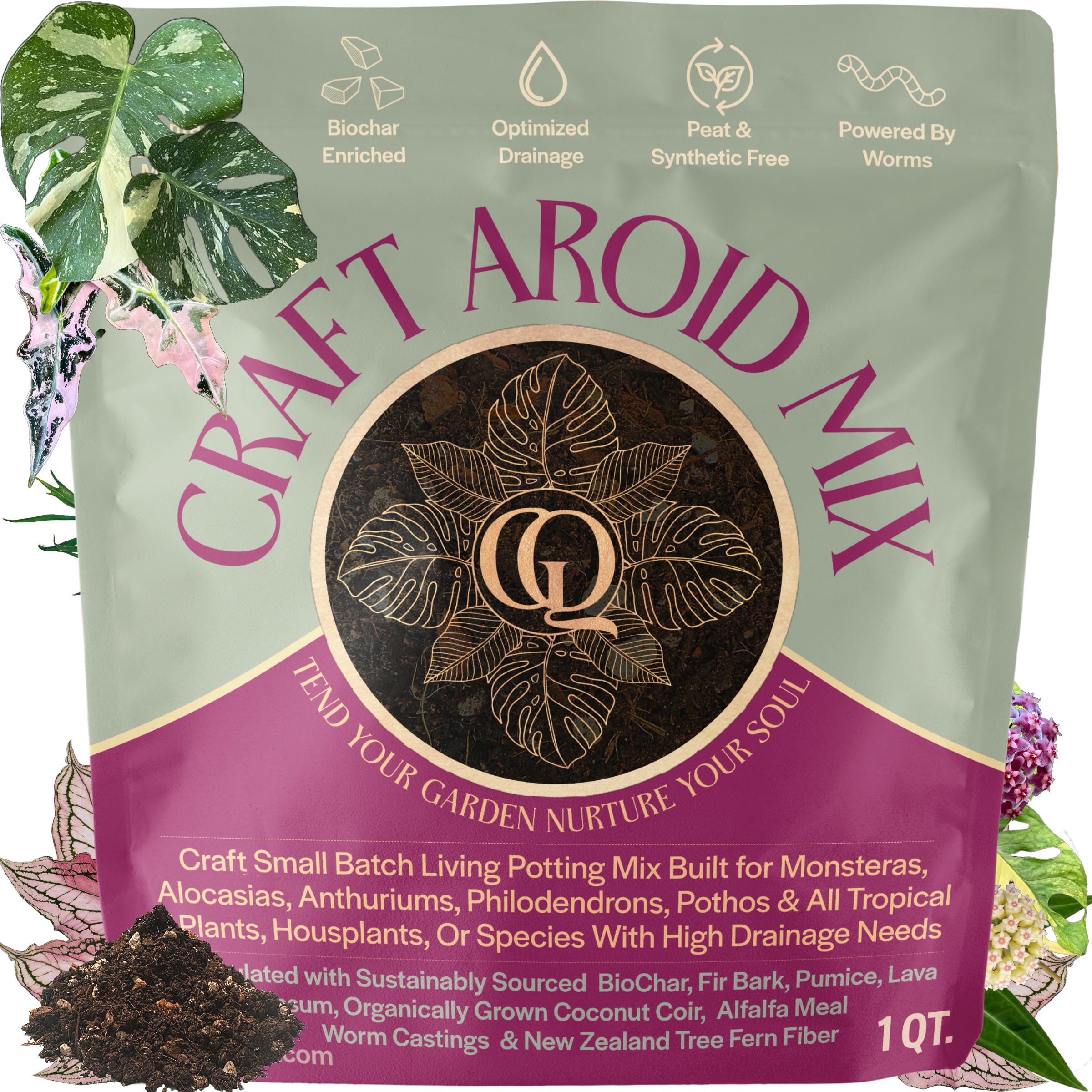
1. Craft Aroid Potting Mix- Elite Organic Alocasia, Philodendron, Monstera Soil Mix, Chunky, Well Draining Potting Soil for Indoor Plants, All Tropical Plants & Houseplants, Sustainable & Peat Free 1QT
Our pick — over 4.5★ from 950+ verified ratings; the strongest balance of quality and price.
An eco-conscious blend that swaps peat for tree fern fiber and lava rock.
What makes this mix different is what it leaves out: no peat, no perlite. Grow Queen uses Douglas fir bark fines, lava rock, and pumice — natural volcanic rocks that need no processing — to create the chunky structure Monsteras love. It also adds New Zealand Tree Fern Fiber, which acts as a soil conditioner and neutralizes the pH to around 6.0 (mimicking the natural acidity of tropical forest soil). Buyers call it “airy” and “light,” able to hold moisture without waterlogging. One buyer who ordered it five times in a row called it “my forever soil,” praising the consistent quality, no bugs, and a fresh dirt smell. It earned 4.6 out of 5 stars from nearly 1,000 ratings.
The catch: one reviewer cautioned that in pots bigger than 6 inches, the soil held too much moisture after watering, causing root rot over 2 months. This mix is best for small to medium Monsteras. It outperforms the Gardenera mix on ingredient quality (no peat, no perlite) but falls short on volume for big pots. The 1-quart bag is pre-mixed and moist, ready to use immediately, and the coco coir is washed more times than competitors to remove excess salt. If you have smaller aroids and want a sustainable pick, this one delivers without a heavy conscience.
The Highlights
- Peat-free and perlite-free — uses sustainable pumice and lava rock
- New Zealand Tree Fern Fiber balances pH and conditions the soil
- Pre-moistened and ready to use with no extra mixing
The Catch
- Best for small to medium pots (6 inches or smaller) — larger plants may experience excess moisture retention
Grab this for: Small Monsteras and aroids in pots up to 6 inches, especially if you want a peat-free, eco-friendly mix that drains well and smells fresh.
Look elsewhere for: Large, established Monsteras in big pots — the moisture retention can become problematic over time.
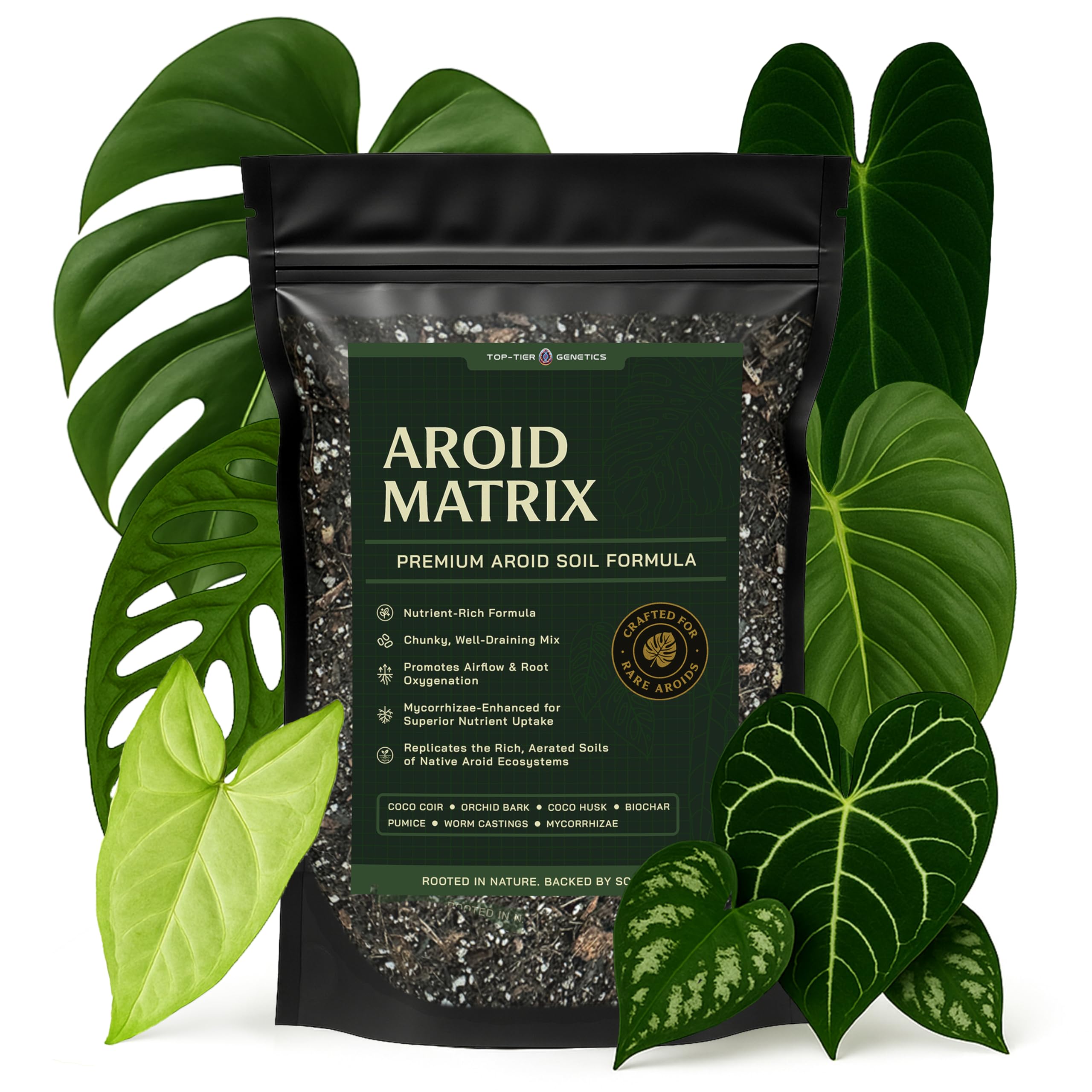
2. Premium AROID Soil Blend for Monstera, Philodendron, Alocasia, Anthurium – Chunky, Optimally Aerated Soil – Organic & Ready to Use – Supercharges Root and Foliage Growth – (2QTS)
A chunky, nutrient-packed blend that makes roots explode with growth.
This mix from Top Tier Genetics earns the top spot because it includes mycorrhizae (beneficial fungi that bond with roots to help them absorb water and nutrients) and biochar, keeping the soil alive for months. It gives you 64 ounces (about 2 quarts) of orchid bark, coco husk, and pumice — the chunky structure Monstera roots need to avoid compaction and rot. One buyer reports that plants “take off after repotting in this mix,” with explosive root growth and vibrant foliage within days. It holds a 4.7 out of 5 stars from 246 ratings, and it is ready to use right out of the bag — no mixing required. Unlike the Craft mix (which some reviews say holds too much moisture for larger plants), this blend keeps the balance right for medium to large Monsteras. It is peat-free and perlite-free, using sustainable volcanic pumice instead. The 64-ounce bag holds 64 ounces while the Gardenera bag holds 37 ounces, so you can fill multiple pots at once.
The trade-off is the price: it costs more than entry-level options, but the consistent quality across batches makes it a solid bet for serious plant owners. If you only need a handful of soil for a single small pot, this 64-ounce bag is more than you’ll use, though it reseals well.
What Stands Out
- Chunky, airy texture with excellent drainage from orchid bark and pumice
- Includes mycorrhizae and worm castings for strong root and foliage growth
- Peat-free and perlite-free — uses sustainable pumice and lava rock
One Thing to Know
- Priced higher than basic potting soils, but the quality and consistent results justify the cost for dedicated plant owners
Perfect for: Anyone with medium to large Monsteras who wants a ready-to-use, chunky mix that delivers fast root growth and balanced moisture without the risk of root rot.
Consider alternatives if: You need a small quantity for a single small pot — the 64-ounce bag is more than you’d use, though it reseals well.
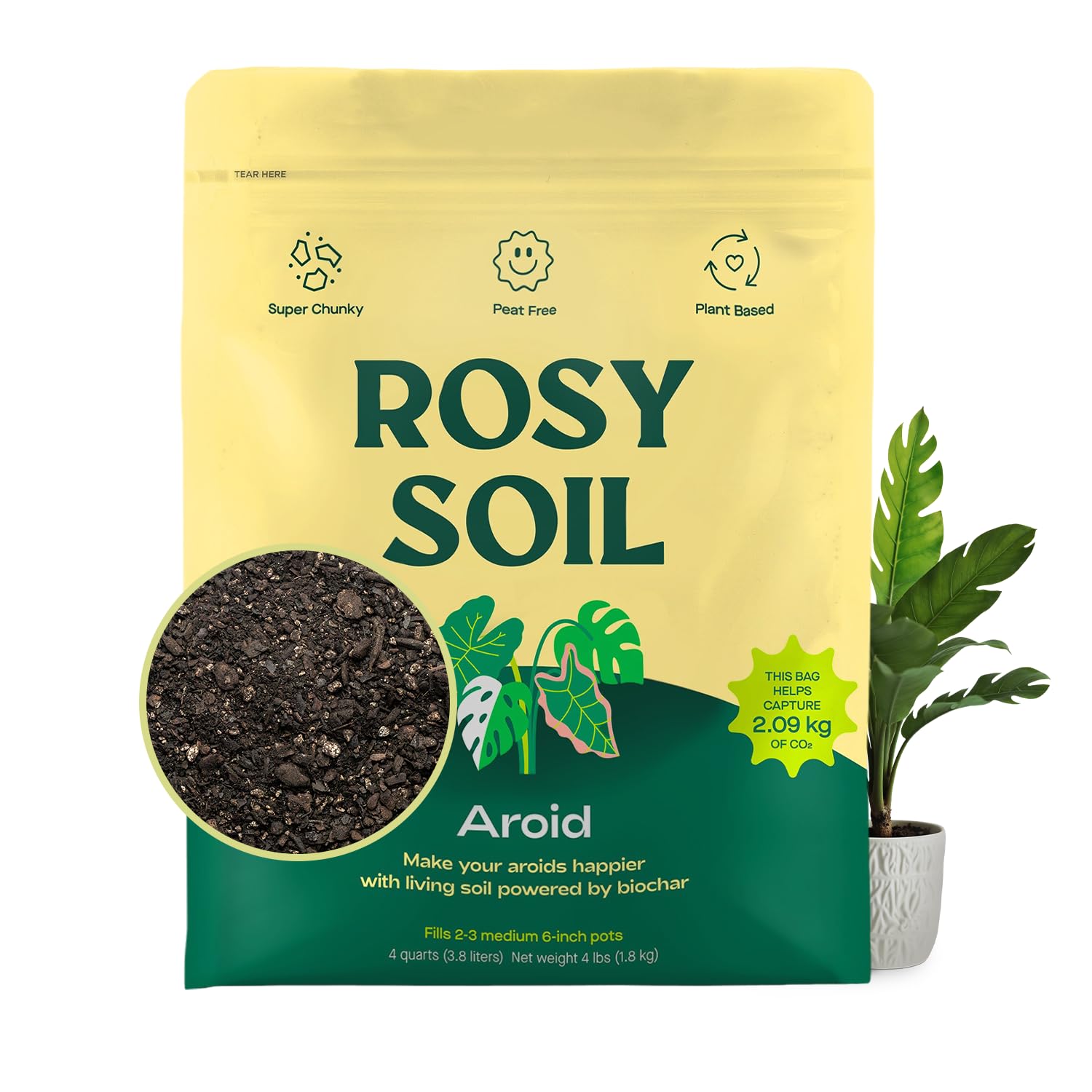
3. Rosy Soil Aroid Soil Mix, Chunky Biochar Potting Mix, 4 Quarts | For Monstera, Philodendron, Anthurium & Tropical Plants – Peat-Free, Microbially Active, Superior Aeration & Drainage
A living, carbon-negative soil that feeds roots and fights climate change.
Rosy Soil is a microbially active environment, not just a potting mix. It blends pine bark fines, pumice, and biochar (a form of charcoal that stores carbon and hosts beneficial microbes) plus worm castings, mycorrhizae, and compost. The soil actively boosts nutrient uptake and strengthens root systems over time. It is 100% peat-free and carbon-negative by design — the ingredients store more carbon than the bag’s production releases. One reviewer who switched from Ocean Forest said they saw new growth on all plants within 2 weeks and no fungus gnats (a common pest issue). The 4-quart bag fills 2 to 3 medium 6-inch pots, giving you twice the volume of the Premium AROID blend’s 2 quarts. It earns 4.7 out of 5 stars from 167 reviews.
The downside: a few owners mention the resealable bag is hard to close, so you may want a separate container for leftovers. It also sits at a premium price point, though the volume offsets the cost. If you have multiple aroids (not just Monsteras but Philodendrons, Alocasias, Pothos, and Peace Lilies) and care about your footprint, this is the standout sustainable pick. But if you are on a tight budget, the per-bag price might be a stretch.
Why It Wins
- Microbially active with worm castings, mycorrhizae, and biochar for long-term soil health
- Carbon-negative and peat-free — gentle on the planet
- Chunky, fast-draining texture that prevents compaction and root rot
The Downside
- Resealable bag can be difficult to close securely after opening
Best suited for: Eco-conscious plant lovers with multiple aroids who want a premium, living soil that delivers visible results without the environmental guilt.
Not ideal for: Those on a tight budget — the 4-quart bag sits at a premium price point, though the quality and volume offset the cost.
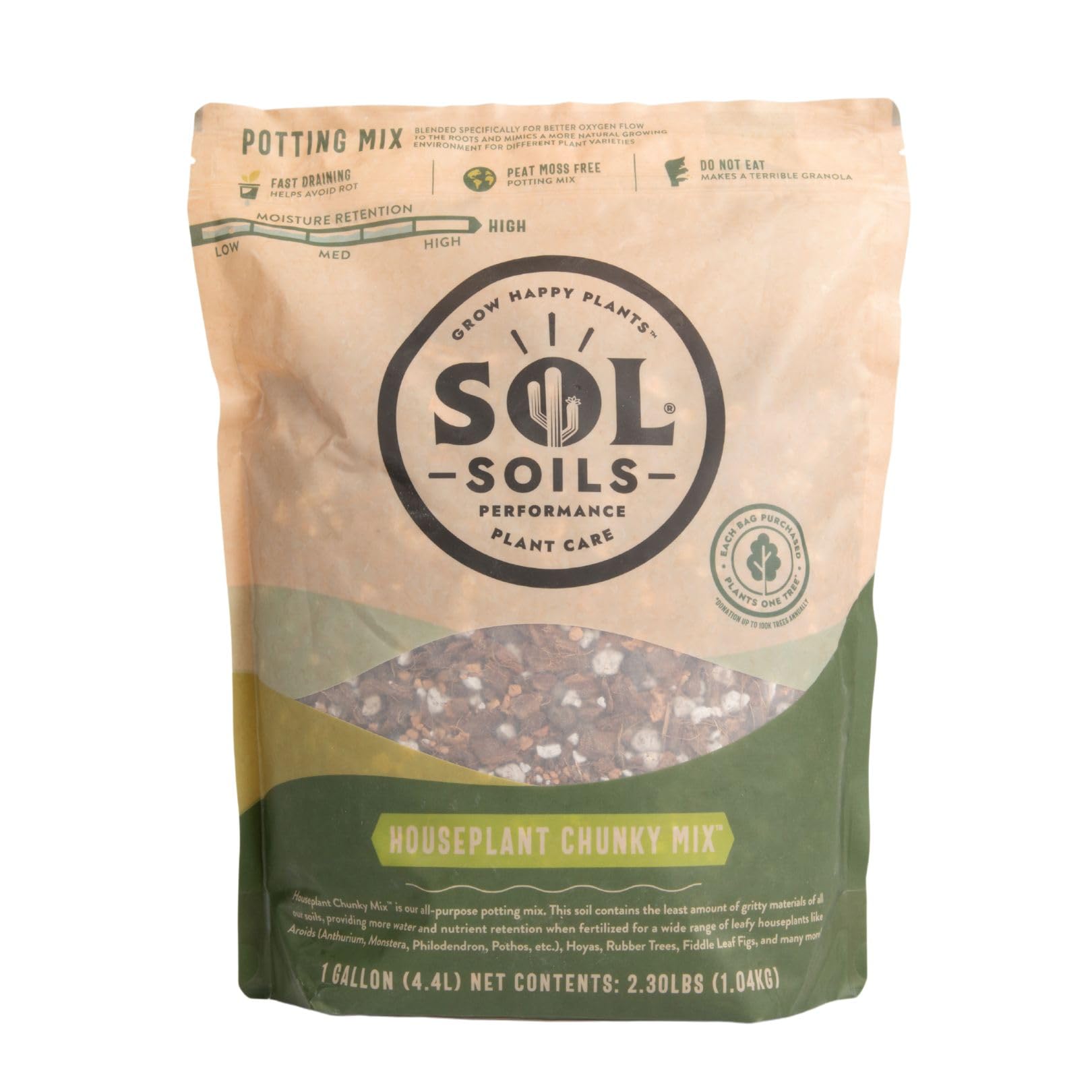
4. Sol Soils Houseplant Chunky Mix – Fast Draining, Chunky Soil Mix for Indoor Plants – 1 Gallon – Coco Coir, Perlite, Pumice
A dry, chunky mix that leaves root rot in the past and plants thriving.
This mix prioritises one thing: drainage. It combines coconut coir, husk chips, perlite, pumice, pine bark, and LECA (lightweight expanded clay aggregate — small, porous clay balls that create air pockets) so water runs straight through while holding just enough moisture for healthy roots. The mix arrives dry, which means zero risk of mold or fungus developing during shipping — a common complaint with pre-moistened bags. One reviewer noted that a Thai Constellation Monstera sprouted new leaves and a Hoya recovered from root rot after repotting into this mix. It scores 4.7 out of 5 stars from 253 reviews. It is peat-free, using coconut chips instead, and a portion of each sale goes toward reforestation.
The trade-off: several reviewers call it “pricey,” though they agree the quality is there. Unlike the Gardenera mix (which uses peat moss), this one avoids peat entirely. The dry texture means you can store leftovers without worrying about moisture. If quick drainage is your priority — especially if you’ve overwatered plants in the past — grab this one. But if you prefer a pre-moistened, ready-to-use mix, this arrives dry and needs initial watering.
What Works
- Excellent drainage with perlite, pumice, pine bark, and LECA
- Peat-free and arrives dry — no risk of mold during storage
- Supports global reforestation with every purchase
The Trade-Off
- Higher price point than basic mixes, but the quality and drainage performance are consistently praised
Reach for this: If your main struggle is overwatering or root rot, or if you have plants that need the fastest possible drainage (like Thai Constellation Monsteras or Hoyas recovering from rot).
Skip it: If you prefer a pre-moistened, ready-to-use mix — this one arrives dry and needs initial watering.
5. Noot Potting Soil Mix for Indoor & House Plants – 1 Gallon – Orchid, Succulent, Cactus, Aroid, Houseplant, Monstera – Bio-Organic – Fast Draining – Rapid Root Growth – Pre-Soaked & Ready to Use
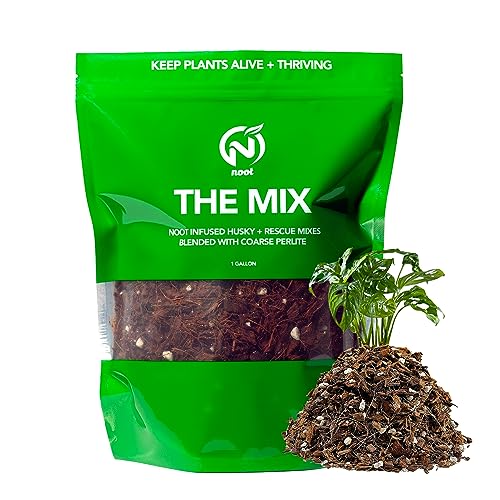
A pre-soaked bio-organic mix that packs 16 strains of beneficial bacteria.
Noot delivers a pre-soaked mix with organic nutrients (NPK.10/.15/.12 — the ratio of nitrogen, phosphorus, and potassium) and 16 strains of beneficial bacteria and friendly fungi. These microbes form a symbiotic relationship (a mutually beneficial partnership) with roots, helping absorb more nutrients and water while warding off pathogens. The base uses larger coconut chips, fibers, low coco coir, and coarse perlite to boost airflow. Buyers report this mix eliminated fungus gnat problems and revived plants with root rot. One buyer mentioned their Monstera put out four huge, healthy leaves with strong roots after repotting. However, the same reviewer called it “too expensive for all plants,” suggesting it is best reserved for prized specimens. It scores 4.4 out of 5 stars from 886 reviews. A few buyers did mention discovering gnats from the pre-moistened state. Unlike the peat-based Gardenera mix, Noot uses no peat and focuses on a bio-active ecosystem. The 1-gallon resealable bag is hand-packed and inspected for quality.
If you are willing to spend more on a mix that actively feeds and protects your plant through microbial action, Noot delivers results basic soils cannot match. The per-bag cost adds up fast, so it is not ideal for routine repotting of many plants.
Key Strengths
- Pre-soaked with organic nutrients and 16 strains of beneficial microbes for enhanced root growth
- Fast-draining with large coconut chips and coarse perlite to prevent root rot
- Works for all aroids and most houseplants, including fussy species like African violets
Considerations
- Higher price per volume than many alternatives — best used as a specialty mix for plants that need extra care
- A few buyers reported gnats emerging from the pre-moistened medium
Pick this if: You have a prized Monstera or aroid that needs a revival boost, or you want a bio-active mix that handles feeding and protection in one bag.
Consider something else: If you need a budget-friendly option for routine repotting of multiple plants — the per-bag cost adds up fast.
6. Gardenera Premium Monstera Potting Soil – Quick Drain Potting Soil for Growing and Repotting Monstera Deliciosa/Swiss Cheese Plant – 1 Quart Bag

A simple, effective starter mix that gets the basics right for beginners.
This is your entry point if you are new to Monsteras and want a bag that works without overthinking ingredients. It blends peat moss, perlite, coco coir, biochar, worm castings, and bark to prevent brown spots, root rot, and dropping leaves. The IBI-certified biochar (a certified standard for biochar quality) helps retain nitrogen and phosphorus for steady nutrition between feedings. Buyers call it a “chunky mix, enough for a 5-inch pot plus extra,” and say Monsteras thrive without waterlogging. It earns 4.6 out of 5 stars from 763 ratings. The 37-ounce (1-quart) bag is small — you will need multiple bags for larger pots. Compared to the Premium AROID blend at 64 ounces, this bag holds 73% less material. It uses peat moss, which has a higher environmental footprint than the peat-free Craft mix. The bag is resealable, certified sterile, and non-toxic, so it is safe for homes with pets.
This one works best as a single-pot solution for beginners. Experienced growers looking for a peat-free, large-volume, or microbially active mix will find the basic formula and small bag size limiting.
What You Get
- Well-balanced mix with peat, perlite, coco coir, biochar, and worm castings
- Certified sterile and non-toxic — safe for pets and indoor use
- Resealable bag for easy storage between uses
The Limits
- Small 1-quart bag — enough for one 5-inch pot, but you will need multiple bags for larger plants
- Contains peat moss, which is less sustainable than peat-free alternatives
Best for: Beginners or casual Monstera owners who want a reliable, no-fuss mix for a single small pot without spending much.
Not the best for: Experienced growers who want a peat-free, large-volume, or microbially active mix — the basic formula and small bag size limit its usefulness for serious collections.
7. Monstera Imperial Houseplant Potting Soil Mix by rePotme – Standard Bag (8 Quarts)
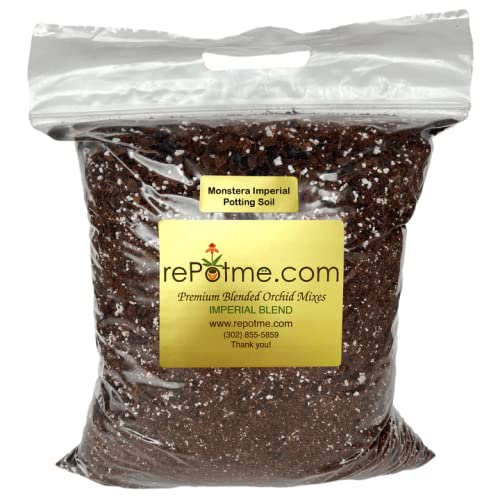
A handcrafted, large-batch mix trusted by botanic gardens and serious collectors.
rePotme is used by some of the largest conservatories and botanic gardens. Their Monstera Imperial mix comes in an 8-quart resealable pouch — the largest volume in this guide, enough to fill a big decorative pot or repot several plants. It contains bark, roots, and peat, made fresh every day in small handcrafted batches using globally sourced ingredients. It is designed for optimal water content: enough moisture to keep roots hydrated without staying soggy. One reviewer who mixed it 60/40 with rich soil said their Monstera is “happy” and noted the mix is clean with no mold or mildew smell. It scores 4.6 out of 5 stars from 758 ratings. The price is the highest here, but the per-quart cost is competitive. A few reviewers mention the bag is not always enough for the pot size they planned — measure your pot first. Unlike the pre-soaked Noot mix, this is dry, so you need to water it in after repotting.
If you have multiple large Monsteras or a sprawling collection, the 8-quart volume makes this the most cost-effective option per quart. It also works as a “soil lightener” — mix it with denser soils to improve drainage. But if you only have one small plant, this bag provides too much soil.
Biggest Strengths
- 8-quart volume — the largest bag in this guide, ideal for multiple or large plants
- Handcrafted in small batches with high-quality global ingredients
- Trusted by major botanic gardens and conservatories worldwide
What to Watch
- Highest price in this guide — the upfront cost is significant, though the per-quart cost is competitive
- Some buyers found the bag insufficient for larger pots, so measure before buying
Great for: Serious collectors with multiple large Monsteras or aroids who want a trusted, large-volume mix at a fair per-quart price.
Consider alternatives: If you only have one small plant and do not need 8 quarts of soil — the bag is too much volume for a single 6-inch pot.
Understanding the Specs
Volume (Quarts vs Gallons)
This tells you how much soil you get in the bag. A 1-quart bag is just enough for a single 5- or 6-inch pot, while a 1-gallon (4-quart) bag can fill 2 to 3 medium pots. An 8-quart bag like the rePotme option is best for large containers or repotting several plants at once. Check the volume before buying — a small bag may look cheap but leave you short on material.
Key Ingredients (Bark, Pumice, Biochar)
Pine bark fines or Douglas fir bark create the chunky texture that lets air reach the roots. Pumice and lava rock are natural volcanic stones that add weight and drainage without compacting. Biochar is a form of charcoal that hosts beneficial microbes and holds nutrients, releasing them slowly over time. A mix with these three ingredients will outperform one that relies only on peat and perlite.
Peat-Free and Perlite-Free
Peat moss is harvested from delicate wetland ecosystems, releasing carbon dioxide. Perlite is made by heating volcanic glass to high temperatures, which is energy-intensive. Many modern aroid mixes skip both, using coco coir (fiber from coconut husks), pumice, and tree fern fiber instead. These alternatives are more sustainable and often drain better.
Microbial Activity (Mycorrhizae and Worm Castings)
Mycorrhizae are beneficial fungi that attach to roots and help absorb water and nutrients. Worm castings are rich in organic matter and microbes that feed the soil food web. A mix containing both creates a living ecosystem that supports root health long after repotting. The Noot mix goes further by adding 16 strains of beneficial bacteria, creating a bioactive environment that can prevent root rot and boost growth.
FAQ
Can I use regular potting soil for my Monstera?
How often should I repot my Monstera into fresh soil?
What is the difference between peat moss and coco coir in Monstera soil?
Why does my Monstera soil smell bad after watering?
Is biochar safe for Monsteras?
Do I need to add fertilizer to Monstera soil?
How do I know if my Monstera soil drains fast enough?
Can I mix two different aroid soils together?
Will any chunky soil work for a Monstera Adansonii?
Is it worth paying more for premium Monstera soil?
Final Thoughts: The Verdict
Across the board, the best dirt for monstera is the Premium AROID Soil Blend because it combines a chunky, well-draining texture with mycorrhizae and biochar for long-term root health, all in a peat-free formula. If you want a living, carbon-negative mix that feeds the soil as much as the plant, grab the Rosy Soil Aroid Mix. For large collections or big pots, the Monstera Imperial by rePotme gives you the best volume at a fair per-quart price, trusted by professional growers.
How We Picked
We do not accept paid placement. Every pick is matched to a real buyer and a real use-case; we do not hands-on test units.
Sources & Methodology
Specifications: manufacturer listings and product documentation. Review insights: verified customer reviews, as of July 2026. Pricing: not shown on this page (it changes often); check the current price via the retailer link.
As an Amazon Associate, Lawn Gear Lab earns from qualifying purchases. This does not affect which products we feature.