
The difference between a bumper crop of juicy tomatoes and a handful of stunted, yellowing plants often comes down to what you put in the ground before you even plant a seed. Vegetables are heavy feeders that demand a specific balance of organic matter, aeration, drainage, and microbial life, and generic topsoil simply can’t deliver the consistent results a dedicated mix provides.
I’m Rikta — the co-founder and writer behind Lawn Gear Lab. I’ve spent countless hours cross-referencing soil lab analyses, digging through verified owner feedback, and comparing the actual NPK ratios, pH ranges, and structural amendments across dozens of formulations for this guide.
Whether you are filling raised beds, amending heavy clay, or starting a container garden on a patio, finding the absolute best dirt for growing vegetables requires understanding what lives inside the bag, not just the brand name on the outside.
How To Choose The Best Dirt For Growing Vegetables
Not all garden soil is created equal. A mix engineered for lush foliage growth in a flower bed may lack the drainage and phosphorus levels your tomato crop demands. To pick the right bag, you need to look past the pretty packaging and focus on three core pillars: texture, nutrition, and organic certification.
Texture & Aeration: The Root Zone Foundation
Vegetable roots need oxygen to respire and water to move freely without pooling. A soil that is too dense (heavy clay) suffocates roots, while one that is too sandy drains nutrients before roots can absorb them. Look for a mix that includes perlite, coarse sand, or coconut coir to create pore spaces. The ideal texture feels light, crumbles easily, and holds its shape when squeezed but breaks apart when poked. Blends with sphagnum peat moss or coir provide water retention, while perlite or pumice guarantees drainage.
Nutrient Density & Organic Matter Content
Vegetables deplete soil rapidly. You need a mix that starts rich. Composted manure, worm castings, kelp meal, and fish emulsion provide a buffet of macro and micronutrients. The best bag will list these ingredients rather than relying solely on synthetic slow-release pellets. High organic matter content (indicated by dark color and earthy smell) feeds the soil microbiome, which in turn makes nutrients bioavailable to the plant roots.
pH Level & Liming Agents
Most vegetables prefer a slightly acidic to neutral pH between 6.0 and 6.8. If the pH is too low (acidic), essential nutrients like calcium and magnesium become locked up. Too high (alkaline), and iron and zinc are unavailable. Reputable soil brands either pre-balance the pH in the bag or include dolomitic lime or oyster shell flour in the mix. Always check the product description—if no pH range is stated, consider it a yellow flag for consistency.
Organic Certification & Filler Content
Certifications like OMRI (Organic Materials Review Institute) give you a guarantee that the mix is free from synthetic pesticides, herbicides, and chemical fertilizers. This matters for edible crops because you don’t want residues in your food. Equally important is what is NOT in the bag—avoid mixes packed with large bark chips, chunks of wood, or visible plastic pieces. These are fillers that rob nitrogen from the soil as they decompose.
Quick Comparison
On smaller screens, swipe sideways to see the full table.
| Model | Category | Best For | Key Spec | Amazon |
|---|---|---|---|---|
| FoxFarm Ocean Forest Potting Soil | Premium All-Purpose | Container vegetables & heavy feeders | 1.5 cu ft (34 lb) bag | Amazon |
| Coast of Maine Castine Blend Soil | Raised Bed Mix | Raised beds & in-ground amending | 2 cu ft bag | Amazon |
| Brut Organic Potting Soil (2-Pack) | OMRI Organic Mix | Indoor & outdoor containers | 1 cu ft per bag (2 packs) | Amazon |
| Old Potters Organic Compost | Plant-Based Compost | Soil amendment & top dressing | ~25 lbs (24 Qt) | Amazon |
| R&M Organics Premium Organic Compost | Manure Compost | Replenishing depleted beds | 10 lb bag | Amazon |
| Black Gold All Organic Potting Soil | Lightweight Potting Mix | Seed starting & houseplants | 8 Qt each (2-pack) | Amazon |
| Premium Organic Coconut Coir Bricks | Compressed Coir | Custom soil blending & moisture control | ~36 Qt expanded (6 bricks) | Amazon |
In‑Depth Reviews
1. FoxFarm Ocean Forest Potting Soil
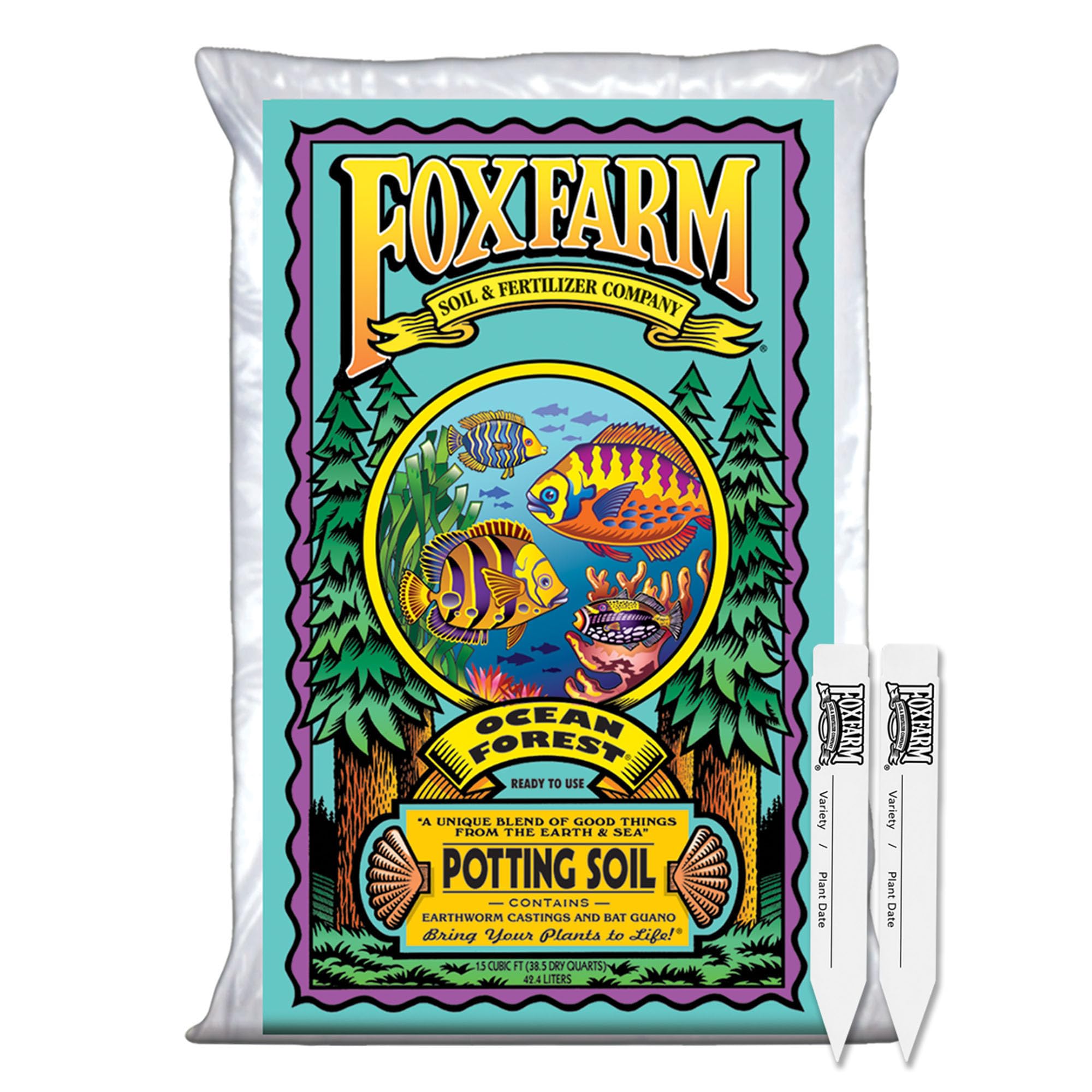
FoxFarm Ocean Forest has earned a cult following among serious vegetable growers, and the reason is straightforward: the ingredient list reads like a soil recipe rather than a filler list. You get aged forest products (sphagnum peat moss), perlite for drainage, sandy loam for structure, and a buffet of organic fertilizers including fish emulsion, crab meal, shrimp meal, earthworm castings, and kelp meal. The mix is ready to use straight out of the bag, which means you can plant a tomato seedling the same day it arrives.
At 1.5 cubic feet and weighing in at 34 pounds, this bag delivers substantial volume for a single raised bed or a collection of large containers. The texture is light and fluffy, yet it holds moisture well without becoming soggy. Growers report immediate results: stronger stems, deeper green leaves, and faster flowering compared to standard potting soils. The oyster shell content helps buffer pH, keeping things in the 6.0–7.0 sweet spot for vegetables.
One thing to note is that this mix is nutrient-rich enough that some growers choose to blend it with a neutral base like peat or coir to extend the bag for large projects. The 4.7-star rating from over 10,000 reviews speaks volumes about consistency. If you want a premium, all-in-one soil that works for peppers, tomatoes, leafy greens, and even herbs, this is your benchmark.
What works
- Loaded with organic nutrients — fish, crab, kelp, worm castings
- Light, aerated texture with excellent drainage
- Consistent batch-to-batch quality across thousands of bags
What doesn’t
- Expensive per cubic foot compared to economy brands
- May be too “hot” for extremely tender seedlings without dilution
2. Coast of Maine Castine Blend Soil
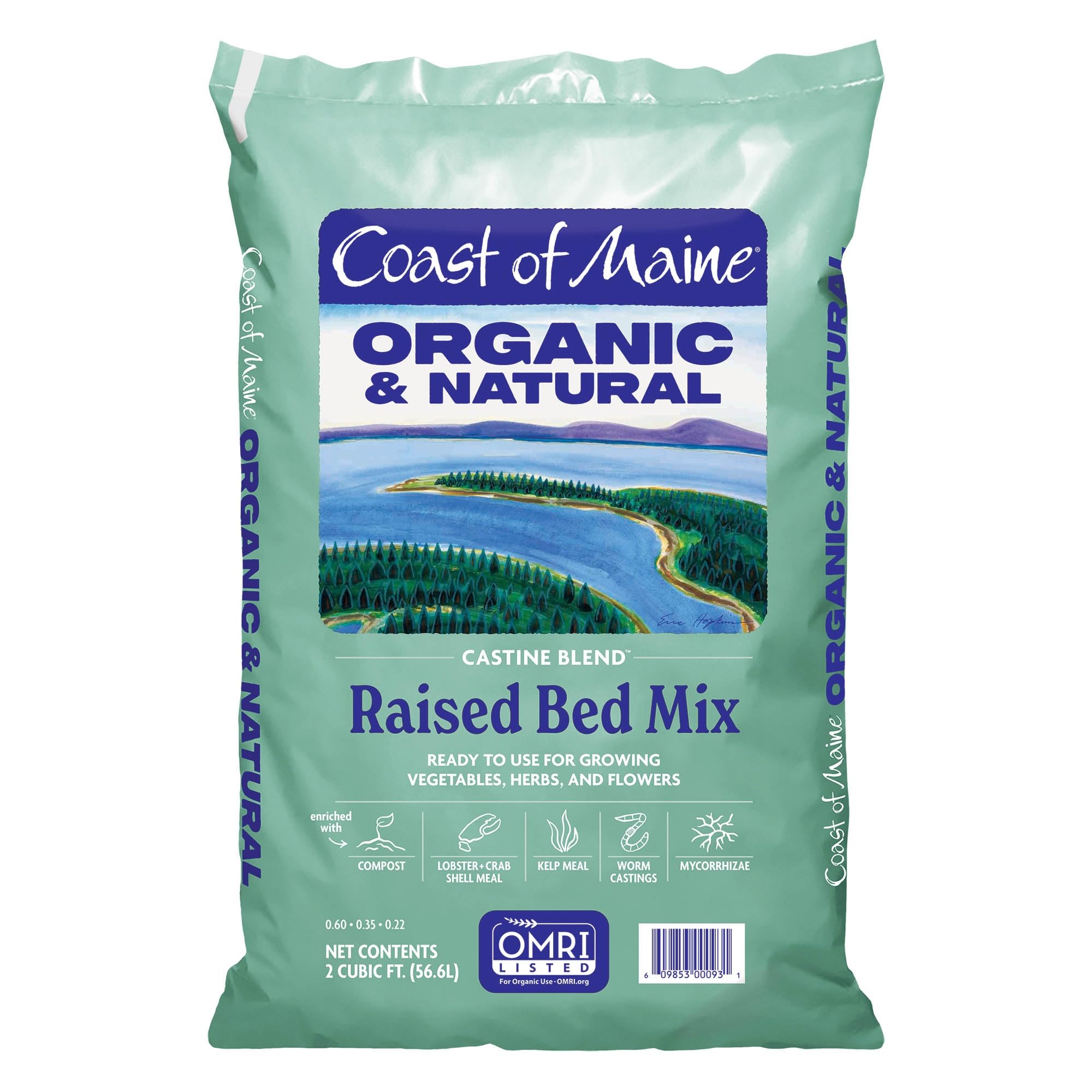
Coast of Maine builds its reputation on regionally sourced, sustainable ingredients, and the Castine Blend is the flagship product for serious raised-bed gardeners. This 2-cubic-foot bag is fortified with worm castings, mycorrhizae (beneficial root fungi), biochar (stable carbon that boosts microbial life), greensand (a potassium-rich mineral), kelp meal, and lobster and crab shell meal. That last ingredient is a signature touch—it provides a slow-release supply of calcium and chitin, which some gardeners link to stronger plant cell walls.
The texture is notably dark, soft, and crumbly—exactly what you want when backfilling a raised bed. It holds moisture without getting muddy, thanks to the balance of organic matter and aeration. Owners who have used it for three consecutive seasons report that it helps loosen existing compacted garden soil over time. The mycorrhizae help expand the root network of transplanted vegetables, which can reduce transplant shock and improve water uptake during dry spells.
The bag size (2 cubic feet) makes it an economical choice for filling deeper beds, though the per-bag cost is in the mid-to-premium tier. It works equally well as a top-dressing for established perennials. The only common critique is that the bag size could be larger for very extensive projects, but for a single 4×8 raised bed, one or two bags will get you started with exceptional quality.
What works
- Biodiverse ingredient list with mycorrhizae and biochar
- Soft, rich texture with no twigs or debris
- Excellent long-term nutrient release for heavy feeders
What doesn’t
- Relatively expensive for a soil amendment base
- Most effective when used as a soil blend rather than solo container mix
3. Brut Organic Potting Soil (2-Pack)
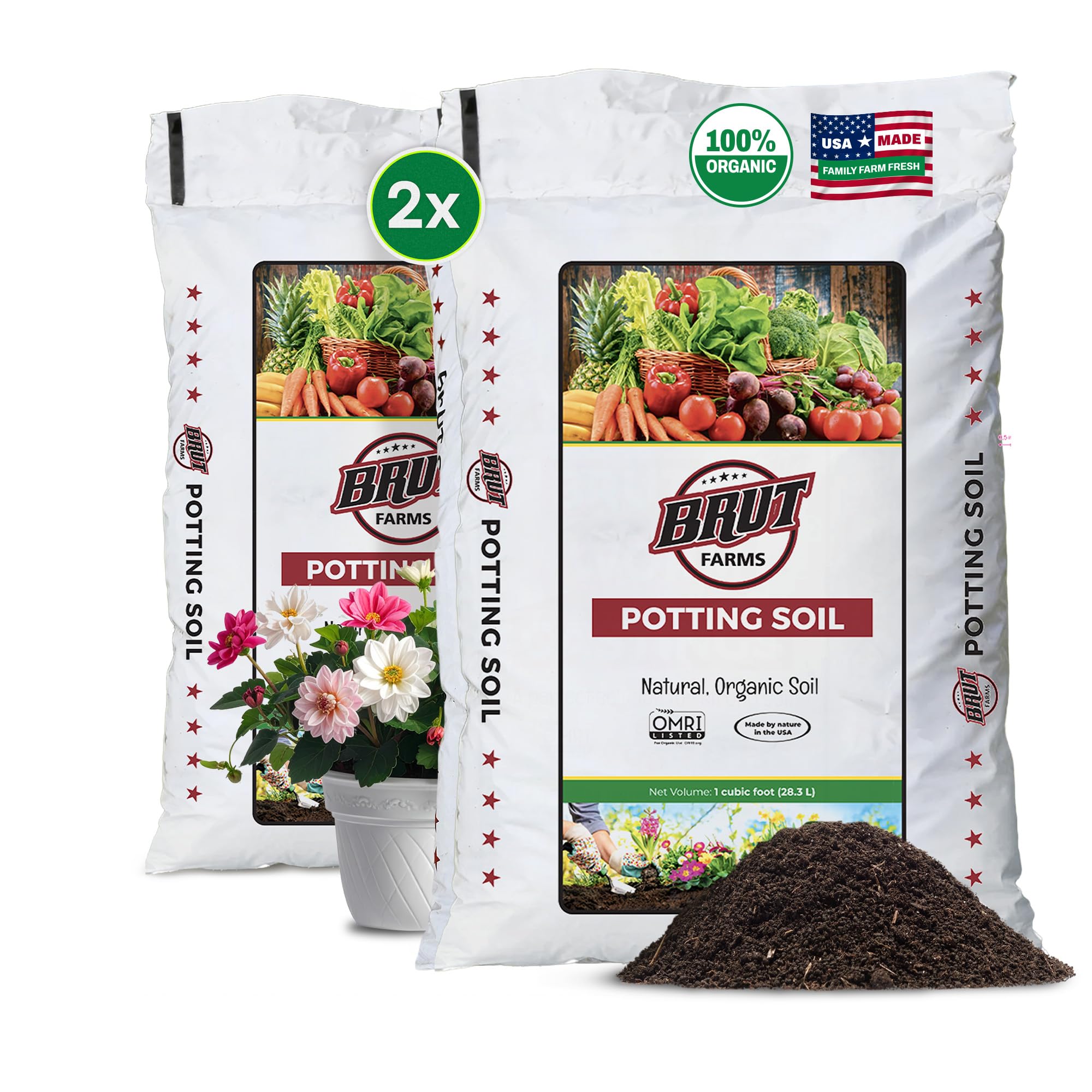
Brut Organic Potting Soil differentiates itself with a strict filler-free guarantee and a tightly controlled pH range of 6.3 to 6.5, which lands right in the prime zone for nearly all vegetable crops. The mix is built around microbe-rich worm castings and trace minerals sourced from Azomite (a volcanic rock dust) and kelp meal. This mineral diversity supports strong root architecture and helps plants resist environmental stress.
The two-pack format delivers 1 cubic foot per bag, which is ideal for anyone managing a mix of indoor starts and outdoor containers. The texture is fine and uniform—no sticks, wood chips, or plastic fragments. This is a significant advantage when you are direct-seeding delicate crops like carrots or lettuce, where large organic chunks can obstruct germination. Customers note that the soil absorbs water quickly without forming a crust on top, which is a common problem with coarser blends.
OMRI certification means the bag meets strict organic standards, giving you confidence that no synthetic growth regulators or pesticides will transfer to your edible plants. The biggest trade-off is the price point—it sits at the higher end of the spectrum. However, given that you get two bags of certified-filler-free material, the value per grow-bed is competitive, especially if you prioritize clean ingredients over volume.
What works
- Narrow pH window (6.3–6.5) ideal for vegetables
- Filler-free — no sticks or wood chips
- Fine texture perfect for direct seeding and containers
What doesn’t
- High cost per bag limits large-scale buying
- May attract fruit flies if stored outdoors due to fish/bone meal content
4. Old Potters Organic Compost
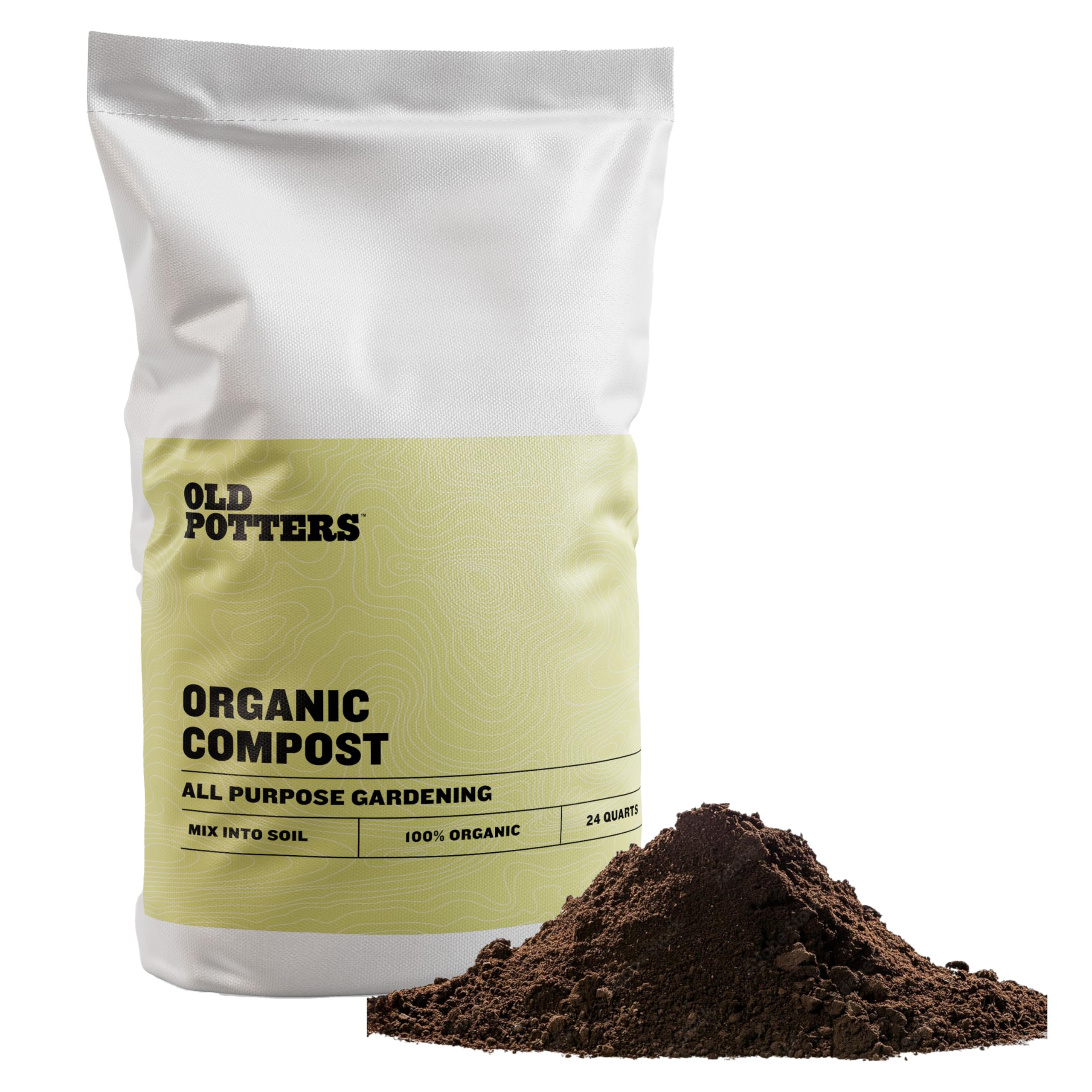
Old Potters takes a plant-only approach to composting, which means this bag is made entirely from decomposed plant materials—no manure, no animal byproducts. This is an advantage for gardeners who want a purely vegetarian soil amendment or who have had bad experiences with manure-based products containing weed seeds or excess salts. The 25-pound bag (24 quarts) gives a solid volume for amending a medium-sized raised bed or for use as a top dressing for containers.
The compost is designed to improve aeration and water retention simultaneously. Customers using it on heavy clay soil in zone 7a reported that it helped transform tough ground into workable bed soil within a single growing season. It can be mixed directly into native soil at roughly a 5:1 ratio (native soil to compost) as recommended by the manufacturer, or used as a standalone potting medium for less-demanding plants.
One thing to watch for is that the texture can be slightly clumpy compared to some premium potting mixes; some users found they needed to manually crumble the material before blending. However, once worked in, it integrates well. The 4.5-star average across nearly 600 reviews suggests that the soil biology benefits—especially for plants recovering from transplant shock—are consistent and reliable.
What works
- 100% plant-based compost, no manure salts
- Improves heavy clay soil structure over time
- Safe around roots — won’t burn seedlings
What doesn’t
- Texture can be clumpy and requires crumbling
- Best used as an amendment, not a standalone potting soil
5. R&M Organics Premium Organic Compost
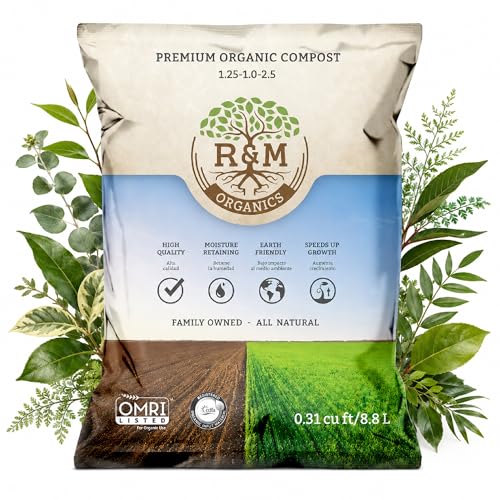
R&M Organics focuses on a time-tested source of fertility: fully composted dairy cow manure. The key here is that the material goes through a complete aerobic composting process that eliminates the strong ammonia smell typically associated with raw manure. The result is a dark, soil-like material with a low-odor profile that makes it practical for both indoor container top-dressing and outdoor garden bed incorporation.
The 10-pound bag is compact, making it a convenient option for small to medium projects. The manufacturer recommends mixing at roughly a 5:1 ratio of native soil to compost. Growers saw results quickly—one review noted that ailing tomato plants with yellowing leaves turned deep green and produced flower buds within a week of adding this compost to a 27-gallon planter. This points to a high concentration of available nutrients, particularly nitrogen for green growth.
While the nutrient density is excellent, the bag size is relatively small. For large gardens, you will need several bags to make a meaningful impact. Also, while the odor is minimal, it is still a manure-based product, so those with extreme sensitivity to any earthy smell may prefer a plant-based alternative. For targeted feeding of heavy feeders like squash, corn, or tomatoes, this is a potent, fast-acting amendment.
What works
- High nitrogen content corrects yellowing leaves quickly
- Low odor for a manure-based compost
- Fine, easy-to-spread texture without clumping
What doesn’t
- Small bag size (10 lb) limits coverage for large beds
- Manure origin may not suit strict veganic gardeners
6. Black Gold All Organic Potting Soil (2-Pack)

Black Gold is a well-known name in the organic gardening space, and this 8-quart two-pack is engineered specifically for indoor and container use. The mix is formulated to be light and airy, which helps prevent the compaction that plagues potted vegetables. What sets this blend apart in user feedback is the near-total absence of fungus gnats, a common plague in bagged potting soils that contain uncomposted bark or wood fines.
Each bag is designed to hold moisture without creating standing water, a balance that is critical for container vegetables like cherry tomatoes, peppers, and bush beans. The organic matter content is rich but not overpowering, making it suitable for direct use with seedlings. It also works as a superb additive when blended with denser native soil or coir to improve overall tilth.
The volume per bag (8 quarts) is modest, so for a large container garden you will likely need multiple packs. However, the 2-pack format is perfect for someone starting a few pots on a balcony or patio. The 4.6-star rating from over 400 reviews reflects consistent quality. If you have had bad experiences with bagged soil introducing pests, this is a reliable clean option.
What works
- Very low risk of fungus gnats compared to other bagged soils
- Light, well-aerated texture ideal for containers
- Encourages new growth quickly — users saw results in days
What doesn’t
- Small bag size (8 Qt) is inefficient for large raised beds
- Pricier per quart compared to bulk economy options
7. Premium Organic Coconut Coir Bricks (6-Pack)
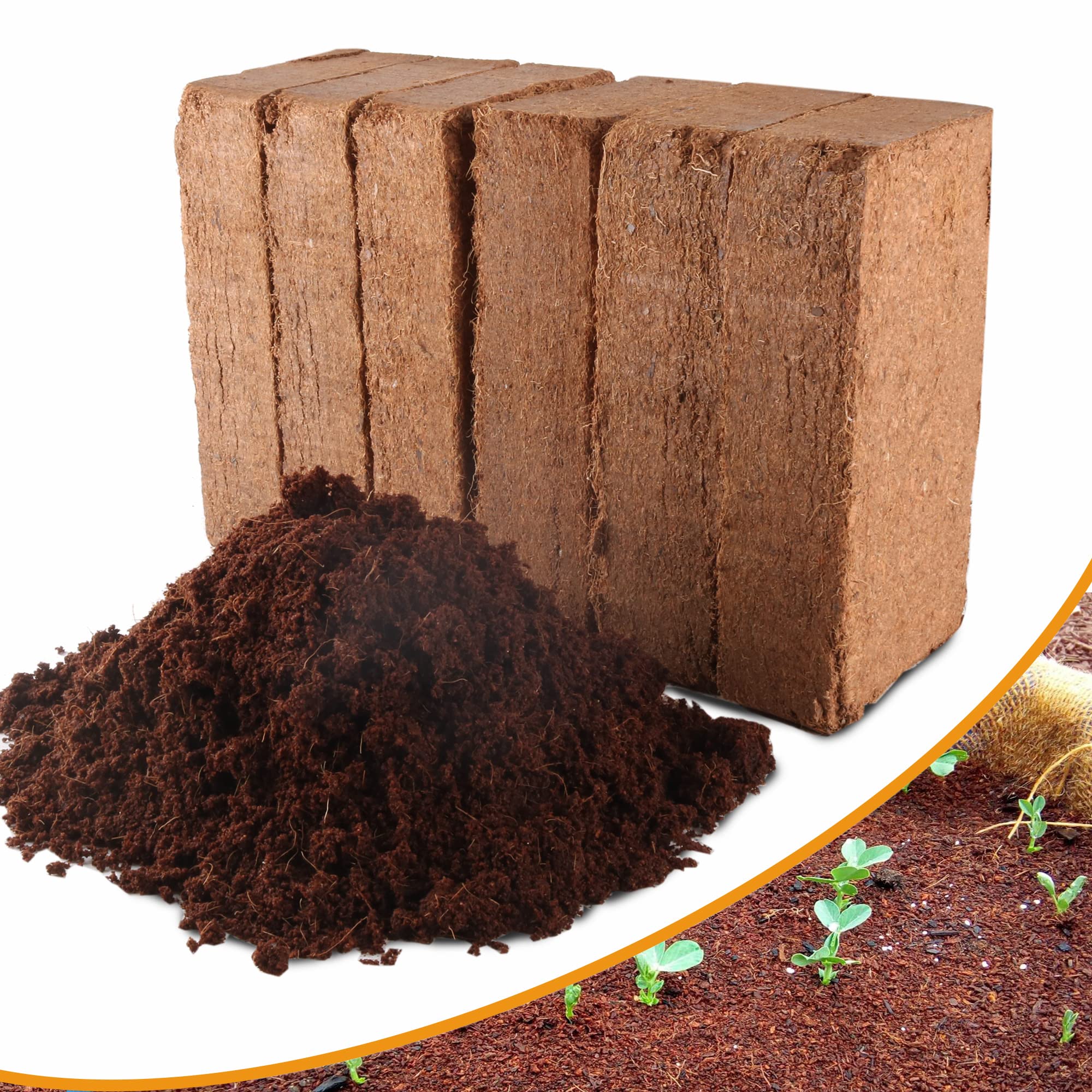
Coconut coir is not a complete soil in itself—it has minimal nutrient content—but it is one of the most versatile base amendments you can buy. This 6-pack of compressed bricks expands to a total of 36 quarts when hydrated, which is a huge volume for the cost-per-quart. The coir has a low electrical conductivity (EC), meaning it is not salty, and a balanced pH, so it won’t throw off your soil chemistry.
The real value here is in customization. Mix these bricks with compost, worm castings, and perlite to build your own custom vegetable soil that is tailored to your local climate and specific crops. The coir provides superior water absorption and retention—up to 10 times its weight in water—while maintaining an open structure that prevents root rot. It is also a sustainable alternative to peat moss, as it is a byproduct of coconut processing.
Preparation requires soaking each brick in about 4–5 quarts of water and breaking it apart after expansion. Some users note that the bricks are hard to crumble when dry, so soaking overnight is recommended. Once expanded, the coir has a fine, fiber-rich texture that integrates beautifully with granular fertilizers. For anyone who wants full control over their soil recipe and maximum value per cubic foot, this is the foundation to build on.
What works
- Extremely cost-effective — expands to 36 Qt total
- Excellent water retention without waterlogging
- Low EC and balanced pH for sensitive seedlings
What doesn’t
- Contains no nutrients — must be blended with compost or fertilizer
- Requires soaking and manual expansion before use
Hardware & Specs Guide
pH Range & Buffer Capacity
The ideal pH range for most vegetables sits between 6.0 and 7.0. Soils with a high buffer capacity—due to ingredients like limestone, oyster shell, or dolomite—resist pH swings caused by acidic fertilizers or rainwater. FoxFarm Ocean Forest and Brut Organic both include pH-buffering components that keep the environment stable throughout the growing cycle. If you are amending with plain coir or peat (which are acidic), you must counterbalance with lime to prevent the root zone from drifting below 5.5.
Organic Matter Content & CEC
Cation Exchange Capacity (CEC) measures how well soil holds onto positively charged nutrients like calcium, magnesium, and potassium. High organic matter content (compost, worm castings, humus) dramatically increases CEC, meaning your soil acts like a nutrient reservoir rather than letting fertilizer wash through. Coast of Maine Castine Blend scores highly here due to its biochar and worm castings. For bare coir bricks, you need to add compost to raise the CEC to a useful level for heavy-feeding vegetables.
FAQ
Can I use bagged topsoil from a big-box store for vegetables?
How deep does my raised bed soil need to be for tomatoes?
What is the difference between potting soil and garden soil?
Final Thoughts: The Verdict
For most gardeners, the dirt for growing vegetables winner is the FoxFarm Ocean Forest Potting Soil because it provides a complete, nutrient-dense, ready-to-use mix that consistently produces vigorous plants in containers and raised beds alike. If you want a premium raised-bed blend with mycorrhizae and biochar for long-term soil building, grab the Coast of Maine Castine Blend Soil. And for the budget conscious gardener who prefers to build their own custom mix from scratch, nothing beats the value and flexibility of the Premium Organic Coconut Coir Bricks as a clean base to augment with your own compost and fertilizers.