
Specs are compiled from manufacturer listings and verified buyer reviews and can change over time — please confirm the key details on the product page before buying.
Dirt matters far more than most new flower gardeners realize. The wrong soil suffocates roots, drowns moisture, or dries out before your flowers get a drink — and no amount of sunlight or watering fixes a poor foundation.
I’m Rikta — the founder and writer behind Lawn Gear Lab. This guide is built by comparing the manufacturers’ published specifications and the patterns across verified customer reviews, so you get each pick’s real strengths and trade-offs instead of marketing spin.
Your best dirt for flowers must give your roots both room to breathe and consistent moisture. That balance depends on ingredients like perlite (the small white volcanic rocks that create air pockets), peat moss (which holds moisture), and compost (which feeds slowly).
Quick Picks
- FoxFarm Ocean Forest Potting Soil with 2 Plant Tags, 1.5 cu ft — Top Performer
- Coast of Maine Organic & Natural Bar Harbor Blend Potting Soil (16 QT) — Best Overall
- Miracle-Gro Potting Mix – For Container Plants, 8 qt. (3-Pack) — Best Value Pack
- Michigan Peat General All Purpose Premium Potting Soil with Perlite (50 Pounds) — Budget Bulk
- Premium Potting Soil Mix with Peat Moss, Vermiculite, Perlite (4 Dry Quarts) — Seed Starter
How To Choose The Best Dirt For Flowers
The difference between soil bags shows up in your flower pots within weeks. Here is what to check before you buy.
Drainage and Aeration
Flower roots need oxygen and a way for excess water to drain out. Look for perlite (the small white volcanic rocks) and vermiculite (a golden, flaky mineral that soaks up water) in the ingredients list. Both create air pockets that stop roots from rotting in soggy soil — perlite provides drainage, vermiculite holds moisture near the roots.
Organic Matter and Nutrients
Ingredients like compost, aged forest products, kelp meal (a slow-release nutrient from seaweed), and worm castings feed flowers slowly over time. Cheap soils rely on synthetic fertilizer that fades fast, while organic blends keep feeding for months without you having to add liquid plant food every week.
Bag Size and Weight
A 4-quart bag (one quart equals about 1/4 gallon) works for a few small pots. A 16-quart bag handles several planters or a small raised bed. The 50-pound bags (like the Michigan Peat) are budget-friendly for big garden projects, but you will need muscle to move them.
Quick Comparison
On smaller screens, swipe sideways to see the full table.
| Model | Best For | Volume | Item Weight | Key Ingredient | Amazon |
|---|---|---|---|---|---|
| FoxFarm Ocean Forest | High-performance container flowers | 1.5 cu ft | 34 Pounds | Aged forest products + fish emulsion | Amazon |
| Coast of Maine Bar Harbor | Organic container gardening | 16 Quarts | 14 Pounds | Lobster/crab shell meal + kelp | Amazon |
| Miracle-Gro Potting Mix (3-Pack) | Outdoor pots on a schedule | 0.66 (per bag label) | — | Synthetic fertilizer (feeds 6 months) | Amazon |
| Michigan Peat All Purpose | Large raised beds on a budget | 50 Pounds | 50 Pounds | Reed sedge peat + perlite + sand | Amazon |
| Midwest Hearth Premium Mix | Seed starting and small pots | 4 Quarts | 0.88 Kilograms | Peat moss + perlite + vermiculite | Amazon |
In‑Depth Reviews
1. FoxFarm Ocean Forest Potting Soil with 2 Plant Tags, 1.5 cu ft
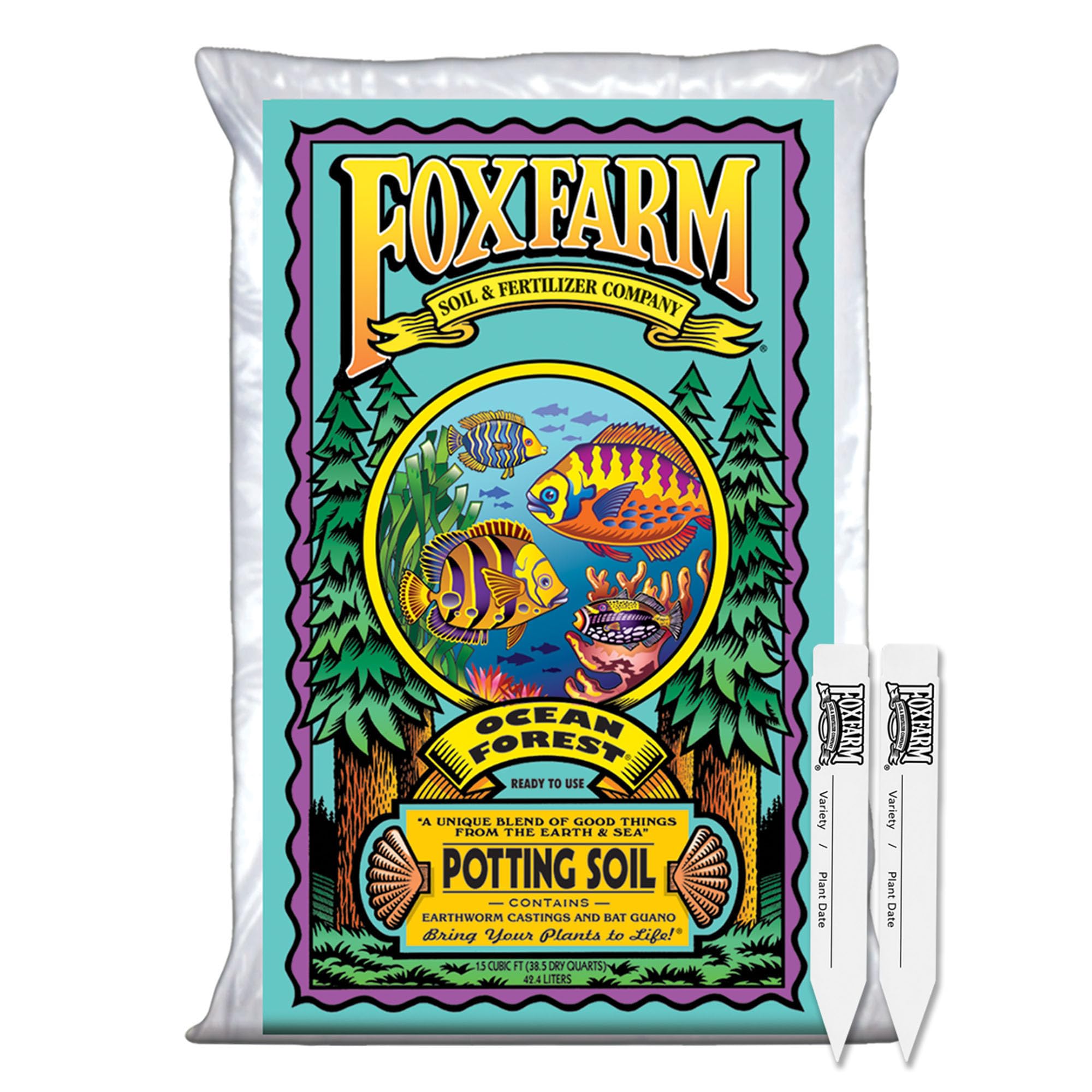
Serious flower growers reach for this bag when they want the biggest, fastest blooms in containers — its ingredient list is class-leading.
FoxFarm Ocean Forest packs in aged forest products, earthworm castings, and fish emulsion (a liquid concentrate from fish parts that provides nitrogen). These ingredients feed flowers steadily rather than burning them with a chemical dose. The light, aerated texture means water flows through instead of pooling, so roots get both moisture and oxygen. Buyers report that this dirt outperformed Miracle-Gro for tomato plants in a side-by-side test: same seeds, same watering, but FoxFarm plants grew significantly larger.
At 34 pounds and 1.5 cubic feet (about 12 gallons), this is a premium mid-to-large bag built for serious flower gardeners. You can plant directly into the bag without mixing anything extra — just open and use. Unlike the Michigan Peat which weighs 50 pounds but consists mostly of reed sedge peat (a lightweight, low-nutrient material), FoxFarm uses a richer blend that holds moisture without compacting into hard clumps. Reviewers also mention excellent water absorption; many buy two or more bags after their first try.
The catch is the price tag — this is the most expensive option here, so it is best for containers where you want maximum blooms rather than for filling a whole raised bed on a budget.
What makes it worth it
- Ingredients include aged forest products, sphagnum peat moss, perlite, sandy loam, fish emulsion, crab meal, shrimp meal, and kelp meal
- Aerated texture prevents root rot by letting water drain through sandy loam
- Two plant tags are included for labeling varieties and planting dates
The trade-offs
- Heavy at 34 pounds — not ideal for carrying up stairs or across a yard
- Premium price per bag vs budget options like Michigan Peat
Grab it if: you want the most proven, nutrient-dense dirt for a few high-value flower pots and are willing to pay for results.
Look elsewhere if: you need to fill a large raised bed on a tight budget — the Michigan Peat will cover more ground for less.
2. Coast of Maine Organic & Natural Bar Harbor Blend Potting Soil (16 QT)
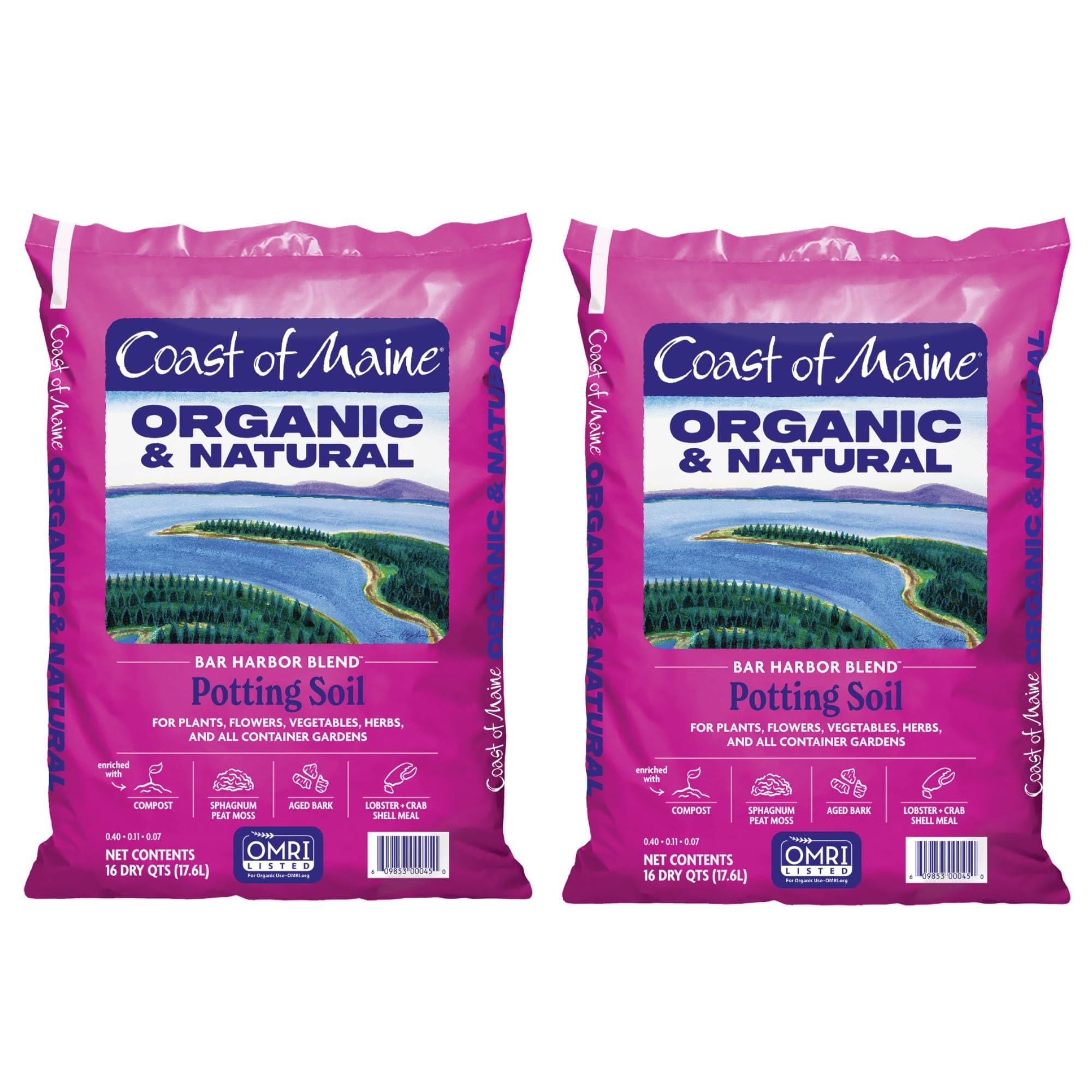
This organic blend uses lobster and crab shell meal — natural slow-release fertilizers — so you water and fertilize less.
Coast of Maine Bar Harbor Blend delivers everything a flower needs without synthetic shortcuts. It combines sphagnum peat moss, compost, perlite, lobster and crab shell meal (ground shells that release nitrogen and minerals slowly), and kelp meal. At 14 pounds for 16 quarts, versus the FoxFarm bag at 34 pounds and 1.5 cubic feet, it is easier to carry to your planters.
Owners mention that two bags were enough to mound up eight potato plants with extra for two more planters. The darker color comes from real compost rather than just peat moss, so you get richer organic matter without the sticks and trash found in cheaper bags. Reviewers also note there were no unexpected weeds from this soil — a common complaint with lower-end potting mixes. Compared to the Midwest Hearth mix at 4 quarts, this 16-quart bag gives you more volume for serious container gardening.
One thing to know: if you need huge quantities for a massive raised bed, the Michigan Peat bag (50 pounds for about the same price) covers more ground, though with less premium ingredients.
Organic power: Slow-release nutrients from lobster and crab shell meal mean you water less and fertilize less — the soil keeps feeding your flowers week after week.
Versatile size: The 16-quart bag is the balance for a window box, half a dozen medium pots, or a small raised bed; not too heavy, not too small.
Best for: the organic flower gardener who wants proven results without the bulk of a 50-pound bag — this is the most balanced premium option on the list.
Note: it costs more per quart than budget peat blends, so stick with the Michigan Peat if you are filling a whole vegetable patch.
3. Miracle-Gro Potting Mix – For Container Plants, 8 qt. (3-Pack)

A reliable three-pack with a built-in synthetic fertilizer that keeps your potted flowers fed for half a year.
Miracle-Gro Potting Mix is the household name because it works consistently. It includes a built-in fertilizer (a synthetic nutrient mix) that the manufacturer claims feeds potted flowers for up to six months and grows plants twice as big compared to unfed plants. This three-pack gives you three 8-quart bags, and each bag fills two 8-inch containers. Customers note it is well-draining and does not pack down into hard crust, so water reaches the roots easily.
Where this mix differs from the organic options above is the fertilizer source. The Coast of Maine and FoxFarm use natural slow-release ingredients like kelp meal and crab shell, while Miracle-Gro relies on synthetic nutrients that deliver a quick green-up. For tough flowers like petunias, marigolds, and zinnias, this approach works great — but some reviewers point out that FoxFarm soil outperforms Miracle-Gro for tomato plants in a direct comparison. Unlike the Midwest Hearth mix which you would use mainly for seed starting, this is a full potting soil for established flowers in containers.
The bags are smaller than the bulk Michigan Peat bag, so if you are filling a large raised bed, you will need multiple packs. For a balcony or patio full of flower pots, this three-pack is a solid, no-fuss choice.
Why it is a practical buy
- Fertilizer lasts up to 6 months — no need to mix liquid feed every week
- Three separate bags are easier to carry and store than one 50-pound sack
- Each bag fills two 8-inch containers, giving you a clear coverage estimate
What to watch
- Synthetic fertilizer fades faster than organic nutrients in hot weather
- Less nutrient-dense per quart than FoxFarm or Coast of Maine blends
Reach for this if: you want a dependable, pre-fertilized dirt for a few flower containers and do not want to think about feeding again until autumn.
Skip if: you prefer organic gardening or need to fill a large garden bed — the Michigan Peat or Coast of Maine give you more volume per dollar.
4. Michigan Peat General All Purpose Premium Potting Soil with Perlite (50 Pounds)

The heavy 50-pound bag that trades a bit of refinement for raw coverage — the cheapest way to fill a large bed.
Michigan Peat General All Purpose is the workhorse bag. It includes reed sedge peat, perlite, and sand, plus starter and slow-release fertilizers. You can use it straight from the bag (no mixing required), and the bulk price makes it the cheapest way to fill a large raised bed or a dozen big planters. Shoppers say the consistency is perfect for potting containers and gardens, and it arrives moist and ready to work with.
By weight, this bag is 50 pounds versus the Coast of Maine bag at 14 pounds, giving you more material for large projects. The trade-off is texture: because it is mostly reed sedge peat with sand rather than compost and lobster meal, the nutrient profile is thinner than the FoxFarm or Coast of Maine blends. Some buyers also warn that gnats can come out of the bag — a common issue with bulk peat-based soils stored in warehouses. Unlike the premium blends that include compost for richness, this is a straightforward peat mix best suited for flowers that are not too fussy.
The 50-pound weight is a real consideration — you will want to move this bag close to your garden before cutting it open, or have someone help you carry it.
Bulk value: For about the same price as the 16-quart Coast of Maine bag, you get a 50-pound bag for larger planting jobs.
The reality: It is good dirt for general flower gardening, but serious growers upgrading from this to FoxFarm notice a clear difference in plant size and bloom count.
Best for: filling large raised beds or seasonal flower patches where cost and volume matter more than premium organic ingredients.
Not for: fussy flowers or indoor pots where you want nutrient-rich compost — the fine roots in small containers will do better with the Coast of Maine or FoxFarm.
5. Premium Potting Soil Mix with Peat Moss, Vermiculite, Perlite (4 Dry Quarts)

This 4-quart bag is small and fluffy — designed for seed starting where gentle, airy soil is key.
Midwest Hearth Premium Potting Soil Mix is a small-bag specialist. It contains peat moss, perlite, and vermiculite, which together create a light, fluffy texture that holds moisture without getting heavy and suffocating. Buyers report it was great for germinating petunias, and one reviewer described it as not hardening around roots like cheaper soils do.
This bag is the smallest on the list — the Coast of Maine bag holds 16 quarts, and the Michigan Peat bag weighs 50 pounds. So this is not the bag for filling a raised bed or even a large planter. Where it shines is precise, small-scale use: a few flower pots on an apartment balcony, starting seeds indoors, or potting up small houseplants that need gentle drainage. The pH-controlled mix works for a broad spectrum of plant types, and the bag is resealable, which buyers appreciate for storing leftover soil.
The price per quart is higher than the bulk options, but for someone who only needs a bag or two for a small project, the convenience and quality of the texture make it a solid choice.
What works well
- Peat moss, perlite, and vermiculite create aerated texture that prevents root compaction
- Resealable bag keeps leftover soil fresh for months
- Balanced pH levels suitable for most flower types and vegetable starts
The limit
- 4 quarts runs out fast — you will need multiple bags for more than a couple of pots
- No added compost or slow-release fertilizer, so you must feed your flowers separately
Reach for this if: you are starting seeds indoors or need a small, clean bag for a few flower pots without buying a heavy bulk sack.
Look elsewhere if: you are planting a window box or raised bed — the 16-quart Coast of Maine bag will cover the same job more economically.
Understanding the Specs
Volume vs Weight
Soil bags are sold by volume (quarts or cubic feet) or by weight (pounds). Volume is the better measure — a 16-quart bag fills a predictable number of pots regardless of whether it is wet or dry. A 50-pound bag sounds like a lot, but because peat-based soils are light and fluffy, you might get less actual volume than you expect if the bag is packed wet. Always check the quart or cubic-foot number to compare apples to apples.
Perlite and Vermiculite
Perlite is the small white volcanic glass that looks like Styrofoam — it does not absorb water but creates air pockets so roots can breathe and water can drain. Vermiculite is the golden flaky mineral that soaks up water like a sponge and holds it near roots. A good flower soil has both: vermiculite for moisture and perlite for drainage. If a bag has neither, expect soil that either dries out instantly or turns into cement around your plant roots.
FAQ
Can I use regular garden soil from my yard for flowers in pots?
How much potting soil do I need for a 10-inch flower pot?
Is the FoxFarm Ocean Forest worth the extra money over Miracle-Gro?
What does organic mean on a bag of potting soil?
How long does a bag of potting soil last once opened?
Why does my potting soil grow gnats after I repot my flowers?
Can I mix different brands of potting soil together?
What is the difference between potting soil and potting mix?
Final Thoughts: The Verdict
For most buyers, the best dirt for flowers winner is the Coast of Maine Bar Harbor Blend because it delivers rich organic ingredients (lobster shell meal, kelp meal, compost) at a reasonable 16-quart size that fits both small planters and medium raised beds without the expense or bulk of the premium FoxFarm bag. If you want the absolute top performance for high-value flower pots, grab the FoxFarm Ocean Forest — its aged forest products and fish emulsion are class-leading for bloom size and quantity. And for budget-friendly coverage of a large garden bed, the standout is the Michigan Peat 50-pound bag for sheer volume per dollar spent.
How We Picked
We do not accept paid placement, and we did not hands-on test every unit. Instead, we match each pick to a real buyer and use-case by comparing the manufacturers’ published specifications against the patterns in verified customer reviews — so you get each pick’s real strengths and trade-offs instead of marketing copy.
Sources & Methodology
Specifications: manufacturer listings and product documentation. Review insights: verified customer reviews, as of July 2026. Pricing: not shown on this page (it changes often); check the current price via the retailer link.
As an Amazon Associate, Lawn Gear Lab earns from qualifying purchases. This does not affect which products we feature.