
Specs are compiled from manufacturer listings and verified buyer reviews and can change over time — please confirm the key details on the product page before buying.
Most cactus deaths happen right at the roots — not from too little water, but from soil that stays wet too long. Standard potting mixes hold moisture like a sponge, which is the exact opposite of what a desert plant needs. The right dirt for cactus is less about feeding the plant and more about mimicking the fast-draining, gritty ground it evolved in, so water flows through quickly and the roots never sit in a puddle.
I’m Rikta — the founder and writer behind Lawn Gear Lab. This guide is built by comparing the manufacturers’ published specifications and the patterns across verified customer reviews, so you get each pick’s real strengths and trade-offs instead of marketing spin.
After digging through the specs and what real buyers report about each bag, these are the soil mixes that actually deliver the fast drainage your succulents need — the best dirt for cactus you can buy right now.
Quick Picks
- Hoffman 10404 Organic Cactus and Succulent Soil Mix — Best Overall
- Cactus & Succulent Potting Soil Mix by Midwest Hearth — Top Performer
- DUSPRO Succulents Soil Potting Mix – 7 in 1 Ingredients — Best for Propagation
- Tinyroots Succulent Soil Potting Mix (2.25 Quarts) — Premium Pick
- Soil Sunrise Cactus and Succulent Potting Mix (8 Quarts) — Best Value
- The Soil Sage Cactus & Succulent Potting Soil Mix (5 Qt) — Root Booster
- Spike & Bloom High Drainage Cactus Soil Potting Mix — Exotic Care
How To Choose The Best Dirt For Cactus
Before you grab a bag, you need to know what separates a good cactus mix from a plant-killer. The ideas are simple: you want a mix that drains fast, contains the right gritty materials, and doesn’t hold moisture like a wet blanket. Here is exactly what to look for.
Drainage Is Everything
The number one job of cactus soil is to let water run straight through. If the mix holds water for days, root rot is almost guaranteed. Look for ingredients like perlite (volcanic glass that creates air pockets), pumice (a lightweight porous rock), and coarse sand (gritty particles that stop the mix from compacting). A good mix should feel gritty and loose, not dense and clumpy — if you squeeze a handful, it should crumble apart, not stick together.
Organic Matter Matters (But Only Some)
Cactus and succulents do not need rich, heavy compost. A small amount of peat moss (a decomposed plant material that holds some moisture but stays light), pine bark fines (small, shredded pieces of tree bark that improve aeration), or worm castings (worm-processed organic matter that adds mild nutrients) is fine — it gives the plant a tiny bit of food without waterlogging the roots. The problem is when a bag is mostly peat or compost with hardly any gritty material. That is basically regular potting soil in a cactus-themed bag, and it will kill your plants.
Ready-To-Use vs. Custom Mixing
Some cactus mixes are designed to be used straight from the bag with no extra work. Others, especially gritty or soilless blends, may need you to add a little more perlite or pumice depending on your climate and watering habits. If you are a beginner, pick a “ready-to-use” mix from the bag. If you like fine-tuning your soil or you grow fussy cacti like lithops (living stones), a versatile base blend that you customize gives you more control.
Quick Comparison
| Model | Best For | Volume | Key Ingredients | Texture | Amazon |
|---|---|---|---|---|---|
| Hoffman 10404 | Overall winner for most cactus owners | 4 Quarts | Peat moss, perlite, sand | Light and fluffy | Amazon |
| Midwest Hearth | Ready-to-use simplicity for beginners | 4 Quarts | Peat moss, perlite, vermiculite | Lightweight, almost dusty | Amazon |
| DUSPRO 7-in-1 | Propagating desert plants from seed | 32.0 Ounce | Perlite, pumice, lava rock, worm castings | Gritty and nutrient-rich | Amazon |
| Tinyroots | Preventing overwatering for beginners | 2.25 Quarts | Pine bark fines, calcined clay, pumice, lava rock | Finer grain, heavy-duty | Amazon |
| Soil Sunrise | Large pots and premium gritty mix | 8 Quarts | Pine bark, silica sand, calcined clay, pumice | Gritty with gravel and sand | Amazon |
| The Soil Sage | Healthy root development with mycorrhizae | 5 Dry Quarts | Lava rock, pumice, compost, biochar, mycorrhizae | Chunky, soilless | Amazon |
| Spike & Bloom | Small exotic cacti needing precise drainage | 4 Quarts | Clays, sands, organic matter, mycorrhizae | Gritty, slightly acidic | Amazon |
In‑Depth Reviews
1. Hoffman 10404 Organic Cactus and Succulent Soil Mix

The bag that finally kicked a stubborn fungus gnat infestation.
This mix gets drainage right where many bags fail. It is a professionally formulated, pH-balanced blend of peat moss (a decomposed plant material that holds some moisture), perlite (volcanic glass that creates air pockets), and sand — a light, fluffy texture that lets water drain fast and roots breathe. You open the bag and use it immediately, no mixing or amendments needed. That makes it about as low-maintenance as cactus soil gets.
The Hoffman dirt for cactus works for both jungle cacti (like Christmas cactus) and desert cacti (like barrel cactus). Owners mention it was the “absolute LAST resort” after a fungus gnat infestation and root rot with snake plants that went on for months. The mix contains very little dead organic matter like wood chips, which often cause those problems, and it worked where other brands failed.
Textured Truth: The mix is mostly peat moss and compost, so it is not as purely gritty as premium soilless blends like Soil Sunrise. But it strikes a balance that works beautifully for general cactus care, and most owners will not need to add anything.
Grab it if: You want a proven, reliable cactus soil that is ready out of the bag and has a track record of fixing gnat and rot problems.
Look elsewhere if: You need a purely gritty, soilless mix for fussy, rot-prone cacti like lithops that demand near-zero water retention.
2. Cactus & Succulent Potting Soil Mix by Midwest Hearth
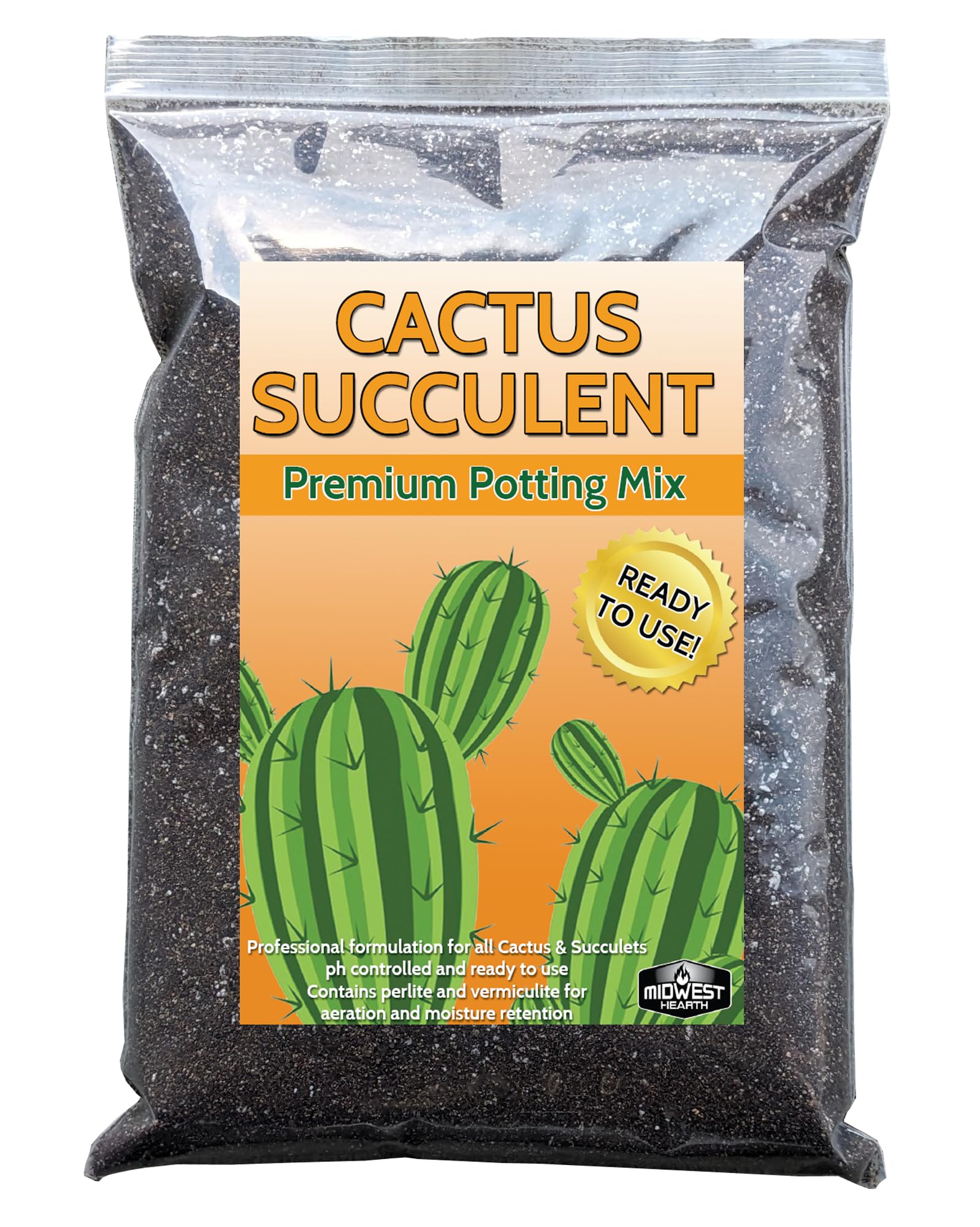
A hands-off formula that makes repotting almost simple to use.
Midwest Hearth designed this as a truly ready-to-use mix — you do not need to add perlite, sand, or any other amendment. The blend of peat moss, perlite, and vermiculite (a mineral that helps with both aeration and moisture control) is pH-balanced specifically for cacti and succulents, so it arrives at the right acidity right away. It is a modern, simple formula that works for aloe, jade, Christmas cactus, and desert rose, indoors or out.
The texture is described as lightweight and almost dusty, which means it stays loose and drains quickly. One reviewer noted, “My baby ponytail plant is really flourishing and just seems to love this potting soil mix!” However, unlike the heavier, more structured Tinyroots or Soil Sunrise mixes, some users complain its dry top particles can blow off an open windowsill. For ease of use at this price point, it is a strong alternative to the Hoffman mix for beginners.
Simple & Dependable: If you want to open a bag and repot without second-guessing, this is the mix. The resealable 4-quart bag is also a nice bonus for storing leftovers.
Reach for this if: You are new to cactus care or want the convenience of a mix that needs zero extra work. If you keep pots on an open windowsill where light particles could be a nuisance, the Hoffman 10404 or Soil Sunrise is a better fit.
3. DUSPRO Succulents Soil Potting Mix – 7 in 1 Ingredients
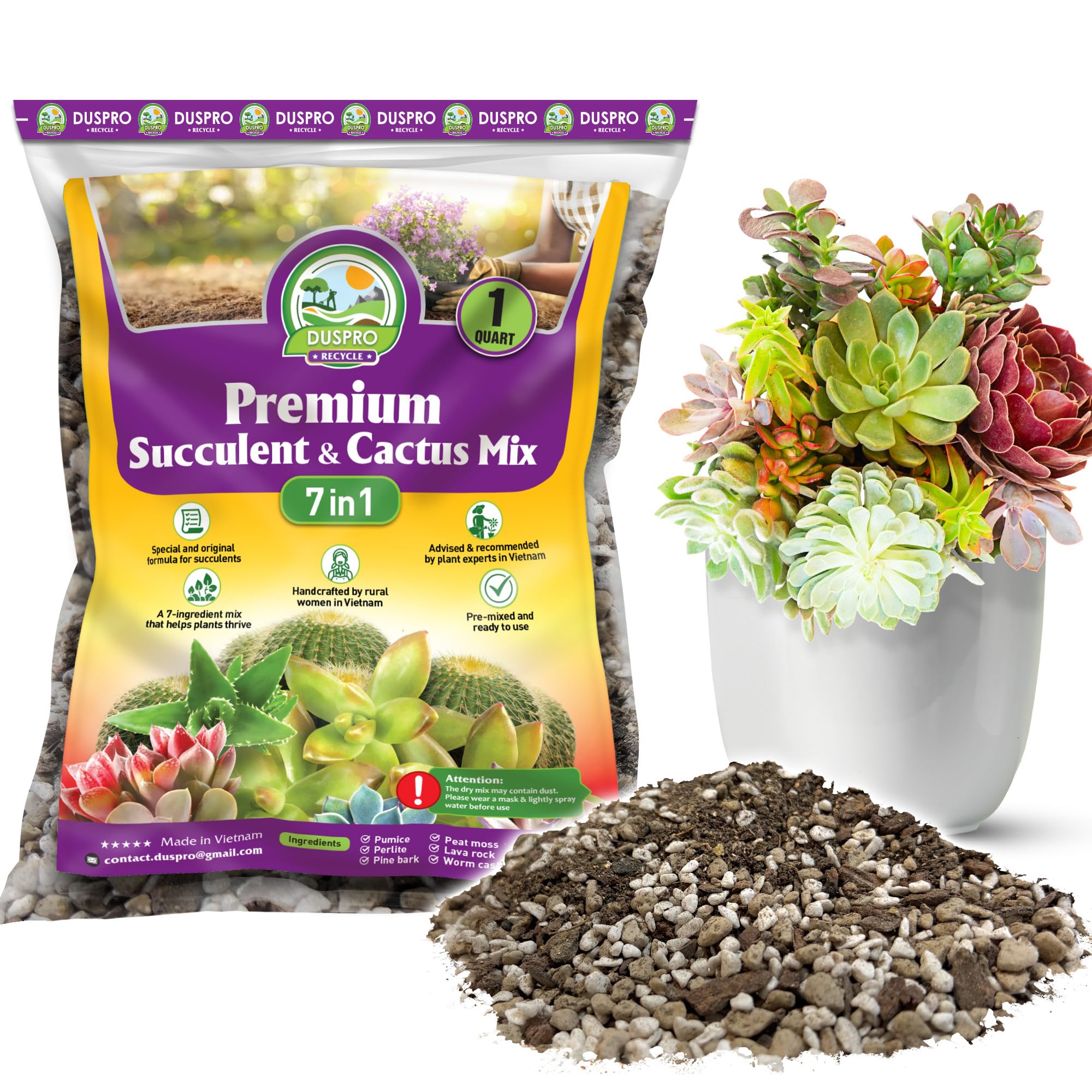
Seven ingredients in one bag, built for starting cacti from scratch.
This mix goes beyond the usual three-ingredient blends. It combines perlite, pumice, lava rock, peat moss, pine bark, worm castings (worm-processed organic matter that adds mild nutrients), and vermiculite — a broad spectrum of materials that gives you excellent drainage along with a natural nutrient boost.
Customers note it is “excellent for desert plants like saguaro and yucca seedlings after adding 10-20% peatmoss-perlite” and that it fills 32 small starter pots from a single 32-ounce bag. That makes it a top pick for propagation projects. Note that the 32-ounce bag is smaller than the Hoffman 4-quart (128-ounce) bag, so while its ingredient list is more diverse, it runs out faster for large pots.
Propagator’s Choice: The nutrient-rich blend with worm castings gives seedlings a head start, and the gritty texture prevents damping off (a fungal condition that kills young sprouts).
Best for you if: You are growing cacti from seeds or cuttings and want a richly textured starting mix with natural nutrients. For repotting a single large cactus, grab the Soil Sunrise 8-quart bag instead.
4. Tinyroots Succulent Soil Potting Mix (2.25 Quarts)

A heavy-duty blend that makes it almost impossible to overwater a cactus.
This garden-grade soil from Tinyroots focuses on one thing above all: preventing overwatering. It combines double-sifted pine bark fines, calcined clay (a heat-treated clay that improves drainage and aeration), pumice, and lava rock into a mix that is purpose-built to let water fly through. The texture is finer than many gritty mixes, making it ideal for tiny succulents like lithops that need precise drainage without large chunky bits that can bury a small plant. It provides better overwatering protection than the Hoffman 10404, which is more peat-based.
Buyers specifically note it is “easier to use” than standard soils and that it makes overwatering difficult — you can fully saturate the pot once a week and let it drain. One buyer mentioned their “first time I’ve ever had blooms on a cactus!” after switching to this mix. The trade-off is the volume: at 2.25 Quarts, it is smaller than the Hoffman 4-quart bag, so you pay more for less soil, but the drainage quality is notably superior.
Overwatering Insurance: The combination of calcined clay and pumice creates a soil structure that physically cannot stay soggy — a lifesaver if you tend to water your plants more than you should.
Pick this if: You have a history of killing succulents with love (too much water) or you grow lithops and other tiny, high-risk cacti. The 2.25-quart bag is best for small pots and collections.
5. Soil Sunrise Cactus and Succulent Potting Mix (8 Quarts)
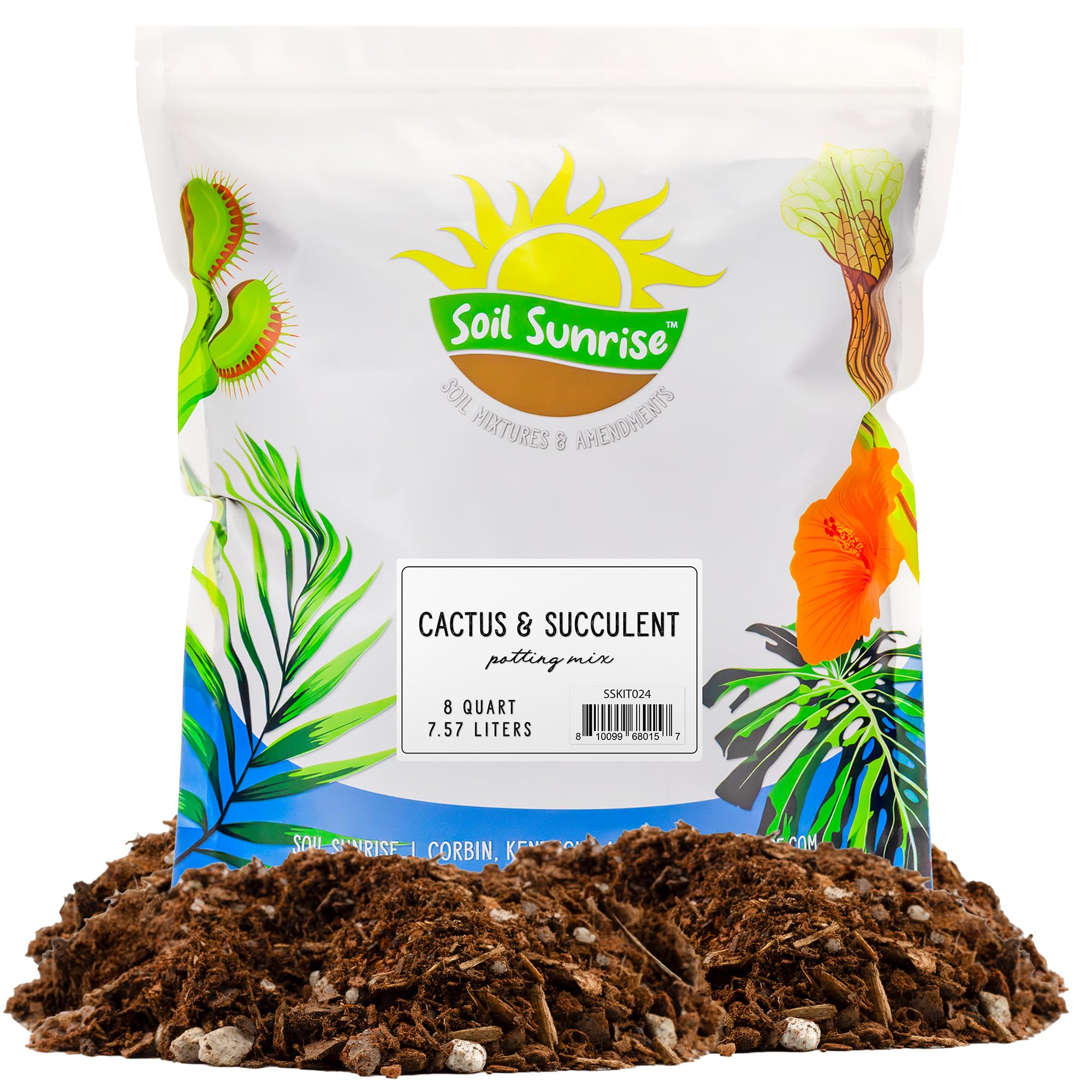
A genuinely gritty, hand-mixed blend in a bag big enough for a 12-inch pot.
Soil Sunrise sells this as a hand-blended, all-natural medium — no artificial ingredients, just pine bark, silica sand, calcined clay, and pumice. It is a true gritty mix, meaning it feels like gravel and sand when you pour it out, not like fluffy potting soil. That texture is exactly what desert plants evolved in: fast-draining, gritty, and impossible to overwater. The 8-quart bag is large enough for a big 12-inch pot, making it one of the best volume-to-value options in this list, especially compared to the Tinyroots 2.25-quart bag.
Reviewers point out it is “noticeably superior to Miracle-Gro” and call it the “BEST gritty mix” they have bought. Unlike the Hoffman mix, which is more peat-based, this one leans heavily on mineral ingredients, so it dries out faster. Shoppers say that their plants dried in about 8 days after watering. If you are switching from standard cactus soil, the gritty feel might surprise you, but your cactus will instantly thank you.
Grit Realism: This is a professional-grade mineral mix for experienced growers. It feels more like landscaping material than potting soil, but that is the point — cactus roots love it.
Buy this if: You have large pots or a big collection and want a hand-mixed, mineral-heavy soil that drains exceptionally fast. If you prefer a finer, more traditional soil texture, stick with the Hoffman 10404.
6. The Soil Sage Cactus & Succulent Potting Soil Mix (5 Qt)
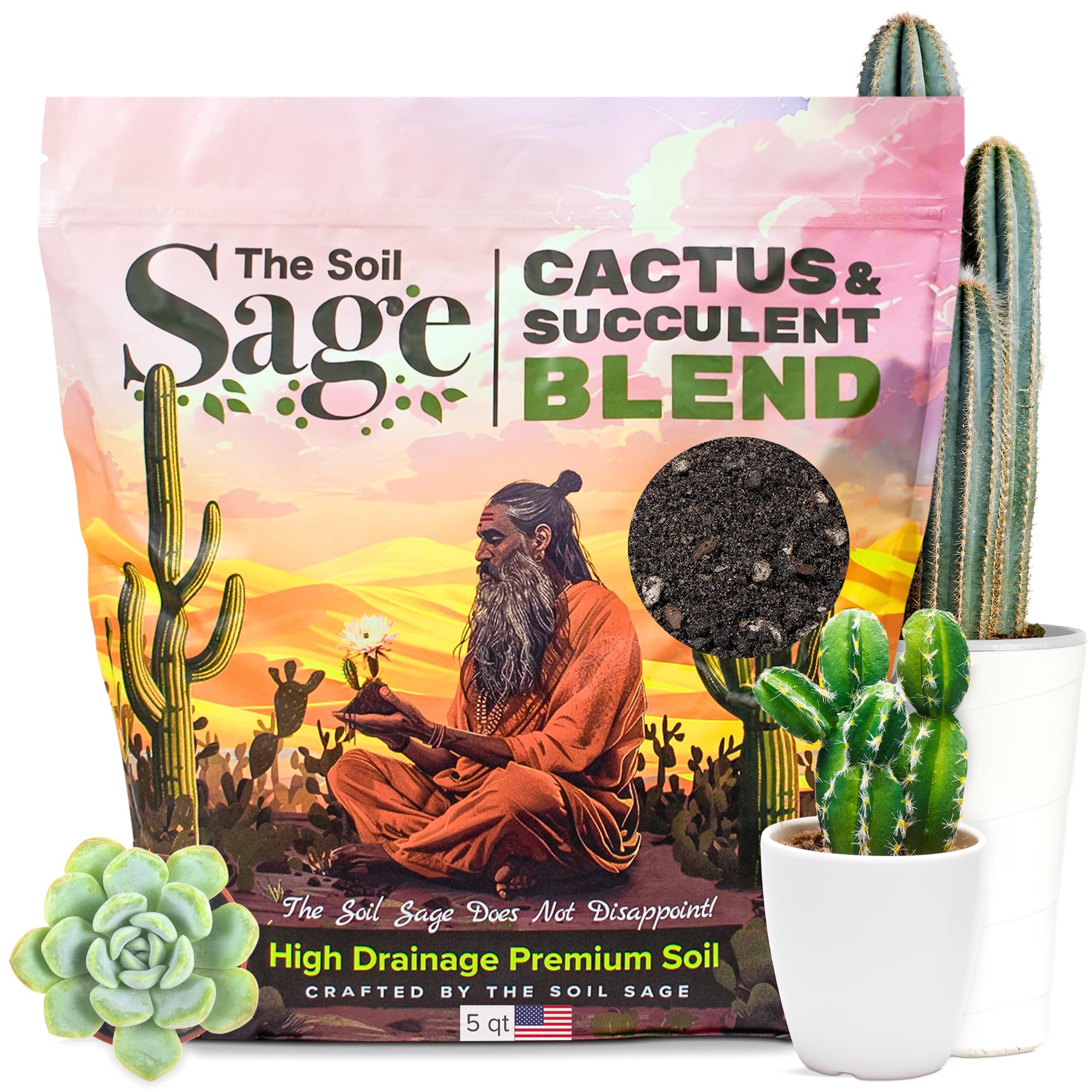
A soilless, peat-free formula powered by lava rock and mycorrhizal fungi.
The Soil Sage takes a completely different approach by being soilless and peat-free. The ingredients are lava rock, pumice, compost, bark, sand, biochar (a charcoal-like substance that improves soil structure and nutrient retention), and mycorrhizae fungi (beneficial fungi that form a network with roots to dramatically increase water and nutrient uptake). This chunky, fast-draining texture is designed to prevent root rot from the start by leaving no room for water to pool.
Buyers report it is “one of the best out there” and that their adenium seedlings are all thriving in it. The mix also comes with four 4-inch round mesh pot screens to keep soil inside while allowing water to drain. The real drawback is the price — this is a premium, hand-blended small-batch product that costs more than the Hoffman 10404. But for collectors with rare or fussy specimens, the mycorrhizae boost can make a significant difference.
Fungal Friend: The mycorrhizal fungi is not a gimmick — it actively extends the root network, helping plants access more water and nutrients, which is a real advantage for slow-growing cacti.
Choose this if: You want the best possible root health for rare, expensive, or slow-growing cacti and are willing to pay for a specialty blend. If you are on a tight budget, the Soil Sunrise 8-quart bag gives you more volume for less money.
7. Spike & Bloom High Drainage Cactus Soil Potting Mix (8 Pounds)

The slightly acidic mix that exotic cacti love and root rot hates.
Spike & Bloom formulated this mix specifically for cacti that benefit from a slightly acidic environment — it has a pH of 6.5, matching what many desert plants naturally prefer. The blend uses a custom mix of clays, sands, and a small amount of organic matter, plus added mycorrhizal fungi powder designed to encourage larger blooms and stronger roots. The makers say it promotes healthy root growth and “death to root rot.”
Buyers confirm it works well for smaller exotic cacti prone to rot, like lophophora, with one reviewer calling it “the bees knees of soil.” The loose, airy texture with grit makes it excellent for preventing overwatering. However, at 4 Quarts, it is not intended for large desert cacti like saguaro — it really shines with small pots where precise moisture control matters most.
Bloom Booster: The mycorrhizae powder is designed to help transplants flower and grow faster — buyers have reported cactus babies repotted in this mix showing new growth within weeks.
Reach for this if: You keep small, exotic, or collection-worthy cacti that require top-tier drainage and a slightly acidic, fungi-boosted soil. If you are planting a large barrel or saguaro cactus, the Soil Sunrise mix is a better fit.
Understanding the Specs
Drainage & Aeration
This is the most important quality in dirt for cactus. “Fast drainage” means water should flow through the pot within seconds, not sit on top. Ingredients like perlite (small white volcanic glass balls that create air pockets), pumice (lightweight porous volcanic rock), and coarse sand do the heavy lifting here. A good mix should feel gritty and crumble in your hand — if it clumps like wet clay, it is too dense.
Nutrient Content & pH
Cactus does not need rich soil, but a small amount of organic matter (like peat moss or worm castings) provides trace nutrients for steady growth. The pH level matters too: most cacti prefer slightly acidic to neutral soil (pH 5.5 to 7.0). A mix that is too alkaline can block nutrient uptake. If a bag says “pH balanced” for cacti, it is already in the right range, so you do not need to test it yourself.
Volume & Pot Size
How much soil you need depends on how many plants you are repotting. A 4-quart bag typically fills 2 to 3 standard 4-inch pots or one 6-inch to 8-inch pot. If you have a large collection, look for 8-quart or larger bags to save money per pot. For single small plants or terrariums, a 1-quart to 2-quart bag is enough and avoids wasting soil that might dry out in storage.
Ready-to-Use vs. Custom Mix
“Ready-to-use” means the bag is designed to be used straight out without adding anything. “Custom” or “base mix” may require you to add extra perlite, pumice, or sand to adjust drainage for your specific climate or plant type. If you are a beginner, stick with a ready-to-use mix. If you like tailoring your soil, a base mix gives you complete control.
FAQ
Can I use regular potting soil for cactus?
How often should I repot my cactus with fresh soil?
What is a “gritty mix” for cactus?
Should cactus soil contain sand?
Does my cactus need fertilizer if it’s in specialized soil?
What is the difference between succulent soil and cactus soil?
Can I make my own cactus soil at home?
How do I know if my cactus soil is draining too slowly?
Does cactus soil expire or go bad?
Is a peat-free cactus mix better?
Final Thoughts: The Verdict
Across the board, the best dirt for cactus winner is the Hoffman 10404 Organic Cactus and Succulent Soil Mix because it balances reliable fast drainage with a ready-to-use formula that works for both beginners and experienced growers. If you want a hand-mixed premium blend with mycorrhizae to boost root growth, grab the The Soil Sage Cactus & Succulent Potting Mix. And for a large-volume, truly gritty mix that feels like real desert soil, the Soil Sunrise Cactus and Succulent Potting Mix offers unbeatable value and texture.
How We Picked
We do not accept paid placement. Every pick is matched to a real buyer and a real use-case; we do not hands-on test units.
Sources & Methodology
Specifications: manufacturer listings and product documentation. Review insights: verified customer reviews, as of July 2026. Pricing: not shown on this page (it changes often); check the current price via the retailer link.
As an Amazon Associate, Lawn Gear Lab earns from qualifying purchases. This does not affect which products we feature.