
Specs are compiled from manufacturer listings and verified buyer reviews and can change over time — please confirm the key details on the product page before buying.
Aloe vera plants are famously tough, but they have one absolute dealbreaker: soggy roots. The fastest way to kill an aloe is planting it in regular potting soil that holds moisture like a sponge. You need a mix that drains fast, stays airy, and mimics the rocky, arid ground aloe evolved in — choose wrong, and you get root rot every time.
I’m Rikta — the founder and writer behind Lawn Gear Lab. This guide is built by comparing the manufacturers’ published specifications and the patterns across verified customer reviews, so you get each pick’s real strengths and trade-offs instead of marketing spin.
Here are four specialized mixes to help you choose the best dirt for aloe vera plant, covering what makes each one work and where they fall short.
Quick Picks
- The Soil Sage 5 Dry Qt Cactus & Succulent Potting Soil Mix — Best Overall
- Spike & Bloom High Drainage Cactus Soil Potting Mix (8 lbs) — Premium Drainage
- Rosy Soil Cactus & Succulent Potting Mix (4 Quarts) — Organic & Chunky
- LGM Premium Cactus & Succulent Soil Mix (0.5 Cu Ft) — Nutrient-Rich
How To Choose The Best Dirt For Aloe Vera Plant
Aloe is a succulent, so the soil needs two things above all else: fast drainage and a chunky, airy structure that lets roots breathe. A dense mix that stays wet for days invites root rot (when roots turn mushy and die from too much moisture). Here is what to look for in a bag.
Drainage and Grit
The mix should feel coarse, not smooth. Ingredients like pumice (a lightweight volcanic rock), lava rock, perlite (volcanic glass that traps air), and coarse sand create the open pore space that lets water rush through instead of pooling around the roots. If the soil looks like fine dirt, it is probably too heavy for an aloe.
Organic Matter and Nutrients
A little compost or worm castings (worm manure that feeds plants slowly) is good — it feeds the plant without chemicals. But too much organic material holds water and turns the mix into mud. Look for blends that mention “chunky” or “fast-draining” and skip anything labeled “moisture control” which is designed to stay wet.
Peat-Free vs Peat-Based
Peat moss (compressed, spongy plant matter from bogs) is a common soil ingredient that holds water like a sponge. Many of the best succulent mixes skip it entirely. Peat-free formulas drain more freely and are less likely to turn into a soggy mess after a single watering.
Quick Comparison
On smaller screens, swipe sideways to see the full table.
| Model | Best For | Volume | Key Drainage Ingredients | Weight | Amazon |
|---|---|---|---|---|---|
| The Soil Sage 5 Qt | Best Overall | 5 Dry Qt | Lava Rock, Pumice | 3.19 kg | Amazon |
| Rosy Soil 4 Qt | Organic & Chunky | 4 Quarts | Chunky bark, perlite | 4 lbs | Amazon |
| LGM Premium 0.5 Cu Ft | Nutrient-Rich Mix | 0.5 Cu Ft | Volcanic Ash, Perlite | — | Amazon |
| Spike & Bloom 8 lbs | Premium Drainage | 8 Liters / 4 Qt | Clays, Sand, Charcoal | 3.17 kg | Amazon |
In‑Depth Reviews
1. The Soil Sage 5 Dry Qt Cactus & Succulent Potting Soil Mix
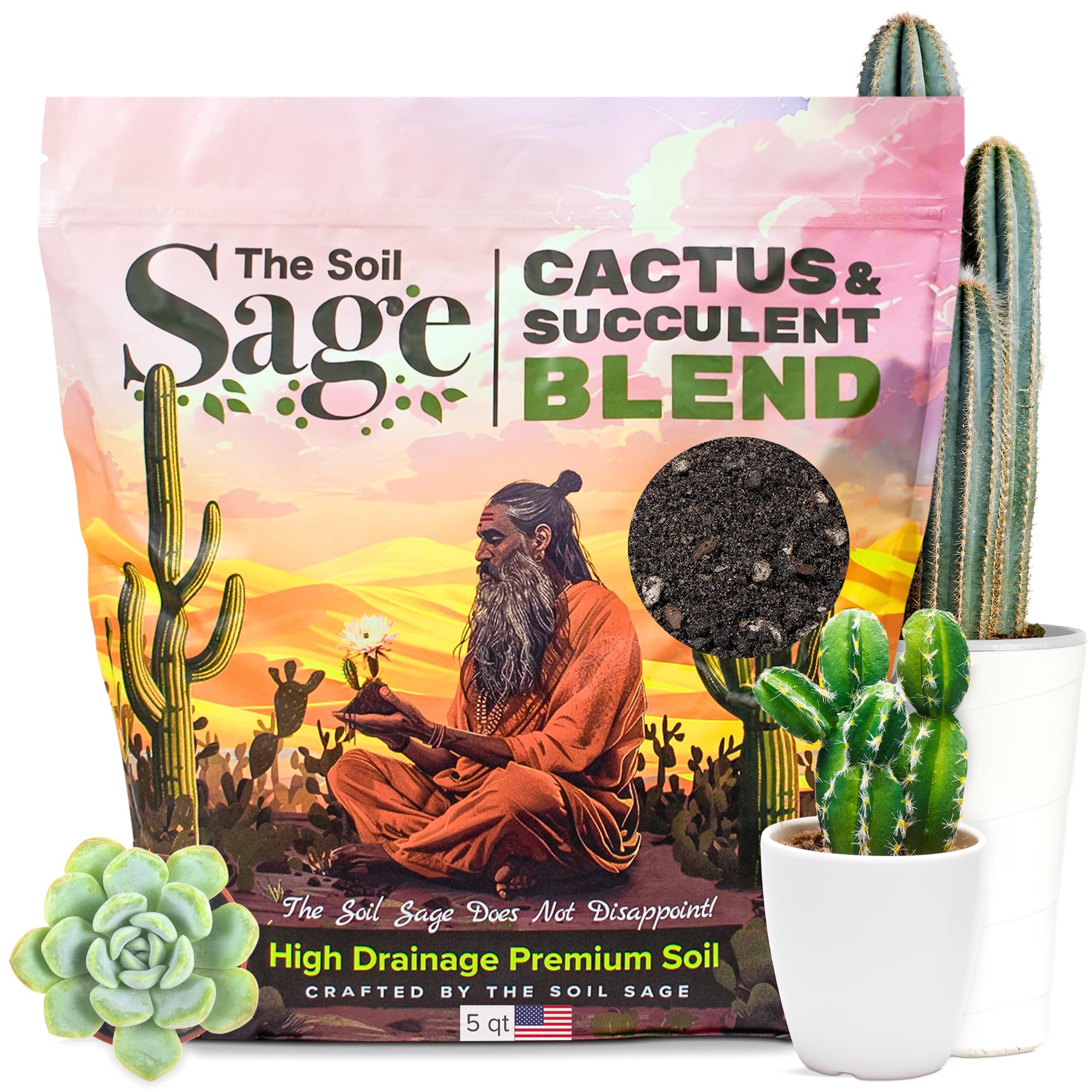
The hand-blended gritty mix that gives aloe roots the rocky home they evolved in.
This mix is built around coarse ingredients — lava rock and pumice (a lightweight volcanic rock) — that create large air pockets so water never lingers against the roots. That prevents root rot, the most common aloe killer. The mix is peat-free and soilless, meaning it skips the dense organic materials that turn to mud over time.
Each 5-dry-quart bag (about 4.7 liters) is hand-blended in small batches in the USA and includes mycorrhizal fungi (a type of beneficial fungus that attaches to roots and helps the plant pull in more water and nutrients). Reviewers specifically note the excellent drainage: one reviewer noted mixing it with calcined clay for adenium seedlings and said it was “fast-draining but holds moisture enough for 50+ seedlings; will reorder for transplanting.” Another called it the “best soil for cacti.”
This mix is pre-mixed so you can pour it straight into a pot — no need to add extra perlite or sand. It also comes with four 4-inch mesh pot screens to prevent soil from washing out the drainage holes. At 3.19 kilograms versus the Spike & Bloom bag’s 3.17 kilograms, you get a larger volume: 5 quarts versus 4 quarts.
What makes it great
- Pre-mixed with lava rock, pumice, and biochar (a charcoal-like material that aids drainage) for instant drainage
- Includes mycorrhizal fungi for root health
- Comes with four mesh pot screens to stop soil loss
One honest drawback
- Several buyers mentioned the price feels high compared to standard potting soil
Reach for this if: You want a ready-to-use, gritty mix with proven drainage that needs no amending — grab it and pot.
Look elsewhere if: You are on a tight budget and willing to blend your own from cheaper base components like perlite and sand.
2. Spike & Bloom High Drainage Cactus Soil Potting Mix (8 lbs)

A slightly acidic blend tuned for cacti that doubles as elite-level drainage for aloe.
Spike & Bloom takes a different approach than The Soil Sage. It is formulated with a custom blend of clays, sands, and a small amount of organic matter, creating a gritty texture that prevents water-logging. The soil has a pH of 6.5 (slightly acidic, on a scale where 7 is neutral) — aloe vera tolerates this range well, and it matches what many cacti prefer in the wild.
Reviewers consistently highlight the drainage as exceptional. One buyer mentioned it has “excellent drainage for cacti prone to root rot (e.g., lophs)” and said the fine mix with charcoal and wood chips “retains moisture without rot.” Another mentioned their plants showed new growth within weeks of repotting. At 8 pounds (3.17 kilograms) versus the Soil Sage bag’s 3.19 kilograms, the Soil Sage offers 5 quarts while this bag lists 8 liters, which is roughly 4 quarts.
The addition of mycorrhizae powder is meant to promote bigger blooms and healthier root systems, which is useful if you also grow flowering cacti. The texture is loose and airy, so water flows straight through — good for aloe, but you may need to water slightly more often in hot weather compared to a denser, moisture-retaining soil.
What makes it great
- Custom pH of 6.5 mirrors natural cactus soil conditions
- Mycorrhizae fungi included for nutrient uptake
- Gritty, airy texture that prevents water pooling
One honest drawback
- Some buyers said the price is best justified for small, exotic cacti rather than larger pots
Best suited for: Collectors who want precise, slightly acidic soil for aloe and smaller succulents in terracotta pots.
skip it if: You need a huge volume for multiple large containers — this bag goes quickly on bigger repotting jobs.
3. Rosy Soil Cactus & Succulent Potting Mix (4 Quarts)
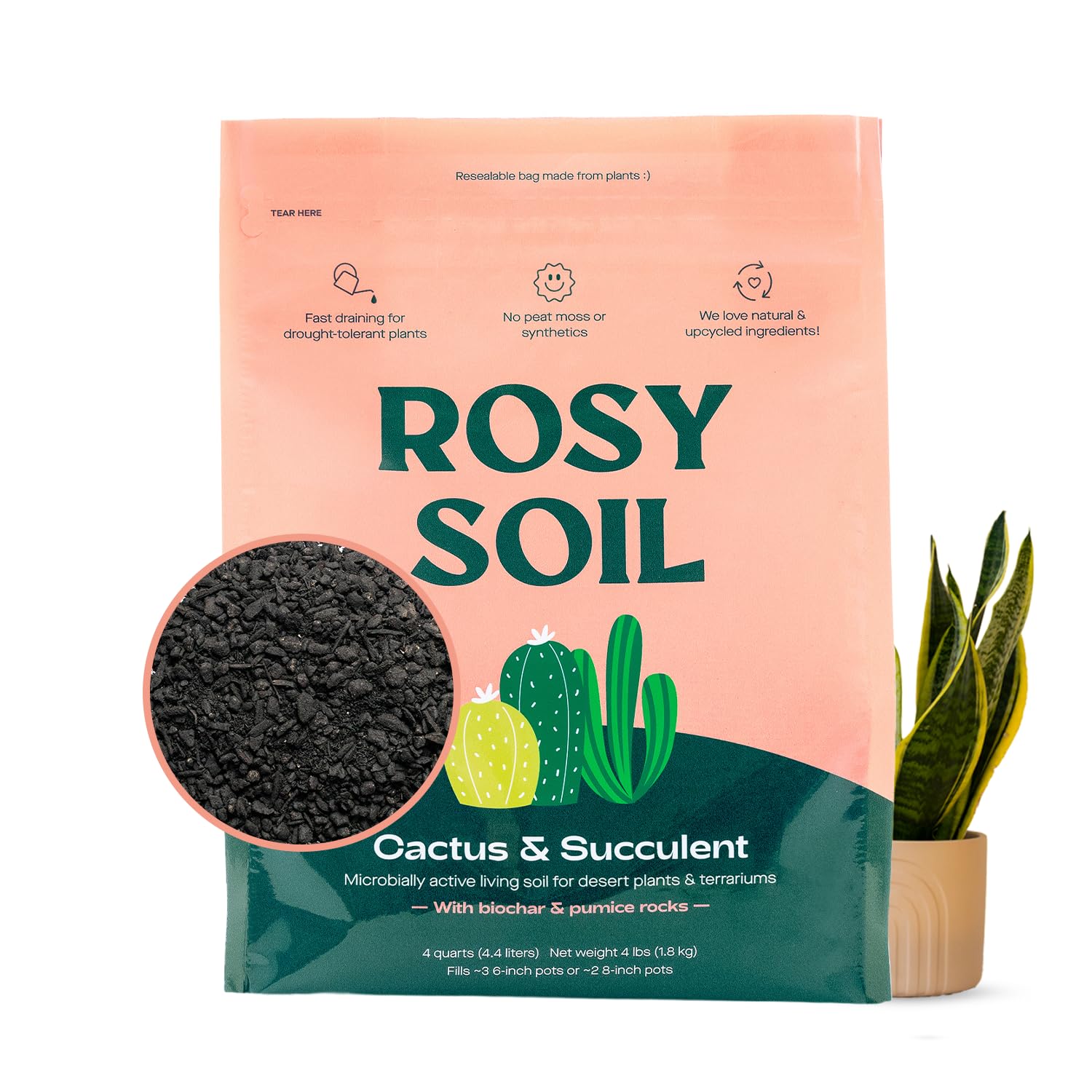
A living soil packed with microbes and worm castings that feeds roots without synthetic fertilizer.
Rosy Soil leans into organic living soil. The mix is peat-free — which means it does not have that water-holding sponge effect — and instead uses chunky bark and perlite to keep the texture open and airy. The key feature here is the pre-loaded beneficial fungi, microorganisms, and organic worm castings (worm manure) that build a small ecosystem inside the pot. For an aloe, that translates to steady, natural feeding without the risk of chemical burns.
Reviewers report that the soil looks clean and dark, and that even after multiple bags they found no bugs. One owner reported “succulents replanted 1 month ago are healthy,” and another confirmed it works “great for rooting new pups” (baby aloe offshoots). The 4-quart resealable bag is designed to stay fresh between uses, and the maker claims it fills two to three plants. A few reviewers noted the soil has some moisture right out of the bag and suggested adding extra perlite (volcanic glass that creates air pockets) or bonsai soil for older plants that need maximum drainage.
At 4 pounds, this bag is lighter than the other options, but it also holds less volume than The Soil Sage. The organic focus is a real plus if you prefer to avoid synthetic additives, though the lower volume means you will run through it faster on larger repotting projects.
Why it stands out
- Peat-free formula prevents the moisture sponge effect
- Organic worm castings and microbes feed plants naturally
- Resealable bag keeps soil fresh between uses
One thing to note
- Some buyers felt it needs extra perlite or bonsai grit for older, root-heavy plants
Go for this if: You want an organic, peat-free mix with active biology and do not mind adding a little extra grit yourself.
Consider another if: You need a large single bag for many pots — the 4-quart size disappears fast compared to the Soil Sage’s 5 quarts.
4. LGM Premium Cactus & Succulent Soil Mix (0.5 Cu Ft)
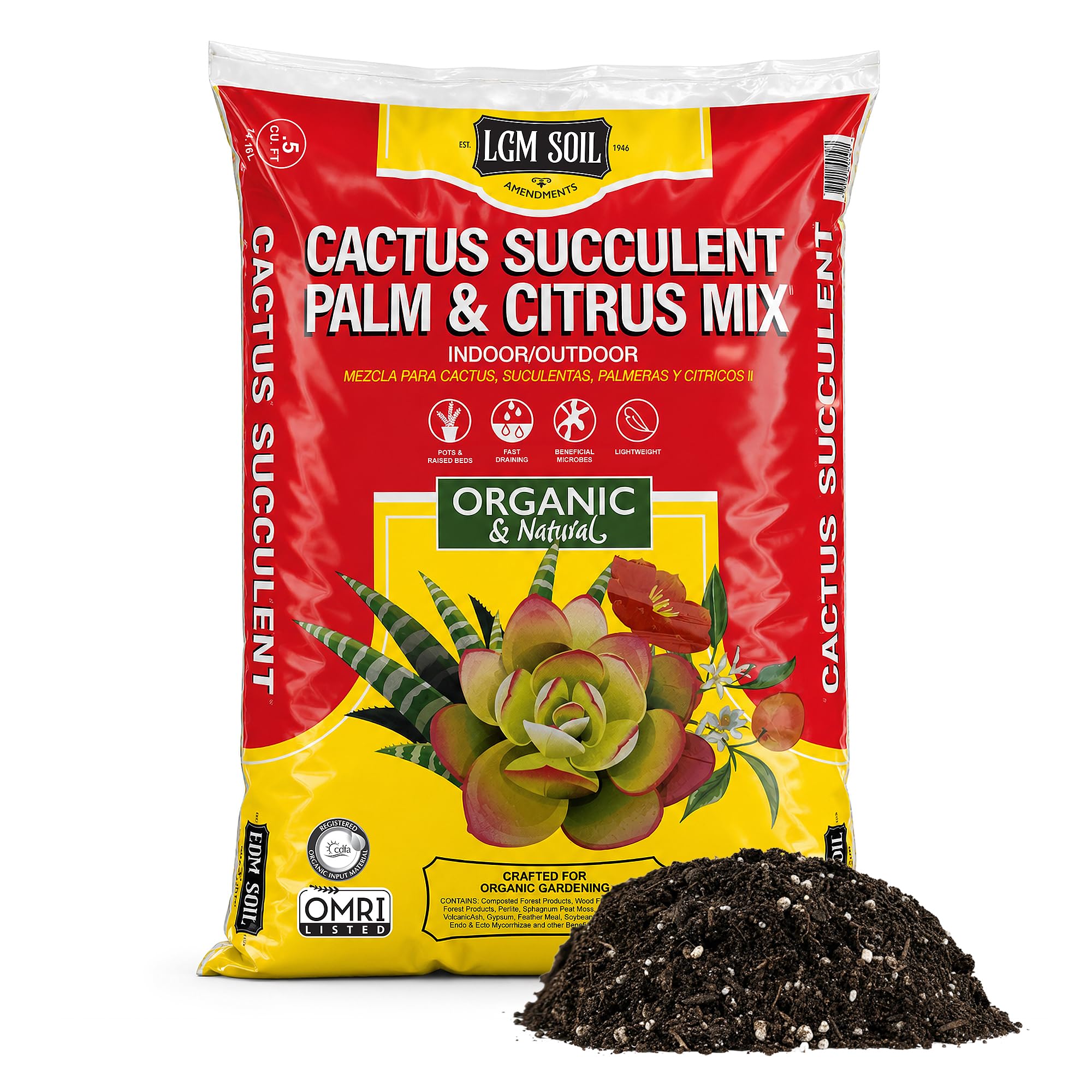
The family-formulated mix that packs volcanic ash for drainage and chicken manure for feeding.
LGM takes a different approach from the other mixes here. Instead of leaving the soil nutrient-poor (which many cacti mixes do, expecting you to add fertilizer), this blend is packed with chicken manure, kelp meal (dried seaweed that adds trace nutrients), and iron sulfate. For an aloe vera, that means the soil delivers slow-release feeding for months without you having to buy a separate bottle of succulent food. The drainage comes from volcanic ash and porous perlite, which create the fast flow-through that aloe roots need.
The mix is a full half cubic foot in volume (about 14.5 dry quarts), making it the largest bag in this lineup — one bag handles several repots or a larger container. The brand, LGM Soil Amendments, has been family-owned since 1946 and formulates in California using aged forest products rather than municipal green waste. A few reviewers noted the soil contains loose sticks mixed in and said “value and quality to be determined by time,” but most confirmed it drains well and their plants are growing fine.
This mix also works for citrus, palms, and plumeria, so if you keep a varied collection, one bag serves multiple plant types. The trade-off is that the nutrient load means you should watch watering slightly more closely than with an inert gritty mix — overwatering an enriched soil can still lead to root rot, just like in standard potting soil.
The big plus
- Slow-release nutrients from chicken manure and kelp meal feed aloe for months
- Largest volume (0.5 cu ft) of any pick in this guide
- Versatile — works for cacti, succulents, citrus, and palms
One trade-off
- Contains loose sticks mixed in, which some reviewers found surprising
Pick this if: You want a single big bag that feeds your aloe naturally without needing extra fertilizer bottles.
Think twice if: You prefer an inert, purely gritty mix and handle fertilizing yourself — this one comes enriched out of the bag.
Understanding the Specs
Drainage & Texture
The most important factor for aloe. You want a chunky, coarse mix — look for ingredients like pumice (lightweight volcanic rock), lava rock, perlite (volcanic glass that traps air), coarse sand, and fine bark. These create air spaces that let water rush through instead of pooling. If the soil looks like fine brown dirt, it is almost certainly too dense for aloe vera. A well-draining mix should feel gritty between your fingers, not smooth or silty.
Mycorrhizae & Root Health
Mycorrhizal fungi are beneficial microscopic fungi that attach to plant roots and extend their reach into the soil, helping the plant absorb more water and nutrients. You will see this listed on several bags. For an aloe in a pot, mycorrhizae can reduce transplant shock and support a stronger root system. It is a nice bonus, but the drainage and texture matter more than whether fungi are included.
FAQ
Can I use regular potting soil for my aloe vera plant?
How often should I repot my aloe vera?
What is the difference between peat-free and peat-based soil for aloe?
Should I add extra perlite or sand to my cactus soil?
Is cactus soil good for aloe vera?
What does mycorrhizae do in potting soil?
How much soil does one aloe vera plant need?
Do I need to fertilize aloe planted in succulent soil?
Final Thoughts: The Verdict
For most people, the best dirt for aloe vera plant is The Soil Sage 5 Dry Qt because it arrives pre-mixed with lava rock and pumice for instant drainage, includes mycorrhizae (beneficial root fungi), and comes with mesh pot screens. If you want an organic living soil with worm castings and microbes, grab the Rosy Soil 4 Qt. And for the largest single bag with built-in slow-release nutrients, reach for the LGM Premium 0.5 Cu Ft.
How We Picked
We do not accept paid placement, and we did not hands-on test every unit. Instead, we match each pick to a real buyer and use-case by comparing the manufacturers’ published specifications against the patterns in verified customer reviews — so you get each pick’s real strengths and trade-offs instead of marketing copy.
Sources & Methodology
Specifications: manufacturer listings and product documentation. Review insights: verified customer reviews, as of July 2026. Pricing: not shown on this page (it changes often); check the current price via the retailer link.
As an Amazon Associate, Lawn Gear Lab earns from qualifying purchases. This does not affect which products we feature.