
Specs are compiled from manufacturer listings and verified buyer reviews and can change over time — please confirm the key details on the product page before buying.
If your back aches every time you try to turn over a new garden bed, you are using the wrong tool. A digging fork shatters compacted soil without the backbreaking strain of a shovel, so you can aerate, lift, and cultivate in one smooth motion. But not all forks are built the same — the wrong one bends in heavy clay or snaps at the handle, leaving you frustrated mid-project.
This guide compares manufacturers’ published specifications and patterns across verified customer reviews. That way you get each pick’s real strengths and trade-offs instead of marketing spin.
Finding the best digging fork means matching tine count (the number of prongs), handle material (wood vs. steel), and overall weight to your specific soil and strength.
Quick Picks
- TABOR TOOLS Digging Fork, Steel Shaft (J59A) — Best Overall
- Spear & Jackson Neverbend Professional Digging Fork — Clay Buster
- Ymachray 5-Tine Heavy Duty Pitch Fork — 5-Tine Power
- Berry&Bird Gardening Digging Fork — Premium Ash Handle
- Eadwiella Pitch Fork, 43-Inch, Stainless Steel — Best Value
- VNIMTI Garden Fork, 4-Tine Spading Fork — Budget Champion
- Truper Spading Fork, 4-Tine Steel Head (30293) — Compact Classic
How To Choose The Best Digging Fork
Picking the right digging fork depends on the kind of ground you dig most and your own build. A lightweight wood-handled fork saves your arms for light bed prep, but a heavier steel-shafted one powers through roots and clay without bending.
Number of Tines and Shape
Most digging forks have four flat tines (these are called spading forks) or five round tines (these are called pitch forks). Four tines push through dense, rocky soil with less resistance. Five tines lift and hold more material for moving compost or mulch. Square tines, like those on the Ymachray model, dig into hard ground with less slip.
Handle Material and Grip
Hardwood handles (ash or hickory) absorb vibration and feel comfortable in the hands, but they can crack under extreme pressure or if left out in the rain. A T-handle (a short horizontal bar at the top) or D-grip (a closed D-shaped loop) gives you more control and leverage when lifting heavy soil loads. Steel shafts, like the one on the TABOR TOOLS fork, won’t splinter and can take years of abuse, though they transfer more shock to your hands.
Total Weight and Length
A fork between 4.5 and 6.5 pounds is ideal — heavy enough to bite into hard soil, light enough to use all afternoon without tiring. The handle length matters for your posture: taller gardeners (over 6 feet) often want a fork closer to 43 inches so they do not hunch. Shorter handles (30 inches) give you more mechanical leverage but require more bending.
Quick Comparison
| Model | Best For | Tines | Weight | Handle Length | Amazon |
|---|---|---|---|---|---|
| TABOR TOOLS J59A | Heavy clay & roots | 4 | 5.5 lb | 40″ | Amazon |
| Spear & Jackson Neverbend | Tough soil cultivation | 4 | 5.4 lb | 39.17″ | Amazon |
| Ymachray 5-Tine | Turning & lifting in clay | 5 | 5.99 lb (2.72 kg) | 41.3″ | Amazon |
| Berry&Bird Digging Fork | Raised bed aeration | 4 | 6.24 lb | 43.9″ | Amazon |
| Eadwiella Pitch Fork | Rocky soil & pavers | 4 | 4.4 lb | 43″ | Amazon |
| VNIMTI 4-Tine Fork | Budget-friendly digging | 4 | 4.5 lb | 45″ | Amazon |
| Truper 30293 | Light turning & compact spaces | 4 | 3.75 lb (1.7 kg) | 30″ | Amazon |
In‑Depth Reviews
1. TABOR TOOLS Digging Fork, Steel Shaft (J59A)

The steel-shafted fork that bends nothing, even in black clay.
This is the fork you reach for when the soil feels like concrete. The 4-tine forkhead and full steel shaft are made from hardened and tempered high carbon steel. The maker says the fork is “virtually unbreakable,” and buyers report using it as a pry bar to unearth large limestone chunks. Those owners mention the tines bent slightly under that extreme abuse, but the fork still works. At 5.5 lb and 40 inches total length, it is heavy enough to punch through packed dirt without bouncing off, so you save energy on every plunge.
Unlike the wood-handled Truper that one reviewer had snap in light soil after years of use, the TABOR’s welded steel shaft does not splinter or chip. The D-handle (a closed D-shaped grip) offers enough room for a gloved hand. The head measures 8 inches wide with 12-inch tines for deep penetration. Some tall gardeners wish it were a foot longer — a common request from reviewers over 6’2″. But for pure digging power and longevity, this is the most reliable fork in the lineup.
One reviewer says, “I have had mine for years… it is standing the test of time so well that this may be a treasure someone finds at my estate sale.” It outperforms cheaper forks, notably one Home Depot model that bent on sunflower stalks, according to the same buyer.
What makes it a beast
- Welded steel shaft won’t splinter like wood
- Sharp tines dig into heavy clay with ease
- D-handle accommodates a gloved hand
One thing to know
- At 40 inches, taller users may want a longer handle
- Heavier than wood-handled options, so all-day use may tire you
Reach for this if: you dig in heavy clay, deal with deep roots, or need a fork that withstands years of tough use.
Look elsewhere if: you are shorter or prefer a lighter tool for quick, small-bed work.
2. Spear & Jackson Neverbend Professional Digging Fork

Solid forged carbon steel that shatters cement-like clay without bending.
If you have ever tried to break up solid clay with a shovel, you know it is a losing battle. The Spear & Jackson Neverbend changes that. Its solid forged carbon steel tines (tines that are hammered into shape rather than stamped) are built specifically to handle tough soil conditions. One reviewer, an elderly woman, says she could “get this fork into the clay easily and break it up like a pro.” After years of struggling with cement-like backyard clay, she calls it a heavy-duty clay buster that worked like a champ.
This fork measures 39.17 x 8.07 x 3.94 inches and weighs 5.4 pounds — nearly identical to the TABOR in heft, but with a weatherproofed hardwood shaft that absorbs vibration better than a steel tube. The 7-inch tines let you get deep into compacted ground for real aeration. One 6’3″ reviewer says it did not break his back to use, and the handle feels like it will last forever. A few reviewers experienced the wooden handle snapping after a year of compost turning, which is the trade-off for that shock absorption.
What pros love
- Forged carbon steel tines resist bending
- Weatherproofed hardwood shaft lasts in the elements
- Great size for taller users at 39.17 inches
The catch
- Wood handle can snap after extended use in very tough soil
- Heavier than budget alternatives for all-day carrying
Choose this for: breaking up tough, compacted clay in larger garden beds or aerating lawn patches.
skip it if: you prefer a steel shaft for maximum abuse resistance or need a lighter fork for raised-bed work.
3. Ymachray 5-Tine Heavy Duty Pitch Fork

Sharp square tines and a clever step bar that lift tap roots whole.
Most garden forks have four tines, but this one gives you five — and those tines are square, not round. That shape cuts into hard ground with less resistance, making it ideal for turning and cultivating soil, moving mulch, or digging potatoes and perennials (plants that live for more than two years). The stainless steel head resists rust, and the extra-long double riveted socket (the part that connects the head to the handle) keeps the head locked tight to the steel shaft. One reviewer in Georgia red clay calls it the “only thing I have found that breaks it up.”
What sets this fork apart is the metal bracket on the back of the head that acts as a step bar and lifting lever. As one reviewer describes it, “That extra metal bracket sticking out of the back of the fork acts as a lever for lifting the blocks of soil straight up,” making it terrific for pulling out weeds with long tap roots. The T-handle design eases stress on your hand and wrist, and the bright color keeps it from vanishing in the garden. At 2.72 kg (roughly 5.99 lb) it is noticeably heavier than the Truper (1.7 kg) by a wide margin, giving it the mass to power through dense soil.
Standout strengths
- Five square tines dig into hard ground easier than round ones
- Step bar gives extra leverage for lifting root-bound soil
- Rust-resistant stainless steel head and welded boron steel blade
Things to consider
- Sharp tines may not last in extremely rocky conditions
- At 5’10”, some reviewers wish the handle was 6 inches longer
Best for: gardeners who need to lift deep-rooted weeds and break up heavy clay, and who want a T-handle for wrist comfort.
Not for you if: your soil is full of large rocks, or you are tall and need a longer handle.
4. Berry&Bird Gardening Digging Fork

The longest fork in the lineup, built for raised beds without back strain.
At 43.9 inches, the Berry&Bird fork is the tallest in this roundup, making it a smart pick for taller gardeners or anyone who wants to avoid constant bending. The head is made of stainless steel with four tines, and the handle is crafted from ash wood sourced from FSC-certified forests (FSC stands for Forest Stewardship Council, a certification meaning the wood is responsibly harvested). The D-grip is designed for a strong hold that won’t loosen over time, and the length is meant to reduce backache during long sessions.
Customers note it is especially good for aerating raised beds and container plants — one buyer says the straight tines “excel at aerating raised beds with less effort and back pain.” Another reviewer, using it for 1.5 years, calls it a great tool for digging, breaking up soil between plants, and shoveling manure and mulch. At 6.24 pounds, it is the heaviest fork here, which gives it the heft to sink into soil but may tire smaller gardeners. It comes with a 2-year warranty from the manufacturer.
Why it stands out
- Longest handle at 43.9 inches saves your back
- Stainless steel head resists rust well
- FSC-certified ash handle is comfortable and sustainable
Heads up
- At 6.24 lb, it is heavy for all-day use in tough conditions
- Not ideal for breaking compacted clay — one reviewer calls it “not for heavy-duty”
Reach for this if: you are tall, work mostly in raised beds or loose soil, and want a comfortable D-grip.
Look elsewhere if: you need to break up hard, compacted clay or prefer a lighter fork.
5. Eadwiella Pitch Fork, 43-Inch, Stainless Steel
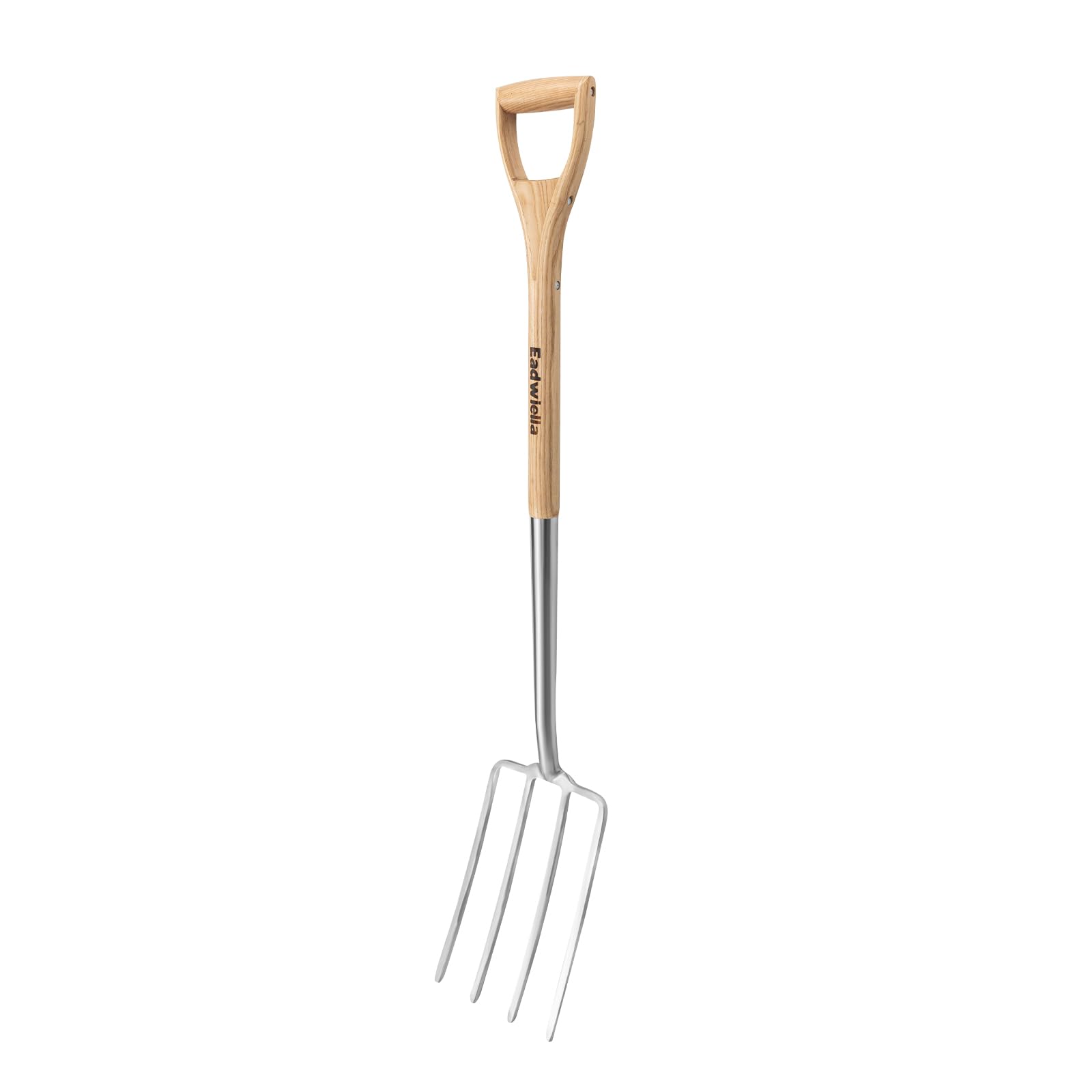
A polished stainless steel fork that is light and tough on rocky soil.
The Eadwiella fork uses mirror-polished stainless steel tines that resist rust even in moist soil or manure. Each of the four tines is made of solid steel and over-welded to the crossbar to prevent snapping — a common failure point in cheaper forks. The handle is made from FSC-certified Ash hardwood with a D-grip, and the extra-long riveted socket adds strength and a bit of flex at the key joint to handle heavier lifts.
Weighing just 4.4 pounds with a 43-inch length, this fork is one of the lightest and longest in the group, making it easy to maneuver for hours. One reviewer says it is “literally the best gardening tool I have ever purchased,” noting it turned an 8×8 raised bed weeding chore into a 20-minute breeze. It is excellent for rocky soil, sorting weed roots, and harvesting root vegetables. The Limited Lifetime Warranty from Eadwiella adds confidence for the long haul.
If the heavier steel shaft of the TABOR TOOLS fork is too much for light bed prep, the Eadwiella is the lighter, longer alternative that still handles tough soil.
What you get
- Lightweight at 4.4 lb for fatigue-free use
- Polished stainless steel resists rust and soil adhesion
- Limited Lifetime Warranty included
Keep in mind
- Designed for lighter work — not for bashing solid rocks
- Wooden handle may not stand up to heavy prying
Choose this for: weeding, sorting roots, and general cultivating in rocky or loose soil without exhausting yourself.
pass on it if: you need to break up extremely hard clay or plan to use it as a pry bar.
6. VNIMTI Garden Fork, 4-Tine Spading Fork

A sturdy 45-inch fork at a budget price that still feels built to last.
At 4.5 pounds and 45 inches, the VNIMTI fork is the longest in this review, which helps you stand up straight while digging. The metal Y-grip is more durable than plastic handles and won’t fade in sunlight. The hardwood handle is tougher than fiberglass and won’t crack or splinter. The fork head is made of polished metal, and the maker says it is strong enough to handle hard soil or rocky environments without bending.
Buyers are consistently impressed with the build quality for the price. One reviewer says, “It cuts my gardening in half.” Another calls it a “great tool at a really decent price,” praising the nice handle and sturdy construction. A third says they have not bent it yet, which is a solid sign given how many forks fail on that test. It is light and long enough for women and elderly gardeners to use easily, though the metal Y-grip may not be as comfortable as a full D-handle (like the one on the TABOR) for heavy lifting.
Strengths
- Very long 45-inch handle saves your back
- Light enough at 4.5 lb for all-day use
- Sturdy build that resists bending
Limitations
- Metal Y-grip may not be as ergonomic as a D-handle
- Not ideal for heavy prying or commercial-grade abuse
Best for: budget-conscious gardeners who need a long, light fork for general bed prep, transplanting, and composting.
Not for you if: you need a steel shaft for extreme durability or prefer a D-handle grip.
7. Truper Spading Fork, 4-Tine Steel Head (30293)
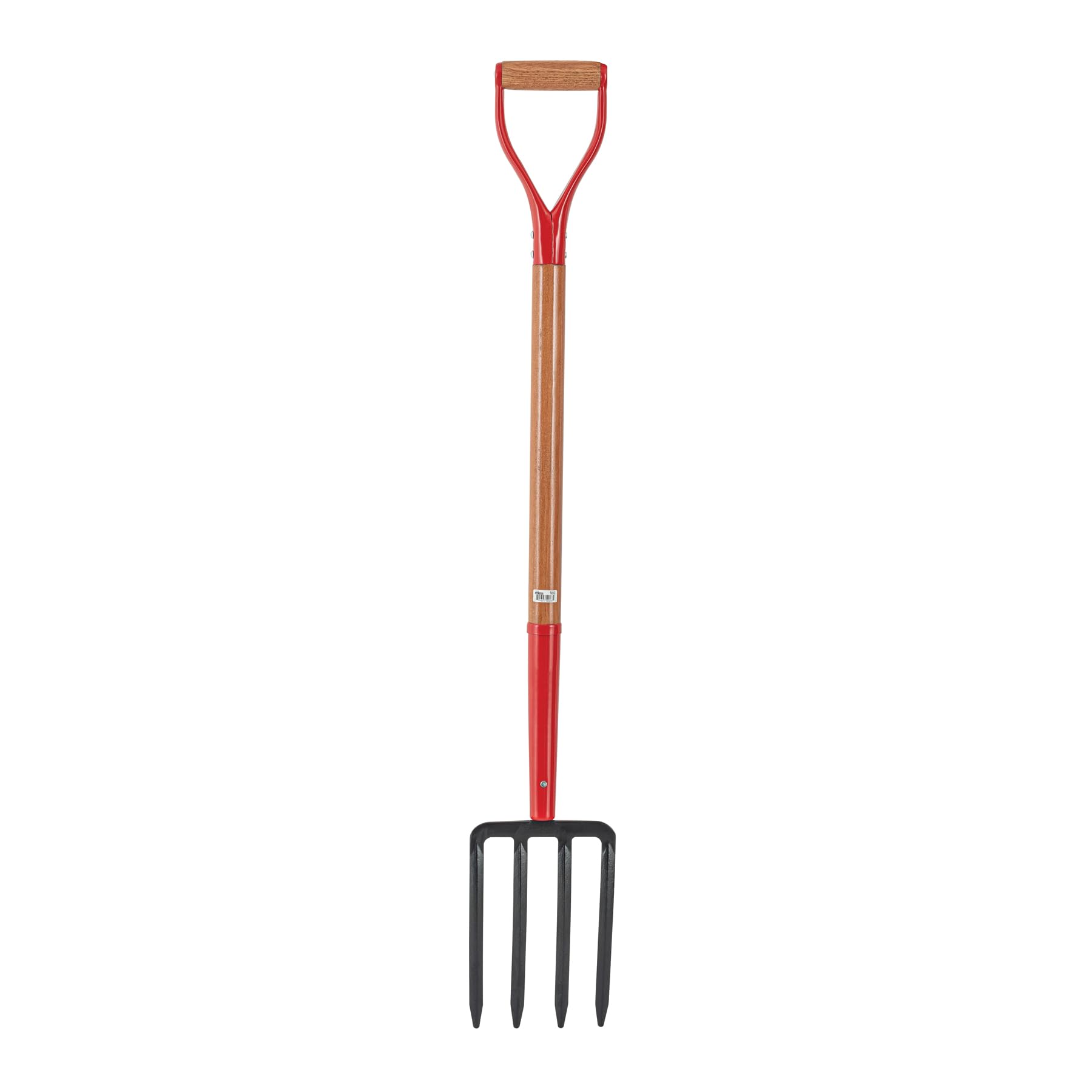
A short, sturdy D-handle fork that turns tight spaces into manageable work.
The Truper 30293 is the smallest and lightest fork here, with a 30-inch handle and a weight of just 1.7 kilograms (about 3.75 lb). That compact design makes it ideal for working in tight garden beds, turning compost in bins, or aerating around established plants where a long handle would get in the way. The 4-tine steel head is built for turning, loosening, and aerating soil with controlled penetration, and the wood D-handle gives you a secure grip.
Reviewers point out it is a quality fork that makes garden turning much easier, and one says it feels like the same Truper fork he bought 10 years ago — a good sign for consistency. However, one owner reports a disappointing break after years of use: “the fork broke off in light soil” while punching holes for fertilizer. At 30 inches, it is noticeably shorter than the 45-inch VNIMTI, meaning you will need to bend more.
Why it works
- Short 30-inch handle is perfect for tight beds and bins
- Light at 1.7 kg, easy to maneuver all afternoon
- Familiar wood D-handle grip
Watch out for
- Short length means more bending for taller gardeners
- One long-term reviewer reports the fork head breaking
Reach for this if: you work in small raised beds, compost bins, or tight garden spaces and want a light, compact tool.
Look elsewhere if: you are tall, need to break up heavy clay, or want a fork that can withstand years of heavy prying.
Understanding the Specs
Tine Count & Shape
The number of tines (the prongs) determines what a fork does best. A 4-tine spading fork slips through dense, rocky soil with less resistance because each tine pushes through a smaller gap. A 5-tine pitch fork carries and lifts more material per plunge, making it better for turning compost or harvesting root vegetables. Square tines cut into hard ground more effectively than round ones, which tend to push soil aside rather than penetrating.
Handle Material
Hardwood handles (ash or hickory) absorb vibration and feel warm in the hands, but they can crack if left in the rain or used as a pry bar. Steel shafts, like those on the TABOR TOOLS fork, never splinter or rot, but they transfer more shock to your hands and are heavier. Fiberglass handles resist weather but can flex without breaking. The handle material directly affects how long the tool will last and how comfortable it feels hour after hour.
FAQ
How is a digging fork different from a pitchfork?
Should I get a fork with 4 tines or 5 tines?
Will a digging fork break in heavy clay soil?
How long should the handle be for my height?
What is a D-handle vs a T-handle?
Can I use a digging fork to turn compost?
How do I take care of a wooden handle digging fork?
Why did my digging fork bend the first time I used it?
Is a heavier digging fork always better?
How is a digging fork different from a broad fork?
Final Thoughts: The Verdict
For the majority of shoppers, the best digging fork is the TABOR TOOLS J59A because its all-steel construction handles clay, roots, and rocky soil without bending. If you want a classic wood-handled feel that breaks up hard ground like a pro, grab the Spear & Jackson Neverbend. And for tall gardeners working in raised beds who need a long, lightweight option to save their back, the Eadwiella Pitch Fork is the smart pick.
How We Picked
We do not accept paid placement. Every pick is matched to a real buyer and a real use-case; we do not hands-on test units.
Sources & Methodology
Specifications: manufacturer listings and product documentation. Review insights: verified customer reviews, as of July 2026. Pricing: not shown on this page (it changes often); check the current price via the retailer link.
As an Amazon Associate, Lawn Gear Lab earns from qualifying purchases. This does not affect which products we feature.