
You plant a garden, not a buffet. Yet every morning, hostas are half-eaten, tomato stalks are snapped, and hoof prints tell the story. A deer proof raised bed isn’t a luxury—it’s the difference between a harvest and a loss. With a physical barrier of the right height and mesh density, you can reclaim your backyard from the local herd without building a fortress.
I’m Rikta — the co-founder and writer behind Lawn Gear Lab. I spend my time cross-referencing galvanized steel gauges, comparing mesh aperture sizes, and analyzing hundreds of owner accounts to find the setups that actually stop deer from jumping in and munching.
Whether you are guarding a small herb patch or a full vegetable plot, finding a reliable deer proof raised bed means matching fence height, mesh strength, and frame durability to the pressure in your area.
How To Choose The Best Deer Proof Raised Bed
A raised bed alone won’t stop a hungry doe. You need a system that combines barrier height, mesh integrity, and a sturdy frame that won’t buckle under soil weight or wind load. Here are the three criteria that separate a true deer barrier from a glorified tomato cage.
Fence Height and Mesh Density
Deer can clear a 4-foot fence without a running start. Look for a cage that stands at least 48 inches tall from the soil surface—ideally 54 to 59 inches. The mesh aperture should be small enough (roughly 1-inch or less) to block fawns and prevent a deer from pushing its nose through to snip tender shoots. A wide grid may keep out rabbits but will not deter a determined buck.
Frame Material and Anchoring
Galvanized steel is the gold standard. It resists rust from soil contact and holds up under the weight of wet mesh covers. Wood frames look natural but can rot within a few seasons in damp climates, and the fence panels often pull loose. A light cage needs ground stakes to stay put in wind; a heavy-duty metal bed with a bolted frame can handle stronger gusts without tipping.
Access and Planting Convenience
A zippered door is essential. Without it, you wrestle the entire mesh cover off every time you water or harvest. Look for a wide zippered panel on at least one side—two is better for larger beds. Some models add a top zipper that folds the roof back, giving you full overhead access for tall crops like pole beans or sunflowers.
Quick Comparison
On smaller screens, swipe sideways to see the full table.
| Model | Category | Best For | Key Spec | Amazon |
|---|---|---|---|---|
| UrGROWA 2-in-1 | Metal Cage | Mid-size veggie beds | 59 in total height | Amazon |
| Ohuhu Elevated | Elevated Bed | Back-saving work height | 31.5 in leg height | Amazon |
| Outsunny Crop Cage | Bed + Shade | Hot-summer sun protection | 60% shade cloth roof | Amazon |
| KING BIRD Elevated | Elevated + Net | Patio and deck gardening | 30 in stand height | Amazon |
| Quictent Oval Self-Watering | Self-Watering | Low-maintenance watering | Integrated misting system | Amazon |
| Lineware 8x4x3 ft | Large Metal Bed | Maximum growing area | 8×4 ft planting footprint | Amazon |
| Permasteel EnGrow | Self-Watering | Premium indoor/outdoor use | Patented soil platform | Amazon |
| AMERLIFE Wooden Bed #1 | Wood Frame | Large landscape integration | 71 in fence height | Amazon |
| AMERLIFE Wooden Bed #2 | Wood Frame | Extra-wide planting area | 17 ft bed width | Amazon |
In‑Depth Reviews
6. Lineware 8x4x3 ft Galvanized Raised Bed
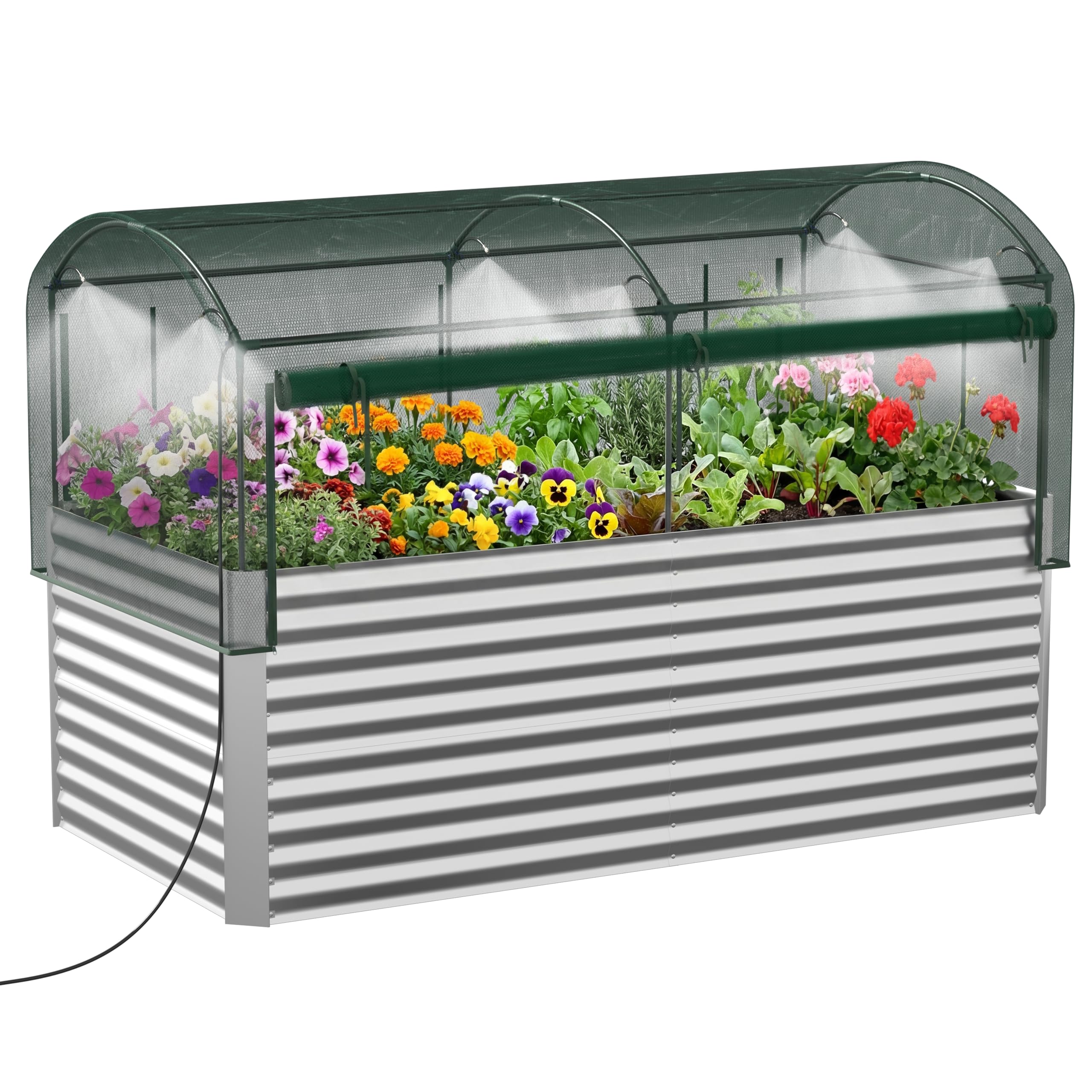
The Lineware delivers the largest uninterrupted growing surface in this lineup. Its 8-by-4-foot galvanized steel frame sits directly on the ground with an open bottom for natural drainage and deep root development. The included mesh cover rises 3 feet above the soil line, which is borderline for deer in high-pressure zones, but the sheer size lets you plant taller crops that physically block the approach.
A self-watering misting system is integrated into the frame, reducing the daily chore of hand-watering a bed this large. Owners consistently report the mesh withstands moderate wind when anchored with the provided ground stakes, and the galvanized finish shows no rust after a full season of rain and sun. The zippered door on one long side is generous enough to reach every corner.
Assembly requires two people for the larger panels, but the step-by-step instructions and complete hardware kit avoid the frustration of missing bolts. If you have the space and want to grow a serious volume of vegetables under one protective canopy, this is the most productive option here.
What works
- Massive 32 sq ft of growing area
- Self-watering system saves daily labor
- Galvanized steel resists rust long-term
What doesn’t
- 3 ft height may need taller extensions for deer-heavy areas
- Assembly is easier with a helper
1. UrGROWA 2-in-1 Galvanized Bed with Crop Cage
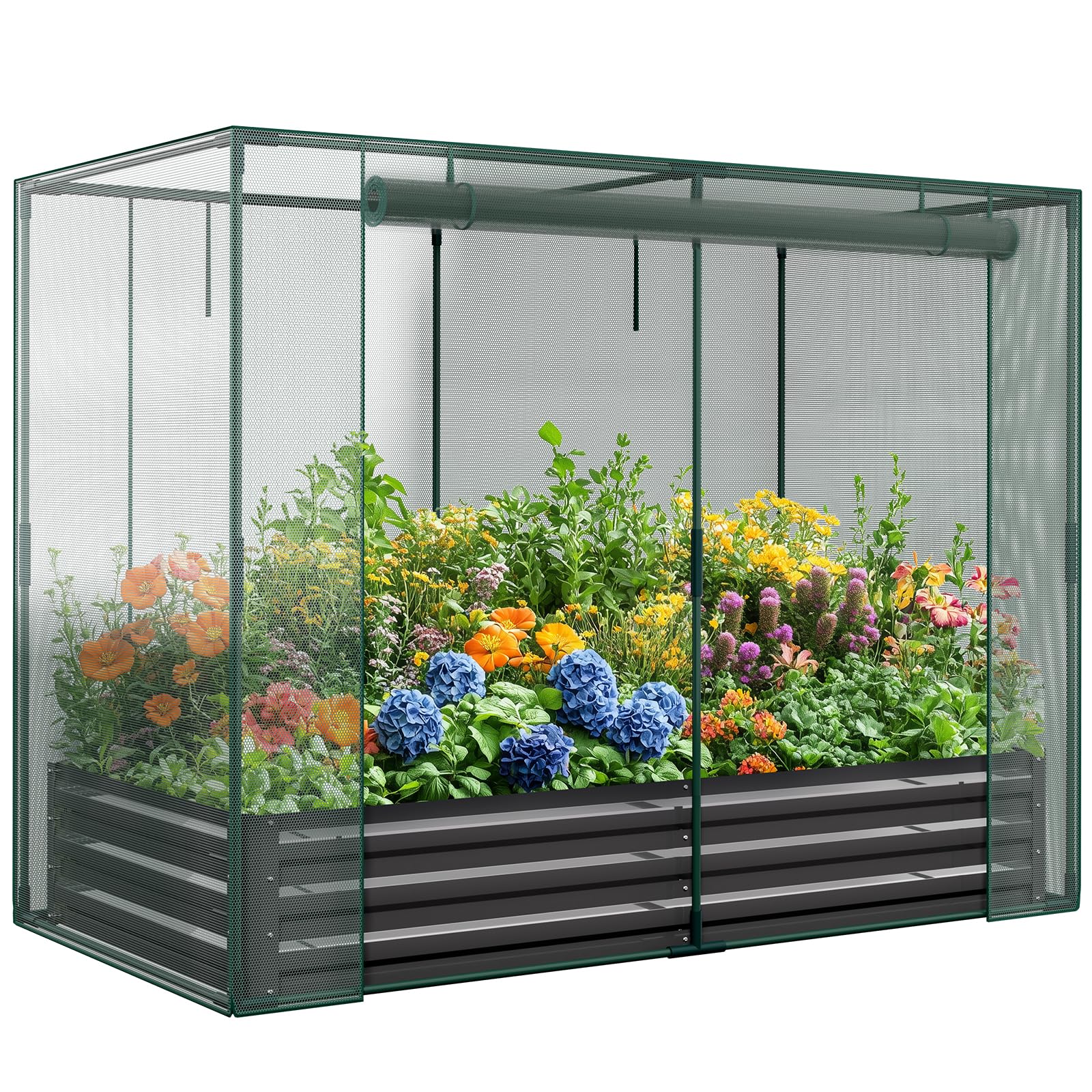
The UrGROWA 2-in-1 combines a galvanized steel raised bed with a full-cage mesh cover that reaches 59 inches above the soil. That height is the sweet spot for deer deterrence—most whitetails hesitate to jump a barrier they cannot see over while browsing. The mesh fabric is dense enough to block birds and squirrels but allows full sunlight and rainwater penetration, so your plants stay on their natural schedule.
A large zippered door on the side lets you reach in for watering, weeding, and harvesting without removing the entire cover. The metal bed itself is made from thickened galvanized steel that resists cracking and corrosion far better than treated wood. Owners note that the included ground stakes are a bit light for windy spots and recommend upgrading to curved iron stakes for a rock-solid hold.
Assembly goes fastest with two people, especially when attaching the mesh canopy to the top frame. The 71-by-35-inch footprint fits neatly into a suburban backyard without overwhelming the space. For the balance of price, protection height, and ease of use, this is the most complete package for the average gardener dealing with deer pressure.
What works
- 59-inch cage clears most deer jump heights
- Galvanized bed outlasts wood alternatives
- Zippered door simplifies daily access
What doesn’t
- Stakes need upgrading for high-wind areas
- Top zipper not as wide as some competitors
7. Permasteel Raised Garden Bed with EnGrow Technology
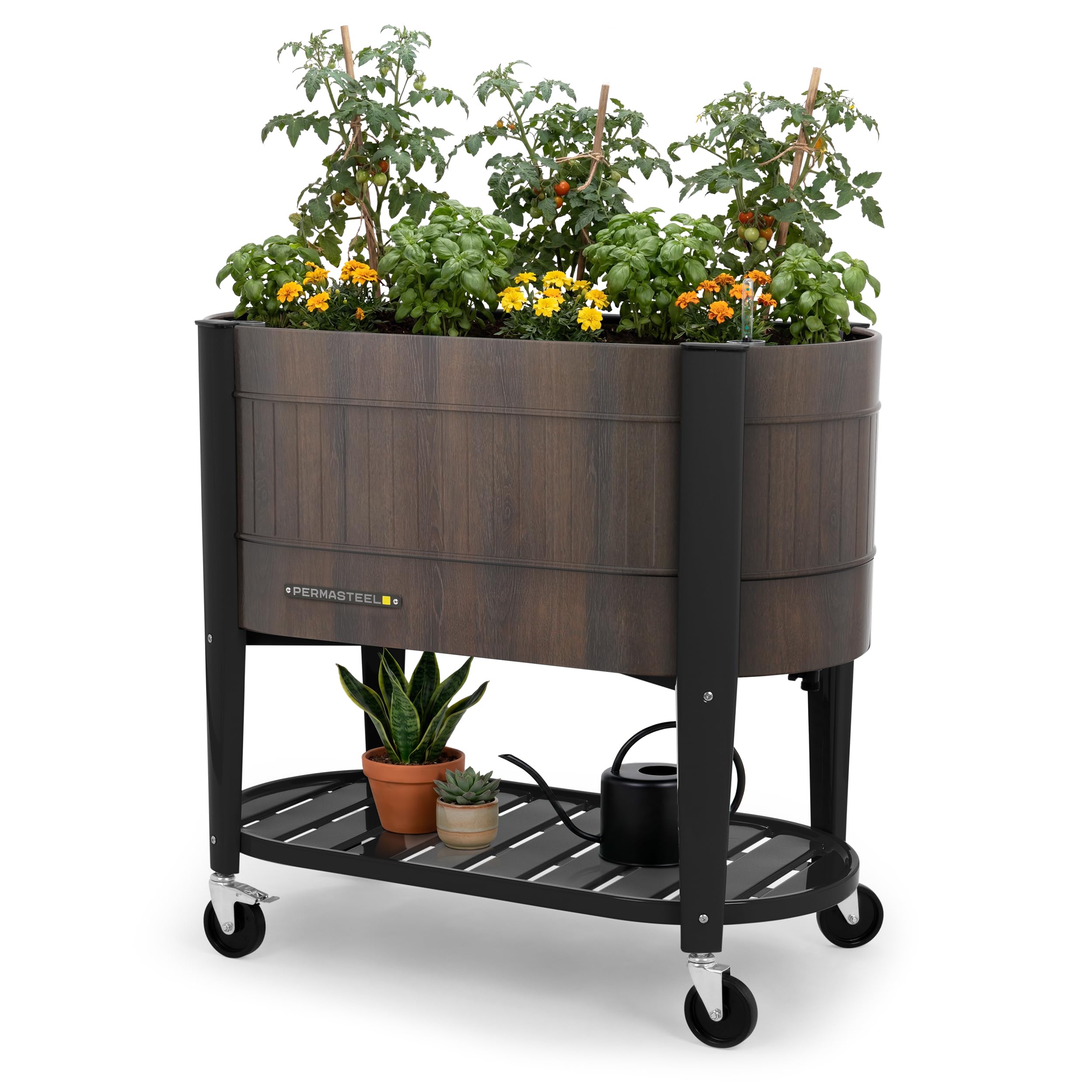
The Permasteel is a different animal. Instead of a mesh cage over a ground-level bed, it uses a 37-inch-tall powder-coated steel frame with a built-in self-watering system that elevates the soil above a drainage chamber. The height alone acts as a deer deterrent—most deer will not try to stand on their hind legs to browse a bed that sits at waist level—and the enclosed design keeps out smaller mammals entirely.
The EnGrow TrueSoil platform supports the soil above the Eco-Chamber, preventing roots from sitting in stagnant water. A water level indicator tells you when to drain the reservoir, and the included soil fabric stops earth from falling into the lower cavity. Owners in Arizona successfully grew tomatoes through a hot, dry season, crediting the system for preventing root rot despite frequent watering.
Assembly is straightforward with clear instructions. The wheels make repositioning possible when empty, though the unit is heavy once filled. The wood-grain powder-coat finish looks more like furniture than a farm bed, making it suitable for a deck or patio setting without clashing with the home aesthetic.
What works
- Elevated design naturally deters deer and rabbits
- Self-watering with drainage indicator prevents overwatering
- Powder-coated finish resists rust and looks refined
What doesn’t
- Smaller capacity than ground-level beds
- No mesh top for flying pest protection
5. Quictent Oval Self-Watering Raised Bed
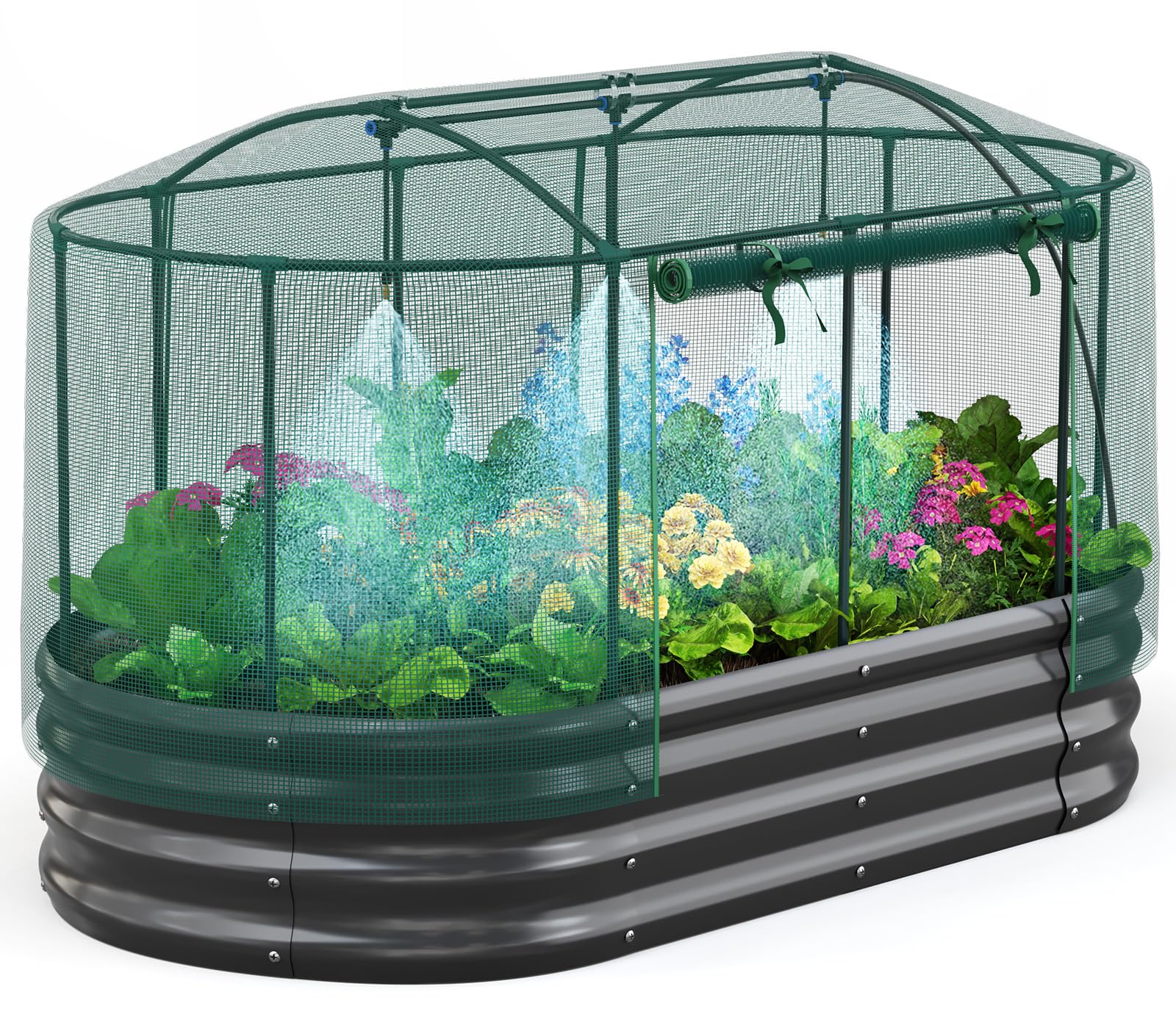
The Quictent oval bed packs two convenience features rarely found in a single unit: a built-in misting irrigation system and a fine mesh cover that zips over the top. The oval shape eliminates sharp corners, making it safer for families with kids who help in the garden. The mesh is dense enough to keep out deer and rabbits while allowing air circulation that prevents heat buildup in summer.
The self-watering kit connects to a standard garden hose and creates a fine mist that cools the surrounding air and covers the entire planting surface evenly. Owners in small city gardens report the setup survived high winds with no damage, though the included instructions are picture-only and require some interpretation. The metal bed is rolled at the edges, so there are no sharp surfaces to snag clothing or skin.
At 68 inches long and 35 inches wide, the bed offers enough room for a mix of tomatoes, peppers, and herbs. The open base ensures excess water drains freely, and the galvanized steel frame resists corrosion. For anyone who wants both irrigation automation and deer protection in one purchase, this is the most efficient single-box solution.
What works
- Integrated misting system waters evenly with less waste
- Safe rolled edges ideal for family gardening
- Mesh cover stops deer while allowing airflow
What doesn’t
- Picture-only instructions can be confusing
- Oval shape limits straight-row planting patterns
3. Outsunny 7.3×3.4 ft Crop Cage with Shade Cloth
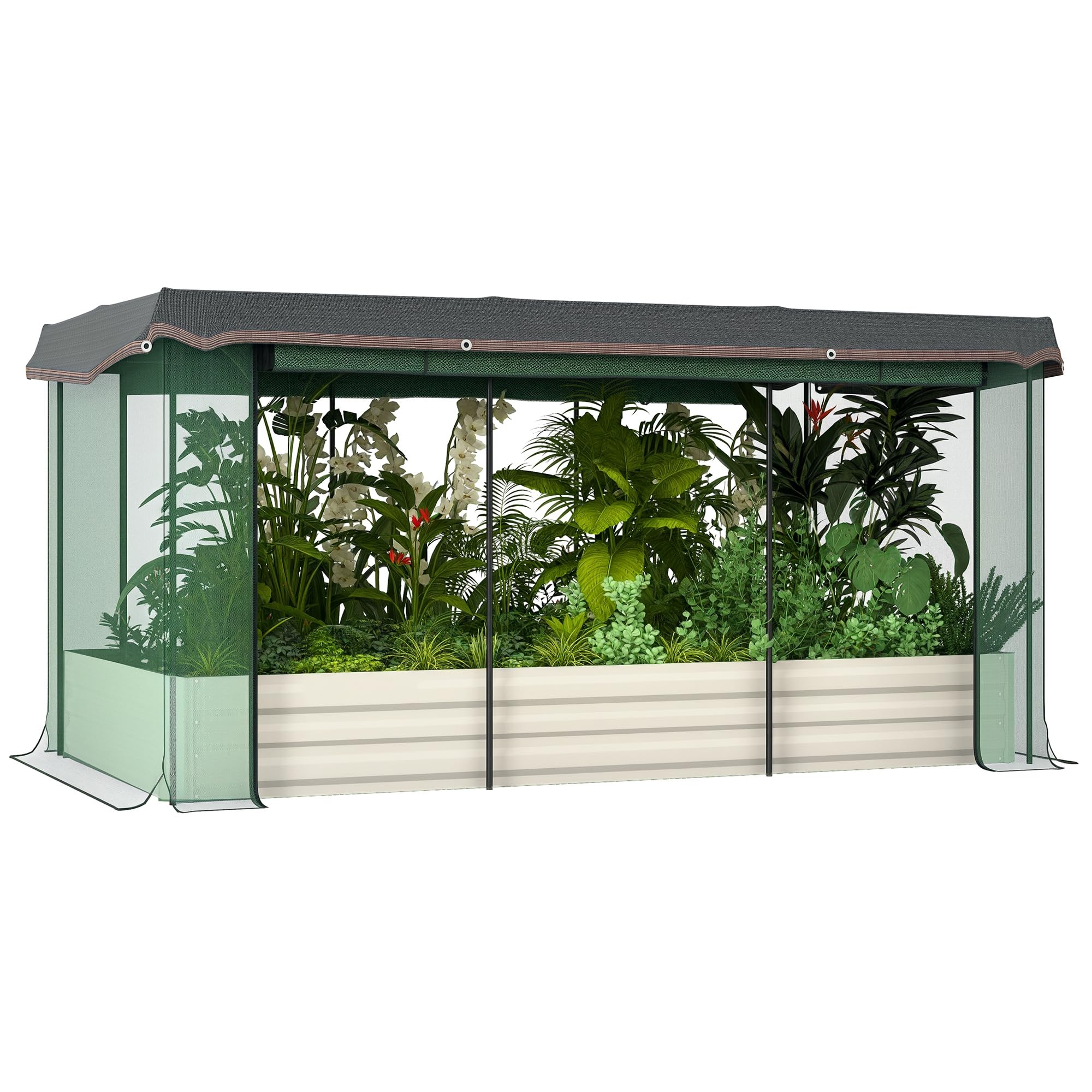
The Outsunny stands out because of its dual-layer top: a standard mesh net for pest protection and a shade cloth that blocks 60 percent of sunlight. This matters in hot climates where direct afternoon sun can scorch tender leaves even when the deer are held at bay. The shade cloth can be removed or left in place depending on the season and crop needs.
The bed itself is 11.75 inches deep with an open bottom, allowing deep-rooted plants like tomatoes and peppers to reach native soil. The galvanized steel panels are reinforced with support bars to prevent bowing under heavy, wet soil loads. Owners report the mesh effectively stopped deer and rabbits from reaching a planting of tomatoes, peppers, zucchini, and basil, and the zippered sides made harvesting straightforward.
Assembly takes about an hour with basic tools. The 90.5-inch length provides substantial row space for a family vegetable garden, and the included guy ropes help stabilize the cage in exposed yards. If your summers run hot and deer run bold, this is the most climate-adapted option in the mid-range group.
What works
- Shade cloth prevents sun scald on hot afternoons
- Open bottom allows deep root penetration
- Reinforced support bars prevent metal warping
What doesn’t
- Shade cloth reduces light for full-sun crops
- Long bed requires a fairly level site
2. Ohuhu Elevated Raised Bed with Greenhouse Cover
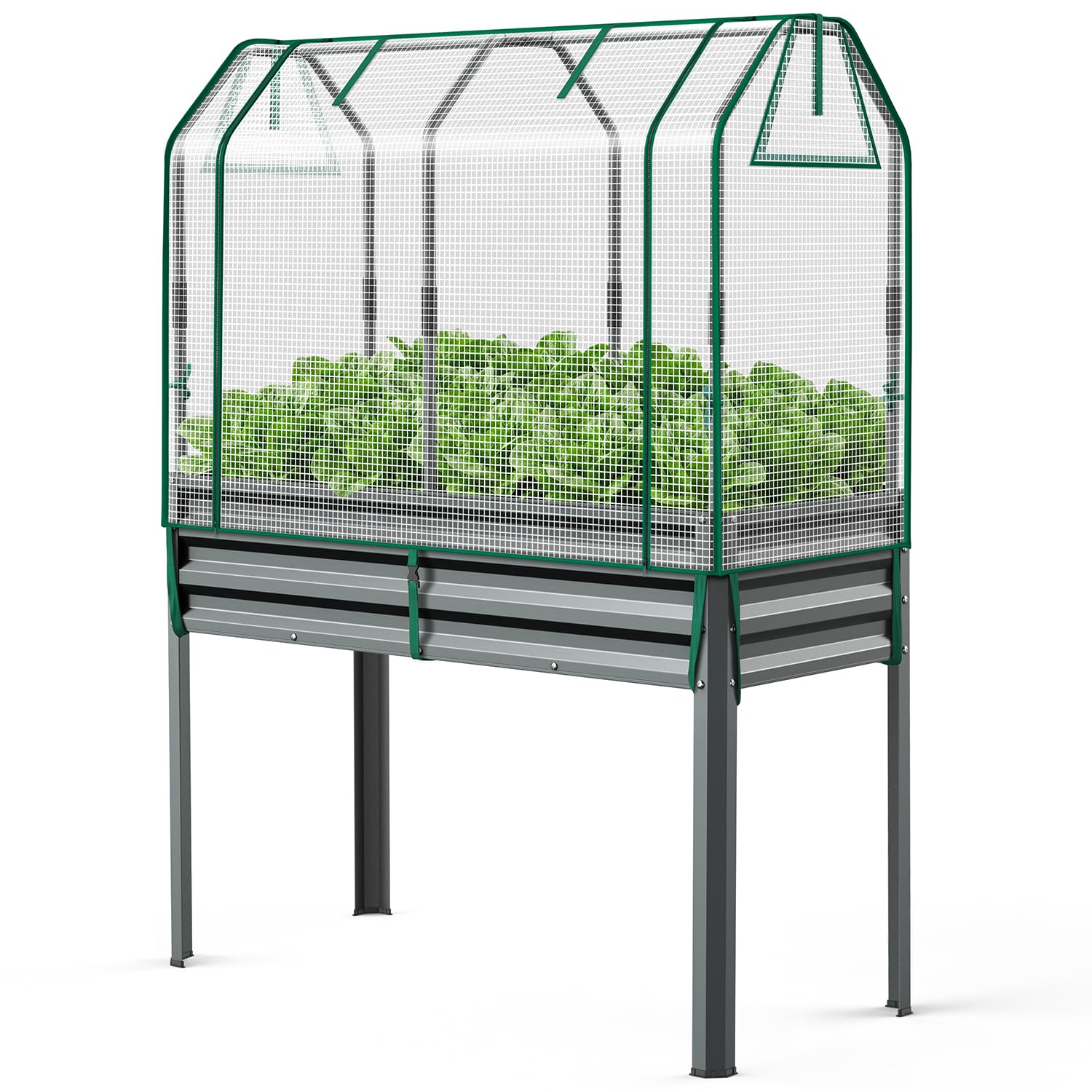
The Ohuhu elevated bed raises the planting surface to 31.5 inches off the ground, which is roughly table height. That eliminates bending and kneeling entirely—a huge quality-of-life improvement for older gardeners or anyone with back issues. The included greenhouse cover extends the total height to 59.5 inches for deer protection while also trapping warmth for early-season planting.
The 11-inch-deep metal box holds 6.37 cubic feet of soil, with twelve drainage holes and a non-woven liner to prevent soil washout. The cover has two mesh windows for airflow and a zippered door for access. Owners praise the sturdy corner posts and bottom support bars that prevent wobbling even when fully loaded with damp soil.
Wheels on the base let you roll the entire unit to chase the sun or move it under cover for winter. One owner reported that after a year outdoors, only a few bolts showed minor rust, and the dark green color option blends well with foliage. For a gardener who wants protection from deer without having to bend down to their plants, this is the most thoughtfully designed elevated bed available.
What works
- Table-height working surface saves your back
- Wheels allow repositioning throughout the season
- Greenhouse cover extends growing window in spring and fall
What doesn’t
- Few bolts reported rust after extended outdoor use
- Cover may not be tall enough for vining crops
4. KING BIRD Large Raised Bed with Netting
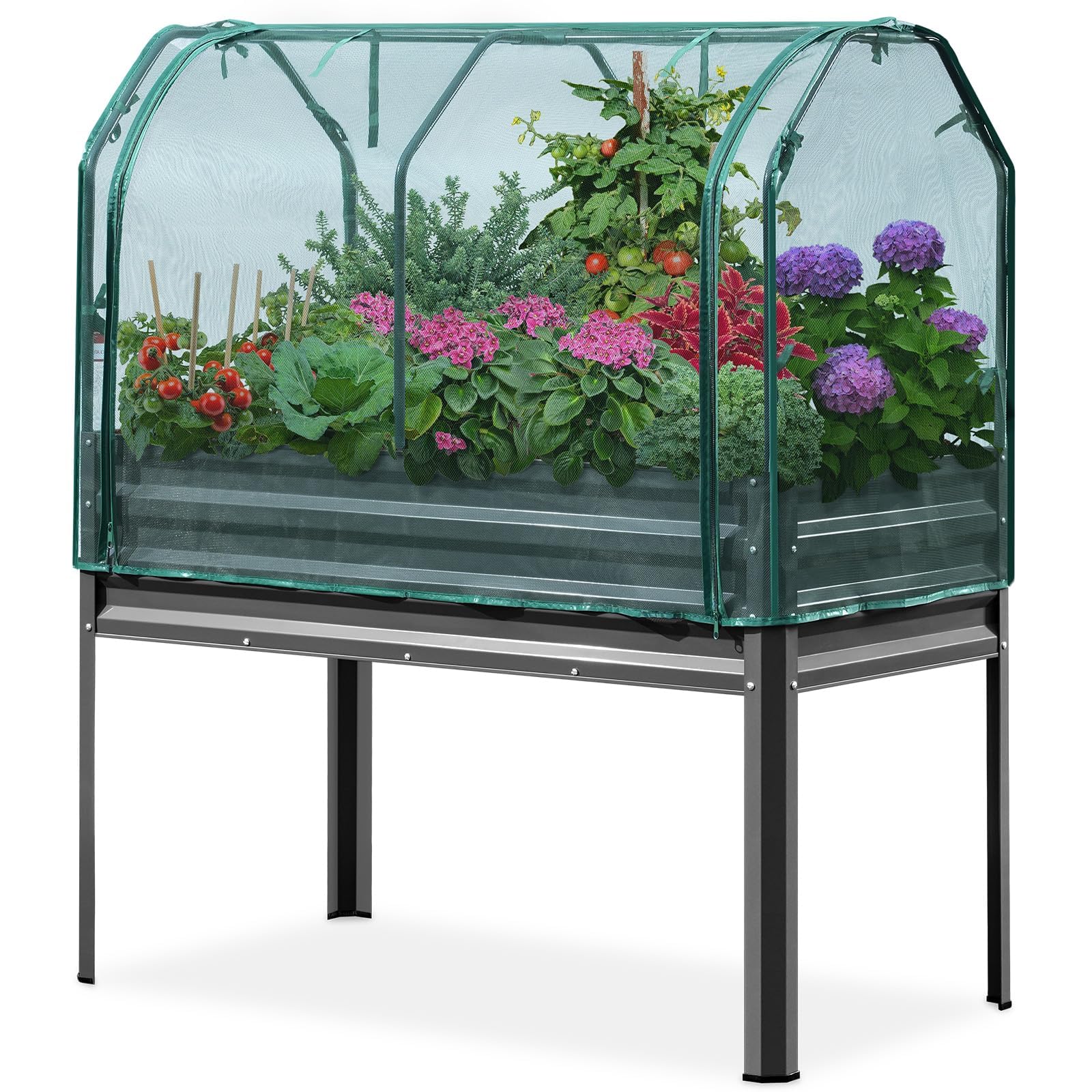
The KING BIRD elevates a 48×24-inch metal planter box on a 30-inch stand, keeping the soil level comfortable while the mesh netting rises to 56 inches total. The netting is fine enough to stop deer from reaching through and includes a zippered door for daily care. The planter box itself is 11.8 inches deep—significantly deeper than the standard 8 inches—giving roots room to spread without hitting the bottom.
Butterfly nuts speed up assembly, and owners report getting the frame together in under 30 minutes. The galvanized steel construction resists rust, and the included non-woven fabric liner keeps soil contained while letting water drain freely. The 50-gallon capacity is enough for a mixed planting of leafy greens, peppers, and determinate tomatoes.
A few owners noted missing wing nuts in the hardware bag, though extra parts were included that allowed completion. The stand itself feels solid once assembled, but the rolling shelf underneath is lighter-duty than the main frame. For the price, this is a strong mid-range contender that combines elevated ergonomics with a protective cage at a height that will make most deer think twice.
What works
- 56-inch total height deters deer effectively
- 30-inch stand saves your back
- Quick assembly with butterfly nuts
What doesn’t
- Hardware bag sometimes missing small parts
- Rolling shelf feels less sturdy than main frame
8. AMERLIFE Wooden Raised Bed with Deer Proof Fence (7.5×12 ft)
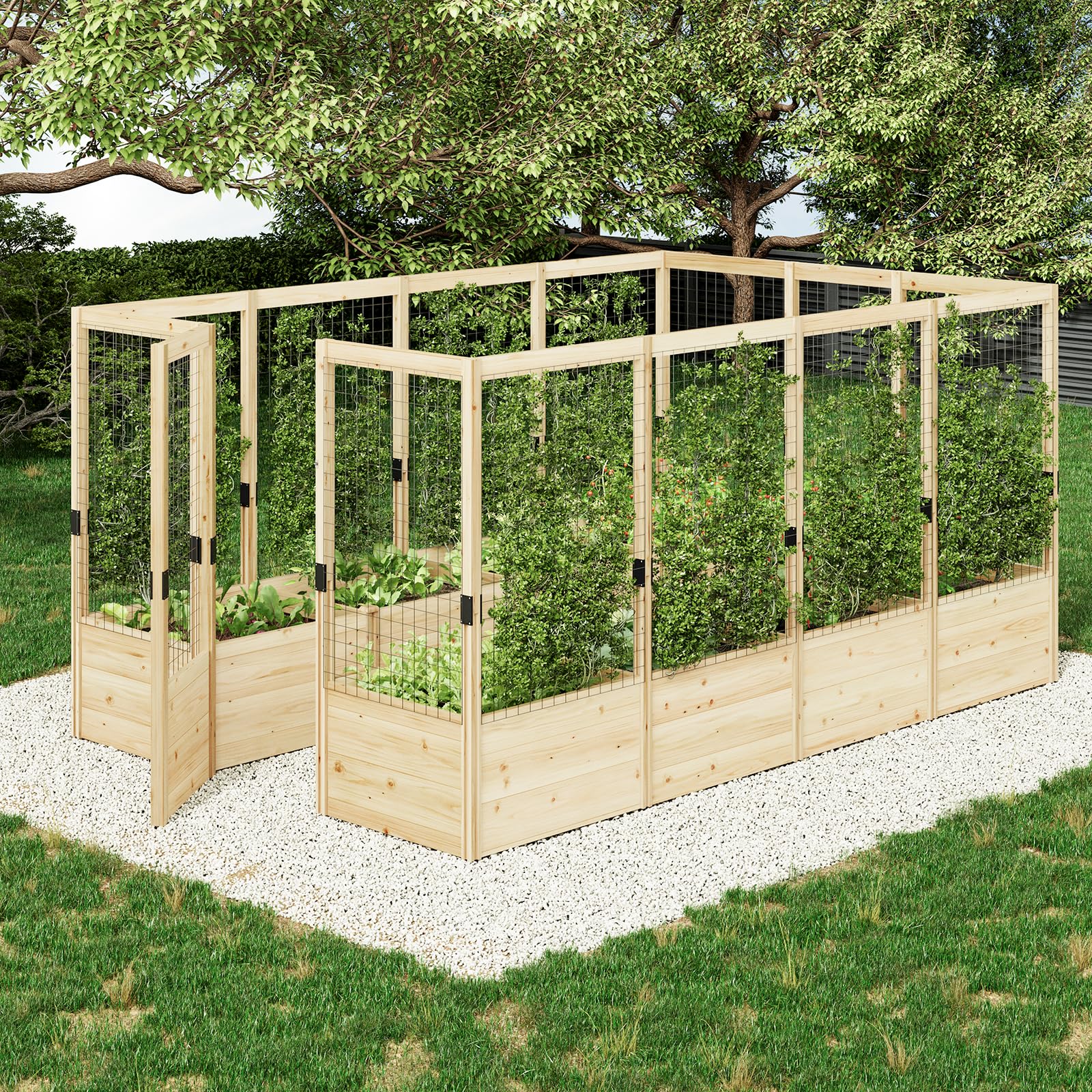
The AMERLIFE 7.5×12-foot bed is built for serious production. The bed depth is 19 inches, which holds enough soil to support heavy-feeding crops like corn, squash, and pumpkins. The attached fence rises to 71 inches—nearly 6 feet—which is tall enough to stop even the most determined whitetail buck from clearing it. The wood frame uses fir construction with a natural finish that blends into a landscape setting.
Drop-down sides make it easy to step inside the fenced area for planting and harvesting without having to reach over the walls. Owners have also repurposed the structure as a tortoise habitat, demonstrating its versatility. One reviewer assembled the kit into a 25-foot linear run, showing the modular potential of the panels.
However, not all feedback is glowing. A single critical review describes the wood as poorly finished and the panels separating under soil weight, requiring added supports. Given the high cost, this is a product to inspect carefully upon delivery. If you get a well-built unit, it offers the most growing space and the tallest fence of any product here.
What works
- 71-inch fence is effectively jump-proof for deer
- Drop-down sides simplify access to whole bed
- Massive 7.5×12 ft growing area
What doesn’t
- Wood quality varies significantly between units
- Some panels may need additional bracing
9. AMERLIFE Wooden Raised Bed with Deer Proof Fence (7.5×17 ft)
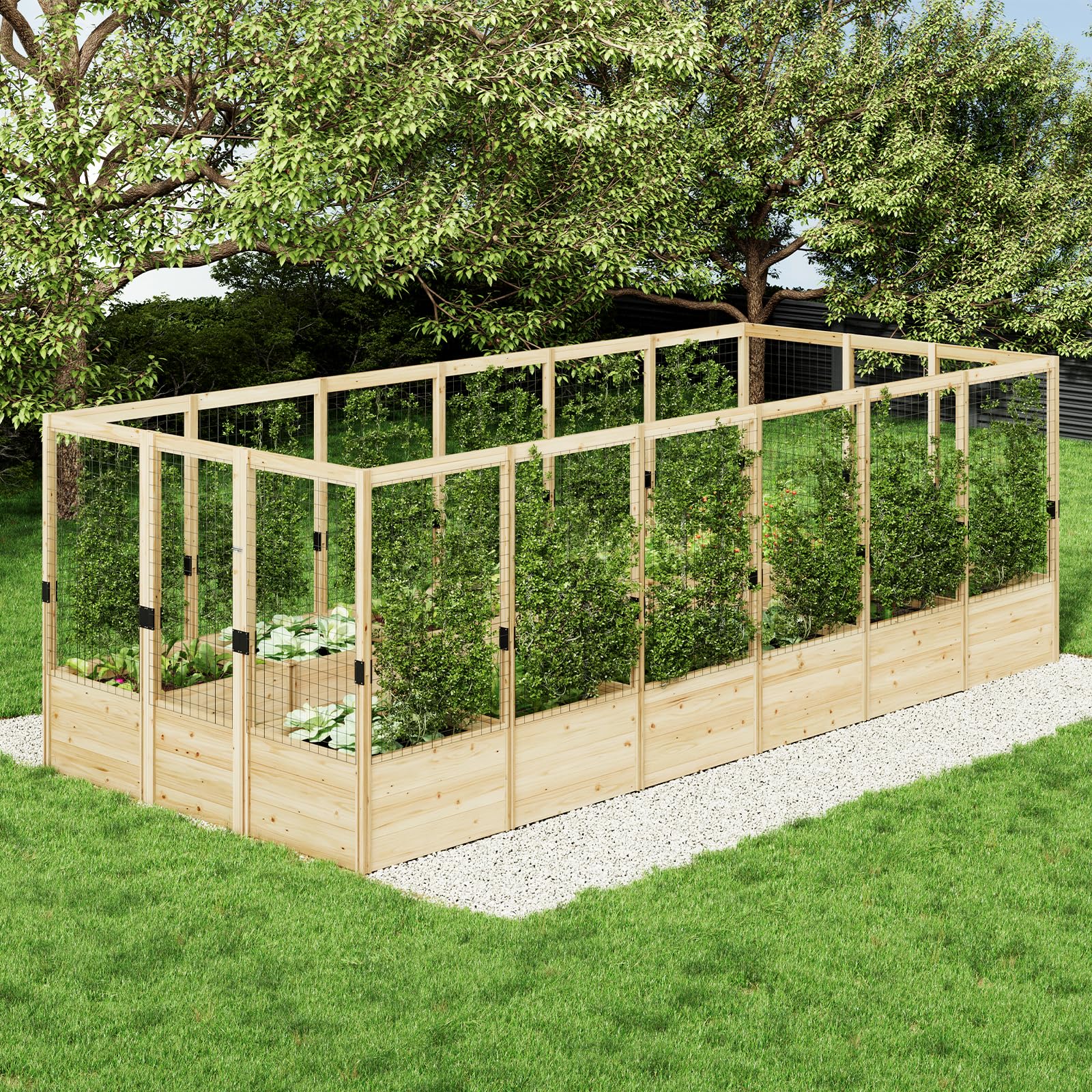
The larger AMERLIFE model stretches the same concept to 17 feet in width, making it one of the widest garden beds available with integrated deer fencing. The bed depth remains 19 inches, and the fence height stays at roughly 6 feet, so the protective envelope scales with the footprint. The bottomless design ensures drainage and lets deep-rooted crops access native soil below.
A secured door with a latch keeps the fence line closed while allowing easy entry. The fir wood construction requires no additional finishing, though the natural wood will weather to a silver-gray over time if left untreated. Owners appreciate the slot-and-tab assembly that speeds up installation compared to traditional fence-building.
As with the smaller AMERLIFE model, quality control is a concern. One owner reported the boxes coming apart when filled with soil, necessitating retrofitted supports. The high investment means you should inspect the wood quality and consider reinforcing the corners before filling. For gardeners willing to do that work, the reward is an enormous, deer-proof growing space that can supply a large household.
What works
- Extremely wide 17 ft planting footprint
- 6 ft fence stops all but the most athletic deer
- Slot-and-tab assembly reduces build time
What doesn’t
- Inconsistent wood quality reported
- Requires bracing for heavy soil loads
Hardware & Specs Guide
Mesh Aperture and Density
The mesh opening size determines which animals are blocked. A ½-inch aperture stops most insects and small rodents, while a 1-inch grid works for deer and birds but lets in bees for pollination. Most deer-proof cages use a woven polyethylene mesh with openings between 0.5 and 1.5 inches. Tighter mesh reduces airflow slightly, so in humid climates, prioritize ventilation over absolute density.
Galvanized Steel vs. Wood Frame
Galvanized steel is the low-maintenance winner for raised beds. The zinc coating prevents rust even when buried in moist soil, and the panels do not warp, rot, or attract termites. Wood frames, especially untreated fir or cedar, need annual sealing and will eventually degrade at the soil line. The trade-off is aesthetics—wood blends into a garden setting more naturally than a silver metal box.
Self-Watering vs. Open-Bottom
An open-bottom bed lets roots grow directly into native soil and avoids water pooling, but it offers no water reservoir during dry spells. Self-watering beds elevate the soil above a water chamber, using capillary action to keep roots evenly moist. The best deer-proof designs combine an open base for drainage with a mesh cover that reduces evaporation, giving you both root health and water efficiency.
Fence Anchoring Options
Wind can topple a lightweight mesh cage if it is not properly anchored. Ground stakes should be at least 8 inches long and driven at each corner and mid-span. For permanent beds, consider bolting the cage to the planter frame or using curved steel rods that resist pull-out. Elevated beds on legs are less susceptible to wind tipping because the weight of the soil anchors the structure.
FAQ
How tall does a raised bed fence need to be to stop deer?
Can deer reach through standard mesh netting?
Will a mesh cover overheat my plants in summer?
Is a wooden raised bed or galvanized steel better for deer-proof gardening?
Do elevated raised beds on legs protect against deer?
Final Thoughts: The Verdict
For most gardeners, the deer proof raised bed winner is the UrGROWA 2-in-1 because it combines a 59-inch cage height with a durable galvanized steel bed at a price that does not break the budget. If you want to garden without bending over, grab the Ohuhu Elevated Bed. And for the largest possible harvest in a fully enclosed space, nothing beats the Lineware 8x4x3 ft Bed.