
Specs are compiled from manufacturer listings and verified buyer reviews and can change over time — please confirm the key details on the product page before buying.
Deer love hydrangeas almost as much as you do — the tender new growth and blooms are an irresistible snack, and nothing is more frustrating than waking up to a row of nibbled-off flower heads. The right netting stops them cold without turning your garden into an eyesore or trapping small animals. This guide cuts through the marketing to find the mesh that actually works for protecting your hydrangeas and other prized plants.
I’m Rikta — the founder and writer behind Lawn Gear Lab. This guide is built by comparing the manufacturers’ published specifications and the patterns across verified customer reviews, so you get each pick’s real strengths and trade-offs instead of marketing spin.
You need netting that stops deer from eating your hydrangeas but still lets bees pollinate the flowers. Three specs decide if it works: mesh size (the gap between threads), material density (measured in GSM, or grams per square meter), and total length so you cover your whole bed. This guide to the best deer netting for hydrangeas gives you the facts to pick the right one.
How To Choose The Best Deer Netting For Hydrangeas
Not all black mesh is the same. The wrong netting either tangles into a mess, degrades after one season, or lets a determined deer nose its way through. Here is what to check before you click buy.
Mesh Size: The Critical First Check
The mesh size (the gap between threads) decides if deer can reach your hydrangeas. A 5/8-inch (about 1.6 cm) mesh is the balance: a deer cannot push its snout through to grab a stem, but pollinating bees can still reach the flowers. A 1-inch mesh saves material costs, but a determined deer can sometimes get a mouth through the larger gap. If you have heavy deer pressure, stick to 5/8-inch or smaller. A 3/4-inch mesh also works well for general deer and rabbit deterrence.
Material Density and Durability
The weight of the netting tells you if it will last one season or several. Standard lightweight nets weigh around 0.65 oz/yd² (about 22 GSM). These are fine for short-term bird protection. Heavier options — like the 55 GSM (grams per square meter) netting — handle wind, sun exposure, and animal pressure much better. Look for “HDPE” (High-Density Polyethylene) as the material; it resists UV rays and won’t rot. “PP” (Polypropylene) is also used in some nets and is slightly less UV-resistant. The heavier the material, the more likely it stays taut and resists tearing when deer bump against it.
Length and Height for Hydrangeas
Measure the area you need to cover. Hydrangeas can grow six to eight feet tall, so a 7-foot or 8-foot tall net is ideal if you are fencing a whole bed. For wrapping individual bushes, a 13-foot or 33-foot length is enough. Longer rolls (200 feet) are more economical for larger gardens but require storage space. Common widths are 7 feet, 8 feet, and 13 feet. Match the net height to your deer pressure — an 8-foot net stops white-tailed deer that can jump, while 6.5 feet works for smaller mule deer or a low barrier around compact hydrangea varieties.
Quick Comparison
| Model | Best For | Dimensions | Mesh Size | Material | Amazon |
|---|---|---|---|---|---|
| FEED GARDEN 7 x 200 ft | Large flower beds wrapping many hydrangea bushes | 7 x 200 ft | 3/4 inch | PP | Amazon |
| RIFNY 13 x 40 ft | Medium beds or wrapping individual specimens | 13 x 40 ft | 5/8 inch | HDPE | Amazon |
| ORIVOGAS 6.5 x 50 ft | Heavy-duty barrier with reinforced edges | 6.5 x 50 ft | 5/8 inch | HDPE (55 GSM) | Amazon |
| Actgan 10 x 33 ft | Lighter cover for raised beds and low-hydrangea borders | 10 x 33 ft | Ultra-fine mesh | PE | Amazon |
| Mklsit 8 x 100 ft | Tall screening for high-jumping deer | 8 x 100 ft | 3/4 inch | PP | Amazon |
| Fetanten 13 x 40 ft | Gardeners wanting a denser weave with high tensile strength | 13 x 40 ft | 5/8 inch (0.65 oz/yd²) | HDPE | Amazon |
| GWHOLE 33 x 13 ft | Budget-friendly cover for low plants and seed patches | 33 x 13 ft | 1 inch | Nylon | Amazon |
In‑Depth Reviews
1. FEED GARDEN Deer Netting Deer Fence Netting, 7 x 200 Feet
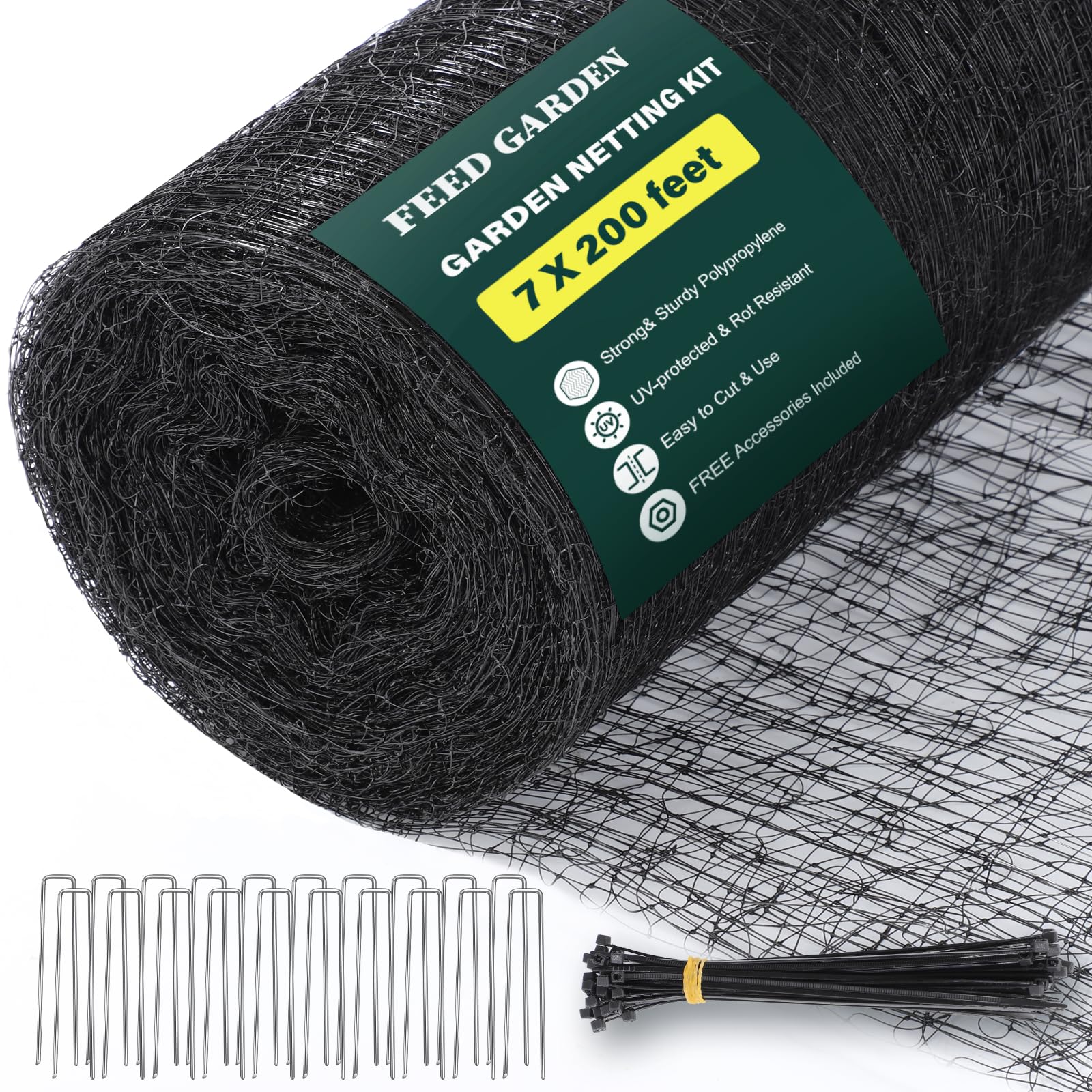
The long-run solution for gardeners fencing off a whole hydrangea bed from deer and rabbits.
This is a big roll — 7 feet tall and 200 feet long — meant for people who need to protect a substantial area, not just one or two bushes. The 3/4-inch mesh stops deer and birds while still letting sunlight and rain through. The material is polypropylene (PP) with enhanced UV protection, so it holds up through a full season of sun and storms without turning brittle.
The kit includes 20 metal landscape staples and 50 zip ties, meaning you can start installing immediately without a trip to the hardware store. Buyers report it keeps deer and rabbits off their tomatoes and peppers. The netting is lightweight for its size, making it easy for one person to cut and drape, but buyers also note it is durable enough that you have to deliberately cut it to remove it.
This netting weighs 1.4 Kilograms, which is considerably heavier than some of the smaller material options, reflecting the sheer volume of the roll rather than the density of the weave. This gives you the coverage to fence an entire garden. The trade-off is that you have to store a large roll, but for the coverage, the price-per-foot is among the best.
Best for whole beds: If you have multiple hydrangea bushes or a large vegetable garden, this is the most economical per-foot option and comes with everything you need.
Watch the size: At 1.4 Kilograms, this is a heavy roll — make sure you have space to unroll and cut it without it tangling in the wind.
Reach for this if: you are fencing a sizable area (50+ sq ft) and want a single-roll solution with stakes and zip ties included.
Look elsewhere if: you only need to protect a few individual bushes and don’t want to wrestle with 200 feet of netting.
2. Bird Netting for Garden – 13 x 40 FT (RIFNY)
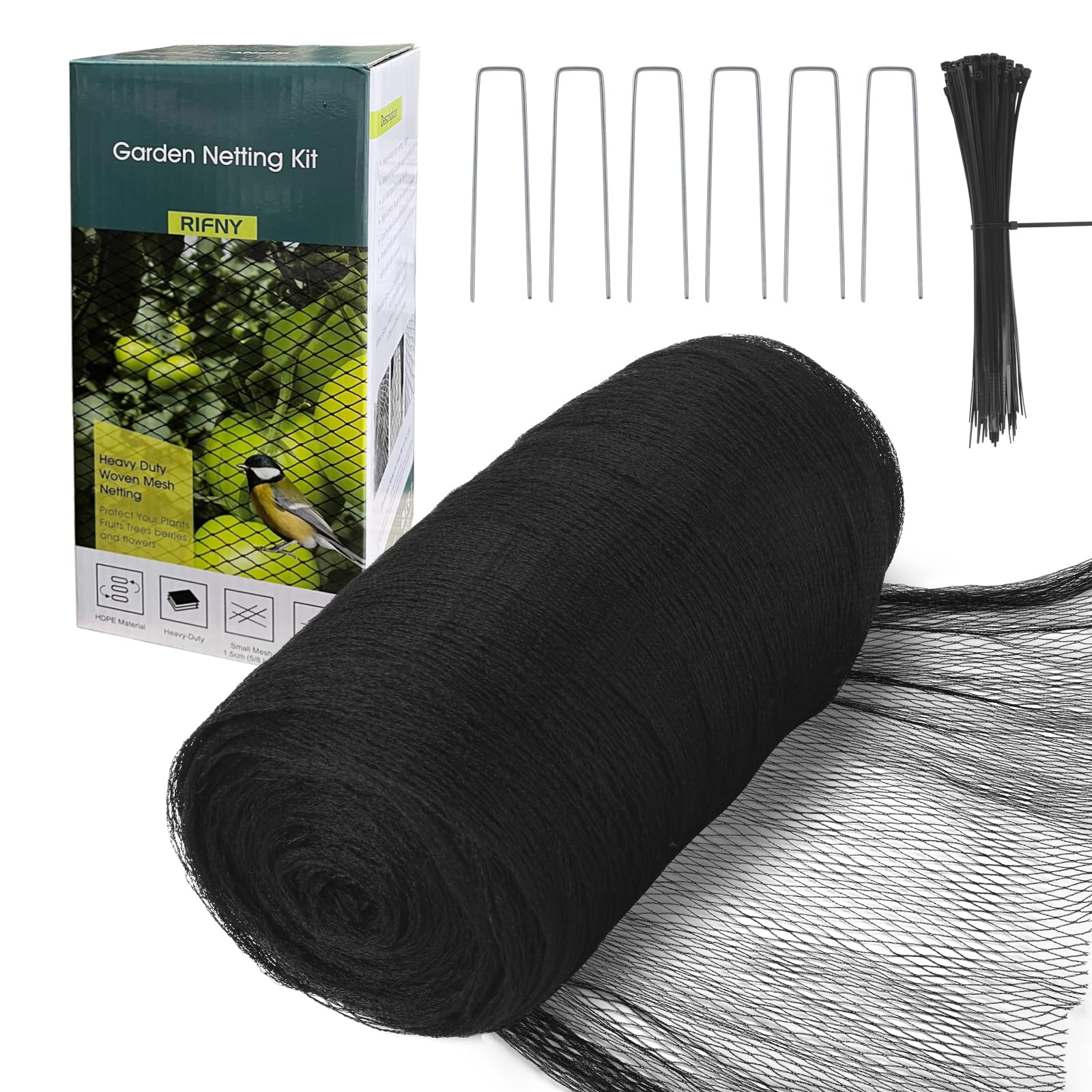
The tightest-weave option that still lets bees in, ideal for hydrangea blooms deer love most.
This netting uses a 5/8-inch mesh size — small enough that deer cannot get their snouts through to grab flower heads, and birds cannot push through. The mesh size is also large enough that pollinating bees can still reach the hydrangea flowers, which is critical for a blooming garden. The roll measures 13 feet wide by 40 feet long, a generous size that can cover a medium bed or wrap several large bushes.
The material weighs 0.65 oz/yd², which is standard for this type of woven netting, but it is made from HDPE (High-Density Polyethylene) which resists UV damage better than standard nylon alternatives. Owners mention the netting does not tangle easily and feels strong — one reviewer noted they have “reordered 4 times” because it works so well. The kit comes with 6 landscape staples and a pack of twist ties. The netting is sold as a 1-count rectangle, so it arrives folded and rolled, not on a tube.
Unlike the FEED GARDEN net which uses a larger 3/4-inch mesh, this 5/8-inch weave provides a denser barrier that also excludes chipmunks and smaller birds. The overall weight is lighter than the 1.4 Kilogram netting from FEED GARDEN, but that is because this is a shorter, narrower roll. It edges out the other 13 x 40 foot nets on this list due to its exceptional customer reviews and the fact that it does not tangle during installation.
What works
- Dense 5/8-inch mesh blocks deer and birds but allows light and bees
- Does not tangle or tear easily during installation
- Includes staples and ties for immediate setup
What to note
- Only 6 landscape staples included — you may need more for a large area
- At 40 ft length, it is best for medium beds, not full gardens
Ideal for medium beds: outstanding mesh density for the weight and the best choice if bees matter as much as deer deterrence.
skip it if: you need a very long roll to fence a large perimeter — the 40-foot length limits it to smaller spaces.
3. Deer Fence Netting, 6.5x50ft (ORIVOGAS)

The reinforced-edge barrier that feels twice as heavy as regular netting, for when deer are relentless.
This is built differently. The material is a 55 GSM (grams per square meter) HDPE weave, while standard netting is 0.65 oz/yd². This weight translates directly into real-world toughness — the mesh does not sag as easily and resists tearing when a deer pushes against it. The 5/8-inch square mesh is small enough to block deer, and the 6.5-foot height works well for most hydrangea beds.
The standout feature here is the reinforced top and bottom edges with a drawstring. This lets you tighten the netting around a frame or fence to eliminate sag, which is a common problem with lighter nets. The kit includes 50 zip ties and 8 ground stakes, plus the netting weighs 3.6 Pounds total. This is a significantly heavier product per foot than many alternatives, which is exactly what you want for a permanent or semi-permanent installation.
Customers note the netting stretches like spandex, which minimizes sag over time. However, several noted that it requires two people to install properly and needs extra ground staples beyond what is included for ground-level exclusion. The 6.5-foot height is adequate for protecting hydrangeas from deer browsing, but if you have very high-deer-activity areas jumping an 8-foot fence, you may want to supplement with an electric wire, as one buyer did.
Best for tough conditions: The 55 GSM weight and reinforced edges make this the most durable net on the list against wind and animal pressure.
Installation takes two: The heavy duty fabric is less forgiving solo — plan for a helper to keep it taut while you secure the top line.
Reach for this if: deer are a constant problem and you want a net that stays taut season after season without sagging or tearing.
Look elsewhere if: you need a quick solo wrap-around — this is a fence, not a drape; it needs posts or a frame.
4. Garden Netting, Actgan Bird Netting for Garden 10x33FT

The ultra-fine mesh that doubles as a frost cover and a general pest barrier for smaller hydrangea starts.
This netting uses an “ultra-fine” mesh that is essentially a bug-screen-like weave — it is much tighter than the 5/8-inch or 3/4-inch options above. This makes it ideal if you have smaller pests like grasshoppers or beetles that target hydrangea leaves, along with the occasional deer. The material is Polyethylene (PE), which is lightweight (1.14 Kilograms) and lets air and water through freely.
The roll measures 10 feet wide by 33 feet long. Reviewers point out cutting it to fit raised beds and holding it down with rocks. One buyer mentioned birds pecked through it, making tiny holes, so it is not a solution for very determined birds if used as a drape. However, for covering rows of smaller plants or protecting newly planted hydrangea starts from deer and rabbits, it works well. The mesh is breathable and transparent, so sunlight easily reaches the leaves.
Compared to the RIFNY net, this is a lighter-weight material overall. Its 1.14 Kilograms versus the RIFNY’s weight reflects the larger physical dimensions (10×33 vs 13×40) and the lighter PE material. It is good for seasonal use when you want to also exclude flying insects, but not the right choice for a permanent deer fence where you need maximum tensile strength.
Good for
- Ultra-fine mesh that blocks small insects along with deer
- Lightweight and easy to cut to custom sizes
- Works as a temporary frost cover too
Limits
- Can be pecked through by determined birds
- Not as UV-stable as HDPE options for multi-year use
Ideal for new plants: protects tender hydrangea starts from both deer and bugs without blocking sun.
pass on it if: deer pressure is heavy and you need a fence-grade net that resists pushing — choose the ORIVOGAS or FEED GARDEN instead.
5. Mklsit Deer Netting Fence, 8ft x 100ft

The tall net that clears even the most athletic deer, made from heavy-duty polypropylene plastic.
If you are trying to fence off hydrangeas from white-tailed deer that can clear a 6-foot fence, this netting gives you the needed 8-foot height. The 3/4-inch square mesh is designed to keep critters out while letting bees in, which is crucial for hydrangea pollination. The roll is 100 feet long and 8 feet tall, and it weighs 1.53 Kilograms, making it a substantial roll.
The material is described as “heavy duty but lightweight,” made from polypropylene (PP) plastic. Unlike some nettings that tangle, shoppers say this one is easy to cut and spread. The edges of the net have a thickened area at the top and bottom, which makes it much easier to thread zip ties through without the mesh tearing. The kit includes 10 U-staple nails and 50 cable ties. Buyers also report it works well for keeping chickens and turkeys out of a garden, not just deer.
The trade-off between this net and the FEED GARDEN 7×200 option is a matter of height versus length. The Mklsit gives you a full foot more of vertical coverage (8 feet vs 7 feet), which matters if you have tower-type hydrangea varieties. However, the Mklsit net is 100 feet long, while the FEED GARDEN net is 200 feet long, so total coverage area is smaller. If height is the priority, this is the pick; if total coverage of a low bed is the priority, the FEED GARDEN wins.
Best for deer jumpers: The extra foot of height above the standard 7-feet option stops deer that have learned to hop a barrier.
Heavier-duty feel: Weighing 1.53 kg, it feels substantial and the reinforced top/bottom edge is a real timesaver during installation.
Reach for this if: you have tall-growing hydrangea varieties or you are fencing against a deer population that jumps other fences.
Look elsewhere if: you only need a low barrier — the 8-foot height is overkill for compact hydrangeas and is harder to handle.
6. Bird Netting for Garden, Fetanten 13 x 40 FT

The HDPE workhorse with a 5/8-inch tight weave that holds up season after season against sun and animals.
This netting is made from High-Density Polyethylene (HDPE), which is a step up in durability from standard polypropylene. The 5/8-inch woven mesh weighs 0.65 oz/yd², and the tight weave adds tensile strength that resists tearing better than nylon alternatives. The roll is 13 feet by 40 feet, the same dimensions as the RIFNY option, but this one includes steel landscape staples and twist ties.
Buyers report this netting is very sturdy and holds up well over multiple seasons. One owner noted it worked great for strawberries and then the same netting was reused for black raspberries, with no rips and no holes. Another buyer used it to protect oak acorn seedlings from jays. The netting is UV-proof and rot-resistant, so it can stay out in the garden all year round without degrading.
The catch is that this is “bird netting,” not a rodent barrier. One buyer explicitly warned that rats and squirrels can chew through it, so if your hydrangea pests include gnawing groundhogs or squirrels, you need a different solution. The netting also changes length with tension — a buyer noted they needed 5.2 feet but had to cut 7 feet of netting because it stretched, so account for that when cutting to size.
Pros
- Tough HDPE material resists UV and rot
- 5/8-inch mesh keeps deer and birds out
- Can be reused for several seasons
Cons
- Length changes with tension — cut generously
- Not a rodent barrier; squirrels will chew through it
Best for multi-season use: the HDPE material outlasts PP nets by resisting sun damage, making it good value for the price.
it’s not for you if: you have a groundhog or squirrel problem — this is a bird/deer-only mesh.
7. GWHOLE 33 x13 Ft Bird Netting for Garden

The lightweight nylon net that covers a large area for very little money, at the cost of some density.
This is the most affordable option on the list, but it comes with a trade-off. The mesh size is 1 inch, which is the largest aperture of any net here. This is adequate for keeping birds off fruit and for light deer deterrence — a deer bumping into it may get a mouth through the larger gap. However, the nylon material is UV-resistant and durable. The coverage is impressive: 33 feet by 13 feet gives you a lot of net for your money.
The net weights 0.49 Kilograms, while the FEED GARDEN net weighs 1.4 Kilograms. This makes it very light and easy to drape over plants. Owners mention creative uses: one uses it as a cat barrier for a guinea pig cage, noting it stretches under weight but never breaks despite being bitten and clawed. Another buyer replaced a balcony screen with it. The netting comes in white, which blends into the sky more than black netting, which can be an advantage for aesthetics but does not hide on the ground level.
Compared to the denser 5/8-inch nets above, the 1-inch mesh is a better fit for protecting tall fruit trees from birds than for excluding deer from hydrangeas. For hydrangea protection, the 1-inch gap is borderline — smaller deer might be kept out, but a determined doe can easily push through. It is best used as a bird deterrent or a light barrier for young, small plants in beds that are also flanked by a taller fence.
Best for light protection: covers a very large area cheaply, ideal for overhead bird protection or as a second layer behind a fence.
Not for direct deer defense: The 1-inch mesh allows a deer’s nose through, and the light nylon gives less resistance than HDPE nets.
Reach for this if: you need to cover a tree canopy from birds cheaply, or you are adding a net layer to an existing fence.
Look elsewhere if: deer are the primary problem — choose a 5/8-inch or 3/4-inch mesh for a reliable physical barrier.
Understanding the Specs
Mesh Size
This is the opening in the netting, measured in inches. A 5/8-inch mesh is the most versatile for hydrangeas — it blocks a deer’s snout but allows bees to pass. A 1-inch mesh is cheaper and lighter, but a deer can sometimes push through the larger gap. A 3/4-inch mesh is a good middle ground. The ultra-fine mesh used by Actgan is less than 1mm, blocking insects along with deer, but it can also block some light, so only use it on low plants or for short periods.
GSM and oz/yd²
These numbers tell you how dense the mesh is. GSM means grams per square meter. A standard net is about 22 GSM (0.65 oz/yd²). The ORIVOGAS net is 55 GSM. A higher GSM or oz/yd² number means the net is heavier, resists tearing better, and lasts longer in the sun, but it is also harder to cut and install. For permanent fences, aim for 40 GSM or higher.
HDPE vs PP vs Nylon
These are the plastic materials the netting is made from. HDPE (High-Density Polyethylene) is the most UV-resistant and rot-resistant, good for multi-season outdoor use. PP (Polypropylene) is similar but slightly less UV-stable. Nylon is the lightest and most flexible, but it degrades faster in direct sunlight. For deer netting that stays out all year, HDPE is the best choice. PP works well for a season or two. Nylon is best for temporary use or light bird barriers.
Staples, Ties, and Installation Hardware
Most nets come with some combination of landscape staples (U-shaped pins that go into the ground) and zip ties (for attaching to posts). The number varies from 6 staples to 20 or 50 ties. If you have a large fenced area, you will almost certainly need more staples than what is included. Heavy duty nets like the ORIVOGAS may also have a reinforced top edge with a drawstring. This lets you tighten the netting to eliminate sag, which is a feature worth paying extra for if you have a long fence line.
FAQ
Will deer netting hurt the hydrangea flowers or leaves?
Can deer smell the hydrangeas through the netting and try to push through?
How do I keep the netting from sagging onto my hydrangeas?
Is there a difference between deer netting and bird netting for hydrangeas?
Will the netting block pollinators like bees from my hydrangea blooms?
How long does deer netting last outdoors?
Can I use this netting to protect hydrangeas from rabbits and groundhogs too?
Does the color of the netting matter?
Final Thoughts: The Verdict
For most gardeners, the best deer netting for hydrangeas is the FEED GARDEN 7 x 200 ft because it gives you the most coverage per roll at a reasonable per-foot price and includes the stakes and zip ties needed for installation. If you have smaller beds or want a tighter weave that also blocks small birds, grab the RIFNY 13 x 40 ft with its 5/8-inch mesh. And for heavy deer pressure where you need maximum durability and no sagging, the ORIVOGAS 6.5×50 ft with its reinforced edges and 55 GSM density is the one.
How We Picked
We do not accept paid placement. Every pick is matched to a real buyer and a real use-case; we do not hands-on test units.
Sources & Methodology
Specifications: manufacturer listings and product documentation. Review insights: verified customer reviews, as of July 2026. Pricing: not shown on this page (it changes often); check the current price via the retailer link.
As an Amazon Associate, Lawn Gear Lab earns from qualifying purchases. This does not affect which products we feature.