
You spent weekends planting hostas, peppers, and tomatoes, only to find them nibbled to the ground by dawn. The frustration is real, and deer repellent sprays wash away after every rain, making your garden a constant battleground. The most permanent solution is a physical barrier that deer simply cannot push through or jump over, and this guide compares five different fences to help you find the one that finally breaks the cycle.
I’m Rikta — the co-founder and writer behind Lawn Gear Lab. This guide is built by comparing the manufacturers’ published specifications and the patterns across verified customer reviews, so you get each pick’s real strengths and trade-offs instead of marketing spin.
If you are tired of reapplying sprays and want a one-time solution that lets your plants grow without worry, choosing the right deer fencing for garden is the single most effective step you can take to reclaim your yard.
How To Choose The Best Deer Fencing For Garden
The fencing aisle can be confusing because lightweight bird netting and temporary snow fencing look similar but fail completely against a determined deer. Focus on three critical factors: height, material density, and mesh size. A 7-foot tall fence is the standard minimum because a deer can clear a 6-foot fence without breaking stride. The material weight is measured in grams per square meter (gsm), and a 55 gsm HDPE weave is roughly 2-3 times heavier than cheap netting, making it far harder for an animal to tear. Finally, a mesh opening of roughly ¾ inch (0.75 inches) stops not just deer but rabbits, squirrels, and birds from slipping through.
Height: The 7-Foot Rule
Deer are remarkable jumpers. A healthy adult deer can easily clear a 6-foot fence, which is why nearly every serious product in this category comes in a 7-foot height. Going shorter means you risk waking up to hoof prints on the other side. Taller fences (8 feet or more) exist, but for most suburban gardens, 7 feet provides the ideal balance of protection and easy installation without needing a ladder for every adjustment.
Material Thickness and UV Protection
The thickness of the plastic mesh is measured by its weight per area (gsm) or by its feel. Standard bird netting is flimsy and tears easily; deer fencing is woven with a heavy-duty polypropylene or high-density polyethylene (HDPE) that resists tearing. UV protection is equally important because direct sunlight breaks down cheap plastic within one season. A UV-treated fence like the one from Jobe’s shows no degradation after two years in Arizona sun, meaning you install it once and forget about it.
Quick Comparison
On smaller screens, swipe sideways to see the full table.
| Model | Category | Best For | Key Spec | Amazon |
|---|---|---|---|---|
| Jobe’s Deer Barrier | Premium | Long-term, all-season defense | 7ft x 100ft, UV-protected poly | Amazon |
| Tenax Deer Netting (7×100) | Mid-Range | Seasonal protection that stores easily | 7ft x 100ft, polypropylene mesh | Amazon |
| FEED GARDEN Deer Netting | Value | Large areas on a budget | 7ft x 200ft, ¾” fine mesh | Amazon |
| ORIVOGAS Deer Fence Netting | Mid-Range | Sharp curves and irregular beds | 6.5ft x 50ft, 55 gsm HDPE | Amazon |
| Tenax Deer Fence Kit | Premium | All-in-one kit, first-time installers | 7ft x 100ft, includes poles & ties | Amazon |
In‑Depth Reviews
1. Jobe’s Deer Barrier Fencing

The Jobe’s LG400171 earns the top spot because its thick, UV-treated polypropylene weave resists sun damage so you do not have to reinstall it every year. A reviewer reports it lasted 2 years in Arizona sun without degrading — that is stronger durability than netting that crumbles in one season. The fence is 7 feet tall, and another reviewer saw deer leave hoof prints and nose slime on it without breaking through. The rolled package is 43.5 inches long and feels heavy, so it does not flap or sag easily on T-posts. Buyers consistently report it lasting 5-10 years with UV-protected zip ties. Skip this one if you need a net to drape loosely over plants — it is a rigid barrier, not a lightweight cover. For standing fences around orchards or vegetable beds, it is the most dependable pick here, outlasting the lighter Tenax netting by years.
Why it’s great
- Proven to last over 2 years in extreme sun
- Thick poly mesh stops deer without tearing
- Easy to install on T-posts with zip ties
Good to know
- Not pliable enough for draping over plants
- Requires sturdy metal posts for best results
2. Tenax Deer Netting 7ft x 100ft
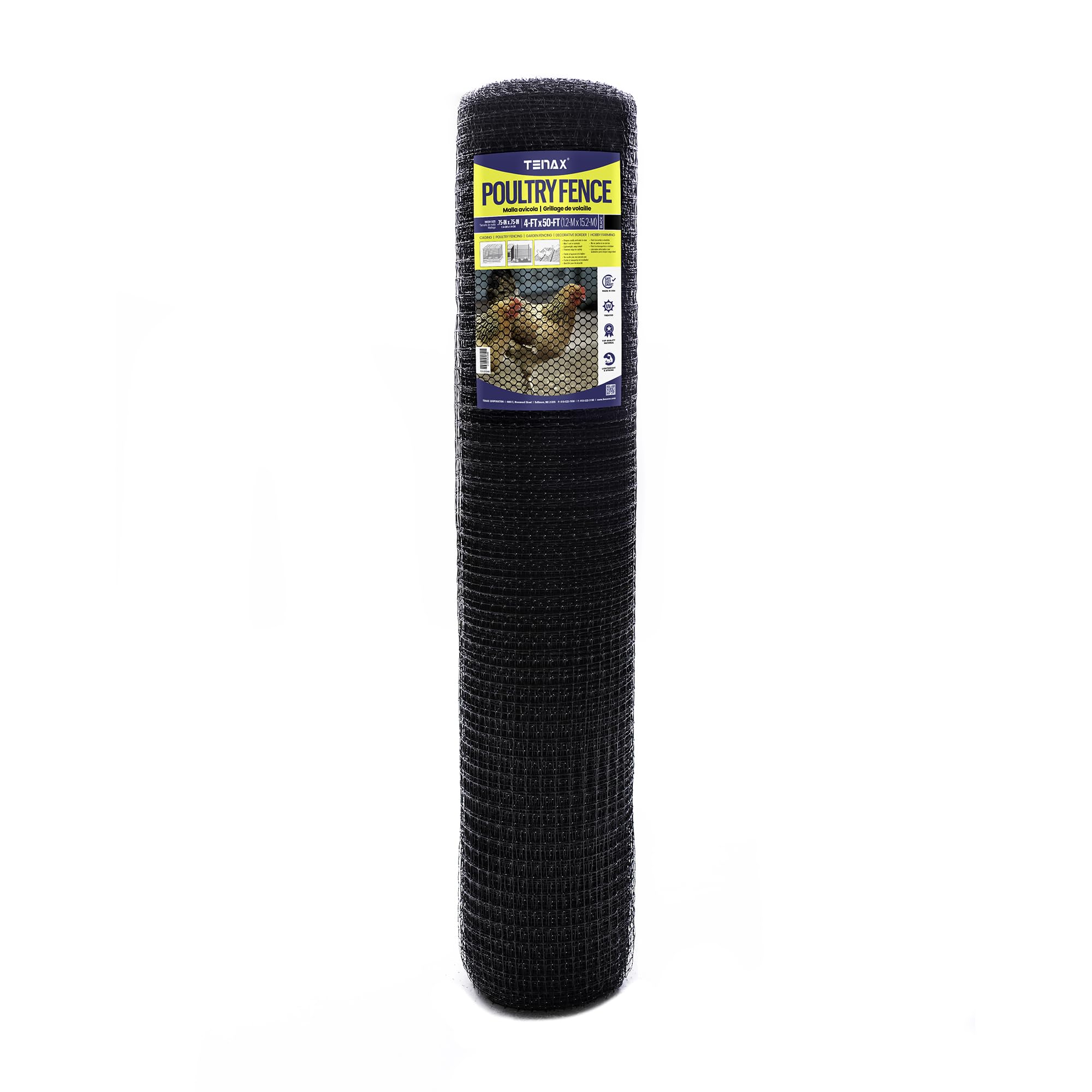
Compared to the Jobe’s barrier, the Tenax netting is lighter and more flexible — easier to roll up and store between seasons. One buyer used it for 4 years straight and said deer never jumped over it, but it is not as thick as the premium option. The mesh is thicker than what you find at a garden center and does not tangle into a knot. Its openings are 0.63 x 0.75 inches, large enough to let bees pass through while blocking deer. A reviewer called it a marriage-saver because it stopped deer from eating his blueberry bushes. The 7-foot height needs a helper during installation, and cut ends can be sharp. If you want a reusable mid-weight fence that comes down easily after harvest, this is a smarter fit than the rigid Jobe’s.
Where it shines
- Thicker than store-bought netting, easier to work with
- Light enough to roll and store for next season
- Large mesh lets pollinators through
Worth noting
- Cut ends are poky and need trimming
- Not as rigid as premium barrier fences
3. FEED GARDEN Deer Netting 7ft x 200ft
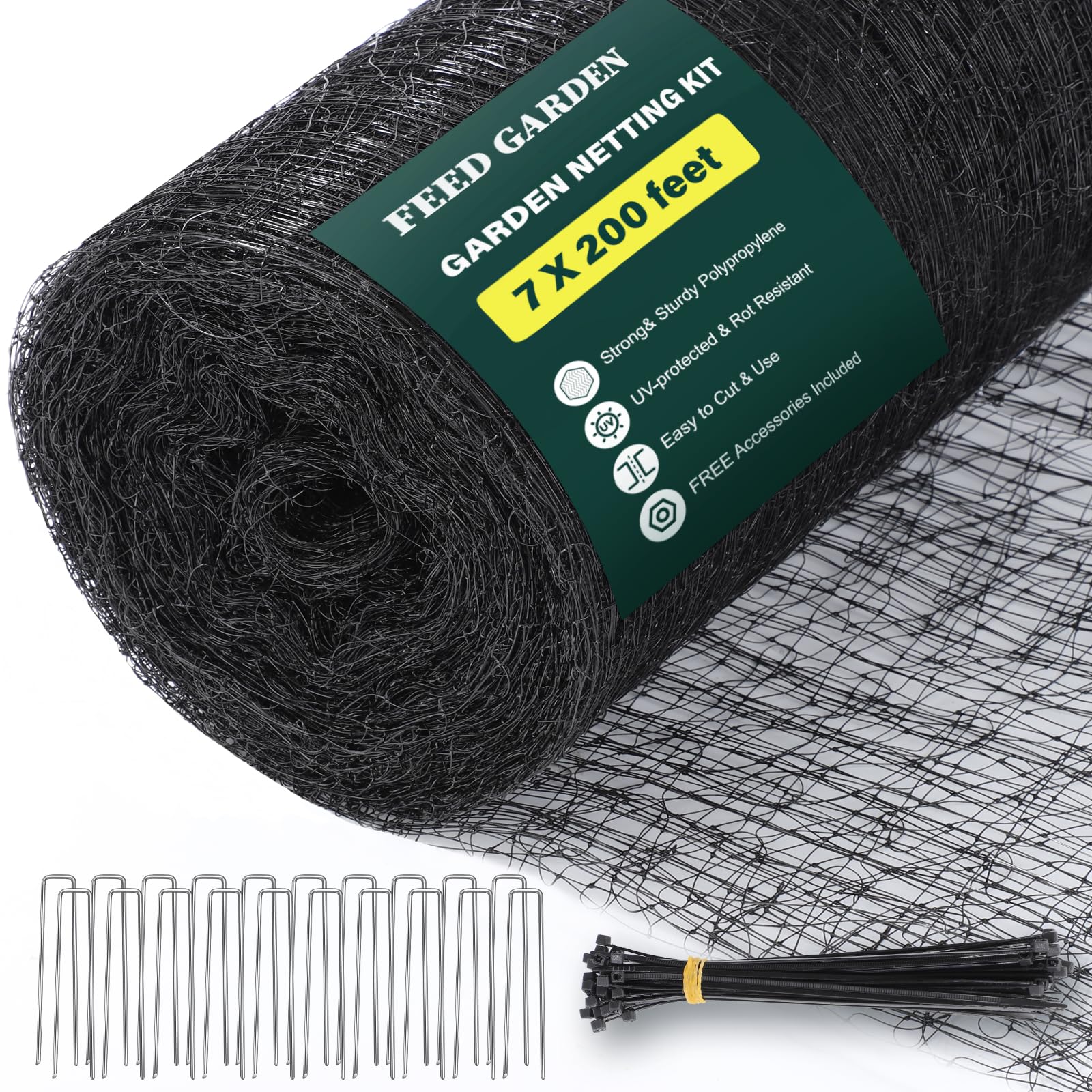
If you need to fence a large vegetable patch, the FEED GARDEN netting gives you 200 feet of 7-foot-tall mesh — nearly twice the length of the Tenax or Jobe’s rolls. It comes with 20 metal landscape staples and 50 zip ties, so you can start installing right away. Buyers report that the ¾-inch fine mesh keeps deer and rabbits off peppers and tomatoes, and one reviewer noted the net does not tear easily. The polypropylene material is UV-protected for multi-season use, and the mesh is nearly invisible from a distance. At 1.4 kilograms (about 3 pounds), the roll is light enough to carry, but installing 200 feet alone is tough because it wants to unravel. For a big yard and maximum fence per dollar, this roll is the clear value leader over the shorter Tenax and FEED GARDEN nets.
What stands out
- 200 feet of coverage in one roll
- Includes stakes and zip ties for immediate setup
- Fine mesh keeps rabbits out too
The trade-offs
- Harder to handle solo due to the long length
- Mesh is fine, so it can catch wind easily
4. ORIVOGAS Deer Fence Netting 6.5ft x 50ft

The most useful number here is the weave density: ORIVOGAS hits 55 gsm (grams per square meter), which is 2-3 times heavier than standard netting. That extra density gives you tear resistance when you stretch it around odd angles, tree trunks, or curved flower beds. Owners mention that the netting stretches like spandex, sagging less around curves, and the reinforced top and bottom channels have a drawstring to tighten everything. At 6.5 feet tall, it is half a foot shorter than the 7-foot Jobe’s or Tenax — larger deer may still clear it, though most customers note success. Each package comes with 50 zip ties and 8 ground stakes, so you can install it in about 30 minutes for a small garden. If you have a decorative garden with tight corners, this is the best pick over the straighter Jobe’s barrier.
The upsides
- 55 gsm weave resists tearing 2-3x better than standard netting
- Drawstring channels prevent sagging over curves
- Easy to install with included stakes and ties
Keep in mind
- 6.5 ft height may be jumpable by larger deer
- Unravels when cut, can be difficult to tie off
5. Tenax Deer Fence Kit 7ft x 100ft

The Tenax Deer Fence Kit removes the guesswork: you get 100 feet of heavy polypropylene mesh plus 10 adjustable poles, 50 self-locking ties, and 10 sod staples — everything you need is in one box. The mesh is identical to the Tenax 7×100 roll, with 0.63 x 0.75-inch openings and a 7-foot height. A long-term buyer reported that deer simply do not jump the fence, and the material is rigid enough to roll up and reuse the following season without tangling. The included poles are adjustable, but some reviewers point out that staking them in heavy soil takes extra effort. If you want a turnkey system and are happy to pay more to avoid a hardware store trip, this kit is the most convenient way to protect a garden, especially compared to buying the Jobe’s barrier and sourcing your own posts.
Why we’d pick it
- Complete kit with poles, ties, and staples
- Rigid mesh rolls up and reuses across seasons
- Proven to keep deer out for 4+ years
A few caveats
- Higher upfront cost than buying netting alone
- Poles may need extra reinforcement in loose soil
Understanding the Specs
Mesh Size (¾ inch vs 1 inch)
The mesh size refers to the square openings between the threads. A ¾-inch (0.75 inch) mesh is small enough to block rabbits, squirrels, and even small birds from squeezing through, while a 1-inch mesh focuses only on deer and larger animals. For a garden with vegetables and tender plants, the finer ¾-inch mesh offers more complete protection. For a boundary around trees or shrubs where rabbits are less of a concern, the larger 1-inch mesh allows better airflow and light penetration.
Grams Per Square Meter (gsm)
Gsm tells you how much the woven material weighs per square meter — a higher number means a denser, stronger fabric. Standard bird netting is often around 15-20 gsm and will tear if a deer pushes against it. Deer fencing is typically 45-55 gsm or higher, making it 2-3 times stronger. The ORIVOGAS netting at 55 gsm is a good benchmark: it is heavy enough to resist tearing but light enough to install without heavy tools.
FAQ
What height of deer fencing actually stops deer from jumping over?
Can I install deer fencing by myself or do I need help?
How do I stop deer from pushing under the fence?
Final Thoughts: The Verdict
For most buyers, the deer fencing for garden winner is the Jobe’s Deer Barrier Fencing because it is the thickest, most UV-durable option that buyers consistently report lasting 5-10 years without degradation. If you want a flexible, easily stored net for seasonal use, grab the Tenax Deer Netting 7ft x 100ft. And for maximum coverage on a budget, the standout is the FEED GARDEN 200-foot roll.