
Decorative bark mulch does more than dress up a garden bed—it regulates soil temperature, retains moisture, and smothers weed seeds before they germinate. But not all bark is equal: the difference between a bag that robs your soil of nitrogen and one that feeds it comes down to the wood species, particle size, and whether the material is composted or raw. This guide breaks down the specific bark types you need to match your planting zone, container size, and aesthetic goal without wasting a single cubic foot.
I’m Rikta — the co-founder and writer behind Lawn Gear Lab. I spend my days cross-referencing horticultural data, comparing particle-size distribution across brands, and analyzing hundreds of verified owner reports to separate the bark that delivers on its promises from the bags that are mostly air and hype.
Whether you are topping a raised vegetable bed, refreshing a shaded perennial border, or finishing a container garden on your patio, the right choice balances decomposition rate with visual longevity. This is the definitive guide to the best decorative bark mulch for every planting scenario, backed by real customer feedback and concrete specs.
How To Choose The Best Decorative Bark Mulch
Bark mulch is not a one-bag-fits-all product. Your choice should hinge on three factors: the plant species you are mulching, the climate’s rainfall and temperature swings, and how often you want to reapply. Here is what matters most.
Particle Size and Texture
Large nuggets (1–2 inches) resist wind and float less during heavy rain, making them ideal for sloped beds and perennial borders. Shredded or mini-nugget bark (¼–½ inch) knits together into a dense mat that blocks light more effectively, suppressing weeds for longer. For containers and terrariums, use small chips under ½ inch to avoid crowding root zones.
Wood Species and Chemical Profile
Pine bark is slightly acidic—perfect for acid-loving plants like blueberries, azaleas, and gardenias. Cedar chips release natural oils that repel moths and some soil-borne pests but break down slower than pine, lowering the topdressing frequency. Cocoa bean hulls carry a NPK value near 2.5-1-3, providing a mild fertilizer boost, but they are toxic to dogs and should not be used near edible crops if pets roam. Rubber mulch never decomposes and offers zero soil benefit, but it maintains color for over a decade.
Organic Certification and Raw vs. Composted
OMRI-listed bark guarantees no synthetic additives, pesticides, or dyes. Raw, uncomposted bark (especially fresh pine or fir) can temporarily tie up soil nitrogen as microbes break it down. Composted or aged bark releases nutrients slowly without the nitrogen drawdown, making it safer for direct application around shallow-rooted annuals and vegetables.
Quick Comparison
On smaller screens, swipe sideways to see the full table.
| Model | Category | Best For | Key Spec | Amazon |
|---|---|---|---|---|
| Back to the Roots Coconut Husk | Coconut Husk | Raised beds and organic veggie gardens | Expands to 2 cu. ft. | Amazon |
| Soil Sunrise Pine Bark Nuggets | Pine Bark | Acid-loving plants and containers | 12 quarts, small nuggets | Amazon |
| Brut Organic Aspen Mulch | Aspen Bark | Odor-free indoor and container use | 10 quarts, 30% carbon | Amazon |
| Double Tree Incense Cedar Chips | Cedar Chips | Pest repellent and aromatic beds | 8 quarts, 100% cedar | Amazon |
| Hull Farm Cocoa Bean Shell Mulch | Cocoa Hulls | Chocolate-scented small flower beds | 2 cu. ft., NPK 2.5-1-3 | Amazon |
| Rubberific Shredded Rubber Mulch | Rubber | Playgrounds and high-traffic areas | 0.8 cu. ft., 12-year color warranty | Amazon |
| Rio Hamza Trading Houseplant Mulch | Mixed Bark | Indoor potted plant top dressing | 8 quarts, small chip size | Amazon |
In‑Depth Reviews
1. Back to the Roots Organic Coconut Husk Mulch
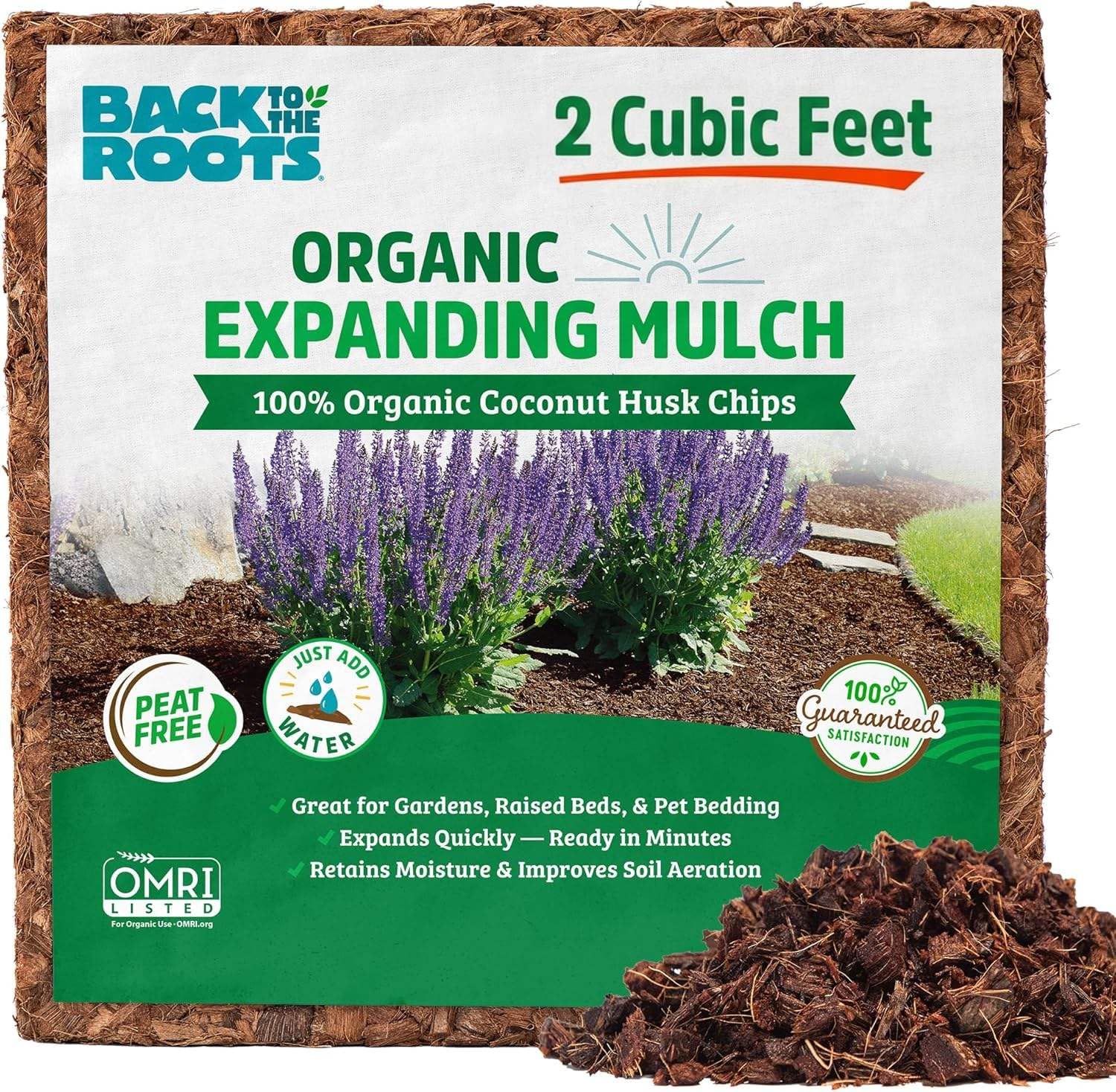
This compressed coconut husk block expands to over 2 cubic feet after adding water—a single 10-pound block delivers the same coverage as several heavy bags of conventional bark. The OMRI-listed organic certification means zero synthetic binders or dyes, making it safe for edible raised beds, vegetable gardens, and pet bedding.
Multiple verified buyers confirm the expansion is dramatic: one user noted it filled three-quarters of a wheelbarrow and a kiddie pool after soaking. The shredded coir texture knits together into a dense surface layer that suppresses weeds effectively while allowing water to percolate without pooling. When tilled in at the end of the season, it improves soil structure rather than robbing nitrogen.
The only trade-off is the initial hydration step—you need a large container to soak the block, and the material expands fast, so plan ahead. The saved back strain from not hauling wet bags, however, makes this the top pick for gardeners covering large beds with minimal physical effort.
What works
- Expands dramatically; one block replaces multiple heavy bags.
- OMRI organic—safe for vegetable gardens and edible crops.
- Retains moisture well and does not float away in rain.
- Improves soil texture when tilled in after decomposition.
What doesn’t
- Requires a large container and time to hydrate before spreading.
- Block size may be difficult to split into smaller portions.
2. Soil Sunrise 100% Natural Pine Bark Mulch Nuggets
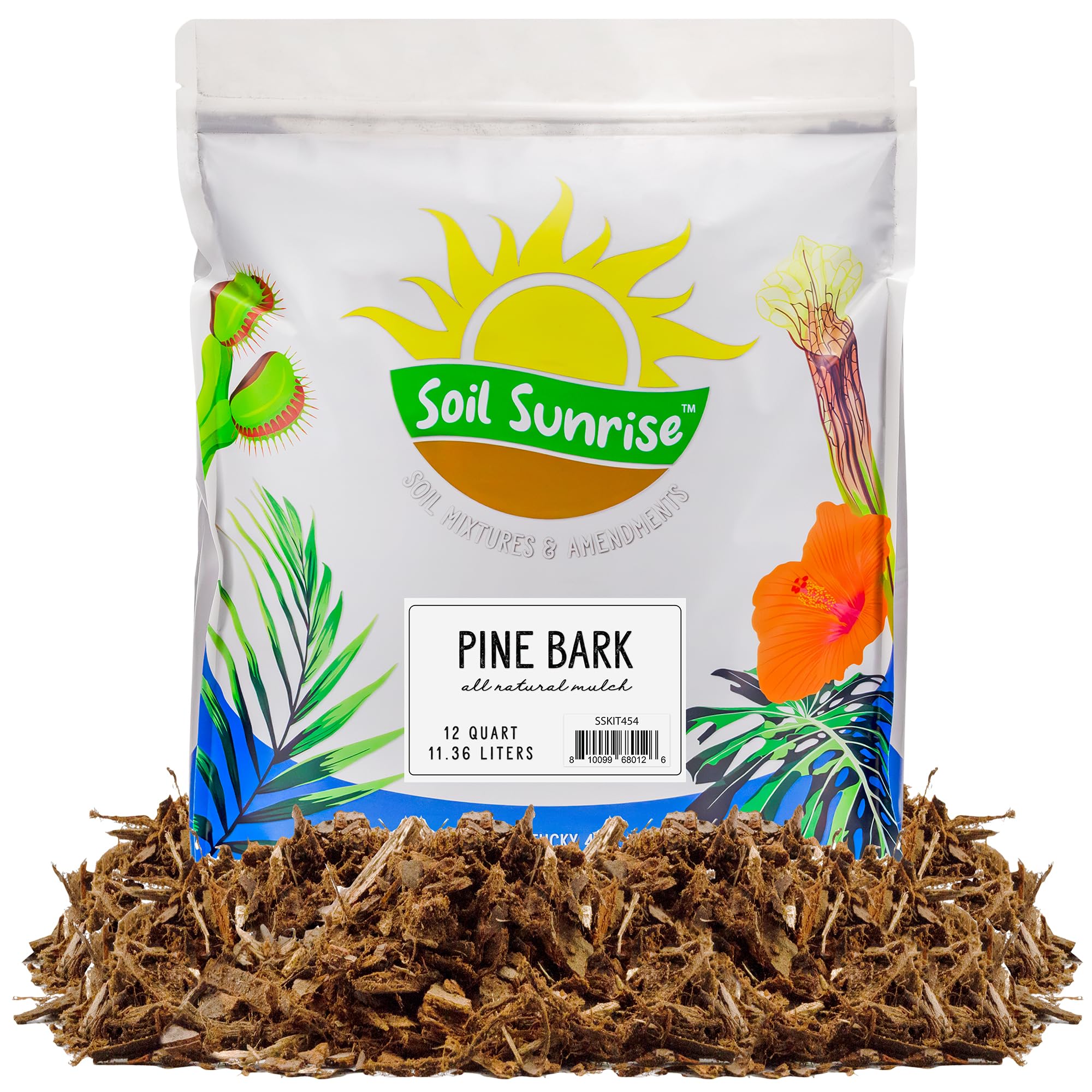
Soil Sunrise delivers what serious container gardeners and acid-soil enthusiasts need: consistent mini-nuggets that are small enough to mix into potting media yet structured enough to stay on top of the soil surface for months. The clear packaging lets you visually inspect every bag for mold or insect hitchhikers before application—a detail that several buyers specifically praised.
The particle size is remarkably uniform, with few long splinters or dust. This consistency matters for citrus, gardenia, and blueberry growers who rely on pine bark to maintain the slightly acidic pH range (5.0–6.5) that those plants demand. One reviewer described the chunks as “perfect for mixing with soil to allow sufficient drainage for citrus and succulents.”
The 12-quart volume covers roughly 2–3 cubic feet of container surface at a 2-inch depth, making it ideal for a medium-sized container garden rather than sprawling landscape beds. The premium pricing reflects the sorting quality—you pay for the absence of fines and irregular debris found in bulk-bin alternatives.
What works
- Consistent mini-nugget size for even coverage and mixing.
- Clear bag allows visual inspection for mold or pests.
- Promotes acidic soil pH perfect for gardenias, blueberries, and citrus.
- Clean, woody scent with no chemical odor.
What doesn’t
- Higher cost per quart compared to bulk landscape bark.
- Not economical for covering large in-ground beds.
3. Brut Organic Aspen Mulch
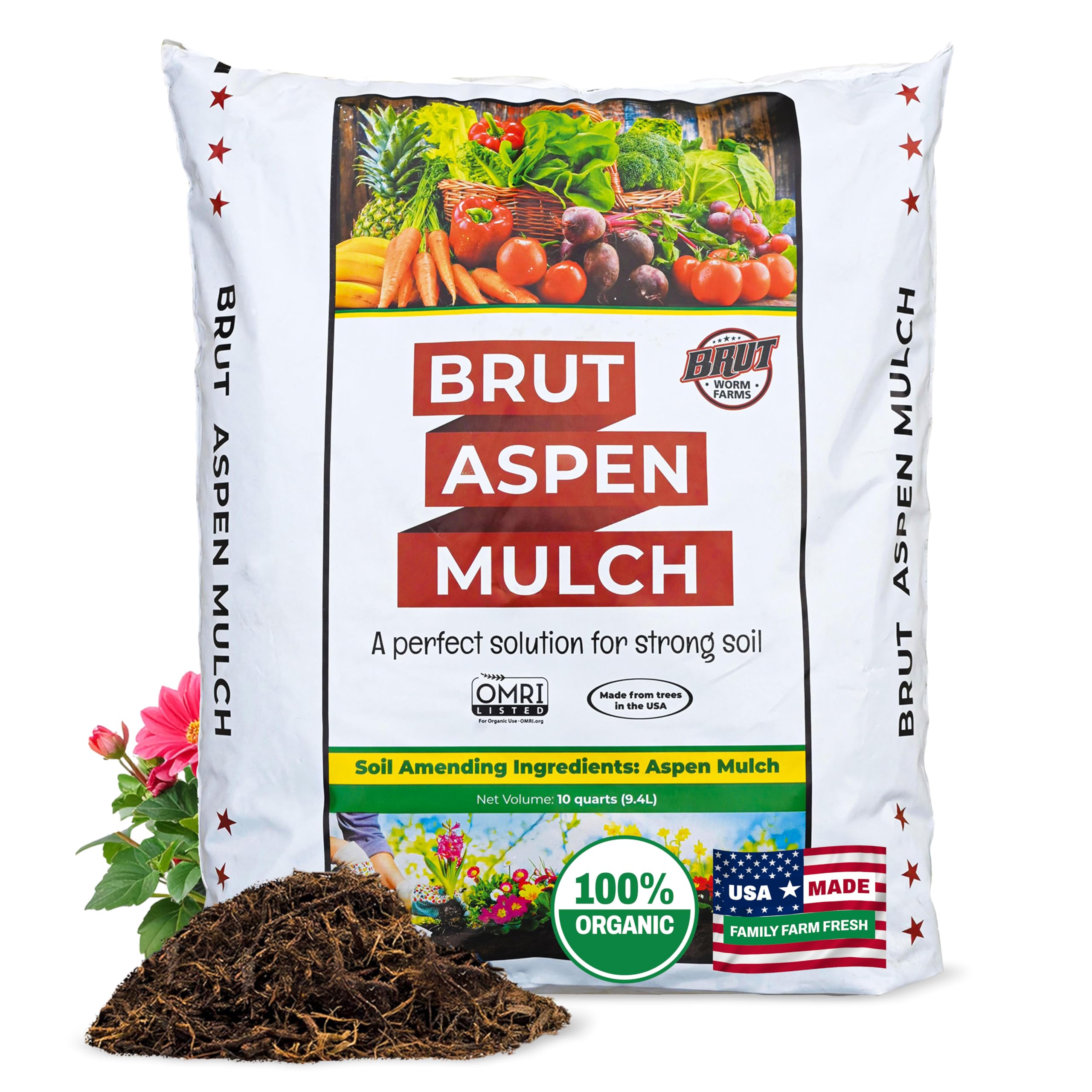
Brut Worm Farms formulated this aspen bark mulch with 30% natural carbon content to feed beneficial soil microbes while keeping the surface odor-free. The fine, compost-like texture is a stark departure from chunky wood chips—it settles into a dense layer that reduces watering frequency by about half according to multiple verified buyers.
OMRI-listed organic certification backs the claim of no synthetic additives. One reviewer growing container herbs and tomatoes reported that the mulch cut their irrigation schedule in half while maintaining consistent soil moisture. Another called it “the best mulch you can buy” and contrasted it directly with dyed or rubber alternatives.
The fine texture does mean the 10-quart bag covers less surface area than expected—several buyers noted the volume appears smaller than the bag advertises. If you are covering multiple large containers or a small raised bed, budget for at least two bags. The material works best when applied to a depth of 1–2 inches over moist soil.
What works
- High carbon content supports soil microbial activity.
- Fine texture creates a dense, weed-suppressing mat.
- Odor-free—suitable for indoor and patio container use.
- OMRI-listed organic with verified moisture retention.
What doesn’t
- Bag volume is smaller than some competing 10-quart products.
- Texture may blow away in windy conditions if not watered in.
4. Hull Farm Cocoa Bean Shell Mulch

Hull Farm’s cocoa bean shell mulch is instantly recognizable by its rich chocolate aroma—intensified by heat and sun—and its built-in fertilizer value of approximately 2.5-1-3 NPK. The shells break down slower than shredded bark, providing a light nutrient release over the season without burning vegetation.
Buyers consistently praise the “heavenly” scent and the mulch’s ability to hold moisture. One reviewer noted the smell lasted over a week and that the material did not blow away easily after watering. Another found it deterred squirrels that had previously dug through pecan hull mulch, likely because cocoa’s bitter compounds are less attractive to rodents.
Two significant restrictions apply: cocoa hulls are toxic to dogs if ingested (theobromine content), and the bags lack strong warnings about not placing them directly against plant stems or in vegetable gardens. The lightweight material can also blow around before rain settles it. Still, for a small, pet-free flower bed where scent is a priority, this is a category standout.
What works
- Pleasant chocolate scent that intensifies in warm weather.
- Mild NPK fertilizer value feeds plants as it decomposes.
- Excellent moisture retention after initial watering.
- May deter squirrels and other digging rodents.
What doesn’t
- Toxic to dogs—do not use in yards where pets roam.
- Lightweight material can blow away before rain settles it.
- Bag does not clearly warn against use near flower crowns.
5. Double Tree Incense Cedar Wood Chips

Double Tree’s incense cedar chips are ground to a consistent small-chip size that resists floating during rain while emitting a strong, natural cedar aroma. Multiple buyers use them not only for garden beds but also for closet pest control—the volatile oils in cedar are known to repel moth larvae and some beetles without chemical sprays.
The 100% natural formulation means no dyes, glues, or synthetic binders. One reviewer noted the chips maintained their effectiveness after rain without losing color or scent. Another specifically praised the bug-repelling quality in small landscaping projects, calling it superior to treated wood mulches.
Volume is the limiting factor: 8 quarts covers roughly two medium-sized planting beds at a 1.5-inch depth. The price per quart is higher than bulk-purchase alternatives, making this a targeted buy for accent areas—around specimen trees, entrance gardens, or indoor planters—rather than full-yard application. The cedar scent fades after several weeks of outdoor exposure.
What works
- Strong cedar aroma repels moths, beetles, and other pests.
- 100% natural with no synthetic additives or dyes.
- Small chip size resists washing away in heavy rain.
- Long-lasting color retention even after wet weather.
What doesn’t
- Expensive per quart for large-scale landscape projects.
- Scent dissipates after several weeks outdoors.
6. Rio Hamza Trading Houseplant Mulch

Rio Hamza Trading packs 8 quarts of small bark chips specifically sized for indoor potted plants. The chips are longer lasting than coconut coir or wood shavings and provide a uniform top dressing that keeps soil from splashing during watering. Multiple buyers reported zero pest issues, which is a common concern when bringing bagged mulch indoors.
The color is described as natural and attractive, complementing a variety of pot styles. One reviewer who used it as a soil amendment noted improved aeration and drainage for houseplants. Another said it kept their indoor plants moist longer without attracting gnats or other insects.
The chief criticism is value: several buyers felt the bag was expensive relative to the small volume, with one noting it only covered 2.5 medium pots and required a second bag to finish. This is not a bulk solution—it is a precision product for plant owners who want a clean, consistent look for a handful of containers and do not mind paying for convenience.
What works
- Attractive, uniform chips sized for indoor containers.
- No pests or mold reported by verified buyers.
- Improves moisture retention and reduces soil splash.
- Can be mixed into potting media for aeration.
What doesn’t
- Small volume—covers only 2–3 medium pots.
- Higher cost per quart compared to bulk alternatives.
7. Rubberific Premium Shredded Rubber Mulch

Rubberific’s shredded rubber mulch is engineered to mimic the look of natural wood bark while delivering zero-maintenance permanence. The 12-year color warranty covers fading, and the material will not rot, compress, or blow away in wind. It is also widely used as playground surfacing because the shredded texture provides shock absorption.
Buyers confirm the appearance is “very realistic looking” and that it stays in place better than wood chips. One reviewer noted their dogs and cats avoided defecating on the rubber surface, likely due to the initial rubber smell. Another used it to border a garage-side garden and called the transformation “perfect.”
The downsides are the upfront cost and the distinct rubber odor that lingers for several days after installation. The material offers zero soil benefit—it feeds no microbes and adds no organic matter—so it is best suited for non-planting areas like pathways, playground bases, and decorative borders where longevity outweighs soil health.
What works
- 12-year color warranty—will not fade, rot, or compress.
- Shock-absorbing texture suitable for play areas.
- Realistic wood-bark appearance without annual replacement.
- Deters animals from digging or defecating on the surface.
What doesn’t
- Strong rubber smell for the first week after installation.
- Provides no nutritional or biological benefit to soil.
- High cost per cubic foot compared to wood-based mulches.
Hardware & Specs Guide
Particle Size and Coverage
Bark mulch particle size dictates wind resistance, decomposition rate, and weed suppression duration. Small chips (under ½ inch) create a dense barrier that blocks light effectively but breaks down within one season. Large nuggets (1–2 inches) last two to three seasons but leave gaps where weeds can sprout. For most vegetable beds and ornamental borders, a blend of shredded and nugget bark (⅜ to ¾ inch) offers the best balance of coverage and longevity.
Carbon-to-Nitrogen Ratio
Fresh, uncomposted bark has a high C:N ratio (often 400:1 or higher), which can temporarily immobilize soil nitrogen as microbes work to decompose the wood. Composted or aged bark drops the C:N ratio closer to 30:1, releasing nitrogen rather than stealing it. If you are mulching heavy-feeding vegetables like tomatoes or corn, always choose aged or OMRI-listed composted bark to avoid yellowing leaves mid-season.
FAQ
Will pine bark mulch lower the pH of my garden soil?
How deep should I apply decorative bark mulch for maximum weed suppression?
Is cocoa bean shell mulch safe for vegetable gardens with pets?
Does cedar mulch repel termites and other insects?
Why does my bark mulch have white fuzzy mold on it?
Final Thoughts: The Verdict
For most gardeners, the best decorative bark mulch winner is the Back to the Roots Organic Coconut Husk Mulch because it delivers the largest expanded volume per bag, carries OMRI organic certification, and improves soil structure when tilled in—all while sparing your back from heavy lifting. If you want a refined, pH-lowering surface for containers and acid-loving plants, grab the Soil Sunrise Pine Bark Nuggets. And for a zero-maintenance, decade-long border around play areas or pathways, nothing beats the Rubberific Shredded Rubber Mulch with its 12-year color warranty.