
Specs are compiled from manufacturer listings and verified buyer reviews and can change over time — please confirm the key details on the product page before buying.
You want dinner-plate blooms, but your dahlia’s roots will rot if they sit in soggy soil for even a day. That is why a good dahlia potting mix must hold onto moisture for feeding while draining instantly—a balance most general-purpose bags miss. Get the mix right, and you will see explosive growth; get it wrong, and you will be digging up mushy tubers a month into the season.
I’m Rikta — the founder and writer behind Lawn Gear Lab. This guide is built by comparing the manufacturers’ published specifications and the patterns across verified customer reviews, so you get each pick’s real strengths and trade-offs instead of marketing spin.
Whether you are growing a single potted dahlia on a balcony or a whole row in raised beds, choosing the right dahlia potting mix makes the difference between a season of constant blooms and a summer of struggling plants.
Quick Picks
- Espoma Organic Potting Mix — Best Overall
- Brut Organic Potting Soil — Top Performer
- Miracle-Gro Moisture Control Potting Mix — Best For Dry Climates
- Miracle-Gro Potting Mix (3-Pack) — Versatile Pick
- Michigan Peat General All-Purpose Premium — Bulk Economy
- Coast of Maine Organic & Natural Planting — Edible Garden Value
- Craft Aroid Potting Mix by Grow Queen — Specialty Starter
How To Choose The Best Dahlia Potting Mix
You need a mix that is loose, fertile, and quick to drain. Here are the three factors that matter most when you scan the bag.
Drainage and Aeration
Dahlias will rot if their roots sit in water for more than a day. Look for a mix with perlite (volcanic glass that creates air pockets), pumice (lightweight porous volcanic rock), lava rock, or coarse bark fines — these create air pockets that let water flow through while keeping oxygen moving around the roots. A mix that feels heavy and dense in the bag is a warning sign for containers.
Organic Matter and Nutrients
Dahlias bloom best in nutrient-rich soil, because they are heavy feeders (plants that use up soil nutrients quickly). Worm castings, composted manure, kelp meal, and feather meal are all signs of a mix that will sustain growth without you needing to fertilize every week. A bag that lists only peat moss and perlite likely needs a boost of slow-release food.
Volume and Bag Size
One dahlia in a 5-gallon pot (a standard container size for a single plant) needs about 0.7 cubic feet of mix. If you are planting multiple tubers or a full raised bed, a 2-cubic-foot bag (about 15 gallons of soil) is far more economical than buying several small bags. Match the bag size to the number of pots you plan to fill to avoid running short mid-season.
Quick Comparison
| Model | Best For | Volume | Weight | Key Drainage Ingredient | Amazon |
|---|---|---|---|---|---|
| Espoma Organic Potting Mix | Premium all-purpose container growing | 2 Cubic Feet | — | Perlite | Amazon |
| Brut Organic Potting Soil | Nutrient-rich organic growing | 21 Quarts | — | Perlite | Amazon |
| Miracle-Gro Moisture Control Potting Mix | Forgetful waterers and hot climates | 2 Cubic Feet | 40.51 Pounds | AquaCoir Formula | Amazon |
| Miracle-Gro Potting Mix (3-Pack) | Small-container versatility | 0.66 Cubic Feet | — | Perlite | Amazon |
| Michigan Peat General All-Purpose | Large-volume raised bed filling | — | 50 Pounds | Perlite and Sand | Amazon |
| Coast of Maine Tomatoes & Vegetables | Edible garden companion planting | 20 Quarts | — | Sphagnum Peat Moss | Amazon |
| Craft Aroid Potting Mix | Small indoor dahlia starts | 2 Quarts | 2 Pounds | Lava Rock, Pumice, Bark Fines | Amazon |
In‑Depth Reviews
1. Espoma Organic Potting Mix

The loamy, living mix that dahlias reward with relentless blooms.
You get a single bag that handles everything from potting up tubers to final summer containers, and the 2-cubic-foot volume gives you enough to fill three or four 5-gallon pots. Inside, the blend of sphagnum peat moss, humus, perlite (volcanic glass for drainage), earthworm castings, alfalfa meal, kelp meal, and feather meal creates a texture buyers describe as loose and airy — never dense or crusty.
The secret weapon is the proprietary Myco-Tone blend of endo and ecto mycorrhizae (beneficial fungi that attach to roots to help them absorb water and nutrients). For your heavy-feeding dahlias, this biological boost means stronger root development during the early growth window, so you see bigger flowers later. This mix is more portable and manageable than the 50-pound Michigan Peat bag below, because it weighs less and stays loose — yet it still has enough nutrition depth for strong container growth.
Because the ingredients are all natural with no synthetic chemicals, this mix qualifies for organic gardening. One reviewer who has plants over 25 years old trusted this soil for sentimental houseplants and reported excellent results. The only real consideration is the premium price per cubic foot compared to economy blends — but for a focused dahlia collection where every container counts, the payoff shows in flower size.
Why Dahlias Love It
- Rich blend of worm castings, kelp meal, and feather meal provides sustained feeding throughout the bloom season
- Myco-Tone mycorrhizae boost root access to nutrients — especially helpful for container-grown dahlias
- Clean, no-big-chunks texture that reviewers describe as loamy and well-aerated
- No gnat infestations reported, a common problem with some other organic mixes
One Catch
- You will pay a premium per cubic foot versus all-purpose potting soils
The Verdict: Reach for this if you want a premium organic foundation that feeds your dahlias from the moment you pot them up and keeps feeding for weeks — the biological boost from Myco-Tone is the edge that separates it from simpler blends like the Brut Organic below.
Look elsewhere if: you are filling a large raised bed and need the lowest cost per cubic foot — the economy of scale favors the Michigan Peat bag for that job.
2. Brut Organic Potting Soil
Filler-free organic power that makes dahlias explode with new growth.
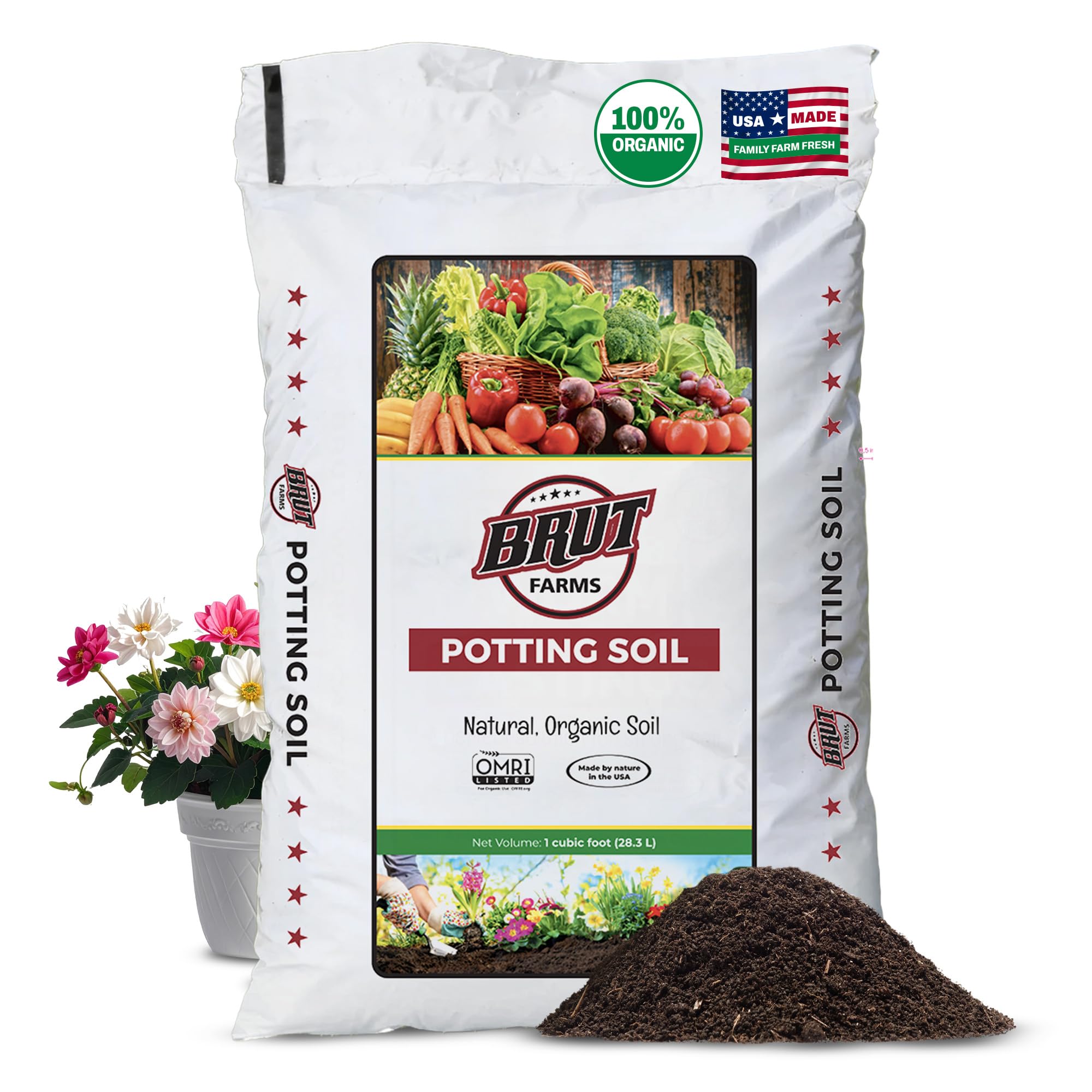
This is the pick for you if you want a mix that is as clean as it is potent. The 21-quart bag (about 0.8 cubic feet) is a perfect single-bag fill for two large dahlia containers, and the ingredient list reads like a soil wishlist: microbe-rich worm castings, trace minerals from Azomite (a natural volcanic mineral powder), and kelp. Unlike the Craft Aroid mix below, which is designed for small tropical houseplants, this is built for serious growth in full-sized garden containers.
The maker claims the blend is pH-balanced between 6.3 and 6.5 — right in the balance for dahlias, which prefer slightly acidic conditions. Because it is OMRI listed (certified for organic use), you can trust there are no synthetic fertilizers or chemicals. One reviewer noted planting two Cara Cara orange trees and a Lapins Cherry tree in this soil and seeing leaves turn deep green and new growth shoot out in just two days. The same buyer noted the soil is so nutrient-dense that it can attract pests if left uncovered outdoors — a sign of quality ingredients, but a heads-up to top-dress with sand or gravel on exposed containers.
Reviewers consistently highlight the absence of sticks, wood chips, or artificial additives. The texture is uniform and pleasant to handle, and plants seem to respond noticeably faster than with generic big-box blends.
Nutrient Punch
- Microbe-rich worm castings and Azomite trace minerals feed roots directly
- Filler-free with no sticks or wood chips — just pure organic material
- pH balanced between 6.3 and 6.5, ideal for dahlia root health
- OMRI listed for certified organic gardening
Heads Up
- The high fish and bone meal content can attract flies if the soil surface is left exposed — a simple top-dressing solves it
Best for: growers who want a ready-to-use organic mix with no filler ingredients and a proven track record for rapid, visible plant response — especially if you value OMRI certification and want a single bag that goes straight from packaging to pot.
Not ideal if: you need a huge bulk volume for raised beds — at 21 quarts it is designed for container precision, not economy-of-scale filling.
3. Miracle-Gro Moisture Control Potting Mix

The forgiving mix that catches your watering mistakes before your dahlias do.
This is a mix built specifically to buffer against both over-watering and under-watering — the two mistakes that kill more container dahlias than anything else. The 2-cubic-foot bag weighs 40.51 pounds, making it the heaviest option here (the Craft Aroid mix is just 2 pounds by contrast), but that weight comes from the exclusive AquaCoir Formula that the maker says helps retain moisture. For your dahlias in hot, dry climates where pots dry out by midday, this buffer can be a lifesaver.
The mix feeds plants for up to 6 months. One reviewer who has used this product for 10 years reported near-100% germination rates when starting 500-700 annuals, praising the Moisture Control feature for allowing later start dates. Another buyer noted that pepper plants transplanted into pure Moisture Control mix showed a full turnaround with greener foliage and rapid growth in just a few weeks. For your dahlias specifically, the finer texture (buyers report fewer sticks than other brands) makes it suitable for starting tubers in smaller containers before the final transplant.
The trade-off is that the high peat content means you need to water carefully to avoid rot — the moisture control feature works both ways. And unlike the Espoma or Brut blends, this is not OMRI listed for organic gardening, so it contains synthetic fertilizers rather than fully organic ingredients.
Water Management
- AquaCoir Formula absorbs up to 33% more water than basic potting soil without getting soggy
- Feeds plants for up to 6 months with built-in fertilizer
- Finer, stick-free texture ideal for seed starting and tuber sprouting
- High germination rates reported by long-term users (one reviewer 10 years)
The Catch
- Not certified organic — contains synthetic fertilizers rather than all-natural ingredients
Grab this if: you garden in a hot, breezy climate where container soil dries out by noon, or if you want a single large bag that provides built-in feeding for half a season. The moisture forgiveness alone makes it worth the premium for forgetful waterers.
skip it if: organic certification matters to you — the synthetic fertilizer content disqualifies it from organic gardens.
4. Miracle-Gro Potting Mix (3-Pack)

Three manageable bags that keep your dahlia feeding simple without the heavy lifting.
You get the same trusted Miracle-Gro formula as the larger 2-cubic-foot bag above but without the AquaCoir — a straight potting mix that still feeds your plants for up to 6 months. The 3-pack format gives you three 8-quart bags (total 0.66 cubic feet), which is perfect if you are potting up a handful of dahlias and do not want to wrestle a heavy 40-pound bag. Each bag fills two 8-inch containers, so three bags handle a modest dahlia display without waste.
Owners mention that this mix drains well and does not compact into hard clumps, keeping water flowing to the roots. One reviewer praised the smaller bag size specifically for not having to lug around large bags — a practical advantage if you are working on a balcony or carrying soil up stairs. The mix is formulated for outdoor containers including flowers, vegetables, shrubs, annuals, and perennials, so it is a safe all-rounder that handles dahlia needs without fuss.
The main difference from the Moisture Control version is that this does not provide the over-watering protection — you need to manage your watering schedule yourself. And like the larger Miracle-Gro bag, this is not certified organic.
Convenience Factor
- Three smaller bags are easier to carry and store than one large bag
- Feeds container plants for up to 6 months, reducing the need for liquid fertilizer
- Drains well without packing down hard, reviewers confirm
- Works for all types of potted plants, so leftovers go to other flowers or herbs
Trade-Off
- No moisture control technology — you must monitor watering more carefully than with the AquaCoir version
Reach for this if: you are potting a modest number of dahlias (3-5 containers) and want the convenience of pre-measured bags without buying a huge volume of soil you might not use.
Look elsewhere if: you need organic certification — this is not OMRI listed — or if you struggle with over-watering, in which case the Moisture Control version is the better fit.
5. Michigan Peat General All-Purpose Premium Potting Soil

A 50-pound workhorse for the gardener who measures soil by the wheelbarrow.
This Michigan Peat blend is the heavyweight champion of the lineup at 50 pounds, compared to the 2-pound Craft Aroid mix. The formula combines rich dark reed sedge peat, perlite (volcanic glass for drainage), and sand to create a texture that balances water retention with drainage. It also includes starter and slow-release fertilizers already mixed in, so you do not need to add anything for the first month of growth.
The mix arrives moist and ready to use straight from the bag — no mixing needed. One reviewer described it as “perfect consistency for potting” and praised the timely delivery. However, multiple customers note a gnat problem, with one reviewer specifically warning “lots of gnats come out of it.” For you and your dahlias, this is a nuisance rather than a disaster, but if you are growing indoors or on a patio near your home, you will want to let the bag sit open for a day or two before use or treat the soil before potting.
This is the most budget-friendly option in the lineup on a per-pound basis, but the 50-pound weight means you are committing to a significant volume. If you only need soil for a single dahlia pot, the smaller bags above (like the Brut or the Espoma) are more practical.
Volume Value
- 50 pounds of soil covers large raised beds or many pots in one purchase
- Ready-to-use with perlite and sand already mixed in for drainage
- Starter and slow-release fertilizers included for initial feeding
- Arrives moist with good texture, reviewers point out
Honest Warning
- Multiple shoppers say gnats emerging from the soil — expect to take precautions before indoor use
Best for: high-volume projects where you need to fill multiple large containers or a raised bed without breaking the budget. The 50-pound bag offers the lowest cost per pound in this list.
Not for: indoor or patio-area potting — the gnat risk makes it better suited to outdoor gardening where flying insects are less bothersome.
6. Coast of Maine Organic & Natural Planting Soil for Vegetables & Tomatoes

Lightweight organic soil that feeds vegetables and dahlias alike from the same bag.
If you interplant your dahlias with tomatoes and peppers, this is the single-bag solution that keeps both happy. The 20-quart bag (about 0.75 cubic feet) is formulated with composted manure and sphagnum peat moss to balance moisture retention and drainage — the same balance dahlias need. It is OMRI listed for organic use, so you know the composted manure and peat are sourced from nature-conscious practices.
Buyers report the soil is lightweight and high-quality, with one noting that “one bag per 5-gallon pot” is the right ratio for strong growth. Another reviewer said the bag is heavy but that plants “like it grow well,” with visible rapid growth and excellent moisture retention. The mix contains aromatic wood that helps deter insects (like spider mites and aphids that can attack your dahlias during blooming). Some reviewers mention undecomposed twigs that need removal for a finer texture, but this is minor.
The key difference between this and the Espoma mix above is that Coast of Maine is built specifically for vegetables and tomatoes — it is slightly heavier on composted manure nutrients that suit heavy-feeding dahlias but does not have the same biological boosters (like Myco-Tone mycorrhizae) that the Espoma includes.
Dual Purpose
- OMRI listed organic formula with composted manure provides rich, sustained feeding
- Lightweight bags are easy to carry and position around the garden
- Contains aromatic wood that deters insects — helpful for dahlia pest management
- One bag fills a standard 5-gallon pot perfectly, according to buyers
Texture Note
- Some bags contain undecomposed twigs that may need hand-sifting for a finer finish in small pots
Reach for this if: you run a mixed edible garden and need one soil that works equally well for dahlias, tomatoes, and peppers — the composted manure formula supports heavy feeders across plant types.
Consider something else if: you want a soil with minimal debris and a uniformly fine texture for smaller container work — the occasional twig can be a minor annoyance.
7. Craft Aroid Potting Mix by Grow Queen
The chunky, ultra-draining mix for starting dahlia tubers without fear of rot.
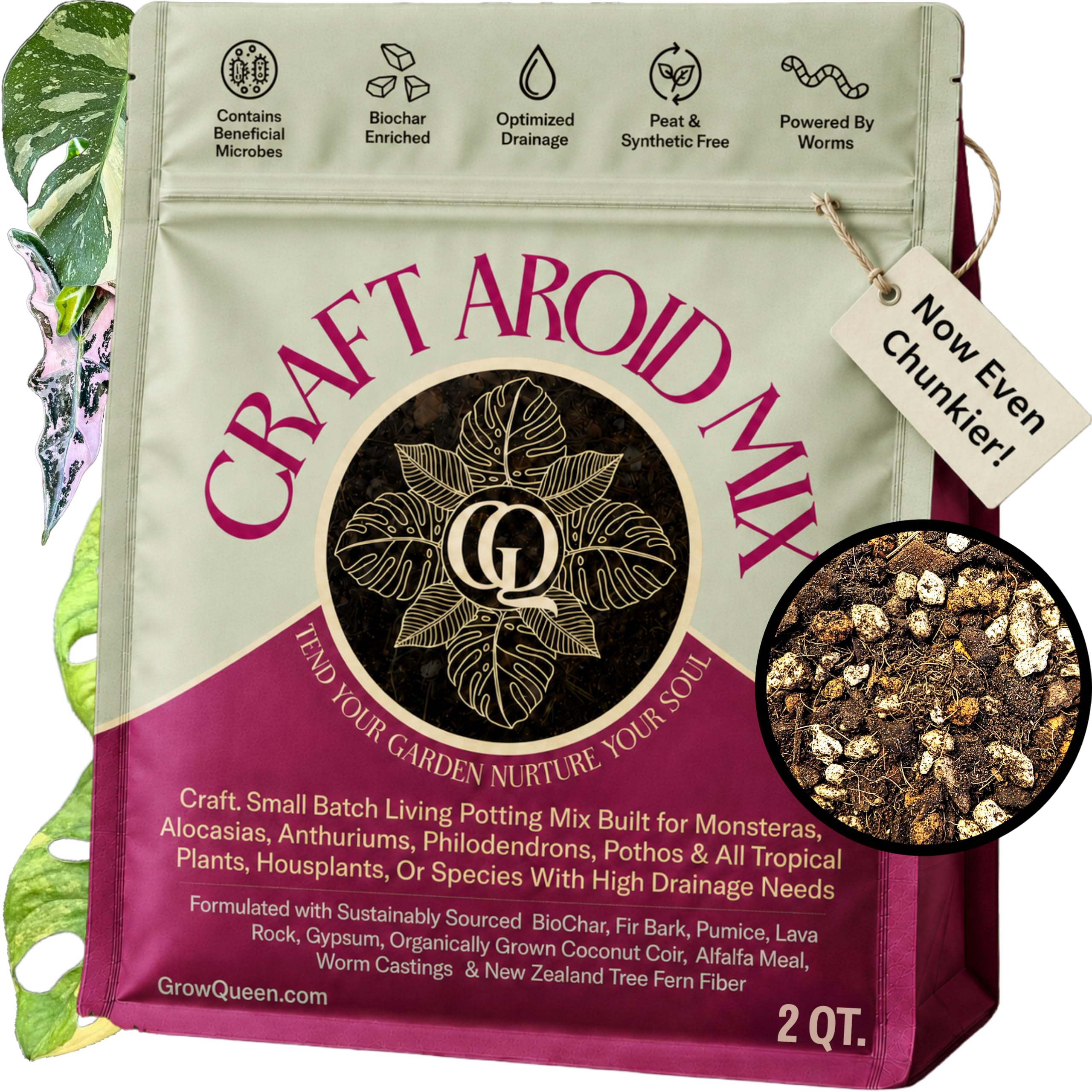
At just 2 quarts and 2 pounds, this is a far cry from the 50-pound Michigan Peat bag above. This mix was designed for tropical houseplants like Monsteras and Alocasias, but its core feature is the same thing your dahlias crave: near-instant drainage. The blend of large Douglas fir bark fines, lava rock, and pumice (lightweight porous volcanic rock) creates such open structure that the maker claims it is “almost impossible to overwater.” For sprouting your dahlia tubers in small nursery pots, that margin of error is invaluable.
The mix includes certified organic coco coir (coconut husk fiber) washed multiple times to remove salts, plus New Zealand Tree Fern Fiber that the maker says neutralizes pH (a measure of acidity) down to 6.0 — mimicking the natural pH of native tropical soils, which aligns closely with dahlia preferences. However, there is a critical size limit here. One buyer warned, “For larger plants, soil held too much moisture, never dried out, causing root rot after two months.” The same reviewer noted this mix works for 6-inch pots or smaller. That means this is a starter mix for tuber sprouting and small early-season containers only — not a full-season pot for a mature 4-foot dahlia.
The chunky texture is the opposite of the fine, moisture-retentive Coast of Maine blend above. If you are starting dahlia cuttings or sprouting tubers in 4-inch pots, the aeration here beats everything else. For final potting, move to one of the larger-volume options.
Drainage King
- Lava rock, pumice, and large bark fines create extreme aeration that prevents overwatering
- Certified organic coco coir is washed extra times for low salt content
- New Zealand Tree Fern Fiber neutralizes pH to 6.0, a great match for dahlias
- Ready to use straight from the bag and safe around pets
Size Limitation
- Reviewers report the mix holds too much moisture for pots larger than 6 inches, causing root rot in larger plants — strictly a small-pot starter mix
Grab this for: the critical first stage — sprouting tubers in 4-inch to 6-inch nursery pots where drainage precision can mean the difference between a healthy plant and a mushy tuber.
Move on from it when: your dahlia outgrows its starter pot and needs a permanent home — at 2 quarts, this bag covers one or two small pots, not a full-season container.
Understanding the Specs
Drainage and Aeration
This is the single most important quality in a dahlia potting mix. Dahlias store water in their tubers (swollen underground stems), so they do not need soil that stays wet for long. Ingredients like perlite (volcanic glass that creates air pockets), pumice (a lightweight porous volcanic rock), lava rock, and coarse bark fines all create channels for water to escape and air to reach the roots. A mix that feels heavy and dense in the bag will likely compact in a pot and hold too much moisture — leading to the root rot that every dahlia grower dreads.
pH Balance
Dahlias grow best in slightly acidic soil, ideally between 6.0 and 6.5 on the pH scale (a measure of acidity or alkalinity). At this level, roots can absorb iron, phosphorus, and other nutrients efficiently. Some premium mixes include pH-neutralizing ingredients like New Zealand Tree Fern Fiber, which adjusts the pH down toward 6.0. If you start with a neutral or alkaline mix, your dahlia may show yellowing leaves (a sign of nutrient lockout) even if you fertilize regularly.
FAQ
Can I use regular garden soil for dahlias in pots?
How much potting mix does one dahlia need?
Should I add perlite or sand to a potting mix for dahlias?
Is organic potting mix better for dahlias than synthetic?
How often should I replace the potting mix for potted dahlias?
What is the difference between aroid mix and regular potting mix for dahlias?
Does a coconut coir based mix work for dahlias?
Can I mix two different potting soils together for better results?
What should I do if my potting mix has gnats or fungus flies?
Is a 2-cubic-foot bag too much for a small dahlia garden?
Final Thoughts: The Verdict
For most growers, the dahlia potting mix winner is the Espoma Organic Potting Mix because its loamy texture, Myco-Tone mycorrhizae (beneficial root fungi), and rich blend of worm castings and kelp meal provide the perfect foundation for dahlias in containers — feeding them steadily without needing weekly liquid fertilizer. If you want the most nutrient-dense certified organic option with zero filler, grab the Brut Organic Potting Soil. And for high-volume raised bed filling where budget matters most, the standout is the raw economy of the Michigan Peat 50-pound bag.
How We Picked
We do not accept paid placement. Every pick is matched to a real buyer and a real use-case; we do not hands-on test units.
Sources & Methodology
Specifications: manufacturer listings and product documentation. Review insights: verified customer reviews, as of July 2026. Pricing: not shown on this page (it changes often); check the current price via the retailer link.
As an Amazon Associate, Lawn Gear Lab earns from qualifying purchases. This does not affect which products we feature.