
Specs are compiled from manufacturer listings and verified buyer reviews and can change over time — please confirm the key details on the product page before buying.
If you have ever walked out to a raised bed to find half-eaten tomatoes, trampled bean vines, or a family of rabbits camped inside your lettuce, you already know the pain. A solid cage is the difference between feeding your household and feeding every critter in the neighborhood. This guide looks at five purpose-built frames that sit right on top of your raised bed, blocking birds, squirrels, deer, and groundhogs without blocking the sun or rain.
I’m Rikta — the founder and writer behind Lawn Gear Lab. This guide is built by comparing the manufacturers’ published specifications and the patterns across verified customer reviews, so you get each pick’s real strengths and trade-offs instead of marketing spin.
Below, you will find honest breakdowns of the height, the mesh density, the wind resistance, and the door access that matter most when you choose your crop cage for raised bed.
Quick Picks
- VEVOR Crop Cage, 3.9 x 3.9 x 5.9 ft — Walk-In Height
- Outsunny 8′ x 4′ Crop Cage — Best for 8×4 Beds
- SUNYRISY Garden Plant Netting Crop Cage, 9.8 x 3.3 x 6 ft — Maximum Coverage
- Ohuhu Crop Cage, 6.6 x 3.9 x 5.3 ft — Premium Construction
- Poray Large Tunnel 8.2′ x 4′ Crop Cage — Best Tall Tunnel
How To Choose The Best Crop Cage For Raised Bed
A crop cage does one simple job: it keeps hungry animals away from your plants while letting in the light and water your crops need. But the differences in mesh, frame, and height make some cages a daily pleasure and others a constant frustration. Here are the three specs that matter most.
Height and Walk-In Room
If you are growing vining crops like tomatoes, cucumbers, or pole beans, standard hoop cages under four feet trap the plants against the mesh. Look for a cage at least five feet tall so your crops have vertical space. Six-foot models let you stand inside to harvest without stooping, which makes daily care much less frustrating.
Mesh Strength and Density
The mesh is your only real barrier against birds, squirrels, and rabbits. Thicker mesh, measured in g/m² or millimeters, resists tearing and lasts several seasons. A mesh aperture around 1 cm keeps out most pests while still allowing bees to reach blossoms. Avoid thin netting that rips after one windy afternoon.
Frame Material and Wind Anchoring
Steel frames with powder-coated finish resist rust much longer than basic plastic rods. Ground stakes and guy ropes turn a light cage into a hurricane-rated barrier. Check whether the manufacturer includes enough stakes, and note how many reviews mention wind survival — that is the real test of frame strength.
Quick Comparison
| Model | Best For | Dimensions (L x W x H) | Frame Material | Mesh Type | Amazon |
|---|---|---|---|---|---|
| VEVOR 3.9×3.9×5.9 ft | Wind-prone gardens | 47.24″ x 47.24″ x 70.87″ | Powder-coated steel | Tear-resistant polyester | Amazon |
| Outsunny 8′ x 4′ | Standard 8×4 beds | 98″ x 47.25″ x 47.25″ | Alloy steel | HDPE | Amazon |
| SUNYRISY 9.8 x 3.3 x 6 ft | Tall crops and stand-up access | 118″ x 39″ x 71″ | Steel | Polyester mesh | Amazon |
| Ohuhu 6.6′ x 3.9′ x 5.3′ | Long-term durability | 6.56′ x 3.94′ x 5.35′ | Steel tubes | 40g/m² HDPE | Amazon |
| Poray Large Tunnel 8.2’x4′ | Maximum tunnel height | 98″ x 49″ x 72″ | 16mm round steel tube | 96g/m² mesh | Amazon |
In‑Depth Reviews
1. VEVOR Crop Cage, 3.9 x 3.9 x 5.9 ft
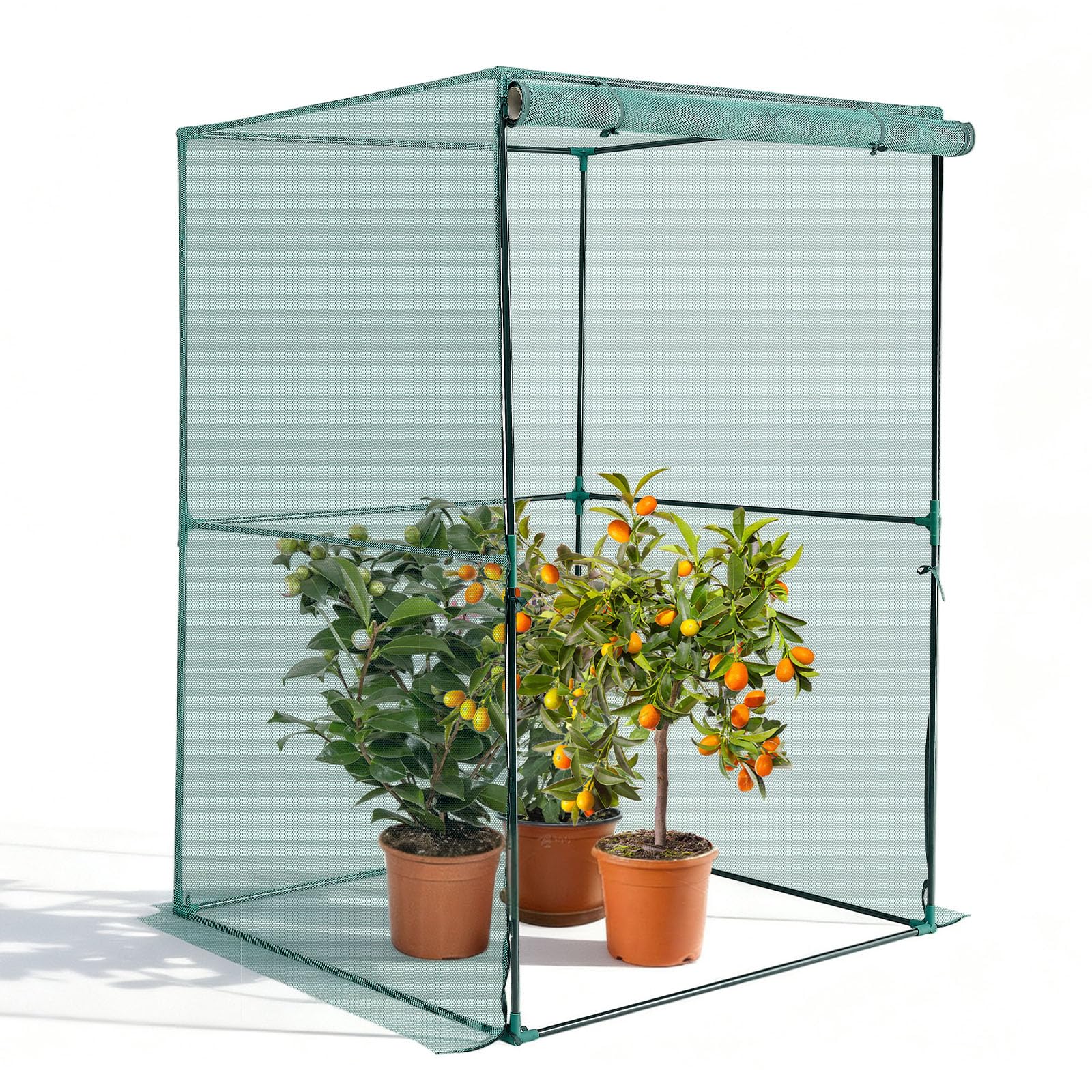
A tall, storm-ready cage that lets you stand upright while tending plants.
At 70.87 inches tall, this VEVOR cage gives you 5.9 feet of clearance versus the Outsunny’s 47.25 inches, which means you walk in instead of hunch over. The 9.92-pound frame uses powder-coated steel tubes, which resists rust far better than bare metal. Buyers report it is an “accurate size, sturdy, survived windy storms,” thanks to the reinforced plastic joints, side support rods, and included U-shaped ground stakes with guy ropes.
The mesh is made from 0.16-inch (4 mm) tear-resistant polyester that keeps out animals while letting air and rain through. The roll-up zippered door has reinforced edges that stay secure. Owners mention the bottom screen on the zip side is not tight when the door is open, and the net can tear if you pull the ties too tight, but for this is a strong balance of height and toughness.
What Stands Out
- Nearly 6-foot interior height for stand-up access
- Powder-coated steel resists rust and corrosion
- Guy ropes and stakes provide real wind resistance
What Holds It Back
- Net stitching can tear if tied too tightly
- Metal stakes ineffective in sandy soil per some buyers
Reach for this if: you have tall crops like indeterminate tomatoes or pole beans and want to stand upright inside the cage while you water and harvest.
Look elsewhere if: your soil is loose sand where standard stakes won’t hold — you will need to add your own anchors.
2. Outsunny 8′ x 4′ Crop Cage
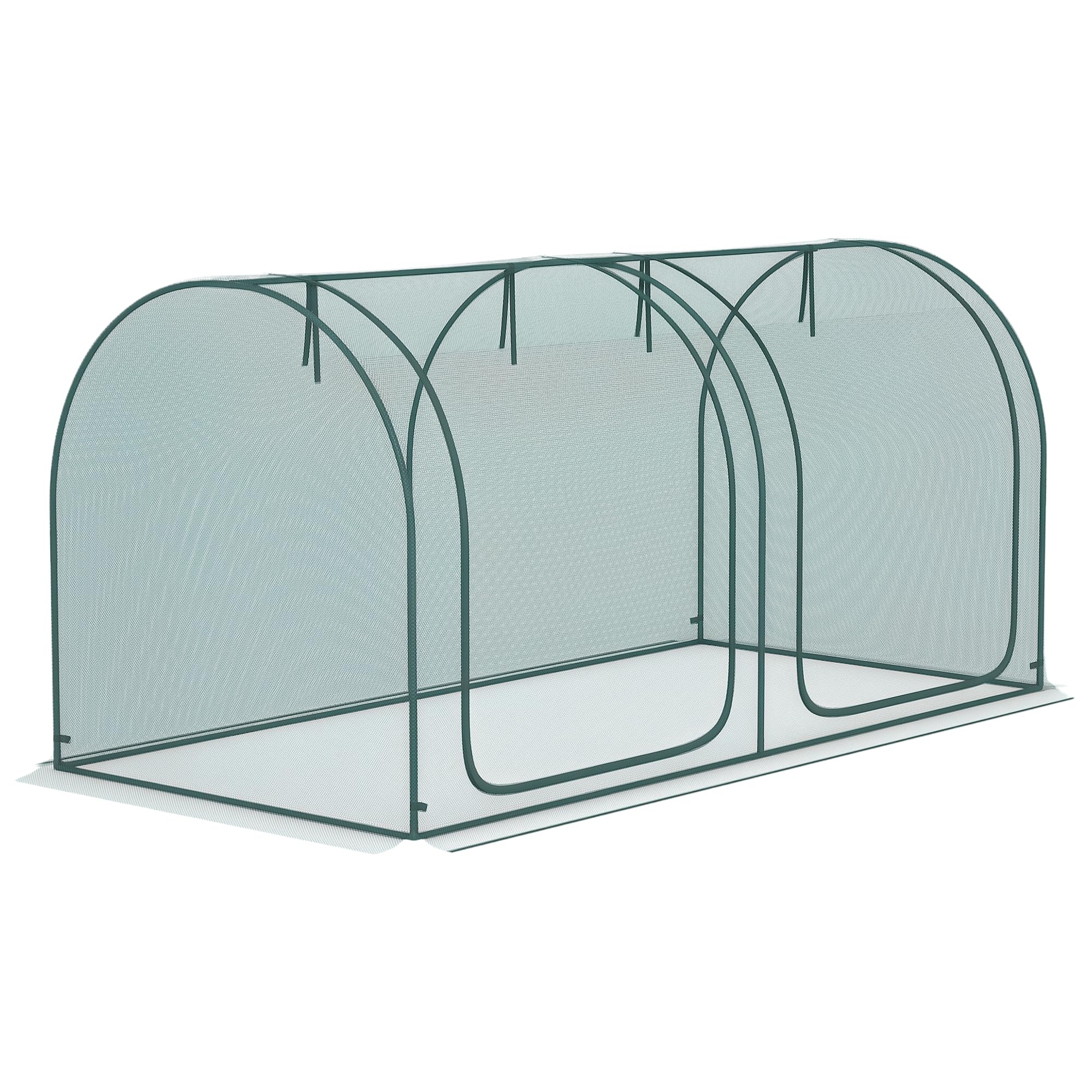
The cage that drops onto an 8×4 bed and locks in place with zero fuss.
At 98 inches long by 47.25 inches wide by 47.25 inches tall, this Outsunny cage is built to fit the most common raised bed size exactly. One buyer called it a “perfect fit for 8’x4’x12″ bed,” and reported it was “strong in 50 mph winds.” The alloy steel frame weighs 7.7 pounds versus the 12.92-pound SUNYRISY cage, making this one much easier to lift on and off the bed for seasonal storage.
The cage uses High Density Polyethylene (HDPE) mesh instead of polyester, and includes two zippered arc doors rather than a single panel. That double-door design means you can reach in from either long side without walking around. The four included ground stakes earn the cage a level four windproof rating. The one catch: buyers in heavy snow and wind zones report the plastic connector rods can snap, so this pick works best in moderate climates.
The Strong Points
- Exactly matches standard 8×4 raised bed dimensions
- Two zippered doors for easy access from either side
- Lightest in this lineup at 7.7 pounds, easy to move
The Weak Points
- Plastic rods can break under heavy snow or high winds
- Only 47.25 inches tall — not enough for tall crops
Your best bet for: the gardener with a standard 8×4 bed who wants lightweight, fast assembly, and two access doors without spending extra.
Not for: growing tall crops — the 4-foot ceiling means tomato trellises will hit the mesh quickly.
3. SUNYRISY Garden Plant Netting Crop Cage, 9.8 x 3.3 x 6 ft
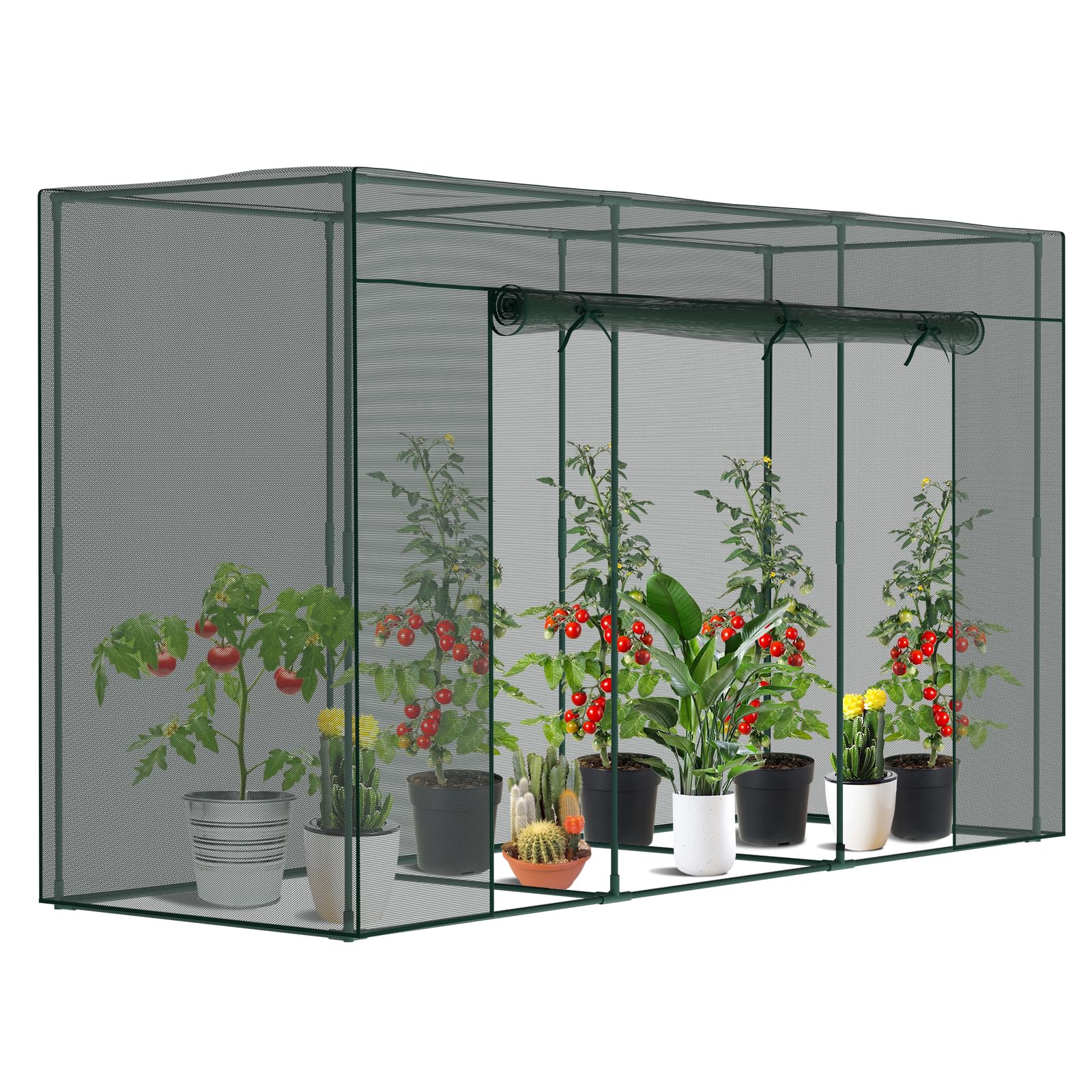
A long 9.8-foot cage with 71-inch height for serious growing space.
This SUNYRISY cage stretches 118 inches long by 39 inches wide and rises to 71 inches tall — that is a full 6-foot interior, which means you can walk in without ducking if you are under 5’10”. It weighs 12.92 pounds, making it one of the heavier options, but that weight comes from a steel frame that resists rust. The high-density polyester mesh lets air and water in while keeping birds and rodents out.
The walk-in door is a big draw, but one buyer gave it “4 stars only bc the door opening has a bar across it.” At 5 feet tall, that person said ducking under the bar was fine, but taller gardeners may find it awkward. The zippered door also lacks anything at the bottom to keep it closed tight — one reviewer wished for velcro there. Still, owners say it “already kept out bugs and rodents” and is “perfect for raised planter[s].”
The Upside
- Long and tall — covers a 9.8-foot bed with 71-inch clearance
- Easy to assemble with picture-only instructions
- Protects multiple pots or a full raised bed
The Downside
- Door bar requires ducking for anyone over 5 feet tall
- Door lacks a bottom fastener to seal the gap
Ideal for: long raised beds where you want maximum coverage and a 6-foot ceiling for tall crops.
But be aware: the crossbar at the door entrance will annoy anyone over about 5’5″ — consider the VEVOR if that bar will drive you crazy every day.
4. Ohuhu Crop Cage, 6.6 x 3.9 x 5.3 ft

A well-built, mid-size cage that survived 80 mph winds according to buyers.
The Ohuhu cage measures 6.56 feet long by 3.94 feet wide by 5.35 feet tall, giving you a solid middle-ground footprint that is easier to fit into tighter garden layouts. The steel tube frame connects with plastic joints, and the included heavy-duty steel pegs anchor it firmly. One reviewer noted the cage “held up in winds around 80 mph,” which is a dramatic jump in wind survivability compared to budget options.
The mesh is 40g/m² HDPE with an aperture of about 1 cm — dense enough to keep birds out while still letting pollinators in. The mesh is UV and rot resistant. Customers note “easy 30-min assembly; durable frame lasts 2+ years, but mesh cover degrades from sun after ~2 years.” That is a real trade-off: the frame outlasts the mesh, and replacement mesh is not sold separately. The zippers fit on both sides, and the cage protects from both animals and intense southern sun.
Why It Stands Out
- Withstood 80 mph winds per buyer reports
- HDPE mesh is UV- and rot-resistant for longer outdoor life
- 1 cm aperture keeps pests out while bees can still enter
The Catch
- Mesh cover can degrade from sun after about 2 years
- Check for seam fraying — some buyers received mesh with poor stitching
Grab this for: a long-lasting steel frame that can ride out severe storms, and a mesh density that protects without blocking pollinators.
skip it if: you need replacement mesh sold separately — when the cover wears out after a couple of seasons, you will need a whole new cage.
5. Poray Large Tunnel 8.2′ x 4′ Crop Cage

A tunnel-style 6-foot-tall cage with the heaviest mesh in the lineup.
At 8.2 feet long by 4 feet wide and 6 feet tall, this Poray tunnel cage uses 16mm round steel tubes — noticeably thicker than the thin rods on budget models. The mesh density is 96g/m², which is the heaviest of any pick here, and the netting uses sub-3mm openings that keep out even small insects while remaining breathable. The whole structure weighs 13.2 pounds and fits into a 90 cm carry bag for off-season storage.
Two full zippered doors sit at the front with double zippers, and the kit includes sturdy stakes plus 6 long camping ropes for anchoring. Reviewers point out it “survived tornado with extra metal stakes” and call it a “high-quality structure to keep birds away.” The one-year warranty covers defects. The netting is not a greenhouse fabric — it is purely a pest barrier — so it will not trap heat or moisture. One buyer mentioned the zipper quality is just “so-so” and the net tore when a dog ran into it.
The Strengths
- Thickest mesh at 96g/m² and sub-3mm openings
- 16mm steel tube frame is the heaviest-duty here
- Tall tunnel design with 6 camping ropes for wind anchoring
The Weaknesses
- Zippers feel only average and may wear over time
- Netting can tear if a large animal or dog runs into it
Choose this for: the most durable mesh you can get on a raised-bed cage and a tunnel shape that matches long, narrow beds.
Think twice if: you have dogs that run through the garden — the mesh is tough but not dog-proof, and replacement nets are not sold separately.
Understanding the Specs
Mesh Density (g/m²)
This number tells you how tightly woven the netting is. A higher number like 96g/m² means the fabric is heavier and harder for animals to push through, but also blocks a bit more wind. A lower number like 40g/m² is lighter and lets more air flow, but is easier for a determined squirrel to chew. For most raised beds, anything above 40g/m² in HDPE will keep birds out — upgrade to 96g/m² if you have deer or raccoons pressing against the fabric.
Frame Material and Wall Thickness
The frame is what keeps your cage standing after a thunderstorm. Powder-coated steel resists rust much better than unpainted metal or plastic. The thickness is often listed in millimeters — 16mm tubes like the Poray model are noticeably stiffer than the thinner tubes on budget cages. Plastic connectors are fine for moderate weather, but buyers in windy zones report they snap; all-steel joints handle the stress better.
FAQ
Will a crop cage fit directly on my raised bed?
How tall do I need the cage for tomato plants?
Can I leave the crop cage up all year?
Do crop cages keep out deer?
How important are ground stakes and guy ropes?
Can I water through the mesh, or do I need to unzip the door?
How long does assembly take for most crop cages?
What is the difference between a crop cage and a greenhouse?
Can I use a crop cage as a chicken coop?
How do I clean and store the crop cage at the end of the season?
Final Thoughts: The Verdict
If you want one dependable pick, the crop cage for raised bed winner is the VEVOR 3.9×3.9×5.9 ft because it combines a nearly 6-foot stand-up height, powder-coated steel frame, and wind-anchoring ropes at a mid-range price. If you have a standard 8×4 bed and need something light and easy to move, grab the Outsunny 8′ x 4′. And for maximum mesh density and a tunnel shape that handles extreme weather, the standout is the Poray Large Tunnel 8.2′ x 4′.
How We Picked
We do not accept paid placement. Every pick is matched to a real buyer and a real use-case; we do not hands-on test units.
Sources & Methodology
Specifications: manufacturer listings and product documentation. Review insights: verified customer reviews, as of July 2026. Pricing: not shown on this page (it changes often); check the current price via the retailer link.
As an Amazon Associate, Lawn Gear Lab earns from qualifying purchases. This does not affect which products we feature.