
Specs are compiled from manufacturer listings and verified buyer reviews and can change over time — please confirm the key details on the product page before buying.
Your crepe myrtle won’t bloom, and you’ve watered and pruned it, yet the branches stay bare while the neighbor’s tree bursts with color. The fix is feeding, and choosing between liquid and granular changes the season-long response.
I’m Rikta — the founder and writer behind Lawn Gear Lab. This guide is built by comparing the manufacturers’ published specifications and the patterns across verified customer reviews, so you get each pick’s real strengths and trade-offs instead of marketing spin.
This breakdown helps you choose between a fast liquid boost and a slow granular feed.
Quick Picks
- Crepe Myrtle Fertilizer, Liquid Plant Food — Best Overall
- NutriStar Crape Myrtle & All Flowering — Long-Feeding Pick
How To Choose The Best Crepe Myrtle Tree Food
Crepe myrtles are heavy feeders that put everything into those summer flower clusters. The right fertilizer boosts bloom count, leaf color, and root strength. The wrong one produces lush foliage but few blooms.
Decide Liquid vs Granular First
Liquid fertilizer reaches roots quickly for fast, visible results. Granular feeds release slowly, feeding for months with one application.
Read the NPK Numbers
The three numbers on the label stand for nitrogen, phosphorus, and potassium. Nitrogen fuels leaves, phosphorus drives blooms and roots, and potassium boosts overall health. A higher middle number (phosphorus) signals a bloom-focused formula.
Check the Extra Minerals
Trace elements like iron, manganese, and zinc often sit in the fine print, yet they do the heavy lifting for rich flower color and healthy new growth. A formula that lists these alongside the main NPK trio gives your tree a more complete diet than a plain three-number blend.
Quick Comparison
In‑Depth Reviews
1. Crepe Myrtle Fertilizer, Liquid Plant Food for Long-Lasting Blooms
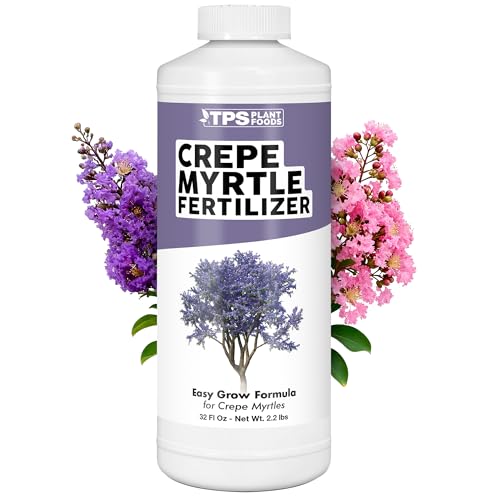
A single liquid feeding that turns stubborn bare branches into a cloud of blooms
If your crepe myrtle has never flowered, this is the bottle to reach for. The formula is built around a high-potassium blend, which is what pushes a tree toward heavy flowering rather than just leafy growth. Buyers report the payoff comes fast: “It works! Never had blooms before and now it’s all blooms!! Only applied once.” That kind of one-and-done result is exactly what a frustrated gardener wants to hear.
The 32-ounce liquid concentrates into a 1:10 mix, so one bottle stretches further than its size suggests. It is made for both potted and in-ground trees, which means it earns its place whether your crepe myrtle anchors the front yard or lives on the patio. Beyond blooms, the nutrient package supports root development and steady foliage growth so the whole tree looks healthy, not just the flowers.
What wins people over is the effectiveness — it shows up repeatedly in owner feedback as the reason this outshines spikes or granules. One gardener who ran the full season reports the trees are thriving after just a couple of applications, with soft, full flowers and healthy new leaves following. The review pages sum it up: this delivers visible results without a complicated feeding schedule.
Why It Wins
- High-potassium formula targets bloom production specifically
- Fast-acting liquid reaches roots quickly
- Works for potted or in-ground trees
- Made in the USA
Keep In Mind
- Liquid feeding means reapplying through the season
- One 32 oz bottle may not cover a large mature tree
The fast fix: choose this liquid when your crepe myrtle needs a visible bloom response this season.
The trade-off: plan for repeat applications since liquid feeds don’t linger in the soil.
2. NutriStar Crape Myrtle & All Flowering Trees Granular Fertilizer

A granular feed that keeps working up to four months for trees that need steady nutrition
For gardeners who want to feed once and forget about it, this granular option is the one. The 10-15-9 analysis puts phosphorus, the bloom-building nutrient, right in the center — and that higher middle number is what tells you this is built for flowering trees, not just green growth. The formula feeds for up to 4 months, so one spring application can carry a tree through most of the blooming season.
The 2-pound bag goes further than the size suggests because the granules release slowly into the soil. It is designed for any flowering tree, not just crepe myrtles, covering crab apple, desert willow, mimosa, orchid tree, and more. The nutrient list includes sulfur, copper, iron, manganese, and zinc — trace minerals that support rich flower color and healthy foliage rather than just pushing out bare stems.
What owners rave about is the growth response, with a master gardener recommending it for a 25-foot crepe myrtle that had struggled for years. The orchid tree story is the standout: “2 weeks after applying this fertilizer white blooms appeared!” Other gardeners report their crepe myrtles became the most beautiful on the street, with huge blooms. The recurring trade-off is the portion size — a light feeding on 5 small trees used the whole container, so a large tree may need multiple bags.
What Shines
- Slow-release granules feed for up to 4 months
- 10-15-9 ratio with 15% phosphorus for heavy blooms
- Includes iron, zinc, and manganese for color and health
- Works across many flowering tree species
What To Expect
- 2-pound bag goes fast on larger trees
- Results take longer than a liquid feeding
The patient pick: go granular when you want one application to feed your tree for months.
The caveat: buy more than one bag if your crepe myrtle is mature and wide.
Understanding the Specs
NPK Ratio
The three numbers on a fertilizer label stand for nitrogen, phosphorus, and potassium in that order. Nitrogen grows leaves, phosphorus drives blooms and roots, and potassium keeps the tree resilient. For crepe myrtles, a higher phosphorus number, like the 15 in a 10-15-9 blend, points to a formula designed for flowering.
Liquid vs Granular Form
A liquid feed mixes with water and gets absorbed fast, which makes it ideal for quick visible results but requires repeat applications. Granular fertilizer breaks down slowly, feeding the soil for months from a single application. Your watering routine and patience level should decide which form fits your garden.
FAQ
How often should I feed my crepe myrtle?
What is the difference between liquid and granular crepe myrtle food?
Why is the phosphorus number important for blooms?
Can I use crepe myrtle food on other flowering trees?
How much liquid fertilizer do I need for one tree?
Will crepe myrtle food work on potted trees?
What extra minerals should I look for in tree food?
Why are my crepe myrtle leaves green but no flowers appear?
Final Thoughts: The Verdict
For most gardeners, the crepe myrtle tree food winner is the TPS Nutrients Liquid Fertilizer because it delivers the fast, visible bloom response most crepe myrtle owners are chasing. If you want a set-and-forget granular feed that works for months, the NutriStar 10-15-9 is the one to grab. And for larger mature trees that need steady nutrition across the whole season, the slow-release granular option stretches your effort further.
How We Picked
We do not accept paid placement. Every pick is matched to a real buyer and a real use-case; we do not hands-on test units.
Sources & Methodology
Specifications: manufacturer listings and product documentation. Review insights: verified customer reviews, as of August 2026. Pricing: not shown on this page (it changes often); check the current price via the retailer link.
As an Amazon Associate, Lawn Gear Lab earns from qualifying purchases. This does not affect which products we feature.