
A crape myrtle that refuses to put on its annual color show is a frustrating sight. You water, you prune, you wait—yet the canopy stays thin and the flower clusters remain sparse. The missing variable is almost always nutrition: a fertilizer formulated specifically for these heavy-blooming trees can make the difference between a few scattered blossoms and a canopy so dense it looks painted.
I’m Rikta — the co-founder and writer behind Lawn Gear Lab. I’ve spent hundreds of hours dissecting NPK ratios, release mechanisms, and owner-testimonials to build this guide so you can match your tree’s exact feeding needs without trial and error.
Whether you are waking up a young sapling or reviving a mature specimen, this guide to the best crape myrtle fertilizer will help you choose the formula that delivers visible results this season and the next.
How To Choose The Best Crape Myrtle Fertilizer
Crape myrtles are not heavy feeders, but they are picky about ratios. A general-purpose lawn fertilizer often contains too much nitrogen, which produces tall green shoots at the expense of flower buds. Focus on phosphorus (the middle NPK number) to trigger flower initiation, and pick a release speed that matches your watering schedule.
NPK Ratio — The Middle Number Is King
Crape myrtles respond best to a formula where phosphorus (P) is the highest of the three numbers, ideally at least 8–15 percent. Nitrogen (N) should stay moderate — too much forces vegetative growth that delays blooming. Potassium (K) supports overall vigor and disease resistance. Formulas like 9‑58‑8 or 10‑15‑9 are specifically engineered for heavy flowering trees.
Release Mechanism — Granular vs. Liquid
Granular slow-release products feed for 4–8 weeks with a single application, making them ideal for spring and midsummer top-dressing. Liquid concentrates act within days and are best for correcting mid-season deficiencies or giving a short-term bloom boost to container-grown trees. Many experienced growers use a granular base feed in early spring followed by a liquid application just before bud set.
Micronutrient Content
Crape myrtles in alkaline soils often lock up iron and manganese, leading to chlorosis (yellowing leaves). A fertilizer that includes chelated iron, sulfur, or trace minerals can prevent this without separate soil acidifiers. The best formulations bundle these micronutrients directly into the NPK blend so you correct deficiencies and feed in one pass.
Quick Comparison
On smaller screens, swipe sideways to see the full table.
| Model | Category | Best For | Key Spec | Amazon |
|---|---|---|---|---|
| Carl Pool BR-61 | Powder | Intense bloom initiation | 9‑58‑8 ratio | Amazon |
| FoxFarm Happy Frog | Granular | Gentle organic feeding | 6‑4‑5 + microbes | Amazon |
| TPS Nutrients Crepe Myrtle | Liquid | Quick recovery after stress | 1:10 mixing ratio | Amazon |
| Nelson NutriStar | Granular | Multi‑tree feeding | 10‑15‑9 + trace minerals | Amazon |
| Great Big Roses & Flowers | Liquid | Soil activation + bloom boost | 70 minerals + humic acid | Amazon |
| Fertilome Tree & Shrub | Granular | Large mature trees | 19‑8‑10 balanced N | Amazon |
| OceanSolution | Liquid | Micronutrient‑deficient soil | 2‑0‑3 + 90 minerals | Amazon |
In‑Depth Reviews
1. Carl Pool BR-61 Plant Food 9‑58‑8
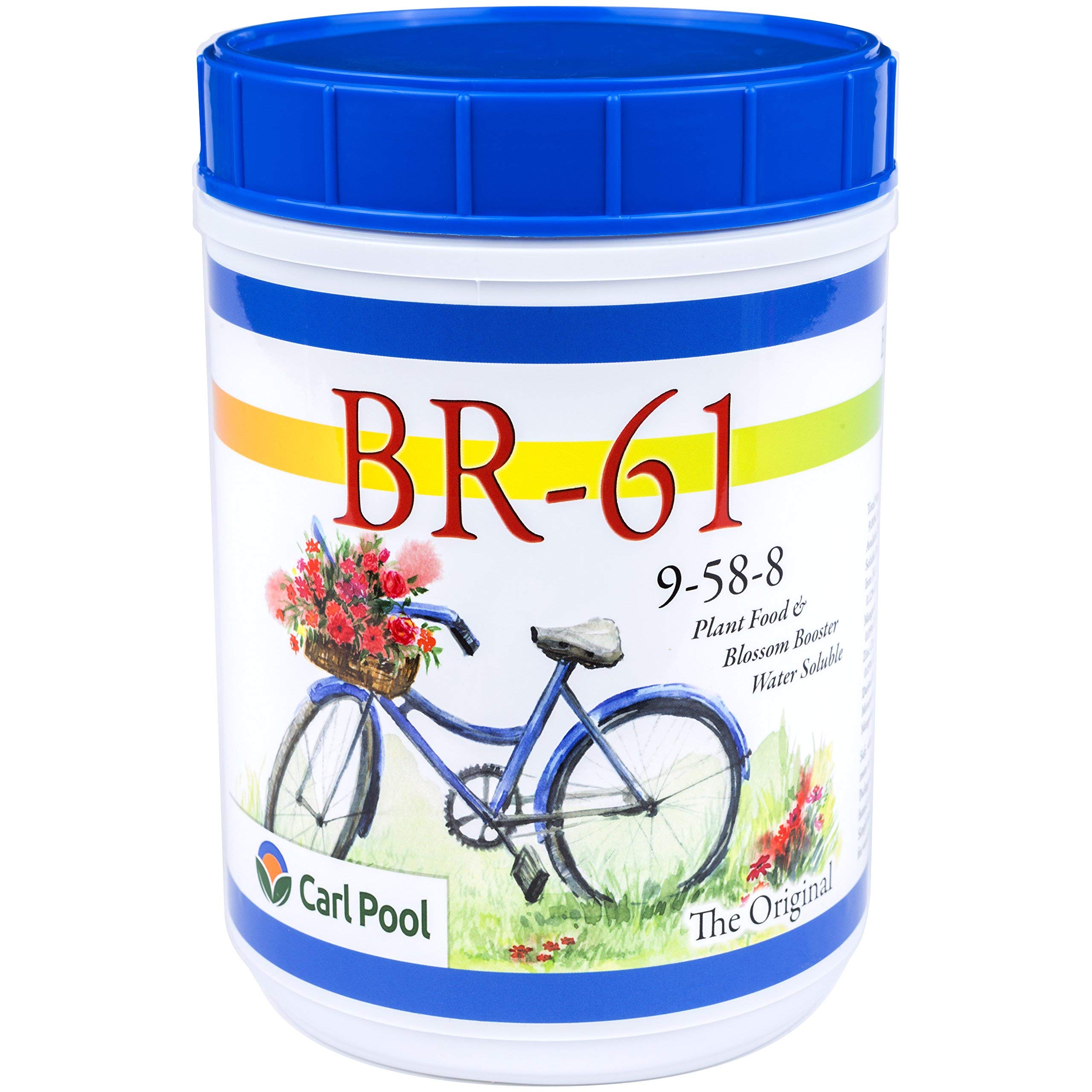
The Carl Pool BR-61 delivers an aggressive 9‑58‑8 NPK profile that is almost pure phosphorus by volume — exactly what a crape myrtle requires to shift energy from leaf production to flower formation. Mixed at one tablespoon per gallon, the powder dissolves fully and can be applied as a root drench or foliar feed. Regular users report that stubborn trees that have never bloomed begin setting buds within two weeks of the first application.
This formula works on any flowering plant, but its real strength on crape myrtles is how quickly it corrects a phosphorus deficiency. The three‑pound bag yields roughly 48 gallons of solution, enough to treat several mature trees across a full season. Experienced growers often alternate it with fish emulsion to avoid nutrient lockout while maintaining the high‑phosphorus trigger.
The powder format requires a measuring spoon and a watering can — there is no spray‑on convenience — and the container lacks a resealable pour spout, so storing it in a separate airtight jar prevents clumping. For the price per application, however, few products match its bloom‑forcing chemistry.
What works
- Extremely high phosphorus content forces immediate bud initiation.
- Mixes easily in water for precise root‑zone application.
- Cost‑effective over 48 gallons of finished solution.
What doesn’t
- Powder can clump if not stored in an airtight container.
- No pre‑measured packets — requires a tablespoon scoop.
2. Nelson NutriStar Crape Myrtle & All Flowering Trees 10‑15‑9
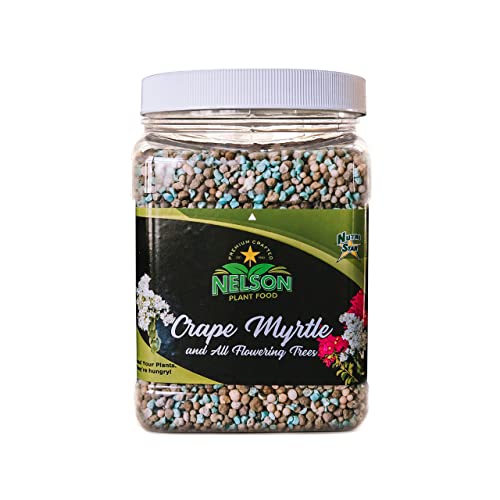
Nelson NutriStar is a granular slow‑release formula trusted by professional landscapers since 1986. The 10‑15‑9 NPK keeps nitrogen moderate while phosphorus and potassium support both bloom quantity and stem strength. Five different nitrogen sources provide a staggered release that feeds for up to four months from a single application, making it a set‑and‑forget option for busy gardeners.
The formula includes sulfur, copper, iron, manganese, and zinc — micronutrients that are especially valuable in alkaline soils where crape myrtles often show iron chlorosis. Users report that struggling orchid trees and older crape myrtles that had not bloomed in years produced heavy flower clusters after two spring applications. The two‑pound bag is compact but concentrates enough nutrients for five small trees or two large specimens.
Because it is a granular product, you need to scratch it into the top inch of soil around the drip line and water it in. Some users find the container size small relative to the price, but the concentration per ounce is higher than many bagged fertilizers. If you have multiple flowering trees, this is the most targeted blend available.
What works
- Four‑month slow release reduces reapplication work.
- Includes chelated micronutrients to prevent chlorosis.
- Proven track record on non‑blooming trees.
What doesn’t
- Small bag may require multiple units for a large yard.
- Granules need incorporation into soil for best activation.
3. TPS Nutrients Crepe Myrtle Fertilizer Liquid
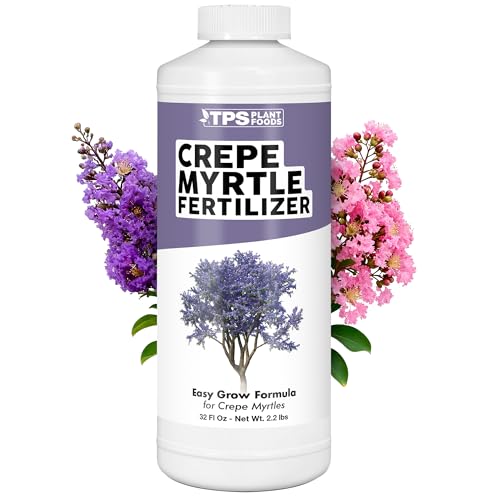
TPS Nutrients formulated this liquid specifically for crape myrtle trees, removing any guesswork about whether the NPK is appropriate. The 32‑ounce bottle mixes at a 1:10 ratio with water, and several verified buyers saw new flush growth within weeks on trees that had stalled after a freeze or transplant. The liquid format moves quickly into the root zone, making it ideal for container‑grown crape myrtles where granular products often wash out.
Gardeners who used it on young trees reported full foliage recovery after winter die‑back, and one Central Texas user noted that a nearly dead tree leafed out completely after two feedings. The formula is USA‑made and contains no fillers, though the manufacturer does not list a full NPK percentage on the label — users rely on the species‑targeted blend rather than a specific ratio.
The main limit is that liquid requires more frequent reapplication than granular. The bottle recommends feeding every two weeks during the growing season, which works well for attentive gardeners but may be demanding for those who want a single seasonal dose. Still, for emergency intervention or container care, this is the most direct option.
What works
- Species‑specific formula strips out all guesswork.
- Fast‑acting liquid ideal for freeze recovery.
- Large 32‑ounce concentrate lasts multiple seasons.
What doesn’t
- Requires bi‑weekly application schedule.
- Exact NPK percentages not disclosed on bottle.
4. Fertilome Tree and Shrub Food 19‑8‑10
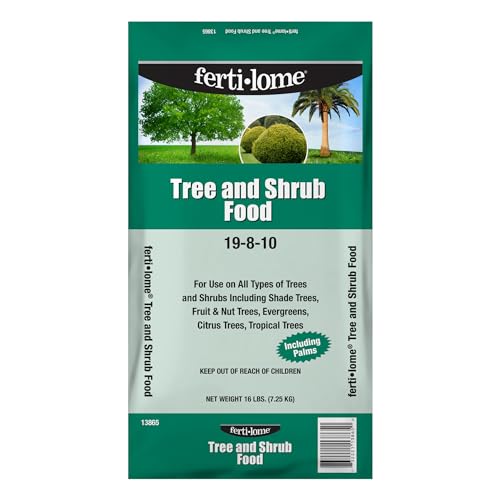
Fertilome’s 19‑8‑10 granular formula is a high‑nitrogen blend designed for general tree health rather than targeted bloom forcing, but it earns a spot here for growers managing mature crape myrtles that also need dense leaf canopies. The 16‑pound bag covers an entire property, and the balanced nutrient delivery supports root strength and disease resistance without the rapid‑release spikes of liquid products.
Landscape professionals recommend this for large specimen trees because the granules distribute easily around the drip line without digging. Users report “explosive new growth” on oaks and evergreens, and crape myrtle owners note that their trees filled in faster after winter pruning. The nitrogen is high enough that you should avoid over‑application — stick to the label rates to prevent excessive sucker growth.
This is not a bloom‑specific formula, so it works best as a spring base feed followed by a phosphorus‑heavy liquid booster in early summer. For pure vegetative recovery on a tree that was damaged or heavily pruned, the 19‑8‑10 ratio is unmatched in value per pound among the products reviewed here.
What works
- Massive 16‑pound bag for large properties.
- Promotes rapid vegetative regrowth after pruning.
- No digging required for application.
What doesn’t
- High nitrogen can delay flowering if used alone.
- Not formulated specifically for crape myrtle needs.
5. Great Big Roses and Flowers Liquid Fertilizer Booster
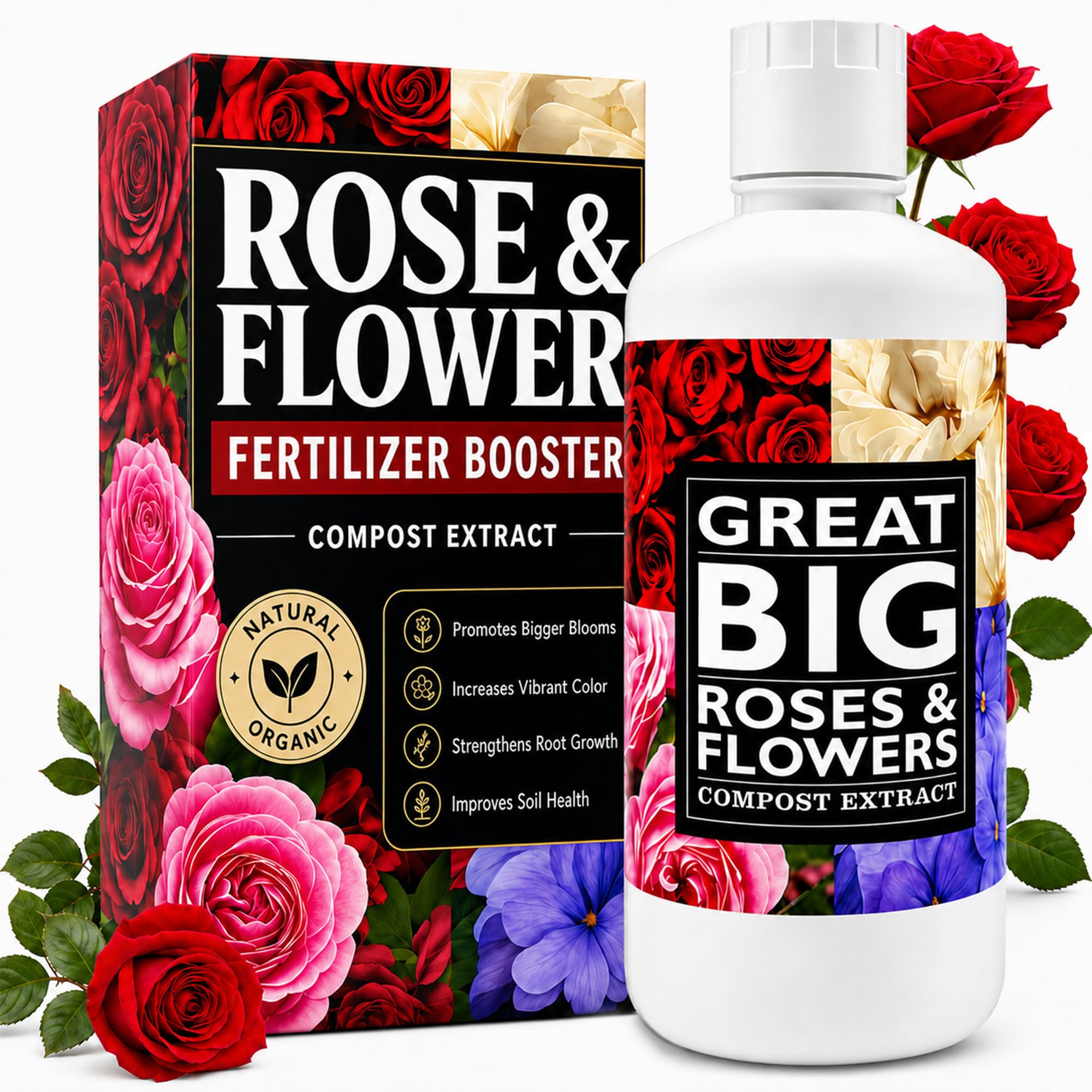
This liquid booster works differently from conventional fertilizers: instead of feeding the tree directly, it supplies humic acids, seaweed, and over 70 chelated trace minerals that activate dormant nutrients already in the soil. For crape myrtles planted in tired or compacted ground, the result is a sudden flush of blooms on trees that had been green but flowerless for years.
The 32‑ounce bottle makes 8 gallons of finished solution when mixed at 4 ounces per gallon. Users report seeing results within two weeks on roses and hydrangeas, and the same mechanism translates to crape myrtles by unlocking bound phosphorus and potassium in the root zone. It works alongside any granular fertilizer you already use, effectively making your existing feed more available to the tree.
The biggest complaint is the bottle design — the wide mouth makes measuring into a watering can prone to spillage. Given the concentration, every lost drop represents wasted value. If you can tolerate a funnel or steady pouring hand, this activator delivers soil‑level improvements that no straight NPK product can match.
What works
- Unlocks existing soil nutrients for stronger bloom response.
- Humic acid improves root‑zone biology long‑term.
- Works as a supplement to any fertilizer regimen.
What doesn’t
- Bottle opening makes measuring difficult without spills.
- Not a standalone NPK source — must be paired with base feed.
6. FoxFarm Happy Frog All Purpose Fertilizer

FoxFarm Happy Frog is an OMRI‑listed organic granular fertilizer with a gentle 6‑4‑5 NPK that builds soil biology over time. It contains beneficial soil microbes and mycorrhizal fungi that form symbiotic relationships with crape myrtle roots, improving nutrient and water uptake without the risk of salt burn. The four‑pound bag is compact but concentrated enough for several trees when used as a top‑dress.
Users transitioning away from synthetic fertilizers appreciate the slow, steady response — plants green up within a week, but the feeding lasts about a month. The organic matter also improves soil texture, which is especially beneficial for crape myrtles growing in clay or sandy ground where nutrient retention is poor. The smell is noticeably earthy (some call it barn‑like), so indoor application is not recommended.
The NPK ratio is lower than any of the bloom‑specific products here, so Happy Frog works best as a spring and fall maintenance feed rather than a mid‑season bloom trigger. Pair it with a liquid phosphorus booster during bud set for the best of both worlds: long‑term soil health and an immediate flower push.
What works
- Organic certification with active soil microbes.
- Safe for all tree sizes — no risk of burn.
- Improves long‑term soil structure and biology.
What doesn’t
- Low NPK requires more frequent application.
- Strong organic odor can be unpleasant.
7. OceanSolution 2‑0‑3 All Natural Liquid Fertilizer
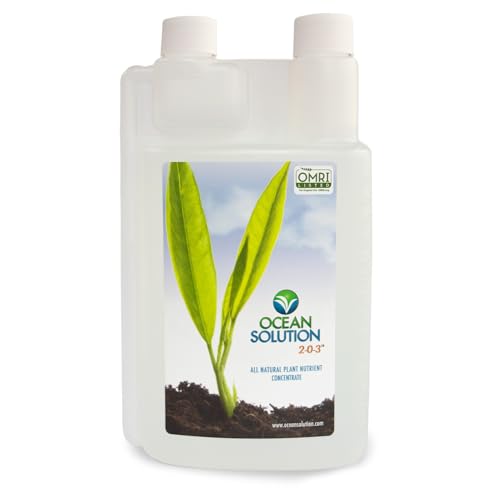
OceanSolution provides 90+ ocean‑derived minerals in a 2‑0‑3 solution that is nearly phosphorus‑free by design. This may seem counterintuitive for a crape myrtle, but it serves a specific role: correcting micronutrient deficiencies that prevent the tree from using the phosphorus already in the soil. If your crape myrtle shows yellowing between leaf veins or stunted growth despite regular feeding, this product addresses the underlying mineral imbalance.
The liquid is odorless, stain‑free, and super‑concentrated — one ounce per gallon makes 32 gallons of finished solution. The ionic formula allows immediate root absorption without microbial breakdown, so results appear within days. It is OMRI listed and suitable for organic gardens where synthetic supplements are restricted.
Because it contains almost no phosphorus or potassium, OceanSolution cannot serve as a primary bloom fertilizer. It functions as a mineral tonic that should be applied in early spring before the main NPK feed, or used as a foliar spray during the growing season to correct trace‑element lockout. For gardeners managing alkaline or heavily leached soils, it is an essential supporting tool.
What works
- Extremely concentrated — 32 gallons of solution per bottle.
- Odorless and mess‑free application.
- Corrects micronutrient deficiencies that block blooming.
What doesn’t
- Very low NPK cannot replace a bloom fertilizer.
- Must be paired with a phosphorus source for flower production.
Hardware & Specs Guide
NPK Ratio — The Three Numbers
The NPK ratio on a fertilizer bag stands for nitrogen (N), phosphorus (P), and potassium (K). For crape myrtles, phosphorus is the critical driver of flower initiation — look for a middle number of at least 8 to 15. Nitrogen should stay below 12 to avoid forcing leafy growth at the expense of buds. Potassium supports wood strength and disease tolerance, so a K value of 8–10 is ideal.
Application Timing & Frequency
Granular slow‑release formulas should be applied in early spring as new growth emerges and again in midsummer if your tree shows signs of fading bloom production. Liquid fertilizers work faster and are best applied every two to four weeks during the growing season, but stop feeding six weeks before the first expected frost to allow the tree to enter dormancy naturally.
Mixing Ratios for Liquid Concentrates
Liquid fertilizers vary dramatically in concentration. A ratio of 1 tablespoon per gallon (like Carl Pool BR‑61) is typical for high‑phosphorus powders, while some organic concentrates require only 1 ounce per gallon. Always measure carefully — over‑concentrated liquid can burn root tips, especially in container‑grown crape myrtles where the root zone is confined.
pH and Soil Interaction
Crape myrtles prefer slightly acidic soil with a pH between 5.0 and 6.5. In high‑pH soils, iron and manganese become unavailable even if they are present in the fertilizer. Products that contain sulfur, chelated iron, or humic acid help buffer alkaline conditions and keep micronutrients plant‑available. A soil test before feeding can save you from applying the wrong formula.
FAQ
Can I use a lawn fertilizer on my crape myrtle?
How often should I fertilize a mature crape myrtle?
Will slow‑release granules work better than liquid feed?
What should I do if my crape myrtle has yellow leaves?
Final Thoughts: The Verdict
For most gardeners, the best crape myrtle fertilizer winner is the Carl Pool BR‑61 because its 9‑58‑8 ratio delivers the targeted phosphorus punch that forces even stubborn trees into heavy bloom. If you prefer a granular slow‑release product with built‑in micronutrients, grab the Nelson NutriStar 10‑15‑9. And for reviving a tree after winter damage or correcting soil deficiencies, nothing beats the TPS Nutrients Crepe Myrtle Liquid for fast, species‑specific results.