
A patch of crabgrass can spread fast, choking out your turf and ruining the look of a manicured lawn. Yanking it out by hand leaves half the root behind, and chemical sprays risk damage to surrounding grass. The right mechanical tool solves both problems cleanly.
I’m Rikta — the co-founder and writer behind Lawn Gear Lab. I spend hours researching and comparing the core specs of manual lawn tools, analyzing user feedback from hundreds of owners to find which designs consistently extract deep taproots, hold up in compacted soil, and save your body from unnecessary strain.
This guide cuts through the noise to deliver the most capable crabgrass removal tool options on the market, ranked by build quality, root-grabbing effectiveness, and real-world durability.
How To Choose The Best Crabgrass Removal Tool
Not every weeder handles crabgrass well. The plant’s root mat spreads laterally, so a tool must reach deep and close around the root mass without tearing the stem. Focus on these four factors to avoid buying a tool that only works on dandelions.
Claw Count and Geometry
A 4-claw head provides even pressure around the root, reducing the chance of breakage. Two-pronged heads often pierce through the root rather than clamping it. Look for serrated inner edges on the claws — they grip fibrous roots more securely than smooth steel.
Handle Length and Material
A handle between 43 and 52 inches lets you stand fully upright during extraction. Steel or aluminum shafts transfer force better than bamboo or wood, which can splinter or loosen at the joint after repeated twisting. Adjustable handles offer flexibility if multiple people use the tool.
Ejection Mechanism
Manual weed ejectors — either a sliding collar or a foot pedal — speed up workflow. Without one, you’ll spend extra time prying the root mass off the claws. A two-way ejection system (both hand lever and foot pedal) gives you options when your hands are dirty or gloved.
Foot Pedal Sturdiness
The pedal takes the full force of your body weight driving claws into soil. Plastic pedals crack over time, especially in dry or rocky ground. Reinforced metal pedals with a textured surface provide safe footing and longer service life.
Quick Comparison
On smaller screens, swipe sideways to see the full table.
| Model | Category | Best For | Key Spec | Amazon |
|---|---|---|---|---|
| Garden Weasel WeedPopper | Step & Twist | Fast extraction in dry soil | 2 serrated carbon-steel tines | Amazon |
| Grampa’s Weeder Original | 4-Claw Stand-Up | Taproot weeds in soft soil | 4-claw alloy steel head | Amazon |
| SOMOLUX 52″ | Long Reach | Tall users needing leverage | 3″ stainless steel claws | Amazon |
| Allsetool Weed Puller | Dual Eject | Fast cycle time on dense lawns | Dual-hand & foot weed eject | Amazon |
| RexWeed Stand Up Puller | Adjustable Handle | Shared household use | Handle range 32″ to 46″ | Amazon |
| Rocklin Stand Up Weeder | Full Steel | Heavy clay or rocky soils | 48″ hardened steel handle | Amazon |
| BellaJoyz Weed Puller | Bamboo Grip | Eco-conscious gardeners | Stainless steel 4-claw head | Amazon |
In‑Depth Reviews
1. Garden Weasel WeedPopper Step & Twist

The Garden Weasel uses a step-and-twist motion that drives two serrated carbon-steel tines deep into the soil. Unlike 4-claw designs that require centering the head over the weed, the step-twist method cuts a clean plug around the root mass, making it highly effective on crabgrass where roots spread horizontally just below the surface.
The 38.5-inch ergonomic handle puts the tines at a natural angle for leverage without needing to squat. Owners report it works well even in dry, compacted clay — a common failure point for stand-up pullers. The thumb-trigger weed eject lets you clear the tines without bending or touching the root plug.
A few users note that the foot pedal partially blocks the view of the tines on the first few uses, but after a short learning curve, the tool becomes intuitive. The all-metal construction includes zero plastic in the working assembly, and the lifetime warranty backs its durability.
What works
- Twist action grabs horizontal roots that claw tools miss
- Thumb eject clears each pull without bending
- Works well in dry and rocky soils
What doesn’t
- Foot pedal partially obscures tine placement
- Not designed for extremely small or fragile weeds
2. Grampa’s Weeder Original

Grampa’s Weeder has been in continuous production since 1913, and the current version retains the same functional geometry that made it a staple. The 45-inch bamboo handle feels warm in the hand and reduces vibrations during extraction, though it requires more care than metal handles to avoid moisture damage.
The 4-claw steel head is purpose-built for taproot weeds like dandelions and thistles. For crabgrass, which lacks a single deep taproot, the tool requires precise centering over the crown to get the full root ball. Owners consistently report success when the soil is damp — after rain or a thorough watering, the claws slide in cleanly.
There is no integrated weed eject mechanism, so you will need to tap the head against the ground or pull the root mass off manually. This is a minor slowdown during large patch work. The tool performs best in loamy or sandy soils; hard clay or rocky ground reduces its penetration depth significantly.
What works
- Timeless design with proven root-grabbing claw geometry
- Comfortable natural bamboo handle
- Lifetime guarantee from an American company
What doesn’t
- No weed ejection mechanism slows workflow
- Less effective in dry or hard-packed soil
3. SOMOLUX 52″ Stand-Up Weed Puller

The SOMOLUX 52-inch handle is the tallest in this roundup, giving taller users or those with limited mobility a distinct advantage. The 3-inch stainless steel claws feature serrated inner edges that grip fibrous roots more aggressively than smooth claws, reducing the chance the root slips free during extraction.
Assembly takes roughly two minutes with a supplied hex wrench. The aluminum alloy handle is lightweight but sturdy enough to transfer full body weight through the foot pedal. Owners note the tool excels on dandelions and thistles, and it handles crabgrass effectively when centered on the crown. The lever mechanism closes the claws without requiring manual clamp force.
Some users report the threaded joints can loosen during extended use, especially when twisting to free roots. A drop of thread-locking compound solves this. The tool is slightly heavier than competitors at just over 3 pounds, but the added weight contributes to soil penetration without needing to stomp as hard.
What works
- Extra-long 52-inch handle for tall users
- Serrated claws grip crabgrass roots firmly
- Fast assembly and lightweight feel for its height
What doesn’t
- Threaded joints may loosen with heavy twisting
- Not adjustable for different user heights
4. Allsetool Weed Puller with Dual Eject
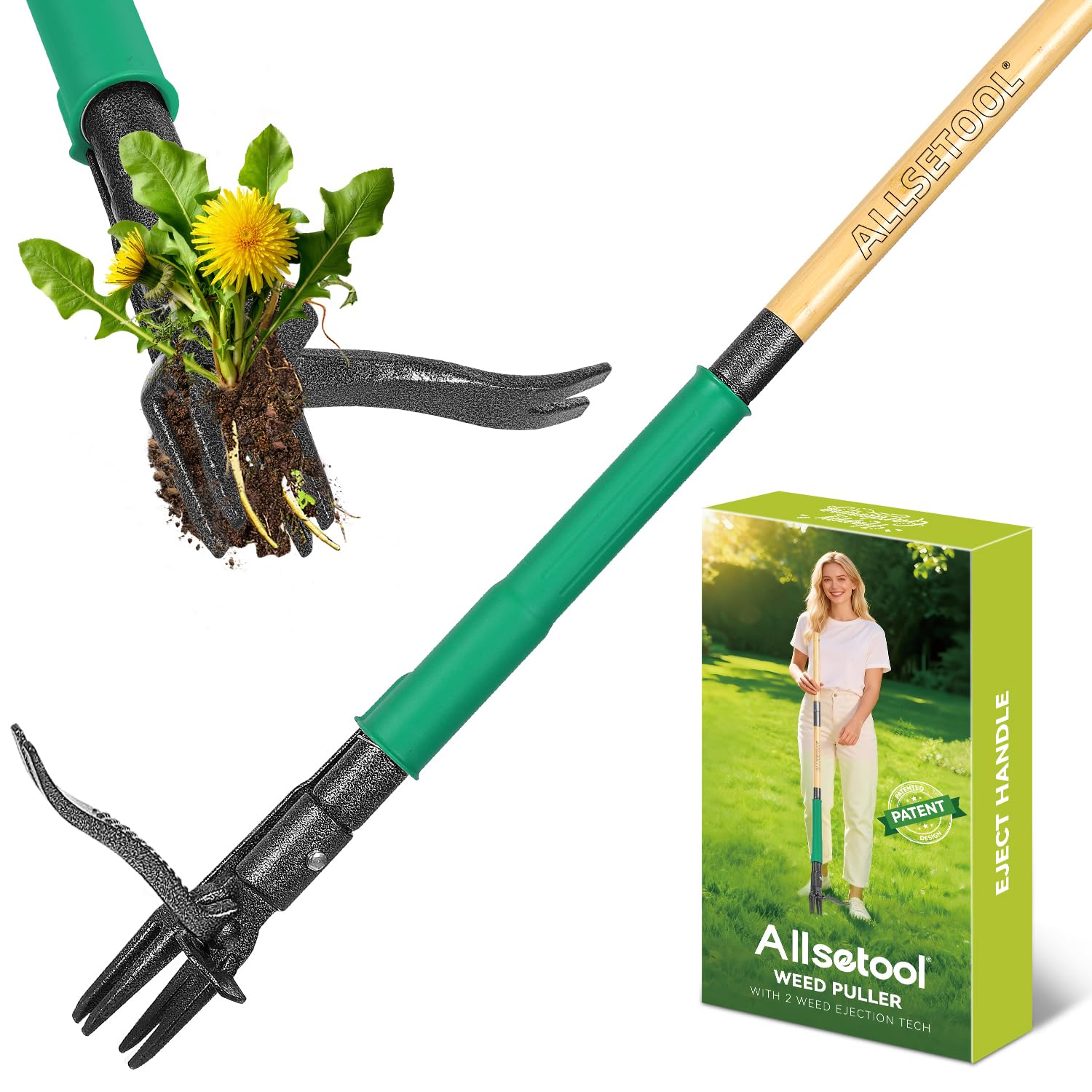
The Allsetool stands out with two independent ejection mechanisms: a hand-operated lever on the handle and a foot pedal near the claw head. This dual system means you can clear the weed without swapping your grip or bending down — a real time-saver when working a large patch of crabgrass.
The 43.7-inch handle provides solid leverage for most users between 5’4″ and 6’0″. The 4-claw head penetrates soft to moderately firm soil without excessive force, and the textured foot pedal prevents slipping even with wet boots. Owners frequently describe the tool as “addictive” because the eject mechanism makes each pull feel snappy and complete.
A small number of reviews mention the release mechanism occasionally sticks, requiring a second press to fully clear the claws. This seems to occur more often with fibrous weed mats rather than single taproots. The tool arrives in a colorful gift-ready box, making it a practical choice for housewarming or gardener presents.
What works
- Two ejection methods speed up repeat pulls
- Textured metal foot pedal provides safe footing
- Sturdy build for a mid-range price
What doesn’t
- Release mechanism can stick on fibrous root mats
- Handle not adjustable for varying heights
5. RexWeed Stand Up Weed Puller Tool
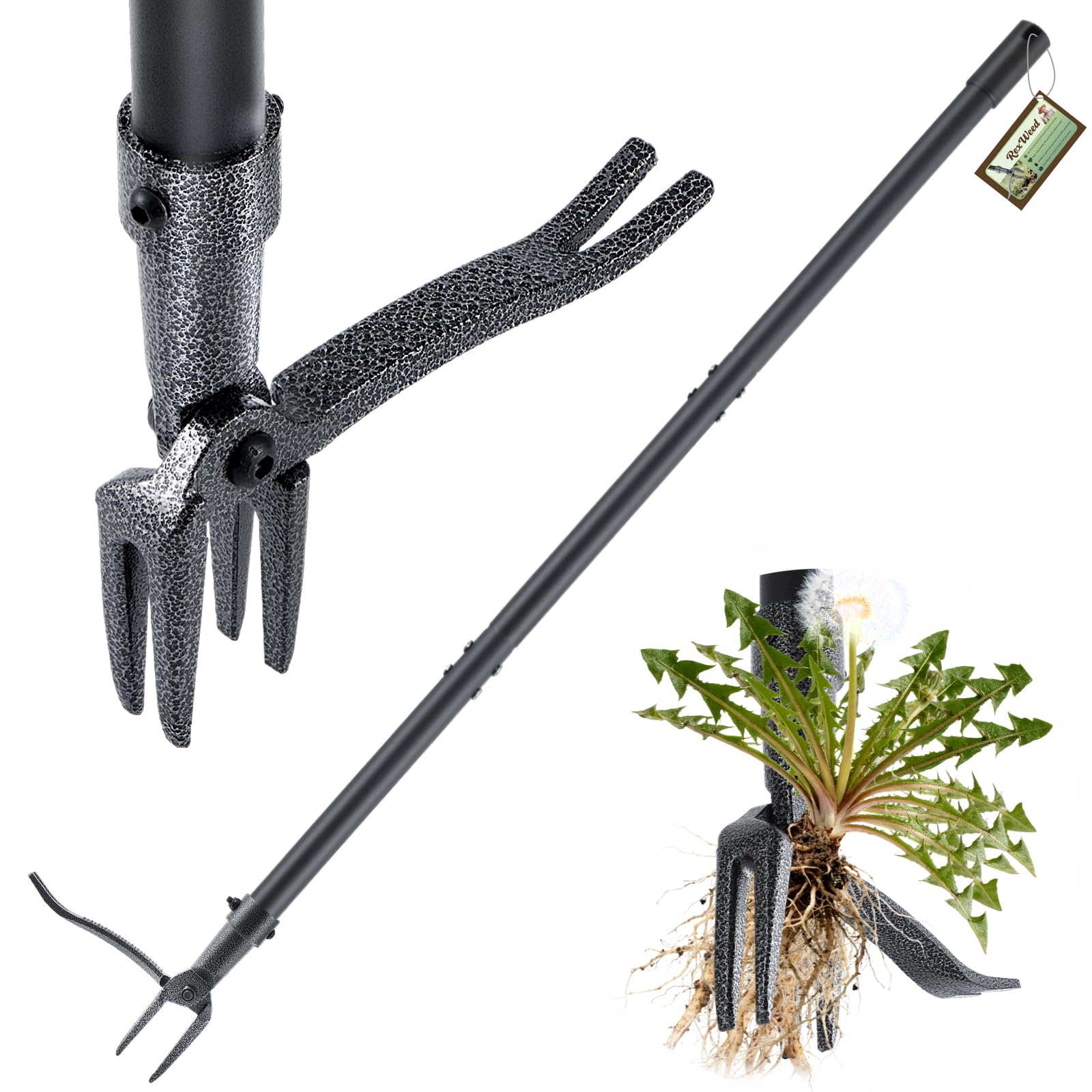
The RexWeed puller covers a wide range of user heights with its adjustable telescoping handle that extends from 32 to 46 inches. This makes it a practical choice for households where multiple people will use the same tool, or for a single user who wants to switch between standing and seated weeding positions.
The 4-claw head is made from reinforced steel with sharp serrated edges. Owners report a 95% root-retrieval success rate when the tool is centered over the weed crown, particularly for dandelions and crabgrass in damp soil. The foot pedal is wide enough to accommodate a full boot, distributing force evenly to prevent the tool from tipping sideways.
A few reviews note the clamping mechanism holds the root securely, but the tool does not include a weed eject feature — you must tap or pull the root off manually. While this slows the workflow slightly, the adjustable handle and all-metal construction at this price point make it a strong value option for casual lawn maintenance.
What works
- Telescoping handle fits a wide range of heights
- High root-retrieval rate on dandelions and crabgrass
- All-steel construction resists bending in compacted soil
What doesn’t
- No weed ejection mechanism
- Slightly heavier than non-adjustable models
6. Rocklin Stand Up Weed Puller Tool
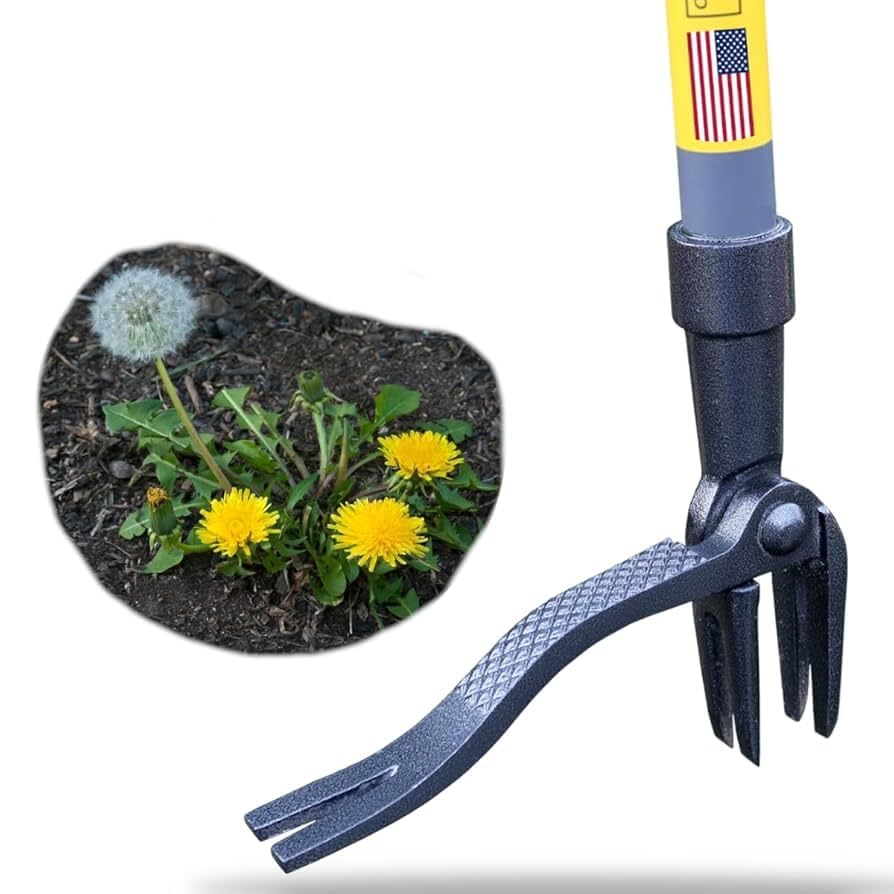
The Rocklin weeder is built around a 48-inch one-piece handle made from hardened alloy steel with precision-threaded sections that resist loosening during twisting. The rhino-coated head resists rust and soil adhesion, which helps the 4 claws penetrate deeper with less friction in heavy clay or rocky soil.
The tool weighs 1.34 kilograms, which gives it a planted feel during the step-down motion. Owners consistently confirm the claws drive four inches into the ground and close around the taproot in a single motion. The cantilever claw design is particularly effective on crabgrass — the claws grip the lateral root mass rather than slipping off the fibrous surface.
There is no automatic weed eject, so you will need to use your fingers or a tap to clear the claws. A few users also recommend applying thread-locking compound to the handle joints to prevent loosening over time. The Rocklin is a straightforward, no-nonsense tool that prioritizes durability over convenience features.
What works
- Hardened steel handle resists bending in tough soil
- Rhino coating prevents rust and soil buildup
- Cantilever claws grip lateral root mats effectively
What doesn’t
- No weed ejection feature slows repeat pulls
- Handle joints can loosen without thread-locker
7. BellaJoyz Weed Puller with Bamboo Handle
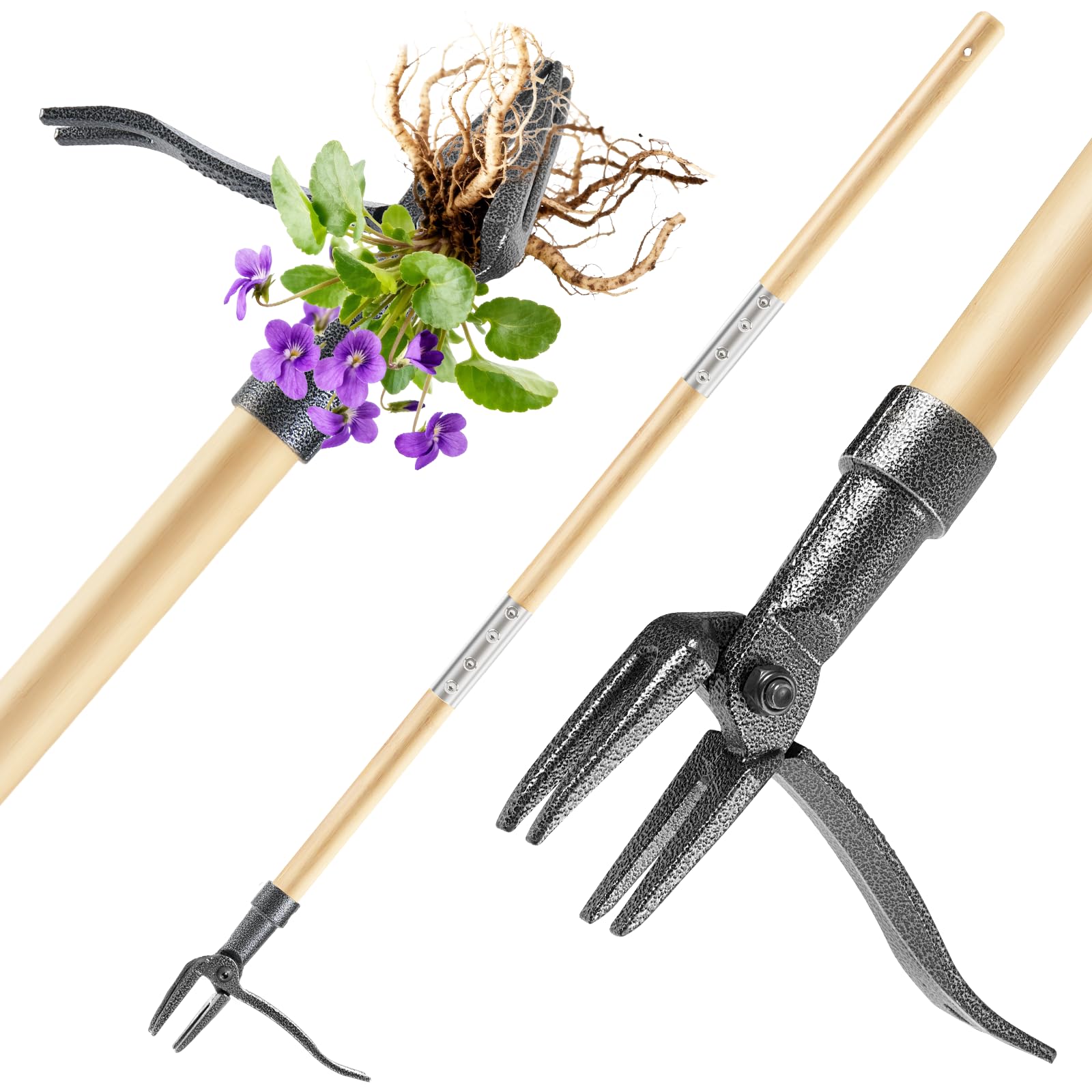
The BellaJoyz weeder combines a stainless steel 4-claw head with a 46-inch bamboo handle for an eco-friendly, lightweight package. The claws are rust-resistant and penetrate soft to moderately firm soil with ease, making the tool a good match for regular lawn maintenance in loamy or well-watered turf.
Owners highlight the tool’s lightweight design — 2.92 pounds — which reduces fatigue during extended sessions. The bamboo handle provides a comfortable, non-slip grip even when hands are sweaty or gloved. The three-section design disassembles for compact storage, and hanging holes allow wall mounting.
The tool performs best on taproot weeds in damp soil. In dry or hard-packed ground, the stainless steel claws require more downward force and may not achieve full depth. There is no weed ejection mechanism, and the bamboo handle can be more susceptible to moisture damage if left outdoors. For gardeners prioritizing sustainable materials and light weight, this is a solid entry-level choice.
What works
- Lightweight design reduces fatigue on long sessions
- Rust-resistant stainless steel claws
- Disassembles for compact storage
What doesn’t
- No weed ejection mechanism
- Best performance limited to damp, soft soil
Hardware & Specs Guide
Claw Depth vs. Root Spread
Crabgrass roots can spread laterally up to six inches under the soil surface. A 4-claw tool that penetrates at least three inches will grab the majority of the root mass. Tools with shorter claws (two inches or less) often leave the lower portion of the root behind, allowing regrowth within two weeks.
Threaded vs. Press-Fit Joints
Sectional handles use either threaded steel joints or press-fit friction collars. Threaded joints provide tighter long-term stability but can loosen with repeated twisting — a common issue noted by owners of multi-section tools. A small drop of thread-locking compound on assembly eliminates this problem entirely.
Handle Coatings and Grip
Bamboo handles absorb moisture and can swell or crack if left in rain. Steel and aluminum handles often include a powder coating or rubberized grip to resist corrosion and provide cushioning. The grip texture matters when extracting weeds from hard soil — smooth handles require more grip force, leading to hand fatigue.
Eject Mechanism Types
Sliding-collar ejectors push the root off the claws as you pull back the lever. Foot-pedal ejectors work similarly but allow hands-free clearing. Both reduce the time between pulls by roughly 50% compared to manual removal, making them essential for treating large crabgrass infestations in a single session.
FAQ
Can a stand-up weeder remove crabgrass without the root breaking?
What is the ideal handle length for crabgrass removal?
Final Thoughts: The Verdict
For most gardeners, the crabgrass removal tool winner is the Garden Weasel WeedPopper because its step-twist action grabs lateral root mats that standard claw tools miss. If you want a classic design with a comfortable bamboo handle, grab the Grampa’s Weeder Original. And for treating large patches where speed matters, nothing beats the Allsetool with dual ejection.