
Specs are compiled from manufacturer listings and verified buyer reviews and can change over time — please confirm the key details on the product page before buying.
Nothing is more frustrating than nursing a garden all summer, only to lose your plants during the first hard freeze. The right winter cover acts like a warm blanket, trapping ground heat while blocking cold winds — and the thickness of the fabric (measured in ounces per square yard, or oz/yd²) decides whether your plants survive a 25°F night or a 15°F blizzard. We sorted through six options, comparing their actual fabric weights, coverage areas, and real customer survival reports to give you a straight answer.
I’m Rikta — the founder and writer behind Lawn Gear Lab. This guide is built by comparing the manufacturers’ published specifications and the patterns across verified customer reviews, so you get each pick’s real strengths and trade-offs instead of marketing spin.
Whether you are protecting a single rose bush or a full vegetable patch, the right cover for plants for winter depends on your local low temperatures, the size of your plants, and how much wind you face — we break down each option so you can choose with confidence.
Quick Picks
- Gardzen 5-Pack Plant Cover Drawstring Tree Cover — Heavyweight Protector
- AlpineReach Plant Covers Frost & Sun Protection 10 x 30 ft — Freeze-Fighter
- Garutom Plant Covers Freeze Protection 10ft x 33ft — All-Season Performer
- Plant Freeze Protection Cover, 10x30ft — Best Value Sheet
- YFFSIDMY Plant Covers Freeze Protection 10’x20′ — Budget Champion
- Amazon Basics Plant Covers for Frost Protection, 10 x 30 ft — Big Sheet, Small Budget
How To Choose The Best Cover For Plants For Winter
Buying a winter plant cover is simple once you know what matters. Ignore the marketing phrases and focus on three measurable things: the fabric’s weight per square yard, the total square footage of coverage, and whether it includes a drawstring or needs separate anchors. Lighter covers (0.9 oz/yd²) are fine for light frosts down to about 28°F, while heavier ones (1.1 oz/yd² and up) handle temperatures in the low 20s with more confidence.
Fabric Weight is Your Primary Shield
The single most useful spec on any winter plant cover is the ounces per square yard (oz/sq.yd. or oz/yd²). A 0.9 oz/yd² fabric is lightweight and lets through about 85% of sunlight, which is great for row covers. But a 1.1 oz/yd² or 1.2 oz/yd² material traps more ground heat and provides noticeably better protection during a hard freeze. For reference, the Garutom cover uses a 1.1 oz/yd² fabric, while the AlpineReach cover is 1.2 oz/yd² — every tenth of an ounce adds a measurable margin of frost defense.
Coverage Size vs. Shape of Your Garden
Measure your garden beds before you buy. A 10 x 30-foot sheet covers 300 square feet, which is a lot of ground — but if you have a single tall shrub, that same sheet is awkward to drape and needs heavy rocks or stakes to hold down. For individual trees or bushes, a fitted cover with a drawstring (like the Gardzen pack of 5) is far easier to use. Buy a large sheet for rows of vegetables, and buy bag-style covers for isolated shrubs and small trees.
Breathability and Light Penetration
Plants still need to breathe and get light even in winter. All the covers here use non-woven polypropylene fabric that lets air, moisture, and sunlight pass through. That means you do not have to remove the cover every sunny day — the plant gets what it needs while staying protected from the cold at night. If a product lists “85% light transmission” (like the Garutom cover), that number tells you exactly how much sunlight reaches the leaves underneath.
Quick Comparison
| Model | Best For | Fabric Weight | Coverage Size | Item Weight | Amazon |
|---|---|---|---|---|---|
| Gardzen 5-Pack Drawstring | Individual shrubs & trees | 2.06 oz/yd² | 31″ x 40″ each (5-pack) | 1.39 lbs (total) | Amazon |
| AlpineReach 10 x 30 ft | Hard freezes & large beds | 1.2 oz/yd² | 300 sq ft | 2.46 lbs | Amazon |
| Garutom 10 ft x 33 ft | All-season row covers | 1.1 oz/yd² | 330 sq ft | 15.7 oz | Amazon |
| Plant Freeze Protection 10×30 ft | General frost defense | 0.9 oz/yd² | 300 sq ft | 1.39 lbs | Amazon |
| YFFSIDMY 10’x20′ | Budget wide coverage | 0.9 oz/yd² | 200 sq ft | 1.26 lbs | Amazon |
| Amazon Basics 10 x 30 ft | Value large sheet | 30 g/sqm (0.9 oz/yd²) | 300 sq ft | 2.35 lbs | Amazon |
In‑Depth Reviews
1. Gardzen 5-Pack Plant Cover Drawstring Tree Cover
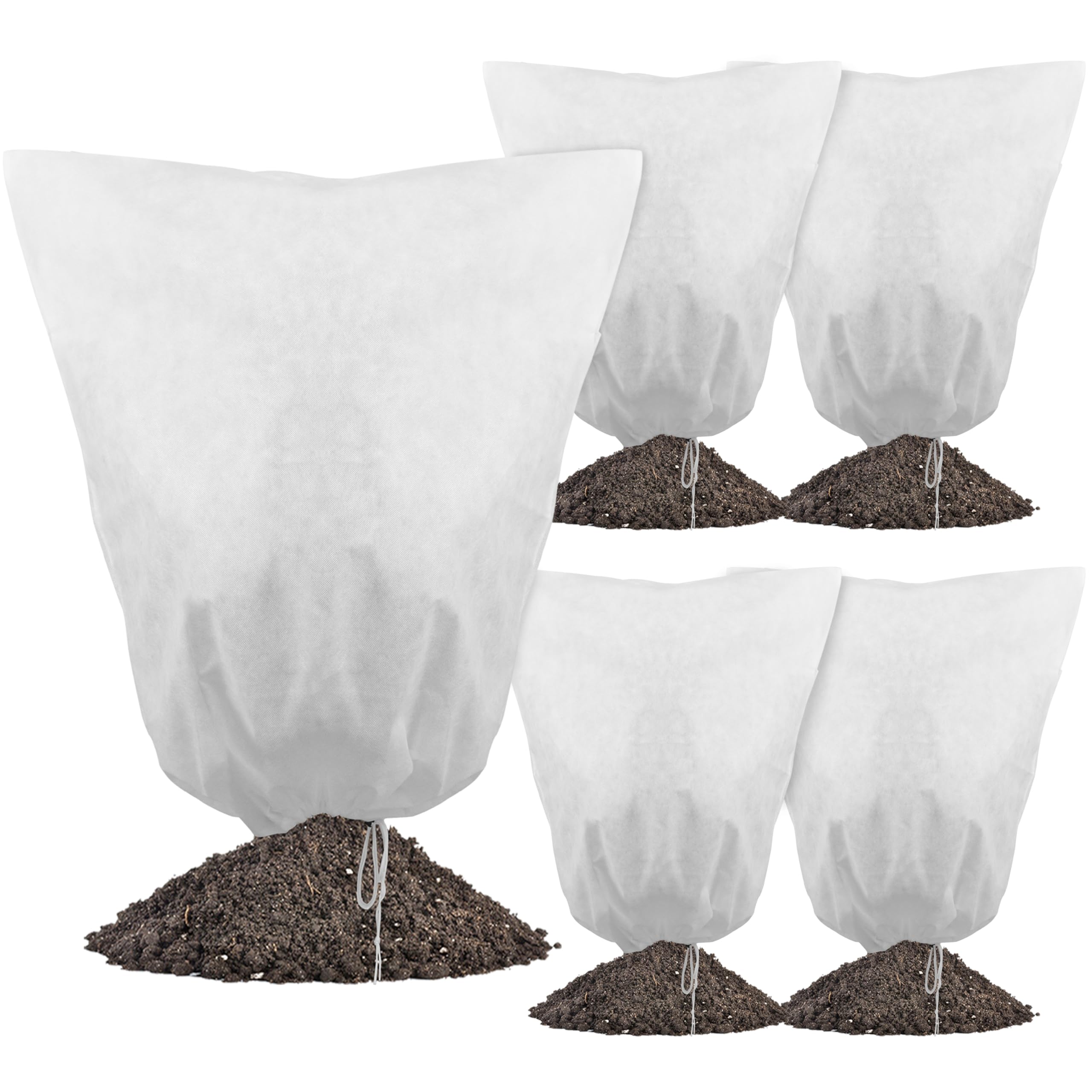
The thickest fabric in this roundup, designed to wrap individual shrubs like a custom winter coat.
At 2.06 oz/yd², this Gardzen fabric is heavier than the other covers on this list, which range from 0.9 to 1.2 oz/yd² — a major advantage when temperatures drop well below freezing. The non-woven polyester material is breathable yet waterproof, meaning it traps heat while still letting sunlight reach the leaves. Unlike the large sheets that flap in the wind, each of these five covers uses a drawstring at the base: you slip it over the plant and cinch it tight around the stem. Buyers report using them for rose bushes, baby trees, and hanging baskets with no fuss. Unlike the YFFSIDMY sheet that one reviewer noted “the windy made it a bit difficult as it kept getting caught on the branches,” these bag-style covers eliminate that problem entirely.
The 31″ x 40″ size fits a medium-sized shrub, but if you are covering a wide garden bed, you will need multiple packs or a large sheet instead. One long-time user mentioned that these covers have lasted a full year outside with no disintegration, which is a better durability track record than some thinner white covers they had tried before. They work best for temps “just below freezing,” as one buyer mentioned, but you may need an extra layer for single-digit nights.
class-leading fabric density: You will not find a heavier consumer-grade cover than 2.06 oz/yd² in this price range — that thickness translates directly into more reliable frost protection.
The one trade-off: Each cover fits one plant only, so you need the 5-pack (or multiple packs) for a full garden row.
Reach for this if: you have a few prized shrubs, small trees, or rose bushes you want individually wrapped and ready in seconds.
Look elsewhere if: you need to cover a 200-square-foot vegetable patch with one piece of fabric rather than multiple bags.
2. AlpineReach Plant Covers Frost & Sun Protection 10 x 30 ft
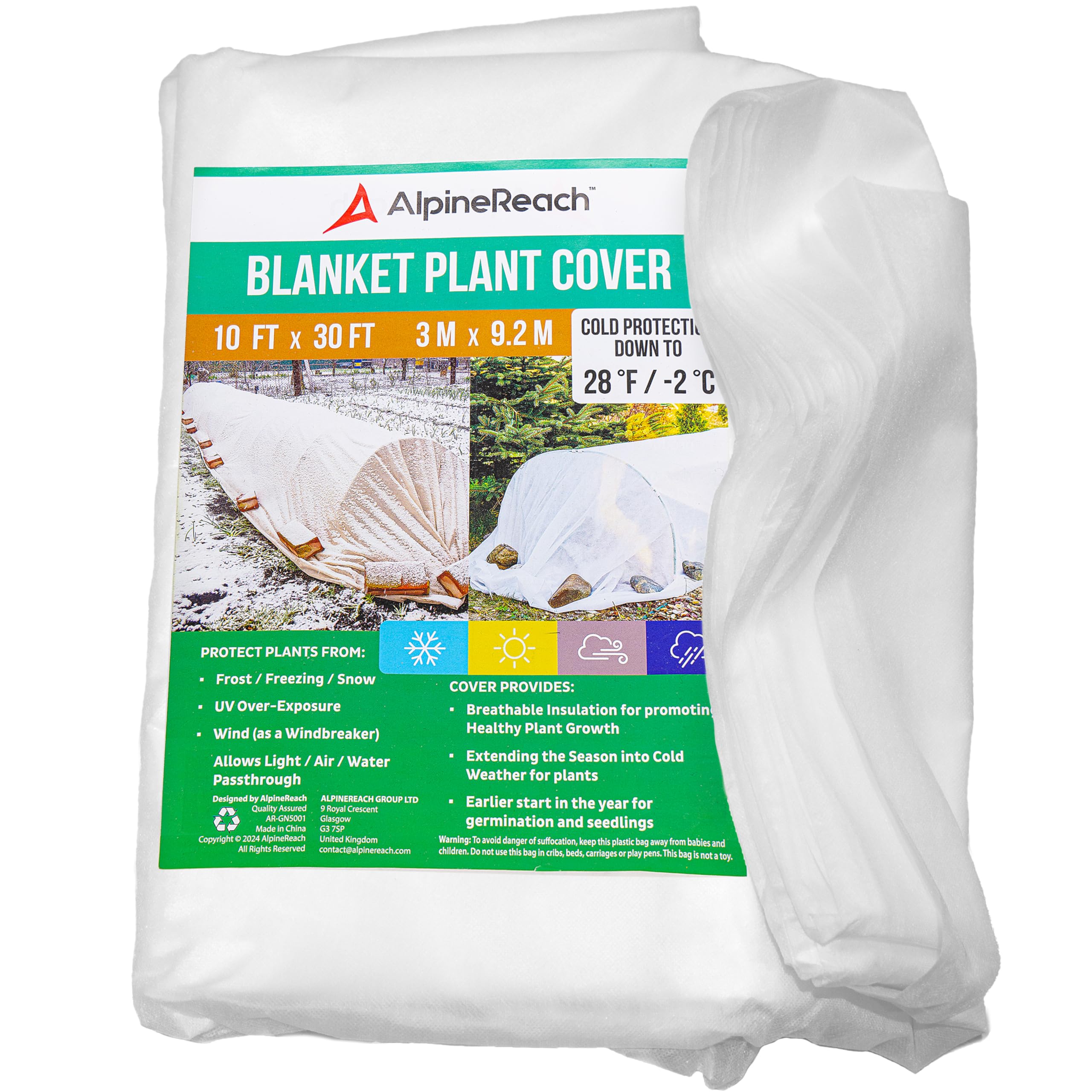
The heaviest large-sheet cover here, purpose-built for the hardest winter freezes.
With a fabric weight of 1.2 oz/yd², the AlpineReach sheet is the thickest option among the large rectangular covers — a noticeable step up from the 0.9 oz/yd² sheets that dominate the budget tier. This thickness translates directly into real-world survival: one buyer in Texas reported it “survived single-digit freeze” and saved their Indian Hawthorns. The cover lets light, air, and water through, so you do not have to pull it off during a warm winter day. At 2.46 pounds, it is the heaviest sheet in the lineup — which is a good thing for staying put in wind, but a minor inconvenience during setup.
Buyers also note it works well as a windbreaker in desert conditions, and another reviewer said it protected frost-sensitive squash after an early spring planting. The clear trade-off versus the Gardzen is that the AlpineReach is a single large sheet — great for rows and beds, but less convenient for a single tall shrub. One critical reviewer reported that after two weeks of April sun, their unit disintegrated, so you will want to store it out of direct UV when not in use. For most gardeners, this is the best balance of weight, coverage size, and freeze protection available in a sheet format.
What stands out
- Thickest large-sheet fabric at 1.2 oz/yd² for harder freezes
- Single-digit freeze survival in real buyer reports
- Breathable design works for cold, wind, and UV protection
What to watch for
- One report of fabric disintegrating after prolonged sun exposure
- No drawstring — needs stakes, rocks, or soil to secure edges
Best for: gardeners who face real hard freezes (teens and single digits) and need a large sheet to cover multiple beds in one go.
Not ideal for: anyone wanting a fitted cover with a drawstring or a multi-pack for individual trees.
3. Garutom Plant Covers Freeze Protection 10ft x 33ft

A 1.1 oz/yd² frost cloth that doubles as a summer shade cover, stretching 33 feet long for the biggest gardens.
The Garutom cover splits the difference between the lightweight 0.9 oz/yd² sheets and the heavy 1.2 oz/yd² AlpineReach. At 1.1 oz/yd², it is a noticeable step up in density without being bulky. The 10 x 33-foot size (330 square feet) is the longest single sheet in this lineup, giving you an extra three feet of coverage compared to the 30-foot options. It transmits 85% of available light, so your plants keep photosynthesizing even under the blanket. Owners mention that when “temps got into low 20s and the plants made it,” which matches the survival data from other hard-freeze reports.
At just 15.7 ounces, this is the lightest premium sheet in terms of shipping weight, which makes it easy to unfold and reposition. Buyers also use it as a summer shade cloth and a barrier against birds and insects — it is genuinely multi-season. Unlike the Amazon Basics cover at 2.35 pounds versus the Garutom at 15.7 ounces, the Garutom is easier to drape over delicate branches without snapping them. The main limitation is the same as any sheet-style cover: you still need rocks or stakes to secure it on a windy day.
balance weight: 1.1 oz/yd² is thick enough for hard frosts but light enough for daily handling — the most versatile fabric density in the group.
The catch: You have to buy garden staples or hoops separately, as the cover comes with no anchoring hardware.
Grab this if: you want one cover that works for winter freezes, spring shade, and summer insect barriers across a large garden area.
skip it if: you prefer a multi-pack of fitted covers for individual plants rather than a single oversized sheet.
4. Plant Freeze Protection Cover, 10x30ft
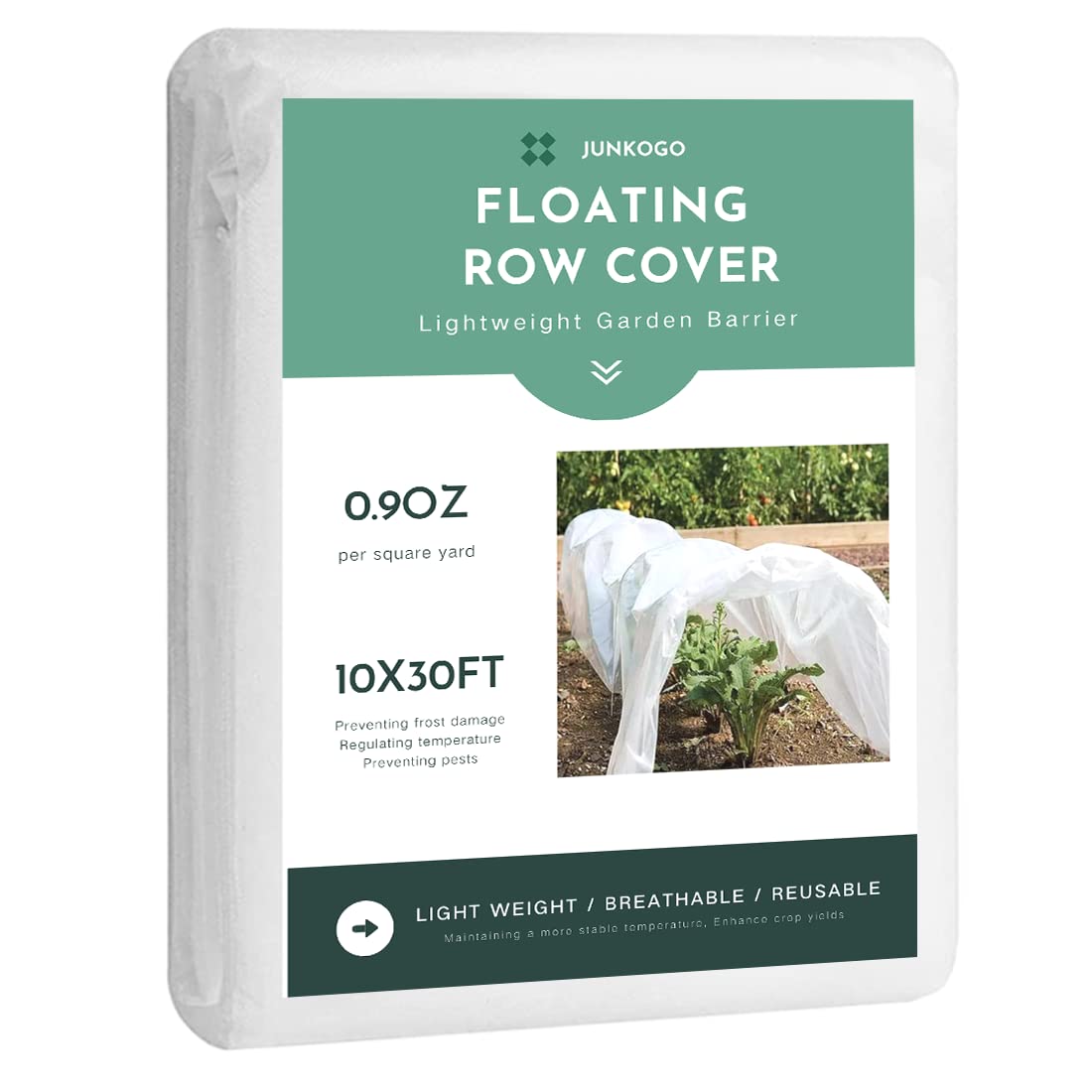
A reliable 0.9 oz/yd² sheet that delivers exactly what it promises for moderate freezes down to the mid-20s.
This 10×30-foot cover uses a 0.9 oz/yd² non-woven fabric — the standard weight for light-to-moderate frost protection. A buyer in Virginia reported using it to cover eucalyptus plants all winter, and “everything is alive – nothing was damaged by the frost.” The fabric is breathable, so you can leave it on for days at a time without worrying about suffocating your plants, and it lets sunlight and moisture through. At 1.39 pounds versus the AlpineReach sheet at 2.46 pounds, it is easier to handle but less dense for hard freezes.
Another reviewer confirmed it “protected strawberries through 25-28°F freezes; all fruit, blooms, plants survived.” That matches the intended performance: this cover is perfect for typical winter frosts in the upper 20s, but if your area regularly sees low teens or single digits, you will want a heavier option like the AlpineReach or Garutom. The package dimensions (12.24 x 9.84 x 1.97 inches) are also more compact than the YFFSIDMY package at 14.21 x 10.98 x 1.42 inches, which is a bit more awkward to store.
Why it works
- Proven survival through 25-28°F freezes in buyer reports
- Breathable fabric lets light, air, and water through
- Compact storage size
What it lacks
- 0.9 oz/yd² weight is too light for hard freezes (teens and below)
- No drawstring or anchoring system included
Best for: spring and fall frost protection when temperatures stay above the mid-20s, and for gardeners on a budget who need 300 sq ft of coverage.
Not the pick for: deep-winter climates that hit the teens or single digits regularly.
5. YFFSIDMY Plant Covers Freeze Protection 10’x20′

The most affordable way to cover 200 square feet of garden, though it demands careful anchoring in wind.
For the lowest cost per square foot, the YFFSIDMY 10’x20′ cover delivers standard 0.9 oz/yd² protection at a very accessible price. It is made from UV-stabilized polypropylene and is breathable, so your plants get air and light while staying shielded from frost. At 1.26 pounds versus the Amazon Basics cover at 2.35 pounds, it is the lightest sheet in the group, which makes it easy to unfold but also less substantial against strong winds. One owner reported: “The windy made it a bit difficult as it kept getting caught on the branches.” You will need bricks, stakes, or rocks handy to keep this one pinned down.
Buyers in Houston reported it “works as intended, true to size, durable against wind/dogs/ice/rain,” though they noted it needs bricks to hold down in a hard freeze. The 200-square-foot size is smaller than the 300-square-foot options, so if you have a large garden, you might need two. That said, it is big enough for a substantial row of tomatoes or a raised bed, and it can be cut with scissors for smaller areas. The trade-off in price over coverage and anchoring effort is straightforward — this is the entry-level pick that gets the job done for light frosts.
Price-to-coverage king: You will not find a cheaper way to cover 200 square feet with actual 0.9 oz/yd² fabric that buyers confirm works.
The real-world catch: Lightweight means wind-prone — one windy day and you are re-covering everything if you do not weigh it down heavily.
Go for this if: your garden is modest in size and you face only occasional light frosts, and you want to keep the cost minimal.
Pass if: you deal with regular high winds or need a larger single-sheet coverage area.
6. Amazon Basics Plant Covers for Frost Protection, 10 x 30 ft
A no-frills 300-square-foot sheet that owners say saves plants “even into the teens” at the lowest price per square foot.
The Amazon Basics cover matches the other 0.9 oz/yd² options in fabric density but gives you 300 square feet — the same coverage as the premium sheets. The non-woven polypropylene fabric is lightweight and breathable, meaning you can lay it directly over plants without suffocating them. One reviewer in Florida reported it was “working thru our second snow and cold Florida weather! Saves plants even into the teens, thankfully it warms up above freezing most days…not all though.” That real-world survival in teen temperatures is impressive for a 0.9 oz/yd² fabric, though it helps that Florida cold snaps are usually short.
At 2.35 pounds versus the YFFSIDMY at 1.26 pounds, this cover is noticeably heavier, which makes it less prone to blowing away but more of a workout to unfold and reposition. The fabric is 30 g/sqm, which is the metric equivalent of 0.9 oz/yd², so do not expect heavy-duty freeze protection; think of this as a solid first line of defense for light snow and mild cold. It can be easily cut to fit planters, flower beds, or crops, and buyers praise the “great thick material at a good price.” The clear advantage over the YFFSIDMY is the extra 100 square feet of coverage for a minimal price increase.
Why buyers like it
- 300 sq ft of coverage at a very accessible price point
- Heavier than YFFSIDMY (2.35 lbs vs 1.26 lbs), so less wind-prone
- Proven survival in teens in real customer reports
Keep in mind
- Still a 0.9 oz/yd² fabric — not ideal for sustained hard freezes
- No drawstring, stakes, or anchoring system included
Buy this for: the biggest coverage area at the lowest barrier to entry, especially for light frost and early-spring cold snaps.
Consider a heavier option if: your winters regularly dip into the teens or single digits for extended periods.
Understanding the Specs
Fabric Weight (oz/yd²)
This is the thickness of the fabric in ounces per square yard. A higher number means a denser material that traps more ground heat and provides better protection against hard freezes. The standard weight for most winter plant covers is 0.9 oz/yd², which works well for light frosts down to around 28°F. The Garutom goes up to 1.1 oz/yd², and the AlpineReach sits at 1.2 oz/yd², giving you noticeably better margins in the low 20s and teens. The Gardzen is the outlier at 2.06 oz/yd² versus 0.9 oz/yd² for a standard cover, which explains why it feels like a real winter jacket for your plants.
Coverage Area (sq ft)
This is the total surface area the fabric covers. It is calculated by multiplying the length by the width of the sheet. A 10 x 30-foot sheet gives you 300 square feet, which covers a generous vegetable patch or multiple raised beds. The YFFSIDMY covers 200 square feet (10 x 20 ft), while the Garutom covers 330 square feet (10 x 33 ft). For individual plants, the Gardzen’s 31″ x 40″ bags cover about 8.6 square feet each, which is plenty for a medium shrub or small tree.
Light Transmission (%)
This tells you how much sunlight passes through the fabric. The Garutom cover transmits 85% of available light, which means your plants keep photosynthesizing even under the cover. Lower transmission values mean more shade, which is useful for summer but less ideal for winter when plants need every bit of weak sunlight. All the covers here use non-woven polypropylene fabric that naturally lets a good portion of light through, so you do not have to remove the cover on sunny winter days.
Drawstring vs. Open Sheet
A drawstring cover cinches tight around the base of a plant, which prevents wind from lifting the fabric and keeps the warm air trapped inside. Open sheets need heavy rocks, bricks, garden staples, or soil to hold them down — they are harder to seal completely but cover a much larger area. The Gardzen 5-pack is the only option here with drawstrings, which is why it is so much easier to use on individual shrubs. All the other options are open sheets that require separate anchoring.
FAQ
Will a 0.9 oz/yd² cover protect plants in a hard freeze?
Can I leave the cover on my plants for days at a time?
How do I secure a large sheet cover on a windy day?
What is the difference between a frost blanket and a row cover?
Will these covers work for citrus trees or large shrubs?
How many times can I reuse a winter plant cover?
Can I cut a large sheet to a smaller size?
Do these covers protect against insects and birds too?
Will a cover damage my plants if it gets wet and freezes?
What does “UV stabilized” mean in a plant cover?
Final Thoughts: The Verdict
For most gardeners, the best cover for plants for winter is the AlpineReach 10 x 30 ft because it combines the thickest large-sheet fabric (1.2 oz/yd²) with the largest useful coverage area, giving you proven single-digit freeze protection without the per-plant limitations of bag-style covers. If you need to protect individual shrubs with minimum effort, grab the Gardzen 5-Pack Drawstring Covers — the 2.06 oz/yd² fabric is class-leading in density, and the drawstring eliminates the wind-anchoring headache. And for the best value across a large garden with only light frosts, the Amazon Basics 10 x 30 ft delivers 300 square feet of proven coverage at the most accessible price point in the lineup.
How We Picked
We do not accept paid placement. Every pick is matched to a real buyer and a real use-case; we do not hands-on test units.
Sources & Methodology
Specifications: manufacturer listings and product documentation. Review insights: verified customer reviews, as of July 2026. Pricing: not shown on this page (it changes often); check the current price via the retailer link.
As an Amazon Associate, Lawn Gear Lab earns from qualifying purchases. This does not affect which products we feature.