
Specs are compiled from manufacturer listings and verified buyer reviews and can change over time — please confirm the key details on the product page before buying.
A sudden freeze warning hits your phone, and you have minutes, not hours, to save the plants you have been nursing all season. The right cover for plants during freeze is the difference between waking up to a thriving garden and finding a row of wilted, frost-burned leaves. This guide walks you through the options that actually hold up when temperatures drop.
I’m Rikta — the founder and writer behind Lawn Gear Lab. This guide is built by comparing the manufacturers’ published specifications and the patterns across verified customer reviews, so you get each pick’s real strengths and trade-offs instead of marketing spin.
You need a cover that keeps frost off your plants without blowing away in a gust of wind. The best cover for plants during freeze for you depends on the fabric weight (how thick the material is), the coverage area (how much ground it can protect), and how easy it is to anchor down.
Quick Picks
- Gardzen 5-Pack Plant Covers Freeze Protection — Best Overall
- Green Plant Covers Freeze Protection 6.5 x 33 FT — Premium Pick
- SnugNiture Plant Covers Freeze Protection — Wide Coverage
- Amazon Basics Plant Covers for Frost Protection — Budget Champion
- Plant Freeze Protection Cover — Extra Long
- Plant Freeze Protection Cover, 10x30ft (JUNKOGO) — Mid-Size Sheet
- NuVue Products 22250 Winter Snow and Ice Covers — Shrub-Specific
How To Choose The Best Cover For Plants During Freeze
The key to picking a freeze cover is matching the fabric to your local winter severity. A light 0.9 oz/yd² cloth works for a mild frost, but a prolonged hard freeze calls for a thicker 1.2 oz/yd² or a multi-layer setup. You also need to think about the shape: a flat sheet covers large beds well, while a pre-shaped bag with a drawstring fits individual shrubs without leaving gaps.
Fabric Weight and Material
Fabric weight (measured in ounces per square yard) tells you how much cold the cover can block. A heavier fabric like 1.2 oz/yd² traps more warmth than a 0.9 oz/yd² cloth. Most covers use non-woven polypropylene, which is breathable, lets light through, and resists rot.
Coverage and Shape
The size and form of the cover matter just as much. A large rectangular sheet (like 10 ft x 30 ft) can be cut to fit irregular garden beds or doubled over for extra protection. Pre-shaped covers with drawstrings or zippers wrap around individual plants more securely and are quicker to put on when a freeze is arriving fast.
Ease of Securing the Cover
A cover that blows off is useless. Look for designs with built-in drawstrings, ground tabs, or enough extra material to hold down with rocks or stakes. If you have a windy spot, a cover that is easy to anchor will save you from running outside at 2 a.m. to retrieve it.
Quick Comparison
| Model | Best For | Fabric Weight | Dimensions | Weight | Amazon |
|---|---|---|---|---|---|
| Gardzen 5-Pack | Individual shrubs & trees | 2.06 oz/yd² | 22.4″ x 24″ | 10.5 oz | Amazon |
| Green Plant Covers 6.5 x 33 FT | Thicker all-purpose coverage | 1.2 oz/yd² | 6.5 x 33 FT | 1.5 lbs | Amazon |
| SnugNiture 10ft x 33ft | Large bed & row coverage | 1.1 oz/yd² | 10 x 33 FT | 1.96 lbs | Amazon |
| Amazon Basics 10 x 30 ft | Budget-friendly sheet | 0.9 oz/yd² | 10 x 30 FT | 2.35 lbs | Amazon |
| Plant Freeze Protection 5x60ft | Extra-long row cover | 0.9 oz/yd² | 5 x 60 FT | 1.39 lbs | Amazon |
| JUNKOGO 10x30ft | Mid-size garden protection | 0.9 oz/yd² | 10 x 30 FT | 1.39 lbs | Amazon |
| NuVue 22250 | Shrubs in snow & ice | Synlap fabric | 22″ x 22″ x 22″ | — | Amazon |
In‑Depth Reviews
1. Gardzen 5-Pack Plant Covers Freeze Protection
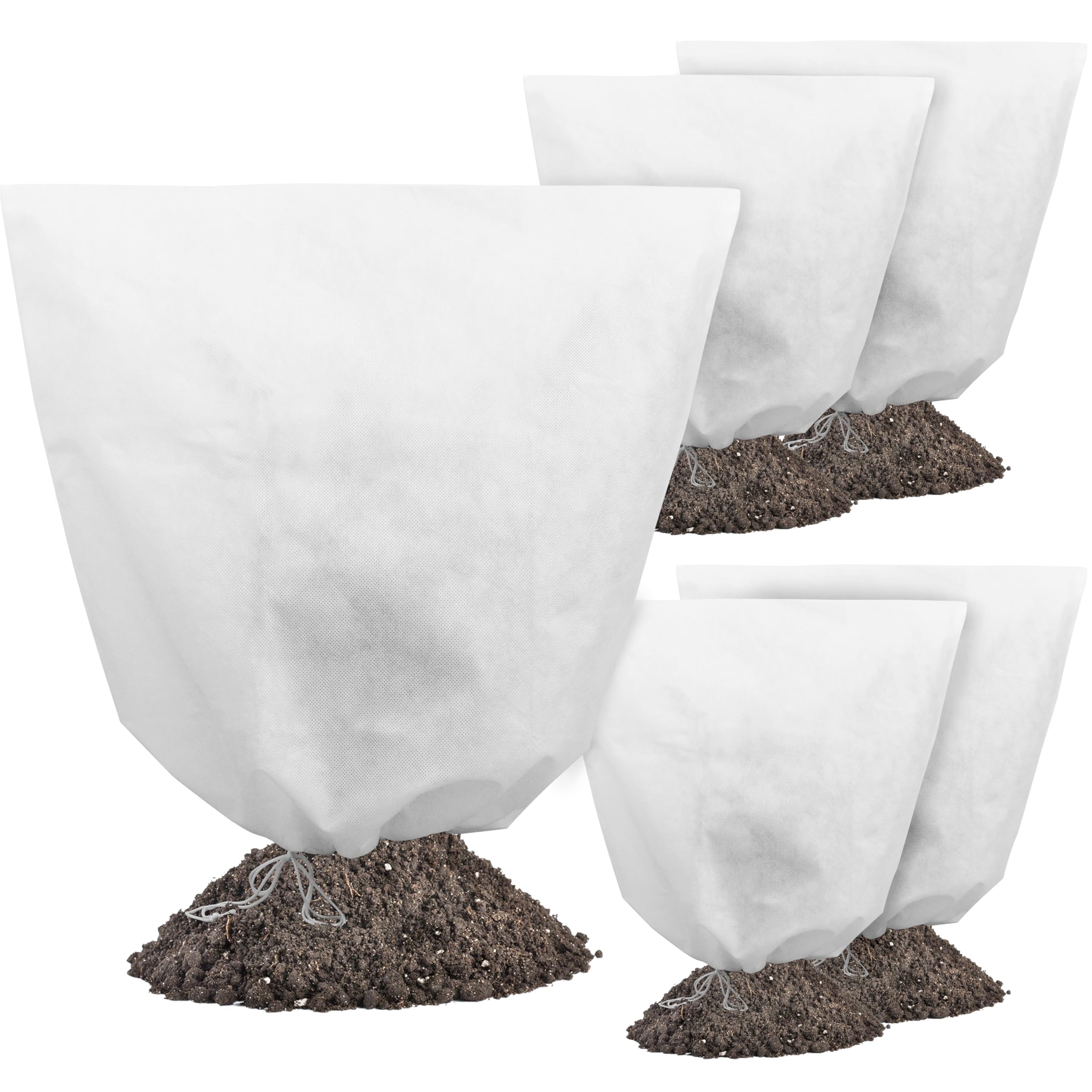
A five-pack of drawstring bags that wraps each shrub like a custom winter coat.
This is not a flat sheet you have to cut and weigh down — it is a ready-to-use bag with a drawstring that pulls tight around the stem. The fabric is 2.06 oz/yd² (70gsm), which is more than twice as thick as basic row covers. That extra density means more insulation when the temperature drops hard. At 22.4 inches by 24 inches, each cover fits a rose bush, a small tree, or a hanging basket. Buyers report the material is “thicker than other white covers” and lets light through while stopping frost damage, which is a real advantage over thinner fabrics that rip after one season.
The five-pack gives you coverage for multiple plants right away, and the included zipper on some bags makes wrapping tall or awkward shapes easier. The trade-off is the fixed size — you cannot lay these over a wide raised bed the way you would with a 10-foot-wide sheet. For individual plants though, this is the easiest option.
Unlike the SnugNiture sheet, which requires cutting and anchoring, these slip on in seconds and stay put thanks to the drawstring. If your garden is a collection of distinct shrubs and small trees rather than one big vegetable bed, these bags save you time and material waste.
Ready-to-use protection: Slip on, tighten, done — no cutting or staking required, and the 2.06 oz/yd² fabric gives you serious cold-weather reassurance.
Size limit: The 22.4″ x 24″ bag does not stretch to cover a large bush or a wide garden bed; you need a different solution for broad areas.
Reach for these if: you have a handful of valuable shrubs or small trees and want a thick, reusable cover that goes on fast before a freeze hits.
Look elsewhere if: your garden is one large raised bed or you need to cover a sprawling area in a single layer.
2. Green Plant Covers Freeze Protection 6.5 x 33 FT
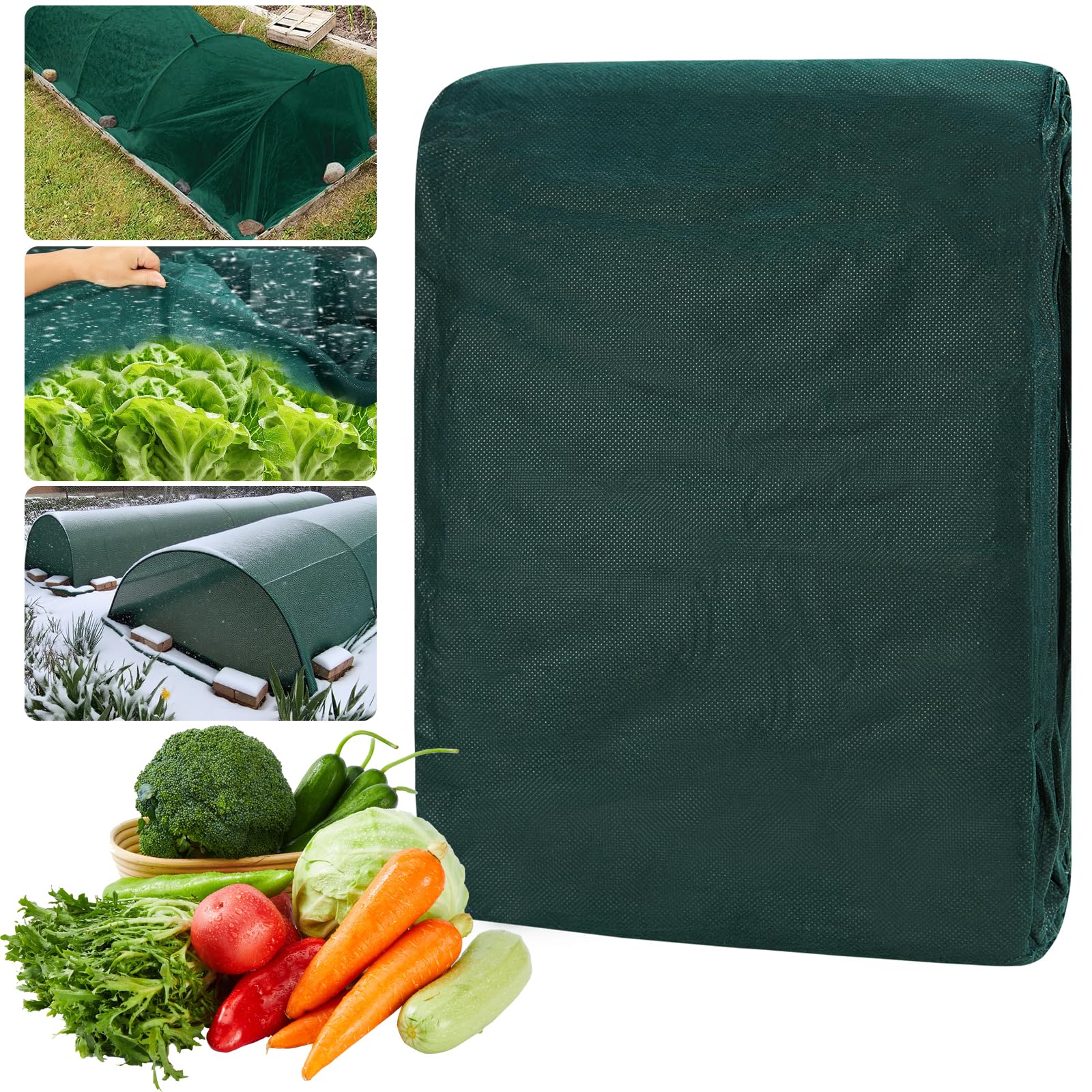
A thicker, UV-stabilized sheet that stands up to wind without tearing.
At 1.2 oz/yd², this cover is 9% denser than the 1.1 oz/yd² SnugNiture fabric, which gives it a slight edge in trapping warmth. The material is UV-stabilized polypropylene, so it does not break down after a summer in the sun. The 6.5-foot width covers a standard raised bed easily, and the 33-foot length gives you enough to cut multiple sections or wrap a small tree. One reviewer noted it survived a 40 mph wind storm wrapped around a peach tree, which tells you the thicker fabric handles gusts better than lighter sheets.
Because it is a flat sheet, you need to secure the edges with soil, stakes, or garden hoops. The seller recommends draping it before sunset to trap the daytime warmth in the soil. Reviewers in zone 7a say it reliably saves annuals and seedlings from a hard frost. The material is still lightweight enough to let air, light, and moisture through, so you do not have to remove it daily during a cold snap.
Compared to the Amazon Basics 0.9 oz/yd² cover, this one is noticeably heavier and less likely to flutter in the wind. Buyers mention it is “solid” and holds up after multiple uses, folding flat for storage when the season turns.
Premium fabric density: 1.2 oz/yd² traps more warmth than standard 0.9 oz/yd² covers and resists tearing in wind, giving you a dependable layer for extended freezes.
Needs anchoring: Without a drawstring or stakes included, you have to pin or weigh this sheet down yourself — it does not come with clips.
Grab this for: a raised vegetable bed or a line of shrubs where you want a thicker, durable fabric that can survive multiple seasons and strong winds.
Pass on it if: you prefer a pre-shaped cover with its own fastening system and do not want to buy stakes separately.
3. SnugNiture Plant Covers Freeze Protection, 10ft x 33ft
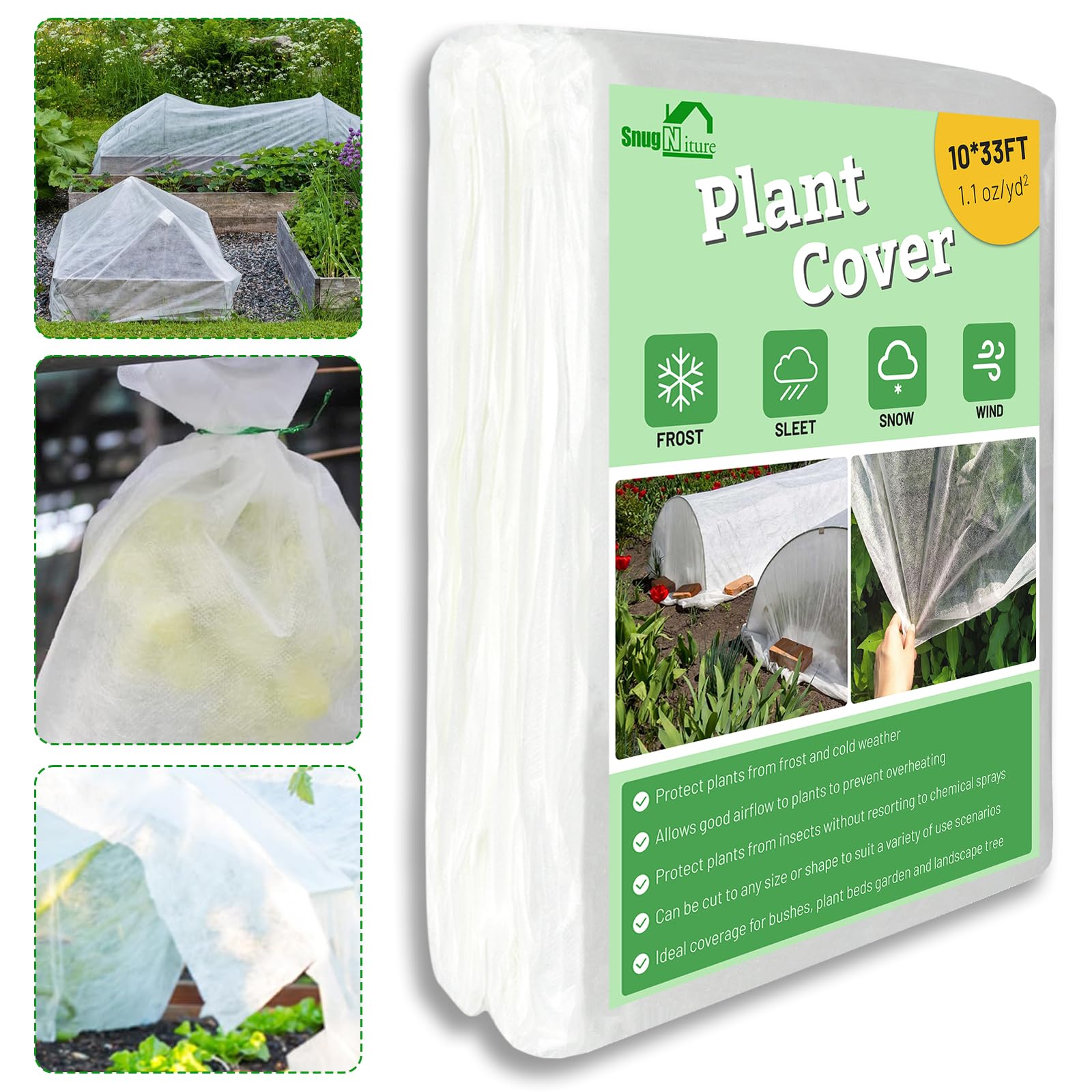
A generous 10-foot-wide sheet that covers wide beds without seams.
At 10 feet wide and 33 feet long, this cover lets you protect a large rectangular garden plot in one piece. The fabric is 1.1 oz/yd² non-woven polypropylene (a lightweight, breathable material that traps heat without crushing plants). That is thicker than the entry-level 0.9 oz/yd² sheets, so it gives you more frost protection without becoming too heavy to handle. Buyers in Texas reported using it during a freeze where temperatures stayed below freezing for three days straight, with “not plant damage occurred.” That real-world test shows the 1.1 oz/yd² fabric creates enough of a thermal buffer for light to moderate freezes.
The material is breathable and lets rain and sunlight through, so you can leave it on for extended cold periods without suffocating the plants. It is cut-to-size, meaning you can trim it to fit odd-shaped beds or wrap individual trees. The trade-off is that no clips or stakes come in the box, so you need your own rocks, soil, or stakes to hold it down. A reviewer noted it is “lightweight yet strong material” but wished for included fasteners.
Compared to the Gardzen bags, which fit specific shrubs, this sheet works better for a continuous row of vegetables or a large bed. It is also 69% heavier by total weight than the 5x60ft JUNKOGO cover because of the wider width, giving it more material to trap heat.
Wide single-sheet coverage: At 10 ft wide, it covers a full raised bed without needing to overlap or sew sections together, and 1.1 oz/yd² offers solid freeze protection.
No included hardware: You will need to buy or find stakes, clips, or heavy objects to keep the edges from blowing up in a breeze.
Choose this when: you have a large, rectangular garden bed and want a single, large cover you can cut to shape without piecing together smaller sections.
Avoid if: you want a no-fuss cover that includes its own anchoring system — this one is just the fabric.
4. Amazon Basics Plant Covers for Frost Protection, 10 x 30 ft
A lightweight budget sheet that handles light frosts and early spring cold snaps.
This is the entry-level option at 0.9 oz/yd² (30 g/sqm) of non-woven polypropylene. It is a simple, no-frills rectangle that you cut to size and drape over plants. At 10 feet by 30 feet, it offers the same width as the SnugNiture but with a lighter fabric. That makes it best for light frost and mild cold conditions — the kind that arrives in late fall or early spring — not for a deep winter freeze. One buyer mentioned it “saves plants even into the teens” in Florida, where the cold does not linger as long as in northern states, but noted “not all though,” meaning it has limits.
The lightweight material is easy to fold, cut with scissors, and store. The breathable design lets air and moisture through, so you do not trap excess humidity against the leaves. The biggest advantage is the low cost per square foot compared to thicker fabrics, especially when you buy the 1-pack. However, the 2.35-pound total weight makes it the heaviest cover here by actual weight — not because the fabric is denser, but because the sheet is large. Compared to the Green Plant Covers 1.2 oz/yd² sheet, this one is noticeably thinner and offers less insulation for the same effort of laying it out.
Buyers recommend doubling the fabric over for more sensitive plants. One gardener used it doubled on hydrangeas and got good results. Do not expect this cover to stand alone through a multi-day hard freeze below 20°F without layering.
Budget-friendly large sheet: Covers 300 sq ft at a low price point, making it ideal for gardeners who need to protect a lot of space on a tight budget.
Lightweight fabric: At 0.9 oz/yd², it offers less cold protection than heavier options; you may need to double it or combine with other insulation for a hard freeze.
Best for: protecting large plantings from a light, brief frost — especially if you are willing to double the fabric for borderline nights.
Not for: prolonged, deep freezes where you need a thicker blanket to hold warmth all night.
5. Plant Freeze Protection Cover, 5x60ft Frost Cloth (JUNKOGO)
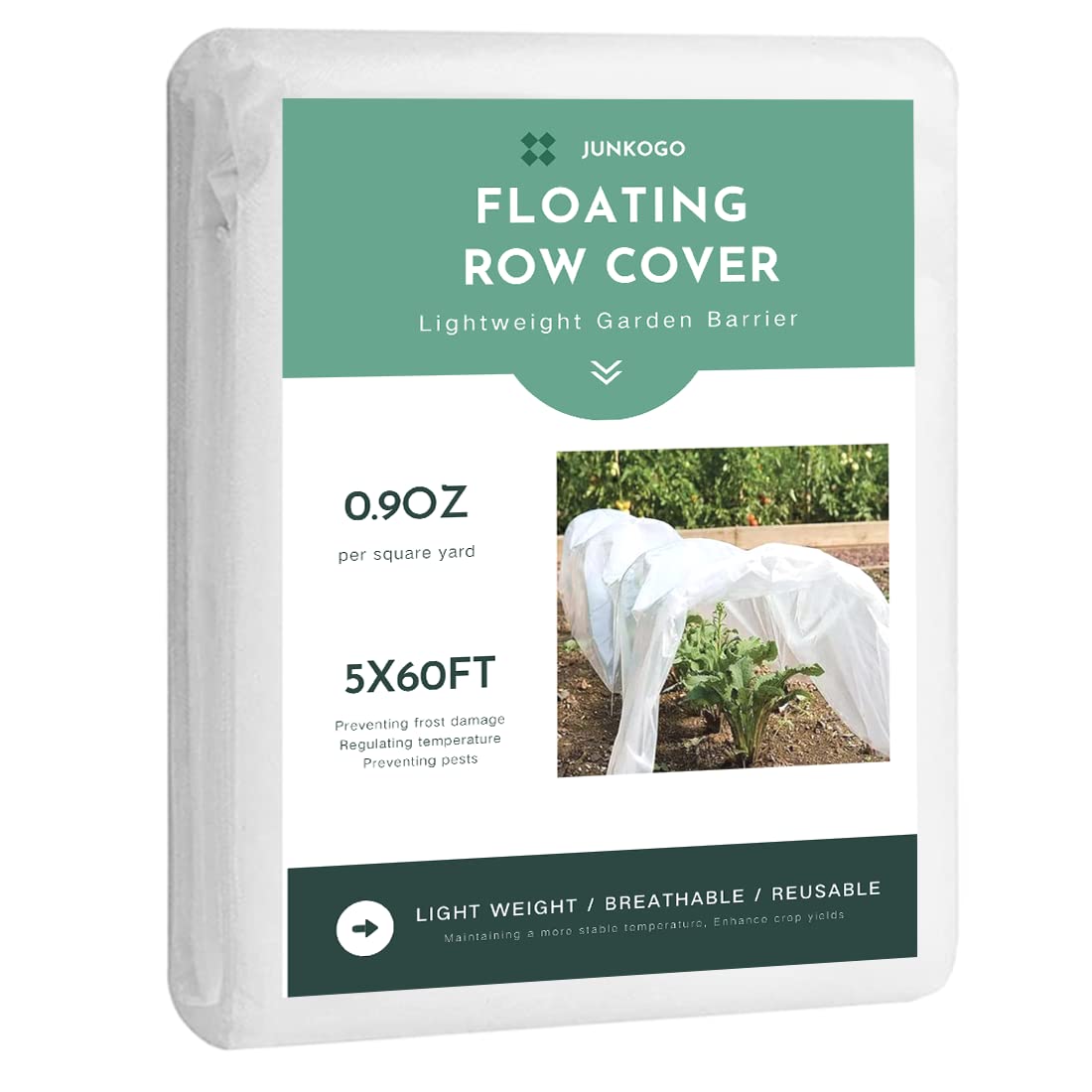
A 60-foot-long strip that runs the length of a long vegetable row without gaps.
At 5 feet wide and 60 feet long, this cover is designed for long, narrow garden rows or a series of beds in a line. The fabric is 0.9 oz/yd² non-woven material, the same weight as the Amazon Basics cover, so it is meant for light to moderate frosts rather than extreme cold. At just 1.39 pounds, it is 69% lighter than the Amazon Basics 10×30 ft sheet, making it easier to handle and reposition. One owner reported it “protected strawberries through 25-28°F freezes” and that all fruit, blooms, and plants survived — a strong endorsement for its performance at a decent temperature range.
The cover is cut-to-size, so you can trim it to fit odd-shaped beds or split it into multiple smaller sections. Because it is a floating row cover, you can lay it directly over plants or suspend it on hoops for more air space. The trade-off is that at 5 feet wide, it covers less area per square foot than wider options. For a standard 4-foot-wide raised bed it is perfect, but a sprawling 10-foot-wide plot will need two runs.
Compared to the Gardzen bags, which fit around specific plants, this is a better match for a continuous row of vegetables. One customer observed it is “slightly hard to find cover start,” but installation was not affected, suggesting the roll can be a bit tricky to locate the first time.
Long row coverage: 60 feet of continuous fabric lets you cover an entire row of vegetables or a line of shrubs without cutting or patching; proven to protect strawberries through 25-28°F freezes.
Narrower width: At 5 feet, it will not cover a wide raised bed in one go — you may need two lengths laid side by side for broad areas.
Ideal for: gardeners with long, narrow beds who want a single continuous cover that runs the whole row without seams.
Skip this if: you need a wide cover for a 10-foot bed, or you want the thicker fabric of the 1.2 oz/yd² option.
6. Plant Freeze Protection Cover, 10x30ft (JUNKOGO)
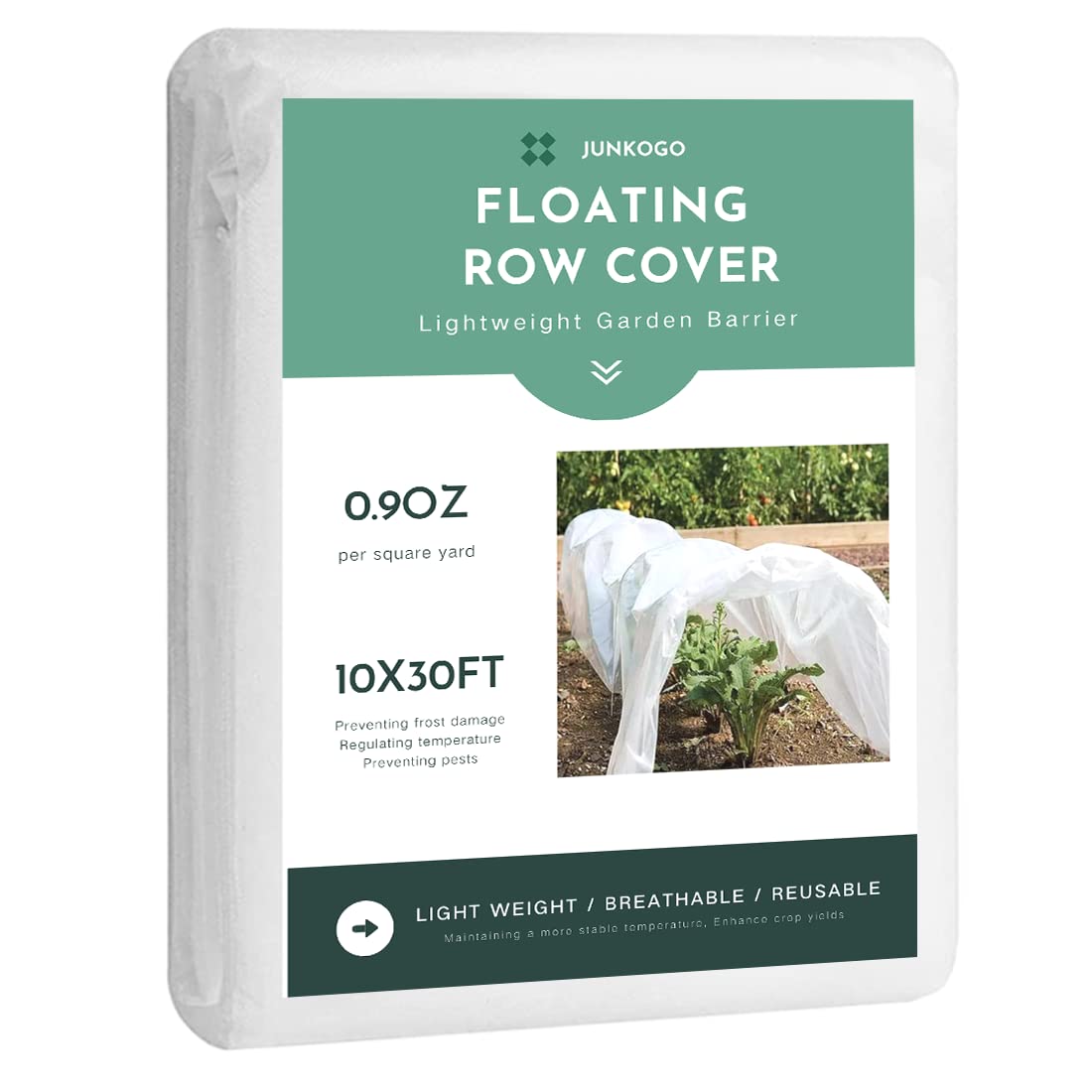
A versatile 10×30 ft sheet with the same fabric as the 5×60 ft version, but wider.
This is essentially the wider sibling of the 5×60 ft JUNKOGO cover — same 0.9 oz/yd² non-woven fabric but in a 10-foot by 30-foot sheet. It is designed for the same kind of light to moderate frost protection and can be cut to fit any size. At 1.39 pounds, it weighs the same as the 5×60 ft version, which is surprising because it is a different shape — the 2.0x area difference in dimensions means the total square footage is similar but distributed differently. One buyer in Virginia used it to cover eucalyptus plants all winter and reported everything survived with no frost damage. Another used it over a hoop house that no longer zipped shut and said the extra layer saved sensitive plants from sub-freezing temps.
The cover is reusable and can be used as a frost blanket in winter, a shade cloth in summer, or a barrier against insects and birds. Like the other flat sheets, it requires you to secure the edges with stones, stakes, or soil. No fasteners are included. For a 10×30 ft space, this gives you the widest single-piece coverage of the budget-tier options. The trade-off is the 0.9 oz/yd² fabric weight, which means it is not the best choice for a sustained deep freeze. If your winters regularly hit single digits, you would want to layer this or buy a thicker cover.
Compared to the similar-priced Amazon Basics sheet, this one has the same dimensions and fabric density but is 41% lighter (1.39 lbs vs 2.35 lbs), which could indicate a slightly different material construction or packaging. Both serve the same purpose: light frost protection for a wide area.
Wide, lightweight sheet: At 10 ft wide, it covers broad beds in one go, and the 0.9 oz/yd² fabric lets moisture and sunlight through while defending against light frosts.
Not for hard freezes: The thin 0.9 oz/yd² fabric offers limited insulation for prolonged sub-20°F temperatures; plan to double-layer or use with hoops for severe cold.
Good for: covering a wide garden bed or greenhouse opening during mild cold snaps, especially if you already have stakes or weights on hand.
Not right for: a multi-day hard freeze in northern climates where a thicker fabric is the safer choice.
7. NuVue Products 22250 Winter Snow and Ice Covers, Pack of 2

A pre-shaped, freestanding cover that does not touch the foliage, avoiding frost damage on contact.
Unlike every other cover on this list, the NuVue is a rigid, structured cube — 22 inches tall, wide, and deep — made from a synthetic “Synlap” material that is meant to be a better alternative to burlap. The shape means it stands up on its own, creating a pocket of air around the plant rather than draping directly on the leaves. That is the key advantage: a plant that touches a frozen cover can still get frost damage at the contact points. With a freestanding cover, the plant sits in a still-air space that stays warmer. The pack includes two covers, each with ground tabs and stakes to hold them in place.
The material is designed to resist rot, mold, and mildew, so you can store these wet without worrying about them degrading. One buyer in Buffalo, New York said the covers have held up through blizzards, which speaks to their durability in extreme snow and ice conditions. Another user said they lasted three winter seasons. However, the stakes that come with the covers are plastic, and a few reviewers noted they can break or bend in hard or rocky soil — an easy fix if you substitute metal stakes.
This cover is narrower in focus than the flat sheets. It only works for shrubs and small trees that fit inside a 22-inch cube (about the size of a small laundry basket). It will not cover a sprawling tomato plant or a 10-foot-wide bed. But for a few prized shrubs that need dedicated protection, this is the most sturdy solution. One reviewer recommended them, saying they are “high quality, easy to store, has ground tabs” (built-in loops to stake the cover down).
Freestanding air-gap design: The cube shape keeps the cover off the foliage, preventing frost damage at contact points, and the Synlap fabric resists rot and holds up through multiple winters.
Includes stakes: The plastic stakes work fine in soft soil but tend to break in hard ground; you may want to upgrade to metal stakes for a more secure hold in windy spots.
Perfect for: a few special shrubs or small trees that you want to protect through heavy snow, ice, and winter wind without the cover pressing on the leaves.
Not for: large garden beds, rows of vegetables, or anyone needing a low-cost per-square-foot solution — this is a targeted, premium pick for individual plants.
Understanding the Specs
Fabric Weight (oz/yd²)
This number tells you how dense the fabric is. A higher number like 1.2 oz/yd² traps more warmth than 0.9 oz/yd². For light frosts, 0.9 oz/yd² is fine. For a hard freeze that lasts several nights, look for 1.1 oz/yd² or higher, or plan to layer two lighter covers.
Shape and Coverage
A flat sheet is flexible — you can cut it to any size and drape it over a bed, a row, or a hoop tunnel. A pre-shaped bag or cube fits around a specific plant and does not need anchors. The right shape depends on your garden layout: sheets for beds, bags for individual shrubs.
FAQ
Can I leave a freeze cover on my plants for several days?
How cold can a 0.9 oz/yd² cover protect down to?
Should I use plastic or fabric to cover plants during a freeze?
How do I keep a flat cover from blowing away in the wind?
Can I cut a large cover into smaller pieces?
Will these covers work for protecting fruit trees?
Are these covers reusable year after year?
How early should I put the cover on before a freeze?
Final Thoughts: The Verdict
For the majority of shoppers, the best cover for plants during freeze is the Gardzen 5-Pack because the thick 2.06 oz/yd² fabric and drawstring design offer the simplest, most reliable protection for individual shrubs and small trees without any cutting or anchoring. If you need to cover a large vegetable bed, the SnugNiture 10ft x 33ft gives you the widest single-sheet coverage with a solid 1.1 oz/yd² fabric. And for a few special shrubs that need dedicated heavy-snow protection, the NuVue 22250 freestanding cubes are class-leading for keeping the cover off the foliage and surviving blizzard conditions.
How We Picked
We do not accept paid placement. Every pick is matched to a real buyer and a real use-case; we do not hands-on test units.
Sources & Methodology
Specifications: manufacturer listings and product documentation. Review insights: verified customer reviews, as of July 2026. Pricing: not shown on this page (it changes often); check the current price via the retailer link.
As an Amazon Associate, Lawn Gear Lab earns from qualifying purchases. This does not affect which products we feature.